


Understanding the ‘Why’ Behind Cancer and Neurological Disease
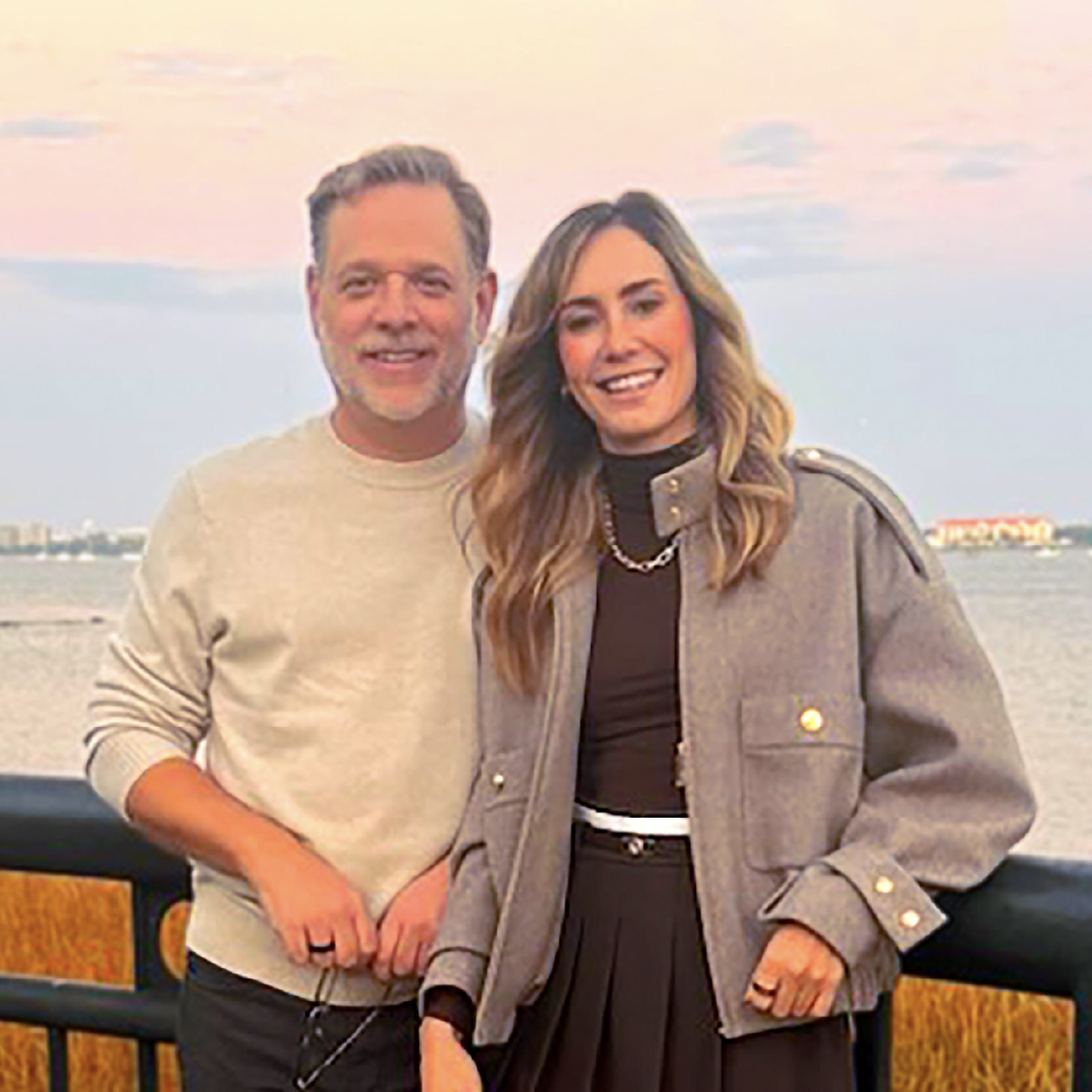
Jay Farner’s grandfather developed Parkinson’s disease in his late 60s — a turning point for the tool and die maker who had always made a living with his hands.
“I remember my grandfather telling me that his hands were all he knew how to use and he couldn’t use them anymore,” Farner says. “It was incredibly hard to watch him go through that, especially as the disease progressed into Lewy body dementia.”
Now, another close family member is navigating a form of dementia that affects memory. He can point to a growing list of family and friends facing similar diagnoses.
These experiences inspired Farner to support the Cleveland Clinic Brain Study, a 20-year, 200,000-person study to identify early indicators of neurological diseases like Alzheimer’s and Parkinson’s long before symptoms appear. One in every six people worldwide lives with a neurological disease, but the medical community has largely focused on managing symptoms and slowing progression rather than preventing and curing disease altogether.
"The Brain Study aims to change the future of neurology by detecting disease in the silent phase,” says Andre Machado, MD, PhD, Chair of the Neurological Institute and the Charles and Christine Carroll Family Endowed Chair in Functional Neurosurgery. “We are bringing together researchers, clinicians, patients and supporters to build a foundation for prevention that was once thought impossible.”
Making a Measurable Impact
A Michigan native, Farner frequently visited Cleveland during his 27-year tenure as Vice Chairman and CEO of Rocket Companies (formerly Quicken Loans). In 2023, he retired from Rocket Companies and founded Ronin Capital Partners, where he works alongside his partner, Nicole Vallianatos. Together, he and Vallianatos founded the Jay Farner Family Foundation on the belief that “kindness, research, and responsible care can transform lives.”
Grounded in his own experiences as a patient, Farner believed Cleveland Clinic was uniquely positioned to translate philanthropic investment into measurable impact. He and Vallianatos initially supported pediatric cancer research through a matching gift for VeloSano Trike & Bike. From there, their giving expanded to include breast cancer research—an area with personal significance for Vallianatos.
When Vallianatos was in college, her mother joined the 1 in 8 women who will face the disease in her lifetime. After undergoing treatment and going into remission, the cancer returned a decade later. She underwent a double mastectomy and recovered again, but she lives with lymphedema in the aftermath.
“Breast cancer is deeply personal for my family and for many families I meet," says Vallianatos. “I want to be part of the mission to expand access to care and improve outcomes for patients like my mother.”
A Light Bulb Moment
Farner has long supported research that accelerates the shift from standard treatment to genetically informed, personalized therapies.
“We have seen real momentum in breast cancer treatment — but cancer is also evolving,” he says. “People are getting diagnosed at younger ages.”
For Farner and Vallianatos, fighting both cancer and neurological disease hinges on going beyond treatment alone and uncovering their root causes. In Dr. Machado and his team, they found like-minded collaborators. They recently toured Dr. Machado’s lab, where they witnessed a gait and balance module that analyzes patients’ stride length, speed and other characteristics to determine risk factors for neurological disease.
“That was a light bulb moment for me,” Farner remembers. “It made me think about how easy it is to rationalize memory issues. But when you have the data in front of you, you can act on it.”
Cleveland Clinic's Brain Study
Launched in 2022, the study relies on the support of donors like Farner and Vallianatos to reach its full potential.
“Philanthropic support will play a vital role in accelerating discoveries that fundamentally change how we diagnose and treat neurological diseases,” says Dr. Machado. “We are grateful for donors with the vision to invest now in better neurological care for generations to come.”
Whether they are investing in a new business venture or research initiative, Farner and Vallianatos look for an extraordinary level of focus and commitment. “We invest in great people who build great teams and take ownership of outcomes,” explains Farner.
“Every time we meet a doctor at Cleveland Clinic, we sense a deep commitment to their mission,” he says. “That reassures us that our dollars are being spent wisely. We hope this is the start of a long and meaningful journey.”
June is Alzheimer's & Brain Awareness Month. Please join Jay and Nicole in helping to change how neurological diseases are diagnosed and treated by making a gift today.
“Food Is Medicine” Helps Heal in Unexpected Ways
Women who experience hypertension, or high blood pressure, before or during pregnancy don’t just face a temporary complication. They face a significantly higher risk of developing chronic hypertension later in life, a serious condition that can lead to stroke, heart attack or kidney disease.
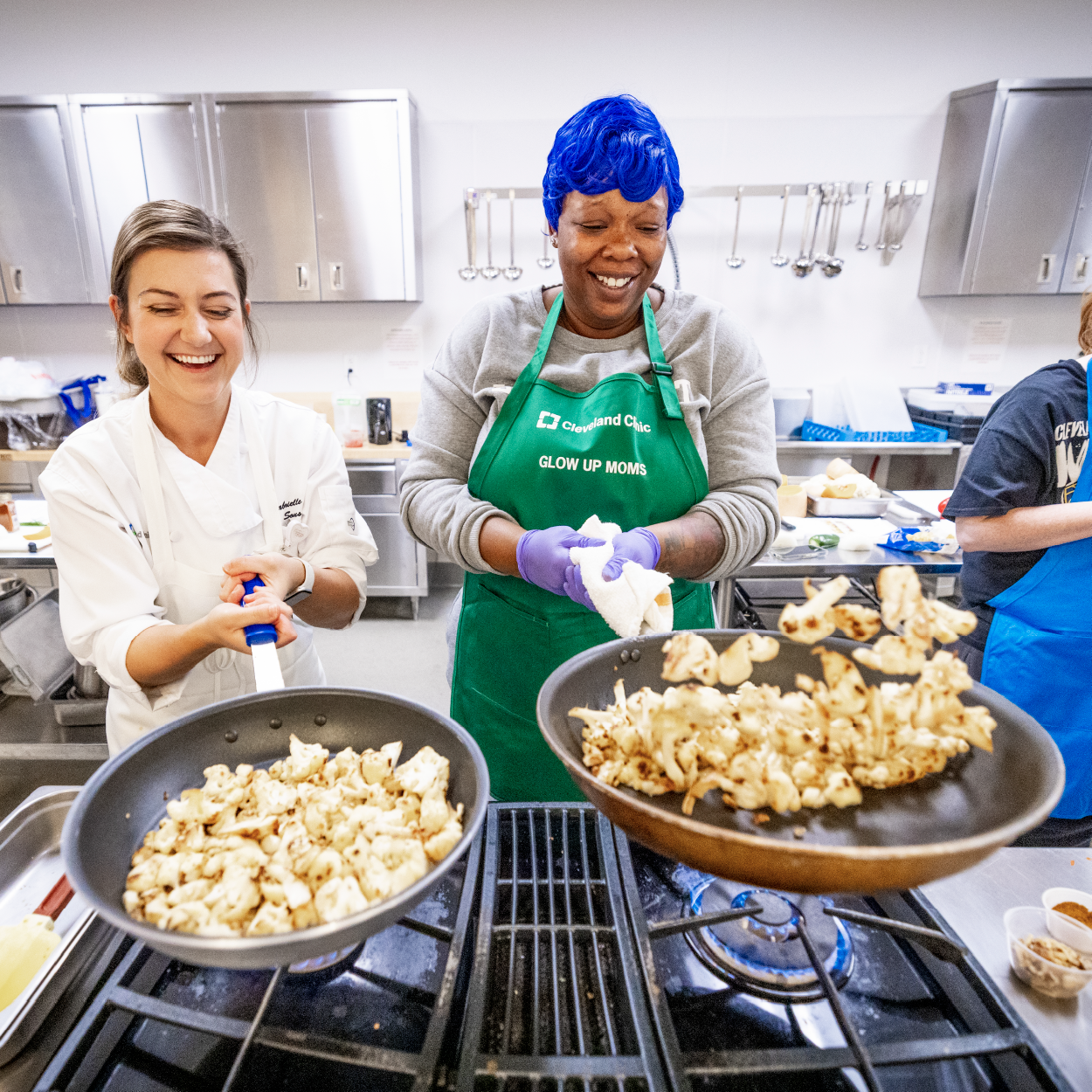
Determined to change this reality, Oluwatosin Goje, MD, Medical Director of the Cleveland Clinic Center for Infant and Maternal Health, launched a healthy cooking class for postpartum at-risk patients in the community. Together with Shannon Walker, PhD, MEd, and supported by a Catalyst Grant, they created a family‑centered, group‑based Food Is Medicine program designed to give women the skills, knowledge and support they need to take control of their long‑term health.
“We integrated a lot of nutrition education, health education and culinary medicine,” says Dr. Walker, Assistant Professor in Family and Community Medicine at The Ohio State University. “They learned how to eat properly, how to read nutrition labels, how to manage stress and how to check their own blood pressure to self-monitor at home."
Dr. Goje and Dr. Walker met with participants every other week for four months in the teaching kitchen at the Cleveland Clinic Stephanie Tubbs Jones Health Center. There, patients cooked alongside Cleveland Clinic chefs as well as chefs from around Northeast Ohio, gaining hands-on experience preparing healthy meals. Community Health Workers guided group conversations where the women shared experiences and built connections with one another.
“Evidence shows that 60% - 80% of a patient’s health outcome is based on where they live, their level of education, how much they earn and risk factors such as smoking or drinking alcohol,” says Dr. Goje. “All of these things play a role. Food justice and food insecurity especially have an impact on health, and our project set out to understand how those issues shape overall health outcomes.”
Twenty patients were screened and selected for the first cohort, which ran from fall 2025 through winter 2026. The program was intentionally designed to be culturally tailored and responsive to participants’ social needs. It reshaped how they think about food, helping them develop new tastes and healthier eating habits. For Dr. Goje, the experience was deeply humbling.
“There’s a lot I take for granted,” says Dr. Goje. “I get into my car, and I go wherever I want to go. Seeing some of these women who don’t have a car still showing up — it was humbling. And seeing the joy on their faces. We couldn’t have done this without the Catalyst Grant. It was highly needed and highly appreciated.”
Catalyst Grants are funded annually by thousands of gifts of all sizes from donors. The competitive grants are awarded to caregivers with ideas to improve the lives of Cleveland Clinic patients, the organization and communities around the world. Dr. Goje and Dr. Walker were awarded about $82,000.
When “You’re Fine” Isn’t Fine
If you know Ann McBrien, you know she’s a dynamo. A partner for 40 years to her husband, Ed; she is also the mother of Kate, 35, and Matt, 29. A retired entrepreneur and consultant, she broke barriers as the first woman to serve as vice president of sales for Procter & Gamble’s global healthcare division—and still finds time to volunteer, run, play golf and pursue pickleball.
So, when Ann began feeling tired in 2020, it seemed like a cause of concern. “I had known I had a genetic heart valve issue from the time I was in my early 20s,” recalls the 66-year-old. “When I reached my 50s – we were living in Chicago at the time – my doctor told me I should start getting it checked annually.”
In 2015, Ann and her family made the move to Hilton Head, South Carolina where she diligently kept up with her annual echocardiograms. But by 2020, something changed. “I just wasn’t feeling great,” she says. “I had no energy and even going out for a walk left me tired.”
A Phone Call Changes Everything
Suspecting a worsening of her heart condition, Ann knew she had to be frank with her cardiologist. But she found herself disappointed by his response. “He told me, ‘You don’t need an echocardiogram; you’re fine. You’re just getting old.’”
While it took a month of self-advocating, Ann eventually got her echocardiogram. As she feared, the results showed the need for immediate surgery.
The road to treatment continued to be bumpy, leaving Ann both frustrated and a little panicked. When her appointment with an out-of-state cardiac surgeon was abruptly cancelled, a dear friend reached out with lifesaving advice: You should be at Cleveland Clinic, she told Ann. After all, it’s the best hospital for heart care.
Ann’s friend was also a friend of Charlie Miner, a retired managing director of Cleveland Clinic Abu Dhabi. “I’m going to call Charlie and see what he can do,” the friend promised.
“Cleveland Clinic called me the very next morning,” Ann recalls. “And I was in tears. I said oh, my gosh, you care about me. You care! After all I had gone through up to that point, I just couldn’t believe it.”
After that call, events moved swiftly. Within days, she received a call from the office of Eric Roselli, MD, Chief of Adult Cardiac Surgery in Cleveland Clinic’s Department of Thoracic and Cardiovascular Surgery. Dr. Roselli’s staffer assured Ann that the doctor would review her medical records and would soon be back in touch to discuss the next steps.
“Actually, I was on the golf course, with friends, when Dr. Roselli’s nurse called back – it was in early November – and she said Dr. Roselli could perform my surgery on Nov. 23! I stood right there bawling. I was dumbfounded; it was just incredible.”
A Gift to Support Research
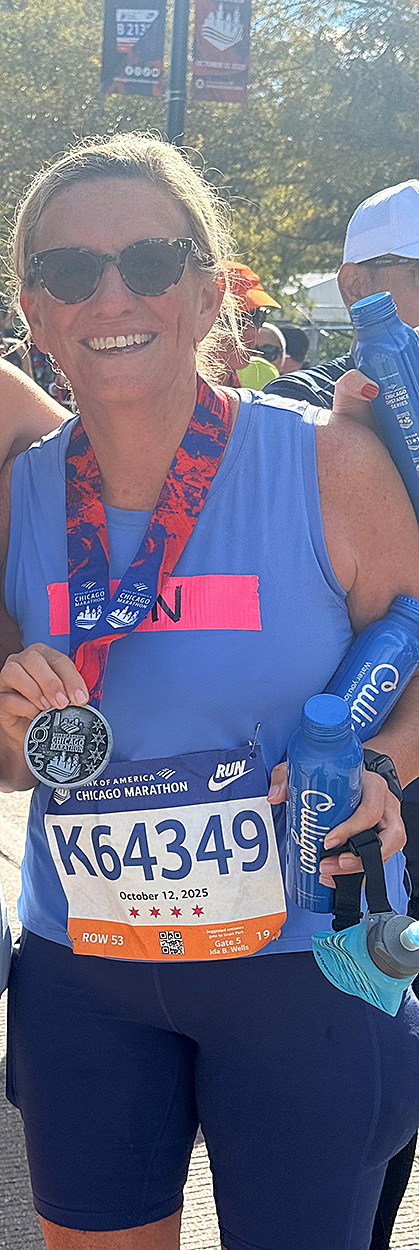
While complex, the surgery – an aortic valve and root replacement – was a complete success, and Ann is now back to her old self, playing tennis, pickleball, golf and running. In fact, in October 2025, at the age of 65, she completed – with her daughter Katie – her first Chicago Marathon. “It still brings tears to my eyes,” Ann says. “We left the starting line together and crossed the finish line together: What a gift.”
Since her surgery, Ann has extended her support to Cleveland Clinic, where she and Ed have become members of the Cornerstone Society. She hopes her generosity can be used for continued research to make surgery, such as the one she had, “easier and better in the future.”
Ann also has a personal investment in the future of cardiac surgery. “I shared some of my same genetic heart valve issues with Katie and Matt,” she says. “Both of them are very healthy now, but they will need to be checked for the rest of their lives.”
Following her surgery, Dr. Roselli told Ann that, thus far, she was one of only a handful of patients on whom he had performed the challenging aortic root and valve replacement surgery, a major cardiac intervention that involved cutting, replacing and moving several coronary arteries to prevent a fatal rupture.
“I’m healthy now,” Ann says. “And Dr. Roselli is a rock star. He truly is. He saved my life and I can’t thank him enough.”
Reflecting on why she cares so deeply about supporting Cleveland Clinic, “They care. That place runs like a well-oiled machine: They call you back, they follow up; they treat you like you’re somebody,” she says. “They really care and I’m so grateful for that.”
