


Couple Funds Education Efforts in Orthopaedics
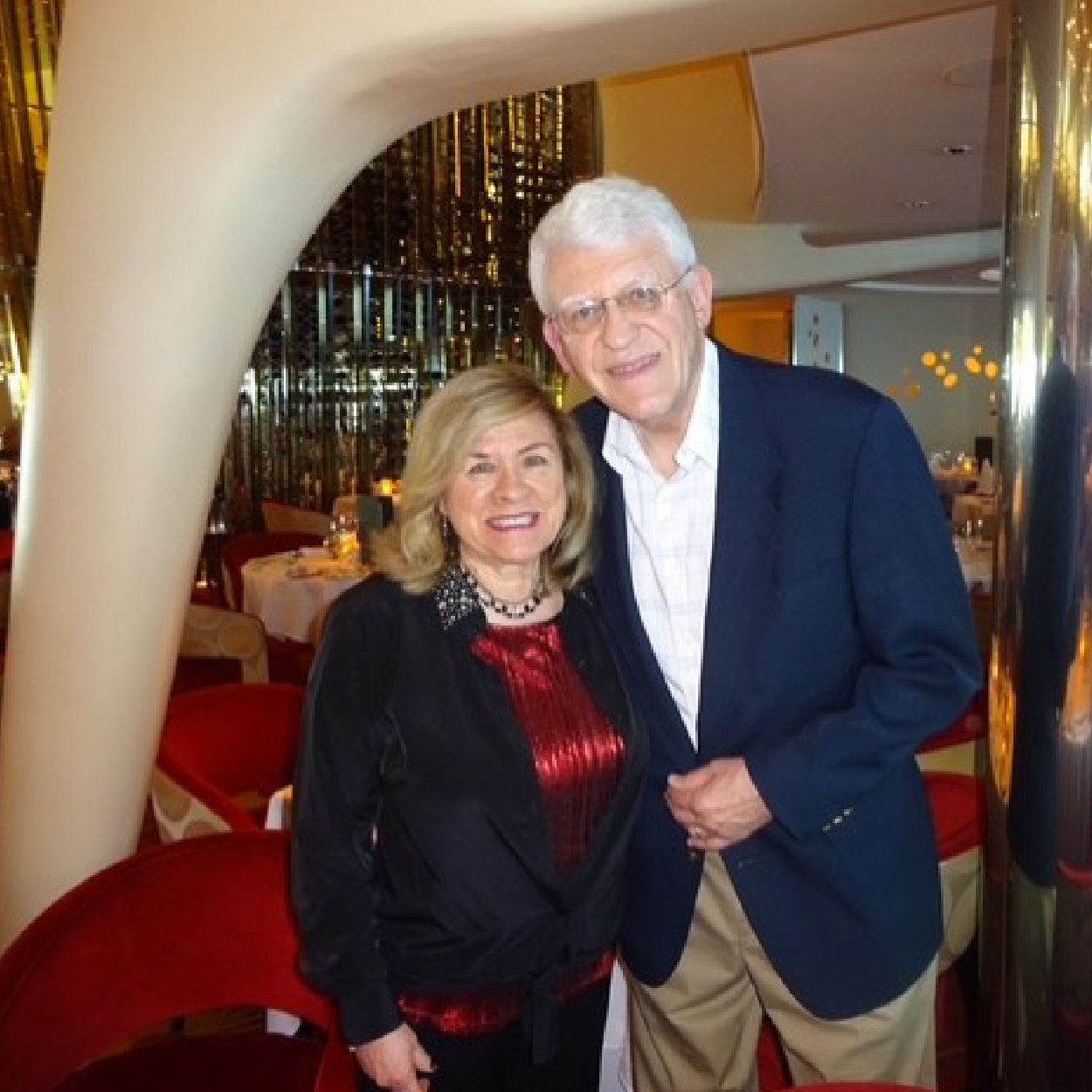
While Don and Sally Messinger have nothing but praise and gratitude for Cleveland Clinic, they recognized – through a lifesaving experience – a way they might help improve outcomes for a specific population of medical staff and patients. So they stepped up with a $100,000 gift to serve a very specific purpose.
The longtime Cleveland-area residents insist, "There is no better way to use your money than to help somebody else."
Their story begins with a trip to the ER in 2022. Don had been a patient of the Cleveland Clinic Orthopaedic department for many years, but his symptoms this time suggested something might be off with his heart or nervous system.
"They did a bunch of tests to see what was going on but didn't find anything of concern," Don recalled. After two days of "every test in the universe," Don and Sally were preparing to leave the hospital when Neha Quatromoni, MD, a cardiologist they hadn't met before, asked if she could do one more test. Soon after that, Don was advised he had cardiac amyloidosis – a buildup of abnormal proteins in the heart. Don was specifically diagnosed with light-chain amyloidosis, where the abnormal proteins come from bone marrow. These proteins thicken the heart muscle, preventing it from working as it should and often leading to death.
Cardiac amyloidosis is considered rare and is often underdiagnosed because symptoms mirror those of many other diseases. Common symptoms are shortness of breath, high levels of protein in the patient's urine, swelling in the belly and legs, fatigue and heart palpitations. Don had none of these. But because amyloid can build up elsewhere in the body, a patient could exhibit other signs of the disease, including a history of carpal tunnel syndrome, spinal stenosis, prior shoulder surgery and hip or knee replacement – all of which Don had experienced.
"I've had bilateral carpal tunnel, both hips replaced, and my shoulders are shot," Don said. He also has been treated for spinal stenosis for more than 10 years. "I've had a lot of orthopaedic issues because the amyloid first deposits in the joints." Don pointed out, too, that his annual physicals didn't show amyloid in his heart or joints.
"The next step for me was a catheterization where they saw that the surface of my heart was thicker than normal, and I had a blockage in one of my valves," said Don. Following a valve replacement surgery, Don's medical team has been managing his disease with a compounded oral medication, formulated specifically for Don at the Specialty Pharmacy at Cleveland Clinic.
The Messingers requested their gift be used to educate medical professionals in orthopaedics about red flags that could help in the early diagnosis of cardiac amyloidosis and convey just how important early diagnosis is.
"We hope that our gift will also educate Cleveland Clinic orthopaedic patients about the symptoms of amyloidosis," said Don. "It's life threatening, so we are grateful beyond words that we're in Cleveland and that we go to Cleveland Clinic."
"This is not a simple problem," Sally cautioned. "We're hoping we make a difference in that somebody is diagnosed today because we gave money to Cleveland Clinic. That means the world to us."
"Every dollar we contribute we earned ourselves," Don added. "We feel fortunate that we're able to give back in this important way."
Sally is a 40-year top-performing real estate agent, currently with Howard Hanna, and Don is a corporate attorney with Thompson Hine, having been a member of the firm's executive committee and served as partner-in-charge of the firm's Cleveland office. They have three married sons and seven grandchildren they adore.
"This is our life," Don reflected. "We think we are the luckiest people on the face of the earth."
He added plainly: "This isn't a disease that you can live with forever. When it gets bad, your heart can't work. You can't reverse this one – but they're going to be able to do so someday. They're doing wonderful studies. The doctors are committed."
"We are so grateful," echoed Sally, "especially to Dr. Quatromoni, but to the whole cardio amyloidosis team. All are sensational. And to the people in orthopaedics who were treating Don. We just are very, very grateful."
Bringing Lifesaving Care to Palm Beach
You've likely heard the message "time is brain," emphasizing that immediate treatment during a stroke is vital to restore blood flow to brain tissue. Similarly, getting prompt treatment for a heart attack is critical to minimizing irreversible heart muscle damage and improving chances for survival.
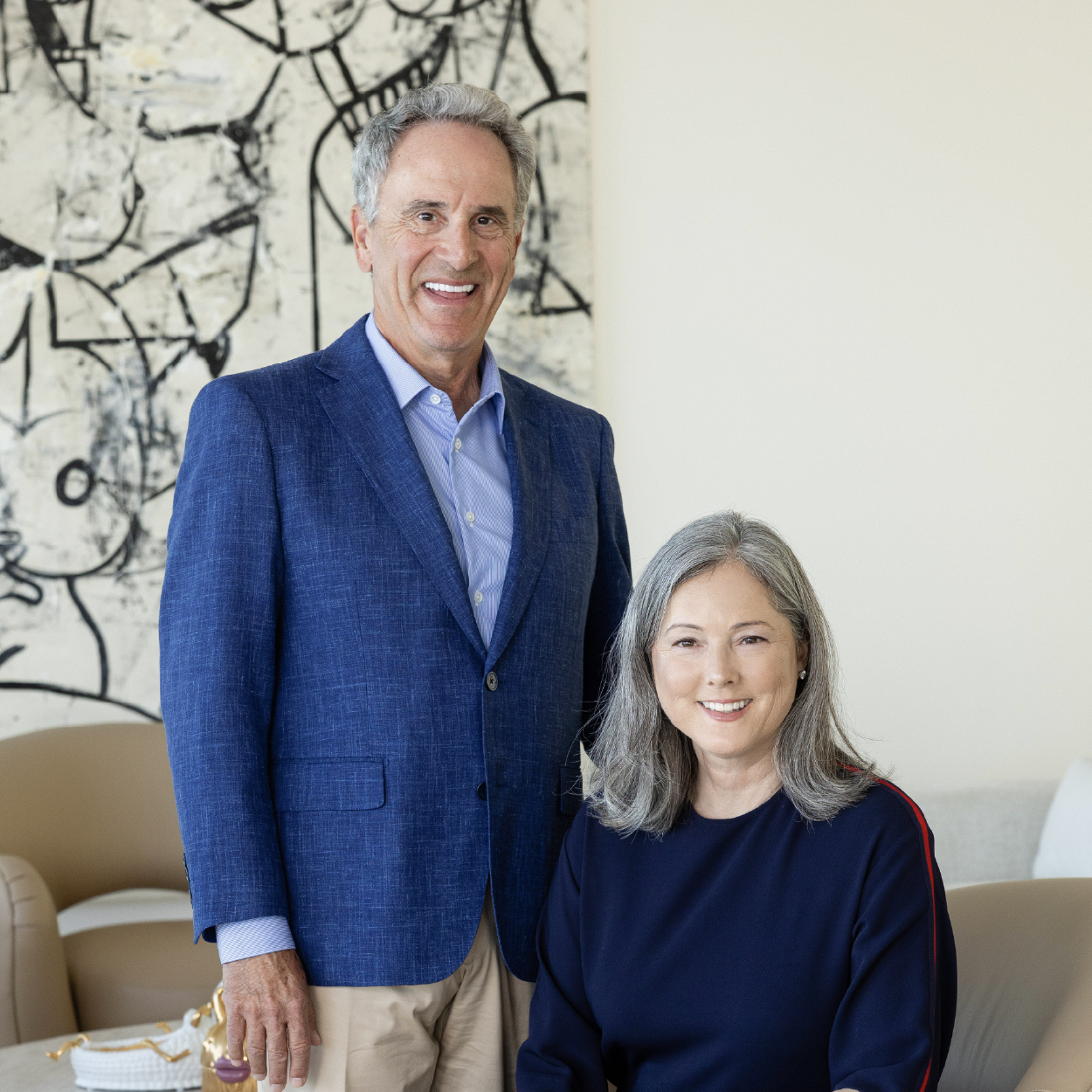
These realities are on the minds of Kerry and Simone Vickar, who recognize that it's important to live in an area with lifesaving medical care nearby. Originally from Canada, the couple considers Palm Beach their primary residence. For years, they've been eager to see a Cleveland Clinic hospital built in their community, having experienced exemplary care at Cleveland Clinic's Weston Hospital.
Simone, who had previously been under concierge care in other cities where the couple had lived, describes her remarkable experience with Stephen Avallone, MD, the Center Director of Concierge Medicine for Cleveland Clinic who now leads the West Palm Beach office: "I walked into his office for an introduction, and in 10 minutes he diagnosed me with something that had gone undiagnosed for decades."
Kerry and Simone are united in their mission to provide their community with access to the same world-class care. To that end, they have been longtime supporters of Cleveland Clinic. In addition to being the first major donors to the Palm Beach hospital campaign in 2021 with a $1 million donation, the Vickars recently made a transformational gift that will help bring the plans for Cleveland Clinic's Palm Beach hospital to fruition.
Over the last 45 years, Kerry has made a career of being a serial entrepreneur who has acquired, grown and ultimately sold numerous businesses across many divergent industries. Through the Kerry and Simone Vickar Family Foundation, the couple has generously supported health, education and the arts in different cities they've called home over the years. "We believe that it's important to support causes in the communities where we are fortunate to live," says Kerry.
The Vickars' approach to giving includes active engagement. They believe in the value of donating not only resources to worthy causes, but also their time, efforts and expertise. Simone has played a pivotal role in expanding their philanthropic footprint in this way. Her passion for the arts and community well-being has led her to serve on the boards of various museums and organizations such as the Boys & Girls Clubs and United Way. The couple also support Cleveland Clinic Florida signature events and served as chairs of the Florida Ball in 2023.
Together, Simone and Kerry strive to make a difference by giving to causes where their contributions will make a tangible impact. Their partnership in philanthropy is built on mutual respect, open discussion and joint decision-making.
They are optimistic about the future, knowing that the shared values and generosity of their Palm Beach community are paving the way to outstanding, quickly accessible healthcare. "Good things come to those who wait," says Kerry of the long-anticipated hospital.
The Vickars appreciate that, once the Palm Beach hospital opens, everyone in the area will have a sense of comfort knowing Cleveland Clinic's exceptional care will be close to home — both for routine needs and for lifesaving medical attention when every minute counts.
Charitable Giving Strategies for 2026

For Cleveland Clinic’s charitable giving partners, every major piece of legislation creates both complexity and opportunity. For example, last year’s One Big Beautiful Bill Act (OBBBA) introduced significant tax changes, including important implications for charitable planning.
For many business owners, executives and high-net-worth families, charitable planning is about more than generosity – it works to structure gifts to support the causes they care about while remaining tax efficient.
In this Q&A, Stacey McKinley, Esq., Director of Gift Planning at Cleveland Clinic Philanthropy, and Jim Lineweaver, CFP®, AIF®, founder of Lineweaver Wealth Advisors, discuss some advantageous charitable giving strategies that can help make a bigger difference in today’s tax climate.
Stacey McKinley: How are you helping clients navigate market volatility right now?
Jim Lineweaver: Volatility is not new. What makes 2026 different is the combination of market volatility and structural tax changes under OBBBA.
For executives, physicians and business owners, charitable planning can no longer be a year-end afterthought. It needs to be coordinated with income timing, liquidity events, and concentrated positions. Our role is to help clients stay disciplined and make decisions based on strategy rather than headlines.
SM: What did the One Big Beautiful Bill change for charitable giving?
JL: Beginning in 2026, two changes materially affect high-income donors who itemize. First, the first 0.5% of adjusted gross income given to charity is no longer deductible. Second, for taxpayers in the top bracket, the value of itemized deductions is effectively capped at 35% rather than 37%.
As a result, spreading gifts evenly year after year may be less tax-efficient than coordinating giving around higher-income years.
SM: What strategies are becoming more relevant because of these changes?
JL: One is concentrated giving, often called bunching. Instead of making similar annual gifts, some households are consolidating multiple years of charitable intent into a single year to exceed the adjusted gross income (AGI) floor more efficiently, offset high-income years and lock in a deduction. Cleveland Clinic donors who have entered into multi-year pledges may want to consider accelerating those gifts.
SM: Why might Qualified Charitable Distributions (QCD) be even more valuable now?
JL: Because QCDs are not itemized deductions. They are income exclusions. A QCD transfers funds directly from an IRA to a qualified charity, and the distribution is excluded from taxable income.
That means it can satisfy required minimum distributions and is not subject to either the 0.5% AGI floor or the top-bracket deduction limitation. The 2026 QCD limit is $111,000 per taxpayer. While RMDs begin at age 73, QCDs can begin at age 70½, creating a valuable planning window.
Plus, QCDs are outright gifts to Cleveland Clinic that, when included with an estate gift, can boost the impact of a donor’s charitable giving.
SM: How does OBBBA affect donor-advised funds and charitable trusts?
JL: The law did not change how donor-advised funds or charitable remainder trusts (CRTs) function, but it did change the deduction landscape around them.
For many donors, Donor-Advised Funds (DAF) remain efficient because they offer flexibility, simplicity, and the ability to concentrate giving in high-income years. CRTs still allow donors to contribute appreciated assets, receive lifetime income, and direct the remainder to charity. While the deduction is subject to the new rules, the broader value of a CRT is often the ability to diversify appreciated assets, spread income over time, and support charitable goals within one plan.
For clients who want a simpler structure and predictable lifetime income, charitable gift annuities may also be worth considering.
SM: What is the central planning theme in 2026 that donors to Cleveland Clinic should keep in mind?
JL: Timing. Adjusted gross income now plays a more direct role in charitable deduction efficiency. Giving decisions should be coordinated with equity compensation events, Roth conversions, business sales, retirement transitions, and concentrated stock positions.
Charitable planning in 2026 is no longer just about generosity. It is about aligning giving with income timing, recent tax law changes, and broader retirement and estate planning goals.
