Pancreatitis is inflammation in your pancreas. Gallstones and heavy drinking can cause it. Less common causes include infections and genetic changes. Abdominal pain is the primary symptom. Depending on the type, treatment can involve supportive care and surgery.
Advertisement
Cleveland Clinic is a non-profit academic medical center. Advertising on our site helps support our mission. We do not endorse non-Cleveland Clinic products or services. Policy
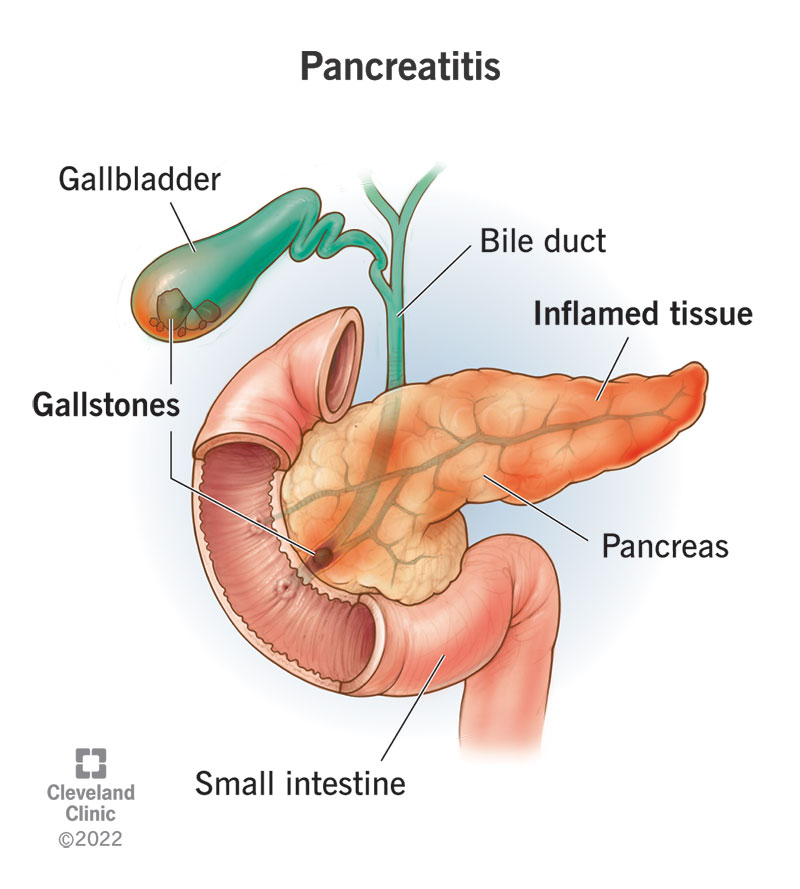
Image content: This image is available to view online.
View image online (https://my.clevelandclinic.org/-/scassets/Images/org/health/articles/8103-pancreatitis-illustration)
Pancreatitis is inflammation of your pancreas. Your pancreas is an organ behind your stomach. It balances your blood sugar levels and makes enzymes that break down food into nutrients your body can use.
Advertisement
Cleveland Clinic is a non-profit academic medical center. Advertising on our site helps support our mission. We do not endorse non-Cleveland Clinic products or services. Policy
A temporary case of pancreatitis won’t affect these functions in the long term. But when the inflammation is constant, it can make your pancreas less efficient at helping with digestion and keeping your blood sugar in a healthy range.
Pancreatitis causes pain and swelling in your abdomen. Gallstones and heavy drinking are the most common causes. Treatment options depend on each case, but they range from nutritional support to surgery.
There are two types of pancreatitis:
Acute pancreatitis is fairly common compared to chronic pancreatitis. In the U.S., acute pancreatitis leads to around 275,000 hospital stays a year. Around 8 in 10 people leave the hospital after a few days.
Symptoms of acute pancreatitis include:
Advertisement
In acute pancreatitis, the pain feels severe and constant. You might feel it deeply, too. Your abdomen can also feel tender to the touch.
Symptoms of chronic pancreatitis include:
With chronic pancreatitis, the intensity of the pain can vary. Flare-ups can last from several hours to many days. But the pain never completely goes away. It may get worse when you:
As chronic pancreatitis progresses, the pain doesn’t go away. For some people, pain may become less severe as chronic pancreatitis gets worse. But this doesn’t mean your pancreas has healed.
The most common causes of pancreatitis are gallstones and heavy alcohol use.
When gallstones clog up your common bile duct, they keep your pancreas from draining digestive juices. These juices inflame your pancreas as they start to digest it. Gallstone pancreatitis is the most common cause of acute inflammation.
Consistently drinking too much alcohol for at least five years straight can also cause pancreatitis. But researchers are still working to understand why. It might be that lots of byproducts from alcohol in your blood can irritate your pancreas, or that they trigger digestive juices to eat away at the tissue.
Excess alcohol use is the most common cause of chronic pancreatitis. But it can lead to both types.
Other, less common causes include:
Risk factors for pancreatitis include:
Both acute and chronic pancreatitis can cause complications.
A pancreatic fluid collection can form during or after pancreatitis. Some fluid collections may go away on their own. Others can become infected, press on nearby organs or need to be drained.
While most cases are mild, severe acute pancreatitis can lead to serious problems, like:
Advertisement
Chronic pancreatitis also causes complications, but they develop more slowly. They include:
Your healthcare provider will ask about your symptoms and medical history. They may also order tests.
For acute pancreatitis, diagnosis is usually based on a combination of:
You may not need imaging if your symptoms and blood tests clearly show acute pancreatitis.
For chronic pancreatitis, your provider may use:
Advertisement
Your provider may also check your blood sugar and nutrition.
Treatment for acute pancreatitis depends on the cause and how severe it is. In some cases, it can go away on its own. But in the meantime, it can help you feel better to get supportive care in the hospital. This can include:
If a gallstone remains stuck in your bile duct or causes an infection called cholangitis, your provider may recommend a procedure called ERCP. During ERCP, a doctor can remove the blocked stone.
Advertisement
If you have complications, you may also need:
If you have chronic pancreatitis, you’ll get a referral to a specialist called a gastroenterologist. First, they’ll focus on managing the pain. Your care team may also include a surgeon, dietitian, pain specialist and other healthcare providers.
You may have to try many different medications and procedures to find something that works for you. Procedures that remove scarred tissue or stones near your pancreas, like ERCP and lithotripsy, could help. Another potential option is injecting nerves in the pancreas with pain-numbing medications (celiac plexus block).
Other treatments may include:
Go to the nearest emergency department if you have severe, constant abdominal pain, especially if you also have:
Acute pancreatitis can become serious quickly, so don’t wait if your symptoms are severe.
Contact your healthcare provider if you have chronic pancreatitis and your symptoms are getting worse, you’re losing weight or your current treatment isn’t helping. They’ll want to take a closer look at what’s going on and find out what works for you.
Most people with acute pancreatitis make a full recovery. If your case is mild, you should feel better within several days. If your case is more severe or complex, you may need to stay in the hospital for several weeks.
But the chance of acute pancreatitis coming back is low once your pancreas has healed (around 5 in 100 people see it recur). Your risk depends on what caused the first attack and whether that cause has been treated. For example, removing the gallbladder after gallstone pancreatitis can greatly lower your risk of another gallstone-related attack.
Among the small percentage of people who experience organ failure, the mortality rate is around 1 in 5.
Chronic pancreatitis progresses slowly. With regular care, you can keep track of the condition and stay ahead of complications. Pain management can be challenging for some people, and it can take a toll on your mental health. If this is your situation, pancreas removal surgery might be an option.
You can’t prevent all causes of pancreatitis. But you can lower your risk by drinking alcohol in moderation. You can also reduce your risk of getting gallstones by cutting back on cholesterol.
If you’ve had acute pancreatitis and you smoke or drink alcohol, you can help prevent another episode by quitting.
Other ways to protect your pancreas include:
Your pancreas is a hard-working, unsung hero. You probably don’t think about it much in your daily life. But if something goes wrong, it might be all that’s on your mind. If you’re experiencing symptoms of pancreatitis, don’t wait. Go to the nearest hospital. With proper treatment, acute cases can be over in a matter of days.
Chronic pancreatitis is more gradual. While some causes are clear-cut, like heavy alcohol use, others may not be. Sticking to your treatment and follow-up plans can help slow down the disease. And be sure to keep in touch with your provider in case you notice any changes.



Sign up for our Health Essentials emails for expert guidance on nutrition, fitness, sleep, skin care and more.
Learn more about the Health Library and our editorial process.
Cleveland Clinic’s health articles are based on evidence-backed information and review by medical professionals to ensure accuracy, reliability and up-to-date clinical standards.
Cleveland Clinic’s health articles are based on evidence-backed information and review by medical professionals to ensure accuracy, reliability and up-to-date clinical standards.
If you have issues with your digestive system, you need a team of experts you can trust. Our gastroenterology specialists at Cleveland Clinic can help.