



Hypoglycemia (low blood sugar) is common in people who have diabetes. But it can also sometimes affect people without diabetes. You should treat it right away by consuming fast-acting carbohydrates to help raise your blood sugar level. If left untreated, severe low blood sugar can be life-threatening.
Advertisement
Cleveland Clinic is a non-profit academic medical center. Advertising on our site helps support our mission. We do not endorse non-Cleveland Clinic products or services. Policy
Hypoglycemia happens when your blood sugar (glucose) drops below a range that’s healthy for you. It’s also called low blood sugar or low blood glucose. It’s most common in people with diabetes, especially if you take insulin. It can also sometimes happen to people without diabetes.
Advertisement
Cleveland Clinic is a non-profit academic medical center. Advertising on our site helps support our mission. We do not endorse non-Cleveland Clinic products or services. Policy
For most people with diabetes, hypoglycemia is when your blood sugar level is below 70 milligrams per deciliter (mg/dL) or 3.9 millimoles per liter (mmol/L). For most people without diabetes, this is when your blood sugar level is below 55 mg/dL or 3.1 mmol/L.
Glucose is your body’s main source of energy. If your blood glucose drops too low, your cells and brain don’t get the energy they need to work. This leads to symptoms like shakiness and confusion. It requires immediate treatment by eating or drinking sugar/carbohydrates. Severe hypoglycemia can be life-threatening.
Too much insulin or diabetes medication, not eating enough and too much physical activity are the main causes of low blood sugar if you have diabetes. If you don’t have diabetes, certain medications, alcohol use or health conditions may lead to it.
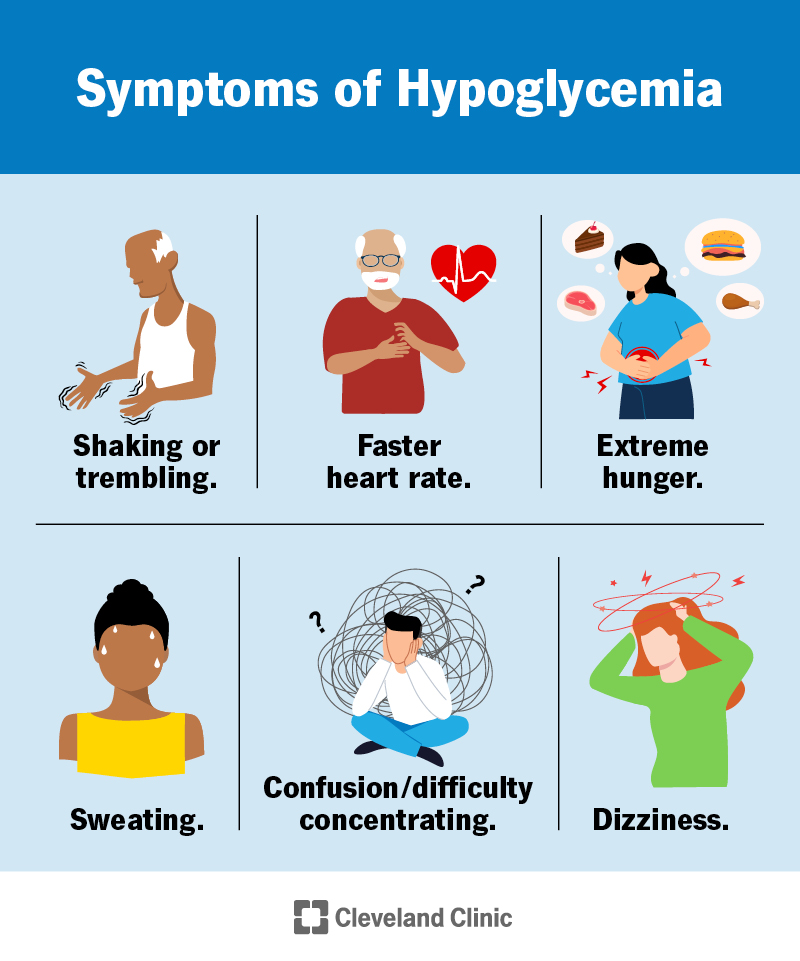
Image content: This image is available to view online.
View image online (https://my.clevelandclinic.org/-/scassets/images/org/health/articles/11647-hypoglycemia-low-blood-sugar)
Symptoms of hypoglycemia often start when your blood sugar is around 70 mg/dL or lower if you have diabetes. If your blood sugar drops quickly, symptoms may begin before it reaches this number. Low blood sugar can happen quickly and can vary from person to person and with each episode.
Many of the early symptoms of low blood sugar happen because your body releases hormones that help raise your blood sugar. These signs are your body’s way of warning you that you need to take action. The signs include:
Advertisement
If your blood glucose is often high, your body can get used to it. Because of that, you may feel symptoms of low blood sugar at higher levels.
Signs of severe hypoglycemia include:
This is life-threatening. Severe hypoglycemia needs immediate treatment with emergency glucagon and/or medical intervention.
You can also have low blood sugar while sleeping (nocturnal hypoglycemia). Symptoms may include restless sleep, sweating through your pajamas or sheets and having nightmares.
Low blood sugar happens for different reasons based on whether you have diabetes or not.
Common situations that can lead to low blood glucose levels include:
If you’re pregnant and have Type 1 diabetes, you’re also more likely to have low blood sugar during the first trimester due to hormone changes.
The two main types of non-diabetes-related hypoglycemia are reactive hypoglycemia and fasting hypoglycemia.
Reactive hypoglycemia (or postprandial hypoglycemia) happens when your blood sugar is low after a meal. It typically happens two to four hours after eating.
Researchers don’t know the exact cause. But they think it happens due to a sudden spike and then a fall in blood sugar after eating certain simple carbohydrates like potatoes, white bread, cake and pastries.
Bariatric surgery can also cause reactive hypoglycemia. This is because sugar can move through your body too quickly, causing your body to release too much insulin.
For most people without diabetes, not eating for a long time (fasting) doesn’t lead to hypoglycemia. This is because your body can keep blood sugar in a healthy range.
But certain conditions and situations can lead to fasting hypoglycemia, including:
Advertisement
If you think you have hypoglycemia, talk to a healthcare provider.
Some people don’t have early symptoms or don’t notice them. This is called hypoglycemia unawareness. It can increase the risk of severe episodes and sudden loss of consciousness.
If you have diabetes, checking your blood glucose level can confirm low blood sugar.
If you don’t have diabetes but have hypoglycemia symptoms, your healthcare provider may check your blood sugar during a supervised fast. You may need other tests, like imaging tests, to look for an underlying cause.
If your provider suspects reactive hypoglycemia, they may recommend a mixed-meal tolerance test (MMTT). During this test, you’ll drink a beverage containing protein, fat and sugar. A provider checks your blood sugar several times over the next few hours to see how your body responds.
You treat mild to moderate hypoglycemia by eating or drinking sugar (carbohydrates).
Healthcare providers often recommend the “15-15 rule” to manage low blood sugar:
Advertisement
Children may need fewer grams of carbs to treat hypoglycemia. Check with your child’s healthcare provider to see what’s right for them.
Severe hypoglycemic episodes require the use of emergency glucagon. Usually, someone else has to give it to you. It comes as an injection or nasal powder. It triggers your liver to release stored glucose, which then raises blood sugar.
If someone you know needs emergency glucagon, follow the instructions on the package. When the person regains consciousness (usually in five to 15 minutes), they may have nausea and vomiting. If they’re lying down, roll them onto their side to prevent choking. If they have slurred speech or are disoriented or unconscious, don’t give them food or liquid. They could choke.
You should call 911 or emergency services right away for help. Even if they have taken glucagon, they still could need emergency services.
Frequent mild to moderate hypoglycemia can affect your daily activities, including work and school. Operating heavy equipment, such as driving a vehicle, while having low blood glucose levels can also be dangerous. You may be more likely to get in an accident.
Prolonged severe hypoglycemia is life-threatening and can lead to:
Advertisement
Frequent low blood sugar episodes can be dangerous if you have diabetes. It may mean your treatment plan needs to be adjusted. Talk with your healthcare provider if you have frequent lows.
Hypoglycemia can make it hard to think clearly and can become dangerous if it happens while you’re sleeping, driving or alone.
Here are some tips to help you stay safe:
It can be difficult to totally prevent low blood sugar when you have diabetes. But your healthcare provider may be able to adjust your diabetes management plan to try to reduce the number of low blood glucose episodes you have.
It’s easiest to do this when you and your healthcare provider understand what causes your blood sugar to drop. Give your healthcare provider as much information as possible about any low blood sugar episodes. Fixing the problem may be as simple as changing the times you take medication, eat and exercise.
Hypoglycemia, or low blood sugar, is quite common in people with diabetes. It’s important to learn your personal warning signs and monitor your blood sugar regularly to try to prevent these episodes. Work with your healthcare provider to adjust your management plan if you have frequent low blood glucose. The more you know, the easier it’ll be to adjust your plan.
If you’re having low blood sugar and don’t have diabetes, you should see a provider. While it’s rare that the underlying cause is serious, it’s possible. It’s better to get checked out sooner rather than later.



Sign up for our Health Essentials emails for expert guidance on nutrition, fitness, sleep, skin care and more.
Learn more about the Health Library and our editorial process.
Cleveland Clinic’s health articles are based on evidence-backed information and review by medical professionals to ensure accuracy, reliability and up-to-date clinical standards.
Cleveland Clinic’s health articles are based on evidence-backed information and review by medical professionals to ensure accuracy, reliability and up-to-date clinical standards.
Whether you’ve been living with diabetes for years or you’re newly diagnosed, you want experts you can trust. Our team at Cleveland Clinic is here to help.
