



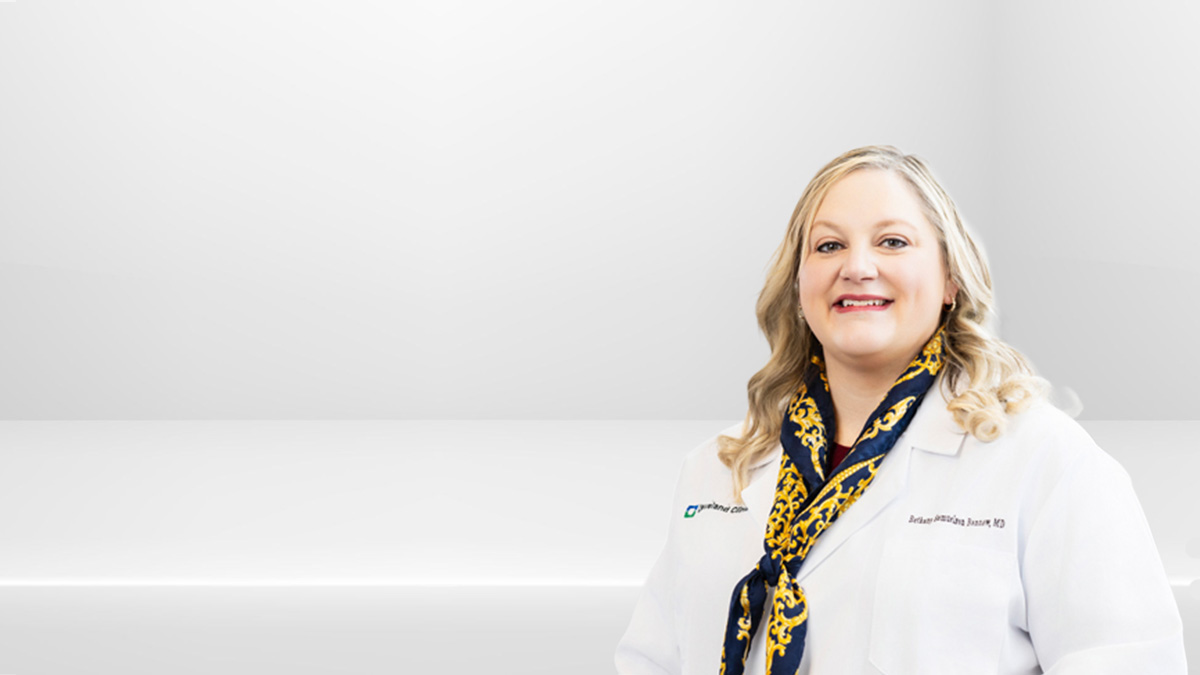
Evolving Management in Classical Hematology
Bethany Samuelson Bannow, MD, Director of Classical Hematology at Cleveland Clinic, joins the Cancer Advances podcast to discuss the evolving field of classical hematology and what it means for managing complex non-malignant blood diseases. Listen as she covers emerging gene therapies, bispecific antibodies, cancer-associated thrombosis, and practical referral guidance for conditions like ITP, TTP, and sickle cell disease.
Advertisement
Cleveland Clinic is a non-profit academic medical center. Advertising on our site helps support our mission. We do not endorse non-Cleveland Clinic products or services. Policy
Recent Episodes
Inhaled KB707 Plus Pembrolizumab in Lung Cancer
Patients with advanced lung cancer often experience disease progression despite treatment with immune checkpoint inhibitors. In this episode…
Improving Diagnosis and Care for Rare Cancers and Blood Diseases
Rare cancers and blood diseases present unique diagnostic and treatment challenges, often requiring specialized expertise and multidisciplin…
CAR T and Bispecific Therapies in AL Amyloidosis
Hematologist and myeloma specialist Shahzad Raza, MD, joins the Cancer Advances podcast to discuss emerging cellular and immune therapies fo…
Video content: This video is available to watch online.
View video online (https://cdnapisec.kaltura.com/p/2207941/sp/220794100/playManifest/entryId/1_k9c8q7yw/flavorId/1_5f3sgelj/format/url/protocol/https/a.mp4)
Transcript
Dale Shepard, MD, PhD:
Cancer Advances, a Cleveland Clinic podcast for medical professionals exploring the latest innovative research and clinical advances in the field of oncology. Thank you for joining us for another episode of Cancer Advances. I'm your host, Dr. Dale Shepard, a Medical Oncologist and Co-Director of the Sarcoma Program at Cleveland Clinic. Today I'm happy to be joined by Dr. Bethany Samuelson Bannow, Director of Classical Hematology here at Cleveland Clinic. She's here today to give us an overview of classical hematology. So, welcome.
Advertisement
Cleveland Clinic is a non-profit academic medical center. Advertising on our site helps support our mission. We do not endorse non-Cleveland Clinic products or services. Policy
Bethany Samuelson Bannow, MD, MCR:
Thanks so much for having me. Happy to be here.
Dale Shepard, MD, PhD:
All right, give us a little bit of an idea of what you do here at Cleveland Clinic.
Bethany Samuelson Bannow, MD, MCR:
Yeah, so I just joined back in October to lead, if I may say so, the best group of classical hematologists in the US and Canada, I would even go so far as to say. So we arrange clinical services, we have a research program. My faculty are involved in medical education and just really trying to grow the program to serve as many patients as possible and be as good of colleagues and collaborators as possible as we can to our colleagues here.
Dale Shepard, MD, PhD:
Perfect. Now, I'm going to jump right into this sort of thing with the name classical hematology and this old term benign hematology. What's involved with this shift?
Bethany Samuelson Bannow, MD, MCR:
So it's still controversial. I will say people do disagree. Historically it was called benign, because we deal with the non-malignant blood diseases. But I think it does a little bit of a disservice to patients to call disease benign when actually there's very complex life-threatening diseases. We use really intensive treatments. Some of our patients need stem cell transplants or cellular therapies or chemotherapy. So it's a really broad range of complex and often highly acute diseases. And so, we really try to get rid of that benign term and call it classical as much as we can.
Advertisement
Dale Shepard, MD, PhD:
Makes good sense. And when you think about some of those specific diseases, what are the ones you see most often?
Bethany Samuelson Bannow, MD, MCR:
I think the ones that we see most often are, we see a lot of cytopenias in our clinic. We see a lot of ITP, for example, that's kind of bread and butter for us. I see a lot of autoimmune hemolytic anemia. That's another very common one. We also see a lot of bleeding and clotting disorders. A lot of patients with thrombosis, underlying thrombophilias, either acquired or inherited bleeding disorders. And now we're doing a better job of recognizing that bleeding disorders include a lot more disease that we can reasonably test for. And so, now we're giving people diagnoses like bleeding disorder of unknown cause, which is satisfying to no one, but actually represents the fact that we believe our patients when they say they bleed now. So that's an improvement. Hemoglobin apathy is sickle cell and thalassemia, other very common diseases within the realm of classical hematology.
Dale Shepard, MD, PhD:
And then how do things vary between clinic and then you're often very busy in the hospital as well?
Bethany Samuelson Bannow, MD, MCR:
Yeah, so we are the ones that get called for the majority of hematologic emergencies with the exception of acute leukemia, which I'm happy to hand over to my colleagues on the leukemia service. But things like TTP, thrombotic thrombocytopenic purpura, or HUS, hemolytic uremic syndrome, those things that people get real scared about at two in the morning, that's what we get called in for. Sickle cell crises, acute chest, things like that are also things that keep us busy. And then we get a lot of questions of, could this be something? Could this be HLH? Could this be ITP? And then we come in and weigh in and say, "Yes or no or do this treatment." A lot of times our answer is, "You've got to stop this medication," and nobody likes that. But unfortunately, medications cause a lot of hematologic side effects, so there you have it. So it's definitely the more acute side of the spectrum compared to what we see in the outpatient side.
Dale Shepard, MD, PhD:
You mentioned sickle cell a couple of times and it seems like all programs kind of handle sickle cell differently, pediatrics versus adult. How do we manage sickle cell here at Cleveland Clinic?
Bethany Samuelson Bannow, MD, MCR:
Cleveland Clinic's sickle cell is primarily located in the pediatric hematology oncology group. So it's important to understand the model of care around some of these lifelong diseases like sickle cell disease and bleeding disorders. So we really like to provide comprehensive care for patients with these disorders. And that means you have a multidisciplinary clinic, you have docs, you have APPs, you have nurses, you have social workers, you have physical therapists. Basically it's just the doctor that changes over the course of the patient's lifetime. They become 18 or 21 or whatever, you see an adult hematologist. So we really like to keep everything else together.
So right now, all those support services, all those wonderful staff who know the patients are in the peds group. What we're doing is working to integrate the adult hematologist into that existing program so we can really provide that lifespan care. Because we're seeing patients with hemoglobinopathies live longer than they used to and that's great. And then when you have sickle cell and you also have heart disease, having an adult doc is a nice thing.
Advertisement
Dale Shepard, MD, PhD:
And that has historically been a little clunky, getting that transition from peds to adult. So it's good that you've kind of incorporated into each. So another area, sometimes a crossover would be clots, thrombosis. We have a vascular medicine service that does some work in that area. We have classical hematology. How do you guys work together? How does one decide where to send someone?
Bethany Samuelson Bannow, MD, MCR:
Yeah, it's a great question. I think honestly, either of us are going to, either group is going to be happy to see any patient with thrombosis. I think here we do have a really superb vascular medicine service that probably does the majority of the DVTs and PEs. They manage HIT, for example, where we often get involved. So we love to be involved with cancer-associated thrombosis just to kind of keep things within the tossing and within our group we can provide that support. Also, when we get called in-patient, it's often like, "Hey, this patient has a clot, but they're also bleeding." And how do you balance those risks and benefits?
Dale Shepard, MD, PhD:
It's important to realize that cancer-associated thrombosis really is a big problem. We've had a lot of work that has been done on a research side here at Cleveland Clinic. Tell me a little bit about the work we've done and where we're going and where we need to go from here.
Advertisement
Bethany Samuelson Bannow, MD, MCR:
It has been a decade plus long journey discovering the differences between cancer-associated thrombosis and sort of regular thrombosis for lack of a better term. So first study that really distinguished between them was the CLOT trial, and that was back in the 2010s, I want to say maybe earlier. And they compared low-molecular-weight heparin to warfarin and found that warfarin was inferior for patients with cancer-associated thrombosis. And so, ever since that study, every time we look at a new treatment, we have to ask, "Does this work for cancer-associated thrombosis?"
And so, when the DOACs came out also kind of in that early 2010s time, the first question was, can we use this for cancer-associated thrombosis? And originally the studies weren't done in patients with CAT, cancer-associated thrombosis. And then in the last couple of decades, a number of studies came out that showed that, yeah, they really are as effective as low-molecular-weight heparin.
There's some caveats, right? They're directly acting oral anticoagulants. So if you have a bleeding lesion in the GI tract, you send the anticoagulant directly to that lesion, you might have some problems. Again, some patients for whom low-molecular-weight heparin is still the thing. But we've really moved into using DOACs much more commonly, much more comfortably in patients with cancer-associated thrombosis. And now the new realm is deciding, who do we treat for the primary prophylaxis? So they've never had a blood clot before, but we want to prevent it and how do we do that?
Advertisement
And of course, we are the home of Dr. Khorana, who was the creator of the Khorana score and has done a tremendous amount of work in that arena trying to, again, identify specific subsets of patients who really benefit. And there's ongoing research into some of the newer therapeutics, maybe anti-11 therapies and things like that to figure out really who best to treat and how best to treat them.
Dale Shepard, MD, PhD:
So when you think about diseases that you see that we're most in need of new treatments, what do you think those are?
Bethany Samuelson Bannow, MD, MCR:
I'm a little bit biased because of my background. First of all, I have to say hemoglobinopathy, so I don't have as much of a background in that, but obviously an area of great need, lifelong diseases, very morbid. But I would also say bleeding disorders. And we made a lot of progress in bleeding disorders in the last many years, but we went decades without changes in treatments for either of these kinds of groups of diseases. We're seeing a lot of new therapies for things like ITP, which is very exciting, even taking targeted therapies over from cancer treatments, seeing immune therapies, things like that. So making good progress in a lot of things. But bleeding disorders, I think, and hemoglobinopathy still have a way to catch up.
Dale Shepard, MD, PhD:
Quite honestly, when you think about, again, traditionally called benign hematology, you don't think about use of things like bispecific antibodies or immune therapies. Tell us a little bit about how those have become incorporated into what you do.
Bethany Samuelson Bannow, MD, MCR:
Probably the most interesting technological achievement in bleeding disorders was this drug called emicizumab, which of course is a treatment for patients with hemophilia A. And it essentially works to replace the factor VIII by bringing factor IX and X together. So it's bispecific antibody and it is very effective. It really does a great job at preventing bleeding. And so, that has been an exciting new treatment. We're also seeing things like stem cell transplant and cellular therapies, gene therapies. We saw a few of those come out in hemophilia. There has not been as much uptake of that maybe as we had expected, but we are seeing more of that in the hemoglobinopathy realm. So sickle cell disease and thalassemia are modifiable with gene treatment and seeing some very exciting outcomes there.
Dale Shepard, MD, PhD:
And I guess out of curiosity, why lower uptake, do you think? Why do think they're not being used as often?
Bethany Samuelson Bannow, MD, MCR:
Well, for me, I think it's the difference between curative or not. So effectively, you can cure or nearly cure a hemoglobinopathy with gene therapy. With hemophilia, we were seeing higher levels, for sure. But when we think about hemophilia, we think about mild, moderate, severe. So severe is somebody who has no factor. Moderate is somebody who has one to 5% of the normal 100% of factor they should have. And then mild is somebody who has between five and 40%. And really our focus historically has been on the severe category, because those are folks who have spontaneous bleeds. But people with mild and moderate disease can still have bleeds. They still need treatment for injuries, surgeries, things like that. And what we've seen with the hemophilia gene therapy to date is it really takes somebody with severe hemophilia and gives them mild to moderate hemophilia. And so, it's not quite curative. And so, it might be perfect for somebody who just really wants to be done with their daily prophylaxis, although now we have options, different options for prophylaxis that aren't as frequent, but yeah, it's not quite the right time for it, I think, unfortunately.
Dale Shepard, MD, PhD:
Yeah, makes sense. Thinking of other things that you might come across, things like transplant or malignancy-associated microangiopathies, what are we doing in those areas at this point?
Bethany Samuelson Bannow, MD, MCR:
I think those are still kind of in early stages of our understanding and treatment of it. Again, we always tell people to stop the drugs. I think the classic transplant-associated TMA that we see, somebody is on tacrolimus, and we've got to say, you've got to switch to something else. That happens all the time. But there are some studies looking at treatments like Eculizumab that we normally use for atypical HUS that can be effective in that setting. At the end of the day, you've got to find what's the underlying cause and see if you can fix that. And honestly, it's kind of the best case scenario if it's a drug, because that's the easiest thing to fix.
Dale Shepard, MD, PhD:
So switching gears a little bit to more traditional things like anemias and things like that. We actually had a previous podcast episode. We talked sort of a virtual team clinic to deal with anemia. Are we still doing that? Is it successful? Tell us a little bit about our ways to sort of offload people coming in for visits.
Bethany Samuelson Bannow, MD, MCR:
That is still ongoing. I think we may be modifying the approach to that in the near future, but the virtual anemia clinic is really a great opportunity to kind of create easier access for patients with a very common thing. I say thing, because technically anemia is a diagnosis, but it's also usually a side effect or a sequela of something else. So autoimmune hemolytic anemia, that's something that we as hematologists specialize in treat in. But things like CKD-associated anemia or iron deficiency anemia, these are things that don't really need as much hematology expertise. And so, we have a great clinic where people can see our APPs virtually, get their labs done, they get IV iron if they need it, they get referred to nephrology if we find out they have CKD. It has been very successful.
Moving forward, we're actually thinking of ways that we can utilize our subspecialized APPs in even deeper areas. And so, what we might be seeing in the future is training internists to deal with some of these anemias in their own kind subspecialized clinics, which I think will be a really great opportunity for us, for the patients, for the internists, and allowing our heme-focused APPs to maybe do a little more diagnostic work.
Dale Shepard, MD, PhD:
And so, I guess sort of related to that, all the thrombocytopenia C in the hospital, all the anemias you see as outpatients, you have an audience here. As a classical hematologist, what are the kind of things you'd like to see has been done before they come to see you? I mean, are there sort of basic things you'd like, "I'd really love if they would've had this first."?
Bethany Samuelson Bannow, MD, MCR:
Absolutely. So for me, reticulocyte count is a big one. And there are a million meaningless indices in a CBC, if I could just replace one of those with a reticulocyte count, it would make my day. So reticulocyte counts help us differentiate between an underproduction anemia, that might be a bone marrow problem, might be a kidney problem, might be inflammation and another problem where you might have bleeding or you're having destruction of red cells. So I think a retic count is very, very helpful.
The other thing I would say is, please make sure to repeat the labs. I love seeing patients, but working a patient in emergently the following day for a count in 93, that was a lab error, not a great use of the patient's time. Probably not a great use of our resource either. We're happy to support, but maybe just repeat the lab if it doesn't make sense. I think that's just fundamental hematologist requests.
Dale Shepard, MD, PhD:
There we go. Good. Good guidance. So a lot of exciting things going on. A lot of diverse diseases. You probably don't have many fellows that rotate through electively to see what classical hematology is all about. So it sounds like there might be good reason for that to change.
Bethany Samuelson Bannow, MD, MCR:
Absolutely. So it is a great time, honestly, to be a classical hematologist. There was a period many decades ago when classical hematologists and oncologists went in at probably similar rates, and then there were all of these new therapies in oncology. Honestly, it was much more financially feasible. And so, there has been a dearth of classical hematologists for decades now, and now we're reaching the point where some of those guys who've been around a long time, they want to retire soon and they should be able to do that.
And so, there is tremendous job security in classical hematology. From the day I graduated fellowship, I could have had a job pretty much anywhere. And that has nothing to do with me, it's just that this area of specialty is needed. And I can also say we are seeing in classical hematology the same kinds of new and exciting life-prolonging therapies in this last decade or so and I think in the coming decades, as we were seeing in the early days of progress in cancer, there's a lot of exciting research opportunities, there's a lot of folks eager to mentor young hematologists. We now have hematology-focused fellowship programs sponsored by the American Society of Hematology. Lots of opportunities, lots of need, lots of interest, and we love working in training folks. And we are a big bunch of nerds, I'm not going to lie, but we are really passionate and we love sharing that enthusiasm.
Dale Shepard, MD, PhD:
So certainly, there's a broad range of diseases that you treat. You guys really are incredible problem solvers. Are there a core group of people who absolutely should see someone at specialized centers? I mean, see someone like yourself rather than try to see, say a community hem-onc doc and kind of sort through their issues?
Bethany Samuelson Bannow, MD, MCR:
So, I would say ideally patients with bleeding disorders and patients with hemoglobinopathies should be cared for in places with comprehensive centers. That doesn't mean that they can't continue to see their local hem-onc and collaborate together, but there's just resources that we have at a center like this that they don't necessarily have elsewhere, right? I would say patients with some of those really acute life-threatening diseases like TTP, atypical HUS, ideally those folks, I think would also get care in a big center as well.
Just we have the experience and the opportunity to use some of these rare treatments that you can't expect a community hem-onc doc to know. I don't know anything about prostate cancer, let alone sarcoma. I can't imagine expecting somebody who has to know all of that to also be able to manage TTP at the drop of the hat. So I think some of the really rare diseases and the diseases that really require comprehensive multidisciplinary care really should be seen at a big center.
Dale Shepard, MD, PhD:
Fantastic. You've been here since October. Great enthusiasm.
Bethany Samuelson Bannow, MD, MCR:
Thank you.
Dale Shepard, MD, PhD:
Really enjoy the ability to work with you and have you help out.
Bethany Samuelson Bannow, MD, MCR:
Likewise. I love being here. It's a great opportunity and great people to work with.
Dale Shepard, MD, PhD:
Excellent. Well, thank you.
Bethany Samuelson Bannow, MD, MCR:
Thank you.
Dale Shepard, MD, PhD:
To make a direct online referral to our Cancer Institute, complete our online cancer patient referral form by visiting clevelandclinic.org/cancerpatientreferrals. You will receive confirmation once the appointment is scheduled.
This concludes this episode of Cancer Advances. For more podcast episodes, visit our website, clevelandclinic.org/canceradvancespodcast. Subscribe on Apple Podcasts, Spotify, or wherever you listen to podcasts.
Thank you for listening. Please join us again soon.
Recent Episodes
Inhaled KB707 Plus Pembrolizumab in Lung Cancer
Patients with advanced lung cancer often experience disease progression despite treatment with immune checkpoint inhibitors. In this episode…
Improving Diagnosis and Care for Rare Cancers and Blood Diseases
Rare cancers and blood diseases present unique diagnostic and treatment challenges, often requiring specialized expertise and multidisciplin…
CAR T and Bispecific Therapies in AL Amyloidosis
Hematologist and myeloma specialist Shahzad Raza, MD, joins the Cancer Advances podcast to discuss emerging cellular and immune therapies fo…
Never miss a moment - subscribe now.
Listen to the Health Essentials Podcast on your favorite streaming platform.
Other Podcasts You May Love
Beyond Leadership
Hosts Jim Pae and Elizabeth Pugel escort you through a network of thought leaders, sharing world-cla…
Beyond the Pages: CCJM Podcast
Beyond the Pages: CCJM Podcast takes the listener more in-depth into Cleveland Clinic Journal of Med…
Butts & Guts
A Cleveland Clinic podcast exploring your digestive and surgical health from end to end. You’ll lear…
Cardiac Consult
A Cleveland Clinic podcast exploring heart, vascular and thoracic topics of interest to healthcare p…