



Innovations Transforming Osteosarcoma Outcomes
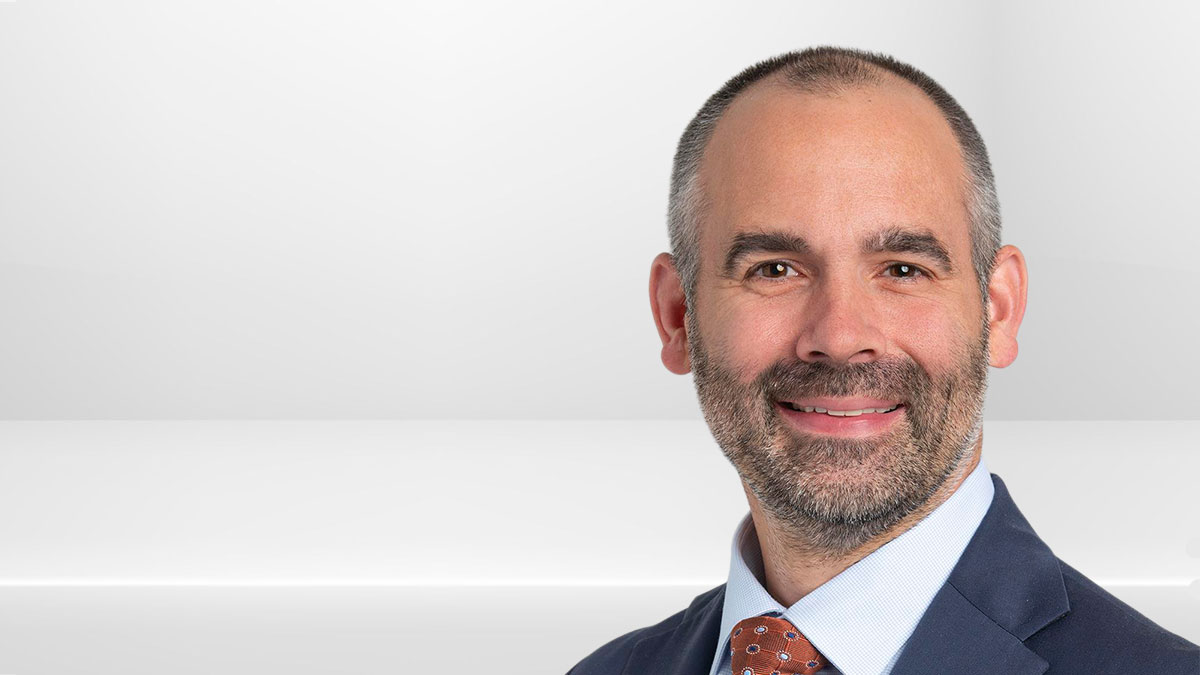
The Cancer Advances Podcast welcomes back Nathan Mesko, MD, Vice Chair of Global Clinical Operations for the Department of Orthopaedic Surgery and Center Director for Musculoskeletal Oncology at Cleveland Clinic to talk about chemotherapy, limb salvage surgery and how 3D printed custom implants are reshaping outcomes in osteosarcoma. Dr. Mesko also shares a remarkable pediatric case whose complex reconstruction highlights the power of multidisciplinary care, surgical innovation and long term functional recovery.
Advertisement
Cleveland Clinic is a non-profit academic medical center. Advertising on our site helps support our mission. We do not endorse non-Cleveland Clinic products or services. Policy
Recent Episodes
Personalizing Pediatric Cancer Care: The Promise of Precision Oncology
As molecular profiling advances, precision oncology is reshaping cancer care for children, adolescents and young adults. In this episode of…
From Evidence to Practice: How NCCN Defines the Standard of Cancer Care
What does it take to establish the standard of care in oncology? Matt Kalaycio, MD, Vice Chair of the Cleveland Clinic Cancer Institute and…
Redefining Resectability in Advanced Rectal Cancer
What happens when a cancer is deemed unresectable? In this episode, Dr. Haniee Chung discusses how multidisciplinary care is expanding treat…
Video content: This video is available to watch online.
View video online (https://cdnapisec.kaltura.com/p/2207941/sp/220794100/playManifest/entryId/1_a68enop8/flavorId/1_5f3sgelj/format/url/protocol/https/a.mp4)
Transcript
Dale Shepard, MD, PhD:
Cancer Advances, a Cleveland Clinic podcast for medical professionals, exploring the latest innovative research and clinical advances in the field of oncology.
Advertisement
Cleveland Clinic is a non-profit academic medical center. Advertising on our site helps support our mission. We do not endorse non-Cleveland Clinic products or services. Policy
Thank you for joining us for another episode of Cancer Advances. I'm your host Dr. Dale Shepard, a Medical Oncologist and Co-Director of the Sarcoma Program at Cleveland Clinic. Today I'm happy to be joined by Dr. Nate Mesko, Vice Chair of Global Clinical Operations for the Department of Orthopaedic Surgery and Center Director for Musculoskeletal Oncology. He was previously a guest on this podcast to discuss treatment of retroperitoneale sarcoma and that episode is still available for you to listen to. He's here today to discuss innovations in the treatment of osteosarcoma.
So welcome back, Nate.
Nathan Mesko, MD:
Dale, thanks for having me.
Dale Shepard, MD, PhD:
Absolutely.
Nathan Mesko, MD:
Glad to be back.
Dale Shepard, MD, PhD:
Sure. Remind me a little bit about what you do here at Cleveland Clinic.
Nathan Mesko, MD:
So I am a surgical oncologist, trained in orthopaedic surgery, to focus on the musculoskeletal system, bones and muscles. The rarity is, I would say the less common scenario is taking care of cancers that originate in the musculoskeletal system. More commonly are taking care of cancers that originate a distant location and then travel to the musculoskeletal system. On top of that, do a lot of collaboration with our orthopaedic department around the different areas that the Cleveland Clinic has nesting spots in in the US and in Europe.
Advertisement
Dale Shepard, MD, PhD:
Very good. So today, we're going to talk about osteosarcoma, talk about some innovations related to surgery for osteosarcoma. To start, lots of people listening in, different backgrounds. Give us an idea, osteosarcoma, what is it, how common is it? Give us a little background.
Nathan Mesko, MD:
Sure. When we think about sarcomas in general, they are just a really rare entity. When you hear the word cancer, two-thirds of cancers in the United States are going to be the carcinomas, which are the cancers that originate in the organs, the glands. Liver cancer, kidney cancer, lung cancer, et cetera. Another third are going to be the blood cancers, which again, are very common. It's hard to find somebody on the street that hasn't heard of somebody that has been affected with leukemia, lymphoma. But only 1% of those cancers in adults are going to be the sarcoma, which is the third family.
Really rare, and just to put that in perspective. If there's maybe half-a-million or so new prostate cancer diagnoses every year in the United States, there's no more than 15,000 sarcoma cancers diagnosed and that is all ages from one-day-old to 100-years-old. And there's not a ton of centers that see a high volume of sarcomas and in the United States of America, a high volume center may see 2 to 300 sarcomas in a year. So again, maintaining that expertise with a team that is really passionate about a rare cancer, the zebra so to speak, is an important thing and it's one of the reasons why I love being here at the Clinic.
Dale Shepard, MD, PhD:
When you think about osteosarcoma, where do they primarily occur?
Nathan Mesko, MD:
So osteosarcomas, generally in my world, we'll find the majority of them starting either around the knee, in the bottom part of the thighbone or the top part of the shinbone. Or we'll find them in the shoulder. Those would be the top three. I think the ones that become even more problematic, just from a technical and complexity standpoint, are those that are in the spine or the pelvis. They become particularly challenging because of all the really high stakes anatomy in that area. But also, probably even more of a big problem is the fact that there's not a lot covering the arm, the shoulder area, but in the pelvis, a tumor can grow for a long time before it's actually noticed. So often times, these osteosarcomas will be very large in size before they're actually identified. Sometimes they don't get symptoms until later in the game.
Dale Shepard, MD, PhD:
Tell me about the multi-disciplinary nature of taking care of these.
Nathan Mesko, MD:
I think a rare disease, it's hard to stand up and be a lone cowboy. There are so many different aspects of cancer in general. Obviously, I bring the surgical expertise along with my surgical oncology partners, but the medications, there is huge breakthroughs. It used to be chemotherapy was the mainstay and chemotherapy is still is the mainstay, it still has improved survival just an incredible amount since the 1980s. But now, we're coming out with things like tyrosine kinase inhibitors and oncolytic viruses that are being studied, CAR T. Those are things that you need a medical oncologist to really understand.
Advertisement
From a radiation standpoint, we typically think of bone sarcomas as a general family of not being something that we commonly employ radiation to. But we're challenging that now, looking at ways that we can definitively treat metastatic sites and give people improved survival, better quality of life and function. We're thinking outside the box with concepts and translating from other types of cancers, such as how do we rev up the system with immunotherapy and make that synergistic with radiation? How do we do things like radium with osteosarcoma? Which has found its home in prostate cancer. And how do we take these really difficult scenarios where it's hard to win and give people hope?
Also, really important is the understanding of the different anatomies, so where osteosarcoma that we just talked about. Every year, we'll see five to 10 of these bone sarcomas in the chest and having a thoracic surgeon that really takes this on and says, "I want to be a part of the team." Or having a big defect that a plastic surgeon says, "Bring me this challenge." No hole is big enough for me to fill is a really, really important thing. So those are just examples of how a multidisciplinary team not only makes it fun to work, but honestly the outcomes are going to be better.
Advertisement
Dale Shepard, MD, PhD:
Talking about improvement in outcomes, tell us a little bit about how surgery has changed over time.
Nathan Mesko, MD:
Taking just a historic look back, in the 1980s and before, almost every single individual had an amputation. You want to talk about how chemotherapy changed the game, in the '80s we started giving chemotherapy to patients and instead of one out of every five patients being alive pre-chemotherapy regardless of what surgery did, even taking and removing a whole limb, really we flipped that upside down where 60, 70 percent of people would survive. So we proved that the secret sauce was chemotherapy.
What is also allowed us to do is it allowed us to stop having to be so aggressive with our operations. Yeah, the number one principle as a surgical oncologist is you got to get the cancer out. And with a bone sarcoma, you have to get clean margins. You have to remove fresh, healthy tissue around the tumor to assure yourselves it's out. As we've advanced, we can start not only cheating margins and getting closer, and closer and closer as we understand the principles of chemotherapy and tumor necrosis, and how that affects the risk of local recurrence. We can save blood vessels and nerves that we may not have otherwise saved and preserved function in that leg and balanced that oncologic and functional principle.
Advertisement
But we're also able to reconstruct things that we never were able to and I would probably draw attention to something like the pelvis. You get an osteosarcoma in the pelvis around the him and years ago, you would either leave them without a hip joint. Maybe you would borrow a cadaveric bone that ultimately would run as some kind of complication and it would be very hard to reconstruct. And nowadays, technology has evolved to the fact where we can create precise margins, geometric margins with custom patient-specific cutting guides, navigation. We can build with 3D printers now, implants that fit that exact congruency that we just created with those patient-specific cutting guides. Get a perfect fit that reliably allows the bone to heal and gives us the ability to reconstruct anatomy where we can keep the limb lengths the same, give patients really high function. It's essentially like doing a hip replacement, as an example, except in a way that nobody would have ever imagined 10, 12 years ago.
Dale Shepard, MD, PhD:
So a lot of innovation, a lot of things that are changing. But I don't hear this often, so just remind me. What was the secret sauce?
Nathan Mesko, MD:
Ha, ha, Dale. Chemotherapy and the medical oncologist.
Dale Shepard, MD, PhD:
Okay.
Nathan Mesko, MD:
The medical oncologist.
Dale Shepard, MD, PhD:
Okay, I just want to make sure I heard that right. So when we think about innovation, let's talk about a pediatric case.
Nathan Mesko, MD:
Yeah.
Dale Shepard, MD, PhD:
So particularly a pediatric case that you've discussed before, that's been out there before about how you took an innovation approach to reconstruct.
Nathan Mesko, MD:
Yeah.
Dale Shepard, MD, PhD:
Give us a little idea of how the patient presented. What made you think that this is something that might be different? How am I going to make this different?
Nathan Mesko, MD:
Sure. So I wish that cancer asked us when and where it would show up. It tends to pick some of the more difficult locations, often times. A particular case I think about is a case of a boy named Miles, five-years-old. He was in the hospital, he was admitted because his arm was hurting. He had a big mass over his shoulder. And I met the family in the room and obviously, when you walk in and talk to family members, it's like you could drop a paperclip in the room and you can hear it plunk off the floor because everybody's on pins-and-needles just waiting to hear what the doctor has to say. He already understood that the bone on the X-ray looked a little funny and the MRI showed something that shouldn't be there. And it was an osteosarcoma of his shoulder, a big mass about the size of a softball.
Routinely in an adult, you would walk in the room and you would say, "Yeah. No, we can remove this. We can do a fancy type of a shoulder replacement on you. You're functional, that should be pretty darn good. Here's what to expect." And we'll work with the medical oncologist as to the right timing. The trick is, in a five-year-old, you're so small, you just haven't hit your growth spurt yet, that there really is nothing that I can just pull out of a package and say, "I'm going to rebuild your arm." So then you have a moment where you have to talk to mom and dad and say, "Well, the options are we can be really creative to a point where you might think I'm crazy. Or we can remove your five-year-old's arm. The number one thing is I have to get this cancer out of him. If we don't, this is life-threatening. If we do, we give him a chance at a cure."
So obviously, nobody wants to talk about the word amputation and so you bring up these ideas. And I got to imagine, over the years that I've had some parents go home and think that I have three heads when I talk to them. In Miles' case, we said, "There are some expendable bones in your body. I would like to borrow a bone from your leg called the fibula bone." You don't need it. The main bone in your lower leg is called your tibia, that's your shinbone, but there's a small bone on the outside part of your leg. "I'd like to borrow that. I'd like to actually have a plastic surgeon who is adept and going into multi-disciplinary team who can actually find the tiny, little blood vessels, remove them on top of the bone, and then plug them in under a microscope to the main blood supply of the arm."
So we basically turned a leg bone into an arm bone, recreate the shoulder joint. But the beauty of something like that is twofold. One, now I have a solution to actually give this kid an arm, and a hand and an elbow that he can use. But two, if it works, the growth plate actually still continues to move. And that's one of the things we have to think about in kids is they're still growing. Adults are done growing, so I don't have to worry about how long this arm should be in 5 years or in 10 years. But in Miles, I had to. He had 10 years-plus of growth left and being able to borrow a bone that still gives me some of that growth was one of those ideas.
Certainly, it's been done before in the world, but I've got to imagine, that surgery is only done several times a year probably on planet Earth.
Dale Shepard, MD, PhD:
Yeah, that's crazy. And then you go through that, and then what's your reaction when the arm breaks?
Nathan Mesko, MD:
So I think the most challenging thing when you're taking care of kids is actually pretending that they're going to listen to you. So obviously, you've gone through the surgery. That surgery with Miles took 19 hours. That was a long day and well into the night, with surgeons taking potty breaks and snack breaks, and working around the clock to get it done. And obviously, you're doing everything you can to protect Miles and you want to make him a bubble boy for three months while he's trying to heal. And I remember getting a call from his mom saying, "I have to tell you something. I think Miles broke his arm."
A lot of emotions go through your head. But the story of how Miles broke his arm is one of those you just can't stop but laugh. Him and his cousin decided to put inner tubes around themselves and do an inner tube Sumo wrestling match where they were bouncing off one another. And obviously, that didn't end well and Miles landed on his freshly operated arm and broke his arm. Broke his leg, I guess, I would have to say.
Dale Shepard, MD, PhD:
Correct. Yes.
Nathan Mesko, MD:
Given the fact that his leg bone was in his arm.
Dale Shepard, MD, PhD:
Correct.
Nathan Mesko, MD:
But everything happens for a reason and looking back at that, it's honestly probably one of the best things that could ever have happened to him. And the reason is, is when that arm broke, the blood supply, the plastic surgeons did such a great job, that the blood supply took, the bone continued to heal, the bone continued to grow. And when you break a bone, your body actually revs up in order to heal. And what happened is it took this tiny, little leg bone and it actually turned it into a much thicker, more robust bone that looked exactly like his opposite side over the course of about six months or so. So it really was like pouring gasoline on the healing fire, so to speak. Which, in a lot of senses, I'm not sure if he hadn't broken his arm, what this arm would have looked like from a functional standpoint.
Dale Shepard, MD, PhD:
You talked about the difference between adults and children. You talked about building parts with 3D printing, you can do that with adults, but you just can't do that with kids because you don't have the growth plate. Interesting.
Nathan Mesko, MD:
Yeah. Not only that, but it's funny. One of the things that, if I could show the X-ray of what Miles' arm looked like when I did this surgery, I took a plate and screws that you would put on the big toe of an adult. And I put it to hold the bone in place and it looked like a huge plate on this kid. And now I go back and look, he's 14 now, Miles just hit his close to 10-year anniversary, and this thing looks like a tiny, little paperclip on his bone. It puts into perspectives kids. So even if you made a custom implant, the rest of your body would grow around it and it would look almost comical.
Dale Shepard, MD, PhD:
Yeah. So what kind of functional outcome? Active kid, right?
Nathan Mesko, MD:
Active kid. There are things that you just replay with the stories and the journeys you take with patients. And I remember telling his parents, "The number one thing is I want to save your kid's life, or be part of the team that saves his life and I have to get this cancer out. Number two is I will be happy in five years if we haven't run into problems and if he still has an arm that he can like feed himself and wash his hair with shampoo." I had never in a million years had dreamed where Miles is today.
On February 5 th of 2026, Miles was given the Courage Award, which is commissioned by the Greater Cleveland Sports, where they basically give out awards to the male and female college athlete of the year, male and female professional athletes of the year, male and female high school athletes of the year. But the entire night culminates with the Courage Award, which is really a story of an individual, usually a child, that has overcome adversity. Miles has won that.
Miles started for his AAU basketball team and he has taught himself to be a lefty even though we reconstructed his right arm. He can still shoot to a point where you watch him play basketball and you can't tell which arm he actually uses. He now starts on his high school basketball team. And I remember the last time I saw him in the office last fall, I made him drop down and give me 10 pushups. I took a video of it. It was all me being proud of what he's become, but at the same time just in awe of what the human body is able to adapt to, and how it can take a really, really awful situation and turn this into a point where he's now a spokesperson for osteosarcoma.
Dale Shepard, MD, PhD:
As you think about upcoming innovations, either surgery or how we do multidisciplinary care, other modalities, what excites you most?
Nathan Mesko, MD:
So I think a couple things here. Number one is where we're going with technology. As an orthopaedic surgeon, I do some other surgeries besides cancer surgery. One of those are total joints. The world with virtual reality, the world with robotics, it has me salivating, but one of the hardest things is understanding where our margins are going to be. Being able to take an MRI that I just got last week and being able to see the microscopic tumor cells. Being able to plan it to a point where I don't even have to worry on my own human error, but I can create perfect cuts that's exactly where I intended to plan. We're pretty good at that. The more seasoned you get, we're pretty darn good at that, but we still have positive margins and we still have times in surgery where we wish we could do it over because we didn't quite get the whole cancer out.
And being able to change the game of taking your plan and 100% assurance that you're going to reproduce that plan each time I think has the potential to drive margins to a point where a positive margin, unless it's a major nerve or a blood vessel that you're intentionally trying to save, probably can go away. I think the ability to even spare major anatomic structures will go away. Virtual reality right now, we're starting to play with it in bones because bones are fixed objects, but the muscles move during surgery. If you're operating in the belly, the intestines move while you're doing surgery and so it's really hard. But if I can overlay it and be able to play almost like a video game and see exactly where that tumor, where that edema field is. In seven years, we're going to have the ability to augment that kind of surgery in all places. Face, belly, extremity, chest wall, et cetera.
I also think how can we use artificial intelligence? I think another really cool thing is that I see on the horizon of osteosarcoma, and yes, I'm going to toot your horn again as a medical oncologist. We know that chemotherapy is what saves lives. We know that necrosis of the tumor is something that is really important to predicting how somebody's going to live or die from this cancer. In the surgical world, there have been studies to show that necrosis is actually really important to whether or not the cancer comes back in the surgical field. I can actually cheat on my margins and get closer, and closer and closer to the tumor if I know there's more necrosis. But the problem right now is that it's all after the fact. I have to cut the tumor out and then we look at the necrosis in everything. It doesn't help me plan my surgery.
But what if you could take something like a PET scan or an MRI and plug it into some kind of a virtual augmented or artificial intelligence where we're augmenting our decision making? Where it actually can say with a high degree of certainty, "Based on this MRI, you have X amount of necrosis." It really lets me go in with a much more confident understanding of this is the biology that I'm dealing with going into the operating room. Again, how do we use the information ahead of time? Instead of an osteosarcoma, so much of it is after the fact that we make our decisions. We changed our chemotherapy after I cut out the tumor, et cetera.
I think it really challenges the traditional comfort zone that we're in of give three cycles of chemotherapy, do surgery, give three cycles of chemotherapy afterward. And says maybe there are some patients we should be giving all the chemotherapy up front to really get that necrosis down. Maybe there are some patients who, after one cycle, we should just cut bait and get this tumor out because it continues to grow. There's a high prediction that this is not going to respond well and we just need to get the cancer out. I think the sky is our limit when it comes to what technology can enable us to do.
Dale Shepard, MD, PhD:
Fascinating area in terms of ways we can make progress, very innovative patient case there. I appreciate you being around to share your insights.
Nathan Mesko, MD:
Yeah. No, it's beautiful to have people to share those journeys with. And again, I can't emphasize enough, it wasn't myself, it was a plastic surgeon, Graham Schwartz. It was a medical oncologist, Pete Anderson. It was child life services team. It was an entire group that made that happen. And Miles is really the subject of attention, but it doesn't happen without a team. There is no I in team.
Dale Shepard, MD, PhD:
Thanks for being with us.
Nathan Mesko, MD:
I really appreciate it. Thanks for the time.
Dale Shepard, MD, PhD:
To make a direct online referral to our Cancer Institute, complete our online cancer patient referral form by visiting clevelandclinic.org/cancerpatientreferrals. You will receive confirmation once the appointment is scheduled.
This concludes this episode of Cancer Advances. For more podcast episodes, visit our website, clevelandclinic.org/canceradvancespodcast. Subscribe on Apple Podcasts, Spotify, or wherever you listen to podcasts.
Thank you for listening. Please join us again soon.
Recent Episodes
Personalizing Pediatric Cancer Care: The Promise of Precision Oncology
As molecular profiling advances, precision oncology is reshaping cancer care for children, adolescents and young adults. In this episode of…
From Evidence to Practice: How NCCN Defines the Standard of Cancer Care
What does it take to establish the standard of care in oncology? Matt Kalaycio, MD, Vice Chair of the Cleveland Clinic Cancer Institute and…
Redefining Resectability in Advanced Rectal Cancer
What happens when a cancer is deemed unresectable? In this episode, Dr. Haniee Chung discusses how multidisciplinary care is expanding treat…
Never miss a moment - subscribe now.
Listen to the Health Essentials Podcast on your favorite streaming platform.
Other Podcasts You May Love
Beyond Leadership
Hosts Jim Pae and Elizabeth Pugel escort you through a network of thought leaders, sharing world-cla…

Beyond the Pages: CCJM Podcast
Beyond the Pages: CCJM Podcast takes the listener more in-depth into Cleveland Clinic Journal of Med…
Butts & Guts
A Cleveland Clinic podcast exploring your digestive and surgical health from end to end. You’ll lear…
Cardiac Consult
A Cleveland Clinic podcast exploring heart, vascular and thoracic topics of interest to healthcare p…