Conjunctivitis (pink eye) is inflammation in your eyes. It happens when the membrane that covers the white part of your eye is irritated. Viral and bacterial infections are the most common causes. You may not need treatment. But visit a healthcare provider if you have symptoms that are getting worse after a few days.
Advertisement
Cleveland Clinic is a non-profit academic medical center. Advertising on our site helps support our mission. We do not endorse non-Cleveland Clinic products or services. Policy
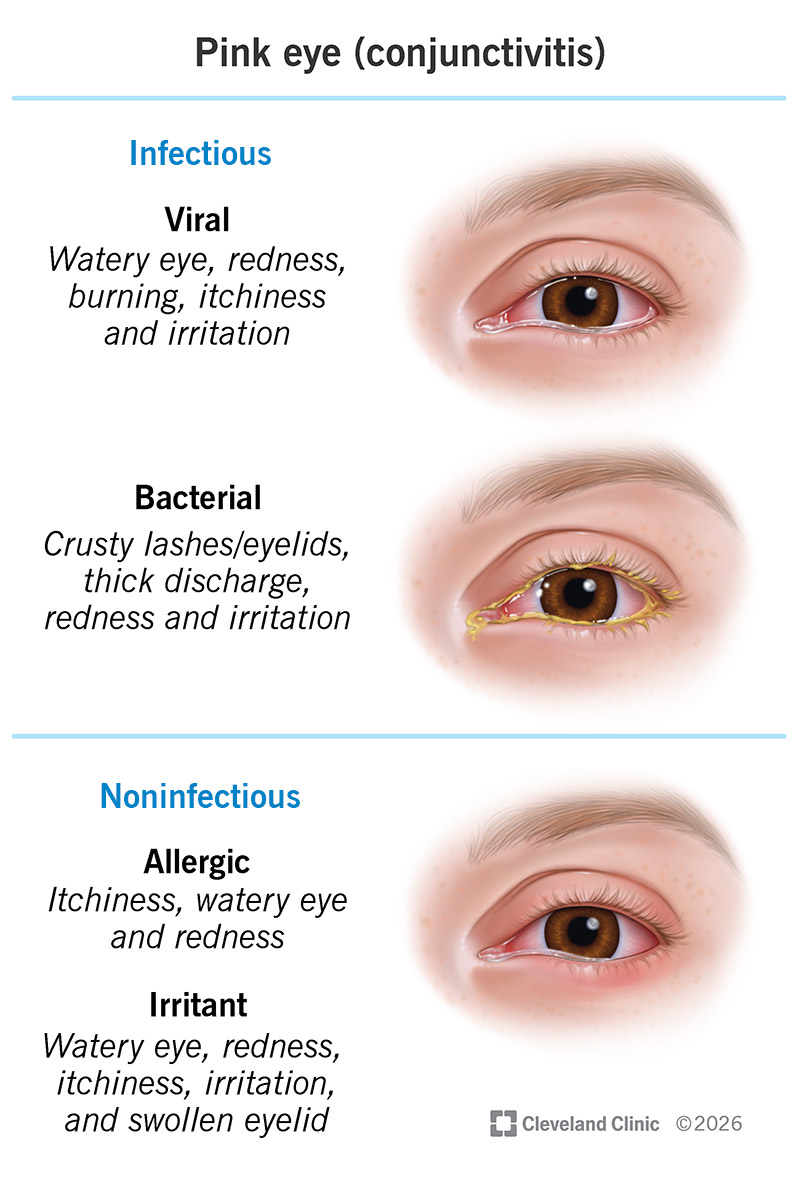
Image content: This image is available to view online.
View image online (https://my.clevelandclinic.org/-/scassets/Images/org/health/articles/pink-eye-conjunctivitis-2)
Pink eye is inflammation in the conjunctiva in your eye. The medical name for it is conjunctivitis. The conjunctiva is the clear membrane that covers the white part of your eye and lines the inside of your eyelid.
Advertisement
Cleveland Clinic is a non-profit academic medical center. Advertising on our site helps support our mission. We do not endorse non-Cleveland Clinic products or services. Policy
Pink eye is extremely common. It can affect one eye or both at the same time. It can be short-term (acute) or long-term (chronic). Acute pink eye lasts for less than four weeks. Chronic pink eye lasts for more than four weeks.
Just like it sounds, pink eye can make the white part of your eye look pink or reddish. It can also make your eyelids look puffy or droopy. You may notice discharge coming from your eyes.
Pink eye caused by an infection can easily spread. You can accidentally pass it to other people or spread it from one eye to the other.
The most common conjunctivitis symptoms include:
Pink eye can share symptoms with lots of other eye conditions. Visit an eye doctor if you notice any changes in your eyes, especially if they hurt or you notice discharge. If you wear contacts, take them out and stop wearing them until you see an eye doctor.
Healthcare providers usually divide conjunctivitis into two categories — infectious and noninfectious.
Advertisement
Infectious pink eye is when an infection causes inflammation in the conjunctiva. Any type of infection can cause pink eye, including:
Noninfectious pink eye is when something other than an infection causes inflammation in the conjunctiva. This is pink eye that doesn’t spread to you from other people, animals or contaminated objects. Examples include:
It’s rare for conjunctivitis to cause permanent eye damage or vision loss. But other, more serious eye conditions can look like pink eye. See an eye doctor if your symptoms get worse after a few days or if you have severe eye pain, light sensitivity or changes in your vision. Prompt treatment is the best way to help prevent complications.
A healthcare provider will diagnose conjunctivitis with an eye exam. They’ll examine your eyes and ask about any symptoms you’ve had. Tell your provider when you first noticed symptoms and if they’ve changed or gotten worse.
Your provider may also test for infections. They’ll use a soft-tipped swab to collect some of the fluid oozing from your eye for lab testing. They’ll use the results to guide your treatment.
Most of the time, you can treat pink eye symptoms at home until they get better. Your healthcare provider will suggest ways to manage symptoms, including:
Advertisement
Your provider might give you medications to treat a specific cause, including:
Visit a healthcare provider if you think you have pink eye and the symptoms keep getting worse after a few days.
See a provider right away if you experience:
How long conjunctivitis lasts depends on what caused it. Most viral infections typically last five to seven days, but some last three to four weeks. Bacterial infections usually last around 10 days. Allergy-related pink eye lasts as long you’re around the allergen that’s irritating your eyes.
The outlook for pink eye is good, especially with treatment. Milder cases often go away on their own.
Call your provider if it seems like treatments aren’t helping. They may be able to adjust your medications.
You may not always be able to prevent conjunctivitis. But following these tips can lower your risk:
Advertisement
Pink eye is an extremely common eye condition that’s usually easy to manage — and, thanks to the name, it’s easy to spot. But always see a healthcare provider if you have new or worsening symptoms in your eyes. Even if conjunctivitis is simple to treat, it’s still important to get a correct diagnosis.
If you have pink eye from an infection, make sure you’re doing everything you can to prevent it from spreading. Wash your hands often, try not to touch your face and make sure you’re not sharing any personal care items or linens with other people.
Advertisement



Sign up for our Health Essentials emails for expert guidance on nutrition, fitness, sleep, skin care and more.
Learn more about the Health Library and our editorial process.
Cleveland Clinic’s health articles are based on evidence-backed information and review by medical professionals to ensure accuracy, reliability and up-to-date clinical standards.
Cleveland Clinic’s health articles are based on evidence-backed information and review by medical professionals to ensure accuracy, reliability and up-to-date clinical standards.
Need care fast? Cleveland Clinic’s Express Care and Urgent Care locations treat everything from sprains to sinus infections — no appointment needed.