



Muscular dystrophy includes over 30 genetic disorders that weaken muscles over time. It can affect movement, breathing and heart function. While there isn’t currently a cure, treatments like therapy, medications and mobility support may help maintain daily functioning.
Advertisement
Cleveland Clinic is a non-profit academic medical center. Advertising on our site helps support our mission. We do not endorse non-Cleveland Clinic products or services. Policy
Muscular dystrophy is a group of genetic conditions that causes your muscles to weaken over time. It happens because gene changes affect proteins that your muscles need to work and stay strong.
Advertisement
Cleveland Clinic is a non-profit academic medical center. Advertising on our site helps support our mission. We do not endorse non-Cleveland Clinic products or services. Policy
This condition can affect your movement and strength. Some types can also affect breathing and heart function. How quickly symptoms progress varies based on the type.
This is a relatively rare condition without a cure. But therapy and medications may help you manage symptoms and support daily life.
There are more than 30 types of muscular dystrophy. Some of the more common ones include:
Advertisement
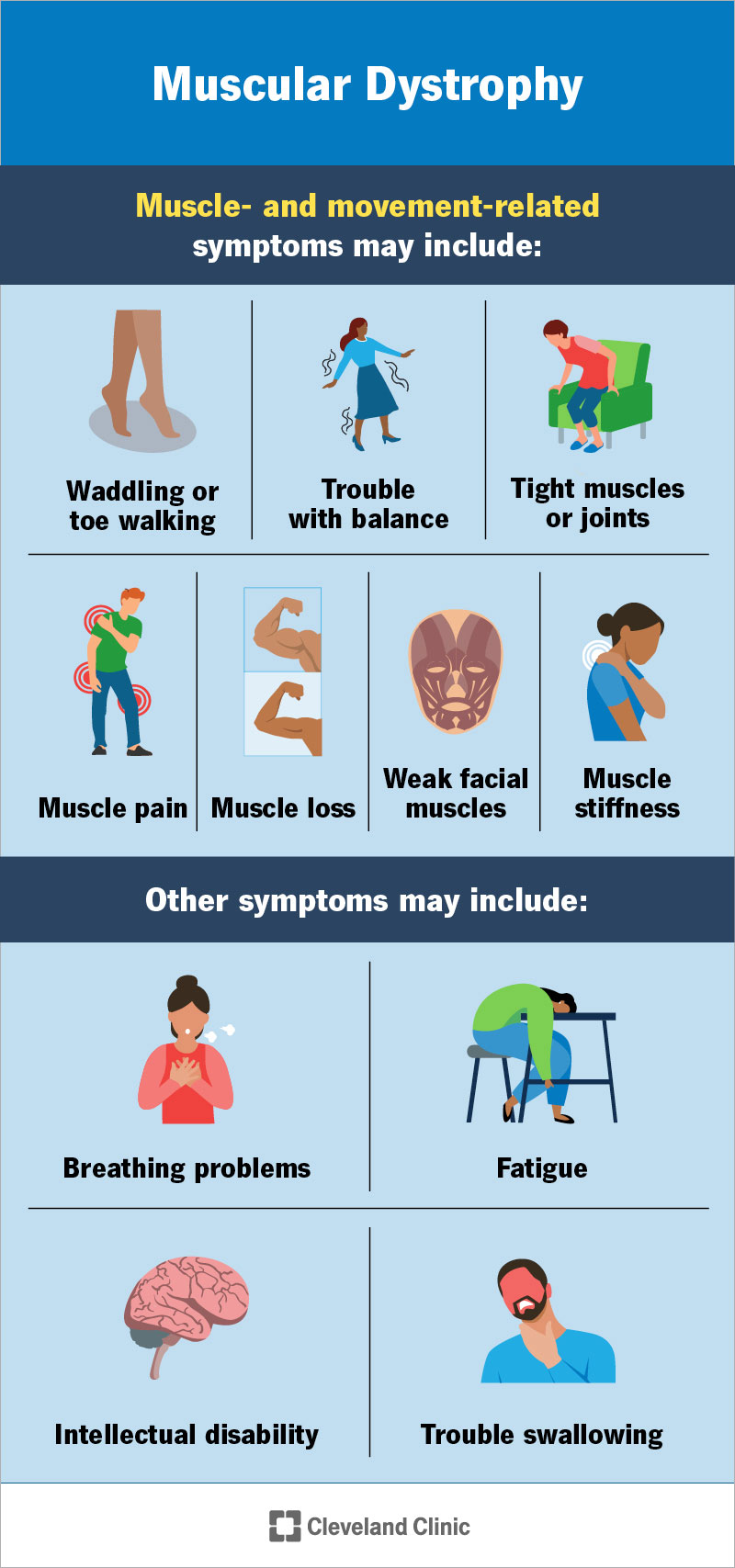
Image content: This image is available to view online.
View image online (https://my.clevelandclinic.org/-/scassets/images/org/health/articles/muscular-dystrophy)
The main symptom is muscle weakness that gets worse over time. Other symptoms can vary depending on the type you have. Each type can affect different muscles and parts of your body.
Muscle- and movement-related symptoms may include:
Other symptoms may include:
Some types cause mild symptoms that progress slowly. Other types lead to faster muscle weakness and more physical disability.
The first signs often appear in childhood, especially in types like Duchenne muscular dystrophy. Parents often notice changes before a provider does.
In young children, early signs may include:
In milder or later-onset types, early signs may be less obvious. They could include:
If you notice these signs, especially muscle weakness that doesn’t improve, see a healthcare provider for an evaluation.
Changes in genes that are important for keeping muscles healthy and strong cause muscular dystrophy.
When these genes don’t work as they should, your body makes little or none of the needed proteins. Without enough protein, muscle cells damage more easily. Over time, muscles weaken, shrink and lose strength.
This condition can run in biological families, depending on the gene involved:
In rare cases, muscular dystrophy can happen randomly, without a history of a gene change in your family history.
Risk factors are mostly genetic. Having a family history of the condition or inheriting a gene change that affects your muscles raises the risk.
Advertisement
Some types affect males more often because the changed gene is on the X chromosome. Males have only one X chromosome, so if it carries the gene change, they’re more likely to develop symptoms.
Muscular dystrophy may affect more than your muscles over time. Possible complications include:
To diagnose muscular dystrophy, a healthcare provider starts with a medical history, physical exam and neurological exam. They’ll ask about symptoms like walking issues, frequent falls or trouble climbing stairs. They’ll also ask about your known biological family history.
Advertisement
If they suspect the condition, the next steps may include:
An electromyography (EMG), heart tests (EKG/ECG) or breathing tests may also check how your muscles, heart and lungs are working.
There’s no cure for muscular dystrophy. But treatment may help slow muscle weakness and manage symptoms.
Common treatments vary by type and could include:
Advertisement
Some newer genetic treatments are available for certain types. Your provider will let you know if these options are a good fit for you.
Therapies play an important role in daily care and long-term function. Your provider might recommend:
Muscular dystrophy is a lifelong condition. Muscle weakness slowly worsens over time. How it changes depends on the type and how it affects your body.
In your day-to-day life and activities, weakness may make it harder to move around and keep up your energy. You may have trouble with tasks like walking long distances, climbing stairs, lifting objects or getting up from the floor. You might need mobility aids like braces or a wheelchair. And you may need regular check-ups to monitor your heart and breathing, as some types affect these parts of your body, too.
Living with muscular dystrophy may mean changing how you do daily tasks, using devices for support and planning ahead. With the right care team and therapies, you can continue to do the things that are meaningful to you with some modification.
Life expectancy varies depending on the type and the level of heart and lung involvement. For example:
Every person’s experience is different. And advances in medical care continue to improve survival for many people with this condition. If you have questions about your life expectancy, talk to your healthcare provider.
There’s no way to prevent this condition because a genetic change causes it. But some steps might help you understand your risk and allow for earlier care:
Muscular dystrophy can bring a lot of questions, especially when you or someone you love starts showing signs. It’s a condition that changes over time. But knowing what to expect and having the right care can help you stay one step ahead.
There’s no cure yet, but there are many ways to support your strength and movement. Even when symptoms change, it’s still possible to find new routines, make meaningful connections and stay engaged in the things that matter most to you.



Sign up for our Health Essentials emails for expert guidance on nutrition, fitness, sleep, skin care and more.
Learn more about the Health Library and our editorial process.
Cleveland Clinic’s health articles are based on evidence-backed information and review by medical professionals to ensure accuracy, reliability and up-to-date clinical standards.
Cleveland Clinic’s health articles are based on evidence-backed information and review by medical professionals to ensure accuracy, reliability and up-to-date clinical standards.
A muscular dystrophy diagnosis can leave you with a lot of questions. Cleveland Clinic’s caring neurology providers are here to help you take the next step.
