Sudden cardiac death is a sudden, unexpected death caused by loss of heart
function (sudden cardiac arrest). It is the largest cause of natural death in
the U.S., causing about 325,000 adult deaths in the United States each year. SCD
is responsible for half of all heart disease deaths.
SCD occurs most frequently in adults in their mid-30s to mid-40s, and affects
men twice as often as it does women. SCD is rare in children, affecting only 1
to 2 per 100,000 children each year.
How is sudden cardiac arrest different from a heart attack?
Sudden cardiac arrest is not a heart attack (myocardial infarction). Heart
attacks occur when there is a blockage in one or more of the arteries to the
heart, preventing the heart from receiving enough oxygen-rich blood. If the
oxygen in the blood cannot reach the heart muscle, the heart becomes damaged.
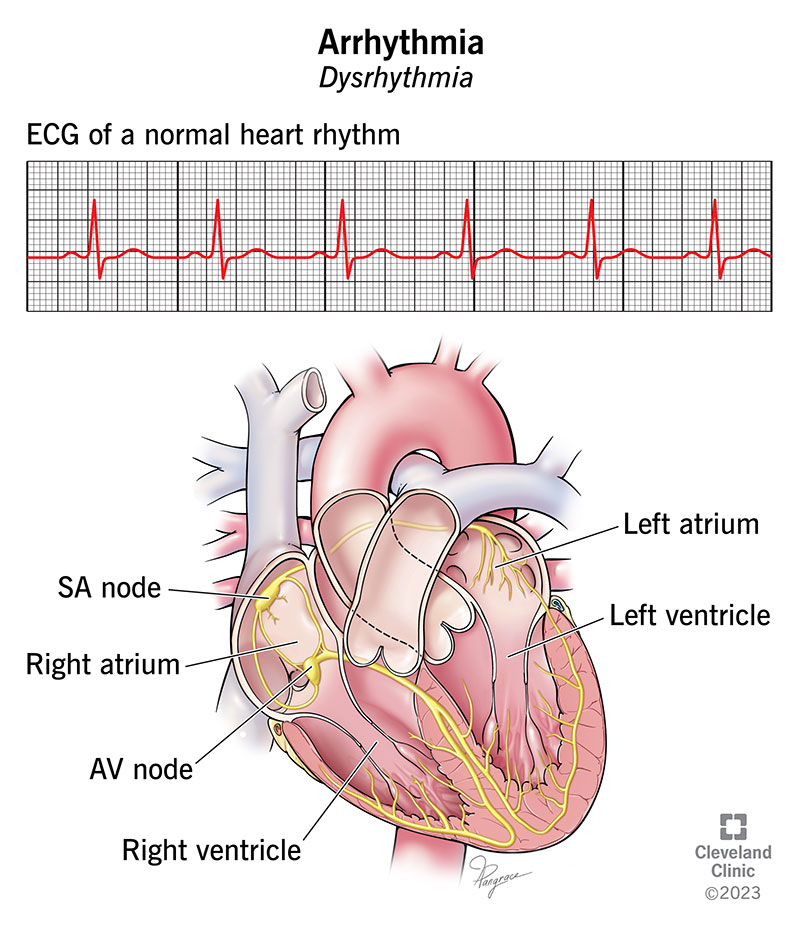
In contrast, sudden cardiac arrest occurs when the electrical system to the
heart malfunctions and suddenly becomes very irregular. The heart beats
dangerously fast. The ventricles may flutter or quiver (ventricular
fibrillation), and blood is not delivered to the body. In the first few minutes,
the greatest concern is that blood flow to the brain will be reduced so
drastically that a person will lose consciousness. Death follows unless
emergency treatment is begun immediately.
Emergency treatment includes cardiopulmonary resuscitation (CPR) and
defibrillation. CPR is a manual technique using repetitive pressing to the chest
and breathing into the person's airways that keeps enough oxygen and blood
flowing to the brain until the normal heart rhythm is restored with an electric
shock to the chest, a procedure called defibrillation. Emergency squads use
portable defibrillators and frequently there are public access defibrillators (AEDs,
ambulatory external defibrillators) in public locations that are intended to be
available for use by citizens who observe cardiac arrest.
What are the symptoms of sudden cardiac arrest?
Some people may experience a racing heartbeat or they may feel dizzy,
alerting them that a potentially dangerous heart rhythm problem has started. In
over half of the cases, however, sudden cardiac arrest occurs without prior
symptoms.
What causes sudden cardiac death?
Most sudden cardiac deaths are caused by abnormal heart rhythms called
arrhythmias. The most common life-threatening arrhythmia is ventricular
fibrillation, which is an erratic, disorganized firing of impulses from the
ventricles (the heart’s lower chambers). When this occurs, the heart is unable
to pump blood and death will occur within minutes, if left untreated.
What are the risk factors of sudden cardiac arrest?
There are many factors that can increase a person’s risk of sudden cardiac
arrest and sudden cardiac death, including the following:
- Previous heart attack (75 percent of
SCD cases are linked to a previous heart attack)
- A person’s risk of SCD is higher
during the first six months after a heart attack.
- Coronary artery disease (80 percent of
SCD cases are linked with this disease)
Risk factors for coronary artery disease include smoking, family history of
cardiovascular disease, high cholesterol, or an enlarged heart.
Other risk factors include:
- Ejection fraction of less than 40 percent, combined with ventricular tachycardia
- Prior episode of sudden cardiac arrest
- Family history of sudden cardiac arrest or SCD
- Personal or family history of certain
abnormal heart rhythms, including long QT syndrome, Wolff-Parkinson-White
syndrome, extremely low heart rates, or heart block
- Ventricular tachycardia or ventricular fibrillation after a heart attack
- History of congenital heart defects or blood vessel abnormalities
- History of syncope (fainting episodes of unknown cause)
- Heart failure: a condition in which the heart’s pumping power is weaker than normal. Patients with heart failure are 6 to 9 times more likely than the general population to
experience ventricular arrhythmias that can lead to sudden cardiac arrest.
- Dilated cardiomyopathy (cause of SCD
in about 10 percent of the cases): a decrease in the heart’s ability to
pump blood due to an enlarged (dilated) and weakened left ventricle
- Hypertrophic cardiomyopathy: a
thickened heart muscle that especially affects the ventricles
- Significant changes in blood levels
of potassium and magnesium (from using diuretics, for example), even if
there is not organic heart disease
- Obesity
- Diabetes
- Recreational drug abuse
- Taking drugs that are "pro-arrhythmic" may increase the risk for life-threatening
arrhythmias
Can sudden cardiac death be prevented?
If you have any of the above listed risk factors for SCD, it is important
that you speak with your doctor about possible steps to reduce your risk.
Keeping regular follow-up appointments with your doctor, making certain
lifestyle changes, taking medications as prescribed, and having interventional
procedures or surgery (as recommended) are ways you can reduce your risk.
Follow-up care with your doctor: Your doctor will tell you how often you need
to have follow-up visits. To prevent future episodes of sudden cardiac arrest,
your doctor will want to perform diagnostic tests to determine what caused the
cardiac event. Tests may include electrocardiogram (ECG or EKG), ejection
fraction, ambulatory monitoring, echocardiogram, cardiac catheterization, and
electrophysiology study.
Ejection fraction (EF): EF is a measurement of the percentage of blood pumped
out of the heart with each beat. EF can be measured in your doctor’s office
during an echocardiogram (echo) or during other tests such as a MUGA (multiple
gated acquisition) scan, cardiac catheterization, nuclear stress test, or
magnetic resonance imaging (MRI) scan of the heart. The EF of a healthy heart
ranges from 55 to 65 percent. Your EF can go up and down, based on your heart
condition and the effectiveness of the therapies that have been prescribed. If
you have heart disease, it is important to have your EF measured initially, and
then as needed, based on changes in your condition. Ask your doctor how often
you should have your EF checked.
Reducing your risk factors: If you have coronary artery disease -- and even
if you do not -- there are certain lifestyle changes you can make to reduce high
blood pressure and cholesterol levels and manage your diabetes and weight -
thereby reducing your risk of sudden cardiac arrest. These lifestyle changes include:
- Quitting smoking
- Losing weight
- Exercising regularly
- Following a low-fat diet
- Managing diabetes
- Managing other health conditions
If you have questions or are unsure how make these changes, talk to your
doctor. Patients and families should know the signs and symptoms of coronary
artery disease and the steps to take if symptoms occur.
Medications: To help reduce the risk of sudden cardiac arrest, doctors may
prescribe medications to people who have had heart attacks or who have heart
failure or arrhythmias such as irregular heart rhythms. These medications may
include ACE inhibitors, beta blockers, calcium channel blockers, and other
antiarrhythmics. For patients with high cholesterol and coronary artery disease,
statin medications may be prescribed.
If medication is prescribed, your doctor will give you more specific
instructions. It is important that you know the names of your medications and
any directions that you need to follow when taking them. If you have any
questions, be sure to ask your doctor or pharmacist.
Implantable cardioverter-defibrillator
(ICD). For people whose risk factors put them at great risk for sudden
cardiac death, an ICD may be inserted as a preventive treatment. An ICD is a
small machine similar to a pacemaker that is designed to correct
arrhythmias. It detects and then corrects a fast heart rate. The ICD
constantly monitors the heart rhythm. When it detects a very fast or slow
heart rhythm, it delivers energy (a small, but powerful shock) to the heart
muscle to cause the heart to beat in a normal rhythm again. The ICD also
records the data of each abnormal heartbeat, which can be viewed by the
doctor through a third part of the system kept at the hospital.
The ICD may be used in patients who have survived sudden cardiac arrest and
need their heart rhythms constantly monitored. It may also be combined with a
pacemaker to treat other underlying irregular heart rhythms.
Interventional procedures or surgery. For patients with coronary artery
disease, an interventional procedure such as angioplasty (blood vessel repair)
or bypass surgery may be needed to improve blood flow to the heart muscle and
reduce the risk of SCD. For patients with other conditions, such as hypertrophic
cardiomyopathy or congenital heart defects, an interventional procedure or
surgery may be needed to correct the problem. Other procedures may be used to
treat abnormal heart rhythms, including electrical cardioversion and catheter
ablation.
When a heart attack occurs in the left ventricle (left lower pumping chamber
of the heart), a scar forms. The scarred tissue may increase the risk of
ventricular tachycardia. The electrophysiologist (doctor specializing in
electrical disorders of the heart) can determine the exact area causing the
arrhythmia. The electrophysiologist, working with your surgeon, may combine
ablation (the use of high-energy electrical energy to "disconnect"
abnormal electrical pathways within the heart) with left ventricular
reconstruction surgery (surgical removal of the infarcted or dead area of heart
tissue).
Educate your family members: If you are at risk for SCD, talk
to your family members so they understand your condition and the importance
of seeking immediate care in the event of an emergency. Family members and
friends of those at risk for SCD should know how to perform CPR.
Can sudden cardiac death be treated?
Yes, SCD can be treated and reversed, but emergency action must take place
immediately. Survival can be as high as 90% if treatment is initiated within the
first minutes after SCD. The rate decreases by about 10% each minute longer it
takes to initiate therapy. Those who survive have a good long-term outlook.
What should I do if I witness sudden cardiac arrest?
If you witness someone experiencing sudden cardiac death, dial 911 or your
local emergency personnel immediately and initiate CPR. If done properly, CPR
can save a person's life, as the procedure keeps blood and oxygen circulating
through the body until help arrives.
If there is an AED available, the best chance of rescuing the person includes
defibrillation with that device. The shorter the time until defibrillation, the
greater the chance the person will survive. It is CPR plus defibrillation that
saves a person.
Once emergency personnel arrive, defibrillation can be used to restart the
heart. This is done through an electric shock delivered to the heart through
paddles placed on the chest.
After successful defibrillation, most people require hospital care to treat
and prevent future cardiac problems.
Sudden cardiac death and athletes
SCD occurs rarely in athletes, but when it does happen, it often affects us
with shock and disbelief.
Cause: Most cases of SCD are related to undetected cardiovascular disease. In
the younger population, SCD is often due to congenital heart defects, while in
older athletes (35 years and older), the cause is more often related to coronary artery disease.
Prevalence: SCD in athletes is rare, but media coverage often makes it seem
like it is more prevalent. In the younger population, most SCD occurs while
playing team sports; in about one in 100,000 to one in 300,000 athletes, and
more often in males. In older athletes (35 years and older), SCD occurs more
often while running or jogging, and in about one in 15,000 joggers and one in 50,000 marathon runners.
Screening: The American Heart Association recommends cardiovascular screening
for high school and collegiate athletes and should include a complete and
careful evaluation of the athlete’s personal and family history and a physical
exam. Screening should be repeated every two years, with a history obtained every year.
Men aged 40 and older and women aged 50 and older should also have an exercise stress test and receive education about cardiac risk factors and symptoms.
If heart problems are identified or suspected, the athlete should be referred
to a cardiologist for further evaluation and treatment guidelines before participating in sports.
For more information
Sudden Arrhythmia Death Syndromes Foundation
508 E South Temple Ste. 20, Salt Lake City, UT 84102
1.800.786.7723
www.sads.org
A nonprofit organization, established to help prevent sudden and unexpected cardiac death in children and young adults.
Heart Rhythm Society
1400 K St., NW, Suite 500, Washington D.C. 20005
(202) 464.3400
www.HRSpatients.org
CPR information: For more information about CPR, please contact your local
chapter of the American Red Cross or the American Heart Association. Or ask your
doctor for more information.
© Copyright 1995-2008 The Cleveland Clinic Foundation. All rights reserved
Can't find the health information you’re looking for?
Ask a Health Educator, Live!
Know someone who could use this information?...send them this link.
This information is provided by the Cleveland Clinic and is not intended to replace the medical advice of your doctor or health care provider. Please consult your health care provider for advice about a specific medical condition. This document was last reviewed on: 4/25/2006...#9519