



Cold EMR: Rethinking Polyp Resection Without Heat
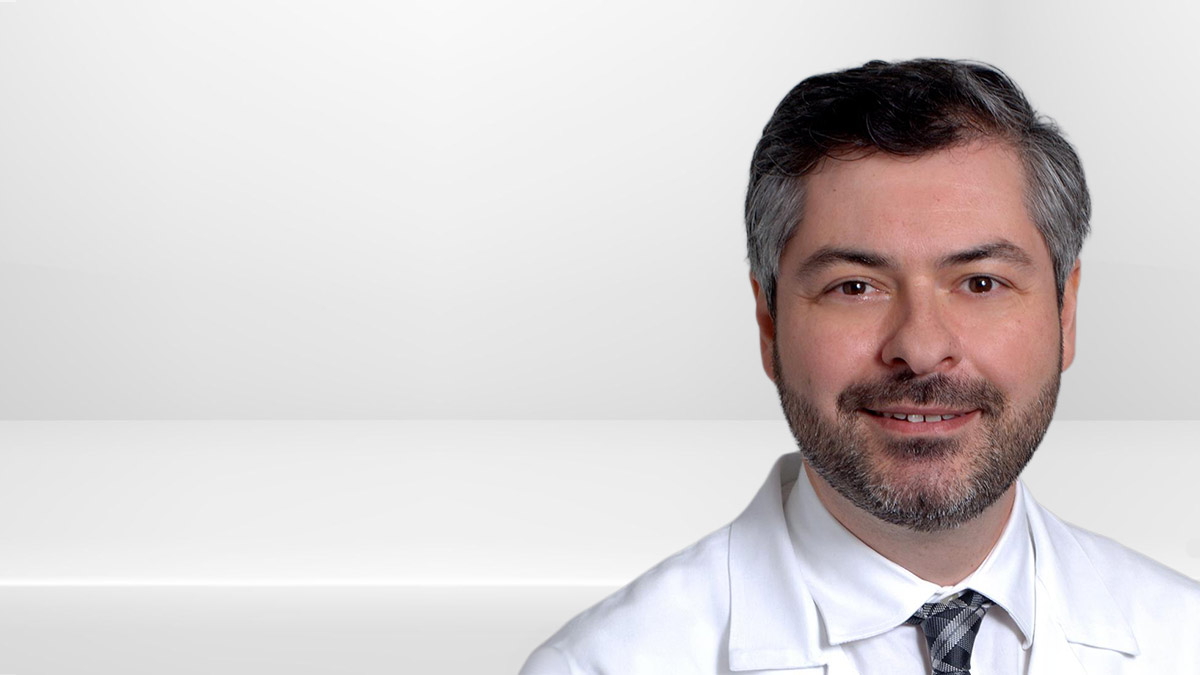
Could removing heat improve safety in endoscopic mucosal resection? Florida Division Chair of the Department of Gastroenterology, Hepatology and Nutrition, and the Florida Region Director for Endoscopy, Tolga Erim, DO, joins the Cancer Advances podcast to break down cold EMR how it compares to traditional EMR, including key differences in bleeding risk, recurrence rates and clinical trade-offs.
Advertisement
Cleveland Clinic is a non-profit academic medical center. Advertising on our site helps support our mission. We do not endorse non-Cleveland Clinic products or services. Policy
Recent Episodes
Integrating Goals-of-Care Discussions in Oncology Practice
How can oncologists initiate meaningful goals-of-care discussions earlier in the disease course? In this episode, Dr. Natalie Jacobowski out…
Building Smarter Testicular Cancer Data Sets with Large Language Models
How can better data improve decision-making in a curable but nuanced disease like testicular cancer? This episode explores how large languag…
Pre-Taxane Lutetium in Prostate Cancer: Changing the Treatment Algorithm
Is there a role for earlier integration of lutetium PSMA therapy in mCRPC management? Emerging evidence supports its use in the pre-taxane s…
Video content: This video is available to watch online.
View video online (https://cdnapisec.kaltura.com/p/2207941/sp/220794100/playManifest/entryId/1_8wkemex6/flavorId/1_5f3sgelj/format/url/protocol/https/a.mp4)
Transcript
Dale Shepard, MD, PhD:
Cancer Advances, a Cleveland Clinic podcast for medical professionals, exploring the latest innovative research and clinical advances in the field of oncology.
Advertisement
Cleveland Clinic is a non-profit academic medical center. Advertising on our site helps support our mission. We do not endorse non-Cleveland Clinic products or services. Policy
Thank you for joining us for another episode of Cancer Advances. I'm your host, Dr. Dale Shepherd, a Medical Oncologist and Co-Director of the Sarcoma Program at Cleveland Clinic. Today, I'm happy to be joined by Dr. Tolga Erim, Florida Division Chair of the Department of Gastroenterology, Hepatology and Nutrition, and the Florida Region Director for Endoscopy. He's here today to discuss cold endoscopic mucosal resection. So welcome to the podcast.
Tolga Erim, DO:
Thank you. Thanks for having me.
Dale Shepard, MD, PhD:
So, give us a little bit of an idea I gave your sort of titles, but what do you do at Cleveland Clinic?
Tolga Erim, DO:
Well, Cleveland Clinic, Florida started as a single hospital, single clinic in Fort Lauderdale, and then it moved to Weston. And over the years, we've expanded into multiple different locations. We now have five hospitals. We are about a three billion dollar organization in Florida alone right now. And this year we hit 50 GI doctors. My administrative responsibilities have to do with the different departments and divisions within the gastroenterology in all of the Florida sites. And I'm a therapeutic endoscopist. So my other hat is about endoscopy, the units, how they run, the quality, the processes, the equipment, all the fun stuff.
Advertisement
Dale Shepard, MD, PhD:
You’re a busy guy because our Florida sites are not next to each other.
Tolga Erim, DO:
Right. The one in Weston is about an hour and a half from the next one, and then about two and a half hours from the one farthest away.
Dale Shepard, MD, PhD:
All right. So we're going to talk about cold endoscopic mucosal resection. So there's a lot of people with different backgrounds that might be listening in. Can you give us a little bit of an idea what exactly that is?
Tolga Erim, DO:
Yes. This is a topic that doesn't catch much attention. And just because some of the procedures that I perform, like this third space endoscopy procedures end up replacing surgical techniques. So they gain a lot of attention that way. Cold EMR has to do with polyp resection mostly. So it doesn't really catch people's attention at first, but for those of us that do this, cold EMR is going to be a major change in the way that we remove polyps. Simply because we remove many, many polyps. We remove millions of polyps every year. And the way that we do it is going to change over time due to the risks associated with using cautery. So cold EMR means cold endoscopic mucosal resection. And the traditional way of removing polyps is by using electric cautery that applies heat to shave off the polyp with a snare.
Cold EMR is when we actually don't use that heat. We end up just using the snare, the metal loop itself, without applying any heat. And it has several advantages.
Dale Shepard, MD, PhD:
When we say cold EMR, we're not really cooling. We're actually just not using heat.
Tolga Erim, DO:
That's right.
Dale Shepard, MD, PhD:
I guess what are some of the advantages of using cold EMR? Because I guess just as a guy who's not a GI guy, one might think, "Well, it's more complex to go in and heat an instrument and start using heat in the first place." So how do we start using heat and why are we moving away from it in some situations?
Tolga Erim, DO:
Yeah. It's funny because when colonoscopy first started, when I talked to my mentors who were among the first people to do colonoscopy in the world, when they first started doing colonoscopy and they needed to remove a polyp, they had to apply electric heat just like cautery in the operating room to remove a polyp. And if you're a gastroenterologist, you had to ask a surgeon to walk into the room and step on the pedal to cut the polyp. And then the next generation of endoscopists were able to do that by themselves without asking a surgeon to walk into the room and step on the pedal. So this set off years, decades of evolving techniques where we started off removing small polyps and then a little bigger one and a little bigger one, little bigger one. And every time somebody removed the bigger polyp, they would make an abstract or eventually videos of them and start publishing them.
Advertisement
So our evolution of these resection techniques went that path. And what's interesting now is that decades later, we're starting to go back to the beginning. I wonder myself sometimes perhaps, "Well, what would've happened, I wonder if people just started to remove these polyps without using electric heat," saying, "The heck with it, I'm not going to bother the surgeons to remove this polyp. I'm just going to cut it off." Because that's literally what we're doing right now. We're trying to move away from those heat inducing therapies because we've noticed over time that they can cause a lot of problems. You know, I do a lot of large polyp resections. And as my practice grew over the last decade and a half, in the beginning, it wasn't so much of an issue, but the more of these procedures you do, the more bleeders you end up having, because statistically you're going to have some people bleeding.
It doesn't matter how good your technique is, it's going to happen. And at some point, we were doing so many of these resections that there was somebody bleeding in the hospital every week, every few weeks, and it can be devastating. And what naturally started driving us away was recognizing that it was actually the heat doing it, the electric cautery causing it, and moving to lesser risky parts. We could sleep better, our patients could sleep better, and it drove us to start innovating in this space.
Advertisement
Dale Shepard, MD, PhD:
So, I suppose the initial thought was the heat would cauterize and minimize bleeding, but that's not necessarily the case.
Tolga Erim, DO:
It does in the beginning. So when you're first removing the polyp, when you apply heat, there's very little blood. The area gets cauterized. It looks very nice. The problem is later on. This is a monopolar cautery. So the current is actually coming from the outside and then meeting at the point where the snare is touching or the metal loop or the metal part of the snare is touching. So this heat, you can think of it as being transferred from the snare that's at the surface to deeper down into the tissues. And this is one of the things that really forced us to start thinking about the microanatomy of the wall of the GI tract. And what happens in that is that there's a layer between the skin layer of the GI tract called the mucosa and then the muscle layer, which is the muscularis propria. This is the deeper muscle layer.
And this is pretty much true in the entire GI tract from the esophagus down onto. There is the outer layer, that is the muscle layer, there's the inner layer that is the mucosa of the skin. And in between the two is something called the submucosa. And this is the layer that has been the most interesting for us in endoscopy over the last several decades because this layer is this spongy layer that when you inject fluid into it, it can increase greatly in size, more than 10 times the size, it can expand. And then that's the layer where the blood vessels are, and the lymphatic vessels are. And what we've realized over time is that the blood vessels are much bigger, deeper down, close to the muscle than on the surface. So when you resect something on the surface, if you're cutting across the smaller vessels, those are able to close themselves off and they do fine.
Advertisement
But when the deeper, bigger vessels get injured, that's when you start having a problem. That's what ends up causing significant delayed bleeding. And what we realized with the electric heat that we were applying was that even though we changed the cautery effects to different ones, like ones that really limited the amount of deeper damage that transferred heat at a much higher frequency, that ended up cutting the mucosa. Even when we started doing that, there was energy transfer to the deeper layer. So things would look great when you first did the polypectomy and the patient felt great. They most of the time don't feel anything. They wake up and they say, "Okay, that was wonderful." They go home. And then once they go home, what's happening inside is that the heat actually has done some damage that's not reversible to the wall of these vessels.
And as time goes on, that wall starts to weaken. That wall becomes when in my mind is like an aneurysm and it pops. And that's when you have this massive bleeding. And then the vessel can't fix itself, it can't clamp down in a way where it can actually keep itself from bleeding. And you could literally bleed out from this tiny little vessel that's oozing because I tell my patients, "If it was on your arm, you just put your finger on it and it would stop." But on the inside, you can't do that. So it keeps dripping and dripping and oozing and oozing. And then it ends up becoming a horrible experience for patients when they're coming to the hospital in the middle at night, they feel like they're about to pass out, they feel terrible, and then we have to go through another procedure and another colonoscopy or an endoscopy.
Dale Shepard, MD, PhD:
When you think about these complications you're talking about with use of heat, are there size of polyp where that's more likely to happen? And then I'm guessing things like anticoagulation would be a factor in terms of risk.
Tolga Erim, DO:
We know that the larger polyp you resect, the more likely you are to have the bleeding associated with it. And over multiple studies, the consensus is that if it's over one and a half centimeters or 15 millimeters, then you're really significantly more likely to have bleeding. And over time, we've tried to mitigate this by placing clips, these metal pincher-like little devices that we clip there and we leave it in place. They fall off by themselves later on. But while they're there for a few weeks, they end up putting pressure in the area and decrease risk of bleeding. And it does work. I mean, we did a study that showed that definitely reduces risk of bleeding. We drove our bleeding risk down to about two percent or less with large wide area EMR's, but it was very costly. I mean, we'd have to apply sometimes up to a dozen of these clips to do full clip closure of these areas. And then it became very, very costly and it still wasn't zero. We wanted to really drive it down to as low as possible this bleeding.
So yeah, over time, it's evolved quite a bit. And what puts people at risk for delayed bleeding is, again, it's not the oozing during the procedure. It's the one that is going to happen later on after they go home. And when they get placed on a blood thinner, like the new medications, the direct thrombin inhibitors, these are ones that end up working immediately. I mean, as soon as you start taking it, it's working. And the issue with that is that if you have something that is just oozing a little bit and it's going to end up forming a clot and stopping itself, then if you're on one of these medications, it's never going to be able to do that. So you have something that would be a non-issue for a normal average patient, but if you get them started on one of these blood thinners, now you're going to have a real problem in your hand. So that becomes compounded if you end up actually doing some deeper damage to the deeper vessels, the larger vessels in the wall of the GI tract.
Dale Shepard, MD, PhD:
And I'm guessing clinically, most people would end up starting those treatments pretty much right after their procedures, so would compound the problem.
Tolga Erim, DO:
You ask any cardiologist or hematologist, they want the patient back on blood thinners immediately as they're leaving. So we have this bit of a tug of war. We want to keep them off as long as we can and they want them on as soon as possible. So you know we try to find the medium. But what we've found is that if somebody's going to go on a blood thinner, I feel more comfortable with them having had a cold EMR than a hot EMR where we did some really deep penetration of the heat.
Dale Shepard, MD, PhD:
How does cold EMR help with the pathology evaluation once you've taken out the polyp?
Tolga Erim, DO:
It's obviously there's no cautery effect, so the distortion is not there. Now, cold MRI is not really meant for malignancy where margins become much more important. This is not meant to take out something like an adenocarcinoma that like an arm block resection to prove that you have clear margins. It's not meant for that. It's really meant for benign tissue. I think that we have had to use this technique in patients where it was advantageous to use it for very early cancers, but studies have to be done in a very organized manner to be able to demonstrate a benefit in that. But I can tell you that just removing that thermal effect in that area is helpful when you look at the tissue under the microscope.
Dale Shepard, MD, PhD:
What would be a downside? So why are we still doing hot EMR?
Tolga Erim, DO:
So last year at our conference in Florida called Gut Insights, I invited a good friend who was really an outstanding endoscopist, Dr. Muhammad Hassan from Orlando, from AdventHealth. I invited him and I said, " You know we're going to have a bit of a debate on stage and I want you to please present on the hot EMR." And I did the cold one and he, you know, he did a great job. And of course, the biggest attack and the one that I really had a lot of difficulty repelling was about recurrence rates. So when you do cautery, you're of course distributing that effect of cautery and the killing the tissue around where you're resecting. So you're much less likely to have recurrences due to leaving tissue behind in the deeper layers and or in the edges.
And that is true. Really most of the studies that are done on cold EMR are showing higher recurrence rates, but it becomes less relevant when, and this is how I kind of countered him, it becomes less relevant when you consider that these are people that when you bring them back for the follow-up and everybody needs a follow-up when they have a large EMR, you can fix these on the follow-up. These end up becoming really minor issues. So now when you're all done with this series of procedures, your recurrence rates become very similar to almost down to zero when you have the right population.
And on top of it, you didn't put them at as high as risk for having bleeding. And one thing we're not talking about is perforation. I mean, the risk of perforation with cold EMR is essentially zero, but it can definitely happen when you apply electric heat because the heat that we use, the devices that we have, they can cut through the entire wall of the GI tract very easily, very easily. That's the biggest downside to it.
The other one that I want to talk about is that it can be difficult to do cold EMR. Believe it or not, you would think that it would be easier to do, but actually it's different. The way that you resect is different. The way you place the snare is different. You end up taking more small bites. So it can take longer to take a polyp with cold rather than hot because you can't grab big chunks because you simply can't cut through it without the heat. So you have to do smaller ones and you have to be really precise and more methodical about it. You have to have very good control over the scope and the tip and it can become difficult.
I teach this to our fellows, our training program, and I can tell you that it's a struggle for people learning how to do polypectomy to do large cold EMR's. So this is going to take a special type of training for people to be able to feel comfortable to do it. We do, do some cold EMR courses where we bring in doctors from around the country to come in and watch how we're doing it to help them refine their skills. And there are a lot of pointers that we give them. A lot of it has to do with how you're doing the placement of the snare, how you're closing it, the way that our techs do it. They need to learn how to close the snare differently than when you're doing the hot. The types of snares that we use are different depending on if it's a scarred area or not.
And also there's some adjunct therapies that we use. Right now, we're doing a study on using hybrid cold EMR. So we do the majority of the lesion cold. And then if there are areas that need attention that the cold wasn't able to do, then we do sort of focused areas where we apply electric heat. So it significantly decreases the amount of heat that we place in the area and also the area of heat that receives the heat.
Dale Shepard, MD, PhD:
Is this relatively widely available or is this mostly still at specialized centers?
Tolga Erim, DO:
It's specialized centers. So the tools are available to anyone because it's literally less tools than before. So everybody has a snare that they can do a cold EMR with, but it's not done very often because the technique is still evolving. How to do it is still evolving. There are not many places that are teaching how to do it. So it's still in very specialized centers. I would say even among advanced endoscopists around the country, it's still a minority of the doctors that are using it. And I hope that as we start publishing more and more studies, we're going to start to change the way that these are done.
Dale Shepard, MD, PhD:
You mentioned differences in recurrence rates. How does that impact surveillance and when you bring people back in for their next scope?
Tolga Erim, DO:
That is the one area where we've noticed we have to pay more attention when we bring the patients back. Now, our standard is to bring patients back usually around six months or so after doing an EMR of any type, sometimes earlier with the higher pathology. And what we're noticing is that there are times where we know that we're going to be higher likely to have a recurrence if we use cold EMR or even with hot EMR, if it's a large polyp or scarred area. And I think the next sets of studies are going to be done like we're doing about trying to reduce stats because the recurrence happens at different areas.
In many studies with the initial EMR studies concentrated on edge recurrence by trying to ablate the edges of the lesion where it was removed. But what we're finding is that with cold EMR, the recurrences are happening not so much at the edges because we can literally take as much edge as we want. We're not really introducing increased risk to the patient, but it ends up happening more in the center, more in the areas of scarring. So our studies are now, and our techniques and the changes of the techniques are really concentrating on reducing that. And I think once we solve that, that's when we're going to really start seeing much wider adoption.
Dale Shepard, MD, PhD:
Certainly, an interesting technique to be incorporated. I guess just sort of as a summary, who would you describe as kind of an ideal patient? So who is it good for and what is it good for?
Tolga Erim, DO:
This is an ideal technique for patients that have flat polyps like serrated polyps that are lateral spreading that are larger. And the size doesn't really matter. As long as it lifts well and you can grasp the area well, you can do quite large size polyps. We've even done circumferential polypectomies in patients that had the entire wall. The ideal population right now for the people trying to get started, I would say these are thin, flat, serrated polyps. I think that's a really ideal one to start with. They're very easy to resect.
Dale Shepard, MD, PhD:
Very good. Well, appreciate all of your insights today. Thanks for being with us.
Tolga Erim, DO:
Thank you very much.
Dale Shepard, MD, PhD:
To make a direct online referral to our Cancer Institute, complete our online cancer patient referral form by visiting clevelandclinic.org/cancerpatientreferrals. You will receive confirmation once the appointment is scheduled.
This concludes this episode of Cancer Advances. For more podcast episodes, visit our website, clevelandclinic.org/canceradvancespodcast. Subscribe on Apple Podcasts, Spotify, or wherever you listen to podcasts.
Thank you for listening. Please join us again soon.
Recent Episodes
Integrating Goals-of-Care Discussions in Oncology Practice
How can oncologists initiate meaningful goals-of-care discussions earlier in the disease course? In this episode, Dr. Natalie Jacobowski out…
Building Smarter Testicular Cancer Data Sets with Large Language Models
How can better data improve decision-making in a curable but nuanced disease like testicular cancer? This episode explores how large languag…
Pre-Taxane Lutetium in Prostate Cancer: Changing the Treatment Algorithm
Is there a role for earlier integration of lutetium PSMA therapy in mCRPC management? Emerging evidence supports its use in the pre-taxane s…
Never miss a moment - subscribe now.
Listen to the Health Essentials Podcast on your favorite streaming platform.
Other Podcasts You May Love
Beyond Leadership
Hosts Jim Pae and Elizabeth Pugel escort you through a network of thought leaders, sharing world-cla…
Beyond the Pages: CCJM Podcast
Beyond the Pages: CCJM Podcast takes the listener more in-depth into Cleveland Clinic Journal of Med…

Butts & Guts
A Cleveland Clinic podcast exploring your digestive and surgical health from end to end. You’ll lear…

Cardiac Consult
A Cleveland Clinic podcast exploring heart, vascular and thoracic topics of interest to healthcare p…