



Heart disease is the No. 1 cause of death for women in the U.S. and globally. Chest pain or discomfort is the most common heart attack symptom both in women and men. But women are more likely to have other symptoms, too, which may be more subtle. These include unusual fatigue, nausea and shortness of breath.
Advertisement
Cleveland Clinic is a non-profit academic medical center. Advertising on our site helps support our mission. We do not endorse non-Cleveland Clinic products or services. Policy
Heart disease in women refers to coronary artery disease (blockages in the heart’s arteries) or other heart conditions that affect females. Heart disease is the No. 1 cause of death both for women and men in the U.S. and around the world.
Advertisement
Cleveland Clinic is a non-profit academic medical center. Advertising on our site helps support our mission. We do not endorse non-Cleveland Clinic products or services. Policy
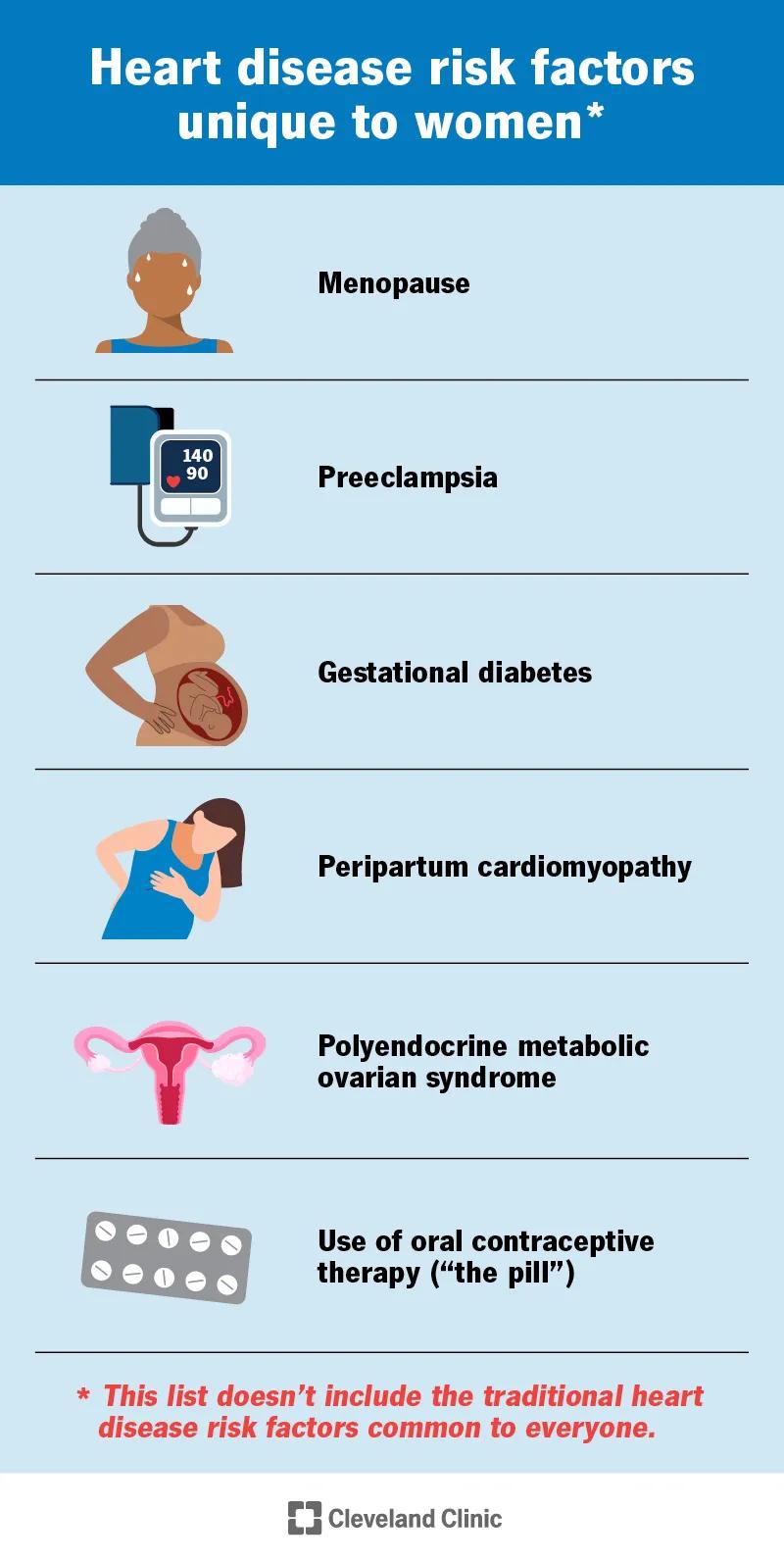
Image content: This image is available to view online.
View image online (https://assets.clevelandclinic.org/transform/a9060f41-efc7-4b75-a9f1-41b787e9b3cc/Heart-disease-in-women)
Women have many unique risk factors that can vary by their age and stage of life. These are in addition to the traditional risk factors that apply to everyone, like high blood pressure, high cholesterol, diabetes and tobacco use.
For a long time, common wisdom held that women were less likely to get heart disease or have a heart attack. Today, we know that’s simply not true, and there’s growing awareness of how heart disease can affect women.
Women and men share a lot in common when it comes to heart disease. But there are some key differences worth knowing about — including risk factors unique to women and certain symptoms that women are more likely to experience. These stem from sex-specific differences in the cardiovascular system, including:
A heart attack is a medical emergency in which blood flow to your heart suddenly drops. Chest pain or discomfort is the most common symptom of a heart attack for everyone. But women are more likely to have some other type of symptom, in addition to chest pain (or instead of it). They’re also more likely to have a silent heart attack.
Advertisement
A heart attack in women may feel like pain or discomfort in their:
In addition to those symptoms, women experiencing a heart attack may also have:
If you have any of these symptoms without another known cause — and especially if you have more than one symptom — call 911 or your local emergency number right away.
It’s also important to stay alert to early warning signs of a heart attack, which can affect both women and men. Some warning signs include unusual fatigue and fleeting episodes of chest pain.
Women and men share many of the same cardiovascular disease causes. But there are some differences depending on the specific type of heart disease.
For example, a common cause of heart attacks for everyone is plaque buildup in the heart’s blood vessels. This plaque can rupture, leading to a blood clot that obstructs blood flow to your heart muscle. But women often have heart attacks even without severe coronary blockages. In those cases, common causes include:
There are also sex-specific differences in the causes of heart failure. Some research shows that the risk of developing heart failure due to high blood pressure (hypertension) is greater for women than for men. This means diagnosing and treating high blood pressure in women is especially important for preventing long-term heart damage.
Women and men share many risk factors in common, like high blood pressure, high cholesterol and diabetes. But factors unique to females include:
Advertisement
Some aspects of testing and treatment for cardiovascular disease are different for women. For example:
It’s important to talk with your provider about your risks, symptoms, test results and responses to medication. Sex-based differences are sometimes less important than individual differences due to our unique medical histories and social environments.
Many heart disease prevention tips apply to both women and men — but there are some unique to women. Here are some steps you can take:
Advertisement
Did you know that more women in the U.S. die of heart disease than from all forms of cancer combined? Heart disease used to have a reputation as a “man’s disease.” We’ve come a long way in terms of awareness and understanding.
But there’s still room for progress. And there’s a lot you can do in your daily life to keep your heart as healthy as possible for as long as possible. Talk to your healthcare provider about steps you can take and available resources to help.
Advertisement



Sign up for our Health Essentials emails for expert guidance on nutrition, fitness, sleep, skin care and more.
Learn more about the Health Library and our editorial process.
Cleveland Clinic’s health articles are based on evidence-backed information and review by medical professionals to ensure accuracy, reliability and up-to-date clinical standards.
Cleveland Clinic’s health articles are based on evidence-backed information and review by medical professionals to ensure accuracy, reliability and up-to-date clinical standards.
When your heart needs some help, the cardiology experts at Cleveland Clinic are here for you. We diagnose and treat the full spectrum of cardiovascular diseases.
