



A heart attack is when blood flow to your heart is suddenly reduced, leading to heart muscle damage. It’s a medical emergency. Symptoms include chest discomfort, shortness of breath, nausea and sweating. Call emergency services right away. It’s not safe to drive yourself to the hospital or let anyone else drive. Fast treatment can save your life.
Advertisement
Cleveland Clinic is a non-profit academic medical center. Advertising on our site helps support our mission. We do not endorse non-Cleveland Clinic products or services. Policy
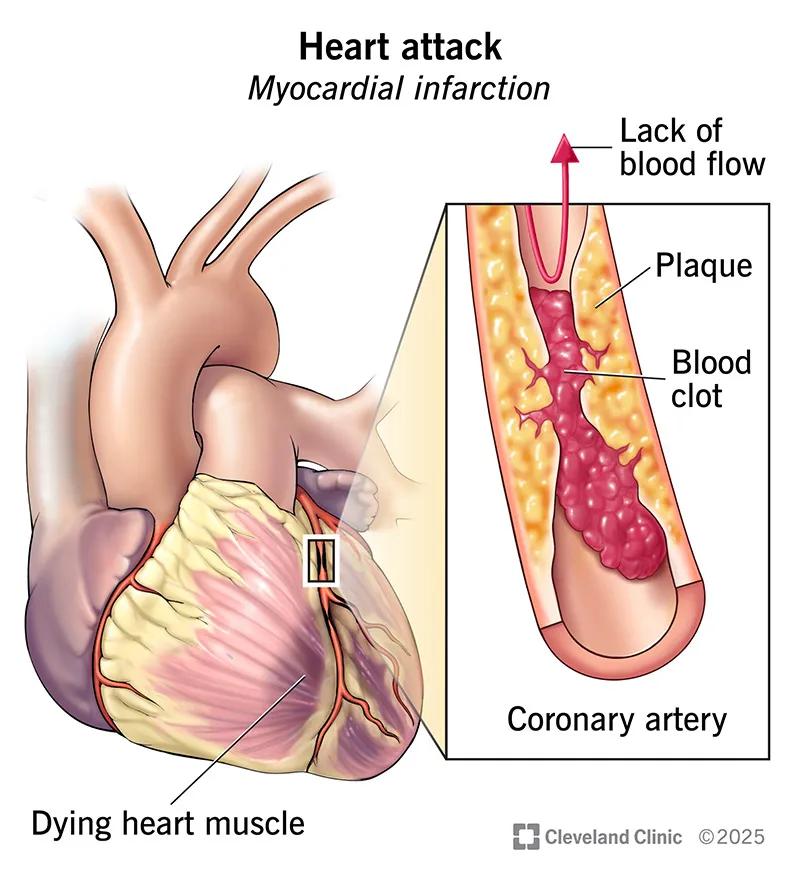
Image content: This image is available to view online.
View image online (https://assets.clevelandclinic.org/transform/9aff3bef-a7ad-4515-b7d9-9d4c031459c9/Heart-Attack-Illustration)
A heart attack (myocardial infarction) is a sudden drop in blood flow to your heart muscle. It’s usually due to a blockage in one of the arteries that supply blood to your heart (coronary arteries). Without steady blood flow, areas of your heart muscle can begin to die. This keeps your heart from pumping normally and reduces blood flow to the rest of your body.
Advertisement
Cleveland Clinic is a non-profit academic medical center. Advertising on our site helps support our mission. We do not endorse non-Cleveland Clinic products or services. Policy
A heart attack is a medical emergency. You need medical care immediately. Call 911 or your local emergency services number if you think you’re having a heart attack. The longer your heart goes without enough blood, the higher your risk of complications or death. The most common symptom is chest pain or discomfort (pressure, squeezing or heaviness). You might also have shortness of breath, nausea, vomiting or sweating.
Treatment restores blood flow to your heart muscle as quickly as possible. You’ll likely need a procedure to clear the blockage and keep your artery open. You may also receive medications to relieve chest pain, prevent complications and help your heart recover. You’ll follow up with a heart doctor for the rest of your life to lower your risk of another heart attack and protect your health.
Healthcare providers who diagnose heart attacks need to quickly find out what type you’re having. This information guides your treatment. The two main types are:
Advertisement
You might also hear providers use these terms:
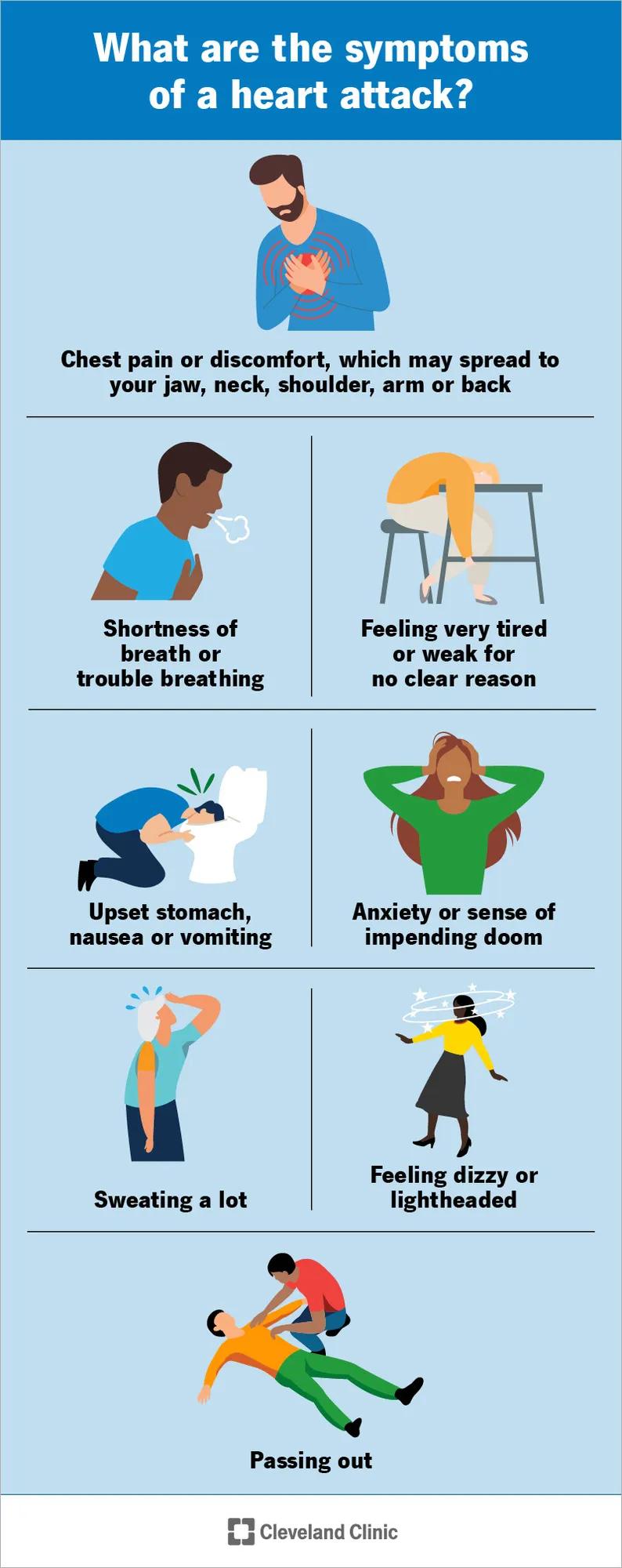
Image content: This image is available to view online.
View image online (https://assets.clevelandclinic.org/transform/7213b999-787c-45cb-8ac9-954a094d48e8/heart-attack-symptoms-infographic)
Chest pain or discomfort, which may spread to nearby areas, is the most common symptom of a heart attack. But you might have other symptoms along with the chest pain or instead of it.
Don’t wait to get help if you have any signs or symptoms of a heart attack. You may have early warning signs that start gradually. For example, you might have mild chest discomfort that comes and goes over the course of a few days or weeks. Or you might feel exhausted or unwell for no clear reason.
Chest pain is the most common symptom of a heart attack. You might notice pressure, squeezing or heaviness in your chest. A heart attack can also feel like you’re having indigestion or heartburn, or you need to burp. This chest discomfort usually lasts at least 10 minutes.
But some people, including some women, have different heart attack symptoms that may seem unrelated. For example, you might have shortness of breath, nausea and sweating (with or without chest pain). It’s also possible to feel achy or unwell, but not recognize it’s a heart attack, which people commonly call a “silent heart attack.”
In general, symptoms of a heart attack include:
If you think you’re having a heart attack — or if you notice signs in someone near you — call emergency services right away. The dispatcher will tell you what to do until help arrives.
The most common cause of a heart attack is plaque buildup in the arteries that supply blood to your heart — a condition known as coronary artery disease. The plaque is most dangerous when its surface wears away or breaks open. Blood clots are drawn to that area. The clots can partly or completely block blood flow, leading to a heart attack.
It’s also possible for the plaque to take up so much space that there’s very little room for blood to get through. This severe narrowing reduces blood flow to your heart and may lead to a myocardial infarction.
Other heart attack causes include:
Advertisement
Your risk of a heart attack goes up if you:
A healthcare provider can help you find ways to lower your risk.
A myocardial infarction can damage your heart, leading to complications like:
These complications can occur if one or more of the following factors apply:
Advertisement
A heart attack diagnosis needs to happen fast. It usually starts when first responders reach you and then continues in the ambulance and emergency room. To diagnose a heart attack, healthcare providers will check your vital signs (like your blood pressure and pulse) and run tests to check your heart function. They’ll use two key tests to see if you’re having a heart attack, and if so, what type:
Providers in the ER will talk to you about your symptoms, if you’re able to speak. They might also ask someone who was with you to describe what happened.
You may need more tests to check your heart function, rule out other causes of chest pain and check for complications. Possible tests include:
Advertisement
Treatment focuses on getting blood flowing to your heart again as soon as possible. Usually, this means you have a procedure to clear the blockage from your coronary artery. The sooner this happens after your symptoms start, the more it can help you. You’ll likely also need several medications to help your heart work better and lower your risk of more problems.
There are three main ways healthcare providers can get blood flowing back to the heart muscle:
Medications you may need as part of your heart attack treatment include:
Your heart attack symptoms should start to go away as you receive treatment. You’ll likely feel tired and weak during your hospital stay and for several days after.
Your healthcare provider will tell you how long you can expect to stay in the hospital. Usually, it’s anywhere from a few days to a couple of weeks. It depends on the treatments you receive and how your body responds. In general, PCI has a shorter hospital stay than CABG.
Heart attack recovery takes anywhere from two weeks to three months. Your provider will advise you on how to take care of yourself during this time. They’ll also say when it’s safe to go back to work, drive and do other things.
Cardiac rehab is a key part of recovery. This 12-week program includes supervised exercise, nutrition advice and more. It helps you feel better faster and lowers your risk of future heart problems.
Emotional recovery is also important. A heart attack is a major life event that can take a toll on your mental health and raise your risk for depression. It’s normal to feel sad or anxious for a few weeks. But if those feelings persist, tell a healthcare provider. They may suggest speaking with a therapist or joining a support group.
Seek emergency care for a heart attack. As you recover, follow-up visits are vital. Be sure to follow the schedule your provider gives you.
After you finish cardiac rehab, you’ll likely see your provider every three months for the first year. Then, you’ll get down to every six months and eventually to once a year. At these visits, your provider will:
Call your provider if you have:
Once you have a heart attack, your risk for having another goes up. This means you’ll need to take prescribed medications and make changes to your daily habits.
Today, many people survive a heart attack. But lots of things affect your outlook, including how much heart damage occurred, your age and overall health. That’s why it’s important to work closely with your provider. They’ll do everything possible to protect your heart and help you live a long life.
A heart attack is a life-changing event. One minute, you’re going about your routine. The next minute, you’re being rushed to the hospital. You’ll probably never forget the emotions of that day. But that doesn’t mean you have to carry the fear or anxiety with you.
Recovering from a heart attack takes time. As your body starts healing, your thoughts and feelings might need some time to catch up, too. But if you still find yourself feeling down or anxious several weeks after your heart attack, talk to your provider. They can offer treatments to help.



Sign up for our Health Essentials emails for expert guidance on nutrition, fitness, sleep, skin care and more.
Learn more about the Health Library and our editorial process.
Cleveland Clinic’s health articles are based on evidence-backed information and review by medical professionals to ensure accuracy, reliability and up-to-date clinical standards.
Cleveland Clinic’s health articles are based on evidence-backed information and review by medical professionals to ensure accuracy, reliability and up-to-date clinical standards.
Whether you need stitches, a broken bone set or think your appendix might be causing your abdominal pain, Cleveland Clinic’s emergency medicine team is here to help.
