
Cleveland Clinic logo
Search

Leukemia

Medically Reviewed.Last updated on 08/06/2026.

Leukemia in adults can develop quickly or over several years. There are many symptoms. Some common and serious ones are unusual bleeding, like bleeding gums; bruises, fatigue and frequent infections. Treatment can put the condition into remission, but can’t cure it.

What Is Leukemia?

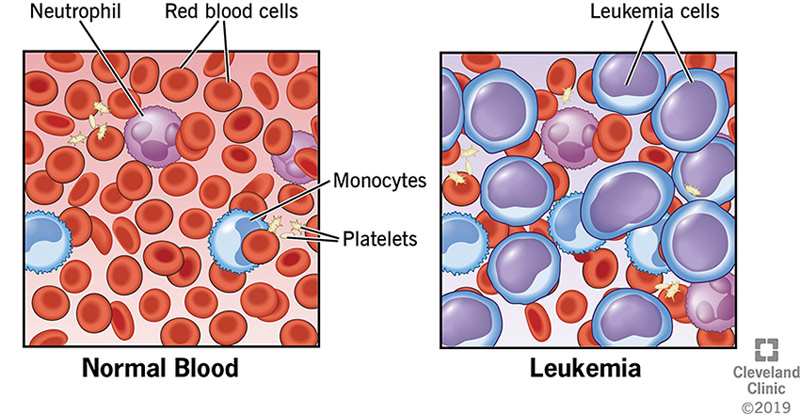
Normal blood cells and abnormal blood cells with leukemia
Abnormal leukemia cells multiply in your bone marrow. That means there’s less room for your healthy blood cells and platelets.

Leukemia refers to a group of blood cancers. The conditions develop when your bone marrow produces an abnormal white blood cell called a leukemia cell. The abnormal cell multiplies uncontrollably to make more cells. These cells take up space in your bone marrow and crowd out other cells that would become healthy red and white blood cells and platelets.

Advertisement

Cleveland Clinic is a non-profit academic medical center. Advertising on our site helps support our mission. We do not endorse non-Cleveland Clinic products or services. Policy
Leukemia in adults typically affects people aged 65 and older. Leukemia in children is the most common childhood cancer. This article focuses on leukemia in adults.

Some leukemias can be cured, but many can’t. Treatment often puts some types into remission that lasts for years. Remission means you don’t have symptoms, and tests don’t find leukemia cells.

Types of this condition

There are four types of leukemia and several subtypes. Healthcare providers classify the condition based on how quickly it causes symptoms and the type of white blood cell it affects:

  • Acute leukemia: With this type, your bone marrow makes immature, abnormal white blood cells called blast cells. The blasts rapidly multiply, taking up space in your bone marrow so you don’t have enough healthy blood cells and platelets. It can be life-threatening without immediate treatment.
  • Chronic leukemia: In this case, you have too many white blood cells. The change happens over many years. You can have it for years before developing symptoms.
  • Myeloid leukemia: This type affects the cells that normally become red and white blood cells and platelets.
  • Lymphocytic leukemia: This type affects lymphoid cells. Normal lymphoid cells develop into white blood cells that are an important part of your body’s immune system.

Advertisement

Leukemia subtypes

The four main subtypes are:

  • Acute lymphoblastic leukemia (ALL): This subtype typically affects young children but can affect adults.
  • Acute myelogenous leukemia (AML): This is the most common type of acute leukemia in adults.
  • Chronic lymphocytic leukemia (CLL): This type typically affects people aged 65 and older. You can have this disease for several years without having symptoms.
  • Chronic myelogenous leukemia (CML): This type can affect adults of any age but is more common in adults aged 55 and older. Newer treatments have turned CML into a chronic disease that medication can manage.

Other less common forms of leukemia include:

Symptoms and Causes

Symptoms of leukemia

This condition can cause many symptoms, including:

  • Bleeding gums, frequent nosebleeds or tiny red spots on your skin (petechiae)
  • Bruises that happen for no reason or after a minor bump
  • Fatigue that lasts no matter how much you sleep or rest
  • Frequent bacterial infections, like pneumonia or a urinary tract infection
  • Shortness of breath
  • Bone/joint pain or tenderness
  • Fever
  • A full feeling or bloating in your upper right abdomen from an enlarged liver
  • Night sweats
  • Pale skin
  • Pain or a full feeling under your ribs on the left side from an enlarged spleen
  • Swollen lymph nodes in your neck, underarm, groin or stomach
  • Unexplained weight loss

Many conditions can cause one or more of these symptoms. Having them doesn’t mean you have leukemia. But you may have another issue that needs medical attention. In general, talk to a provider if your symptoms last for more than two weeks.

Leukemia causes

This condition starts when there’s a change (mutation) in your DNA that affects how your blood cells work. Your DNA tells cells when to multiply and when to die. With leukemia, DNA changes create abnormal blood cells that multiply uncontrollably and don’t die.

Experts don’t know what causes the genetic change. But there are risk factors that increase the chance you’ll have leukemia. Your risk may increase if you:

  • Had chemotherapy or radiation therapy to treat cancer
  • Smoke or were exposed to second-hand smoke
  • Had exposure to high doses of radiation or high levels of chemicals, like benzene

Complications of leukemia

This condition may cause several complications, including:

  • Anemia: This is low levels of red blood cells. In this case, abnormal white blood cells take up space in your bone marrow, so there’s no room for red blood cells.
  • Infections: The abnormal white blood cells also crowd out normal white blood cells. This increases your risk of infection.
  • Thrombocytopenia: This condition happens when you don’t have enough platelets. Platelets form blood clots that control bleeding.
  • Late effects: These are medical issues that develop months and years after you complete treatment. Ask your provider about potential late effects. They’ll explain the kinds of issues you may experience and how they’ll support you.
  • Mental health issues: Living with a serious illness, even one that goes into remission, can lead to anxiety and depression.
  • Organ damage: Leukemia cells can spread to organs like your brain, liver, lymph nodes, spleen and testes.

Advertisement

Diagnosis and Tests

How doctors diagnose this condition

A healthcare provider will do a physical exam. If you have symptoms, they’ll ask when you first noticed them and whether any seem to be getting worse. Your provider will do tests to look for signs of leukemia. Tests may include:

  • Blood tests: Your provider will do a complete blood count to look for high white blood cell levels. They’ll also have your blood checked for leukemia cells. Flow cytometry and peripheral blood smear are tests that can detect these abnormal cells.
  • Bone marrow tests: You may have a bone marrow aspiration to check for leukemia cells. You may have a bone marrow biopsy. This test compares the percentage of abnormal and normal blood cells in your bone marrow.
  • Imaging tests: Your provider may do chest X-rays, CT or MRI scans to check for signs of leukemia in your organs.
  • Lumbar puncture: This test checks for abnormal cells in the fluid that surrounds your brain and spinal cord.

Management and Treatment

How is leukemia treated?

Your treatment will depend on the type you have, your symptoms and the risk for complications. There are many ways to treat it. Some potential treatments include:

  • Chemotherapy: This is a common treatment for most types of leukemia.
  • Immunotherapy: CAR T-cell therapy is an example of immunotherapy for several types of this condition.
  • Targeted therapy: These medications target proteins or DNA changes in leukemia cells. Targeted therapy may be an initial treatment for ALL, CLL and CML.
  • Allogeneic stem cell transplant: This procedure uses healthy stem cells from a donor to replace damaged bone marrow. It’s a treatment for acute leukemia.

Advertisement

Your provider will discuss how each treatment could affect your daily routine. For example, they’ll explain potential side effects. They may recommend specialized treatments, like:

  • Cancer prehabilitation to help you prepare for treatment. For instance, some cancer treatments affect your appetite. A nutritionist may suggest ways to get the nutrition you need.
  • Palliative care is an extra layer of support. Specialists may recommend ways to manage side effects. They can connect you to resources like mental health and community support groups.
  • Cancer survivorship can help you manage the long-term impact that leukemia can have.

Outlook / Prognosis

What can I expect if I have leukemia?

Leukemia isn’t a single disease, which can make it hard to say what you can expect. But there are some issues most adults with leukemia experience, like:

  • Living with uncertainty: Treatments may put the condition into remission for a long time. But it can come back (recur).
  • Protecting against infection: Some cancer treatments affect your immune system. This increases your infection risk. Ask your provider about the best ways to avoid infections.

What is the survival rate?

Experts estimate that about 7 out of 10 adults with leukemia in the U.S. are alive five years after their diagnosis. This is the relative survival rate. This rate compares the percentage of adults with leukemia to the percentage of adults without it. Both groups are the same age, sex and race.

Advertisement

It’s important to remember that a survival rate estimate doesn’t predict how long you’ll live with leukemia. Experts use the experiences of large groups of people to estimate survival. The estimate doesn’t account for differences in those experiences.

It can be challenging to interpret survival rate information. Don’t hesitate to ask your healthcare provider to explain what the numbers mean. They know you and your situation, which makes them your best resource.

Additional Common Questions

How is childhood leukemia different from leukemia in adults?

There are a few differences:

  • Children are more likely to have acute forms of the condition.
  • The risk factors are different. Having a genetic disorder like Down syndrome increases the chance that a child will have leukemia. Risk factors for adults include issues like smoking and exposure to chemicals.
  • Some leukemias are curable. Leukemia in adults may go into remission and may be cured, but it can also come back.

A note from Cleveland Clinic

Leukemia starts with a single abnormal white blood cell. It can be hard to understand how a single cell can trigger changes that lead to such a serious disease. Fortunately, some treatments can put this condition into long-term remission. And there’s support you can turn to as you manage the ways that leukemia can change your life. Your healthcare team will be with you from diagnosis to treatment and beyond.

Cleveland Clinic icon
Health Essentials logo
Subscription icon

Better health starts here

Sign up for our Health Essentials emails for expert guidance on nutrition, fitness, sleep, skin care and more.

Experts You Can Trust

Medically Reviewed.Last updated on 08/06/2026.

Learn more about the Health Library and our editorial process.

References

Cleveland Clinic’s health articles are based on evidence-backed information and review by medical professionals to ensure accuracy, reliability and up-to-date clinical standards.

Care at Cleveland Clinic

A leukemia diagnosis can come as quite a shock. Cleveland Clinic’s blood cancer experts are here to guide you through it and help you move forward.

Ad
