



Down syndrome (trisomy 21) is a genetic condition that causes distinct physical features, learning challenges and behavioral changes. It occurs when you’re born with an extra copy of chromosome 21. Researchers don’t know why this happens. With improved medical care, people with Down syndrome are now living well into adulthood.
Advertisement
Cleveland Clinic is a non-profit academic medical center. Advertising on our site helps support our mission. We do not endorse non-Cleveland Clinic products or services. Policy
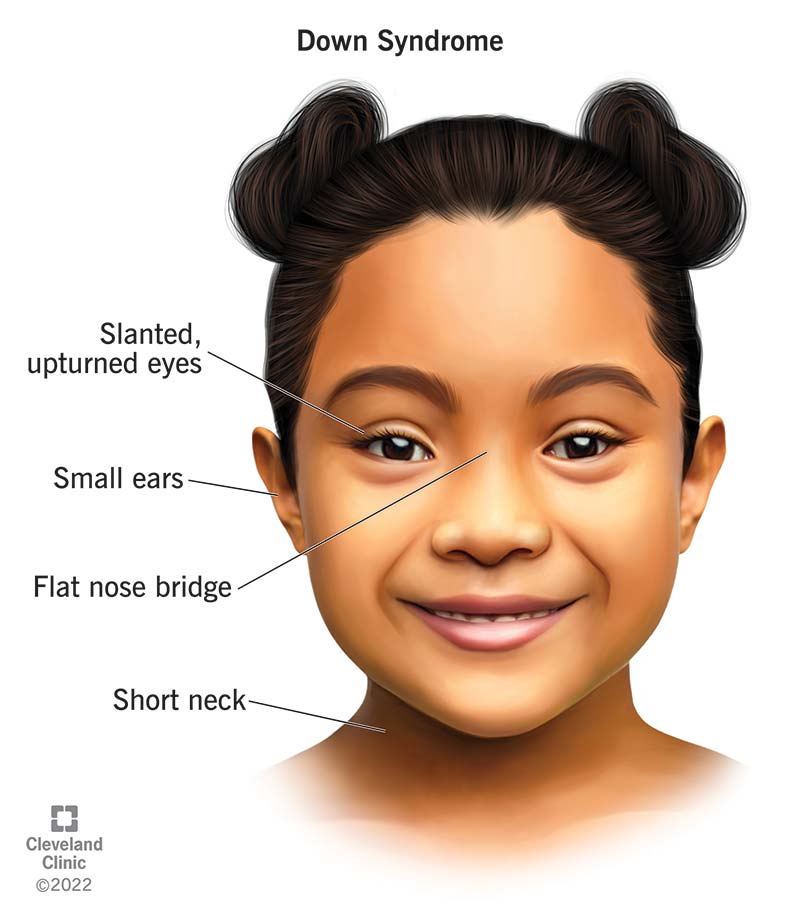
Image content: This image is available to view online.
View image online (https://my.clevelandclinic.org/-/scassets/images/org/health/articles/17818-down-syndrome)
Down syndrome (trisomy 21) is a common genetic condition. It happens when your baby is born with an extra copy of chromosome 21.
Advertisement
Cleveland Clinic is a non-profit academic medical center. Advertising on our site helps support our mission. We do not endorse non-Cleveland Clinic products or services. Policy
Most people have 23 pairs of chromosomes in each cell (46 total). With an extra copy of chromosome 21, people with Down syndrome have 47. This extra chromosome changes how your baby’s brain and body develop. Newborns with Down syndrome may have distinct physical features. They may also have learning and developmental challenges.
Down syndrome is the most common chromosome-related condition in the U.S. About 5,700 babies are born with trisomy 21 in the U.S. each year. That’s about 1 in 640 babies.
Most children with Down syndrome lead happy, active lives. They go to school, play sports and take part in activities the same way typical children do. But they may need medical care for certain health conditions. As your child reaches adulthood, they may need lifelong care. But with therapy and support, your child can thrive.
There are three types of Down syndrome:
Advertisement
Down syndrome can cause:
Not everyone has all of these. Symptoms and severity vary from person to person.
Babies with Down syndrome are often born with certain physical signs of the condition. These may become more noticeable as they grow. Down syndrome features can include:
As your child grows, they may develop other symptoms of trisomy 21 (Down syndrome). These may include:
Your child’s healthcare provider will regularly check for these and other conditions throughout your child’s life.
Your child may have developmental delays due to the extra chromosome. This can affect how they:
Because of this, it may take your child longer to:
Some children may have behavioral challenges. These are often related to difficulty communicating their needs. They may include:
An extra chromosome 21 causes Down syndrome. Most cases happen randomly during cell division. Researchers don’t fully understand why this happens.
Nothing you did before or during pregnancy caused trisomy 21 (Down syndrome). Most people with Down syndrome didn’t inherit it.
Researchers continue to learn more about the risk factors for trisomy 21. They do know that the chance of having a baby with Down syndrome increases with age, especially after age 35.
But most babies with Down syndrome are born to people under 35. This is because younger people have higher fertility rates.
Doctors can diagnose Down syndrome before or after birth.
Your healthcare provider may offer prenatal genetic testing. This can screen for trisomy 21 and other conditions. It’s your choice whether you get these tests.
These tests estimate your risk but don’t confirm a diagnosis. Screening tests for trisomy 21 include:
These tests can confirm a diagnosis, but are more invasive. Unlike screening tests, they carry a small risk of miscarriage. They include:
Advertisement
Your baby’s healthcare provider will look for physical signs during an exam. They may do a couple of tests to check for an extra chromosome 21.
A test called FISH (fluorescence in situ hybridization) can give early results within a day or two. A blood test called a karyotype can confirm the diagnosis.
Down syndrome is a lifelong condition, and there isn’t a cure. But treatment can help your child reach their full potential. Treatment may include:
People with trisomy 21 may have other health conditions. These include:
Children with Down syndrome can lead happy, meaningful lives. With support, many can reach milestones and go to school. Treatment can help them build relationships and go to work.
Support groups and resources can help you and your family navigate care and find community.
Down syndrome life expectancy has improved greatly. Today, many people with Down syndrome live into their 60s or longer.
Advertisement
Health conditions, like heart defects, can affect lifespan.
People with Down syndrome have a higher risk of developing Alzheimer’s disease (AD). AD is a progressive brain disorder that slowly destroys brain cells and impairs memory and thinking skills. This is linked to genes on chromosome 21 that affect brain changes over time.
Due to their unique genetic makeup, up to 9 out of 10 people with Down syndrome will develop AD dementia in their lifetime. The symptoms of AD in people with Down syndrome often begin in their 50s, but they can start as much as a decade earlier. AD is the leading cause of death in adults with Down syndrome.
It may feel overwhelming to learn that your child has Down syndrome (trisomy 21). As you process the news, know that you’re not alone. Your child’s extra chromosome is part of what makes them unique. You can find support through your child’s medical care team. There are also free resources available to people with the syndrome and their families. Many join Down syndrome support groups to share their experiences. You can find ways to help your child live an active, full life.
Advertisement



Sign up for our Health Essentials emails for expert guidance on nutrition, fitness, sleep, skin care and more.
Learn more about the Health Library and our editorial process.
Cleveland Clinic’s health articles are based on evidence-backed information and review by medical professionals to ensure accuracy, reliability and up-to-date clinical standards.
Cleveland Clinic’s health articles are based on evidence-backed information and review by medical professionals to ensure accuracy, reliability and up-to-date clinical standards.
When your child gets a Down Syndrome diagnosis, you want them to have the best care. Cleveland Clinic Children’s is here to support your family every step of the way.
