



Beyond Mammography: Supplemental Screening for Dense Breast Care
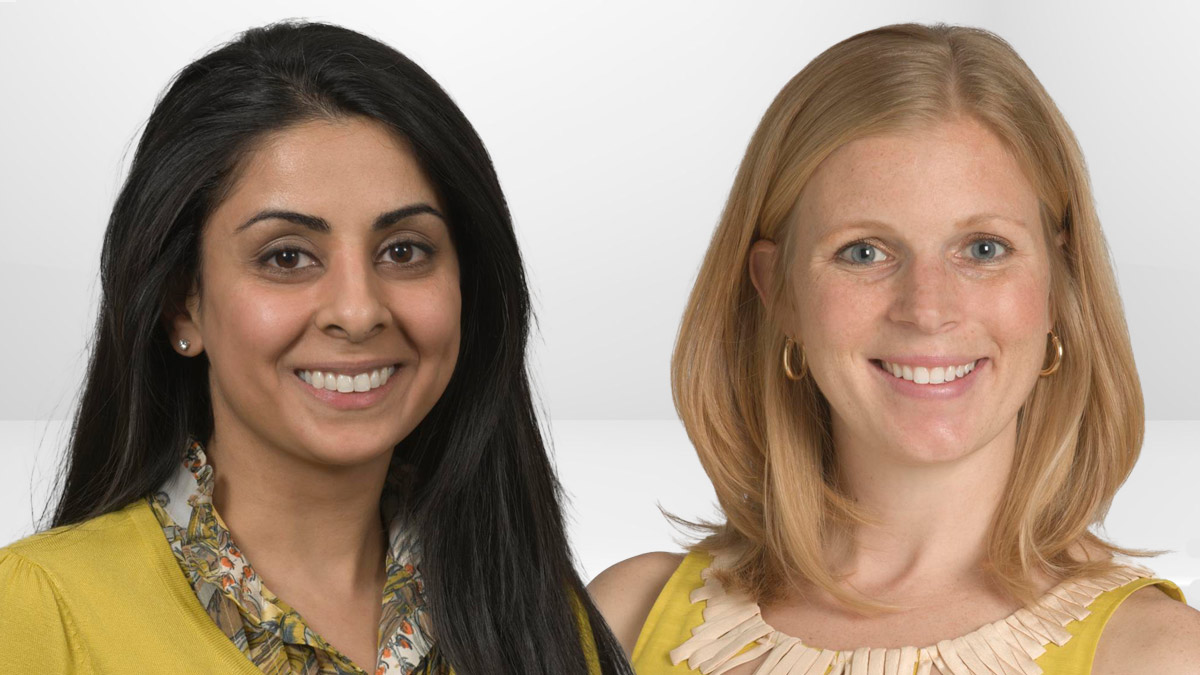
Breast density affects 50% of women and can significantly impact both cancer risk and early detection. Breast Radiologist, Paulette Turk, MD, and Medical Breast Program Director, Lakshmi Khatri, MD, join the Cancer Advances Podcast to discuss breast density, its risk implications and the role of supplemental screening. Listen as they explain how Cleveland Clinic is defining practical screening pathways in an area where national guidelines continue to evolve.
Advertisement
Cleveland Clinic is a non-profit academic medical center. Advertising on our site helps support our mission. We do not endorse non-Cleveland Clinic products or services. Policy
Recent Episodes
CAR T and Bispecific Therapies in AL Amyloidosis
Hematologist and myeloma specialist Shahzad Raza, MD, joins the Cancer Advances podcast to discuss emerging cellular and immune therapies fo…
Are We Missing Patients? Expanding Germline Genetic Testing in Oncology
As recommendations for germline genetic testing continue to expand, many eligible patients remain untested. In this episode of Cancer Advanc…
Partnering with Classical Hematology: Optimizing Referrals, Diagnostics and Patient Care
Bethany Samuelson Bannow, MD, Director of Classical Hematology at Cleveland Clinic, joins the Cancer Advances podcast to discuss how stronge…
Video content: This video is available to watch online.
View video online (https://cdnapisec.kaltura.com/p/2207941/sp/220794100/playManifest/entryId/1_lx45wqnb/flavorId/1_5f3sgelj/format/url/protocol/https/a.mp4)
Transcript
Dale Shepard, MD, PhD:
Cancer Advances, a Cleveland Clinic podcast for medical professionals exploring the latest innovative research and clinical advances in the field of oncology. Thank you for joining us for another episode of Cancer Advances. I'm your host, Dr. Dale Shepard, a Medical Oncologist and Co-Director of the Sarcoma Program at Cleveland Clinic.
Advertisement
Cleveland Clinic is a non-profit academic medical center. Advertising on our site helps support our mission. We do not endorse non-Cleveland Clinic products or services. Policy
Today I'm happy to be joined by doctors Paulette Turk and Lakshmi Khatri. Dr. Turk is a Breast Radiologist, and Dr. Khatri is the Director of the Medical Breast Program at Cleveland Clinic. They're here today to talk about breast density and the future of supplemental screening and breast cancer care. So welcome.
Paulette Turk, MD:
Thanks for having us.
Lakshmi Khatri, MD:
Thanks for having us.
Dale Shepard, MD, PhD:
So maybe give us a little bit of an idea what each of you do here. Start with Dr. Turk. What do you do here at Cleveland Clinic?
Paulette Turk, MD:
So, I'm one of the breast radiologists at Cleveland Clinic. I also do a lot with the new technologies. So I worked very closely with our section head to rule out supplemental screening program, including automated breast ultrasound as well as abbreviated MRI.
Dale Shepard, MD, PhD:
Excellent. And Dr. Khatri, what do you do?
Lakshmi Khatri, MD:
I'm an internal medicine physician and I currently direct our high-risk medical breast program. We focus on prevention and taking care of women who may be at elevated risk for getting breast cancer and how to help them manage their risk in addition to following survivors.
Dale Shepard, MD, PhD:
Excellent. So we're going to talk about supplemental screening. One thing that we're also going to talk about here is breast density. And so maybe Dr. Turk, we can start with you. Why is breast density become an important sort of topic when we think about screening?
Advertisement
Paulette Turk, MD:
So, I think the best way to start out that is probably just explain what breast density is. Let me back up a little bit. So a breast is composed of really two different types of breast tissue, one of which is fat, and the other one is the glands and the ducts, which make up the fibro glandular tissue.
If the amount of fibro glandular tissue exceeds the amount of fatty tissue in a breast, a woman is referred to as having dense breast tissue. Now, dense breast tissue appears white on a mammogram as does cancer. So dense breast tissue can obscure or hide breast cancer, which is why it is important that women are aware of their breast tissue density and why it's also one of the limitations we have with screening mammography.
Dale Shepard, MD, PhD:
And so, Dr. Khatri, how often is this something that we see as a risk factor? You mentioned high risk patients here. How common is it we see high density?
Lakshmi Khatri, MD:
Yeah, so it's actually quite common. Approximately 50% of women have elevated breast density. So that's categorized as heterogeneously dense or extremely dense. And the ratio of women who have dense breast tissue will go down with age naturally as there's less estrogen exposure in the breast tissue. But some of it is based on genetics as well.
So it's extremely common and there is data to show that there is a higher risk associated as well with breast density or elevated breast density. So the more glandular tissue you have in your breast, then the higher risk for potentially developing breast cancer there is based on volume. So as Paulette was mentioning, there's loss of sensitivity in the mammogram, but then there's also some potential elevation in risk.
Dale Shepard, MD, PhD:
So really you get both sides, you get increased risk and you get harder detection. So Dr. Turk, maybe you can talk to us about from an imaging standpoint, what does that mean in terms of how we think about screening?
Paulette Turk, MD:
So, there's actually been a number of advances within breast cancer screening over the last few years, especially with the advent of digital breast tomosynthesis. So digital breast tomosynthesis, previously a mammogram was specifically just a 2D examination. We had a lot of overlapping glandular tissue. Mammography relies a lot on compression and specifically compression of the breast tissue.
We need compression of the breast tissue really to kind of see through that breast tissue and highlight any abnormalities. The digital breast tomosynthesis, in addition to compressing the breast also is able to image the breast or reconstruct the breast at one millimeter slices, which allows us to kind of page through the breast almost like you're paging through a book to look for any kind of abnormalities. Specifically we're looking for any distortion or margins of masses.
Advertisement
Dale Shepard, MD, PhD:
And so are there different techniques other than the digital tomosynthesis? Like ultrasound, how has that been incorporated into screening?
Paulette Turk, MD:
The tried and true screening modality that is recommended across all national standards is screening mammography. It is the one modality that's been shown to reduce breast cancer morbidity and mortality. With supplemental screening now, we've been able to show that some women, especially those with dense breasts and extremely dense breasts, would benefit from additional screening in addition to the screening mammogram. So it does not replace the annual screening mammogram, but is meant to be used in addition to it.
So there's a few different types of supplemental breast cancer screening, one of which is whole breast ultrasound. So ultrasound relies on sound waves and how those will go through the breast tissue and allows us to see through the breast tissue differently than we do with mammography. The other screening modality we will use, especially in our patients with high risk and extremely dense breast. So high risk is greater than 20% lifetime calculated risk of developing breast cancer, is breast MRI. Breast MRI relies on contrast enhancement of the glandular tissue and it looks for any abnormalities or anything that stands out from the background.
Advertisement
Dale Shepard, MD, PhD:
So Dr. Khatri, maybe you can elaborate in terms of supplemental screening guidelines, what exactly are the triggers for who's high risk, who needs the supplemental screening, and then what kind of supplemental screening. So Dr. Turk had mentioned ultrasound versus MRI. What do the guidelines say?
Lakshmi Khatri, MD:
Yeah. So we can talk about high risk women first because that's I think the easiest and that is one in which we do actually have guidelines. So those, as Paulette had mentioned, are women who have a calculated lifetime risk of 20% or greater, a residual lifetime risk for getting breast cancer. And that's sort of based on statistical models that really rely heavily on family history, but do include density as well.
And women who carry a moderately or highly penetrant gene mutation that increases their lifetime risk as well for getting breast cancer. Or women who had radiation to their chest, so therapeutic radiation to their chest before the age of 30. And so those are the women who meet national criteria and guidelines for MRI surveillance and that is in high risk women. And then when we're talking about women who are otherwise not high risk but have dense breast tissue, this is when the supplemental imaging comes in with, again, two modalities we have at the Cleveland Clinic, which include the whole breast automated ultrasound and an abbreviated version of that MRI.
Advertisement
And some institutions have other modalities. Other institutions do something like molecular breast imaging. The reason that it's so varied is because there are no guidelines. There are just sort of recommendations. There is data out there that helps support the use of these modalities. And in 2022, actually in Ohio there was a bill passed requiring insurances to pay at least in part for supplemental imaging for women with dense breast tissue.
Dale Shepard, MD, PhD:
So Dr. Khatri, maybe we'll just continue with you for a second here in terms of, you mentioned about risk assessment. And so risk assessment sort of would assign someone to maybe need supplemental screening. Do those risk assessment models then go back and utilize information from that screening to change risk? Or once someone's sort of considered at high risk, are they always going to continue to have supplemental screening?
Lakshmi Khatri, MD:
So if somebody's at high risk, then it really is based on sort of their particular level of risk. So over time, if your risk is based solely on familial history and not particularly on a gene mutation, you will see that over time that residual lifetime risk will go down. And when I'm seeing somebody for high-risk management in my clinic, I'm redoing, I'm repeating and recalculating their risk about every three years.
And every year I also look at their breast density because there can be, for example, a high-risk woman with a gene mutation who has fatty replaced breast tissue and the sensitivity of her mammogram is so high that clinically it doesn't make sense to do additional imaging. So it's definitely not one size fits all. And now the biggest challenge comes in with 50% of women who have dense breast tissue and how do you provide guidance when there are multiple options and no specific guidelines on who should get what screening and how often?
Dale Shepard, MD, PhD:
Yeah. So we've talked about ultrasound and MRI, molecular testing. We've talked about the lack of clear guidelines in some cases. How did we, here at the clinic, how do we navigate what testing is best and kind of what are the pros and cons that we consider?
Lakshmi Khatri, MD:
We know when we're thinking about women, the cancer detection rates vary and that's an important thing to think about. So with whole breast ultrasound, with a 3D mammogram, for example, the cancer detection rate is about five to seven out of a thousand women screened. And with whole breast ultrasound, it varies based on studies, but somewhere between two to four out of a thousand women screened, you'll capture more cancer.
And with things like MRI, the numbers are on average 15 to 20 out of thousand women screened. And so there are definitely different sensitivities of these images, but then there's also risks and benefits to consider. I don't know, Paulette, if you want to add anything to that.
Paulette Turk, MD:
That's exactly correct. So ultrasound tends to show a little bit less sensitivity than MRI. So our higher risk patients, we tend to screen with MRI. A lot of research is coming out that we really need some kind of contrast. So we've talked about really adding contrast-enhanced mammography.
Currently, contrast-enhanced mammography is actually only approved for diagnostic settings, but it's really shown a lot of promise in high-risk screening or dense breast screening or supplemental screening. But the nice thing about automated breast ultrasound is it's a non-invasive test that requires no contrast.
Lakshmi Khatri, MD:
Yeah. The other thing is, I'm talking to women about these options when they're not high risk and sort of as Paulette alluded to, if you look at the NCCN guidelines and all sort of the expert statements about high-risk women in screening is that it should be some sort of contrast image. And in fact, they really recommend it's MRI. And if it's not MRI for those high-risk women, then it has to be, it should be contrast-enhanced mammography or molecular breast imaging. And they really put whole breast ultrasounds sort of as the final option for those high-risk women.
But for the women who are not otherwise at high risk, but just have dense tissue, some of the things you need to think about are the false positive rate, the callback rate as well, and also the discomfort that might come with imaging. Right? So with an MRI, there's always contrast involved. It's a tight space. A lot of people are claustrophobic and that can be a challenge. You're also imaging other parts of the body. Right? So incidental findings are something to consider. And with a whole breast ultrasound, it's a pretty simple test.
It's not as expensive, it's just focusing on the breast tissue. And so one thing that I use as my sort of fork in the road is if a woman has extremely dense breast tissue, so that's the top 10% of women where their tissue is often like a sheet. There's no sort of variation. It's very difficult to read. The sensitivity is probably as low as 60%. Those are the women in whom I often will recommend as a supplement that they do the abbreviated MRI, because their risk is also higher because of the volume of glandular tissue they have. And there's some pretty good data.
There was a huge randomized control trial called the DENSE trial that came out in 2019 and it was looking at women with extreme density in the Netherlands. And they looked at like 40,000 women. And essentially the women who were getting MRIs doubled their cancer detection rate. And so in Europe, and I don't know if Paulette has more information about this, but I understand they've been recommending MRI every two to four years to supplement mammogram for women with extreme density. So I use that as sort of some guidance for how I can guide my patients.
Dale Shepard, MD, PhD:
What kind of support do we have for, you mentioned things like as you do supplemental screening, you may have more false positives, you may have more benign findings. Certainly anxiety is associated with that. How do we as a program address those issues?
Lakshmi Khatri, MD:
Well, I think when you're offering this type of screening to somebody, one, it's important. So in the high risk women in whom we're recommending it, I always have a conversation about expectations, that this is the percentage chance you'll get called back after an MRI for an ultrasound, and this is the chance that you'll have a false positive and end up with a biopsy. Because I think that if you can at least ensure that a woman knows what to expect, you can help sort of mitigate some of that anxiety.
But Paulette and I have talked about this a lot when we're thinking about the supplemental program is that a lot of it has to do with a woman's sort of risk tolerance and sort of values and preferences. And so that I think it's important to empower women with all of this information so that they're able to make the decision that makes sense for them. And so for that woman who is like, "I don't want to go down this road of potential callbacks and every six month images if it's going to happen, that's too much anxiety for me" versus the woman who's like, "I want to do everything possible to make sure I'm not missing something," that helps me guide them in making that decision.
Dale Shepard, MD, PhD:
So I have a very, very practical question. People might be listening in a lot of different backgrounds, different places they're working. If someone wants to put together a breast program, do a lot of supplemental screening, it's a lot more imaging. I mean, it's a big lift. Any recommendations on kind of how you accommodate that increased volume?
Paulette Turk, MD:
I mean, I think you just need to make sure that you have adequate staffing to be able to read the additional studies. Because patients that get called back for an abnormal MRI or an abnormal whole breast ultrasound usually would like to be seen within a certain amount of time to ensure that their abnormal study is really addressed. But I think that's the most important thing.
Lakshmi Khatri, MD:
Yeah, it's a large volume of women. Right? I mean, 50% of our women and how many do we screen per year? Quite a couple hundred thousand in Northeast Ohio alone.
Dale Shepard, MD, PhD:
It's a lot of screening.
Lakshmi Khatri, MD:
Yeah. Clinically on our end of things what I have found is there's been a lot of education in primary care in GYN because really these are the providers that are ordering mammograms for their women and making sure their women are getting screened. And so they're getting a lot of volume of sort of work and how do I manage all of this? Right? These are not short conversations.
And so in our program, we developed a virtual shared medical appointment that's targeted specifically for women who have dense breast tissue so that we have the opportunity to give them all of that education and go over information and how do these modalities work and what does an MRI look like and what does an ultrasound look like? And then give individualized recommendations to each of the women as well. And so this is born out of necessity because of the volume of women who have questions.
Dale Shepard, MD, PhD:
It sounds like a pretty powerful resource. This is something that primary care can sign people up for and let them know about?
Lakshmi Khatri, MD:
Absolutely.
Dale Shepard, MD, PhD:
Yeah. That's good. What's the role of AI at this point in terms of, we're talking about looking at different imaging modalities, trying to find a better way to read films. Probably AI has impacted radiology as much as anything from a reading standpoint. How's that being incorporated?
Paulette Turk, MD:
Yeah. No, you're a hundred percent right. Radiology does use a lot of artificial intelligence. We specifically like artificial intelligence as a second reader on mammography. We also have it on automated whole breast ultrasound. The nice thing is that it really tends to have a good sensitivity in that if the study's negative, it's got a good negative predictive value. The vendors tend to vary quite a bit, but it's supposed to increase the accuracy of the radiologist.
Dale Shepard, MD, PhD:
What's going to be next, incorporating some different imaging modalities, trying to come up with risk assessments? What does the perfect screening look like to each of you?
Paulette Turk, MD:
From an imaging standpoint, ideally, I would like a study that is more physiologic based. So a lot of the contrast enhanced studies are really showing that that's going to be your best ability to detect small, non-invasive or invasive breast cancers at a no negative state. And then really leveraging our artificial intelligence to increase the efficiency of the radiologist. So the more studies they're done, the more they can detect and get done.
Lakshmi Khatri, MD:
I think for me, obviously the ideal sort of screening image is one that has a low chance of false positives. Right? And is well tolerated. But there is a lot coming out with contrast enhanced mammography and perhaps an ultra-fast version of the abbreviated MRI that we're doing already, which is quite sensitive in comparison to the full MRI.
But when it comes to assessment of risk, I mean, these statistical models that we use are not perfect. There's no one perfect way to assess risk. And so with that is probably further looking into genetics and using something like a polygenic risk score that can help us identify women who may be at lower risk and can de-escalate some of their screening versus women who potentially are higher risk and really do need to have more intensive surveillance.
Dale Shepard, MD, PhD:
Very good. Well, it's certainly a very important and well, because of the nature of this, the condition of having dense breasts and needing further screening, it's an important topic. So appreciate you guys being with us and giving us some good insights today.
Lakshmi Khatri, MD:
Thank you.
Paulette Turk, MD:
Thank you.
Dale Shepard, MD, PhD:
To make a direct online referral to our Cancer Institute, complete our online cancer patient referral form by visiting clevelandclinic.org/cancerpatientreferrals. You will receive confirmation once the appointment is scheduled.
This concludes this episode of Cancer Advances. For more podcast episodes, visit our website, clevelandclinic.org/canceradvancespodcast. Subscribe on Apple Podcasts, Spotify, or wherever you listen to podcasts.
Thank you for listening. Please join us again soon.
Recent Episodes
CAR T and Bispecific Therapies in AL Amyloidosis
Hematologist and myeloma specialist Shahzad Raza, MD, joins the Cancer Advances podcast to discuss emerging cellular and immune therapies fo…
Are We Missing Patients? Expanding Germline Genetic Testing in Oncology
As recommendations for germline genetic testing continue to expand, many eligible patients remain untested. In this episode of Cancer Advanc…
Partnering with Classical Hematology: Optimizing Referrals, Diagnostics and Patient Care
Bethany Samuelson Bannow, MD, Director of Classical Hematology at Cleveland Clinic, joins the Cancer Advances podcast to discuss how stronge…
Never miss a moment - subscribe now.
Listen to the Health Essentials Podcast on your favorite streaming platform.
Other Podcasts You May Love
Beyond Leadership
Hosts Jim Pae and Elizabeth Pugel escort you through a network of thought leaders, sharing world-cla…
Beyond the Pages: CCJM Podcast
Beyond the Pages: CCJM Podcast takes the listener more in-depth into Cleveland Clinic Journal of Med…

Butts & Guts
A Cleveland Clinic podcast exploring your digestive and surgical health from end to end. You’ll lear…
Cardiac Consult
A Cleveland Clinic podcast exploring heart, vascular and thoracic topics of interest to healthcare p…