



A National Tumor Board for DNA Repair and Telomere Biology Disorders
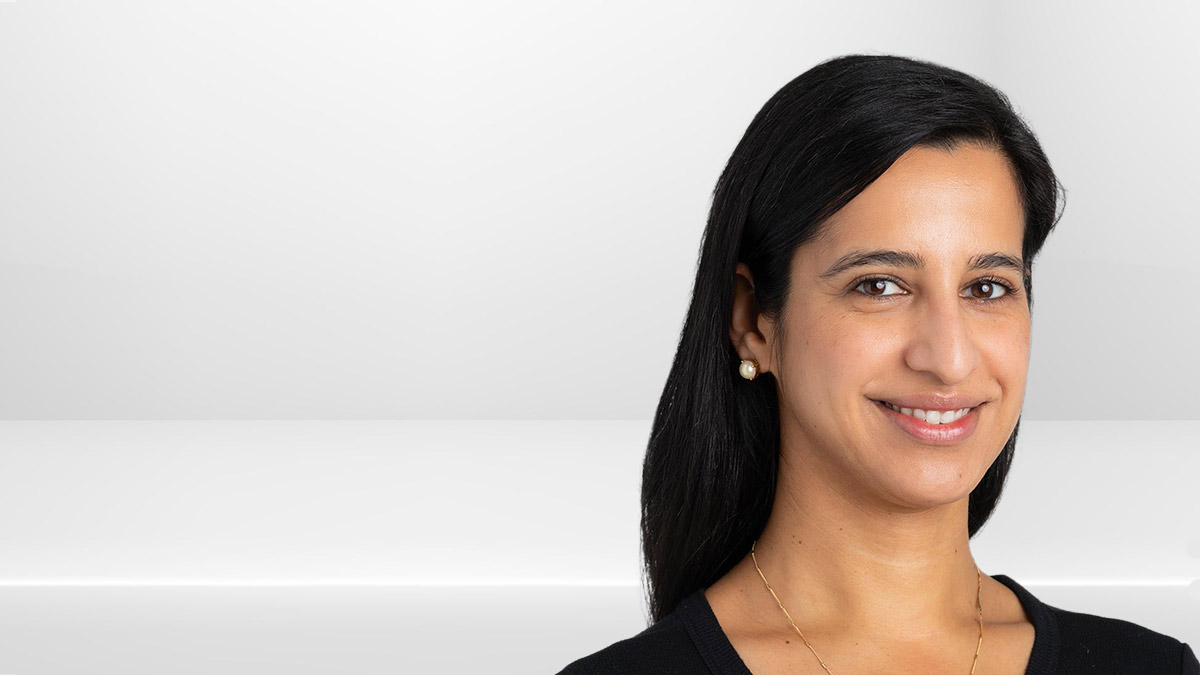
Associate Staff and Physician Scientist at Cleveland Clinic Children’s, Richa Sharma, MD, joins the Cancer Advances podcast to discuss the launch of a National DNA Repair and Telomere Biology Disorder Tumor Board. Listen as Dr. Sharma explains the cancer predisposition associated with these rare inherited disorders, the challenges of treating malignancy in patients with impaired DNA repair, and how a multidisciplinary, national tumor board can help clinicians navigate complex treatment decisions and toxicity risks.
Advertisement
Cleveland Clinic is a non-profit academic medical center. Advertising on our site helps support our mission. We do not endorse non-Cleveland Clinic products or services. Policy
Recent Episodes
Redefining Resectability in Advanced Rectal Cancer
What happens when a cancer is deemed unresectable? In this episode, Dr. Haniee Chung discusses how multidisciplinary care is expanding treat…
Preserving Vision, Expanding Options in Uveal Melanoma
As new therapies move through clinical trials, the management of uveal melanoma is entering a period of significant change. In this episode…
Integrating Goals-of-Care Discussions in Oncology Practice
How can oncologists initiate meaningful goals-of-care discussions earlier in the disease course? In this episode, Dr. Natalie Jacobowski out…
Video content: This video is available to watch online.
View video online (https://cdnapisec.kaltura.com/p/2207941/sp/220794100/playManifest/entryId/1_tcxouz2b/flavorId/1_5f3sgelj/format/url/protocol/https/a.mp4)
Transcript
Dale Shepard, MD, PhD:
Cancer Advances, a Cleveland Clinic podcast for medical professionals, exploring the latest innovative research and clinical advances in the field of oncology. Thank you for joining us for another episode of Cancer Advances. I'm your host, Dr. Dale Shepard, a Medical Oncologist and Co-Director of the Sarcoma Program at Cleveland Clinic. Today, I'm happy to be joined by Dr. Richa Sharma, an Associate Staff and Physician Scientist at Cleveland Clinic Children's. She's here to discuss a National DNA Repair and Telomere Biology Disorder Tumor Board, so welcome.
Advertisement
Cleveland Clinic is a non-profit academic medical center. Advertising on our site helps support our mission. We do not endorse non-Cleveland Clinic products or services. Policy
Richa Sharma, MD:
Thank you for having me.
Dale Shepard, MD, PhD:
Absolutely. So, give us a little bit of an idea of what you do here at Cleveland Clinic.
Richa Sharma, MD:
Yeah, so I'm a physician scientist, so I do research 80% of the time in the basic wet lab. And I see patients 20% of the time, and the patients that I see usually have DNA repair disorders and bone marrow failure. And then I also am on service and I see patients with cancer and benign hematologic diseases.
Dale Shepard, MD, PhD:
Okay. So, when we think about DNA repair and telomere biology disorders, a lot of people listening and might not know exactly what that is. Can you give us maybe an overview about what diseases we're talking about here?
Richa Sharma, MD:
So, DNA repair disorders, these are rare disorders, relatively rare disorders, and they happen due to people inheriting mutations in certain genes. And those genes belong to a pathway called a DNA repair pathways. So, when these genes are not working properly because they have mutations in them, your DNA doesn't correct itself well when it makes mistakes. And so, that's why these patients tend to have disease manifestations, and one of the hallmark features for DNA repair disorders is cancer predisposition. So, that's really DNA repair disorders. Telomere biology disorders are also heritable disorders, but these happen because of inherited mutations and telomere genes. And therefore, because your telomeres are not well protected, you have early onset telomere shortening, liver fibrosis, pulmonary fibrosis, bone marrow failure, and again, cancer predisposition. So, the two things that both of these big umbrella disorders have in common is cancer predisposition. And that's where the tumor board comes from.
Advertisement
Dale Shepard, MD, PhD:
Okay. When we think about patients being affected by these, these are inherited, but when do you first start seeing evidence of a problem?
Richa Sharma, MD:
Usually, patients with a DNA repair disorders and telomere biology disorders commonly present in childhood. So, really across a pediatrician's office or someone like me, that's going to be the most common diagnosis. But you can also see these patients specifically for telomere biology disorders in adult clinics. So, for example, some of these patients tend to have pulmonary fibrosis or liver fibrosis as adults, but they may not have marrow failure, which usually presents pretty early. So, really, for DNA repair disorders, it's children and telomere biology, it's a spectrum and these people can be seen as adults.
Dale Shepard, MD, PhD:
Okay. I guess we're going to talk about a National DNA Repair and Telomere Biology Disorder Tumor Board. Give us a little bit of an idea of what the thought process. How did this start? How did we get involved in this?
Richa Sharma, MD:
Yeah. So, I am consulted from really all over the world about patients, these really difficult patients, specifically in ataxia-telangiectasia, which is a DNA repair disorder. So, usually, these are physicians who are seeing this very complicated patients with complicated heritable disorder. And then these patients tend to have cancer on top of this complex disorder. So, really, the question comes, well, how do you treat somebody's cancer with chemotherapy who already has issues with fixing their DNA and what kind of toxicities can come up for these patients? Because usually, patients with the DNA repair disorders, the management of cancer is quite tricky because they have an inherent defect in repairing DNA. So, when you give them chemotherapy, not only are you affecting their tumor, but you're also affecting the rest of their body, which causes them to have severe toxicity. So, it's a very fine line that you have to walk, hopefully, not to give them too much toxicity, but trying to achieve cure of their cancer.
So, that's really where the thought of this tumor board came about. And the same thing with telomere biology disorders, the standard of care for treatment for cancer in these rare disorders, it's lacking. There's not a standard of care. So, we thought it would be a good idea to get physicians, cancer champions, disease champions online to provide advice to the physician who could be anywhere in the nation who's caring for this patient with a complex disease and now a complex cancer.
Dale Shepard, MD, PhD:
So, when we think about particular diagnoses or age groups, are there anything you see on a recurring basis on the tumor board or is it really across the spectrum?
Richa Sharma, MD:
I would say really, it's across the spectrum for both DNA repair and telomere biology. But really, and I say across the spectrum because I don't want anyone to shy away from saying, "Well, I have this one rare cancer in a patient who I think has A-T, but it's not the cancer spectrum that's usually seen because anything is possible." But really for A-T, these patients tend to have lymphomas and GI cancers later on in age. And then the telomere biology disorder patients tend to have AML, MDS, and squamous cell carcinomas, head and neck carcinomas, and things of that nature. But other cancers have been described and it's across the age spectrum, but usually, the solid cancers happen at an older age.
Advertisement
Dale Shepard, MD, PhD:
When you think about the patients that are presented at the tumor board, is it often a new diagnosis and someone that you already knew had the underlying DNA repair issue or are these sometimes people that they've had a relapse or they recur and then it's discovered?
Richa Sharma, MD:
Yeah, that's a great question. So, I would say 85% of the time, you know that the patient has something underlying genetic disorder, but 15% to 20% of the time, the germline disorder is diagnosed after the fact that this patient comes in, they have had a weird history, well, we're treating their cancer and they're just not rebounding their counts and they have severe toxicity. And that's kind of where people start thinking about DNA repair disorders. So, I've been on both ends of that conversation.
Dale Shepard, MD, PhD:
Are we seeing this more often now that more and more guidelines for cancers are suggesting germline testing or just in the course of looking for treatment options, we're doing more genomic testing?
Richa Sharma, MD:
Yes, absolutely. And that is specifically for telomere biology disorders. This was an entity that was pretty underappreciated, but over the last decade, we've seen a pretty big increase in diagnostics and just diagnosing this constellation of features called telomere biology disorder because again, these patients can be in adult clinics or pediatric clinics, but again, also for DNA repair disorders, as well.
Advertisement
Dale Shepard, MD, PhD:
So, for the tumor board itself, who makes up the tumor board? Who do you have involved and what specialties and how do they contribute to the discussions?
Richa Sharma, MD:
So, the tumor board, it's really a multi-institutional tumor board. So, we have several people from different institutions that are either interested in these disorders, have experience with seeing these patients with these disorders, or are cancer champions that are very familiar with treating the cancer and the nuances of treatment, but may not be familiar with the rare germline disorder. And there's also scientists on the tumor board that are there to listen in. And of course, people like me who've seen and heard of several A-T patients have described it in literature and know the toxicities and nuances. And so, yeah, it's a very collaborative group of people that are there to help.
Dale Shepard, MD, PhD:
When you think about like yourself as a physician scientist, you mentioned scientists and clinicians, have you had research questions that have come through as a result of the tumor board and led to collaborations from that standpoint?
Richa Sharma, MD:
Yeah. So, the tumor board, I'm sure there will be research questions that will stem from the tumor board. I do basic science research in telomere biology disorders, and I also do it in DNA repair. And so, there's nothing that directly comes from the tumor board because it hasn't really yet started, but I would be very surprised if that wasn't the case going forward.
Advertisement
Dale Shepard, MD, PhD:
What's the frequency of meeting? And oftentimes, I'm guessing that some of these patients need some relatively quick decisions from a logistics standpoint. How does that work?
Richa Sharma, MD:
Yeah. So, to respect everybody's time and just provided that these disorders are pretty rare. So, the tumor board meets once a month on Thursdays, and it's usually the second Thursday of each month. And we request that physicians submit their cases a week prior to the tumor board so that we have enough time to circulate the cases and get feedback. But if it's an emergent case, as you had mentioned, that's something that we would probably work on offline just to get the physician the help they needed.
Dale Shepard, MD, PhD:
Given the unique nature of this disorder and your expertise in the area, do patients utilize our virtual second opinion service that we have here at Cleveland Clinic?
Richa Sharma, MD:
For telomere biology disorders, perhaps I don't know of a lot of patients utilizing that for the DNA repair disorders.
Dale Shepard, MD, PhD:
If a clinician might be listening in, they're interested in thinking about getting involved to present a case, how would they go about doing that?
Richa Sharma, MD:
Yeah. So, we'll do our PR and there'll be a QR code that you can scan and that'll take you to a REDCap database, where you input all the details that we ask for and that'll come straight to us and we'll assess the case and we'll contact you.
Dale Shepard, MD, PhD:
So, it seems pretty easy.
Richa Sharma, MD:
That's what we're hoping.
Dale Shepard, MD, PhD:
As you develop the tumor board, are there particular specialties or people that you might want to be getting involved that you don't currently have? And maybe how could those people get in contact with you to participate?
Richa Sharma, MD:
Yeah. First of all, we would love... yeah, if anybody's interested, please feel free to join the call just to learn, but we're basically going to be consulting the physician based on the cancer that is diagnosed. So, for example, if it's a gastrointestinal cancer that's diagnosed, we'd be reaching out to our GI colleagues here at Cleveland Clinic to give us their opinion on the details of how they treat GI cancers and its nuances and just normal adults. And then on the panel, there are people on the panel that have disease expertise as far as DNA repair disorder or telomere biology. So, we would be joining those two voices to make a reasonable treatment strategy to discuss with the clinician. So, really, we'll be folding in the oncology consultants based on the patient's need.
Dale Shepard, MD, PhD:
Well, it sounds like you have a great mechanism in place to help a lot of people with rare disorders. And congrats on getting everything together and good luck as you get started.
Richa Sharma, MD:
Thank you so much. And yeah, we welcome learners and physicians for these patients who we'd love to provide care for.
Dale Shepard, MD, PhD:
That's great. Appreciate your insights.
Richa Sharma, MD:
Thank you.
Dale Shepard, MD, PhD:
To make a direct online referral to our Cancer Institute, complete our online cancer patient referral form by visiting clevelandclinic.org/cancerpatientreferrals. You will receive confirmation once the appointment is scheduled.
This concludes this episode of Cancer Advances. For more podcast episodes, visit our website, clevelandclinic.org/canceradvancespodcast. Subscribe on Apple Podcasts, Spotify, or wherever you listen to podcasts.
Thank you for listening. Please join us again soon.
Recent Episodes
Redefining Resectability in Advanced Rectal Cancer
What happens when a cancer is deemed unresectable? In this episode, Dr. Haniee Chung discusses how multidisciplinary care is expanding treat…
Preserving Vision, Expanding Options in Uveal Melanoma
As new therapies move through clinical trials, the management of uveal melanoma is entering a period of significant change. In this episode…
Integrating Goals-of-Care Discussions in Oncology Practice
How can oncologists initiate meaningful goals-of-care discussions earlier in the disease course? In this episode, Dr. Natalie Jacobowski out…
Never miss a moment - subscribe now.
Listen to the Health Essentials Podcast on your favorite streaming platform.
Other Podcasts You May Love
Beyond Leadership
Hosts Jim Pae and Elizabeth Pugel escort you through a network of thought leaders, sharing world-cla…
Beyond the Pages: CCJM Podcast
Beyond the Pages: CCJM Podcast takes the listener more in-depth into Cleveland Clinic Journal of Med…
Butts & Guts
A Cleveland Clinic podcast exploring your digestive and surgical health from end to end. You’ll lear…
Cardiac Consult
A Cleveland Clinic podcast exploring heart, vascular and thoracic topics of interest to healthcare p…