A urinary tract infection is a very common type of infection in your urinary system. It can involve any part of your urinary system. Bacteria are the most common cause. Symptoms include needing to pee more often, pain while peeing and pain in your sides or lower back. Antibiotics can treat most UTIs.
Advertisement
Cleveland Clinic is a non-profit academic medical center. Advertising on our site helps support our mission. We do not endorse non-Cleveland Clinic products or services. Policy
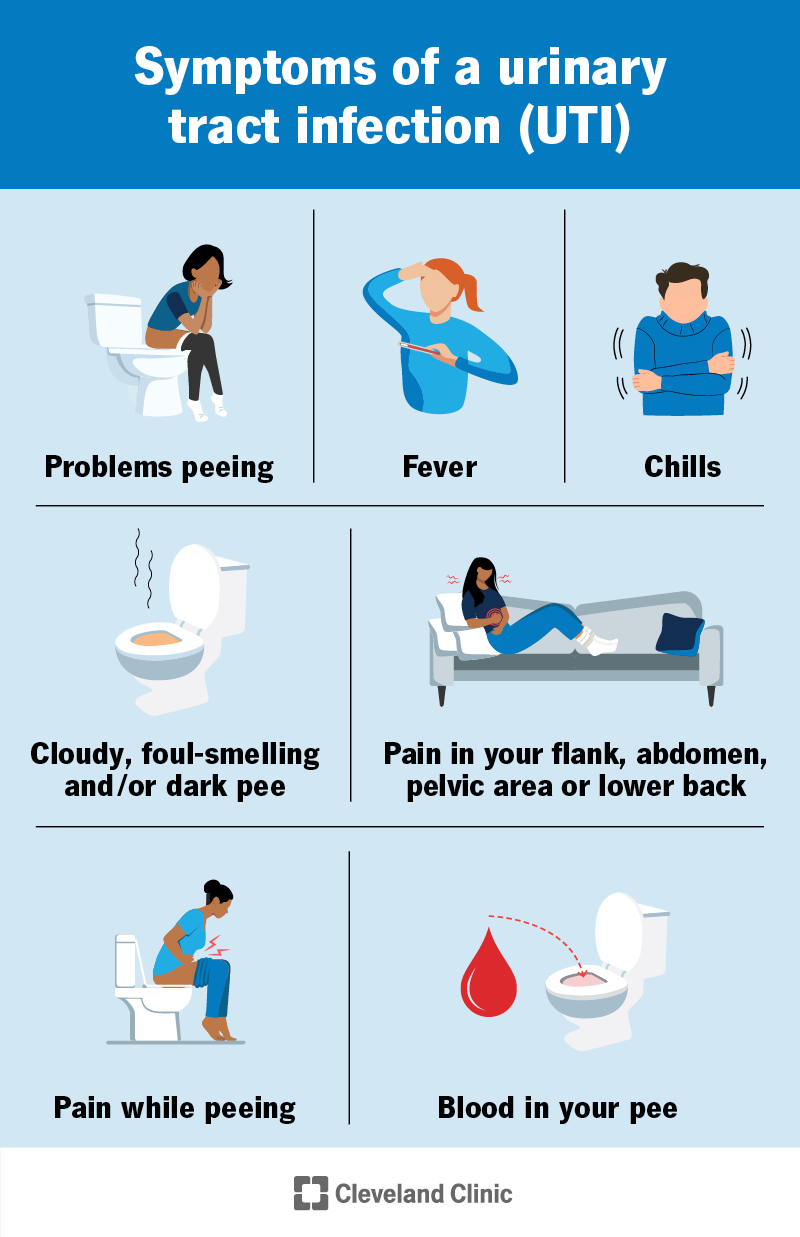
Image content: This image is available to view online.
View image online (https://my.clevelandclinic.org/-/scassets/images/org/health/articles/uti)
A urinary tract infection (UTI) is an infection of your urinary system. Your urinary system makes and stores pee (urine). UTIs can involve the main parts of the urinary system, like your:
Advertisement
Cleveland Clinic is a non-profit academic medical center. Advertising on our site helps support our mission. We do not endorse non-Cleveland Clinic products or services. Policy
UTIs are very common, especially if you’re female. More than half of all females will have a UTI at some point during their lives. Males and children can also get UTIs, but it’s not as common. Healthcare providers treat over 8 million people each year for UTIs.
Inflammation in your urinary system may cause symptoms like:
Other UTI-associated symptoms may include:
Microorganisms — usually bacteria — cause UTIs. E. coli causes most infections.
Other less common causes may include:
The microorganisms usually enter your body through your urethra. They may infect your bladder. The infection can also travel up from your bladder through your ureters. In some cases, it can eventually infect your kidneys.
Anyone of any age can get a UTI. But you’re more likely to get one if you have a vagina. That’s because your urethra is shorter and closer to your anus, where E. coli are common.
Advertisement
You also may be more likely to get a UTI if you:
Without treatment, urinary tract infections may cause:
A healthcare provider will review your medical history, ask questions about your symptoms and perform a physical exam. If they think you have a UTI, they may recommend that you provide a urine sample so they can do tests like:
If it doesn’t respond to treatment, your healthcare provider may recommend more tests to check your urinary system for a disease or injury. These may include:
If you get UTIs a lot, your provider may check for other health issues that may cause an infection. These include diabetes or an abnormal urinary system, like an enlarged prostate.
You need oral antibiotics to treat it. Your healthcare provider will select one that works best against the microorganism. It’s very important that you follow your provider’s directions. Be sure to take the full course of antibiotics, even if you start feeling better. If you don’t finish all of your antibiotics, the infection can come back and be more challenging to treat.
If you get UTIs often, your provider may recommend that you take low-dose antibiotics:
Every time you use antibiotics, the infection can adapt and become harder to fight. To prevent this, your provider may suggest other UTI treatments. These may include:
Healthcare providers commonly prescribe the following to treat UTIs:
Advertisement
Most people feel better within a few days after starting antibiotics to treat a UTI. If you don’t, reach out to your healthcare provider. They may recommend extra tests to check for other conditions that may cause similar symptoms.
Schedule an appointment with a healthcare provider if you have symptoms of a UTI. Contact them again if they diagnose you with a UTI and your symptoms get worse. You may need a different treatment.
Go to the emergency room (ER) if you have a UTI and develop:
The outlook is good. Most UTIs usually respond very well to treatment. They may be uncomfortable or annoying before you start treatment. But once your healthcare provider prescribes the proper antibiotic, your symptoms should improve quickly.
You can help prevent them by:
Advertisement
Urinary tract infections (UTIs) can be frustrating and embarrassing. They can also be painful and affect your peeing habits. It’s important to remember that you haven’t done anything wrong. UTIs are very common, especially if you have a vagina. The good news is that most cases are easily treatable with oral antibiotics. Your symptoms should go away a few days after starting them. Be sure to follow your healthcare provider’s instructions so the UTI goes away and doesn’t come back.
Advertisement



Sign up for our Health Essentials emails for expert guidance on nutrition, fitness, sleep, skin care and more.
Learn more about the Health Library and our editorial process.
Cleveland Clinic’s health articles are based on evidence-backed information and review by medical professionals to ensure accuracy, reliability and up-to-date clinical standards.
Cleveland Clinic’s health articles are based on evidence-backed information and review by medical professionals to ensure accuracy, reliability and up-to-date clinical standards.
Need care fast? Cleveland Clinic’s Express Care and Urgent Care locations treat everything from sprains to sinus infections — no appointment needed.