



The Intersection of Cutting-Edge Technology and Compassionate Patient Care
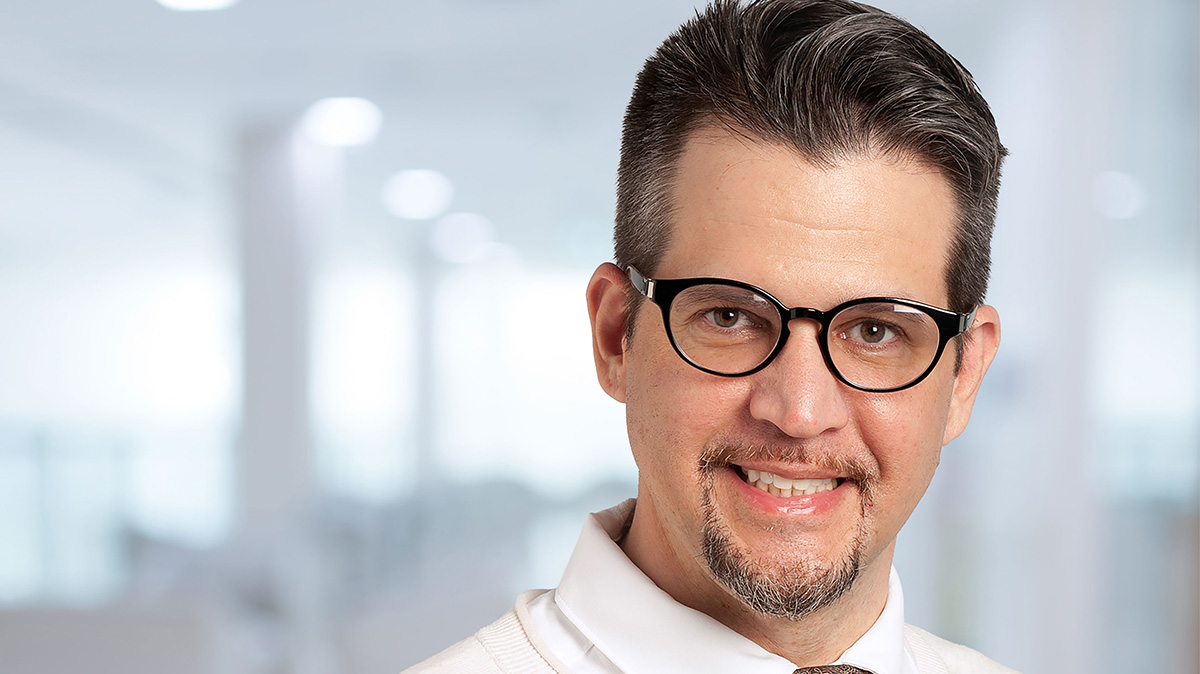
Healthcare is inundated with new technologies, from workflow and documentation tools to virtual patient companions and AI-enabled medical devices. "We're seeing technology evolve faster than ever, and nurses are right at the center of that change," says Matthew Shesko, MSN, NI-BC, NE-BC, Nurse Manager for Nursing Informatics at Cleveland Clinic. In this episode of Nurse Essentials, Shesko discusses how nurses can continue to provide compassionate patient care while embracing technology.
Advertisement
Cleveland Clinic is a non-profit academic medical center. Advertising on our site helps support our mission. We do not endorse non-Cleveland Clinic products or services. Policy
Recent Episodes
Spotlight on Critical Care Transport
Imagine employing all the skills, competencies and critical thinking needed to deliver top-notch care to patients in urgent situations while…
Leaning into Evidence-Based Practice
Evidence-based practice involves three factors: using high-quality research to guide nursing practice, relying on clinical expertise and inv…
Caring for Patients with Chronic Lung Disease
Four to six percent of Americans live with some form of chronic lung disease, and it remains one of the leading causes of death and illness…
Video content: This video is available to watch online.
View video online (https://cdnapisec.kaltura.com/p/2207941/sp/220794100/playManifest/entryId/1_3idrlykb/flavorId/1_5f3sgelj/format/url/protocol/https/a.mp4)
Transcript
Carol Pehotsky, DNP, RN, NEA-BC, CPAN:
No matter when you're listening to this episode, we find ourselves in a fascinating time at this intersection of what is currently existing with technology and AI and what is yet to come and what will come that defies any possible imagined scenario we can think of. And within all of that, we remain nurses. We want to be taking care of our patients. We want to put our patients at the center of the care. We want to provide that art of nursing. And yet it can be daunting to think about how I interact with all these technologies in a way that enhances care and doesn't distance me from the bedside and from my patient. We're joined today by Matt Shesko, nurse manager for nursing informatics to talk more about how to keep nurses at the heart of care while implementing and embracing technology.
Advertisement
Cleveland Clinic is a non-profit academic medical center. Advertising on our site helps support our mission. We do not endorse non-Cleveland Clinic products or services. Policy
Hi, and welcome to Nurse Essentials, a Cleveland Clinic podcast where we discuss all things nursing, from patient care to advancing your career, to navigating tough on- the-job issues. We're so glad you're here. I'm your host, Carol Pehotsky, Associate Chief Nursing Officer of Surgical Services Nursing.
Welcome back, everyone. If you've been listening from the beginning, you know that over time, we've had some really fantastic guests talking about nursing informatics and technology and documentation. And we had guests talk about our hospital care at home and the virtual nursing. Throughout those and other topics, if you've been paying attention, you've probably heard me say at least twice, that's how you get the Terminator. <laugh> It’s that balance of being a Gen X gal and growing up with media around some level of fear of AI and technology and robots and the matrix and all those things that if y'all have no idea I'm talking about, just go into the vault of 90s and 2000s movies. <laugh> A few of the 80s movies sprinkled in.
Here we are, we're in that space. And as nurses, no matter our generation, putting our heads in the proverbial sand and trying to ignore it will be not just our own professional peril, but potentially the peril of our patients. It behooves us and is incumbent upon us to find a place where we can be curious about it, engage with it, and engage our experts when we do have some of those fears about what does this mean for me and the care I provide.
Advertisement
To that, it's my great pleasure to welcome to the show today, Matt Shesko. Matt is the nurse manager for nursing informatics here at Cleveland Clinic. And a wealth of expertise when it comes to all things nursing informatics. Matt, thank you so much for joining me today.
Matthew Shesko MSN, NI-BC, NE-BC
Oh great. Thank you so much, Carol. It's, it's a pleasure and honor to be here. I'm super excited about this conversation.
Carol Pehotsky, DNP, RN, NEA-BC, CPAN:
Yes.
Matthew Shesko MSN, NI-BC, NE-BC:
Because of the technology that our nurses are using and experiencing, we’re seeing technology evolve faster than ever and nurses are right at the center of that change.
Carol Pehotsky, DNP, RN, NEA-BC, CPAN:
Yes.
Matthew Shesko MSN, NI-BC, NE-BC:
Today I'm really looking forward to talking about how we can design technology that actually enhances the art of nursing. I'm really passionate about the art of nursing and what I do and really the importance of never losing sight. You have the science of nursing, you have the technology that impacts that science of nursing. My passion really lies at keeping that nurse and that patient at the center of care.
Carol Pehotsky, DNP, RN, NEA-BC, CPAN:
Before we get into it, I know you had a really fantastic nursing career that led to your role in nursing informatics. Would you mind telling our audience a little bit about your professional journey leading up to today?
Matthew Shesko MSN, NI-BC, NE-BC:
Yes. I've been a registered nurse for 15 years. I started on the intermediate care unit and worked on that unit for three years on the floor. I had an opportunity to, at that point, the healthcare organization that I was working for, making the leap from paper to electronic documentation records. And I had an opportunity to get involved with that. I really enjoyed that opportunity and that led me to pursue ... I was an ADN student. [Okay.] So, I went from ADN to a bridge to an MSN program.
Carol Pehotsky, DNP, RN, NEA-BC, CPAN:
Oh, nice.
Matthew Shesko MSN, NI-BC, NE-BC:
And my emphasis was on nursing informatics. So that's how I ended up with a passion for number one nursing- [Mm-hmm.] ... but number two, then nursing informatics.
Carol Pehotsky, DNP, RN, NEA-BC, CPAN:
Fantastic.
Matthew Shesko MSN, NI-BC, NE-BC:
Yes.
Carol Pehotsky, DNP, RN, NEA-BC, CPAN:
And so, then you launched your career in nursing informatics. Tell us a little bit about what that journey's been like so far.
Matthew Shesko MSN, NI-BC, NE-BC:
The journey's been really great. Nursing's taken me farther than I ever really thought I'd go. And when I got into the field of informatics, it was really looking at how do we separate that technology again to preserve that art of nursing. So, I was always passionate through every project that I worked on. I've worked on a lot of projects throughout my career. I like to say long before I cared about data, workflows and technology, I cared about presence. Really wanting to be that person who could just sort of sit, listen, and be present with the patient. As I was journeying through my career, I started to see more and more technology. As we implemented more and more technology that seemed to be less and less. And, you really had to be intentional and deliberate about taking that time with a patient.
Advertisement
Carol Pehotsky, DNP, RN, NEA-BC, CPAN:
So, whether it's electronic documentation that could be on a workstation on wheels; it could be on a phone or a tablet. We also have other technologies we're interacting with as nurses. I think that a lot of our reaction is that it's going to get in the way.
Matthew Shesko MSN, NI-BC, NE-BC:
Yes.
Carol Pehotsky, DNP, RN, NEA-BC, CPAN:
Between me and my patient. They're going to see me staring at a phone- [Right.] ... and think that I'm on a social media platform- [Right.] ... instead of caring for them. I know you're in that space a lot and you're diffusing some anxiety <laugh>- [Right.] ... when people come to you with that, either written on their face or coming out of their mouth. [Mm-hmm.] How do you help diffuse some of that and help put those nurses at ease?
Matthew Shesko MSN, NI-BC, NE-BC:
To put the nurses at ease, I think it's important that they understand the why behind the technology and how that technology is going to support their workflow. It's going to really enhance patient care, reassuring them that the technology that we're implementing is truly a partner in care with them.
Carol Pehotsky, DNP, RN, NEA-BC, CPAN:
Well, and like everything else, there's a skillset for things that can be taught. How do you teach the ‘yes, I have to interact with the technology, but there's a difference between my head is buried in my phone versus I'm making eye contact with you. I'm telling you, I'm going to be recording some of this on my tablet.’ So, what are some of the techniques you give nurses to help them maintain that art while they're interacting with technology?
Advertisement
Matthew Shesko MSN, NI-BC, NE-BC:
When they're interacting in front of the patient, I think it's important that we're letting the patient know that this is the technology that we'll be using, and this is how you'll see us use it. So, they don't think that we're texting or looking at social media. I think that helps set the stage for the patient’s understanding, and then also the nurse using the technology. Also understanding that if we can design it in a way that does not require a lot of, and I'm big on design and human centered design- [Okay.] ... and having the nurses at the table during design. If we can design it in a way that we spend a lot of time on that design and we design it with the nurses in mind and with nurses, then it's going to help them adopt it in a way that I don't think will be viewed as a challenge. ‘How do I take this piece of technology, assimilate it into my care and translate to my patient that this tool is helping me provide you with better care?’
Carol Pehotsky, DNP, RN, NEA-BC, CPAN:
You and your colleagues do such a great job of exactly that.
Matthew Shesko MSN, NI-BC, NE-BC:
Oh, thank you.
Carol Pehotsky, DNP, RN, NEA-BC, CPAN:
And bringing in shared governance other ways. It's bringing in that bedside caregiver really; you guys do a great job of bringing them in early on to say are we on the right track or-
Advertisement
Matthew Shesko MSN, NI-BC, NE-BC:
Yes. Yes.
Carol Pehotsky, DNP, RN, NEA-BC, CPAN:
Can you give us an example of a time when you've done that and gotten some really good feedback from the nurses, either positive or corrective, shall we say?
Matthew Shesko MSN, NI-BC, NE-BC:
Oh yes. And that's something we're absolutely passionate about- [Mm-hmm.] ... bringing our nurses in design as soon as we possibly can. We've had it both ways where we've designed something with our nurses in mind and we designed it in one market. And so, we want to make sure that we're getting as much of a broad voice of the enterprise and not just specific to one hospital.
When we design with them at the table and with them in mind, we've seen it go extremely well with some of the applications that we have put into the environment. When the opposite of that is true where we've designed it, everything looks good on a whiteboard or in a meeting…on a piece of paper. Unfortunately, that's not AM, maybe short staffed, a lot going on, busyness, nurses don't really think linear, they think circular.
Carol Pehotsky, DNP, RN, NEA-BC, CPAN:
Yes.
Matthew Shesko MSN, NI-BC, NE-BC:
There's just so many different things that are going through their brain. So if we don’t get the design right, we've seen it where, for example, we designed something and where we felt it was right, and when we bring it to our nurses, ‘this is too many clicks, this is not in line with our workflow, this is redundant documentation,’ and so we've learned the importance of that definitely over the years. And we desire to continue to do it more and more as we move forward.
Carol Pehotsky, DNP, RN, NEA-BC, CPAN:
We've also had episodes about nursing innovation. We know that nurses can get very innovative when they're working on workarounds.
Matthew Shesko MSN, NI-BC, NE-BC:
Yes. Right. Correct. Yes, absolutely.
Carol Pehotsky, DNP, RN, NEA-BC, CPAN:
Let's stray away from documentation for a second, because we know there's lots of other technologies; virtual patient companions, new technology coming out with bed alarms and chair alarms, and all sorts of other non-documentation platforms. I'm sure those same potential barriers exist. This is not directed to my wow, this is throughout the room. How do you help design workflows or even vet technology to think about is this going to keep me with the art of nursing and patient care- [Yes.] ... but enhance the care I’m providing?
Matthew Shesko MSN, NI-BC, NE-BC:
One thing we try to do is we're undergoing a lot of pilots currently- [Okay.] ... right now in the AI space. We're excited about the opportunity to bring this technology to nursing units that we've selected throughout the enterprise and design it, but then take it live on a smaller scale. What that allows us to do is to put what we'd like to call a minimal viable product. Let's not let perfection be, you know-
Carol Pehotsky, DNP, RN, NEA-BC, CPAN:
The enemy <laugh>.
Matthew Shesko MSN, NI-BC, NE-BC:
... sort of be the enemy of progress.
Carol Pehotsky, DNP, RN, NEA-BC, CPAN:
Mm-hmm.
Matthew Shesko MSN, NI-BC, NE-BC:
And when we do that, we've seen a lot of success with piloting it, taking it to a smaller site on a couple units and really allowing our nurses to interact with it, to use it, to provide us feedback, and then take that feedback back and actually say to ourselves, is this aligning with success for them? Is this alleviating documentation burden? Is this making care smarter? Is this increasing nurses’ satisfaction? Is this increasing patient satisfaction?
Carol Pehotsky, DNP, RN, NEA-BC, CPAN:
Hmm.
Matthew Shesko MSN, NI-BC, NE-BC:
And we're fortunate here to be able to do that. Because if it doesn't work for three nurses, it's not going to work for 3,000, right? So that's one of the strategies we've employed over the years, and we'll continue to do that. I think that's a smarter way to go, especially when you're talking about emerging technology like we're seeing with predictive analytics, like we're seeing with computer vision, like we're seeing with AI, clinical summarization, and some of these other cutting-edge technologies. It's important that you're able to bring it into the environment to truly understand its impact and to see if it's really going to bring you value before you scale, because cost is significant.
Carol Pehotsky, DNP, RN, NEA-BC, CPAN:
Yes. So, you know, audience, I feel like we should disclose we're recording this at the end of 2025. This will air in early 2026 and we know so much is changing that some of this could be outdated by the time you listen to it. [Yes, right.] But I think your point is well taken that, whether listening in 2026 or 2031, the importance of a thoughtful eye towards technology will remain.
Matthew Shesko MSN, NI-BC, NE-BC:
It will remain. Yes.
Carol Pehotsky, DNP, RN, NEA-BC, CPAN:
AI, let's linger there for a moment, because, again, this isn't the Terminator. <laugh> I need to take myself ... and I've gotten better at that.
Matthew Shesko MSN, NI-BC, NE-BC:
Yes.
Carol Pehotsky, DNP, RN, NEA-BC, CPAN:
But again, in this current moment in history, we see lots of different iterations in our organization. We have Microsoft Copilot as one version. We know there's plenty of other-
Matthew Shesko MSN, NI-BC, NE-BC:
Love Copilot. Yes.
Carol Pehotsky, DNP, RN, NEA-BC, CPAN:
... tools in that space. Whether it's a different brand or not that can be useful. Our physicians and our advanced practice providers have access to technology during outpatient visits that can be listening and generating some notes. We know we're thinking about that in the nursing space. Talk to us a little bit about, at this moment in time, where are we at, where are we headed, and appreciate that we have nurses who listen from outside the Cleveland Clinic.
Matthew Shesko MSN, NI-BC, NE-BC:
Mm-hmm.
Carol Pehotsky, DNP, RN, NEA-BC, CPAN:
What are some of those things that should remain true as we're thinking about AI and its safe and ethical use?
Matthew Shesko MSN, NI-BC, NE-BC:
To remain true, we have to always have guardrails about patients being first. Also, when we think about patients being first, we have to think about how care in an AI model is going to translate to the patient. What's it like to be on the other side of all this, you know-
Carol Pehotsky, DNP, RN, NEA-BC, CPAN:
Sure.
Matthew Shesko MSN, NI-BC, NE-BC:
... as the patient. I think it's important as we design these technologies for our nurses, that we have the patient in mind. Going back to that word presence and art of nursing, we can never get away from that. I'm going to harp on this a little bit, but the physical touch of interacting. I remember something I'll share. Early on in my career, there was a patient that I had who was just so nervous. She was so nervous, full of anxiety and just sitting in her room. I walked in, it wasn't because it was a diagnosis, it wasn't because there were any machines running or any special interventions being done. It was just a foreign environment.
Carol Pehotsky, DNP, RN, NEA-BC, CPAN:
Yes.
Matthew Shesko MSN, NI-BC, NE-BC:
And I remember just having the opportunity to sit with her, just sit for about 20 minutes and talk to her. And what I found out is that presence is medicine, compassionate medicine.
Carol Pehotsky, DNP, RN, NEA-BC, CPAN:
Yes.
Matthew Shesko MSN, NI-BC, NE-BC:
And so how does all that relate in an AI world? We can't create technology that brings us further away from the bedside. We do virtual assessment, we do all that, and I'm not going down that road. There are definitely clinical use cases for those and, and that's working, I think tremendously. But in the inpatient setting, designing technology or implementing technologies that keep nurses further away from the bedside is not where we need to be. So, AI implementations that empower the nurse, what I call that agent of synthesizing flow sheets, notes, meds, trends, interacting with the chart to produce a clean, accurate and real time clinical snapshot in seconds that would give our nurses clarity. Clarity gives nurses confidence and then confidence positions the nurse to provide better care.
So, you have that AI competence coupled with that nurse's confidence that I think blends together to really deliver safe, effective and smart patient-first care. The simple guardrail is the patient always has to be at the center, and we have to make sure that whatever we do, it, it doesn't move us further away from the bedside. And we have to continue bedside care. We have to continue to lay stethoscopes on patients, and we have to continue to interact with patients and it translates [Yeah.] ... the human touch. [Yes.] The healing. The human touch. And some of that you really can't measure-
Carol Pehotsky, DNP, RN, NEA-BC, CPAN:
Yes…
Matthew Shesko MSN, NI-BC, NE-BC:
But you know it's there when you know it's there. You know that nurse that took care, that's our mission at the Clinic, patients first and compassionate care. And so-
Carol Pehotsky, DNP, RN, NEA-BC, CPAN:
Absolutely. And nurses, no matter when you're listening to this, if you're worried about AI replacing your job or if you haven't yet had that experience, you're probably relatively new in your nursing career. Because you're sharing that beautiful story. And I know that I can think of several very quickly where sometimes it's just sitting. It wasn't even saying anything- [Right.] ... just, I'm not alone in this because this nurse is taking the time to be with me. You can't replace that with it.
Matthew Shesko MSN, NI-BC, NE-BC:
That's absolutely right. I think there's no worry that AI will ever replace the art of nursing, the human touch and the translation of empathy to someone who needs it in a very crucial time.
Carol Pehotsky, DNP, RN, NEA-BC, CPAN:
Yes, absolutely. So earlier this calendar year, there was some chatter online about, should it be banned to be able to say a robot nurse or an artificial nurse or a synthetic nurse. Any thoughts about all of that?
Matthew Shesko MSN, NI-BC, NE-BC:
Again, anything we can do to support the administrative, the logistical, covering geography where we could get something to the nurse much faster, whether that's the artificial nurse is prepping something or-
Carol Pehotsky, DNP, RN, NEA-BC, CPAN:
Like med delivery, or…
Matthew Shesko MSN, NI-BC, NE-BC:
Yes, med delivery, supply delivery…
Carol Pehotsky, DNP, RN, NEA-BC, CPAN:
Mm-hmm.
Matthew Shesko MSN, NI-BC, NE-BC:
... assisting maybe in some of the patient questioning around in terms of family connection, some of that- [Mm-hmm.] ... in the future, yes.
Carol Pehotsky, DNP, RN, NEA-BC, CPAN:
Well, and you think about, and I'm sure listeners, you can think about that too, the time when you need a second person.
Matthew Shesko MSN, NI-BC, NE-BC:
Yes.
Carol Pehotsky, DNP, RN, NEA-BC, CPAN:
It's in the morning and everybody's taking care of patients and it’s a turning, a skin check, a lift. And so, that patient waits and you wait until somebody's available versus something in the future there could be a robotic assistant that you're still going to check the skin, you're still going to assess it. You're still going to provide that human touch, but there's an assistant-
Matthew Shesko MSN, NI-BC, NE-BC:
Yes. ...
Carol Pehotsky, DNP, RN, NEA-BC, CPAN:
Helping you turn the patient, helping you boost the patient.
Matthew Shesko MSN, NI-BC, NE-BC:
Right.
Carol Pehotsky, DNP, RN, NEA-BC, CPAN:
We're going to get there. It's not going to be the terminator. Yes. I'm sort of relieving myself as I'm saying that. <laugh> Well, and I think too about even our patient care assistants … there's still going to be a role for them too, right? [Right.] Again, it's not all, because what they do is care based and human touch based as well.
Matthew Shesko MSN, NI-BC, NE-BC:
Correct. Absolutely. Yes, I would agree with that.
Carol Pehotsky, DNP, RN, NEA-BC, CPAN:
We do know that there are things that we as nurses do that are more task-based, more repetitive.
Matthew Shesko MSN, NI-BC, NE-BC:
Mm-hmm.
Carol Pehotsky, DNP, RN, NEA-BC, CPAN:
And, and I'm not going to get the quote right, but it stuck with me – the concept that says we should be using AI for the mundane to free up the human brain to be more human, more creative, more innovative. What are some of the mundane things, so to speak, all very important, but those repetitive tasks that we do in nursing that are already being managed by AI or supplemented by AI.
Matthew Shesko MSN, NI-BC, NE-BC:
I think surveillance is a big one. And we're doing that here with Bayesian and sepsis surveillance and that has been extremely successful. Or anything around data, synthesizing data, surveilling data, looking for trends in data, I think that's going to be the first big insertion point for AI to bring, and we're already seeing it, tremendous value. We're collecting so much data, how are we assimilating and how are we distilling it down to make an accurate clinical decision to make sure that we're providing the best care in that moment.
I think that's going to be the biggest influence of AI moving forward. Anything around critical thinking. I think that's going to influence critical thinking. I don't think it's ever going to replace nursing judgment and nursing critical thinking. I don't think it can, but I think it's going to augment it. I think it's going to help. It's going to allow the nurse to look at, rather than try to skim through all of these flow sheets and all these notes, it's really going to surface very clean, very concise way of empowering that nurse through data that they can act on.
Carol Pehotsky, DNP, RN, NEA-BC, CPAN:
Sure. And you think about, trending, whatever it is, labs, eyes and eyes, vital signs- [Yes.] ... that there might be micro trends that don't readily-
Matthew Shesko MSN, NI-BC, NE-BC:
Correct. ...
Carol Pehotsky, DNP, RN, NEA-BC, CPAN:
I'm glazing through a flowchart very quickly. It might not jump out at me, but it could be catching things before the trend gets really obvious.
Matthew Shesko MSN, NI-BC, NE-BC:
Yes, absolutely. Correct.
Carol Pehotsky, DNP, RN, NEA-BC, CPAN:
So, all the things we've talked about, and whether it's nursing school or I'm now a licensed nurse, what do we all need to be thinking about doing to educate ourselves and our future nurses about the basics of AI and human in the loop, and where we need to intersect and where we need to be critical and where we need to consider that as another source of truth, frankly.
Matthew Shesko MSN, NI-BC, NE-BC:
That's a great question because in one of the classes I just finished, we were talking about course design, developing courses, and the course assignment that I put forward was infusing all these trends that we're seeing that's impacting care into that education life cycle. From a student, as soon as they're interacting with the EHR, they're understanding some of the other cutting edge technology that nurses are currently using or that is on the horizon so they have an idea when they go from this classroom or the lecture, then it's time to get ready for clinical and they're out on the floors and they're practicing in a clinical space and they see a technology, emergent technology, it's not foreign to them and they're able to understand it, at least be able to speak to it, interact with it, and at least at the novice level. It's not overwhelming them.
Infusing that early into the academia, into the curriculum is imperative. And for those of us that are practicing, now there's just so much information that's out there, and staying up to date, staying current. There are so many evidence-based journals out there that we can consume that speak to AI in a more balanced way that really has a clinical or a nurse lens to it. [Mm-hmm.] And I think it helps ease some of the anxiety, helps us understand where we are in a healthcare space and where we're going. So, I would encourage anyone to start looking at journals. I would stay in journals; I would stay in reputable sources.
And then, there's different types of certifications that people can pursue. Every day another university has spun <laugh> an AI certificate. It's expanding and starting to formalize, but I think right now we're in this gap to where if you're not getting introduced to it formally, I'd be proactive to go out and search it out.
Carol Pehotsky, DNP, RN, NEA-BC, CPAN:
Sure.
Matthew Shesko MSN, NI-BC, NE-BC:
Yes.
Carol Pehotsky, DNP, RN, NEA-BC, CPAN:
And just the little bit that I've challenged myself to do, I think, audience, one of the things that has given me some more comfort around this is there's so much out there written about, for the foreseeable feature, keeping that human in the loop. You can design all these things but the imperative that says there still needs to be a human being as part of that process, vetting it, correcting, teaching it. That gives me that, okay, it's not quite the matrix yet. <laugh>
Matthew Shesko MSN, NI-BC, NE-BC:
Right. <laugh>
Carol Pehotsky, DNP, RN, NEA-BC, CPAN:
Finally on this topic, I could keep going. This has been really informative, and I feel even better about where we're headed as a profession. So, thank you.
Matthew Shesko MSN, NI-BC, NE-BC:
Yes, absolutely.
Carol Pehotsky, DNP, RN, NEA-BC, CPAN:
Looking ahead, because I'm thinking about the future nurse that's my daughter's age, who's very comfortable with AI. It's that balance of maybe healthy skepticism <laugh>- [Right, right.] ... for either the nurse who has several years of tenure or is coming into the profession, what are skills or mindsets that are going to be needed for the next generation of nurses and nursing informaticists to really thrive at the intersection and keep that art of nursing alive?
Matthew Shesko MSN, NI-BC, NE-BC:
You're going to have to embrace that change is going to happen to you faster than it happened to nursing generations prior to you. And I think everything we know doubles every 90 days or something ridiculous like that. <laugh> So nurses are going to be faced with constant change all the time. When we have, change is based off certain evidence, and we put into practice as we should.
I think one of the skills is going to be, always be a lifelong learner, staying curious and staying up to date. So, when you're doing your continuing education credits, taking that time to seek out the technology aspects and the AI aspects, the emerging technologies that are going to be on the horizon for nursing. And through continuing education and other aspects, being able to process data in nurses now in this generation, everything is coming at them so fast.
I think that that's a certain skillset to be able to process, take in, and assimilate data, but I don't think it's ever going to replace the assess, diagnose, implement, evaluate, plan that-
Carol Pehotsky, DNP, RN, NEA-BC, CPAN:
The nursing process, yes.
Matthew Shesko MSN, NI-BC, NE-BC:
... that, the nursing process. I think you have to look at everything with that overlay-
Carol Pehotsky, DNP, RN, NEA-BC, CPAN:
Yes. ...
Matthew Shesko MSN, NI-BC, NE-BC:
And then see how you are going to sharpen your assessment skills as you look out and say what's cutting edge, what's going to be impacting my ability to assess a patient. All those nursing process components will definitely be enhanced by AI. I think just having that open mind to it and realizing that it's a partner in care and it's going to augment care, and I think it's beneficial.
It's really about the mindset. I just foresee a time in the near future where we're going to be able to just ask, "Can you remind me how I do peritoneal dialysis?" So those skills that we don't maybe do a lot or that as we think about policy and procedure and being able to surface that information right there to the nurse while they perform that procedure is going to be a game changer.
What is the policy? What is the procedure? What are the steps? Rather than having this documentation that we've engineered because we don't want to make sure we don't miss a step, right? So, they become 20, 30 flow sheets- <laugh> ... Because, then the policy can be six, seven pages, but to be able to have that and say, okay, what is absolutely need to know necessary step right now and have that surface right there, it's going to help them tremendously. I think the skill is being able to interact with it, and it's a skill that will continue to evolve.
Carol Pehotsky, DNP, RN, NEA-BC, CPAN:
Well stated, yes. All right; this has been fantastic. I can't thank you enough for sharing your expertise. Before we call it a day-
Matthew Shesko MSN, NI-BC, NE-BC:
Yes.
Carol Pehotsky, DNP, RN, NEA-BC, CPAN:
... I have a couple of fun questions to ask you if you don't mind. We'll start with, if you weren't a nurse, what would your passion career be?
Matthew Shesko MSN, NI-BC, NE-BC:
If I wasn't a nurse, I have always had a passion to be a detective. It's just the way my brain works. I pay attention to detail; I connect all these dots. And so, I think I would enjoy doing that. Yes.
Carol Pehotsky, DNP, RN, NEA-BC, CPAN:
Finally, as you know, we've spent a lot of this past year talking about the power of purpose at Cleveland Clinic, and I'm hoping you're willing to share with us what's your why?
Matthew Shesko MSN, NI-BC, NE-BC:
For me it is truly I love nursing and I love the mission and the vision of the Cleveland Clinic and what we stand for. The purpose for me is to get out of bed and say, how do we reduce burden? How do we reduce cognitive friction? How do we reduce cognitive load? How do we transform care in a way that truly relieves administrative burden, giving the nurse time back to spend more time just being present with the patient? So that's my why. Just being able to advocate, design, innovate with our nurses in mind to truly make care easier for them.
Carol Pehotsky, DNP, RN, NEA-BC, CPAN:
Thank you so much for joining us today.
Matthew Shesko MSN, NI-BC, NE-BC:
Yes, thank you.
Carol Pehotsky, DNP, RN, NEA-BC, CPAN:
As always, thanks so much for joining us for today's discussion. Don't miss out, subscribe to hear new episodes wherever you get your podcasts. And remember, we want to hear from you. Do you have ideas for future podcasts or want to share your stories? Email us at nurseessentials@ccf.org.
To learn more about nursing at Cleveland Clinic, please check us out at clevelandclinic.org/nursing. Until next time, take care of yourselves and take care of each other.
The information in this podcast is for educational and entertainment purposes only and does not constitute medical or legal advice. Consult your local state boards of nursing for any specific practice questions.
Recent Episodes
Spotlight on Critical Care Transport
Imagine employing all the skills, competencies and critical thinking needed to deliver top-notch care to patients in urgent situations while…
Leaning into Evidence-Based Practice
Evidence-based practice involves three factors: using high-quality research to guide nursing practice, relying on clinical expertise and inv…
Caring for Patients with Chronic Lung Disease
Four to six percent of Americans live with some form of chronic lung disease, and it remains one of the leading causes of death and illness…
Never miss a moment - subscribe now.
Listen to the Health Essentials Podcast on your favorite streaming platform.
Other Podcasts You May Love
MedEd Thread
MedEd Thread explores the latest innovations in medical education and amplifies the tremendous work…
Health Essentials
Tune in for practical health advice from Cleveland Clinic experts. What's really the healthiest diet…
Beyond Leadership
Hosts Jim Pae and Elizabeth Pugel escort you through a network of thought leaders, sharing world-cla…
Studies in Empathy
Join Cleveland Clinic Patient Experience leaders and a group of guests with a wide range of experien…