



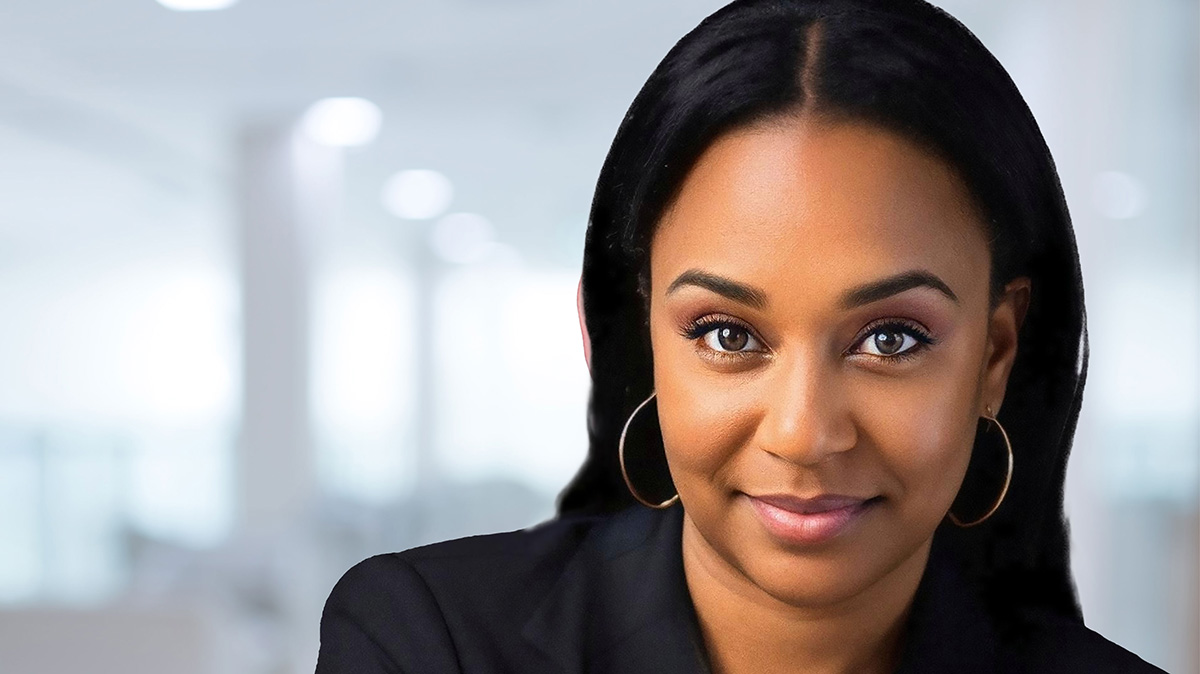
Specialty Spotlight: An Inside Look at Surgical Nursing
Surgical nursing can be daunting, whether you're a student exploring specialties or an experienced nurse seeking a new position. The role demands efficient teamwork in a fast-paced setting to achieve optimal patient outcomes. But it's also incredibly satisfying. "I've seen patients who have been turned away from another institute, come here, have a successful surgery, and go home to their family, and that is just so rewarding to me," says Shanon Schady, MSN, RN, CNOR, lead perioperative educator at Cleveland Clinic. Schady presents an inside look at surgical nursing and how Cleveland Clinic prepares caregivers for the OR through its Perioperative Nurse Residency.
Advertisement
Cleveland Clinic is a non-profit academic medical center. Advertising on our site helps support our mission. We do not endorse non-Cleveland Clinic products or services. Policy
Recent Episodes
Caring for Patients with Chronic Lung Disease
Four to six percent of Americans live with some form of chronic lung disease, and it remains one of the leading causes of death and illness…
Back to School: Is it Time to Pursue Another Nursing Degree?
Lisa Baszynski, DNP, RN, NE-BC, Associate Chief Nursing Officer (ACNO) for nursing education and professional development at Cleveland Clini…
De-escalation Strategies to Prevent Workplace Violence
Healthcare workers are four to five times more likely to experience workplace violence injuries than workers in private industry, according…
Video content: This video is available to watch online.
View video online (https://cdnapisec.kaltura.com/p/2207941/sp/220794100/playManifest/entryId/1_g0wzgwht/flavorId/1_5f3sgelj/format/url/protocol/https/a.mp4)
Transcript
Carol Pehotsky:
One of the beauties of nursing is all the different directions you can take. Nursing school exposes us to some of those opportunities, but others are more of a mystery. Surgical nursing sometimes falls in that bucket. There often isn't time within the nursing school experience to come down and shadow. And sometimes surgical nursing gets a rep for being a bit scary. People wear different clothing. You're not quite sure where you could walk and how you can enter and exit. And so many other pieces that are a bit opaque to somebody who hasn't had exposure to this specialty.
Advertisement
Cleveland Clinic is a non-profit academic medical center. Advertising on our site helps support our mission. We do not endorse non-Cleveland Clinic products or services. Policy
I'm joined today by Shanon Schady to learn more about just how rewarding the specialty of surgical nursing can be and about the perioperative (periop) nurse residency that helps prepare nurses to exceed and deliver fantastic care in the surgical space.
Hi, and welcome to Nurse Essentials, a Cleveland Clinic podcast where we discuss all things nursing, from patient care to advancing your career, to navigating tough on-the-job issues. We're so glad you're here. I'm your host, Carol Pehotsky , Associate Chief Nursing Officer of Surgical Services Nursing.
Welcome back, everyone. I'm actually going to start this episode with a plug. You sometimes hear it at the end if you listen that far, but I'm going to put that plug up front and I'm going to tell you why. We want to be a podcast where you, the listener, feel like you have a voice in it, that you're able to interact with us. And we always welcome suggestions for topics at nurseessentials@ccf.org. We would love to hear back from you. The reason I lead with that today is because one could accuse me of being the person who selected today's topic because it is near and dear to my heart, but this actually did come in as a suggestion. So, we're going to talk about surgical nursing today, my favorite.
Advertisement
It is my great pleasure to welcome today, our lead of perioperative (periop) education for Cleveland Clinic, Shanon Schady , to talk a little bit more about that with us. Welcome.
Shanon Schady:
Thank you. Thank you for having me.
Carol Pehotsky:
We were joking before the mics got started that we've had lots of conversations on this topic. There just happens to be two microphones in between us this time.
You've been such an influential surgical nurse and educator over the years that I've had the pleasure of knowing you. But before we get into some of that, I'd love for you to share with the audience a little bit about your career and your trajectory, and how it is that you ended up in this role.
Shanon Schady:
Absolutely. So going way back, I broke my arm when I was in fourth grade.
Carol Pehotsky:
Oh, no. I didn't know that.
Shanon Schady:
And the physical therapist I had was so amazing. I was like, "I want to be like her." And I knew I wanted to do something in healthcare, helping people.
Further down when I got into college, I found the surgical technologist program and thought that was amazing. Like, "Wow, you get to work with all of these instruments." So, I became a surgical technologist working in cardiothoracic and vascular surgeries here at Main Campus, and I just completely fell in love with it. I fell in love with the team dynamics, being up there scrubbing with the surgeons. It was amazing. But I also saw the circulating role, and I wanted to do that as well. So, I went back to nursing school and got my nursing degree. And I have been at the clinic for almost 23 years, and I was about to say recently stepped into education, but I've been in this role for about 10 years now. 11 years.
Carol Pehotsky:
One of the smartest decisions I ever made was hiring you in the education department.
Shanon Schady:
Thank you. So, that's my journey. I love surgery, perioperative nursing, and even more so now I love perioperative education.
Carol Pehotsky:
It's been so fun to get to work with you and to see your growth. And there wasn't a lead periop educator at the time when I had the great pleasure of leading you in the team. And to see you take on a leadership role in this space, you're doing great things, and I'm just so excited you're here to share a little bit more about that with our audience.
Shanon Schady:
Appreciate that.
Carol Pehotsky:
You came to the OR via surgical technology, and folks, I know this is a nursing podcast, but we definitely need surgical technologists if anyone is curious about that. There is plenty more information out there about surgical technologists. You followed a path that some of our techs do, right? They see the nurse's role; they decide to go back to nursing school and make fantastic OR nurses. But we have a lot of folks who come to us a different way.
Shanon Schady:
Absolutely.
Carol Pehotsky:
Whether they're new grads or nurses with other experiences. So, talk to me a little bit about a normal day for a surgical nurse, for a periop nurse who hasn't necessarily had exposure to it, who hasn't been a surgical technologist.
Advertisement
Shanon Schady:
Yes. Surgical nursing combines hands-on skills, new technology in the OR, multidisciplinary team, and a lot of communication, so it encompasses all these different dynamics. You are in charge of the room as the circulating nurse. You are the patient advocate. You only get a small amount of time with that patient before they go off to sleep, and then you are in charge. You are making sure the documentation is good. You're verifying everything, making sure everyone is following all the policies and guidelines and advocacy.
You, as the patient advocate, they are off to sleep, and you are there, truly their eyes and ears, making sure everything is going the way it's supposed to go.
Carol Pehotsky:
I think one of the things that can either scare people off from the specialty or draw them in is with all sorts of nursing, of course it's a team sport and it's interprofessional. That takes on a whole different flavor in the OR. Talk to me a little bit more about what that's like working with other professions in the OR.
Shanon Schady:
Yes. Bedside nursing, like med surg, has team nursing.
Carol Pehotsky:
Absolutely.
Shanon Schady:
But there is a lot of autonomy. You have your patient assignment, and you are just going about your day prioritizing that. For surgery, it is a team dynamic. You have your surgeon, fellows, medical students, and residents, and your surgical technologist. And as a circulator, you really have to navigate communication and verification with a lot of different processes in the OR. So, it's all teamwork.
Advertisement
Carol Pehotsky:
Sometimes we talk to folks new to our space and I'm going to get yelled at. We'll talk a little bit about the pros and cons in a second here. But that is a fear, folks, that you are 100% in a room with somebody at all times. It could be the anesthesiologist, could be the surgeon, could be anybody. And that is a fear that we see from people coming into it. What do you say to that? What if I get yelled at?
Shanon Schady:
As long as you are following policy and you are doing the things that you are supposed to do, your leadership team is going to have your back. We are a highly reliable organization, and we definitely believe in speaking up. We want to make sure that our patients are safe. That is our number one priority. So as long as you're doing that, our leadership has stated thousands of times that they have your back.
Carol Pehotsky:
It's that advocacy piece.
Shanon Schady:
Exactly. Do the right thing and you will be supported.
Carol Pehotsky:
But I'm sure there are plenty of examples in the media of yelling and screaming and tantrums, and it just really isn't like that anymore.
Shanon Schady:
No.
Carol Pehotsky:
Rest assured, you probably won't get yelled at. And if you do, you will be supported. You mentioned the circulating role, and certainly in a lot of our operating rooms, not just across Cleveland Clinic but across the country, we have surgical technologists that are right there at the field in the "scrub role". But we train nurses to do that as well. Do you mind spending a few moments describing that role and how that functions a little differently?
Advertisement
Shanon Schady:
Yes. When you are hired as a surgical nurse, most of our hospitals here in Northeast Ohio are starting to train the nurses to do both roles, to circulate and scrub. It's a six-month orientation period to prepare you for that because we know nursing school does not prepare you to be an OR nurse. So, there are a lot of things that you do have to learn that you have not learned before. Surgical instruments and safety checklists, and all these different things that help our patients stay safe. Learning how to set up a table with these instruments. And it could be multiple different sets that you've never experienced.
But what's great about the Clinic is we have a residency program that teaches you how to do those things. We teach you about the different instruments that you will be using and a lot of it is service specific. So, you don't have to worry about this generic overview of not knowing like, "Oh, I'm in cardiac. They don't use the same instruments as general surgery." We have these great bootcamps that will teach you all about the instruments that you're going to use for your service.
Carol Pehotsky:
Yes. You do such a lovely job of, "We basically assume you don't have any exposure to the OR, but it's okay if this is a right fit for you, we're going to make it work." At least in Ohio, many, many years ago, periop nursing was part of the nursing school curriculum and was taken out in the '80s and '90s and not formally put back in most, but you and the team have really worked with our local schools to change some of that. Tell us a little bit about how you are making sure we're exposing potential OR nurses to our environment before they get hired day one.
Shanon Schady:
We have an immersion program with Ursuline where we invite these nurses. We go out to the school, and we have a day where we teach them about perioperative nursing. And then we have them come into our sites to do an immersion. They get to experience what it's like being in the pre-op area, in the OR, and then also the PACU. And it just helps them be more aware of what this actually looks like. "Is this something for me?" Because it's not for everybody and we want you to get that experience. Obviously, I love it, but I know it's not for everybody.
Carol Pehotsky:
We're very fortunate that we have programs like immersion here that you work so hard on to make sure that our local nursing students get exposed to that. If you're listening from somewhere else, hopefully your program does have some sort of opportunity to even just observe one surgical case, all the way up to things like we have with Ursuline and several other local colleges in terms of Case Western doing their practicum time with us and some of their clinical time as well. We've done some other things to try to expose people beyond our local schools to periop, haven't we?
Shanon Schady:
Yes. With the nurse associate program, we take nursing students who are finishing their junior year, going into their senior year. And over the summer, we expose them to a 10-week paid externship. This is across multiple nursing specialties. However, we do have a specific number of spots just for the perioperative area. And we're so grateful to have this opportunity to show these nursing students our areas. They are with us for 10 weeks. We onboard them for a day, truly making sure that they are going in with some type of fundamentals before we just stick them in the OR. We show them those instruments, what the safety checklist looks like, and we talk to them about all the PPE and making sure they know how to scrub, gown, and glove.
We give them this great one-day experience and then let them go and explore. And it's just a wonderful opportunity for them. Not only are they getting paid, which is great, but they get to truly dive deep into this experience to see what it's truly like to work in the OR.
Carol Pehotsky:
And folks, hopefully again we're still piquing your interest. This isn't limited to individuals in Ohio either, is it?
Shanon Schady:
No. We see people from all over the country.
Carol Pehotsky:
So, this is the second iteration of this program. And the very first class, I'll never forget, we were doing a graduation after the 10 weeks and it was a combined, all the nurse associates, no matter what their primary setting was. Our then executive chief nursing officer, now chief caregiver and administrative officer, Kelly Hancock, was leading the event and asked if anybody wanted to share their experience. And this lovely young lady raised her hand instantly, right up tall. "Hi, how are you? How is it going? "And she had been a perioperative nurse extra and said, "And now I know I don't want to be."
And everybody looked at me and you. And that was still a win because, we said that to her, "Hey, you spent your 10 weeks, you're going to be a great advocate for your patients when they do have surgery." And we've all saved ourselves a lot of heartache in terms of ... She said," Yeah, I would have applied and I would have started and I would have left." So, it can be a win either way.
Shanon Schady:
Yes.
Carol Pehotsky:
So, we see folks coming into the OR. Some are new grads and some have other experiences. We hope they've been exposed to it during nursing school, but maybe they have and maybe they haven't. How does somebody figure out if it's right for them? And over the years, you've seen people be very successful. What are some things that you see as an educator where you think they understand what they're in for and they're going to be successful?
Shanon Schady:
So, I think you really don't know. You have new grads who come in with no nursing experience except for what they learned at nursing school and they do amazing. You have some nurses who are experienced who have developed critical thinking and problem-solving skills, but they realize that they really miss that patient care being at the bedside and the OR is not for them. You really can't tell.
Carol Pehotsky:
Yes. We always encourage a shadow experience as long as people want it, so they can see not just an OR, but you're applying at this OR and what that looks like.
Shanon Schady:
Yes.
Carol Pehotsky:
Here in Ohio, I have the great pleasure of being able to welcome every new class of periop residents and I will ask them why surgery, why you came here. We get everything from the most tear jerking, oh my gosh, I can float out of here to folks who maybe haven't given it a ton of thought. And sometimes those folks struggle, but sometimes those folks came here maybe because they just wanted to try something different, or they wanted to try a different location, but they get into it and I think some of it's about what you put into it too.
Shanon Schady:
Yes.
Carol Pehotsky:
How does the program balance learning in a simulation center in a classroom with making sure people can apply it in a real functioning OR?
Shanon Schady:
Great question. I love our residency program. Not just because I'm the lead perioperative educator, but because it is such an amazing program. We have so many different learning modalities that we use. Like you stated, we use the simulation. We also use didactic; we use micro learning modules. But the preceptors at the bedside are the most important piece of the caregivers' orientation. We place them with someone who has experience, who's dedicated, and who wants to do a good job. They want to see that their preceptee is going to make it. So, a lot that goes into it, but I think all the different learning modalities that we utilize, it's not just one way. We don't just use modules. We make sure that they get hands-on skills. And we're always improving.
Carol Pehotsky:
You are.
Shanon Schady:
We have evaluations; we take those into consideration from our orientees. We look at how we can improve. We're always looking to see how we can improve and make residency better.
Carol Pehotsky:
Well, and I love that you're also always so receptive to feedback from preceptors or managers, that Carol might have spent her lab day with you, but when she came to the OR there was a gap, or there wasn't a gap, or what have you. I'm so appreciative you are collectively constantly iterating because it needs to be competency based, and caregivers need to have enough time to learn, and nobody has the luxury of time. So really making sure people come out of this with they're not going to be comfortable, but they're going to be competent.
Shanon Schady:
Absolutely.
Carol Pehotsky:
I think one of the things that sets this program apart too is that you're not plugging people in a classroom in a simulation lab for five weeks. Tell us a little bit more about how you're using adult learning theory to really make sure people are applying what they've learned.
Shanon Schady:
Yes. We start with fundamentals because they're coming in with no OR experience, teaching them the basics of aseptic technique and infection prevention and patient safety, utilizing this safety checklist. Why do we have it? The importance of it. And a lot of times even just communication. We have a lot of new grads who aren't comfortable speaking with anesthesia or surgeons, or saying, "Hey, this patient is allergic to this, but I see that you have it listed here." So, we have to teach them how to communicate and how to speak up. But then we also, again, put them in the OR with their preceptors.
Carol Pehotsky:
Right away.
Shanon Schady:
Right away, yes. Making sure that they get that real world experience to see what it's like to actually take care of a real patient, to put your hands on these instruments, to have to set up this table and pull these medications, make sure you're checking the labels and the expiration dates so that they can see that what we are trying to teach them in the classroom, how that translates to real world experience.
Carol Pehotsky:
And it's just such a lovely building experience. Other institutions may front load all of it, and I understand the why behind it. But it's been, I think, 14 years we've run the residency and some version of this is that we hear from our learners that it's not so intimidating because they don't have to take five weeks of learning that, "Well, I learned how to get myself dressed and put on a gown and put on some gloves and then I helped count a little bit. And now I understand more about the why." I think you do such a lovely job of making sure that you're reinforcing those concepts and building upon them.
Shanon Schady:
Thank you.
Carol Pehotsky:
Yes. So, the new grad nurses are still building their skills fresh out of school, but also right on the cutting edge of what they've learned. Or the nurse who came from ICU and had 12 hours to strategize and prioritize their care. Both come to the OR where the pace can sometimes be steady and sometimes can be, "Can't you move faster?" And sometimes a surgeon may ask for five things and what they need right away is item number three, they want you to go get that and then bring that and then go get the other four. In light of those real situations, how do you as a clinician keep track of all that and adjust your pace? And how do you help those who are new to our space learn to prioritize, engage, and manage their energy?
Shanon Schady:
We try to tell them in the beginning that expectation is that you are not going to know everything day one. And it's the difference between new grads. I feel like new grads understand that, where sometimes our experienced nurses-
Carol Pehotsky:
It can be hard.
Shanon Schady:
It can be hard because you were probably the content expert-
Carol Pehotsky:
Absolutely.
Shanon Schady:
... on the floor, people came to you, you were the preceptor and now you are learning this all over again.
Carol Pehotsky:
It's hard.
Shanon Schady:
We try to just really encourage them to prioritize, but you don't have to know everything day one. Really pace yourself, organize yourself, and organize those tasks. What is important? What do I need to prioritize now? And really listening and paying attention to the preceptor, because this preceptor has probably worked with this surgeon and knows that even though he's asking you for these five things-
Carol Pehotsky:
"Go get number three now."
Shanon Schady:
Number three is what he needs.
Carol Pehotsky:
Excellent. This has been so helpful. I'm going to ask two more topic questions before we get into the fun stuff. So, two different sides of the same coin.
First off, we've talked a lot about physical skills and advocacy and critical thinking. What aspects do you find most challenging physically, mentally, emotionally?
Shanon Schady:
I would say physically, if you're not used to it, just in a scrub role, doing cardiac procedures, I could be standing there for six hours-
Carol Pehotsky:
One day.
Shanon Schady:
... eight hours. Mentally, it is a lot to learn, especially as ... Again, nursing school doesn't prepare you for all the things that you have to learn. So just taking all of that in the beginning can be a little bit overwhelming, and that's why we really stress that you're not going to know it all in the beginning. Give yourself time and give-
Carol Pehotsky:
Lots of grace, yes.
Shanon Schady:
... yourself grace.
And then emotionally, I would just say, we take care of patients who have high acuity. And you think of surgery as, "I am going to fix this patient, and then they're going to go on their lovely way." And sometimes that doesn't happen, and no matter how many times it happens, when the outcome isn't what you expect it to be, it can still take a toll on me.
Shanon Schady:
Absolutely, yes.
Carol Pehotsky:
Well, and I think too, you always make sure that while it might be routine for you, it's never routine for the person on the table. Along those lines, what do you find most rewarding about this specialty?
Shanon Schady:
The one thing I love about the Clinic is that we do see high acuity. I've seen patients who have been turned away from another institute, come here, have a successful surgery, and go home to their family, and that is just so rewarding to me to see that. Also, all the firsts that we get to do here, face transplants and all these amazing surgeries that ... We were the first. They happened here first. Getting to be a part of that is very rewarding as well.
Carol Pehotsky:
And you've touched thousands and thousands of nurses with your program. On behalf of all of them, thank you to you and your team that have really helped ensure that we have a highly skilled and competent periop nursing force.
Shanon Schady:
Thank you.
Carol Pehotsky:
Of course. Now we'll talk about the fun stuff. It's speed round time, where the listeners get to have a little peek into the amazing human being you are in addition to the amazing OR nurse and educators. So, what's one skill you've always wanted to learn?
Shanon Schady:
I wanted to learn a foreign language. I took Spanish in school for probably seven years, and I know a little, but I am not fluent, so that is definitely something that is still on my bucket list.
Carol Pehotsky:
Okay. All right. There are all sorts of apps and things, right? There are ways to make that happen. And then as you know, as an organization, we recently revised our values to really make sure ... They've resonated so strongly with caregivers, even though they've recently just been announced. So they are: serve with heart, succeed as one team, and shape the future. Which value resonates to you the most and why?
Shanon Schady:
I would say serve with heart. And the reason is teaching these nurses who are new to the OR, that's what we're doing. We are serving them with heart. They may have had a bad day, and they're calling on the educator to come and support them. And "I'm so sorry that you've experienced this," and just truly listening and not just advocating for the patient, but also advocating for them, advocating that they're getting the best orientation that they could possibly get, advocating that they're with the best preceptors. So yes, I would definitely say serve with heart.
Carol Pehotsky:
Wonderful. Thank you so much for joining me today.
Shanon Schady:
Thank you for having me.
Carol Pehotsky:
As always, thanks so much for joining us for today's discussion. Don't miss out. Subscribe to hear new episodes wherever you get your podcasts. And remember, we want to hear from you. Do you have ideas for future podcasts or want to share your stories? Email us at nurseessentials@ccf.org. To learn more about nursing at Cleveland Clinic, please check us out at clevelandclinic.org/nursing. Until next time, take care of yourselves and take care of each other.
The information in this podcast is for educational and entertainment purposes only and does not constitute medical or legal advice. Consult your local state boards of nursing for any specific practice questions.
Recent Episodes
Caring for Patients with Chronic Lung Disease
Four to six percent of Americans live with some form of chronic lung disease, and it remains one of the leading causes of death and illness…
Back to School: Is it Time to Pursue Another Nursing Degree?
Lisa Baszynski, DNP, RN, NE-BC, Associate Chief Nursing Officer (ACNO) for nursing education and professional development at Cleveland Clini…
De-escalation Strategies to Prevent Workplace Violence
Healthcare workers are four to five times more likely to experience workplace violence injuries than workers in private industry, according…
Never miss a moment - subscribe now.
Listen to the Health Essentials Podcast on your favorite streaming platform.
Other Podcasts You May Love
MedEd Thread
MedEd Thread explores the latest innovations in medical education and amplifies the tremendous work…
Health Essentials
Tune in for practical health advice from Cleveland Clinic experts. What's really the healthiest diet…
Beyond Leadership
Hosts Jim Pae and Elizabeth Pugel escort you through a network of thought leaders, sharing world-cla…
Studies in Empathy
Join Cleveland Clinic Patient Experience leaders and a group of guests with a wide range of experien…