



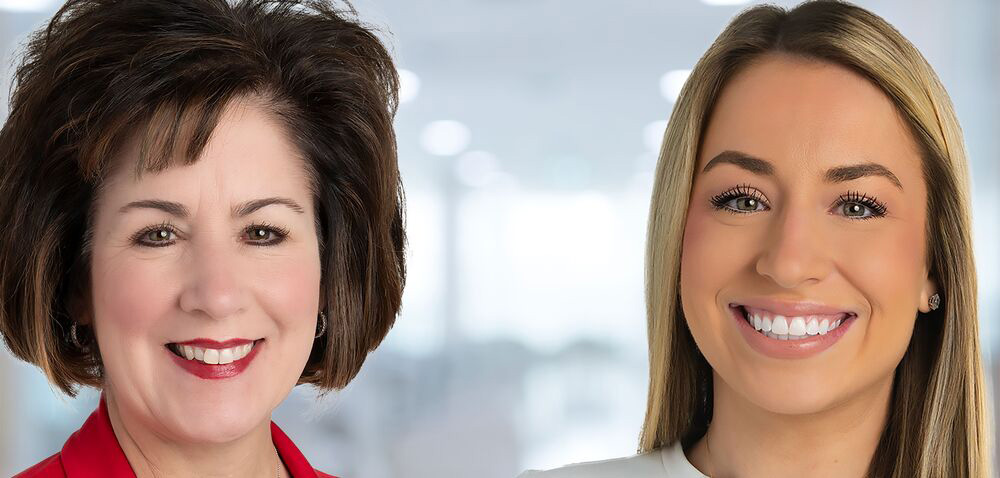
Generations of Nurses: A Mother-Daughter Duo Shares Their Story
Many nurses are influenced by family members to join the profession. Amanda Hancock, a pediatric clinical nurse at Cleveland Clinic main campus, is no exception. Her mother is Kelly Hancock, DNP, RN, NE-BC, FAAN, Chief Caregiver Officer at Cleveland Clinic. “Hearing all her stories and the impact she’s made on people throughout almost 35 years of being a nurse was really inspiring,” says Amanda. “I wanted to have the same impact on others.” In this episode of Nurse Essentials, the mother-daughter duo shares what it means to work in the same profession and healthcare system.
Advertisement
Cleveland Clinic is a non-profit academic medical center. Advertising on our site helps support our mission. We do not endorse non-Cleveland Clinic products or services. Policy
Recent Episodes
Caring for Patients with Chronic Lung Disease
Four to six percent of Americans live with some form of chronic lung disease, and it remains one of the leading causes of death and illness…
Back to School: Is it Time to Pursue Another Nursing Degree?
Lisa Baszynski, DNP, RN, NE-BC, Associate Chief Nursing Officer (ACNO) for nursing education and professional development at Cleveland Clini…
De-escalation Strategies to Prevent Workplace Violence
Healthcare workers are four to five times more likely to experience workplace violence injuries than workers in private industry, according…
Video content: This video is available to watch online.
View video online (https://cdnapisec.kaltura.com/p/2207941/sp/220794100/playManifest/entryId/1_6c0mx74j/flavorId/1_5f3sgelj/format/url/protocol/https/a.mp4)
Transcript
Carol Pehotsky:
In my almost 24 years with Cleveland Clinic, I've encountered countless examples of generations of nurses. And you can see that love of the profession from mother to daughter, father to son, and sometimes even passing on to grandchildren—two, three generations of nurses all working for the same organization and within that same profession. And you're able to see, when they interact with each other, how they make our profession better, how they take that love and they share it with others. On this special Mother's Day episode, I'm joined by Dr. Kelly Hancock and Amanda Hancock , mother and daughter and amazing nurses, here at Cleveland Clinic. Hi, and welcome to Nurse Essentials, a Cleveland Clinic podcast where we discuss all things nursing, from patient care to advancing your career, to navigating tough on-the-job issues. We're so glad you're here. I'm your host, Carol Pehotsky , Associate Chief Nursing Officer of Surgical Services Nursing.
Advertisement
Cleveland Clinic is a non-profit academic medical center. Advertising on our site helps support our mission. We do not endorse non-Cleveland Clinic products or services. Policy
Welcome back, everyone. We have a very special episode. If you're listening in real time, this is coming out both in honor of Nurses Week and Mother's Day, and so the topic is generations of nursing. And when we look not just at our organization but across the country, we know that there are so many amazing generations of nurses in families, sometimes two, three, four generations deep. As I thought about that and prepared for this episode, I thought about my own family. One of my maternal aunts is a nurse. She's in her 90s now, so she is no longer practicing, but for a good 50 years of her life, she practiced not just as a nurse, but in rural America, in one of those hospitals that was a ward. So, she could be taking care of somebody who'd had back surgery next to somebody having a heart attack, next to somebody who's having a baby. She could and can still do just about anything. Talk about a relief… when I had my daughter and she's a little bit colicky, if Aunt Audrey can't stop her from crying, nobody can, because this woman can do anything, and it was meaningful for me.
I came to nursing a little bit late, but to be able to hear from her that she was proud of me coming into the profession really meant a lot. When we look at statistics across the country and across the world, I am curious about how often people are going into the same profession as their parents. Is nursing different? Depending on where you look, the answer is generally, yes, it is different. In some parts of the world, in fact, people are less likely to go into the profession their parents are in, especially if their parents are encouraging them to go into that. When it comes to America, daughters are more likely to follow their mom's career path, about 1.8 times more likely than the general population. But when it comes to nurses, daughters are 3.75 times more likely than the general population to follow in their mother's footsteps. So, with that as an introduction, it is my great pleasure to welcome back one guest and to welcome another. First, welcome to the show, Dr. Kelly Hancock . Kelly is our Chief Caregiver Officer and Chief Administrative Officer. Kelly, welcome back.
Advertisement
Kelly Hancock:
Thank you. It's great to be here.
Carol Pehotsky:
I’m so excited to welcome your daughter, Amanda Hancock joins us also today. Amanda is a pediatric bedside nurse at Cleveland Clinic Main Campus. Welcome, Amanda.
Amanda Hancock:
Thank you for having me.
Carol Pehotsky:
I'm going to pik on you a little bit to start, Amanda. We've had the great pleasure of hearing a little bit about Kelly's career over the previous episodes. I'm hoping you'll share with our audience what has your nursing career been like so far?
Amanda Hancock:
Yes. I started at Cleveland Clinic a little under eight years ago, and I started as a nursing assistant in the J Building when I was a freshman in nursing school. My senior year of nursing school, I had the opportunity to do the nurse extern program at Cleveland Clinic, and that's where I got into pediatrics. And now I've been a nurse there for almost four years.
Carol Pehotsky:
Wow. And folks, she's fresh from night shift and doing great already, so you’ve got this. Tell me a little bit more about peds (pediatrics). What drew you to peds? What keeps you coming back for more?
Amanda Hancock:
There was nothing that originally drew me to peds. It was just more that the opportunity presented itself. I was interested in trying something different, and then when I got there, I absolutely loved it. I loved my colleagues. I loved the patients. It's very different than working with adults. It's a lot more fun. It's a different way of nursing, for sure.
Carol Pehotsky:
So, growing up with your mom as a nurse, what first inspired you to pursue that career in nursing, and how much did this relationship influence that?
Amanda Hancock:
Obviously, my mom is my biggest inspiration for coming into nursing. For a while, I wasn't sure what I wanted to do, so it wasn't until high school. She encouraged me to become a volunteer at Fairview Hospital, which was close to where I went to high school. I went to St. Joe's in Cleveland, so it was right around the corner. That's how I started to get into nursing. I started volunteering and just talking with patients and bringing them newspapers or flowers. It was just an easy way to see what nursing is all about.
Carol Pehotsky:
That's fantastic. So, Kelly, how did it feel watching Amanda choose nursing?
Kelly Hancock:
Oh, my gosh, it was awesome. I'll never forget that. Like she said, one day we were talking while she was in high school and she said, "You know, I really want to pursue nursing." And I said, "You do?" And she said yes, after all my years of hearing all my stories, and I was just delighted. I was just so happy, because I could see it in her. She always had a love for science. She has such a big, caring heart, and curiosity—asks a lot of questions. So just to be sure, I did encourage her to volunteer. I said, "Why don't you volunteer at Fairview and see what you think, and watch the nurses and the teams in action?" She did, and she came back and said, "This is what I want to do," and so I was just so proud.
Advertisement
Carol Pehotsky:
And that's great advice for anybody, frankly, if you’re curious about nursing, see if you can volunteer. Get in there and see what it's about.
Kelly Hancock:
Absolutely. And she did, and she loved it.
Carol Pehotsky:
So, Amanda, what role did your mom's career play in shaping your perspective to even consider this in the first place?
Amanda Hancock:
I think just hearing all her stories and the impact she's made on people throughout almost 35 years of being a nurse was really inspiring. I wanted to have that same impact on others, so I think that's what made me want to be a nurse.
Carol Pehotsky:
Did you ever hesitate to follow those footsteps? Did it feel natural?
Amanda Hancock:
I don't think there was ever hesitation. For a while, I just wasn't sure what I wanted to do.
Carol Pehotsky:
Sure.
Amanda Hancock:
And then when I really got into volunteering, and then in high school we had an immersion week where you pick a couple careers and you shadow them for a couple of days. I actually shadowed at Main Campus and I was like, "I love this," and that's how I dove into nursing. I think having her there was super helpful, to ask questions and know the ins and outs of nursing.
Carol Pehotsky:
Absolutely. So bedside nursing, when Kelly and I were bedside nurses, a little bit different than it is now, Amanda. I'm sure the stories felt a little different. Amanda, what's been your experience of modern nursing, and how does that feel different from maybe what you imagined your mom was doing on the floors and as a nursing leader when you were growing up?
Advertisement
Amanda Hancock:
One thing I can think of is when I was in nursing school, COVID was happening, so it was a huge altering thing in healthcare. That was very different from what it was like when my mom was a bedside nurse. So, adjusting to new practices and adjusting with vaccines and the way we care for patients has just been different. So I think that's what's been different, at least from our aspect.
Carol Pehotsky:
We're changing how we’re caring for patients every five minutes.
Kelly Hancock:
Yes, right?
Carol Pehotsky:
Yes.
Amanda Hancock:
I mean, people are mobile ordering their food on an app, and I'm sure you had to take their order and send it to the entry or something.
Kelly Hancock:
Well, even the documentation. When Carol and I practiced, I never documented on an electronic health record because it didn't exist. So, I never had the experience to do that, it was all pen and paper. And so that's what you experience when you have to do downtime, right? I'm sure.
Carol Pehotsky:
I was like, "Give me downtime anytime, right? No one can read my notes, but I'm ready."
Kelly Hancock:
That's right. That's right. The red pen comes back out to cross up the orders.
Amanda Hancock:
It's funny because when downtime comes, everyone's freaking out. Some of the more senior nurses are like, "This is our bread and butter."
Carol Pehotsky:
"We'll show you how to do it," right?
Advertisement
Amanda Hancock:
Yes.
Carol Pehotsky:
That's why we need nurses of all generations.
Amanda Hancock:
That's right.
Carol Pehotsky:
One of the many reasons. To tap into that a little bit more, I'd love to hear from both of you, how do you think your perspectives on patient care differ across your two generations of practice? I'm going to pick Kelly first.
Kelly Hancock:
I don't know if the perceptions are different. I'm a firm believer that people are drawn to the profession of nursing because they believe they can make a difference in someone's life, like what you said, Amanda. You've heard me say this time and time again, Carol. I can't think of a more noble profession. When you think about the opportunity to care for somebody in the most vulnerable times of their lives, that's a privilege and it's such an honor. I think amongst all generations, they believe that, and the impact that they can have as an individual professional nurse and hopefully as a member of a multidisciplinary team. So, I don't know if there are any differences. I know I'm a bit biased, but I don't know. Amanda, what do you think?
Amanda Hancock:
I would agree with that. I think that people go into nursing for the same reason you went into nursing today versus 30 years ago, for the genuine want to care for other people.
Carol Pehotsky:
Sometimes people of the younger generations get, I'm going to say, a bad rap. Some Millennials and Gen Zs don't stay in positions very long, whether it's nursing or something else. And I've heard other millennials say things like, "But I’m loyal to the profession." Any thoughts? I'm picking on you again, Amanda, as the voice of your generation here, but sometimes you guys do get a bad rap for not sticking around. What are your thoughts about that? You've obviously stuck around.
Amanda Hancock:
I do agree that we get a bad rap. I think that social media has a big part in my generation, especially because a lot of people have a difficult time communicating with people in person and most are used to on the phone. So, for a lot of people, I think having conversations with families is difficult at times.
Kelly Hancock:
That's an interesting perspective. I didn't think about that. I often sometimes on that. I think for some of our younger generation, having those conversations may not come as naturally as it did for you and me.
Amanda Hancock:
It makes perfect sense, yes.
Kelly Hancock:
Because it's dependent.
Amanda Hancock:
Yes.
Kelly Hancock:
But when you think about the essence of nursing, particularly around that nurse-patient relationship, that is so critical in so many ways to the healing of the patient, to the engagement of the family when appropriate, you have to have that conversation. I could see how that could be limiting, but I don't think that's for all in the generation because I can see why people would do that. You're right.
Carol Pehotsky:
Or being intentional with any new hire to say, "How much time have you spent talking with families, talking with patients, having uncomfortable conversations?" It's a great point you bring up, about if I don't feel comfortable doing it, I maybe won't gravitate towards it. What are some different supports you think, Amanda, that we should be thinking about to really tap into that and help people be a little more at ease if that's not their normal communication style?
Amanda Hancock:
I think one thing that helped me for sure was being a nursing aide prior to nursing school. The first thing you have to do is be able to talk to people, and having that exposure before you learn your nursing skills is super helpful, especially for me. Because if I'm able to talk to you, then I can easily care for you after that. So, I think just being a nursing assistant really shaped me into being a good nurse.
Carol Pehotsky:
That's great insight.
Amanda Hancock:
Yes.
Carol Pehotsky:
Yes, because I think about the things that a nursing assistant has to do. You have to be able to get comfortable with people quickly.
Amanda Hancock:
Yes.
Carol Pehotsky:
It's a lot to balance, but it's well worth it.
Amanda Hancock:
Oh, absolutely.
Carol Pehotsky:
Yes. What's it been like working in the same organization? Just a few people know who your mom is, Amanda. What's it been like?
Amanda Hancock:
Just a few. I love working for the same organization. I think that we share a lot of similar interests in the organization.
Kelly Hancock:
The stories that we share. For me, I can tell you I love living through her eyes again. The things that make us proud about this organization, I think we both believe in. And it's really been a privilege to say that my daughter was not only born here at Cleveland Clinic, but now she also practices here as a professional nurse. It's certainly a privilege.
Carol Pehotsky:
Working for the same organization, have there been moments where your professional paths intersected? What's that been like?
Kelly Hancock:
There was a rule in our family, Carol, that I was not allowed to go up to the units where she worked when she was working.
Amanda Hancock:
That seems reasonable.
Kelly Hancock:
And so, I abided by those rules.
Carol Pehotsky:
I'm sure it wasn't always easy.
Kelly Hancock:
Yes. But with that said, Amanda, I think you've been part of some of the town hall meetings that I've been part of as a member in the audience, and it's been fun. And she has seen us on rounding as we do leadership rounds, and that's been a bit cool to say, "Hey, that's my daughter. That's my kid."
Carol Pehotsky:
What's it been like for you, Amanda?
Amanda Hancock:
It's been awesome. I try to lay low, but one time I remember that our paths crossed was my nurse externship program. When I graduated from the program, she actually handed me my award, so that was a full-circle moment for me that I really enjoyed.
Carol Pehotsky:
That's fantastic. Yes. Oh, my gosh.
Kelly Hancock:
I know. And it's interesting because we had similar paths because I started here too as a nursing assistant, and then I was a nurse associate at the time. And so, it just really, as Amanda said, comes full circle for me too. It's just really been ...
Amanda Hancock:
We also went to the same nursing school. I think that even more.
Kelly Hancock:
Yes, we did. Nurses Hancock and Hancock. Ursuline College. That's very nice. Exactly.
Amanda Hancock:
We really have a lot in common.
Carol Pehotsky:
So, appreciating, though, that there could be some boundaries. I'm sure there are people that perhaps, with good intent, confuse those a little bit. How do you navigate those between your professional roles and your personal relationship? I'm going to pick you first, Amanda.
Amanda Hancock:
Professionally I keep us separate, because I think that's the most appropriate thing to do. But while I'm at work, of course, I talk about my family and my outside life, so I feel like most of the people I work with know my mom as my mom. People know her from that way, but I feel like everybody else who doesn't know me on that personal level knows her as Kelly Hancock , yes.
Kelly Hancock:
And I think you've done a really nice job in, if there's any organizational questions that she may be curious about, she really doesn't go there with me. There's no ...
Carol Pehotsky:
"Whose idea was this?"
Kelly Hancock:
No, she really doesn't. I will have to say that. I think we both, as she pointed out, think about our personal life and our family together and how much we enjoy being with one another. And yet, I think the essence of being here and sharing our love for the organization, our love for patient care, our love for our profession, has really kept us close and mitigates any of those maybe barriers that could come up because of that, so it's been fun.
Amanda Hancock:
Yes. I feel like usually when we talk about work, it's more like if I had a rough shift, I just want somebody to vent to. It's not really like I'm complaining about this place.
Kelly Hancock:
That's a good point. You call me as Mom.
Amanda Hancock:
Yes. I go to her as Mom with work frustrations, and she's able to really relate to that because she's also been a bedside nurse and knows the frustrations of a 12-hour shift.
Kelly Hancock:
I'll never forget when you first began your first shift when you were out of orientation. You were nervous about if there was a medical emergency and what would happen. And I remember talking through that with you and saying, "You got it. You're never alone. We have confidence." And when you did have it, we talked about it, right? And again, you came to me as Mom, but I also had that other hat on where I could give you that confidence that you got this.
Carol Pehotsky:
I've got goosebumps thinking about going to your mom, who has the wisdom of a nurse, and then your mom being in this organization. But yes, bravo for that. It's so hard not to take work home anyway. So really being intentional about it clearly has been key to your healthy relationship.
Kelly Hancock:
Oh, most definitely.
Carol Pehotsky:
So, Kelly, as a nurse leader, what lessons or values have you hoped to pass on to Amanda?
Kelly Hancock:
My gosh, hopefully many. As I told her, always be true to yourself. Patients always come first. Always think about the family members too, because we're also caring for them, and always remember that your greatest support is the team that you surround yourself with. So, leverage those teammates that you have, whether they're your nursing colleagues, your physician colleagues, and other members of the multidisciplinary team. We talk about that, the importance of team and how we succeed as a team.
:
But I think, as it relates to some other values, it's always do right by what you believe in, and I know I'm a bit biased because she's my daughter. I think she has a very strong ethical framework that she has built her values on and her own persona. The last thing I will add is I tell her all the time, "I've done my path and my career, and you are your own individual, your own professional nurse, and you will also do your own," and she is. She's blazing the trail. I mean, I'll tell you. I'm going to brag about you.
Carol Pehotsky:
Please.
Kelly Hancock:
She's a unit council member. She got involved early with Magnet. I had no influence on that, but I told her, hopefully, "If you want your voice to be heard, you have to do something about it, and you have to make it different and be that advocate." And she's taken that to heart, hopefully.
Carol Pehotsky:
So, Amanda, what have you learned from your mom, not just as your mom, but as a nurse and as a nurse leader?
Amanda Hancock:
I've learned a lot from my mom. I think the biggest thing is to embrace every opportunity that comes your way because you never know where it could lead. For example, like I said, Fairview Hospital. Little did I know. I didn't really think I'd love it as much as I did. I was like, "Mom, really." I needed service hours for school. It was a good way to get into medicine. And then I really loved it, and I looked forward to it every Thursday after school. And embracing opportunities, especially like the nurse extern program, that was something she encouraged me to do. And thank God I did it, because it led me to be on the floor that I am now. So, I think I've learned a lot from my mom, especially leading with integrity I think is super important, and that's something that I really admire about her. She's a consistent leader. She's morally driven. I really look up to her in a lot of ways.
Carol Pehotsky:
And we're all going to shed a few tears. I'm going to tell you a story about your mom here. When I was interviewing for this job, I had the great pleasure of working for your mom before she moved into her other roles, and I was interviewing. I cried during my ... we both cried.
Kelly Hancock:
Yes, we did.
Carol Pehotsky:
Yes. So, my daughter was nine years younger than she is now and we were talking in the interview about boundaries, and every role is important, bedside nursing. I was a little concerned about I've got a young daughter and what does that mean, and we had this beautiful, heartfelt, tear-felt conversation, where your mom shared with me what it was like for her having a young daughter, being in a leadership position, and talk about integrity ... really talking about there are times when you do need to step away and you need to go take care of business, but most of the time there are people that you can delegate to. Your family comes first. And so, I thank you, Amanda, for that story; it really formed me as a leader and as a mom.
Kelly Hancock:
I remember that, Carol. That's important, and I think it's for all of us. It's our responsibility to continue that messaging. I always say this is a big part of our life, but it's not our life. Our life is with our families, and we need to be there present with them. To your point, we have great people that we can delegate things to, and we're lucky to have them.
Carol Pehotsky:
We've talked about this throughout the episode, but as we're coming to a close ... unfortunately, I could talk all sorts of time with you ... in what ways has nursing strengthened or changed your relationship as mother and daughter?
Kelly Hancock:
I think we've always been close, but I think we're even closer because we have this shared love for this profession. Again, just hearing these stories, bouncing ideas off one another as a mom and offering my insight and wisdom to her, I think it's strengthened us. I don't know, what do you think?
Amanda Hancock:
I agree. I think it really has strengthened our relationship. It's funny because I'll tell my mom these stories, and my dad's in the background and he's like, "You sound just like your mom 20 years ago when she came home." And so, for that, I can also relate to my dad, because he's heard the stories and he's really well versed in the ... he knows everything about the experience. So luckily, I have both of my parents. Nursing has strengthened my relationship with both of them too, because they're both understanding because they've been through this before.
Carol Pehotsky:
So, you mentioned going to nursing school in COVID.
Amanda Hancock:
Yes.
Carol Pehotsky:
I can only imagine what that was like.
Amanda Hancock:
Yes.
Carol Pehotsky:
So, whether it's that or another moment, I'm wondering if, can you share a moment when you leaned on each other during challenging times in your career?
Kelly Hancock:
As a nurse leader, you remember, Carol, as a good steward of this organization, COVID was hard, especially when we had so many unknowns. And I remember coming home every day and having conversations with my family, with Amanda, about being scared and vulnerable. And I think that's when I was leaning on them, and them giving us and her giving me the confidence that, "You can do this, you can do this," while she's in nursing school trying to navigate this virtually, and the clinicals and, "How am I going to do this? How am I going to learn this?" And I think supporting one another.
Amanda Hancock:
Yes. I think we got to experience it together, which strengthened our relationship and then our love for nursing. I mean, it's very difficult, and everyone saw how difficult COVID was on the nursing profession, so I think that we just related to one another. Also dealing with nursing school during COVID, I mean, I was doing SIM labs online. So having her watch my SIM lab, I'm like, "Is this real? Is this what happens?" We spent a lot of time together during COVID, and I remember she would do flashcards with me to study for tests. So, nursing school was a shared experience, I would say.
Carol Pehotsky:
Yes, and look at you now.
Amanda Hancock:
She went through nursing school twice.
Kelly Hancock:
That's right.
Carol Pehotsky:
Well, ladies, thank you so much for joining us, and you've given our audience just a wealth of learning and context that's just so beneficial. Before we call it a day, I'm going to transition to a fun question, to help our audience get to know you as amazing human beings as well as amazing nurses. As she well knows, and she led the efforts to really look at our values as an organization and moving forward, our values are to serve with heart, to succeed as one team and to shape the future, and we've heard just lovely resounding themes from people around how they're action-oriented and they're relatable. So, knowing that all of those are very important to us as an organization and as individuals, I'm wondering if each of you could share with us which one resonates the most with you and why. That's a hard question.
Kelly Hancock:
Yes, it is a hard question. I do really appreciate all three new values, and they resonate very well with most people, but I would have to say succeed as one team resonates with me. I'm a firm believer that as an individual contributor and as a member of a team, the more that we can succeed, we do it together, and it'll benefit not only ourselves, our teammates, but really our patients, the families, and overall, the organization. To me, there are so many possibilities when you think about succeeding as a team. Amanda, what about for you?
Amanda Hancock:
Serve with heart. Being at the bedside, I feel like every day you have to start with heart, serve with heart. These people rely on you to give the utmost care, and I think having empathy and compassion and trying to understand what these people are dealing with goes a long way. Just if you can resonate with them just a little bit, I feel like it goes a long way.
Carol Pehotsky:
Thank you so much for joining me today.
Amanda Hancock:
Thank you for having me.
Kelly Hancock:
Yes, thank you.
Carol Pehotsky:
And Happy Mother's Day and Happy Nurses Week to our listeners.
Kelly Hancock:
Thank you.
Carol Pehotsky:
As always, thanks so much for joining us for today's discussion. Don't miss out. Subscribe to hear new episodes wherever you get your podcasts. And remember, we want to hear from you. Do you have ideas for future podcasts or want to share your stories? Email us at nurseessentials@ccf.org. To learn more about nursing at Cleveland Clinic, please check us out at clevelandclinic.org/nursing. Until next time, take care of yourselves, and take care of each other.
The information in this podcast is for educational and entertainment purposes only and does not constitute medical or legal advice. Consult your local state boards of nursing for any specific practice questions.
Recent Episodes
Caring for Patients with Chronic Lung Disease
Four to six percent of Americans live with some form of chronic lung disease, and it remains one of the leading causes of death and illness…
Back to School: Is it Time to Pursue Another Nursing Degree?
Lisa Baszynski, DNP, RN, NE-BC, Associate Chief Nursing Officer (ACNO) for nursing education and professional development at Cleveland Clini…
De-escalation Strategies to Prevent Workplace Violence
Healthcare workers are four to five times more likely to experience workplace violence injuries than workers in private industry, according…
Never miss a moment - subscribe now.
Listen to the Health Essentials Podcast on your favorite streaming platform.
Other Podcasts You May Love
MedEd Thread
MedEd Thread explores the latest innovations in medical education and amplifies the tremendous work…
Health Essentials
Tune in for practical health advice from Cleveland Clinic experts. What's really the healthiest diet…
Beyond Leadership
Hosts Jim Pae and Elizabeth Pugel escort you through a network of thought leaders, sharing world-cla…
Studies in Empathy
Join Cleveland Clinic Patient Experience leaders and a group of guests with a wide range of experien…