



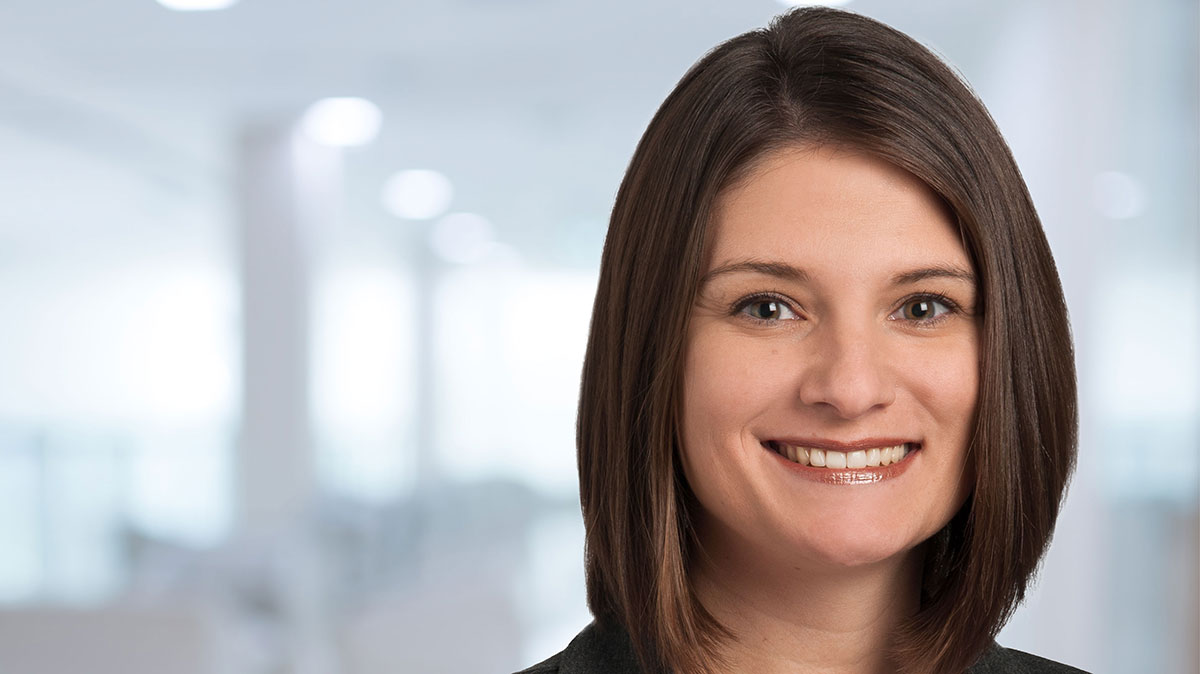
Advanced Practice Nursing Spotlight: The Role of Certified Registered Nurse Anesthetists
Angela Milosh, DNP, APRN-CRNA, FAANA, calls the nurse anesthesia practice the "epitome of critical care nursing." It combines technical skills, critical care knowledge, critical thinking and judgement in a dynamic, rapidly changing environment. Dr. Milosh, program director of Cleveland Clinic's Nurse Anesthesia Training School, explains what it's like to be a certified registered nurse anesthetist and offers advice for nurses thinking about the three-year graduate program.
Advertisement
Cleveland Clinic is a non-profit academic medical center. Advertising on our site helps support our mission. We do not endorse non-Cleveland Clinic products or services. Policy
Recent Episodes
Spotlight on Critical Care Transport
Imagine employing all the skills, competencies and critical thinking needed to deliver top-notch care to patients in urgent situations while…
Leaning into Evidence-Based Practice
Evidence-based practice involves three factors: using high-quality research to guide nursing practice, relying on clinical expertise and inv…
Caring for Patients with Chronic Lung Disease
Four to six percent of Americans live with some form of chronic lung disease, and it remains one of the leading causes of death and illness…
Video content: This video is available to watch online.
View video online (https://cdnapisec.kaltura.com/p/2207941/sp/220794100/playManifest/entryId/1_68qruk8e/flavorId/1_5f3sgelj/format/url/protocol/https/a.mp4)
Transcript
Carol Pehotsky:
For nurses looking to enter the advanced practice nursing space, there are four great options. If your cup is filled by patient advocacy, critical care, a fast-paced environment, an environment where nurses are relied on and expected to speak up, nurse anesthesia is an amazing path to consider. I'm joined today by Dr. Angela Milosh , CRNA and program director, to learn more about everything from preparation and training in the field to thriving and leading as a CRNA.
Advertisement
Cleveland Clinic is a non-profit academic medical center. Advertising on our site helps support our mission. We do not endorse non-Cleveland Clinic products or services. Policy
Hi, and welcome to Nurse Essentials, a Cleveland Clinic podcast where we discuss all things nursing, from patient care, to advancing your career, to navigating tough, on-the-job issues. We're so glad you're here. I'm your host, Carol Pehotsky , Associate Chief Nursing Officer of Surgical Services Nursing.
Welcome back everyone. Today I get to go back to my favorite setting, the perioperative setting, the place where I grew up and continue to grow. And throughout my years at the bedside, educating, leading, it's been such a pleasure to work with so many different team members and get to understand a little bit more about the unique role everyone plays in the care of a patient who's undergoing a procedure or surgery. Coming into the PACU all those years ago, one of the roles I was most curious about and probably didn't know as much as I thought I did was the certified registered nurse anesthetist role, CRNA. What a pleasure it's been over the years to get to work closely with these professionals, to see a little bit behind the curtain of the amazing care they provide, not just in operating rooms and in all sorts of procedural settings. We've done other advanced practice roles, and we have neglected to invite a CRNA on until today.
Advertisement
It is my great pleasure to introduce you all to Dr. Angela Milosh . In addition to being an amazing CRNA colleague of ours, she's program director of the Cleveland Clinic Training School for Nurse Anesthesia, which is brought to us in collaboration with Case Western Reserve University. Angela, thank you so much for joining me today.
Dr. Angela Milosh:
Oh, thank you so much for having me.
Carol Pehotsky:
We'll get into the CRNA stuff in a moment, but first, if you wouldn't mind, talk us through a little bit about your journey as a nurse and then going into an advanced practice field.
Dr. Angela Milosh:
Sure. I began my career as actually a clinical technician in the intensive care unit in one of our cardiothoracic ICUs here while I was in nursing school. And over a period of time I worked there, I really enjoyed that patient population. Although when I graduated nursing school, I was contemplating intensive care nursing or labor and delivery nursing.
Carol Pehotsky:
Oh boy. Those are different.
Dr. Angela Milosh:
Two little bit different things. But ultimately, I ended up selecting the intensive care unit. And the specialty unit that I worked in was one of the cardiothoracic ICUs that's here, and it specialized in heart and lung transplant, LVADs, RVADs, mechanical assist devices, and I found it to be a wonderful place to learn. It was a great place to work. I learned an incredible amount about how to be a good nurse, how to advocate for patients, a lot of technical skills, and a lot of critical care knowledge. I had always been interested in graduate school; I just didn't know what. And going along with my original interest in labor and delivery, at one point I thought maybe I wanted to be a neonatal nurse practitioner. But once I was in the ICU, I realized that really wasn't the direction that I wanted to go.
Carol Pehotsky:
Okay.
Dr. Angela Milosh:
So ultimately, I ended up applying to a graduate program in nurse anesthesia, which I trained at the program here.
Carol Pehotsky:
Fantastic.
Dr. Angela Milosh:
They accepted me, and I was honored to be accepted, and I completed my training here. At the time it was a master's degree. So, I completed my master's degree here in December 2006, and then eventually I went on to get a Doctor of Nursing practice degree from the Ohio State University in 2013.
Carol Pehotsky:
Fantastic. And now you're a program director. What is that like? How did that transition happen?
Dr. Angela Milosh:
Kind of by accident, honestly. I realized early on. I had a couple of really great faculty mentors early on in my career, and they had mentioned that they thought I would be good at it. They said that I had a way of explaining things and discussing case management and thought I would be good at it. Sometimes all you need is the power of suggestion.
Carol Pehotsky:
Absolutely.
Dr. Angela Milosh:
I decided to give it a whirl. I'm going to try it. So, I started offering guest lectures and teaching about a year after I graduated. I became the assistant program director about four years after I graduated. And then about three years later, the previous program director retired, and I took over that role.
Carol Pehotsky:
And here you are.
Advertisement
Dr. Angela Milosh:
And that's where I've been for the last 12, 13 years or so.
Carol Pehotsky:
While still practicing as a CRNA, of course.
Dr. Angela Milosh:
Yes, absolutely.
Carol Pehotsky:
What does the program director role entail?
Dr. Angela Milosh:
So, my role... It's a couple of things. I have an administrative portion, an educational portion, and I maintain a clinical practice, which is not required for a program director, but it's one that I feel is important. And honestly, I truly enjoy it. I do practice clinically still. But my role really, in a greater sort of philosophical way, is to shepherd in the next generation of nurse anesthetists. As a program director and a member of the program faculty, we oversee the curriculum, the admissions process; we ensure that they're getting what they need from an educational standpoint and ensure that they're getting enriching experiences that are going to promote their abilities as a competent, advanced practice provider.
Carol Pehotsky:
Perfect. There's a rich history of nurse anesthesia, including here in Cleveland. Do you mind telling us a little bit more about the history of the profession and its ties to Cleveland?
Dr. Angela Milosh:
Sure. Anesthesia for years and years and years had been given by nurses. Way back in the 1910s, 1915s, around the time of World War I, there was a nurse anesthetist at Lakeside Hospital. Her name was Agatha Hodgins, and she went to France during World War I, and she went to France with a surgeon that she worked with from Lakeside Hospital by the name of George Crile, who is a little bit known to Cleveland Clinic.
Advertisement
Carol Pehotsky:
Oh, one of the Founding Fathers.
Dr. Angela Milosh:
So, she was actually his personal anesthetist.
Carol Pehotsky:
Oh, how about that?
Dr. Angela Milosh:
And so, she provided the anesthesia care for a lot of his surgical procedures. She was also the founder of the National Association for Nurse Anesthetists, or NANA, as we were originally named. Eventually our name transitioned to the AANA or American Association of Nurse Anesthesiology, but she was the founder of that. And that was at Lakeside Hospital right down the road. So, Cleveland is very much one of the original places for anesthesia practice.
Carol Pehotsky:
And our program has been around for quite a while too.
Dr. Angela Milosh:
Yes. We started our program in the late '60s, 1969.
Carol Pehotsky:
Wow.
Dr. Angela Milosh:
The chairman at the time, Carl Wasmuth, was supportive of a nurse anesthetist named Del Portzer, and she was the original founder of our program. We had an alumni event in 2019, and she was, at the time, in her late nineties. She was not able to travel, but she did send a video, and it was lovely.
Carol Pehotsky:
Oh, that's amazing.
Dr. Angela Milosh:
She has since passed, but she really was a great nurse anesthetist, and she founded the school here.
Carol Pehotsky:
That's amazing. Wow. So how would you describe the role of a certified registered nurse anesthetist to someone who's familiar with nursing, but not necessarily the profession?
Advertisement
Dr. Angela Milosh:
I think nurse anesthesia practice is really the epitome of critical care nursing. It is all the great, the technical skills, the critical care knowledge, the critical thinking, the judgment that goes along with being an intensive care nurse, and it's just focused in an environment that is dynamic and rapidly changing. In the perioperative environment, there are a few other areas that we practice outside of the operating room, but the majority of the work that we do is during surgery. I really think of it as an enhancement to critical care practice, truly.
Carol Pehotsky:
All right. And advanced practice nursing is very important, all the different iterations, so certainly that procedural aspect differentiates nurse anesthesia from the other advanced practice roles. How else would you say it's differentiated from a nurse practitioner, a CNS, or a certified nurse midwife?
Dr. Angela Milosh:
I think some of the things that make them different, many APRNs, outside of nurse anesthetists, depending on their practice location, they often get to see their patients sort of over and over.
Carol Pehotsky:
Sure.
Dr. Angela Milosh:
They develop a relationship with their patients.
Carol Pehotsky:
Yes. Yes.
Dr. Angela Milosh:
Nurse anesthetists do as well, but that opportunity to develop that relationship is sometimes very quick. They got five, 10, 15 minutes before the surgical procedure starts. They have to meet the patient, review their medical history, identify any potential concerns, develop a rapport with that patient, explain what's going to happen from an anesthetic standpoint, and then proceed with the anesthetic. Patients get nervous about surgery.
Carol Pehotsky:
Yes, we do.
Dr. Angela Milosh:
They get nervous about anesthesia, for sure.
Carol Pehotsky:
Yes.
Dr. Angela Milosh:
So having that conversation and being able to alleviate any concerns and any fears that they may have is super important.
Carol Pehotsky:
And in such a short period of time.
Dr. Angela Milosh:
Yes. Your customer service and people skills have to be spot on from the beginning.
Carol Pehotsky:
Yes.
Dr. Angela Milosh:
Yes.
Carol Pehotsky:
So, I'm going to go left for a second here. It is so important and it's a unique skill to develop rapport that quickly. For all of our nurses listening, what tips and tricks do you have for, especially because you have such a short time to help that patient understand your role and how you can be trusted to support them?
Dr. Angela Milosh:
I always look to see where are the patients coming from? If they're coming in from home, if they're in the hospital, because they may be both, they may be already inpatient. I talk to them just like a normal person. I introduce myself, I shake their hand, "Tell me where you're from. What are we doing for you today? How can we help you? This is our understanding of what's happening. Do you have any questions?" I explain all the things that are going to happen, make sure that they're well informed about what's going to happen. They're always nervous about, "Am I going to remember anything? How long will I be in the hospital?"
Carol Pehotsky:
"Will I make an idiot of myself?"
Dr. Angela Milosh:
Yes. "Am I going to say funny things after I've had medicine? Is it going to hurt?" And so really, setting good expectations and making sure that they understand what we can do and what we can't. Every CRNA that I know, we have hugged patients, we have cried with patients, we have prayed with patients, whatever it is that they need at this sort of crucial moment, whether they're having surgery, sometimes they're having a baby and they're in labor or going to have a C-section. Sometimes it's with a mom or a dad if their child is having surgery. It's a lot of in the moment, just being human with people. It's a critical time in their life. We do it routinely. We see it day in and day out, but those patients don't. This may be the only time they come for surgery, and it's important for us to treat that in the right way. It's a sacred time for them and we treat it as such.
Carol Pehotsky:
Wise words for any of you who are listening, whether you aspire to be a CRNA or not. So, talk to me about the day to day. You've established that rapport with patients, what does the rest of a clinical day look like?
Dr. Angela Milosh:
From the beginning... So, if I were in the OR today, I would come in and look to see what cases I have that are scheduled in my operating room. I do a review of the patient's medical history through their chart, and then I would go and speak with the patient to clarify, verify, and amplify anything that I saw in the chart that needed some additional questioning. I would do a quick physical examination. The things that we're particularly interested in, heart and lung sounds, we do an airway assessment, we take a look and see if there's anything in the pre-op exam that was done in the pre-op clinic that warranted any additional material or information that might be needed. From there, talk to the patient about what to expect, answer any questions that they may have, bring them into the operating room, and we place monitors, and then we get them off to sleep.
:
And we do all that in collaboration with the whole perioperative team, the surgeons, the operating room nurses, the scrub techs, any other trainees that may be involved to ensure that everybody's on the same page and that we're all proceeding towards the same goal.
Carol Pehotsky:
Fantastic. I know certainly within our organization, and I'm sure it's true across the country, we have some locations where it is a team of anesthesiologists and nurse anesthetists that are delivering care, but we have some locations that are fully CRNA led, correct?
Dr. Angela Milosh:
That's correct.
Carol Pehotsky:
How does that look? What does that look like? How does it differ?
Dr. Angela Milosh:
That's really the great part about anesthesia, is that there can be a variety of locations and a variety of ways in terms of the personnel that are involved with the anesthesia care. Anesthesia can be provided by nurse anesthetists as the only anesthesia provider. It can also be provided by a nurse anesthetist as well as an anesthesiologist. In some locations, that is institution specific, depending on the patient population, depending on the goals of the institution. And some locations, some states, the laws vary.
Carol Pehotsky:
Yes.
Dr. Angela Milosh:
Some states require physician supervision, some states don't. Sometimes you're dictated by the statute of the particular state that you're working in. Within our health system, we have locations that are nurse anesthetists only, and then we also have nurse anesthetists alongside anesthesiologists. That just kind of varies day to day, kind of depends on the practice site, depends on the specific type of case. We do so many truly groundbreaking procedures here, things that are first in Ohio, first in the US, first in the world sometimes. We really focus on expertise, who's got the background expertise and the experience to care for these patients, truly at a very high level?
Carol Pehotsky:
And what types of practices? I'm thinking definitely in rural areas it might be, but in terms of what other practices might you see a CRNA led practice?
Dr. Angela Milosh:
You can see them, honestly, almost in any practice setting. There are trauma centers that are primarily CRNA led, there are rural critical access hospitals. Actually, about 80% of rural anesthesia is provided by nurse anesthetists, and oftentimes they are the only anesthesia provider. Some very rural areas may be the only anesthesia provider in a hundred miles.
Carol Pehotsky:
Right.
Dr. Angela Milosh:
There are some locations where there's a collaborative practice where maybe a nurse anesthetist is doing his or her own cases, and then in an adjacent operating room, an anesthesiologist would be doing their own cases. And then there's some that are team models where there's nurse anesthetists doing the cases and anesthesiologists are available for consultation as needed.
Carol Pehotsky:
Well, and procedure rooms and ORs are team sports for sure.
Dr. Angela Milosh:
Oh, for sure. It's very, very difficult to do any kind of surgical procedure or anything in a silo. It's the name of the game in the perioperative area. It's a big team.
Carol Pehotsky:
To linger on that a little bit more, what does that look like in terms of the team sport of, "I'm providing the anesthesia. I'm a nurse." What does that collaboration look like?
Dr. Angela Milosh:
Oftentimes, in many areas, if you're working in a care team model, oftentimes the...most typically the nurse anesthetist is the one providing the anesthetic in the operating room. An anesthesiologist is available and he or she may be available for consultation if needed. Outside of a care team model, if the situation were with a nurse anesthetist only, the nurse anesthetist would be providing the entirety of the anesthetic. And then there may not be an anesthesiologist available for consultation. But in terms of provision, the way the anesthetic is given, whether there's an anesthesiologist available or not, it's the same anesthetic.
Carol Pehotsky:
And the collaboration with the surgeons, the nurses, the surg techs is going to be the same no matter what, right?
Dr. Angela Milosh:
Oh, yes. We're talking and discussing, "Here's what I'm thinking for the patient. Do you foresee any issues with this?" During the procedure, if the patient becomes unstable or if there's any unexpected complications, you're having that ongoing discussion with the surgical team. And that would happen whether an anesthesiologist is doing the anesthetic, a nurse anesthetist is doing the anesthetic, or both an anesthesiologist and a nurse anesthetist are doing the anesthetic.
Carol Pehotsky:
Sure. And I can tell you, just leading and working with operating room nurses specifically for years, very collaborative, love being part of the process. Sometimes it gives our brand new OR nurse residents a little bit more confidence knowing that there's another nurse in the room.
Dr. Angela Milosh:
Yes.
Carol Pehotsky:
At the end of the day, that CRNA is a nurse, has always been a nurse.
Dr. Angela Milosh:
Yes.
Carol Pehotsky:
And oftentimes you lend your voices very quickly to just say, "Hey, let's take a deep breath here."
Dr. Angela Milosh:
Yes. Nurse anesthetists can be... They're most often a very vocal group.
Carol Pehotsky:
Yes. We count on that on our side of the table.
Dr. Angela Milosh:
Yes.
Carol Pehotsky:
So, being a vocal group is very important. You talked about, it's an extension of critical care. In addition, or beyond that, what other personal and professional traits really help somebody be successful in the education and in this role?
Dr. Angela Milosh:
I think a really high degree of attention to detail is important. Sometimes the way that we care for patients... in the perioperative area, it's such an acute area and things can change very quickly. Being able to notice those things and identify what they are and identify them early, intervene early, and have good communication with the whole perioperative team early about, "Hey, this is what I'm seeing. The blood pressure's a little low. I think we're losing a little bit of blood. We're going to start getting some blood products ready." Whatever the circumstance may be. So strong attention to detail, noticing little things. Because big things never happen all of a sudden. Really great communication skills are important. The operating room can be a stressful environment, and knowing how you're going to be a net positive to that environment and add value to that environment...
Carol Pehotsky:
I like that.
Dr. Angela Milosh:
... without unnecessary stress.
Carol Pehotsky:
Yes.
Dr. Angela Milosh:
So, great communication skills, attention to detail, great critical thinking. Weird stuff happens in the operating room and sometimes unexpected things. And not every patient, actually very few patients, if any, they don't read the textbooks about how things should happen. So, the way that things present don't always follow sort of the normal pattern; you have to be able to detect those, sniff those out and really pay attention. And then I think vigilance. Vigilance is a very, very strong requirement for our role. We have to be paying attention all the time. And every person in the operating room has a role, the OR nurses, the scrub tech, the surgeons, they all have a well-defined role, and no one can be monitoring everything all at the same time.
:
And so our role as a nurse anesthetist, it is truly, we are watching what is happening and how the patient is responding to it, and then we're making decisions and adjustments based on what we see, based on what we hear the surgeon talking about, based on what we see the surgeon doing, based on what our monitoring data demonstrates to us about how the patient's tolerating it. We're keeping an eye on all of those things and making changes and adjustments.
Carol Pehotsky:
It can be exhausting work.
Dr. Angela Milosh:
It is. And when you're first training to do this, when you go through this training program... I tell all our trainees when they first start, it is exhausting to be mentally stimulated all day.
Carol Pehotsky:
Absolutely.
Dr. Angela Milosh:
And it takes time to get used to. I always liken anesthesia, particularly in a new environment... I do primarily adult anesthesia. When I'm in a pediatric environment, I think that it's like driving a car on the opposite side of the road.
Carol Pehotsky:
I bet.
Dr. Angela Milosh:
You need to pay attention to every single thing. You obviously do that for every patient, but when you're out of an environment that your patient population that you're typically caring for, you're uncomfortable all day and the constant vigilance, it can be very tiring.
Carol Pehotsky:
Let's linger on that some more. I know that we certainly experience that too when we have other types of nurses who come into the OR. You have to have critical care experience to enter the training world, the educational world to become a CRNA. It can be hard to go from, I'm an expert in my ICU, et cetera, now I'm in a full, probably an advanced beginner role in Benner's...
Dr. Angela Milosh:
Yes, way back.
Carol Pehotsky:
And so, especially in your role, how do you support nurses through that? If there's a nurse listening right now who's thinking about going this path, what do they need to be thinking about to go from probably full-time, top of your game nurse, to learning full-time?
Dr. Angela Milosh:
It is a tough transition.
Carol Pehotsky:
Yes.
Dr. Angela Milosh:
We have this conversation every year when we begin a new class of students. And the most important thing that I can tell them is, "You are a registered nurse and you know some stuff."
Carol Pehotsky:
That's right.
Dr. Angela Milosh:
"What you don't know is how to apply what you know in this new context. You don't know how your knowledge previously is going to apply in this new environment. That's what you're going to learn in school." So, we tell them, "You do have to have confidence in what you do know, but you also have to be open to the idea that in this new environment, it's not going to translate evenly. It's not going to be a direct correlation. You will build on it and then you'll make adjustments to that knowledge." It is difficult for trainees. They were at the top, and they come in and they're at the bottom. And they also get a ton of feedback while they're in training to the point where they leave and they say, "I don't really want to hear about how I did something anymore." But feedback, that's how you grow. You need to know what you're doing well so that you continue doing it and what your biggest opportunities for improvement so that you can improve on that too.
And we also tell them... it's a three-year training program. It's three years for a reason. You're not expected to know everything all at once. We tell everybody, "You should seek to improve every day." The whole idea, the whole concept of 1% better every day, is super important. Progress is progress. And it goes in fits and starts.
Carol Pehotsky:
It's not linear.
Dr. Angela Milosh:
It is not linear. And I think that's the surprising thing. It is surprising for trainees to realize that there's a lot to learn.
Carol Pehotsky:
A million years ago, when I was bedside at PACU, sort of that, hmm, would I want to be a CRNA someday? And to be honest, part of the way I got to “no thank you” was thinking about starting epidurals and A lines and things where it's like, “I'm happy to monitor those things, I don't necessarily want to be on the acting.” Do you find that in some of your students? How do you help them sort of get from the, "I'm monitoring it," to "I'm the one who's doing the intervention."?
Dr. Angela Milosh:
I think that from that part of it, I think the biggest thing that they have a challenge with... They enjoy the procedures.
Carol Pehotsky:
Okay.
Dr. Angela Milosh:
And to be fair, procedures are fun. We do a lot of simulated things. We try to get them acclimated and do it on a mannequin or... We have a variety of training opportunities, so they get the process and the steps down, so they learn how to do that first before they have the opportunity to do that for a patient. But I think that the biggest thing to get them used to is less about doing the procedures and more about sort of owning the decision to even do it to begin with.
Carol Pehotsky:
Oh, sure.
Dr. Angela Milosh:
When they say they're happy to place an arterial line, the transition for them is to say, "I think this patient needs an arterial line and here's why," And to have that discussion with the people they're working with, the people that are teaching them. So, helping them, supporting them to find their voice with that, that's a transition period. And some students, it happens easily. They are critical care nurses and they've been leaders in their prior location, their prior unit before they arrived in a graduate program, but getting them to have that very clear, distinct, direct voice, "This patient needs this, here's why I think they need that " And then to have that discussion.
Carol Pehotsky:
Yes.
Dr. Angela Milosh:
That's the part that I think they struggle with the most, but they do get there.
Carol Pehotsky:
So, there's no magic length of time before anyone goes back to school for any advanced practice degree. I think you've done a lovely job of highlighting, I have to be really confident in my nursing practice thus far and I need to be a bedside leader. What's your average sort of tenure of ICU experience? Are some ICU experiences more formative than others? Do you find some people coming to school... Nobody can be fully prepared, but if I'm intrigued by this, are there certain different ICU type opportunities I should be looking for?
Dr. Angela Milosh:
We tell individuals who are considering graduate study, it's less about the patient population and it's more about the acuity. With our program in particular, and other programs may vary, but our program, we don't recommend or not recommend any one ICU over another.
Carol Pehotsky:
Sure. Okay.
Dr. Angela Milosh:
Pediatric is fine, neonatal is fine, neuro, cardiac, surgical, medical, any of them.
Carol Pehotsky:
Okay.
Dr. Angela Milosh:
What's most important is the acuity of the patients that you'll see. And in a place like where we work, all of our ICUs are...
Carol Pehotsky:
No shortage of acuity.
Dr. Angela Milosh:
Yes. Excellent preparation for a graduate program. But we look for acuity of the ICU. Some more rural ICUs, those are... Sometimes our floor patients, our step-down patients.
Carol Pehotsky:
They're getting transferred out somewhere. Yes.
Dr. Angela Milosh:
And so, they may not even be in our facility anymore. We look for acuity, but probably even more importantly, what did the applicant do with that acuity? How did they do with that patient acuity? Do they seek to continue to further their knowledge? Are they interested and engaged in what they're learning? Are they taking it to the next level and always looking to see, "Well, why? Why did this patient get X, and then this other patient, who seemed to be very similar, was offered Y or Z?" It's a little bit about the style or the type of the ICU. It's more about what the individual did with it.
Carol Pehotsky:
That curiosity versus, "This has been ordered, so I'm going to do it," Versus that curiosity that says, "Is this the right thing to do?" All right.
Dr. Angela Milosh:
Yes. Intellectual curiosity is very, very highly sought after. We want to see that you're interested and why.
Carol Pehotsky:
Absolutely.
Dr. Angela Milosh:
You seek to know why. That will ultimately help you provide better care for your patients.
Carol Pehotsky:
Money is helpful, and sometimes I know there are people who, they're going to nursing school or coming to nursing school and seeing some dollar signs at the end of the road, and that certainly should not be a reason someone would go to CRNA school. You probably end up with people asking you questions about that. How do you help them understand the balance of what should you be really thinking about before you pursue this specialty?
Dr. Angela Milosh:
We always tell people, the investment in your education, if you seek to go to a graduate program, and particularly a graduate program in anesthesia, the investment that you're making in your education, both in terms of paying for the program, but also an opportunity cost. They typically don't work for a couple of years.
Carol Pehotsky:
Sure.
Dr. Angela Milosh:
So, they would lose bedside nursing experience, they lose income from that. You want to make sure that you're truly engaged in this career.
Carol Pehotsky:
Yes.
Dr. Angela Milosh:
You want to make sure that you're going to enjoy it because it'll be a long career if it's not enjoyable.
Carol Pehotsky:
This is too hard if you don't.
Dr. Angela Milosh:
And there is no dollar amount that's going to make this worth it if it's something that you truly don't like.
Carol Pehotsky:
Right.
Dr. Angela Milosh:
It's a stressful environment. We can work with some challenging personalities. You have a lot of strong personalities in a stressful environment.
Carol Pehotsky:
Yes.
Dr. Angela Milosh:
You have to have the emotional intelligence and confidence and just your own ability to manage your own emotions to be able to navigate that situation.
Carol Pehotsky:
Absolutely.
Dr. Angela Milosh:
We truly want people to have a good understanding of, this is what this role entails, make sure that this is something that you want. Because yes, it's a well-compensated specialty, but it's well compensated because of the hours, the education, the training, the long hours. There are locations where you can work in a surgery center and you have a wonderful sort of banker schedule. There are also locations, trauma centers. When we transition to a level one trauma center...
Carol Pehotsky:
And there's call. There are all sorts of... Yes.
Dr. Angela Milosh:
Those things happen around the clock. My birthday is on Christmas. Someone was there. Someone was there when I was born. We're not a bank. Hospitals are not a bank. Things still do happen around the clock, so being able to provide care or have the availability to provide that care is important.
Carol Pehotsky:
All right. You're in a leadership role. What other types of leadership opportunities exist for somebody who becomes a CRNA and they're loving that clinical practice, but they'd like to go into leadership. What directions can they go in?
Dr. Angela Milosh:
Tons of opportunities for that. So, within the practice of nurse anesthesia, educators are a big one. There's a lot of people who enjoy teaching. They become faculty. They will become program administrators. We have nurse anesthetists who have gone on to become researchers. Some of them don't practice clinically anymore, but they do anesthesia research and nursing research. We have individuals that are in... They're chief CRNAs, they've gone into management and they manage a group of nurse anesthetists at their facility. We've had individuals who sit on advisory boards for regulatory agencies.
Carol Pehotsky:
Oh, yes.
Dr. Angela Milosh:
We have individuals who have sat on national association boards. There's a nurse anesthetist in Ohio that is a state representative. She ran for public office.
Carol Pehotsky:
That's so cool.
Dr. Angela Milosh:
There are lots of opportunities.
Carol Pehotsky:
Yes.
Dr. Angela Milosh:
People can be leaders within their own clinical facility, either formal or informal. They can be leaders in the educational realm and the professional practice realm. Lots of opportunities. And some people choose to combine the two. They do a little bit of clinical, a little bit of education, a little bit of clinical, a little bit of professional service, that kind of thing.
Carol Pehotsky:
Amazing.
Dr. Angela Milosh:
Lots of flexibility.
Carol Pehotsky:
So, with the disclaimer that, listeners, you need to consult your state laws. Every law's a little bit different in terms of the scope of a CRNA, the training, the preparation, et cetera. With all that disclaimer aside, there are people listening from around the country, and I'm confident there are people that, even if they weren't thinking about becoming a CRNA, they're like, "Okay, I'm in." What advice would you give those nurses in terms of the next step?
Dr. Angela Milosh:
If you're still in school, make sure that you're really focusing on your academics. The competition to get into a graduate program right now is high. We have a lot of applicants for each individual spot, and most CRNA programs are capacity limited. We have a limited number of individuals that we can admit based on the resources that we have. So, if you want to make yourself as competitive as possible, ensure that you focus on your academics, you want to have a high level of achievement academic wise. You're also going to want to shadow. You can reach out to a local facility where you are, make sure that you have the opportunity to shadow a nurse anesthetist. Ensure that this truly is something that you do have an interest in. We have had individuals who have come through and shadowed, and then they realize, "You know what? This actually isn't what I thought it was," Which is great because then that means the shadow opportunity served its purpose.
:
The last thing we would want is for you to apply, get admitted and get partway through and realize, "This isn't for me." We want people who are committed and engaged and want this as a career. Really focus on becoming an excellent critical care nurse.
Carol Pehotsky:
Yes.
Dr. Angela Milosh:
Excellent critical care nurses become excellent CRNAs and so be engaged in your unit. Leadership opportunities, clinical excellence, be thirsty for knowledge, have that intellectual curiosity, make sure that you're asking why, why things are happening so that you have a good understanding of your patient's disease processes, their procedures that they may be undergoing. It'll help you provide the best care for your patients.
Carol Pehotsky:
That's amazing advice. So, I hope you all took that down or you can rewind and write it down again. Thank you so much. Before we call it a day, we're going to move on to our speed round where our listeners get to learn a little bit more about you as an amazing human being in addition to an amazing leader in CRNA. What is one thing that instantly makes your day better?
Dr. Angela Milosh:
A big cup of coffee on the way to work.
Carol Pehotsky:
And then finally, as an organization, we have revised our values this year. As you know, they're now, "Serve with heart, succeed as one team and shape the future". Which of those three resonates with you the most and why?
Dr. Angela Milosh:
Shaping the future, for sure. I've been involved in education almost since I graduated, which was about 20 years ago, and it really fills my cup to have a new class every year that we graduate and they go off into the world and they really do great things for patients. We train them, we educate them, we support them. And we try not only to support them to be expert clinicians, but also to be good stewards of the profession, to be very strong patient advocates. I think I can speak for both myself as well as my group of faculty that we truly enjoy seeing our students' successes. We hire many of our graduates, so it's a very rewarding experience to call these individuals that we've trained our colleagues. I've had former students as well as training students care for patients in my family and colleagues. I've had them care for me as I've received anesthesia care. So truly believing in what you're teaching and what you're doing is incredibly rewarding.
Carol Pehotsky:
Wonderfully said. Thank you so much for joining me today.
Dr. Angela Milosh:
Thank you for the opportunity.
Carol Pehotsky:
As always, thanks so much for joining us for today's discussion. Don't miss out. Subscribe to hear new episodes wherever you get your podcasts. And remember, we want to hear from you.
Do you have ideas for future podcasts or want to share your stories? Email us at nurseessentials@ccf.org. To learn more about nursing at Cleveland Clinic, please check us out at clevelandclinic.org/nursing. Until next time, take care of yourselves and take care of each other.
The information in this podcast is for educational and entertainment purposes only and does not constitute medical or legal advice. Consult your local state boards of nursing for any specific practice questions.
Recent Episodes
Spotlight on Critical Care Transport
Imagine employing all the skills, competencies and critical thinking needed to deliver top-notch care to patients in urgent situations while…
Leaning into Evidence-Based Practice
Evidence-based practice involves three factors: using high-quality research to guide nursing practice, relying on clinical expertise and inv…
Caring for Patients with Chronic Lung Disease
Four to six percent of Americans live with some form of chronic lung disease, and it remains one of the leading causes of death and illness…
Never miss a moment - subscribe now.
Listen to the Health Essentials Podcast on your favorite streaming platform.
Other Podcasts You May Love
MedEd Thread
MedEd Thread explores the latest innovations in medical education and amplifies the tremendous work…
Health Essentials
Tune in for practical health advice from Cleveland Clinic experts. What's really the healthiest diet…
Beyond Leadership
Hosts Jim Pae and Elizabeth Pugel escort you through a network of thought leaders, sharing world-cla…
Studies in Empathy
Join Cleveland Clinic Patient Experience leaders and a group of guests with a wide range of experien…