



Reversing Roles: Nurse Shares Lessons Learned as a Patient
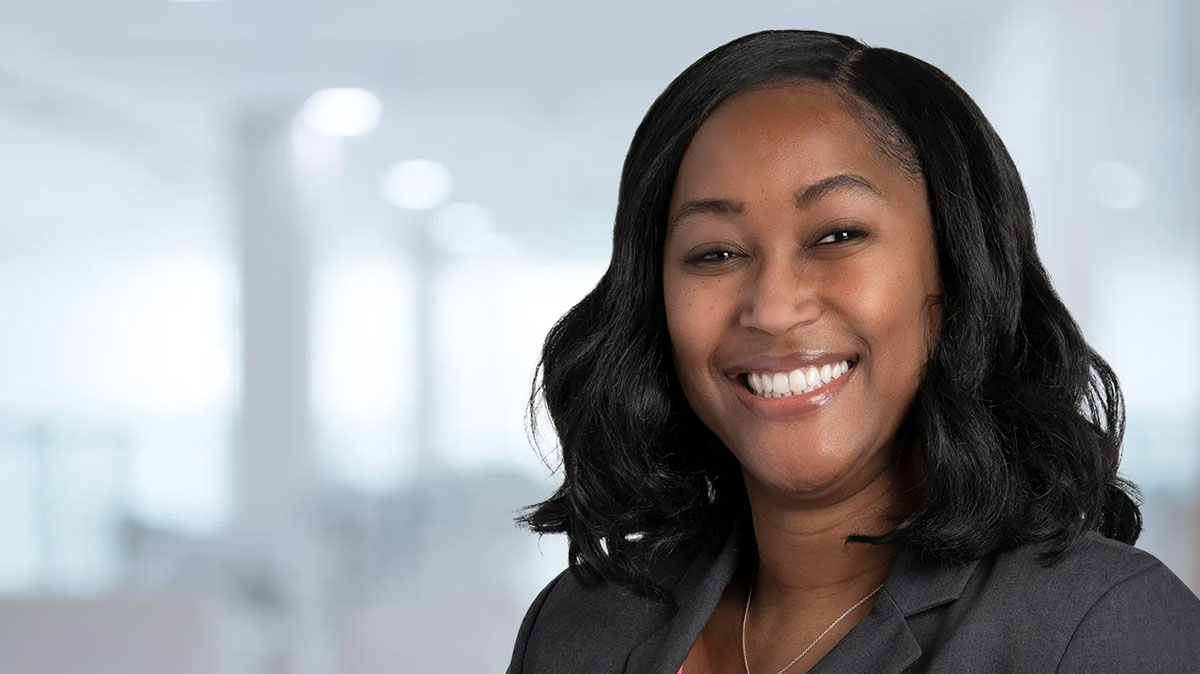
When nursing veteran Myra King, DNP, APRN-CNS, ACNS-BC, CCRN-CCS, was hospitalized following emergency surgery, she gained first-hand insight into what it feels like to be a patient. In the latest episode of Nurse Essentials, Dr. King shares the lessons she learned and insight into becoming a better caregiver.
Advertisement
Cleveland Clinic is a non-profit academic medical center. Advertising on our site helps support our mission. We do not endorse non-Cleveland Clinic products or services. Policy
Recent Episodes
Back to School: Is it Time to Pursue Another Nursing Degree?
Lisa Baszynski, DNP, RN, NE-BC, Associate Chief Nursing Officer (ACNO) for nursing education and professional development at Cleveland Clini…
De-escalation Strategies to Prevent Workplace Violence
Healthcare workers are four to five times more likely to experience workplace violence injuries than workers in private industry, according…
Experienced Nurses Share Advice for New Grads
According to the National Council of State Boards of Nursing, approximately 227,000 new nurses entered the U.S. workforce last year. As more…
Video content: This video is available to watch online.
View video online (https://cdnapisec.kaltura.com/p/2207941/sp/220794100/playManifest/entryId/1_806iv70t/flavorId/1_5f3sgelj/format/url/protocol/https/a.mp4)
Transcript
Carol Pehotsky:
If we're fortunate enough to live long enough, at some point in time, we will be on the receiving end of healthcare, likely in an inpatient setting. And once that happens, it dramatically affects the perspective you have on the experience our patients have. Being vulnerable, not knowing what's going to happen, relying heavily on others to advocate for you, to treat you, to help you get back to that life you so long to lead.
Advertisement
Cleveland Clinic is a non-profit academic medical center. Advertising on our site helps support our mission. We do not endorse non-Cleveland Clinic products or services. Policy
We're joined today by Dr. Myra King to share her journey as a patient and how that transformed her approach to nursing and healthcare.
Hi, and welcome to Nurse Essentials, a Cleveland Clinic podcast where we discuss all things nursing, from patient care to advancing your career, to navigating tough on-the-job issues. We're so glad you're here. I'm your host, Carol Pehotsky , Associate Chief Nursing Officer of Surgical Services Nursing.
Welcome back everyone. If you've been listening from the beginning, I have occasionally peppered in some of my own experiences with healthcare, and I have the great privilege of welcoming newly hired nurses when they're coming into the perioperative area. I have the great pleasure of welcoming them and talking to them a little bit about what it means to be in this space. And I always talk to them about the gift of time that people give us and, and surgery. That could be anywhere from a few minutes to several hours where they're fully handing over everything and trusting that we're going to remember what's important to them—even if we've never met them, that they are a human being. That the care we'd want to receive if it were us or someone we care most about in this world, on the table.
Advertisement
I've had some experience with healthcare, thankfully, always very elective except for a spill at home where I broke part of my spine. But it was all good. And whether it was that emergency treatment or a planned surgical procedure, it's a very humbling experience. My very first surgery, I was a young adult. I wasn't in healthcare yet. I think back to that; it really made a core memory for me and for my nursing career. I didn't have my contacts in, and they took my glasses, so I couldn't see, which made sense now. But at the time, it's like I can't see anybody. I had a rough wake up from anesthesia, and even though I was 25, I felt about 12 and wanted my mommy and daddy who are several hours away because I had insisted to them that I could handle it and I would be fine.
So that has always informed my career. It's easy when you get busy and distracted and things are going on, it's easy to lose that, to bring yourself back to, as one of my former assistant nurse managers used to always say, ‘Carol, any day that's on this side of the stretcher is a good day.’ It doesn't mean our patients who are here aren't excited about the treatments or the surgeries we're going to give them, but it's a whole different day when you get to deliver the care instead of receiving it. And that is our topic for today.
I'm so grateful that my friend and colleague, Myra King is here. Dr. King has been so gracious to be willing to tell a little bit about her story as a patient. So, we're very grateful for your willingness to do that and share that with our audience. First, Myra, though, I hope you'll share with us a little bit about your career. You're a clinical nurse specialist, you're an APRN manager here at Cleveland Clinic. Tell us a little bit about your professional life, please.
Dr. Myra King:
Sure, absolutely. Well, thank you so much for having me. I'm very honored to be here and to tell you a little bit about my journey, both my career as well as being a patient, and how that informed how I practice today as an APRN.
I've been a nurse for 27 years, all of which have been in the cardiovascular intensive care unit here at Main Campus at the Clinic. And I've been in a variety of roles. It was probably about seven years into my career where I learned that I really love teaching. I really love giving back to nursing, and particularly at the bedside.
Carol Pehotsky:
Mm-hmm (affirmative).
Dr. Myra King:
That just-in-time teaching. And so, I transitioned into the role of an educator.
Carol Pehotsky:
Mm-hmm (affirmative).
Dr. Myra King:
At the time we were called clinical instructors. I functioned in that role for a few years before returning to school to become a clinical nurse specialist. I just love the fact that in the clinical nurse specialist role, the focus really is on improving patient care through advancing nursing practice and promoting evidence-based practice. I've been doing that for about 16 years and then transitioned into becoming an APRN manager about five years ago. So, I have the privilege of being manager for clinical nurse specialists on Main Campus, as well as in the ICUs in our regional hospitals.
Advertisement
Carol Pehotsky:
Well, and that's a whole episode in terms of all the wonderful things that you personally have brought to the profession, to the specialty, all the nurses you've mentored over the years. But we'll leave that for another day, . Okay. So, can you walk us through briefly the experience that we're going to talk about today in terms of your experience as a patient?
Dr. Myra King:
Absolutely. I think that, just as you mentioned in your introduction, when you are a patient, it really provides an opportunity to reflect on things that we sometimes lose sight of as clinicians. In my adult life, I had two illnesses that led me to be hospitalized. The first was in 2018, about two months before my wedding.
I was working out at the gym. It was a normal day, and I had a sudden excruciating pain in my abdomen. It just came out of nowhere. I ended up going into the emergency department, and a few hours later it was found that I had a small bowel obstruction. It was from a uterine fibroid that had attached to my small bowel, probably while I was working out and caused it to kink.
Carol Pehotsky:
Yikes.
Dr. Myra King:
And so, I needed to go and get that repaired. I was in the hospital for five days after that surgery. Thankfully, it was caught early enough where I did not have to have a resection or an ostomy. It was still very viable. So, I was very grateful for that.
Advertisement
Carol Pehotsky : But still, working out to five days in a hospital, there is no transition or adjustment there at all. My gosh.
Dr. Myra King:
Very much a surprise.
Carol Pehotsky:
Yes.
Dr. Myra King:
And then the second instance was a couple years after that, in the middle of the pandemic, when I was 45 years old, I was diagnosed with breast cancer. Again, another surprise. I did not have a very strong family history. With that diagnosis, I underwent several surgeries, a mastectomy, and then two surgeries for reconstruction, as well as four rounds of chemotherapy. I was blessed to have excellent medical care and nursing care right here at Cleveland Clinic. But it definitely was a time for me to reflect on what's important as we were caring for patients.
Carol Pehotsky:
Going back to first situation, so you said it was right before your wedding?
Dr. Myra King:
Yes.
Carol Pehotsky:
I know you'd be a very determined individual. Did that impact your wedding plans?
Dr. Myra King
No, not at all. , absolutely not. I was able to recover. All plans went just as I had intended, thankfully. And I was able to walk down the aisle in my wedding dress without an ostomy. I was happy about that.
Carol Pehotsky:
Yes.
Dr. Myra King:
Yes, I was very blessed.
Carol Pehotsky:
Wow, that's amazing. I think that there are so many things we can talk about here, including, especially when we work inpatient, our patients have whole lives that they want to get back to. We play probably a more important part than maybe we realize in terms of getting them back to that life.
Advertisement
Dr. Myra King:
Yes, absolutely. Absolutely. I think it's important to remember that, right. That they have a life outside of the walls of our hospitals, and what can we do to help restore that life for them, and to get them back to what is meaningful and what's important for them.
Carol Pehotsky:
So, getting into some of the experiences, just again, I'm struggling to wrap my brain around all of what you've been through and in a very short period of time. Leaning into your inpatient experience with the nurses.
Dr. Myra King:
Mm-hmm (affirmative).
Carol Pehotsky:
Again, there's so many things that we're thinking about as nurses. We're doing assessments and we're getting medications, and we're trying to remember the big picture, and we're trying to critically think. What are some of the small gestures or interactions that your nurses did that really gave you that moment when you knew you were cared for, or you felt like you were in really skilled hands?
Dr. Myra King:
I was really very grateful for the interactions I had with several nurses.
Carol Pehotsky:
Okay.
Dr. Myra King:
That made me feel as though I was seen, that I was heard, that I was cared for. And it was interesting because it wasn't always anything that was what we would consider big.
Carol Pehotsky:
Sure. Yes.
Dr. Myra King:
There were the small things like a smile or a gentle touch, or the tone of the voice that they had as they interacted and spoke with me, making eye contact, sitting down to talk to me and not being distracted as they were having conversations with me, really let me know that they cared about me. Frequent check-ins.
Coming and just saying, ‘I'm just here to see how you're doing. What can I do for you?’ It really meant a lot to me. I think it was being fully present. Sometimes we can feel like, I don't have a lot of time, I'm really busy. I don't have time to spend with you. But it really isn't about the quantity of time, it's the quality. In that moment, while nurses were interacting with me, and there were several of them, that they weren't necessarily messing with the IV bag or messing with my IV or giving medication. But they just stopped everything, made eye contact and had a conversation with me. I think that really meant so much.
There was one nurse in particular who, when I originally was in the emergency room with the small bowel obstruction and had to have an NG tube placed. Intuitively, I remember as soon as it got in, I reached up and pulled it out. Everything that we tell our patients not to do, I did. It was just intuitive. I felt like there's this foreign thing inside me, I need to get it out.
Carol Pehotsky:
Yes.
Dr. Myra King:
I remember her looking at me. She took my hand and she said, ‘you can do this. I am here with you. We're going to do this together.’ And I immediately got this feeling of, we're going to walk through this experience together. She's with me. I'm going to gain strength from her. She took my hand and guided me throughout the way. And of course, I know what NG tubes are for. I know why they're important.
Carol Pehotsky:
It's a little more personal this time.
Dr. Myra King:
I know, I've put in hundreds of them. But in that moment, having her there, showing the compassion that she did helped calm me down.
Carol Pehotsky:
Yes.
Dr. Myra King:
It made me feel safe. And I was able to go through the treatment that I needed to go through in that moment because of her actions. I'll never forget her for that. And I gratefully had the opportunity to thank her for that.
Carol Pehotsky:
Oh, that's wonderful.
Dr. Myra King:
Yes.
Carol Pehotsky:
And she probably said, ‘I was just doing my job.’ [Yes.] And yes, that's a hallmark of a very good nurse.
That's right. I hate that sometimes these things are called soft skills.
Dr. Myra King:
Yes.
Carol Pehotsky:
When they're the most important skills.
Dr. Myra King:
I agree. I think that those things that are, as you said, soft skills can be just as important as it relates to the experience that our patients have. Having been a critical care nurse my whole career, I've been trained to care for patients from a physiological standpoint, right?
I have been trained to make sure that they're hemodynamically stable, their vital signs. I'm very comfortable with analyzing ECGs and analyzing lab work. But when I think about administering to the psychological, emotional, and spiritual needs, in addition to the physiological needs of patients, it really does remind us that this is important, and we can heal from those aspects just as much as we can heal from a physiological standpoint.
That was a mind shift that I needed to take from my career. Again, thinking always critically and physiologically, really thinking about what I can do to provide comfort and can provide healing beyond the medications that I'm giving or the other kinds of treatments that we give. Again, it is a very powerful reminder for me.
Carol Pehotsky:
We forget that we have tools in our tool belt. Yes, we need to treat with medication as appropriate. But we have within our own selves the adjuncts that are always available.
Dr. Myra King:
Absolutely. And we cannot take them for granted. We cannot minimize them. And I think we have to make sure we teach that to our clinical nurses, our new nurses, the importance of those skills that can really make a huge difference in the experience of our patients and how well they recover while they're in our care. So, very important.
Carol Pehotsky:
Whether it's anxiety or it's pain, certainly it really is what the patient says it is. And our presence can help so much. I think back to when I slipped on some stairs and turned out I fractured a vertebrae. And that was more painful than labor . And when I was in the ED, one of the nurses said, ‘I can tell she's tough. If she's clenching this much and suffering this much, she needs something.’
I can only imagine what that painful experience felt like for you. Again, you're going along, you're working out to probably doubled over.
Dr. Myra King:
Oh, yes.
Carol Pehotsky:
So, without reliving that pain, again, talk to me a little bit about how we need to take from those experiences, how we respond to patients when they're in severe pain, some of the things that we can do to help address that as soon as possible.
Dr. Myra King:
You know, it was interesting and I'm glad you brought that point up. My experience with the pain when I originally went to the emergency room was that I didn't feel that it was necessarily taken as seriously as I had hoped initially. I think we have to be very careful, because as this oftentimes happens with women where they feel as though maybe there's an exaggeration of pain, maybe they're not really having as much pain as they're showing. And so, with that, I originally was diagnosed with gastritis. And I was actually being sent home, but I was still in a lot of pain.
Carol Pehotsky:
Mm-hmm (affirmative).
Dr. Myra King:
And they were like, okay, here's this pain medication and we're just going to watch you and follow up with your primary care after the weekend.
Carol Pehotsky:
Mm-hmm (affirmative).
Dr. Myra King:
I was being rolled out of the emergency room when all of a sudden I had this overwhelming feeling that something's not right. I am still in so much pain, and I urged them to keep me for observation. Please just keep me for observation. Something's not right. I don't want to go home in this much pain. And so they did. They listened to me, which I was grateful for. Treated my pain. A couple of hours later, the physician came in and she looked at me and said, ‘you really are in a lot of pain, aren't you?’
Carol Pehotsky:
Yes, I am.
Dr. Myra King:
Yes, I am. I actually am. So she said, ‘why don't we get a CAT scan just to be sure, get a CAT scan?’ I said, yes, let's do that.
Carol Pehotsky:
Thank goodness. Yes.
Dr. Myra King:
It was in that moment where during the CAT scan, they called people in and they told me that I had an obstruction and were preparing for surgery. I could only imagine what would've happened if I went home. And my surgeon said that if I had gone home even hours later, I would've had ischemia and likely would've had a resection or ostomy. It was a reminder that we have to listen to our patients. They know their bodies better than we know their bodies.
We have to be mindful of what they tell us is going on. I am grateful that I was eventually heard, and I had a care team that said, yes, let's follow up. And it was because of that, you know, it changed the whole course of my treatment. Being relentless in our efforts to treat symptoms is important because so many of us became nurses to relieve suffering.
Carol Pehotsky:
Yes.
Dr. Myra King:
And patients suffer when they have these symptoms that go unrelieved. So, we need to be vigilant in our efforts to alleviate those symptoms. That is what we are called to do.
Carol Pehotsky:
Yes.
Dr. Myra King:
That's what we are meant to do. It was a powerful reminder that I'm going to walk through this with my patient and say, if they're having pain, this is how I would want to be treated. I'm going to be as vigilant and aggressive and listening to them and trying to help as much as we can. Very, very important.
Carol Pehotsky:
Yes, that's what advocacy is all about, right? And maybe my patient seems really stoic and they're not. It could be any expression and are the words aligning with what I'm seeing? How do I keep asking that question as a nurse to say, do they have the right tools to go home and manage this? Or do we need to investigate this further?
Dr. Myra King:
Absolutely. Exactly. Being vigilant in that approach. What can we do for them while they're here, are we setting them up to be able to manage those symptoms at home? And if not, what must we do to ensure that they can care for themselves at home as well? So, it's just really important. I remember I had a nurse once tell me that when she comes to work, she takes off her shoes and steps into the shoes of her patients, essentially. Being able to see what that patient is experiencing from their perspective.
Carol Pehotsky:
Mm-hmm (affirmative).
Dr. Myra King:
I think when we do that, when we step into the shoes of our patients and try to imagine what they're experiencing, it really is that motivator that we need to be able to go above and beyond to make sure that they're comfortable.
Carol Pehotsky:
Absolutely. What is just a Wednesday for somebody is likely for somebody else, the patient's worst possible day.
Dr. Myra King:
Absolutely. Absolutely.
Carol Pehotsky:
So, we've talked a lot about empathy, appreciating that, you had all sorts of drains and tubes, and you really called out, and that you could really tell when somebody could set that aside and say, ‘I'm going to connect with Myra first, and then I'll look at the IV and the NG tube, et cetera.’
What advice do you have for nurses who are a little more novice? There is a lot going on with our patients. And there are a lot of things we ask them to assess for, to plan for, to think through. What advice do you have for them to keep integrating that empathy? Even if they've never been on the other side of the bed, what could it feel like? What advice do you have for them?
Dr. Myra King
I think that is a very important question. I feel that particularly when you're a novice nurse, things tend to be very task-oriented. I have these things that I have to get done, and I think it's important to understand that doing those tasks is important.
Carol Pehotsky:
Mm-hmm (affirmative).
Dr. Myra King:
Caring for patients, their psychological, emotional, and spiritual needs are important, as well. It's not mutually exclusive. You can do both at the same time. While you are doing those tasks, are there little nuggets of things that you can do to express that you care and that you are making an effort to connect with them? Even if you pause for a moment from those tasks, obviously prioritizing what needs to get done first, and then say, ‘I'm going to stop right now, and right now you have my full attention. I'm fully present with you and I'm listening’. Again, it really isn't that quantity of time, it's the quality. And from a patient's perspective, it can seem like it's so much longer over a period of time.
Carol Pehotsky:
Oh my gosh, yes.
Dr. Myra King:
Even though it may be a short period of time.
Carol Pehotsky:
[Mm-hmm (affirmative).]
Dr. Myra King:
Because they know that you are fully present, which is an intentional action. Presence is intentional action. It is, I am going to make up in my mind that you have my full attention and I'm going to connect with you in that moment. I think that if novice nurses can understand the importance of that, they'll be able to truly learn why, as nursing, we've always been taught the importance of treating patients from a holistic standpoint.
Carol Pehotsky:
Mm-hmm (affirmative).
Dr. Myra King:
You learn that and you learn it in action. You learn to know that I can care for their tubes, their drains, their medications, their dressings, while being compassionate, while connecting, while talking to them, and building a relationship.
Carol Pehotsky:
Mm-hmm (affirmative).
Dr. Myra King:
Building a rapport with them is invaluable. There's a tool that we use here at the Cleveland Clinic, and you know it well, S.T.A.R.T. with Heart. It's so simple. I remember when I first heard that term, it resonated with me because I felt like these are just such simple things that I can do and remember in my day-to-day interactions with patients that can make a difference. I would definitely have our novice nurses start with those actions. So S.T.A.R.T. with Heart. It's an acronym.
Carol Pehotsky:
Mm-hmm (affirmative).
Dr. Myra King:
The S stands for you simply smile and greet warmly. I'm just going to smile and greet patients and families warmly. The T is to tell patients your name and to try to tell them your role and expectations. Just tell them about who you are and why you're there. The A is active listening, which I've talked a little bit about. Just truly listening, not listening to respond, but truly trying to hear what they are saying. And then to provide a connection at that time and to assist as you are able. And the R is to build the rapport.
Carol Pehotsky:
Mm-hmm (affirmative).
Dr. Myra King:
I'm going to build this rapport with you. I'm going to try to build a relationship with you. I'm going to try to build that connection. And then T is ending with a thank you. Thank you for the opportunity to care for you. So, I think just those small things that we can teach our novice nurses to incorporate into their care every day can make a tremendous difference.
Carol Pehotsky:
Well, and it's like anything else, the more you do it, the more natural it becomes.
Dr. Myra King:
Yes. Absolutely.
Carol Pehotsky:
You know, it might feel forced to say, ‘hi, I'm Carol and I'm going to be your nurse today.’ But it's practicing just like it's practicing everything else. And I love how you've called out the intention and the attention.
Dr. Myra King:
Right, exactly.
Carol Pehotsky:
That's very powerful.
Dr. Myra King:
Right, and then finding those points of connection.
Carol Pehotsky:
Mm-hmm (affirmative).
Dr. Myra King:
Sometimes it's something as little as I remember the nurse that I referred to about the NG tube. We began to talk a lot about my grandchildren. It was in that moment where I was starting to think about them, and it made me feel good and it made me connect. And she talked about her grandchildren. That was just something that we ended up having in common with one another. So being able to find, and even if you start with the weather or their hobbies or, tell me a little bit about your family. Just those little things to connect and to learn more about them outside of their illness, outside of their disease, and who they are outside of our hospitals can build the connection and the trust that we need with our patients and their families.
Carol Pehotsky:
What matters most to them.
Dr. Myra King:
What matters most to them. It's their lives, their bodies that we're caring for. So, what matters most to them should be a priority for us.
Carol Pehotsky:
You come with such a rich clinical background and deep understanding of physiology, and yet you're a patient. Did you find that there were times when you wish they weren't talking to you like a nurse? Did people talk to you assuming you understood some things because you came from healthcare? Or what was that like? And, and what advice would you have for healthcare workers caring for people in healthcare?
Dr. Myra King:
That's a great question. There were definitely times when I felt like there may have been some gaps in opportunity to provide education because they felt as though, you're a cardiac nurse, of course, you know this. And maybe it was well intentioned. Maybe they didn't want to offend me by thinking that I might not know something. But I think it's important to remember that regardless of if you're caring for a patient that has a medical background, has the knowledge, you never want to assume what they know.
I think when you are a patient and you're going through pain or you're in shock, which I was in shock, or you’re nervous, you're anxious. It's very hard to think rationally, It's hard to remember your medical knowledge and what's important because you're navigating those emotions that you're feeling or those symptoms that you're feeling.
So, it's always, treat every patient as if they need to know what is important to their medical care; the treatments; always provide patient education. I have one example of this that I can recall after my surgery for the small bowel obstruction. I had to, as we know with most surgeries, you need to perform incentive spirometry. It's important. You had surgery and you can have atelectasis, so you need to do incentive spirometry to prevent that from happening. I had the device next to my bed space, as most surgical patients do, but I do not recall anyone ever going over it with me—teaching me, reminding me that it needed to be done and even how to do it or how often to do it.
I assume it's because I was a nurse, but because of that, it just wasn't at the forefront of my mind. I didn't prioritize it. There were so many other things to think about. I'm thinking about how am I going to navigate work? How am I going to go home and do what I have to do at home? There were so many other things that were priority on my mind that I literally didn't really pick up the IS. Of course, I knew how to do it, and it was important. But again, not at the forefront of my mind.
About a day after being discharged, I couldn't catch my breath. In fact, I was trying to take a deep breath and couldn't, it was one of the worst feelings I ever had. When you try to take a breath, but you cannot get enough air in. I had shortness of breath, and immediately I thought I had a pulmonary embolism.
Carol Pehotsky
Of course.
Dr. Myra King:
Of course. Worst case scenario. Oh my gosh, this is terrible. I rush to the emergency room. Something's not right. I cannot breathe. So they rush me back, they do a chest x-ray, and they come back and say, you have atelectasis. And I was like, oh my goodness.
And then they talk to me about how frequently have you been doing your incentive spirometry? And I was like, yes, the really is important. That thing that I have taught hundreds of patients to do, I didn't do it myself. And I think that reminder, that prompting would've been helpful for me.
Carol Pehotsky:
Mm-hmm (affirmative). Mm-hmm (affirmative).
Dr. Myra King:
I had to do deep breathing, had to get respiratory treatment. I had all these things I had to do. And then of course I did my IS for many, many days after that to reopen my lungs. But I think it's just important, never assume. Don't let any assumptions cloud your judgment. Just always provide patient education instruction.
‘Would you like me to go over this with you? Do you have any questions?’ I think can be really important and it actually relays respect. It's not offensive. It relays that you care, so it is very important to remember.
Carol Pehotsky:
And there's a way to say, ‘I'm going to feel better if I go over it with you so that we're all on the same page, what the plan is.’
Dr. Myra King:
Exactly. ‘You probably know this, but I just want to make sure that, you know, we're on the same page.’
Carol Pehotsky:
Yes.
Dr. Myra King:
Or, you know, and I think you can, even if teach back is still a great tool.
Carol Pehotsky:
Absolutely.
Dr. Myra King:
You just talk to me about your understanding of this.
Carol Pehotsky:
Yes.
Dr. Myra King:
Because it may be different to how you do this in your clinical area or in your clinical practice. Can you talk to me about how you plan to implement this? Or show me? Demonstrate. Or you could even say ‘it's required that I go over this.’
Carol Pehotsky:
And it really is.
Dr. Myra King:
It really is. And I need to be able to check this off in my patient education. Could you just show me that? And I think that is so important. Again, never make assumptions. Assumptions can really cloud your judgment and can be detrimental to the care that we provide to patients.
Carol Pehotsky:
And then some spirometers are harder to do than it looks like when you teach teaching somebody, as somebody who also almost gave herself a little atelectasis , it's like, oh, this is tough.
Dr. Myra King:
It’s tough. But then there is this sense of accomplishment when you can do it better. You're like, oh my gosh, I was only able to get it this time. [The little smiley face.] The smiley face is really important. And it felt like I was getting better every day when I was able to get higher and higher. It's a sense of accomplishment. So, absolutely. Another great reminder that IS is important.
Carol Pehotsky:
Yes. That's right.
Dr. Myra King : Patient education is important.
Carol Pehotsky : Absolutely. I could talk to you all day long about this. I'm going to ask you one more question. You've talked throughout your story about the importance of your family.
Dr. Myra King:
Mm-hmm (affirmative).
Carol Pehotsky:
And we know that having families at the bedside can just sometimes physically be a challenge with the number of bodies and getting to the patient. Sometimes there's different understandings or comfort level with the environment. Talk to us a little bit about, from your perspective, what that was like in terms of family presence.
Dr. Myra King:
Mm-hmm (affirmative).
Carol Pehotsky:
And what you'd like nurses to take from that.
Dr. Myra King:
Having my family with me throughout the process and them being able to be present was a game changer for me.
Carol Pehotsky:
Okay.
Dr. Myra King:
I'm blessed to have my husband and my mom and my siblings and my daughter and my children with me. What it reminded me of is that when we allow families to be present as much as possible, it can make them feel safe. It improves their patient experience. I know that it's not always convenient. I know that there are times when we have to have families step out. We're doing procedures where they might not be able to be present, but as much as possible, we want to treat them as if they're not an inconvenience.
Carol Pehotsky:
Mm-hmm (affirmative).
Dr. Myra King:
I think that we want to relate to families that their presence is important for the care of the patient and to incorporate their presence into the plan of care, right? Because not only can it make the patient feel safe, be therapeutic for the family, it can also help to ensure that we incorporate their values and their preferences and their beliefs into their plan of care.
Carol Pehotsky:
Sure.
Dr. Myra King:
Because how can we do that if they're not present? And when we talk about honoring the values, beliefs, and what is important to our patients and families and to plans of care, then we can't do it if they're not present and involved in those discussions.
Carol Pehotsky:
Yes.
Dr. Myra King:
Family presence has so many benefits that I don't think that we often think about. I would encourage that we take a different look at it. We have 24-hour visiting, and what I found in addition to all of those things as it relates to my family being present, was that my husband was better able to care for me at home.
Carol Pehotsky:
Sure.
Dr. Myra King:
Because he was involved in the care, he saw what was happening, and he was able to do the dressing changes. He was able to empty the drains. He wasn't scared to touch me. He saw everything that was, so if I go back to thinking about if it were your mom, your dad or your child, if it were you. If you were to step into the shoes of the family, how would you want to be treated? Would you want to be there? Would you want your voice to be heard?
When you think about it from that perspective, you can really see the value of family presence and try to make sure that as much as possible, that you allow it for your patients and their families to give the optimal experience. It can be so therapeutic, both for the patient and for the family and for you as a nurse.
There are things that families can do—mouth care or just spending time with it can also be helpful in your practice as well.
Carol Pehotsky:
Sure. That helps the family to feel involved.
Dr. Myra King:
To feel involved. Exactly.
Carol Pehotsky:
Can you give some ice chips? Can you do mouth care?
Dr. Myra King:
Absolutely. And it helps create a memory for them that is important, right? Particularly if it happens to be near the end of life. We have this opportunity to create memories for families as they're with their loved one in their last moments. And it's a place of honor to be able to do that. It's really a privilege to be able to do that.
When you allow them to be present, when you involve them in the care, you can really optimize the memory, the last memories that they have of their loved one, which is, I don't think anyone can argue is, just so important. It's so powerful. And we have the ability to do that. We have the ability to create those moments, those memories that are so important.
I always say we may not be able to always control the health outcome of our patients. We don't know how our therapies will work, how their bodies will respond. We can’t always control their health outcomes, but we can control the experience that they have with us. Having that control is powerful, so we need to take full advantage of it.
Carol Pehotsky:
So beautifully said. Myra, I can't thank you enough for being so vulnerable and sharing your story with us. I know that everyone's gotten so much out of this. So, listeners, I hope you wrote all that stuff down, but you can go back and listen again and again, lots of wonderful things to take from this conversation.
Dr. Myra King:
Thank you.
Carol Pehotsky:
Before we call it a day, I'm hoping you'll honor us with a couple more questions. Our speed round where we get to know you a little bit more as an extraordinary human being in addition to what you've shared with us today.
Dr. Myra King:
Absolutely.
Carol Pehotsky:
So, you're back at work, you're working hard, you work long hours, you take care of patients and nurses and the organization. When it's finally time to call it a day, what do you do for you to recharge?
Dr. Myra King:
Well, my husband and I really love to go and see sunsets, and that is one of the things we've done since we were dating. And so, we oftentimes will go find a great place. There are several places in Cleveland to see a wonderful sunset. We will go out and do that, spend quality time together. We love to be out in nature, so we go walking or we ride our bikes. And so those are just things that I will prioritize. So being outside, love it. And it is a great way to recharge for me.
Carol Pehotsky:
And as you know, this year we've spent a lot of time in as an organization talking about the power of purpose. You've given us a look into who you are and what motivates you. But I'm hoping you're willing to share with us what your why is.
Dr. Myra King:
When I think about my why, the purpose that I have and why I went into nursing, it really was this unrelenting passion to relieve the suffering of others, to provide hope and love and kindness to the lives that I touch. And I truly believe that every life you touch matters; it contributes to your legacy. So, you have to make every encounter matter and ensure that you hold each encounter in high regard. My purpose is to try to improve the experience that others have with me.
And in some way, I hope that I can influence others to reach their full potential. As a nurse leader, that's really my charge as well. I'm hoping to influence others in terms of reaching their maximum potential and to really maximize their contributions they make to the world. The Maya Angelou quote that I love is when she says that people will forget what you said and they will forget what you did, but people will never forget how you made them feel.
Really being able to infuse my purpose into the experience that people have when they're in my presence is something that I hold in high regard. And I think that is true for us as nurses and for us as leaders, as well.
Carol Pehotsky:
And audience, I can assure you that you're doing that every day. Myra.
Dr. Myra King:
Oh, thank you much. As are you.
Carol Pehotsky:
So very fortunate to have you.
Alright. Thank you so much for joining us today and sharing your story.
Dr. Myra King:
Thank you for this opportunity.
Carol Pehotsky:
As always, thanks so much for joining us for today's discussion. Don't miss out, subscribe to hear new episodes wherever you get your podcasts. And remember, we want to hear from you. Do you have ideas for future podcasts or want to share your stories? Email us at nurseessentials@ccf.org.
To learn more about nursing at Cleveland Clinic, please check us out at clevelandclinic.org/nursing.
Until next time, take care of yourselves and take care of each other.
The information in this podcast is for educational and entertainment purposes only and does not constitute medical or legal advice. Consult your local state boards of nursing for any specific practice questions.
Recent Episodes
Back to School: Is it Time to Pursue Another Nursing Degree?
Lisa Baszynski, DNP, RN, NE-BC, Associate Chief Nursing Officer (ACNO) for nursing education and professional development at Cleveland Clini…
De-escalation Strategies to Prevent Workplace Violence
Healthcare workers are four to five times more likely to experience workplace violence injuries than workers in private industry, according…
Experienced Nurses Share Advice for New Grads
According to the National Council of State Boards of Nursing, approximately 227,000 new nurses entered the U.S. workforce last year. As more…
Never miss a moment - subscribe now.
Listen to the Health Essentials Podcast on your favorite streaming platform.
Other Podcasts You May Love
MedEd Thread
MedEd Thread explores the latest innovations in medical education and amplifies the tremendous work…
Health Essentials
Tune in for practical health advice from Cleveland Clinic experts. What's really the healthiest diet…
Beyond Leadership
Hosts Jim Pae and Elizabeth Pugel escort you through a network of thought leaders, sharing world-cla…
Studies in Empathy
Join Cleveland Clinic Patient Experience leaders and a group of guests with a wide range of experien…