



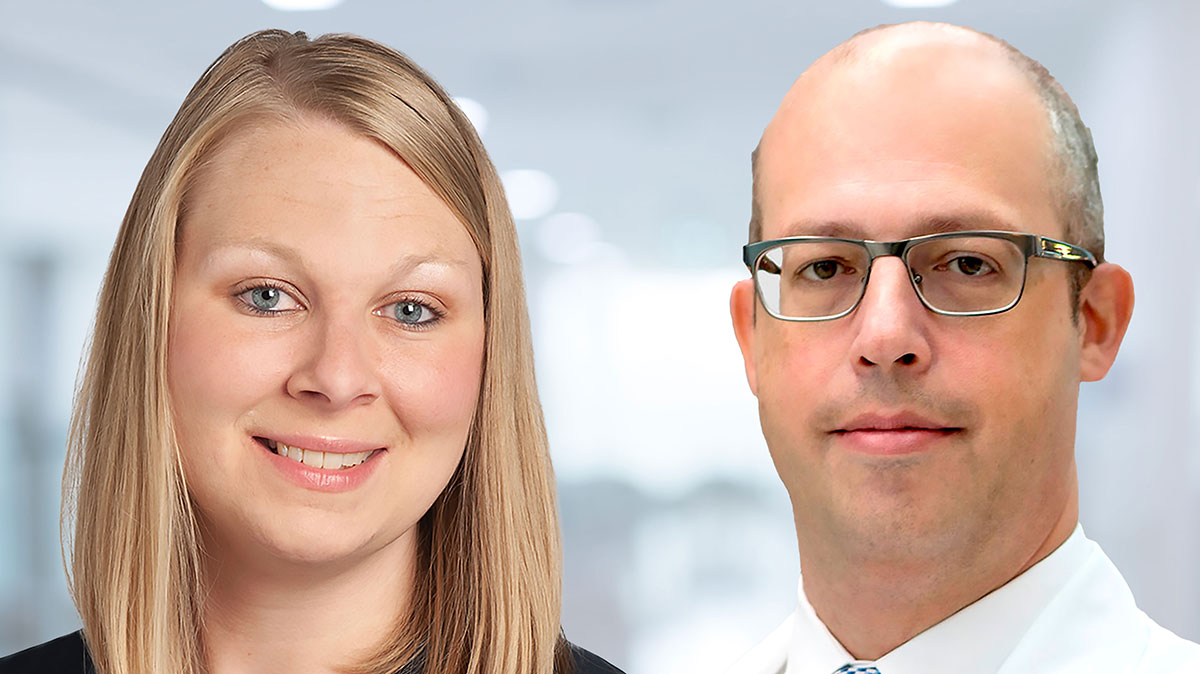
Nurses Contribute to Design of New Neurological Facility
The Cleveland Clinic Neurological Institute is constructing a 1 million square foot building set to open in January 2027. “The building is very much designed with the patient in mind,” says Andre Machado, MD, PhD, Chair of the Neurological Institute. “And our nursing colleagues were really instrumental in being the voices of the patient in the design, not only from the patient experience perspective, but from the patient safety perspective.” In this episode of Nurse Essentials, Machado and Kristen Vargo, DNP, RN, NE-BC, Director of Nursing for Neurological, Orthopedic and Rheumatology Nursing at Cleveland Clinic, discuss nurses’ input in the state-of-the-art building, which will be the largest dedicated neurological facility in the country.
Advertisement
Cleveland Clinic is a non-profit academic medical center. Advertising on our site helps support our mission. We do not endorse non-Cleveland Clinic products or services. Policy
Recent Episodes
Caring for Patients with Chronic Lung Disease
Four to six percent of Americans live with some form of chronic lung disease, and it remains one of the leading causes of death and illness…
Back to School: Is it Time to Pursue Another Nursing Degree?
Lisa Baszynski, DNP, RN, NE-BC, Associate Chief Nursing Officer (ACNO) for nursing education and professional development at Cleveland Clini…
De-escalation Strategies to Prevent Workplace Violence
Healthcare workers are four to five times more likely to experience workplace violence injuries than workers in private industry, according…
Video content: This video is available to watch online.
View video online (https://cdnapisec.kaltura.com/p/2207941/sp/220794100/playManifest/entryId/1_axl5f2eh/flavorId/1_5f3sgelj/format/url/protocol/https/a.mp4)
Transcript
Carol Pehotsky : As nurses, we are often solely or mostly focused on the care we provide, and less about how much the role of the physical unit or the physical building in which we deliver that care – and the impact that makes on us and the patients we serve. It's a rare and wonderful opportunity to be part of the design of a new space to deliver healthcare. I'm joined today by Dr. Andre Machado and Kristen Vargo to talk about how they integrated the voice of the entire healthcare team and the patient in building the new Cleveland Clinic Neurological Institute building.
Advertisement
Cleveland Clinic is a non-profit academic medical center. Advertising on our site helps support our mission. We do not endorse non-Cleveland Clinic products or services. Policy
Hi, and welcome to Nurse Essentials, a Cleveland Clinic podcast where we discuss all things nursing from patient care to advancing your career to navigating tough on-the-job issues. We're so glad you're here. I'm your host, Carol Pehotsky , Associate Chief Nursing Officer of Surgical Services Nursing.
Welcome back everyone. When I think back many, many years ago, earlier in my nursing and leadership career, I had the great fortune of being able to go to one of the Cleveland Clinic patient experience summits, and the many thoughtful leaders that challenged me to think differently about how we welcome patients and how we've helped them feel like they're an equal partner in their care. But one of the most impactful presentations I saw that sticks with me at least 10 years later was an architect talking about the importance of the buildings in which we deliver care. Being part of that healing, being welcoming and thoughtful and forward thinking; embracing not just the care we provide today, but the care we'd like to provide in the future.
Up until then I had been a nurse and pretty much delivered care within the building that already existed. There wasn't really that thought or that opportunity to think about what could care look like, how could it be different if the physical structure was different? We have the great fortune today to talk to two very impactful leaders who have had a great deal of influence in building our most recent building that will be opening soon. So, it's my great pleasure to welcome to the show Kristen Vargo . Kristen is Director of Nursing for the Neurological, Orthopedic and Rheumatology Nursing here at Main Campus. And Dr. Andre Machado . Dr. Machado is Chief of the Cleveland Clinic Neurological Institute. Welcome. Thank you so much for joining me today.
Advertisement
Kristen Vargo : Thank you, Carol.
Dr. Andre Machado : Thanks for having us.
Carol Pehotsky : Of course. To get us started, if you don't mind telling our audience a little bit about what the building is going to be, what it will look like day one, how it's going to evolve as the building moves forward and care evolves into the Neurological Institute building.
Kristen Vargo : Obviously, this building is set to open in January of 2027.
Carol Pehotsky : For our audience, that's about 13 months from the day we're recording right now. Lots of great activity happening between now and then.
Kristen Vargo : We are definitely in the final countdown of our opening. This building will be the largest on Main Campus, standing at a little over 1 million square feet, and it really is going to bring together all our neurological services under one roof. In our current state, we span over 10 different buildings here on Main Campus. So, being able to bring all of our services together from ambulatory to inpatient, imaging, all our surgical suites in perioperative space and all of our research labs under one roof, is truly going to help us expand and innovate the care that we're providing to our neurological patients.
Carol Pehotsky : Dr. Machado, I'm sure this has been a vision of yours for many years. Talk to me a little bit, if you will, about how that vision evolved and how you really helped bring it to life.
Dr. Andre Machado : The vision stems from our task, right? Cleveland Clinic has a well-defined mission around patient care, education of those who serve and researching the problems of our patients. The fit we have here with neurological care is really a duality of mission between the care that we have to deliver today – we have to do the best that's possible for our patients now and simultaneously develop the neurological care of tomorrow. And this is very present to us.
Carol Pehotsky : Mm-hmm .
Dr. Andre Machado : Because most of the things we treat in neurology, neurosurgery, behavioral health, they are incurable. We can mitigate disease, we can alleviate suffering, but we need to develop new treatments. And for us, the direction to the architects was to develop a space that was second to none for the experience of the patient and the caregivers, but also a space that would allow us to combine today's medicine with research so that we can do better for the patients of tomorrow.
Carol Pehotsky : Fantastic. So, getting into the nuts and bolts, if you will. , how do we make sure that you and the colleagues that you lead really will look at the final building and say, yes, my voice was heard, and this is going to help me deliver superior care?
Advertisement
Dr. Andre Machado : Yes, we did it in two ways.
Carol Pehotsky : Mm-hmm .
Dr. Andre Machado : One was a larger questioning of the physicians over a number of years: about the shortcomings of the current space, its older space and how we could go into a new facility that wouldn't simply be a new version of the old but actually rethink it as something that doesn't exist. The other part was a smaller group that worked on innovation and ideation. And from that group came critical concepts like, for example, the assessment center.
Carol Pehotsky : Okay.
Dr. Andre Machado : Which is going to be one of the innovations of the new building.
Carol Pehotsky : What will that be like? How will that be different?
Dr. Andre Machado : It's making the building effectively become a caregiver. We're all caregivers in the front line of care, and if architecture is to really be human centric, which is the principle, then we want the building to help us care for patients.
The initial path here is to have two assessment centers starting with our outpatients that will automatically evaluate gait, speech, and cognitive function as the patients come into the building before they get to their appointment with the provider. And the work is being led by two very important innovators of our organization, Rob Bermel and Jay Alberts.
Advertisement
Carol Pehotsky : Very cool. That's amazing. So, Kristen, you've been involved in this from the very outset of “Congratulations. We're going to be able to do this.” Talk to us a little bit about how you really kept the nurse's voice at the table and how you brought other nurses into these discussions.
Kristen Vargo : We found it really important to include our nursing voice into a lot of the architecture, as we knew that it was imperative for us to have a layout that really enhanced the efficiency of the nurse and also promoted safety of our patients. So, we actually scheduled round tables with every single one of our nursing care areas.
Carol Pehotsky : Okay.
Kristen Vargo : From ambulatory, procedural, surgical, inpatient, and really heard from them what mattered most. There were really some resounding themes that came out of these round tables, particularly on our inpatient units. One of the key items that came out is in these very large nursing units, how are we going to keep our patients safe? How are we going to stay close to our patients, be able to provide all the tasks that we need to complete in one day, but still provide that safety?
Carol Pehotsky : Mm-hmm .
Kristen Vargo : One of the decisions we made in the design was to build touch down stations in between every other patient's room.
Advertisement
Carol Pehotsky : Touch down stations? Okay.
Kristen Vargo : Which allows us to have a direct line of sight into every single patient's room but also gives the nurse the ability to do all her documentation while being able to monitor the patient and be close. We are really looking at how we can enhance technology in this space, too.
Carol Pehotsky : Mm-hmm .
Kristen Vargo : Which is also something that came out of our round tables. And currently working with Nelita Iuppa, who is our Associate Chief Nursing Officer of Nursing Informatics on how we can use technology and video cameras in our inpatient rooms to be able to have some of that visualization of our patients.
Carol Pehotsky : Yes.
Kristen Vargo : And still maintain our safety as well.
Carol Pehotsky : Yes. You think about, for those of you listeners who aren't in northeast Ohio, it's probably hard to conceptualize, but this is a million square feet and yet thinking about if a bed alarm goes off it's hard to get to that room in time if it's a physical distance. So, tell us a little bit more about that. How will some of this technology help us predict or be a little more proactive in patient safety?
Kristen Vargo : A lot of this technology, particularly from nursing, is still in its infancy state. For us, it's going to allow us to innovate and to really understand how we are going to be able to use visual cameras in these rooms but also start to integrate AI technology to be able to keep our patients safe. It's very interesting to talk to Nelita and really get her insight. And I know that she shares our excitement in the growth of this technology and how it's going to help us provide care to our patients.
Carol Pehotsky : It's been really remarkable. Even the little bits that I've had the great pleasure of being involved in. What do you want to add now? It's always leading with what technologies should we be considering? What enhancements should we be considering? How do we make it even better, more innovative? Which has just been really fascinating and refreshing to have that already laid at the table as opposed to, we'd like to, but we can't.
Dr. Machado, from a provider standpoint, you mentioned that people are being assessed as they walk in the building. What sort of other designs within, let's say the inpatient setting have been created to really help our physician colleagues or trainees, our advanced practice providers, deliver the care the best that they can?
Dr. Andre Machado : Yes, Kristen already touched on technologies. This building is designed for complexity.
Carol Pehotsky : Mm-hmm .
Dr. Andre Machado : It's designed for acuity. We anticipate that, because it is going to be the largest dedicated neurological facility in the country, that patients with disorders that cannot be adequately handled in the community will be transferred to this facility. Which is already part of the history of the Cleveland Clinic with the heart center, right?
Carol Pehotsky : Yes.
Dr. Andre Machado : The building presumes a large proportion of ICU care, and one of our bottlenecks right now is actually step down not only for surgical patients, but medical admissions as well. And the building was designed to be able to flex beds based on staffing and care needs from step down to regular nursing, and from ICU to step down without having to change the physical space because the beds are actually the same. The spaces were designed to function either as a step down or a regular nursing, or as ICU or a step down. We think that this level of redundancy and flexibility is going to allow us to appropriately allocate patients to the right level of care, which is currently a major challenge in our space. We often are pressed to provide ICU level care in a step down and step-down level care in a regular nursing floor for lack of choice.
Carol Pehotsky : Mm-hmm .
Dr. Andre Machado : I think this is going to be one of the key differences in terms of safety and quality as we go into the new building.
Carol Pehotsky : And what a great thing for the patient’s family too, to be able to center themselves in a room versus back and forth.
Dr. Andre Machado : The building is very much designed with the patient in mind. And our nursing colleagues were really instrumental in being the voices of the patient in the design, not only from the patient experience perspective, but from the patient safety perspective.
Kristen, maybe you can talk a little bit about the time when we were looking at the prototypes of the inpatient rooms made of cardboard, and your team realized that there were difficulties related to handling emergencies with the bathroom located in the intended place. And that led to a change in design to change the location of the bathroom relative to the door. What was that story about?
Kristen Vargo : We realized that where we positioned the head wall of the patient and where the bathroom was actually limited our line of sight to the patient and response to the patient, because it limited how we would care for that patient by limiting the amount of space on the floor because of how the bathroom is positioned.
Carol Pehotsky : Mm.
Kristen Vargo : We were able to work with our architecture team to redesign where the bathrooms were located on these inpatient spaces, but we also put the head wall on the opposite side of the room.
Carol Pehotsky : Oh. Sure.
Kristen Vargo : Then you still have that direct line of sight to every patient from the door or the touch down station, and it also allowed better access to the patient, particularly during emergency situations.
Carol Pehotsky : Wow. That's fantastic. And a great big hooray and shout out to our architecture colleagues who are not here, but who have been such great partners. It really is a meeting of the minds. I can't imagine what it's like when they have their own language and approach to things and having to translate.
So, talk to us a little bit about that. What sort of translation did you have to do to really bring the architects into some of the healthcare speak?
Kristen Vargo : I think it is a significant collaboration, because obviously we talk in healthcare lingo and they talk in construction lingo. So, it is a space where we are often educating on each other's fields.
You started off the podcast talking about a presentation you saw with architecture. And to be honest, I never thought 20 years ago when I was becoming a nurse that I would be afforded this ability to design a space for our neurological patients. It has been absolutely incredible working alongside our architects.
I’ll tell you a funny story. I remember at a meeting added to my calendar with one of our architects to talk about the millwork, and I remember thinking to google what millwork is, but unfortunately, I got busy and forgot to do so. So, I get on the meeting and they're talking to me, and I had to stop and say, “can you please just define what millwork is first before we continue so I fully understand?” For those who don't know, millwork is the cabinetry in the units, and I worked very closely alongside our architects to design the cabinetry in all our inpatient rooms. So, we really met the needs of our patients, but also our caregivers as well.
Carol Pehotsky : And it really requires a love of vulnerability from both sides to be able to be very frank and to set that tone that says from anyone in the room, “Yes, cabinetry is very important.” Being able to say, “I'm so sorry. Can we pause and make sure we're all speaking the same language?”
Dr. Andre Machado : It is. And I think that one of the great assets we have at the Clinic is the team led by Bill Peacock and Pat Rios.
Carol Pehotsky : Mm-hmm .
Dr. Andre Machado : They were the translators. They have Upesh Dhanji, Alex Xu, Doug Lippus, who are Cleveland Clinic people that do construction and design for a living. And they helped us being the interface with the two architectural firms and the construction firm. And they are external to the organization who are hired by Cleveland Clinic to do the job.
These are effectively the translators and the aggregators of the knowledge between nursing, physical therapy, physicians, APPs, other professionals involved in the building, and the design elements that were brought by the conceptual architectural firm, the US-based architectural firm, and the construction teams. Very spectacular to work with.
Carol Pehotsky : Yes. We're so fortunate to have caregivers dedicated to this space.
Dr. Andre Machado : To have this function in-house that can help clinicians like Kristen and I do something that is foreign to us and still be able to advance successfully.
Carol Pehotsky : Yes. I'm thinking of my own (experience). We built a house, we saw the blueprints; it seemed all in order but the furnace ended up in a different place than we wanted. It wasn't the end of the world, but well, you sign the blueprints. So, I just think about that on a million square foot scale of really having that collaboration. Before you sign off on this, we want to make sure that everybody at the table understands what's moving forward.
I'm going to go back to the idea of these beds that will flex between what's old is new again. We think about the nineties, some of that happened in some of our hospitals, especially around cardiac care. But as care evolved, the ability to do those things sometimes faded away. So Kristen, talk to us about the right person to work in that flexible space and what the plan is to really make sure that the nurse, whether they're fresh out of nursing school or they have a lot of experience, feels confident to deliver care, knowing that that same patient may need a different level of care based on the day and maybe on the minute.
Kristen Vargo : When we really sit down and look at the patient population that's in our neuro ICU and our neuro step down units, they are very similar. They are just at two very different points in their care progression. Oftentimes these patients move back and forth between our neuro ICU and our step-down unit and why we felt it'd be simple for us to have more flexible beds in this new space to be able to transition care if needed.
Carol Pehotsky : Mm-hmm .
Kristen Vargo : It's really interesting. We're creating a new position that will allow for this flexibility. It's called neurological critical care resident. So, all of our new graduate nurses are going to start working out in our intensive care unit and our neuro step down units to really allow for that flexibility, to be able to provide care for all of our patients, and to assist with some of our staffing needs as well.
Carol Pehotsky : And then that idea of step down to more traditional acute care, not step-down care, how do we really tackle that? Again, understanding that's a different level of care for those nurses.
Kristen Vargo : Yes. When we look at the Neurological Institute, that care is actually more similar than what other institutes have. And in our current state, all our critical care or ICU nurses float to our neuro step down units, so they're already trained to work there. We would like to be able to have our residents be able to work in both spaces and really see the care transition of both areas.
Carol Pehotsky : Yes. We've spent some time talking about inpatient, we've spent a little time talking about ambulatory. I'm of course very excited about the perioperative space and that all becoming one building. Going back to that concept of the building as the caregiver, how does this new approach then really help that patient from perhaps initial visit, identification of a challenge through ambulatory care, potentially needing some inpatient? How do we help with all those transitions of care so that patient gets everything they need in one building?
Kristen Vargo : I think having everything under one roof will really help with this seamless transition. We were methodical, too, about how we designed the building.
Carol Pehotsky : Mm-hmm .
Kristen Vargo : The surgical floor is sandwiched between the imaging and ambulatory space, the bottom, and then the inpatient at the top. This will really help with that trajectory of care, where a patient will likely come in, have imaging done, then go to ambulatory space.
Carol Pehotsky : Mm-hmm .
Kristen Vargo : Then will likely have surgery that's positioned in the middle of the building and then will be admitted to our top floors. I think we've been really methodical about how we are supporting our patients through this care trajectory and thinking through how we support them upon discharge too. So, several of our centers have implemented a program called care transition.
Carol Pehotsky : Okay.
Kristen Vargo : Where our ambulatory nursing care coordinators follow these patients through their care. Right now, where they're situated, there's several buildings away from our inpatient, which limits our ability for them to always connect with our inpatients. When we're in this new building, there will just be a couple of floors below these patients so they can go and see them on the inpatient units. It allows our patients to put a face to a name: this person who is going to be following their care once they're discharged home and really helping them to be successful at home.
So, we've developed care transition programs with our RN care coordinators who are able to monitor our patients while at home and to be able to optimize their care.
Dr. Andre Machado : Transition of care. It’s where most healthcare systems fail, between the transition of ICU to step down, step down to regular nursing, and then worse, between discharge and outpatient because that's where the readmission happens.
Carol Pehotsky : Mm-hmm .
Dr. Andre Machado : It's a great plan.
Carol Pehotsky : Yes, and I think for the caregivers, what a great satisfaction of, “I'm a care coordinator, I'm worried about Carol, I hear she got admitted, I can just pop up and see her and check in on how she's doing and then really together form a plan so that Carol doesn't end up coming back.”
Dr. Andre Machado : I think that Kristen was on a great point. Healthcare is complex. It's multi-professional.
Kristen Vargo : Mm-hmm .
Dr. Andre Machado : It's multidisciplinary.
Carol Pehotsky : Mm-hmm .
Dr. Andre Machado : And like all things that have multiple moving pieces, the risk is breaking at the seams.
Carol Pehotsky : Yes.
Dr. Andre Machado : We see that in healthcare in general, this ability to see the patient that you're going to see as an outpatient while they are still an inpatient, and connect the dots between inpatient and outpatient. This is going to enable us to provide better continuity of care and hopefully prevent people from getting sick again.
Carol Pehotsky : Mm-hmm .
Dr. Andre Machado : And end up in the hospital again. It's a huge improvement in care.
Carol Pehotsky : And what a lovely thing for even the caregiver experience. I'm a patient of a care coordinator. They hear I'm in the hospital; they're worried about me, they can pop on and see me. And the relief I feel as a patient seeing that face, the connection they feel to me, and that commitment to my transition.
Dr. Andre Machado : I think it's brilliant that you will be able to bring the caregivers, the nurses that will be caring for the patient after they get discharged, to know them while they're still in the hospital to prevent the loss of continuity. I anticipate that this is going to reduce the likelihood of unnecessary readmissions, and I think it's going to improve the experience of the patient as well.
Carol Pehotsky : Definitely.
Kristen Vargo : I agree.
Carol Pehotsky : Yes. So, appreciating that we of course wanted the caregiver's voice in the design of the building. We obviously want to make sure this is space where amidst the technology, amidst whatever is bringing me to that building for care, whether it's ambulatory or inpatient, how did we make sure that the patient's voice was heard? And then amidst the technology, it's still a place of healing.
Kristen Vargo : I think one great thing about working with the Cleveland Clinic is that we partner with our patients. They're called healthcare partners. We have actually brought them in several times to offer feedback about the design in the new building. But some of the features that we really put into place in the new building really plays on that patient experience.
One, the whole entire building is modular, meaning it's very similar on every floor. This really assists with wayfinding for our patients. We also made sure that every single inpatient bed is private, which really helps with our patient experience. A lot of our early conversations around the design of the new building were centered around the light as well.
Carol Pehotsky : Oh.
Kristen Vargo : And really ensuring that our patients have natural light. A lot of neurological patients have conditions with delirium, confusion and it really shows when you offer natural light, it really enhances their care and really helps support all the other therapies that we're providing to these patients. I think other things and decisions that we made in this building that really support our patient experience is one around our rehab services.
Carol Pehotsky : Okay.
Kristen Vargo : We actually built rehab sections on some of our inpatient floors where the patient will be able to go to physical therapy and occupational therapy right on their floor instead of needing to go off the floor for these services. I think that is really going to enhance our physical ability to assist these patients.
Dr. Andre Machado : Fielding Epstein, our executive director, works heavily with the voice of the patient, actually engaged patients. He's great at listening. And light came up over and over and over for healing, for orientation, but it didn't come only from the patients. The caregivers spoke about it, and the architects in designing the inpatient areas for natural light optimized natural light to the caregivers as well, with the belief that it will be a more uplifting working environment for those delivering care.
Carol Pehotsky : Yes.
Dr. Andre Machado : And that, as a consequence, there will be an improvement in the patient experience as well.
Carol Pehotsky : So, a lot has to happen between today and January 2027. How do we help prepare these teams to deliver care in a brand new space? I'm sure that could probably be its own episode, but in brief, what does the plan look like?
Dr. Andre Machado : There is a ton of preparation that needs to happen. But there is also a ton of recruiting that needs to occur.
Carol Pehotsky : Mm-hmm .
Dr. Andre Machado : I think that if I were a nurse finishing school, there would be no better opportunity in the country to join a team that's going to redefine what neurological care looks like. Working for Kristin and her leadership team of nurses. They're remarkable people. They care about young nurses. They invest in their development. I think for all the nurses listening to this podcast that I would strongly consider coming to work in this project. I think it's a great opportunity.
Carol Pehotsky : And it's not too soon, right? Let's talk about that. Somebody raises their hand and says, “yes, I can't wait to be part of it.” We're already hiring with that proactive plan in place. And so, then we have teams, they can't wait to get into that building. What does that look like?
Kristen Vargo : We have a great partnership with our talent acquisition colleagues that are assisting us to recruit for this new building. We have over 300 nursing positions that we are currently recruiting for to be able to open up this new space and make it a success. Thank you, Dr. Machado, for putting the plug in. We are really looking for those people who are passionate about taking care of our neurological patients and joining our team.
Carol Pehotsky : What does that look like in terms of access to the building? Making sure before the lights turn on and the first patients come in it, it can be daunting to think about delivering care in new space. And we would never turn on the lights and say, “all right, good luck. Go take care of the patients.” What are the plans for acclimating all of our teams to the new building, to the technology, to the workflows?
Dr. Andre Machado : The dominoes are lined up.
Carol Pehotsky : Mm-hmm .
Dr. Andre Machado : The building is under construction still.
Carol Pehotsky : Mm-hmm .
Dr. Andre Machado : And there is a moment here when we get something that is a temporary permit, meaning we caregivers can walk in. We are not in a hard hat environment anymore, right? It's not construction, but we cannot yet see patients.
Carol Pehotsky : Sure.
Dr. Andre Machado : The time between us having the permit to walk in, activate and observe the spaces, plan the patient care, and the first patient, those are the few months we have to nail this.
Carol Pehotsky : Yes. <laugh>
Dr. Andre Machado : That's when all this needs to come together. Nurses, those that already work here at the Cleveland Clinic and those that are going to join us in these 300 career opportunities that Kristen is talking about. Physicians, advanced level providers, CRNAs and physical therapists and occupational therapists. It is the moment when all these professionals have to gel together to enable us to bring our first patient safely.
Kristen Vargo : Yes. I think to elaborate on that a little bit, we are currently in the process of planning for all of these activities for our caregivers and we will go through simulations of all of our workflows to make sure what our current workflows are in our current state [And how they might change.] and how they will work in this new building.
Carol Pehotsky : Mm-hmm <affirmative>.
Kristen Vargo : We will also have mock scenarios and day-in-the-life events. We will go through mock codes and mock ORs, to make sure that all of the decisions that we have made in the construction and activation phase are really going to work in this new space. We have wonderful global leadership and learning caregivers who are starting to work on some cultural onboarding to this space.
Carol Pehotsky : Oh sure. Mm-hmm <affirmative>.
Kristen Vargo : Which is really getting us excited about this new building. And then we will also spend time in our new space, learning where the bathrooms are at and where the nursing station is located and where the med rooms are, doing scavenger hunts. Really getting people acclimated to that new unit.
And then obviously technology is a huge component to this new building. We will have large vendor fairs where our caregivers will come and learn about all the new technology of the new space. So, there are multiple plans to get our caregivers acclimated to this new building, which are actually going to start in a few short months in August that will really prepare us to be successful in this building.
Carol Pehotsky : Well, it's a great plan because it can look good conceptually, it can even walking through seem like it's going to work, but the minute that code button gets pulled, all bets are off
Dr. Andre Machado : The moment when that code button gets pulled, it needs to work without flaws.
Carol Pehotsky : Yes.
Kristen Vargo : Dr. Machado and I were talking about that on the way over here because we will have a brand new call light system in this building, and things you don't even think about are the sound can be different. Some of our activation colleagues told us that even the light switches might be different.
Carol Pehotsky : Yes.
Kristen Vargo : And it might be a little confusing to caregivers. And obviously we might even need to do a five-minute training on how to operate a light switch <laugh>.
Carol Pehotsky : Yes. You don't want to be fumbling with a patient looking at you. So, we certainly hope everybody can't wait to be part of our organization. Do you have any advice for nurses or nursing leaders or even physician leaders as other hospitals are undertaking expansion or new construction? What advice do you have for those leaders and caregivers in terms of making sure their voices are heard when part of this work?
Kristen Vargo : I think don't be afraid to speak up when there are things that you feel might not be necessarily appropriate, particularly in the design. Speak up, have a voice, share what your thoughts are and make sure you're collaborating with your construction team. They are learning just as much as you are as they're designing your space. And they are absolutely incredible colleagues to work with. I think both Dr. Machado and I have had multiple moments where we have spoken up about design features and things that maybe didn't make sense from a construction perspective.
Carol Pehotsky : Mm-hmm <affirmative>.
Kristen Vargo : But were important when you think about our workflows in healthcare. That was so essential as we moved through this process.
Dr. Andre Machado : I agree completely with your point here, Kristin, that you see something, say something, there's plenty to be said, and it's where discussion becomes productive. I think that the group did well when it considered not only the technologies and the patients that we're caring for now, but also worked to at least attempt to future-proof the building for incoming technologies and for the demographic changes that we're going to be facing with older, potentially sicker patients and a larger volume of patients with neurological needs.
Kristen Vargo : Yes. I think to that point too, we also made specific decisions on potential growth.
Carol Pehotsky : Mm-hmm <affirmative>.
Kristen Vargo : We actually have several shelf spaces in this building that will allow us to expand from an ambulatory, operative and inpatient perspective.
Carol Pehotsky : Sure. Mm-hmm <affirmative>.
Kristen Vargo : So, this really was our detailed planning to be able to grow for the future.
Carol Pehotsky : Yes. Last thing you want is to run out of space day three <laugh>.
Dr. Andre Machado : True.
Carol Pehotsky : So, it's a good problem, but it's still a problem.
Dr. Andre Machado : It sounds like you have been there, Carol.
Carol Pehotsky : <laugh> With my own home and the storage, <laugh>. We could talk about this for hours. Unfortunately, we are at time. I can't thank you both enough for sharing your expertise and your experience. Before we sign off, I'm hoping you'll humor me with one more question that's a little more personal. As you both know, of course, we as an organization at Cleveland Clinic have been spending the year talking about the power of purpose and how we connect to our why. I'm hoping you're willing to share with us what's your why.
Kristen Vargo : So, a little backstory on why I became a nurse.
Carol Pehotsky : Okay.
Kristen Vargo : I had a cousin; we were nine days apart. We actually lived together and grew up together in our younger days. When he was five years old, he was diagnosed with Duchenne muscular dystrophy. So very, very close to him. Unfortunately, at the age of 21, he did pass, but I spent several days with him while he was in the hospital and really, truly learned what it is to be a nurse and to provide care.
And that was my true passion to be able to become a nurse. He and his memory is what truly inspires me every single day to ensure that we are making decisions to provide the absolute best patient care and also to build an environment where our caregivers thrive. And that is truly what my why is.
Carol Pehotsky : And it's clear having the pleasure of interacting with you on a frequent basis.
Dr. Andre Machado : That's powerful, Kristen.
Carol Pehotsky : Yes.
Dr. Andre Machado : I started my path from the research side as a high school student working summers in a research lab of immunology. I wasn't in neuro yet and transitioned later to neuro with a great mentor in medical school. I know that our mission is to care for the patient with us today, but in neurological care, I think that much of our purpose, much of my purpose is dedicated to the patients that we have not yet seen, the patients of tomorrow, do something for them that we cannot do today.
Carol Pehotsky : Wonderful. Thank you both for sharing your powerful stories and for being here today.
Dr. Andre Machado : Thank you.
Kristen Vargo : Thank you, Carol.
Carol Pehotsky : As always, thanks so much for joining us for today's discussion. Don't miss out, subscribe to hear new episodes wherever you get your podcasts. And remember, we want to hear from you. Do you have ideas for future podcasts or want to share your stories? Email us at nurseessentials@ccf.org.
To learn more about nursing at Cleveland Clinic, please check us out at clevelandclinic.org/nursing. Until next time, take care of yourselves and take care of each other.
The information in this podcast is for educational and entertainment purposes only and does not constitute medical or legal advice. Consult your local state boards of nursing for any specific practice questions.
Recent Episodes
Caring for Patients with Chronic Lung Disease
Four to six percent of Americans live with some form of chronic lung disease, and it remains one of the leading causes of death and illness…
Back to School: Is it Time to Pursue Another Nursing Degree?
Lisa Baszynski, DNP, RN, NE-BC, Associate Chief Nursing Officer (ACNO) for nursing education and professional development at Cleveland Clini…
De-escalation Strategies to Prevent Workplace Violence
Healthcare workers are four to five times more likely to experience workplace violence injuries than workers in private industry, according…
Never miss a moment - subscribe now.
Listen to the Health Essentials Podcast on your favorite streaming platform.
Other Podcasts You May Love
MedEd Thread
MedEd Thread explores the latest innovations in medical education and amplifies the tremendous work…
Health Essentials
Tune in for practical health advice from Cleveland Clinic experts. What's really the healthiest diet…
Beyond Leadership
Hosts Jim Pae and Elizabeth Pugel escort you through a network of thought leaders, sharing world-cla…
Studies in Empathy
Join Cleveland Clinic Patient Experience leaders and a group of guests with a wide range of experien…