



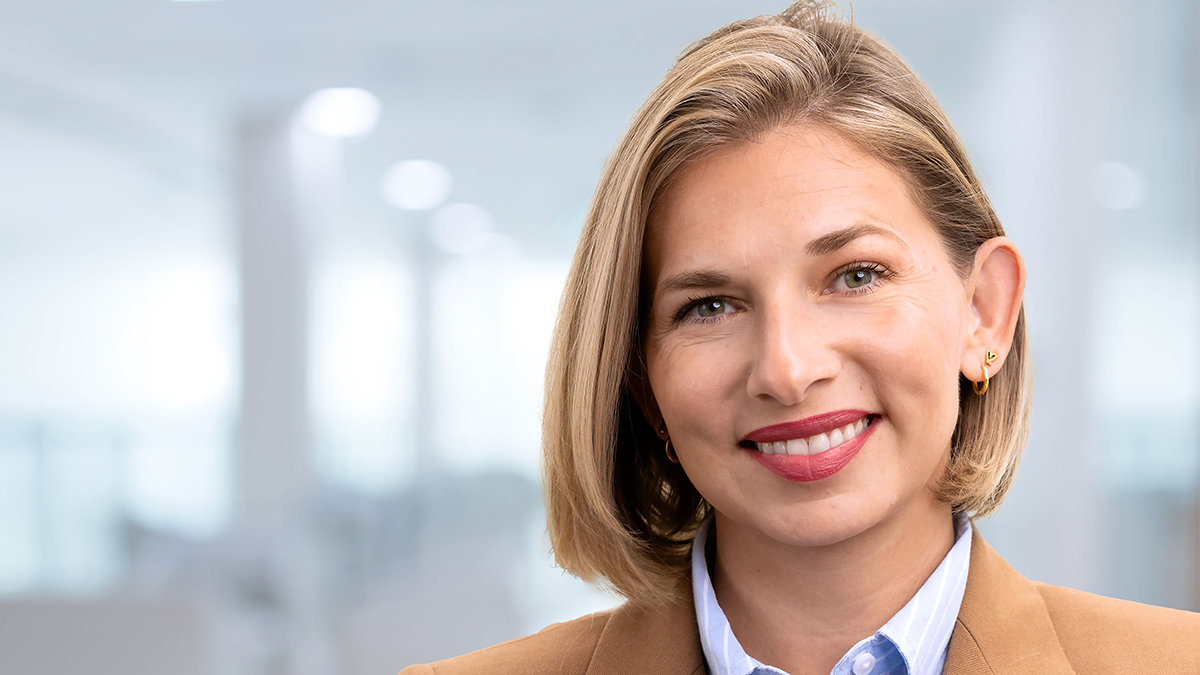
Embracing a Multigenerational Workforce in Healthcare
With several generations working in healthcare today, it’s easy for misunderstandings to occur as we stereotype co-workers based on age. In this episode of Nurse Essentials, a senior director from Cleveland Clinic’s Mandel Global Leadership and Learning Institute shares thoughts on how to embrace generational differences and create strong teams.
Advertisement
Cleveland Clinic is a non-profit academic medical center. Advertising on our site helps support our mission. We do not endorse non-Cleveland Clinic products or services. Policy
Recent Episodes
Spotlight on Critical Care Transport
Imagine employing all the skills, competencies and critical thinking needed to deliver top-notch care to patients in urgent situations while…
Leaning into Evidence-Based Practice
Evidence-based practice involves three factors: using high-quality research to guide nursing practice, relying on clinical expertise and inv…
Caring for Patients with Chronic Lung Disease
Four to six percent of Americans live with some form of chronic lung disease, and it remains one of the leading causes of death and illness…
Video content: This video is available to watch online.
View video online (https://cdnapisec.kaltura.com/p/2207941/sp/220794100/playManifest/entryId/1_d4y1b5zi/flavorId/1_5f3sgelj/format/url/protocol/https/a.mp4)
Transcript
Carol Pehotsky : Depending on where you work, there are probably four, if not five generations in the healthcare workforce right now. And with generations comes, maybe we call them generalities, or maybe we call them stereotypes. And how do we carry those with us?
Advertisement
Cleveland Clinic is a non-profit academic medical center. Advertising on our site helps support our mission. We do not endorse non-Cleveland Clinic products or services. Policy
We're all shaped by the world we were raised in, that we live in, but how do we get beyond those stereotypes to find common ground? And then really ensure that every nurse can be their full self and bring their full self to the care they provide?
I'm joined today by Colleen Carroll , Senior Director of Leadership and Learning, to talk more about how we can embrace these differences and lean in with curiosity.
Hi, and welcome to Nurse Essentials, a Cleveland Clinic podcast where we discuss all things nursing from patient care to advancing your career, to navigating tough on the job issues. We're so glad you're here. I'm your host, Carol Pehotsky , Associate Chief Nursing Officer of Surgical Services Nursing.
Welcome back, everyone. With or without intention over the course of almost three years of recording, I've probably peppered in enough clues that you could figure out as a listener who I am in terms of generation, but if you haven't put those clues together I am very proudly Gen X. Growing up in the eighties, somehow, made it to adulthood, didn't have my whole youth plastered all over social media. Some of those generalities that are tied to my generation are things I very much gravitate towards. And there are some things where I say that's not exactly me.
Advertisement
And isn't that true of every generation? When we think about healthcare, when we think about nursing, when we think about our workforce in general, we know that there are many generations in our workforce today. Some of us are parents of other generations, and that informs who we are, how we lead, how we interact with others. And we just get more generations, and sometimes it just feels like it's getting more complex.
How do we make sure that as nurses, we are welcoming each other in making sure that we're all committed and all here for the right reason, to take care of patients and be open to what other nurses have to share with us, whether they are novices and from different generations. To dig into this a little bit more, I'm so glad to have our guest join us today. Colleen Carroll is a Senior Director of Leadership and Learning at the Mandel Global Leadership and Learning Institute at Cleveland Clinic. Colleen, thank you so much for joining me today.
Colleen Carroll : Carol, thank you for having me. I am thrilled to be here.
Carol Pehotsky : Great. Before we get into the questions, would you be so kind as to give our audience a little bit about your professional background and how we got the pleasure of getting to work with you every day?
Colleen Carroll : Yes, absolutely. As you said, I'm a senior director here in the Global Leadership and Learning Institute. I've been at Cleveland Clinic for almost nine years now. And my focus has always been on creating learning content and programs that drive caregiver engagement, leadership development, and all of those skills in between.
I'm getting very granular here, but I really have a focus on how we show up well in the professional environment. What are the skills that we need to build to make the best of that environment? And then when it comes to leadership, it's accountability, emotional intelligence. At one point we did have a course on working with different generations, and we spend so much of our lives at work that it's our job in our office. What I'm passionate about is how do we create resources, courses, and content that help people show up their best, interact, and enjoy being at work.
Carol Pehotsky : Yes. We're so fortunate to have this resource in the organization and you and your team have done such great things for us. I'm so glad you're here to talk to us a little bit about how that shows up at work.
We know there are a lot of generations in the workforce right now and appreciating that every one of us is more than a descriptor. Can you just lay the stage for us? What are some of the common perceptions and or misperceptions of each of the generations that are in the workforce in healthcare right now?
Advertisement
Colleen Carroll : Oh gosh. Well, right now we have a lot of generations in the workforce. As far as the clinical or the healthcare industry, we've got everything from Gen Z, and we probably even have some of the silent generation still in the workforce.
We've got a vast array, and it's for a couple of reasons. I think people aren't retiring as soon as they used to; they're staying in the workplace a little bit longer. And then you've got Gen Z just coming in. So, we've got all these generations.
And I think some of the things that show up, some people would call them stereotypes, some people would call them generalities. But the reality is that all of us as humans are shaped by the things that raised us. If you start from the youngest right now that's in the workforce, you've got Gen Z, and you know they grew up on tech.
They've got a device in their hands from the time they're born. They come to the workforce, they're asking for purpose-driven work. They want feedback, they want to grow. They need that constant engagement and they're looking for a great environment.
You move it up, you've got millennials. Millennials are kind of oddball because some of them grew up with no technology and then got to just get into it. And there's a figure-it-outness to millennials where they really prioritize figuring things out with technology. But also, they're asking for a lot of work-life balance.
Advertisement
We move up to Gen X. I would say that Gen Xers are great for independence, and they saw the very beginning of personal computing. And I would say in a way, I'm jealous. As a millennial myself, I'm jealous that I don't know what a life is fully like without technology like Gen X does. Because I think that's incredible.
And then you've got baby boomers. And when we look at our baby boomers, it's post-war prosperity. They value stability, professionalism, and a lot of traditional things. So, it's just different historical context that shapes each generation. The biggest thing is that we see the world through our experience. And I think that's really what makes the generational difference.
Carol Pehotsky : Yes. And so with that, certainly rife for gaps in communication. We'll start with that. What challenges are we seeing, especially when you have a nursing unit where you could have all those generations showing up to work at various points of the day. What are some of the challenges we're seeing and what are some strategies to overcome those?
Colleen Carroll : I think probably the number one challenge that we see with generations in the workplace is communication. And it's communication around modality. That’s what I see and hear about the most is miscommunication, misunderstanding. It's for good reason and it's not just because of generations.
Advertisement
Today we have so many ways to communicate. I can call you, I can text you, I can talk to you face to face, I can talk to you virtually. I could even react to your email with a thumbs up. I can Teams message you, . The list is exhausting.
From that, I think what we have is each person can individualize something that they prefer. And when we show preference for certain communications, we mitigate the preferences of others. A great example is we have had team members where I'll say, ‘have you checked in on so and so? Have you checked in on this project? I want an update.’ And they say they sent an email last week. I say, ‘well, did you just call?’
Carol Pehotsky : No .
Colleen Carroll : The look of shock on this young team member's face that I suggested she pick up the phone. We both had a good laugh. And I said, ‘I hear you. There’s an app for everything. I don't always want to pick up the phone and cold call, but sometimes when we need to get something done, that's the fastest way to do it.’
Carol Pehotsky : Mm-hmm .
Colleen Carroll : So sometimes we see challenges around those things, the modality, the preferences, those kinds of things. I would say one way to deal with that as a team member, even a team leader, whatever your role, I think it's important for teams to establish norms.
Carol Pehotsky : Mm-hmm .
Colleen Carroll : What are the standard channels of communication when you receive a communication? What is the standard of reply? Is it okay for team members to reply within 24 hours? Is it 48 hours? And I know that sounds granular, but I think different generations have different expectations of what timing means for responding to things.
It sounds so silly in our world today, but as a team setting expectations and norms, what channels are you using and how quickly are people expected to reply? What are the expectations for being available, things like that. I think it's better to have those expectations set than to get to the point where something feels off or like the norm has been violated. But really, have you ever communicated that norm or expectation? I think that's not just because of generations; we just have so many channels.
Carol Pehotsky : Yes. If I've gotten an email, a phone call, a text, and a Teams, I can still only respond to one of those from the same person and really working with what is the right way to get ahold of you.
I think that's very insightful when you think about it even for a nursing team. I've talked with leaders who have, especially newer to nursing leadership, they want to be available for their team, and they want to be present and they want to meet them where they're at. Those are all very applaudable and important things to leadership, but they haven't set that boundary. So, the night shift nurse who, it's three in the morning and they want to change their schedule and, and that's reasonable for them to do, but they maybe text the nurse manager because there hasn't been that boundary setting that says, here are the channels.
And so, you're hearing from newer leaders that say, ‘my phone is going off all night long, and I look at the text and it's about changing their day off.’ It's timely to them because they're thinking about it in the moment they're at work. Have you given them proper channels where they can send that message? Like you said, that expectation that this is important to you and it's important to me, but maybe not at three in the morning when I'm trying to rest so I can be fully present for the team when I come to work later.
Colleen Carroll : Absolutely. Boundaries are so important. Same way you would set expectations, same way you set boundaries.
Carol Pehotsky : Yes. When you think about healthcare too, some of us remember carrying around the pager, and then of course we're old enough to remember that we didn't have a phone to answer the pager with. But you think about all the way from that to our Cleveland Clinic phones having a paging app and ways to communicate through Epic.
And so, nurses, as you're listening, I think our assignments moving forward is talking to our leaders, talking to our colleagues, talking to the physicians and other team members we interact with to really understand if there is a hospital policy around how we communicate certain things.
Texting should not be done outside of a secure channel if it's patient-related information. And sometimes we have to help educate people about that just because they're so used to that communication modality. They're not disrespectful of the privacy, they're just so used to it. It's really helping people understand when this critical thing is happening to a patient, these are the methodologies we use that are secure, that are appropriate, and that the receiver understands that they need to answer in a timely fashion.
Colleen Carroll : Yes. Great example.
Carol Pehotsky : Like you said, is it a stereotype or is it a generalization? Sometimes we find ourselves, unfortunately, straying towards the stereotype. So, what recommendations do you have? Especially when we're working amongst each other to try to stop lingering in that stereotype and acknowledge maybe generality but then build from it to understand the individual.
Colleen Carroll : I think that's a great question because as I said, stereotypes are a generalization. And it's because there are differences. I think what is most important in that case is just in general, to talk about differences from a point of curiosity and appreciation. Differences are things that make our organization, make a team strong, make a group strong, make a family strong. So, for a team that has multi-generations, that means it's probably a really great team.
Carol Pehotsky : Yes.
Colleen Carroll : You also have to make sure that you're fostering an environment of curiosity, human connection and relationship building. I know it's hard, we're here to do a job, but as I said, because people spend so much of their time at work, we should also bring our humanity with us. And that means bringing who you are.
For example, I teach classes and I design some of the programs, and a lot of that effort, a lot of those programs, we are teaching concepts on leadership and communication and emotional intelligence. But if I had to time it out, at least 50% of the activities have an element of relationship building. Because if we can create human connection with people that don't know each other, might have no other connection at Cleveland Clinic, they're more likely to be present.
They're more likely to be engaged, innovate, and genuinely lean into all of the other asks during that time in a class about emotional intelligence that they may be relatively disinterested in. But if they make a connection with the person next to them, they're more likely to lean in. And so how you use that maybe in a team meeting is spending your first five minutes just asking how people's weekends went.
If people don't really resonate with that. Something I love to ask, this is my wild card, Carol is, what's the last concert you went to? The answers always just light up the room because it really, I think I had somebody that went to an Elvis Presley concert in one of my classes.
Carol Pehotsky : Oh, wow. It's been a minute. .
Colleen Carroll : It's incredible. She went as a teenager with her mother. It's finding those things that give people the opportunity to connect as humans. And so, in my back pocket, I always have five questions that I can ask my team in a group setting to get them to connect as humans. And sometimes five minutes is all it takes.
Carol Pehotsky : Sure.
Colleen Carroll : I would say it's bringing a culture of talking and connecting as humans and being interested in one another and not being afraid to ask each other questions. I know that can be hard because when we see someone different from us or we perceive someone different, we think it's just human nature to be like, oh my gosh, I don't know, they're different from me. I don't want to offend. That's not familiar to me. So sometimes we default to distance.
Carol Pehotsky : Mm. Sure. Yes.
Colleen Carroll : I think it's important for people to recognize that, and maybe not default to distance, but instead default to curiosity and oh wow, that's really interesting. I know nothing about that. And getting comfortable with saying, I know nothing about that. Would you be willing to share more about X, Y, Z in your background, or whatever it is you talked about over lunch? Those are some things I think about.
Carol Pehotsky : So, we all have an assignment to create five questions we can have in our back pocket. Colleen gave us one that I'm totally stealing.
Colleen Carroll : Only for example.
Carol Pehotsky : That's right. Well, and you think about the likelihood as a nurse of always taking care of somebody who's also my same generation is zero chance, right. As you're listening folks, thinking about the ways I can connect with my colleagues, there are also the ways I can connect with my patients who may be saying, ‘gosh, are you 12’ when you walk in the door if you're a newer nurse. If you are nurse with more experience, patients can also have those stereotypes, and how you put them at ease no matter what your generation, so they know they’re in great hands and they're going to receive great care.
Colleen Carroll : Yes.
Carol Pehotsky : It's been many a year since I heard ‘is this your first shot or are you in high school?’ Many years since I got that. But we do receive that. So, for those of you in nursing school, you've probably already experienced it in clinicals, but that's something that you have to prepare for and think about. There's not necessarily a disrespect intended there, but it's people who have those stereotypes in mind. And then how you diffuse that situation through connection.
Colleen Carroll : You bring up such a great point, and that's something else that I think about a lot is we all were young once. Oh, those were the days, right? And I'm sure at some point, almost everyone has an example of a time where they felt maybe somebody looked down upon their experience, they didn't have enough, they didn't have the right degrees, or they just hadn't been here long enough. I think we all know how it feels, and I'm making a brash assumption here, but it's important to remember that.
It's important to remember, it doesn't feel good to be labeled as new or inexperienced, or ‘do I know what I'm doing here?’ I think it's important for all of us to remember that before those words come out of our mouth. Because it is easy to say that. And it's easy to say, ‘you have no idea what I went through when I was coming up.’ I'm guilty of it myself. We need to do better at just taking a breath and thinking that's not the one that should come out today.
Carol Pehotsky : Apply that filter really quick. Yes, we can all experience that, but maybe we haven't always experienced the reverse, which is, ‘oh, she's old, she can't listen.’ I hopefully didn't say that, but I'm certainly feeling that as the tech is getting savvier and I am not . Suddenly I'm not the go‑to person to fix the thing; I'm turning to my 15‑year‑old saying, ‘help, please.’ So, understand that we haven't all had that experience yet. What's your advice for those who are less experienced as they're working with experienced people to make sure they're also not projecting this, ‘you're old, you're past due, you don't have anything to contribute’ to make sure that we're welcoming people of all generations and ages.
Colleen Carroll : We make this assumption that you and I are on the same level of knowledge. It's like this default for some reason. We default to, ‘I know what I know and you probably know what I know.’ It might be related to technology, knowledge, or expertise in a certain bucket.
But I think for the younger generation coming up, what's important is, sometimes they'll say things like, ‘oh, they don't know or they don't want to learn.’ I think that's a little bit of an assumption that we hear from younger generations about older generations.
I've surely said it at some point in my younger years or thought it. I don't think that older generations don't want to learn. I don't think that they resist change. In reality, many people are eager to adapt. But when you start to encounter things that are different from your foundational knowledge base, I think it's really easy to become intimidated.
Carol Pehotsky : Mm-hmm .
Colleen Carroll : And then resign yourself to ‘there's no way I could possibly get ahead at this point.’ My advice would be to show up with empathy. It might not be that they don't know, or they don't want to know, or they don't want to know how to use some technology or a process. It's that maybe nobody took the time to help them understand it. There's so much expertise in our Gen X, our baby boomers. It's taking a moment to understand and explain rather than judgment.
Carol Pehotsky : Empathy is always a great place to start. I've seen videos on social media where they line up five people of each of the generations with them saying things like, ‘show me how you hang up a phone. Show me how you pick up a phone. Show me how you make a heart symbol your hands.’ This is an audio recording so our audience can't see what I'm doing, but you've all probably seen that video. For me, that's always a great reminder.
To your point about we all go in assuming, the assumption that somebody dialed a phone and then physically hung it up like we did back in the day, is a false assumption. You could even do fun things to highlight that just because we come from different places doesn't mean we can't all work together. It means we should work together and offer whatever experience we have to be better nurses and caregivers.
Colleen Carroll : Absolutely. There are so many great examples of things that we don't understand because we weren't raised with them. My favorite one for me as a millennial is the sound of the internet . I think that's such a funny thing, but somebody younger than me would probably be like, ‘what in the world are you talking about?’ Those things are funny to me.
Approach it with empathy, approach it with appreciation for the differences. Be willing to have a laugh. But I think it's just asking and realizing that things are constantly changing. Here's the thing, millennials and Gen Z, you're going to be in our place in a decade or two. So, you're going to have your own version of the younger generation. Good luck and remember to have empathy. This is not unique. This has been happening since the dawn of time.
Carol Pehotsky : I love that idea about curiosity. As I have had the great pleasure of leading millennials, Gen X, baby boomers, some silent generation and starting to have some Gen Zs enter my reporting structure, and having one at home, I think you can always appreciate that. Sometimes the difference is better. I remember when millennials were starting to come into the workforce and one of the assumptions was that the days of somebody working in the same job for 40 years are long gone and they're not going to stay. And there's nothing you can do. That's really hard to hear as a leader. But then I had an opportunity to sit down with some and ask them to tell me about your desires for your career.
They would say things like, ‘I want to be loyal to nursing and it's really important that I'm loyal to nursing. If the organization allows me to be loyal to nursing and stay, I will. But if I'm in an organization that feels like I'm no longer being loyal to my purpose as a nurse, I'm going to go somewhere else.’ I really appreciated that feedback because I hadn't really thought of it that way before. Or there's so many opportunities as a nurse these days, why would I just do one thing for 40 years when I could do many things and give back to patients in so many different ways?
And so, I love your idea about that curiosity because if you don't ask those questions, then you don't get that rich feedback that helps you understand like you're onto something there. As you mentioned, having some boundaries around work and life, and how you spend your time outside of work. That's probably something we could all learn from.
The Gen Zs that I have the pleasure of interacting with via my daughter, have a really strong sense of right and wrong and justice. If that's part of that generation, then we're going to be in really good hands. It makes me really excited to see some of these kids get so passionate about doing good in the world.
Colleen Carroll : Each generation, we all have our strengths. And I think that's what the strength is, and really learning by asking questions and encouraging people to have conversations rather than shut down just because something doesn't match their expectations.
Carol Pehotsky : There you go. Wise words for us all, whether we're interacting with the people in our lives, or as nurses or as patients. Colleen, I can't thank you enough for joining me today, but before we call it a day, I'm hoping to ask you a couple of fun questions so that our listeners can get to know a little bit more about you as an amazing human being as well as a fantastic expert who's joined us today. So, what's something about you that surprises people?
Colleen Carroll : Something that surprises people is that I did not take the traditional college to career pathway.
Carol Pehotsky : Okay.
Colleen Carroll : I actually joined the Marine Corps right after high school.
Carol Pehotsky : Ah.
Colleen Carroll : I was in the Marine Corps for five years and I learned Arabic during that time.
Carol Pehotsky : Wow.
Colleen Carroll : So, I was fluent in Arabic and deployed and all that fun stuff.
Carol Pehotsky : And as you know, across the organization, we've been spending time this year talking about the power of purpose. You've already offered some things for us all to think about, about our why and how we show up and how we make sure we show up for each other. Would you be willing to share with us what's your why?
Colleen Carroll : Yes. My why has changed a bit and I think that's true for many of us. It matures as we do. When I got into healthcare, I knew nothing about it. I came from the defense industry, so I was really drawn to healthcare for the purpose of caring for people.
Carol Pehotsky : Mm-hmm .
Colleen Carroll : I grew up in Cleveland and always heard about Cleveland Clinic growing up. Then being able to fast forward to today and work at an institution that is so highly regarded and does great, wonderful things. That was part of my why initially. What really changed is about three years ago, my husband, who is also a Marine, came down with a very rare life-threatening cancer. And we spent much of 2023 in the hospital for chemo, radiation, surgery, the after-chemo effects.
It was so bad to the point where he was saying goodbye on multiple occasions, and the nurses, the people that took care of him, that reassured me, that comforted me and him and the reason he's alive. It completely transformed my why, because I realized how much is on the nurse's plate in that patient service role. They have to show up with a smile and help people.
And to be able to be in my role where maybe I'm not facing patients, but I create resources. My team, we create resources and programs and we support caregivers in ways to be able to show up well. That completely altered my why. I'm just so grateful to the profession and to be able to support on my end.
Carol Pehotsky : Amazing. I'm so glad he's okay, and we're so fortunate to have you as part of our team, really supporting caregivers, really in helping all of us show up and be our best. Thank you so much for joining us today.
Colleen Carroll : It was a pleasure to be here. Thank you so much for inviting me.
Carol Pehotsky : As always, thanks so much for joining us for today's discussion. Don't miss out, subscribe to hear new episodes wherever you get your podcasts. And remember, we want to hear from you. Do you have ideas for future podcasts or want to share your stories? Email us at nurseessentials@ccf.org.
To learn more about nursing at Cleveland Clinic, please check us out at clevelandclinic.org/nursing.
Until next time, take care of yourselves and take care of each other.
The information in this podcast is for educational and entertainment purposes only and does not constitute medical or legal advice. Consult your local state boards of nursing for any specific practice questions.
Recent Episodes
Spotlight on Critical Care Transport
Imagine employing all the skills, competencies and critical thinking needed to deliver top-notch care to patients in urgent situations while…
Leaning into Evidence-Based Practice
Evidence-based practice involves three factors: using high-quality research to guide nursing practice, relying on clinical expertise and inv…
Caring for Patients with Chronic Lung Disease
Four to six percent of Americans live with some form of chronic lung disease, and it remains one of the leading causes of death and illness…
Never miss a moment - subscribe now.
Listen to the Health Essentials Podcast on your favorite streaming platform.
Other Podcasts You May Love
MedEd Thread
MedEd Thread explores the latest innovations in medical education and amplifies the tremendous work…
Health Essentials
Tune in for practical health advice from Cleveland Clinic experts. What's really the healthiest diet…
Beyond Leadership
Hosts Jim Pae and Elizabeth Pugel escort you through a network of thought leaders, sharing world-cla…
Studies in Empathy
Join Cleveland Clinic Patient Experience leaders and a group of guests with a wide range of experien…