



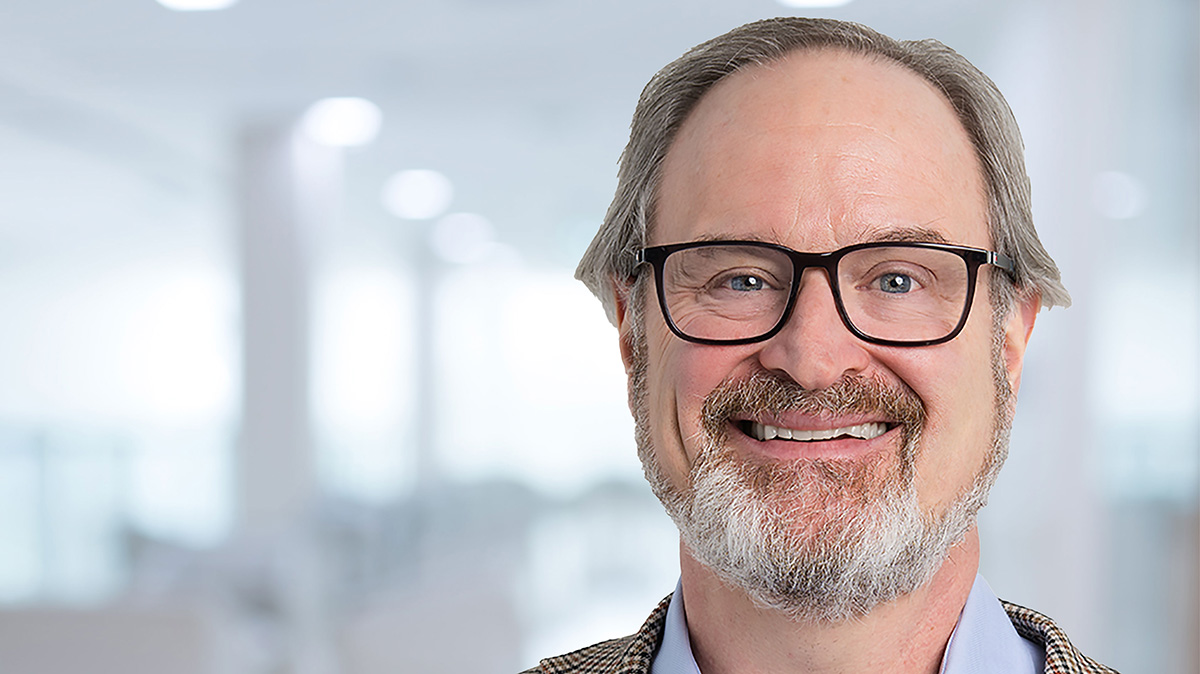
From English Teacher to Oncology Nurse
Tim Tibbitts, BSN, RN, became a clinical nurse at age 55 after spending time as an English teacher, freelance writer and stay-at-home parent. During the COVID pandemic he thought, "There's got to be something more I can contribute." He enrolled in an 18-month accelerated BSN program, then joined the inpatient solid tumor oncology unit at Cleveland Clinic main campus after graduation. In this episode of Nurse Essentials, Tibbitts shares his experience of starting a nursing career later in life.
Advertisement
Cleveland Clinic is a non-profit academic medical center. Advertising on our site helps support our mission. We do not endorse non-Cleveland Clinic products or services. Policy
Recent Episodes
De-escalation Strategies to Prevent Workplace Violence
Healthcare workers are four to five times more likely to experience workplace violence injuries than workers in private industry, according…
Experienced Nurses Share Advice for New Grads
According to the National Council of State Boards of Nursing, approximately 227,000 new nurses entered the U.S. workforce last year. As more…
Transitioning Surgical Care from Inpatient to Ambulatory Surgery Centers
In January 2026, the Centers for Medicare & Medicaid Services (CMS) removed 285 procedures from its inpatient-only (IPO) list, accelerating…
Video content: This video is available to watch online.
View video online (https://cdnapisec.kaltura.com/p/2207941/sp/220794100/playManifest/entryId/1_946kj1nx/flavorId/1_5f3sgelj/format/url/protocol/https/a.mp4)
Transcript
Carol Pehotsky, DNP, RN, NEA-BC, CPAN :
We all arrived to nursing in a million different pathways. Each is as unique as we are and hopefully at a time in our lives where it makes sense, where it's helped to inform the care that we have and continue to provide. I'm joined today by Tim Tibbitts, an oncology nurse, to learn more about his journey to nursing later in life.
Advertisement
Cleveland Clinic is a non-profit academic medical center. Advertising on our site helps support our mission. We do not endorse non-Cleveland Clinic products or services. Policy
Hi, and welcome to Nurse Essentials, a Cleveland Clinic podcast where we discuss all things nursing from patient care to advancing your career, to navigating tough on the job issues. We're so glad you're here. I'm your host, Carol Pehotsky, Associate Chief Nursing Officer of Surgical Services Nursing.
Welcome back everyone. If you've been listening from the beginning, you've heard me talk about the bendy and twisty road that I traveled to where I am today, especially the fact that I was a second career and I'm a second career nurse. In thinking about today and the topic about career journeys and the many ways we find ourselves into nursing, I think back to the very first day of actual nursing school. I had just left a full-time position as a music therapist at Metro Health Medical Center on their burn unit. I'd pretty much gotten through all my prerequisites while I was still working, but now it's time to fully eject from full-time work to full-time student, and the six part-time jobs that you have when you go to school. And I'm walking in thinking at the ripe-old age of 28 that I was going to be the oldest person in the room.
I was going to a community college, and envisioned lots of folks that came out of the womb thinking they were going to be nurses, and people fresh out of high school. You know those fears in your head that I'm talking myself through—are they going to be able to relate to me at all and what does that look like? I went to school in 2002, and for those of you who are local to the Cleveland area, you might also reflect that was when a lot of the steel mills were closing. So, I was not the oldest person in the room because a lot of my colleagues in the room were folks who had been displaced by that. With the job relocation and funds to help those folks find other means of employment, several of them were encouraged to go back to school and to go back to nursing.
Advertisement
So suddenly there was the, whew, I'm not the oldest person in the room, but <laugh>. Still, it's something different when you have a little bit of road under your tire. And for me, it was absolutely the right decision at the right time. I would not have been ready to start this journey fresh out of high school. I know a lot of my colleagues in that room, we talked about that as we got to know each other in the next two years, is that some people will get there very early. And for us, that wasn't the case. I think I'm a better nurse because I took that time until I was ready. And so, I'm so thrilled to introduce you all today to Tim Tibbitts. Tim is a bedside nurse here at Cleveland Clinic Main Campus on G70, our solid tumor oncology inpatient floor. Tim also has an interesting journey about how he got into nursing. Thank you for joining me today, Tim.
Tim Tibbitts, RN :
Thanks for having me.
Carol Pehotsky, DNP, RN, NEA-BC, CPAN :
So, let's get into it. Tell us a little bit about your road to nursing. It was not fresh out of high school. [No.] What did that look like for you?
Tim Tibbitts, RN :
I was 50, 55 when I started here at Cleveland Clinic as a nurse. I had been an English teacher right out of college and did that for a number of years. And then in 2001, I left the classroom to be home with my kids who were three and one at the time.
Carol Pehotsky, DNP, RN, NEA-BC, CPAN :
Oh, that's amazing.
Tim Tibbitts, RN :
And I did some other things on the side. I'm a writer.
Carol Pehotsky, DNP, RN, NEA-BC, CPAN :
Mm-hmm <affirmative>.
Tim Tibbitts, RN :
I've done a bunch of freelance writing. I've written a couple of novels, and started a tutoring business, which I still run as a small side business.
Carol Pehotsky, DNP, RN, NEA-BC, CPAN :
Yes.
Tim Tibbitts, RN :
And my kids, as kids will, grew up and sort of left home. And I was still thinking of myself as the at-home parent doing these sorts of side projects. In the summer of 2020, the pandemic was fully upon us, and I didn't think, gosh, I have to help because there's a pandemic. It so happened I was home a lot. I was doing my tutoring fully remotely. I was feeling pretty isolated. And I thought there's got to be more that I can do. There's got to be more that I can contribute. I started journaling about that. And I'm a writer, right? So, it didn't take long for the word nursing to pop onto the page.
Carol Pehotsky, DNP, RN, NEA-BC, CPAN :
Okay.
Tim Tibbitts, RN :
And the seed had been planted a long time before that. I, as part of my freelance writing journey, was at one point the managing editor of Case's Nursing School Alumni magazine.
Carol Pehotsky, DNP, RN, NEA-BC, CPAN :
Oh, cool. Okay.
Tim Tibbitts, RN :
So, for three and a half years I was interviewing nurses, flight nurses, nurse practitioners who were the only providers in their little corner of Kentucky, nurse researchers, professors, et cetera.
Advertisement
Carol Pehotsky, DNP, RN, NEA-BC, CPAN :
Wow.
Tim Tibbitts, RN :
I'd always known it was a wonderful and important profession. I never realized how varied the opportunities were within nursing. I literally was in the middle of a pretty sizable writing project at the time, and I just stopped it. And I went on and found nursing prerequisites.
Carol Pehotsky, DNP, RN, NEA-BC, CPAN :
Yes.
Tim Tibbitts, RN :
And I started right away; I found some online prerequisites.
Carol Pehotsky, DNP, RN, NEA-BC, CPAN :
Yes.
Tim Tibbitts, RN :
I had to do a year of prerequisites online at home. And then I enrolled in an 18-month accelerated BSN at Baldwin Wallace locally in Cleveland.
Carol Pehotsky, DNP, RN, NEA-BC, CPAN :
Fantastic.
Tim Tibbitts, RN :
And here I am.
Carol Pehotsky, DNP, RN, NEA-BC, CPAN :
The rest is the story.
Tim Tibbitts, RN :
Yes.
Carol Pehotsky, DNP, RN, NEA-BC, CPAN :
That's so cool. Any moment where you were like, "Yes, this is the right decision," or was the whole path the, "I think this is the right decision. Let's see how this pans out."
Tim Tibbitts, RN :
Literally, as soon as it popped on the page.
Carol Pehotsky, DNP, RN, NEA-BC, CPAN :
There you go.
Tim Tibbitts, RN :
I've been brainstorming, what could I do to contribute, make the world a better place? What would make sense for a 50-something person to even consider retooling into? And as soon as nursing popped on the page, I knew it was right. I consulted with somebody, a trusted mentor and said, “I want to make sure I'm not making a, a snap decision.”
Carol Pehotsky, DNP, RN, NEA-BC, CPAN :
Sure.
Tim Tibbitts, RN :
You know, this is a big change.
Carol Pehotsky, DNP, RN, NEA-BC, CPAN :
Yes.
Tim Tibbitts, RN :
And she said, “Let's see. You told me that a dozen years ago; you spent three years writing about nursing, thinking about nurses, and now you've realized it's something you might like to do that doesn't feel like a snap decision. It seems like that's something that's percolated for a while.” <laugh>. So, yes.
Advertisement
Carol Pehotsky, DNP, RN, NEA-BC, CPAN :
It's so wonderful that she was able to connect those dots for you in maybe a different way by being able to see that trajectory.
Tim Tibbitts, RN :
Yes. Yes.
Carol Pehotsky, DNP, RN, NEA-BC, CPAN :
That's amazing. So, nursing school is not for the faint of heart independent of our age going into that endeavor. When you think about everything that's entailed in an 18-month program it is accelerated. That's also not an easy feat. What was that like transitioning into the demands of nursing school?
Tim Tibbitts, RN :
First of all, I was fully unprepared for what it would be like. I had no idea what it was really going to be and I've always been a school kind of a person. I've always been a bookish person. My BSN was my fourth degree. I have a master's in literature and a master's in education that were part of the teaching career thing. So, I felt really lucky to have a chance to go back to school full time. I was the oldest person in my cohort by a lot. And a major difference between me and most of my classmates was that most of them had—they were 20 somethings who had decided maybe halfway through college or even later—that they wanted to do nursing and they didn't want to start all over.
Carol Pehotsky, DNP, RN, NEA-BC, CPAN :
Sure.
Tim Tibbitts, RN :
So, they finished their biology degree or what have you and then added our 18 months.
Advertisement
Carol Pehotsky, DNP, RN, NEA-BC, CPAN :
Ah, sure.
Tim Tibbitts, RN :
So, for a lot of them, at least the feeling I got from them, they were kind of grinding it out. Got to get through it. For me, I was like a pig in mud. I was like, oh my gosh, I can't believe I have the pleasure of being back in school full time. The academic part of it came easily to me, the hands-on... I joke that if we need a light bulb change at home, I'm often tempted to call somebody <laugh>. So, for me, all of the hands-on aspects of nursing, seeing and managing feeding pumps and suctioning a trach, and all those things that aren't as safe as sitting and reading and writing. That's been my big learning curve. Yes.
Carol Pehotsky, DNP, RN, NEA-BC, CPAN :
Well, and I think there's probably something of, if you're fresh out of high school, you're going right in, maybe it doesn't get in your head like it did for me. The first time I interacted with a patient where I'm laying hands on somebody I'm not related to. Did you have a similar experience where it's like, yes, I have to get through all of these. I'm going to somebody's personal space; I have enough rotor in my tire to realize that that is their personal space, and how do I overcome that because it's going to help them.
Tim Tibbitts, RN :
That's a great question. I feel like it didn't really hit me until I started the job.
Carol Pehotsky, DNP, RN, NEA-BC, CPAN :
Okay.
Tim Tibbitts, RN :
Actually.
Carol Pehotsky, DNP, RN, NEA-BC, CPAN :
Okay.
Tim Tibbitts, RN :
Nursing school was, for whatever reason, enough training wheels.
Carol Pehotsky, DNP, RN, NEA-BC, CPAN :
Sure.
Tim Tibbitts, RN :
Once I got to the floor as a professional nurse, I realized that I really would've benefited from having even found a few hours a week to work as a PCNA.
Carol Pehotsky, DNP, RN, NEA-BC, CPAN :
Mm. Sure.
Tim Tibbitts, RN :
I just felt like I couldn't possibly take the time in an 18-month program. And I really felt behind my classmates who had that hands-on experience. Not because I was afraid of it, just because I just was unfamiliar with it. So, I was getting used to all of that together with... yes. So, I would recommend anyone, you know, thinking about nursing…
Carol Pehotsky, DNP, RN, NEA-BC, CPAN :
If you can. Yes.
Tim Tibbitts, RN :
Yes. If you can get a hands-on job.
Carol Pehotsky, DNP, RN, NEA-BC, CPAN :
Yes.
Tim Tibbitts, RN :
Yes.
Carol Pehotsky, DNP, RN, NEA-BC, CPAN :
So, what did your family and friends think?
Tim Tibbitts, RN :
My mom actually laughed when I told her I was applying to nursing school. I remember we were sitting in the garage. We were trying to stay distant. Remember 2020?
Carol Pehotsky, DNP, RN, NEA-BC, CPAN :
Oh, yes.
Tim Tibbitts, RN :
So, sitting a dozen feet away from each other. She laughed and then she sort of felt embarrassed because she could tell that I was serious.
Carol Pehotsky, DNP, RN, NEA-BC, CPAN :
Yes.
Tim Tibbitts, RN :
And she said, "But Tim, you hate blood." [Oh! <laugh>.] And she reminded me of a story when my sister and I were young, and we were just old enough to be left alone at home. Parents were out for the evening or something and my sister became sick and threw up. And I very cautiously came into the room with a bucket and a spoon. And I said, “I'm so sorry” at a distance, and handed it to her. And I said, “Well, you know, Mom, I've raised two kids.”
"That's different. That's your blood. That's your own blood." I said, well, okay. So I have a learning curve there, but it's amazing what we do as bedside nurses and I can be involved in the most elaborate sort of wound care and then just go eat lunch and [Yeah.] We just get used to it, so...
Carol Pehotsky, DNP, RN, NEA-BC, CPAN :
That's right.
Tim Tibbitts, RN :
Yes.
Carol Pehotsky, DNP, RN, NEA-BC, CPAN :
That's right. Well, that's amazing.
Tim Tibbitts, RN :
Yeah. And, beyond that initial laugh, the friends and family we're wildly excited.
Carol Pehotsky, DNP, RN, NEA-BC, CPAN :
That's awesome.
Tim Tibbitts, RN :
Enthused. Yes.
Carol Pehotsky, DNP, RN, NEA-BC, CPAN :
It takes a village to get through nursing school for any of us, so...
Tim Tibbitts, RN :
Yes. Thank goodness I had that.
Carol Pehotsky, DNP, RN, NEA-BC, CPAN :
Any challenges you faced returning to school and how did you work through those? What resources did you tap?
Tim Tibbitts, RN :
Good question. Let me start with the prerequisite. Prereqs all online. And remote labs. Anatomy and physiology, too. I've got a fetal pig. I've got a sheep brain [In your house?] Not in my house. [Not Okay.] My wife said absolutely not <laugh>. It was February. We don't have a connected garage. The garage was separate from the house, so I'm out in the garage in February fully frozen. And I just couldn't do it. So, fortunately the remote courses were self-paced.
Carol Pehotsky, DNP, RN, NEA-BC, CPAN :
Okay.
Tim Tibbitts, RN :
I did everything for A and P two, except for those labs.
Carol Pehotsky, DNP, RN, NEA-BC, CPAN :
Mm-hmm <affirmative>.
Tim Tibbitts, RN :
And then in March we jumped in a car and drove down to Florida for a week vacation. My wife was sitting on the front porch of our little place that we rented, reading. And I was around the back dissecting a fetal peg and taking pictures with my phone sending them to my lab professor.
Carol Pehotsky, DNP, RN, NEA-BC, CPAN :
That's wild.
Tim Tibbitts, RN :
And we brought our dog with us and she was very upset.
Carol Pehotsky, DNP, RN, NEA-BC, CPAN :
I'm sure.
Tim Tibbitts, RN :
She was reading on the porch instead of helping me. And then we moved during the lead up to nursing school starting, and there was a few months period between leaving our house and our new house being ready, so we stayed with my mother-in-law who's a saint <laugh>.
She has a beautiful apartment. And you wouldn't imagine that she'd be okay with mold growing all over the place. But that final summer we were living with her; I had to do micro. And so, I've got Petri dishes all over her pantry growing all sorts of things. She just rolled with it.
Carol Pehotsky, DNP, RN, NEA-BC, CPAN :
That's amazing.
Tim Tibbitts, RN :
In terms of, once I got to the actual in-person courses, one challenge was we were all masked up for the first at least six months of the program.
Carol Pehotsky, DNP, RN, NEA-BC, CPAN :
Yes.
Tim Tibbitts, RN :
The other challenge was when I came here, I was 51, 52 years old. I came on the first day of school. I get out my notebook and my pen, and 28 or 30 other students get out their laptops.
Carol Pehotsky, DNP, RN, NEA-BC, CPAN :
Sure.
Tim Tibbitts, RN :
Oh, okay. This is, this is going to be a little different. And I thought, well, that's okay. They can do things their way. I'll do things my way. Then the teacher says, I assume everyone's downloaded the PowerPoint. You can take your notes right on the slides. And I turned to my neighbor and said, “Can you help?” And they did. Awesome. People were warmly supportive and it was great. I have no complaints. Shout out to Baldwin Wallace. Great...
Carol Pehotsky, DNP, RN, NEA-BC, CPAN :
It's a great school.
Tim Tibbitts, RN :
Great accelerated BSN program.
Carol Pehotsky, DNP, RN, NEA-BC, CPAN :
Yes.
Tim Tibbitts, RN :
And I hadn't taken a science class since high school. I didn't take science classes in college.
Carol Pehotsky, DNP, RN, NEA-BC, CPAN :
Yes.
Tim Tibbitts, RN :
So, it was a big learning curve, which was good for my confidence.
Carol Pehotsky, DNP, RN, NEA-BC, CPAN :
Yes, for sure.
Tim Tibbitts, RN :
You know, I figured if I can do this on my own…
Carol Pehotsky, DNP, RN, NEA-BC, CPAN :
If I can dissect fetal pigs at home, then...
Tim Tibbitts, RN :
If I can figure this out…
Carol Pehotsky, DNP, RN, NEA-BC, CPAN :
So, you killed it in nursing school. It's time to transition into a licensed nursing role.
Tim Tibbitts, RN :
Yes.
Carol Pehotsky, DNP, RN, NEA-BC, CPAN :
Were you feeling called towards oncology? Were you keeping your options open and that's what landed? How did you end up where you ended up?
Tim Tibbitts, RN :
I'm a broadly curious person. And darn near every subject that came up during nursing school, I thought, oh, this is cool. I could see myself doing this.
Carol Pehotsky, DNP, RN, NEA-BC, CPAN :
That's kind of the universal nursing school experience, isn't it?
Tim Tibbitts, RN :
Yes. And we didn't have any coursework related to oncology.
Carol Pehotsky, DNP, RN, NEA-BC, CPAN :
Oh, okay.
Tim Tibbitts, RN :
Maybe one chapter in a med surg textbook or something. So, when I started my job search the summer before my final semester, three and a half years ago, I was interested in oncology. My grandmother died of cancer in our home when I was two weeks into college. So she lived with us my senior year.
And it was really special to have her there. It was hard, obviously, but really special to have her there. That made a big impact. I mentioned, I'm a writer, and for years I was writing, in one way or another, I was writing about grandma and cancer. In fact, I have a novel called Echo Still, which is about a 13-year-old boy, or boy who's on the precipice of becoming 13 and a Bar Mitzvah in Judaism. And his grandmother, who has to move in with the family for a while because she's come to a fictional version of Cleveland for some cancer treatment. And so, it took me a long time to sort of get that out of my system. And I started asking around about oncology jobs.
I thought I was interested in adolescent and young adult oncology. That's what I was calling all the area hospital systems, asking about those. And I didn't really find anything that felt like what I was looking for. And thank goodness, because now if I have a patient anywhere near my kid's age, I am... [Yeah.] it's hard. It's too hard. Even patients just younger than I am—that’s too young. It should be illegal. Have cancer when you're that young, you know?
Carol Pehotsky, DNP, RN, NEA-BC, CPAN :
That's right.
Tim Tibbitts, RN :
Yes. I talked to a recruiter here at Cleveland Clinic and I knew I wanted to work on Main Campus.
Carol Pehotsky, DNP, RN, NEA-BC, CPAN :
Okay.
Tim Tibbitts, RN :
I live a mile from here.
Carol Pehotsky, DNP, RN, NEA-BC, CPAN :
Oh, perfect.
Tim Tibbitts, RN :
I love living so close, and I knew I wanted to work here and I'm proud to work here. It's wonderful reputation, international reputation. And, my sister is a social worker with in-home hospice.
Carol Pehotsky, DNP, RN, NEA-BC, CPAN :
Yes.
Tim Tibbitts, RN :
Has been with Cleveland Clinic for 25 years, and she was very supportive and kept encouraging me to think about applying to Cleveland Clinic, so...
Carol Pehotsky, DNP, RN, NEA-BC, CPAN :
Here you are.
Tim Tibbitts, RN :
Yes. So, I ended up in this inpatient solid tumor oncology unit. I didn't realize what the difference between inpatient and outpatient is. You know, outpatient...
Carol Pehotsky, DNP, RN, NEA-BC, CPAN :
You didn't have any exposure to it.
Tim Tibbitts, RN :
Yes. Most cancer treatment is outpatient.
Carol Pehotsky, DNP, RN, NEA-BC, CPAN :
Mm-hmm <affirmative>.
Tim Tibbitts, RN :
Sadly, we have some friends going through cancer treatment, and there could be a surgery, radiation, chemotherapy, additional therapies, and not even a single overnight in the hospital.
Carol Pehotsky, DNP, RN, NEA-BC, CPAN :
Sure. You, you never get to meet them.
Tim Tibbitts, RN :
So, the folks who come to our floor, by and large, are going through metastatic cancer. And the complications that come with that, whether it's an infection, spinal cord compression; something is creating challenges that require an inpatient stay. So, it's emotionally heavy.
Carol Pehotsky, DNP, RN, NEA-BC, CPAN :
Yes.
Tim Tibbitts, RN :
Heavy work. And my family remains very supportive. My wife and kids have seen me cry at the dinner table more than a few times...
Carol Pehotsky, DNP, RN, NEA-BC, CPAN :
Sure. Yes. Of course.
Tim Tibbitts, RN :
...when asking me about my day, and they've been wonderfully supportive.
Carol Pehotsky, DNP, RN, NEA-BC, CPAN :
Let's linger there for a moment. Emotionally draining is probably an understatement, right? But you have to give your full self...
Tim Tibbitts, RN :
Yes.
Carol Pehotsky, DNP, RN, NEA-BC, CPAN :
...to your patients in the role, but you have to be able to take care of yourself.
Tim Tibbitts, RN :
Yes.
Carol Pehotsky, DNP, RN, NEA-BC, CPAN :
Having a little more road under your tire when you came to the specialty, do you feel like that helped? What sort of work do you need to do to take care of yourself and still serve this…
Tim Tibbitts, RN :
Population? That's a great question. I do feel that having some more lived experience has been to my benefit. I mentioned that in the CJON essay. I've seen some things. I've had friends go through cancer. My mom had cancer a couple times. My grandmother and just other life experiences and raising children through to adulthood. I just think I had maybe some life experience. I don't necessarily... wisdom, but perspective.
Carol Pehotsky, DNP, RN, NEA-BC, CPAN :
Yes.
Tim Tibbitts, RN :
And so, an awareness of needing to find that balance. Sometimes friends will say, how do you keep yourself from taking your work home? And the answer is, I don't try to do that. When something sad or difficult happens at work, it stays with you. And that's real. And I think that just not trying to run away from it, but talking about it, I have been focused on writing poetry as opposed to other kinds of writing.
Carol Pehotsky, DNP, RN, NEA-BC, CPAN :
Okay.
Tim Tibbitts, RN :
Writing poems gives me a good escape, but also a good chance to process.
Carol Pehotsky, DNP, RN, NEA-BC, CPAN :
Oh wow.
Tim Tibbitts, RN :
There's a whole thread in my poems that I call the nursing poems, and...
Carol Pehotsky, DNP, RN, NEA-BC, CPAN :
Cool.
Tim Tibbitts, RN :
Yes.
Carol Pehotsky, DNP, RN, NEA-BC, CPAN :
You have some young colleagues on the floor. They're younger than you.
Tim Tibbitts, RN :
Everybody <laugh>.
Carol Pehotsky, DNP, RN, NEA-BC, CPAN :
Well, okay.
Tim Tibbitts, RN :
Literally. Occasionally there's a physician older than I am.
Carol Pehotsky, DNP, RN, NEA-BC, CPAN :
Oh. Only occasionally <laugh>.
Tim Tibbitts, RN :
Otherwise, I mean, I'm 58 now. I'm the oldest person on the floor who isn't a patient.
Carol Pehotsky, DNP, RN, NEA-BC, CPAN :
Do your colleagues turn to you seeking life advice? Wisdom?
Tim Tibbitts, RN :
Sometimes they ask me things that I'm not good at. Because I'm the male on the floor, an old guy on the floor, they ask me some question about car repair. Oh, <laugh>. And I am just terrible at that stuff.
Carol Pehotsky, DNP, RN, NEA-BC, CPAN :
See, also call somebody. Right.
Tim Tibbitts, RN :
<laugh>. Right, right, right. No, I don't think so. I do sometimes feel like I get treated with more deference than I've earned. Especially by physicians and younger physicians. I've joked with one of my younger assistant nurse managers. I said, “They think I know stuff.” <laugh> I mean, I was kind of brand new.
Carol Pehotsky, DNP, RN, NEA-BC, CPAN :
Yes.
Tim Tibbitts, RN :
And she said, "I know. That just makes me so mad." You know, she's 32 or something and she knows so much more than I know. One thing about going through hard stuff together is that it can create a sense of connectedness. And we have a wonderfully supportive core group on G70.
Carol Pehotsky, DNP, RN, NEA-BC, CPAN :
Oh, that's wonderful.
Tim Tibbitts, RN :
Yes.
Carol Pehotsky, DNP, RN, NEA-BC, CPAN :
Do you think the patients react to you differently?
Tim Tibbitts, RN :
I don't know that they react to me differently, but I think my ability to connect and to be quiet and just present with them. I'm not comparing myself to my colleagues but comparing myself to how it might've been for me as a much younger person trying to do this role.
Carol Pehotsky, DNP, RN, NEA-BC, CPAN :
Mm-hmm <affirmative>.
Tim Tibbitts, RN :
I feel like I'm more aware that just a calm, kind, compassionate presence can be really powerful. That may be one of the best things that I bring to the role is being able to be there with and for patients and families and still learning lots of skills. But that's something that's going well.
Carol Pehotsky, DNP, RN, NEA-BC, CPAN :
That's so powerful, right? We have lots of things that need to happen in a shift as a nurse, but giving patients your presence, your full presence. That has to make a huge difference for them.
Tim Tibbitts, RN :
Which is challenging when you've got six patients, high acuity.
Carol Pehotsky, DNP, RN, NEA-BC, CPAN :
It's the ticker running in the back of your head. <laugh>.
Tim Tibbitts, RN :
Yes. I always, at least once per shift with each patient, try to make a point of just sitting, I want to send the message that I'm here.
Carol Pehotsky, DNP, RN, NEA-BC, CPAN :
Mm-hmm <affirmative>.
Tim Tibbitts, RN :
You know, we're all busy, but I'm not in a hurry. I'm here. I think that's a really important thing.
Carol Pehotsky, DNP, RN, NEA-BC, CPAN :
So therapeutic.
Tim Tibbitts, RN :
Yes.
Carol Pehotsky, DNP, RN, NEA-BC, CPAN :
Absolutely.
Tim Tibbitts, RN :
Yes.
Carol Pehotsky, DNP, RN, NEA-BC, CPAN :
That's wonderful.
Tim Tibbitts, RN :
That's important to me.
Carol Pehotsky, DNP, RN, NEA-BC, CPAN :
And you get to take a load off your feet. <laugh>. [Yes.] Everybody wins. So, let's talk about the article you wrote. You drew your first love of writing with nursing. [Yes.] Tell us a little bit more about that article and what inspired you to write it.
Tim Tibbitts, RN :
It's in the Clinical Journal of Oncology Nursing. When I accepted the job six months before I started, I joined ONS, the Oncology Nursing Society.
Carol Pehotsky, DNP, RN, NEA-BC, CPAN :
Oh, wonderful.
Tim Tibbitts, RN :
And I started receiving their two journals, one of which is very science-based and not as obviously relevant to the bedside nurse. And the other is the Clinical Journal of Oncology Nursing. CJON is an evidence-based practice journal.
Carol Pehotsky, DNP, RN, NEA-BC, CPAN :
Oh, great. Okay.
Tim Tibbitts, RN :
So that's feels very relevant to the bedside nurse. I read a handful of articles a month and find it useful. I also listen to the ONS podcast; it is great. And at some point, Jodi Watson took over as new editor and she sort of made a call to action, don't just read us if you find this magazine to be helpful and get involved, support us somehow.
Carol Pehotsky, DNP, RN, NEA-BC, CPAN :
Awesome.
Tim Tibbitts, RN :
So, I sent her a message, I'm a writer, how can I help? And she directed me to the associate editor of the Clinical Moment Department.
Carol Pehotsky, DNP, RN, NEA-BC, CPAN :
Mm. Okay.
Tim Tibbitts, RN :
Which is a personal essay. It's a one page back of the magazine.
Carol Pehotsky, DNP, RN, NEA-BC, CPAN :
Nice.
Tim Tibbitts, RN :
Every issue has this one page. It's, it's a perspective piece from the RNs perspective. And each essay is framed as a question. The title is a question.
Carol Pehotsky, DNP, RN, NEA-BC, CPAN :
Okay.
Tim Tibbitts, RN :
I think the title they put on mine was, Is 50-something Too Old? [Oh no. <laugh>] Become an Oncology Nurse. So, instantly when I started brainstorming with the editor of that section, the obvious thing for me to talk about was becoming a nurse later in the career. And it was an attenuated process. It took over a year just because of their scheduling and other things. She kept saying to me, “We're not in any rush.” Don't tell a writer you're not in any rush <laugh>; give me a deadline and I can have it by tomorrow. Tell me you're not in any rush. I'm busy with other stuff. <laugh>. So that editor and I had a chance to get to know each other a little bit over several meetings. It was about last May, we were putting the finishing touches on things and she said, “I'm rolling off as associate editor for this department. Given your background and experience, you might be a good fit.”
Carol Pehotsky, DNP, RN, NEA-BC, CPAN :
Oh my gosh, that's so cool.
Tim Tibbitts, RN :
So, I applied in the same month that the article came out, they invited me to be on the editorial board of CJON. Yeah.
Carol Pehotsky, DNP, RN, NEA-BC, CPAN :
Congratulations.
Tim Tibbitts, RN :
Yeah. So [That's huge!] putting writing and nursing together.
Carol Pehotsky, DNP, RN, NEA-BC, CPAN :
I love it.
Tim Tibbitts, RN :
At last.
Carol Pehotsky, DNP, RN, NEA-BC, CPAN :
That's fantastic. How exciting.
Tim Tibbitts, RN :
I'm very happy about it. It just started this month and it’s all right.
Carol Pehotsky, DNP, RN, NEA-BC, CPAN :
You'll have to keep us tuned on how it's going.
Tim Tibbitts, RN :
I shall.
Carol Pehotsky, DNP, RN, NEA-BC, CPAN :
We have listeners, everyone from, I'm thinking about going to nursing school all the way to people who are maybe at end of career. For that person that is listening who isn't yet a nurse, maybe in their thirties, forties, or fifties, what advice do you have for them?
Tim Tibbitts, RN :
I think it's a great profession. It's a noble profession. There's a ton of variety and there's a lot of job security. If you're in your thirties, forties, and fifties, there's always, between now and the end of your career, there's going to be a nursing job for you.
Carol Pehotsky, DNP, RN, NEA-BC, CPAN :
That's right.
Tim Tibbitts, RN :
It's not just bedside nursing; there's all kinds of roles. There are nurses who work in insurance companies where, you know, nurses who do research.
Carol Pehotsky, DNP, RN, NEA-BC, CPAN :
Mm-hmm <affirmative>.
Tim Tibbitts, RN :
It's a great profession to be a part of. And I would say give it a try. If you can, get some hands-on experience.
Carol Pehotsky, DNP, RN, NEA-BC, CPAN :
So, to answer the article’s question, the answer is no. You can never be too old to go nursing school.
Tim Tibbitts, RN :
Not old, not too old.
Carol Pehotsky, DNP, RN, NEA-BC, CPAN :
Well, what a wonderful thing for our patients that you did embark on that journey and you're here with us.
Tim Tibbitts, RN :
Oh, thank you.
Carol Pehotsky, DNP, RN, NEA-BC, CPAN :
I am confident you're giving fantastic care.
Tim Tibbitts, RN :
Thank you.
Carol Pehotsky, DNP, RN, NEA-BC, CPAN :
And that presence has got to be everything for patients who are going through such a hard time.
Tim Tibbitts, RN :
Thank you. That's kind.
Carol Pehotsky, DNP, RN, NEA-BC, CPAN :
You've given us a lot to think about and learn. Before we call it a day, I'm hoping you'll appease me with a few fun questions before we wrap it up.
So, you're very busy, you're about to be busier, you're going to be an associate editor on top of your day job, so to speak. When it's finally time to relax, what do you do for you? How do you take care of yourself?
Tim Tibbitts, RN :
I just actually came from the gym before I was here. I really try to stay committed to exercise. I think it's super important. And also, yoga, nutrition is really important as well. And especially if I'm working two or three twelves in a row.
Carol Pehotsky, DNP, RN, NEA-BC, CPAN :
Yes.
Tim Tibbitts, RN :
I have a wonderful partner in my wife; she's not our chief cook though <laugh>. She always makes sure I have perfectly white scrubs; I always make sure we have food on the table. So, I need to be thoughtful about preparing ahead, et cetera. Journaling. I still do write on my own; it gives me a chance to express some of those things and sort through that. And then just time with family and friends.
Carol Pehotsky, DNP, RN, NEA-BC, CPAN :
That's wonderful.
Tim Tibbitts, RN :
Yes.
Carol Pehotsky, DNP, RN, NEA-BC, CPAN :
As you know, we've spent this last year as an organization talking a lot about the power of purpose, and so I'm hoping to wrap us up. You'll be willing to share with us what's your why?
Tim Tibbitts, RN :
I think that the two things that keep me coming to work are the patients and my colleagues. The human aspect of it. The opportunity to be with folks when they're going through something really hard, a lot of which is outside of their control.
Carol Pehotsky, DNP, RN, NEA-BC, CPAN :
Mm-hmm <affirmative>.
Tim Tibbitts, RN :
It's hard for them and for their families and to be with them during those times. As an inpatient nurse, we work every other weekend and every other holiday. Sometimes that gets old. But being there on Thanksgiving Day when they have no choice but to be there on Thanksgiving Day, it feels like an honor. So yes, the patients and then the colleagues, just being part of that team is powerful for me.
Carol Pehotsky, DNP, RN, NEA-BC, CPAN :
Wonderful. Thank you so much for joining me today.
Tim Tibbitts, RN :
Thanks for your time. Thanks for having me.
Carol Pehotsky, DNP, RN, NEA-BC, CPAN :
As always, thanks so much for joining us for today's discussion. Don't miss out. Subscribe to hear new episodes wherever you get your podcasts. And remember, we want to hear from you. Do you have ideas for future podcasts or want to share your stories? Email us at NurseEssentials@ccf.org.
To learn more about nursing at Cleveland Clinic, please check us out at clevelandclinic.org/nursing.
Until next time, take care of yourselves and take care of each other.
The information in this podcast is for educational and entertainment purposes only and does not constitute medical or legal advice. Consult your local state boards of nursing for any specific practice questions.
Recent Episodes
De-escalation Strategies to Prevent Workplace Violence
Healthcare workers are four to five times more likely to experience workplace violence injuries than workers in private industry, according…
Experienced Nurses Share Advice for New Grads
According to the National Council of State Boards of Nursing, approximately 227,000 new nurses entered the U.S. workforce last year. As more…
Transitioning Surgical Care from Inpatient to Ambulatory Surgery Centers
In January 2026, the Centers for Medicare & Medicaid Services (CMS) removed 285 procedures from its inpatient-only (IPO) list, accelerating…
Never miss a moment - subscribe now.
Listen to the Health Essentials Podcast on your favorite streaming platform.
Other Podcasts You May Love
MedEd Thread
MedEd Thread explores the latest innovations in medical education and amplifies the tremendous work…
Health Essentials
Tune in for practical health advice from Cleveland Clinic experts. What's really the healthiest diet…
Beyond Leadership
Hosts Jim Pae and Elizabeth Pugel escort you through a network of thought leaders, sharing world-cla…
Studies in Empathy
Join Cleveland Clinic Patient Experience leaders and a group of guests with a wide range of experien…