



Creating an Ethical Culture on Nursing Units and in Hospitals
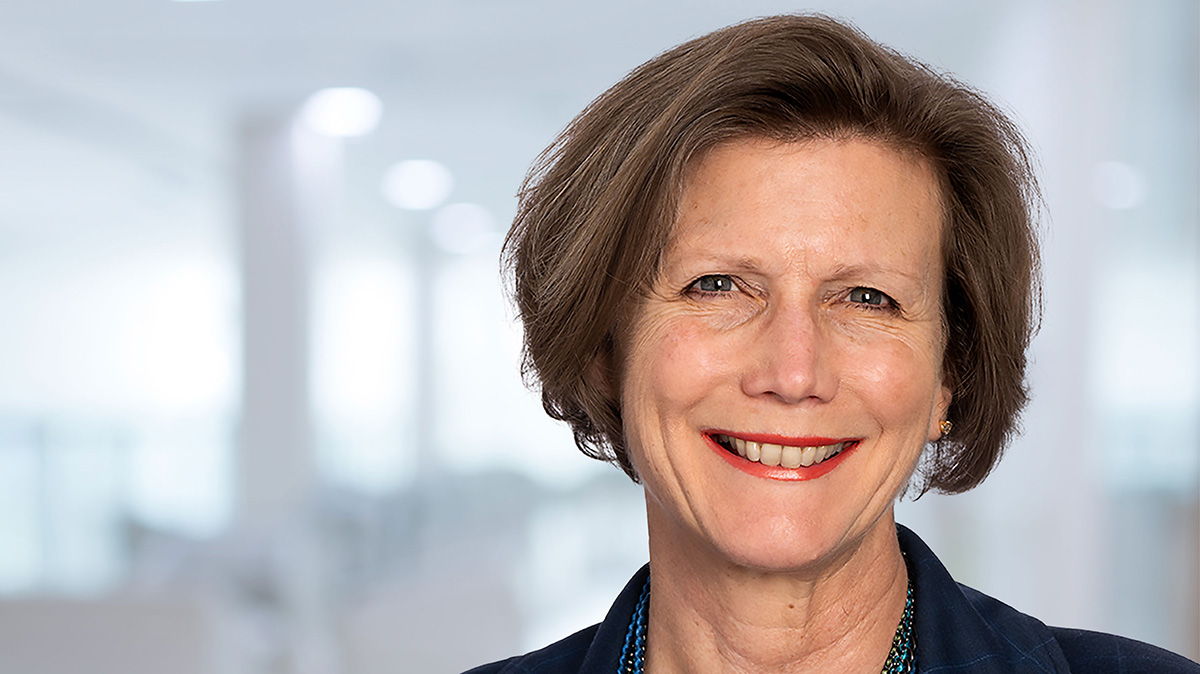
Earlier this year, the American Nurses Association revised The Code of Ethics for Nurses, the standard for ethical nursing practice. In this episode of Nurse Essentials, Julie Gorecki, MBA, BSN, RN, NEA-BC, Vice President and Chief Nursing Officer at Cleveland Clinic Fairview Hospital, shares how nurses and leaders can weave ethics into the fabric of their units and hospital culture.
Advertisement
Cleveland Clinic is a non-profit academic medical center. Advertising on our site helps support our mission. We do not endorse non-Cleveland Clinic products or services. Policy
Recent Episodes
Leaning into Evidence-Based Practice
Evidence-based practice involves three factors: using high-quality research to guide nursing practice, relying on clinical expertise and inv…
Caring for Patients with Chronic Lung Disease
Four to six percent of Americans live with some form of chronic lung disease, and it remains one of the leading causes of death and illness…
Back to School: Is it Time to Pursue Another Nursing Degree?
Lisa Baszynski, DNP, RN, NE-BC, Associate Chief Nursing Officer (ACNO) for nursing education and professional development at Cleveland Clini…
Video content: This video is available to watch online.
View video online (https://cdnapisec.kaltura.com/p/2207941/sp/220794100/playManifest/entryId/1_l8oh519h/flavorId/1_5f3sgelj/format/url/protocol/https/a.mp4)
Transcript
Carol Pehotsky:
As nurses, we've all experienced situations in the care we have provided where either in the midst of it, or afterwards, we've thought, was that the right thing to do? Were we as a healthcare team on the same page? Were we in line with what the patient wishes, what the family wishes, and how do we know the right next step?
Advertisement
Cleveland Clinic is a non-profit academic medical center. Advertising on our site helps support our mission. We do not endorse non-Cleveland Clinic products or services. Policy
I think about my own career in perioperative services where there were times a procedure was done for a palliative reason, and so that DNR was suspended for the right reason. And yet sometimes we are left with, when do we reinstate that conversation? What is the right thing to do to make sure that we are recovering that patient from that procedure and moving forward still in alignment with what that patient and their family wants?
Just a highlight of the millions of ethical situations that nurses find themselves in. At the beginning of the year, we talked about moral distress and moral spaces. Today I'm joined by guest Julie Gorecki , VPN, Chief Nursing Officer, Fairview Hospital, to talk more about how nurses and leaders can weave ethics into the fabric of their unit and hospital culture.
Hi, and welcome to Nurse Essentials, a Cleveland Clinic podcast where we discuss all things nursing, from patient care to advancing your career to navigating tough on the job issues. We are so glad you are here. I'm your host, Carol Pehotsky , Associate Chief Nursing Officer of Surgical Services Nursing.
Welcome back, everyone. As we are drawing to the close of 2025 and reflecting back on a year of fantastic guests that have taught us so much, we are bookending the year, to an extent, with talking about nursing ethics.
Advertisement
If you're interested in hearing more about moral distress, we had a fantastic episode to start the year, with Georgina Morley, where we talked about moral distress. And, certainly, that was a fantastic conversation. And as the years progress, we have had conversations with various guests about challenging situations we find ourselves in as nurses in the profession and healthcare, in this day and age.
And so, it is my great pleasure to welcome here at the end of 2025, my friend and guest and fellow colleague, Julie Gorecki . Julie is the Vice President and Chief Nursing Officer at Fairview Hospital. Julie, welcome.
Julie Gorecki:
Thank you, Carol. It's great to be here.
Carol Pehotsky:
Yes. We are going to talk about taking that a step further in terms of nursing ethics. How do we create environments that are welcoming to those conversations where nurses feel like they don't end up in moral distress, or how we can identify it and correct it and give them the resources they need? And yours was the first name we thought of when we talked about this topic. Before we get into the nitty gritty, though, you have a wonderful nursing story to tell and I'm hoping you will share that with our audience to get us started.
Julie Gorecki:
Sure. So, a few years back when I got out of nursing school, 1984, you could do the math <laugh>. I started out in critical care. And I think critical care is where a lot of ethical issues that nurses face happen, but they happen across the continuum of care from ambulatory and into the emergency department, as well. I became interested in, and I really, really love dealing and working with the families, because a lot of times in the ICU, that is who is most affected. Patients come in very, very sick and they do not have the ability to make their own decisions. Families step in. So, I think his is where my early interest in ethics started.
Carol Pehotsky:
Okay.
Julie Gorecki:
I went over to my first management; my first leadership role as nurse manager at Mount Sinai. I shifted from UH, where I did ICU and transport nursing, and moved over to Mount Sinai where I was a nurse manager.
I learned a lot from that role but was asked to be on the ethics committee. I was a nurse manager. I shifted out of the critical care unit and onto a med surg floor where I was a nurse manager for a renal floor. And there were obviously a few ethical issues that arose with that patient with the chronic care that they received.
So, I was asked to be on the ethics committee. It was in the early nineties and Joint Commission at that time had requested that all hospitals have some way to respond to ethical issues. So I was asked to be on the ethics committee and back then it was primarily committees and there still are ethics committees at other hospitals, but there has been a shift in that time to clinical ethicists.
It's a relatively new field, it was my first time, that they asked me to do some training. I went to Chicago with some of the team from Mount Sinai and learned about clinical ethics and bioethics. It was really interesting. It helped shape what I did, not only as a leader, but as a nurse to learn about patients’ values and that they are not necessarily our values. I know we'll talk a little bit about that.
Advertisement
So, I've always been interested, and found myself seven years ago when I came back to the Cleveland Clinic. I have been in leadership since the early nineties in various areas. I was at Metro for a little bit and then came to the Clinic about seven, eight years ago.
Carol Pehotsky:
Mm-hmm <affirmative>.
Julie Gorecki:
And I was asked to co-chair the ethics committee. So, I jumped at the chance to develop ethics at Akron General. We actually did a refresh with Akron, along with the Cleveland Clinic Center for Bioethics Program. It developed into this wonderful support, not only for the hospital, but for nurses. And so, that is really where I've gotten to combine nursing, nursing leadership and ethics, working with Georgina Morley, who you mentioned, who has been my mentor in the world of ethics.
Carol Pehotsky:
Oh, she is wonderful.
Julie Gorecki:
She is fantastic. I was asked to be on the faculty, and so I'm on the Cleveland Clinic Nursing Ethics Program faculty, and currently in the middle of doing a fellowship with Georgina and developing some plans to work on what she's done with moral spaces for the bedside nurse, which is teaching competency and ethics, and to do the same with nursing leaders. It is an opportunity for nursing leaders to be able to learn the same skills, but also the breadth that they must have to impact the nurse at the bedside.
Advertisement
Carol Pehotsky:
And you might just be doing a little bit of schoolwork in your free time <laugh>.
Julie Gorecki:
Yes. What I noticed in myself was that when I was the co-chair of the ethics committee, I could not speak the language. And so, I looked into where there were opportunities in ethics. I did not have a degree because you needed a terminal degree. So, I was on the cusp of, do I pursue the doctorate in nursing or the doctorate in bioethics.
I chose that path mainly because I thought it would support the nursing piece that I had. And lo and behold, it gave me so much more: it allowed me to speak the language of ethics, but also apply it to nursing in a way that probably isn't done often enough when it comes to bioethics, because it's usually a medical focus.
It is a medical focus about the plan for the patient. It is a medical focus about what's happening, treatment decisions where the opinion of the nurse does not always get included. So, giving nurses and nursing leaders that opportunity to understand ethics a little deeper allows them to bring their voice that much stronger to advocate for the patient, and patient advocacy is one of our primary things to do in nursing.
Carol Pehotsky:
And you are almost done. Right? You are getting close.
Advertisement
Julie Gorecki:
I am two months away. One last paper, so yes. I am actually working on the code of ethics, so just to put little plug out there for nurses that are listening, a code of ethics for nurses was revised in 2025.
Carol Pehotsky:
Mm-hmm <affirmative>.
Julie Gorecki:
You can access it through the ANA website, and it is free to take a look at. It is something that a lot of us know about but have not looked at in a while.
Carol Pehotsky:
That is a great kickoff because yes, we are bound to follow that. So, we would be wise to make sure we know what is inside of it.
Julie Gorecki:
And I think what most people will find is they are following it. Yes. But there are some little tidbits that you may not be aware of that may help you have that next conversation, whether it's with a colleague, a patient, or a physician, so...
Carol Pehotsky:
Sure. Absolutely. So, we'll start with an easy question. Ha ha ha. In your experience, what are some of the most common ethical challenges that we are facing at bedside today?
Julie Gorecki:
Well, I mentioned that I started a journey in bioethics in critical care. So, end of life issues. Especially in the last 50 years, we have had such a boom in technology, we can keep patients alive well beyond what may be a quality of life for someone. I think that is a big one. And really getting to know whether it's the patient or the patient through the family.
I think another piece of it is learning how to understand what that patient would have wanted through families. A lot of times our patients lose capacity, so they do not have the ability to make their own decisions. So, it is really finding that person who knows them best may not be the legal next of kin. It may be a friend, but who is that person that can speak for that patient if they are not able to speak for themselves?
I think that's a lot of times what nurses advocate for. They will know what the patient wants, or they'll have that conversation in the middle of the night when the patient regains capacity. Or has, and that happens, it waxes and wanes. I think capacity is one of those things that people get tripped up on.
Workplace violence is another consideration for ethics where we come to the bedside to take care of people no matter what, right? And we should be able to come to work in a place that's not violent. There is that ethical dilemma of wanting to help that patient. It is okay that they did this, but it's not okay. And I think that is a place where we have to really support our teams that are undergoing some of those very difficult, challenging situations.
And I think every day— I learned this from Georgina, another plug for Georgina Morley—is what micro ethics is for nurses. You think, micro ethics? Well, you think about it. All day long we make decisions, and as leaders we make decisions. Sometimes we have a little bit of time, but as a nurse, two call lights are going off, which one do I go to? That can have a little stress in and of itself because they both need your attention.
Sometimes it is delegating and sometimes it's like, “I know they need a nurse in both, which one do you choose?” Those are all little, tiny decisions that we make. That is just one example that we make all day long.
Carol Pehotsky:
Well, and the longer you persevere on something like that, potentially the worst outcome is for both. It is not just the decision; it is the speed with which we have to make those decisions sometimes.
Julie Gorecki:
Right, and we do not even think about it. It's something that happens all day long. So, when I learned about that, I thought, “Oh, isn't that fascinating?”
Carol Pehotsky:
That is a whole other topic. We'll come back to that one other day, but that is fascinating. Knowing everything that is happening for our bedside nurses—and our listeners represent everyone from nursing students through late career, bedside, leadership, et cetera—we want to make sure that no matter the nurse's role, that they feel like they're part of an ethical culture.
So, what does a strong ethical culture look like in a hospital setting? How would I know this is a place where maybe I'm coming to interview.
Julie Gorecki:
It is actually something I have learned over the years. I have held a number of different positions at different organizations. When you walk into the hospital or you walk into the interview or into a unit, if you have a loved one that is being cared for, how do you know this is a good environment? Simple.
The whole Start with H.E.A.R.T. How we receive people, how we were kind. I had four different interviews when I went to Akron. Every single time people were kind, they were smiling, and I thought, “This feels like the right environment.” I think that is very simple. Being kind. But the other piece is that we have strong interdisciplinary collaboration.
Carol Pehotsky:
Okay.
Julie Gorecki:
That is a good environment if I can come to the bedside as the nurse and offer the input that I have. Our disciplines are very different, right? Between physicians, nurses, PT/OT care management, we all have a little bit of a different focus on how we manage the patient, and we all should be heard.
It is that piece of that highly reliable organization where we are able to be heard, that just culture where I can ask a question no matter how simple because it is important to the patient and we should have respect. I think that is another big important piece of that ethical environment.
I am going to put in a little piece for transformational leadership. As a Magnet organization, transformational leadership is really that piece of looking at, it's easy to lead people where they want to go, but It's a different thing to lead them to that place where it might be a little challenging or difficult, but it's our future, And how do we get to that future?
Even if there are ethical challenges at the bedside where you have a physician not listening, that leader can step in and help. Or that very experienced nurse can step in and use some of those words that they have found to try to get the nurse's voice heard. I think it is being able to speak up.
Carol Pehotsky:
Okay. So that does not just happen. It has to be created and nurtured. How does one go about doing that? We hope every listener says yes. But let's say that somebody is coming into a space saying maybe it doesn't quite feel like that.
How does one go about really making sure that that ethics education gets integrated into not just the unit, but the fabric of the hospital culture?
Julie Gorecki:
There are usually a few people on every unit that have an interest in this. One of the questions is, is ethics your jam <laugh>? And if it is your jam, there are so many resources out there to learn about it.
One, I already mentioned the code of ethics, taking a look at that. The other is reaching out to clinical ethicists. If you have questions or want to bring some information to your unit, often the ethics committee goes through some education. So, if you are at a hospital that does not have a clinical ethicist, but has their clinical ethics addressed by a committee, reach out to that committee to bring some of that information there.
The next piece I would say is to make those alliances or allegiances with those folks that think in that way. That have that thought process. And I would say that connecting with them or having them come in, palliative care is a really good resource.
Especially when it comes to end of life, they do an excellent job of talking to patients. And oftentimes can help be that bridge between physicians who may not be listening, or nurses who may be uncomfortable with withdrawing treatment. We do not withdraw care. We never withdraw care. We always provide care, but we may be withdrawing, perhaps a ventilator, or the patient is on multiple vasopressor drips to keep their blood pressure up. So, this may be that time. And if somebody may be having a difficult time, a lot of times it is trying to help the family through.
So, use the resources that you have. And I think nurses are perfect at that. They always think about, who can I call? What help can I get? If spiritual care can come in and help the family through the process. And a lot of times having that meeting before the family meeting, so everybody gets on the same page.
If we are having a family meeting to have a difficult conversation, having that meeting prior with the physician bringing in spiritual care, so be prepared. Bringing ethics to the table to help facilitate, if you have that opportunity at your hospital, to have them there to help with hearing both the clinical side and the family side, and to bring value in. Sometimes the value of the family might be very different from what the value of the care team is. And that is usually the conflict.
Carol Pehotsky:
Well, a lot of our listeners probably bristle a bit at the mention of Joint Commission, and sometimes that unfortunately causes stress. But, in terms of really leveling the playing field and making sure we have access, they have been expecting us to have ethics committees since the nineties. They are focused on higher reliability, like you mentioned, really driving organizations to be highly reliable organizations. There is that tone of it, too. So, everyone, Joint Commission is not so scary. They are really trying to support all of us in the best care. Everyone should have an ethics committee somewhere.
Julie Gorecki:
There should be. Because it is required. If you are receiving Medicare and Medicaid CMS, there are the regs (regulations) right there. Yes, everyone should have the ability to, and some places have a clinical ethicist on consult who may not be part of their organization. The clinical ethicist is a newer field.
Clinical ethics is a newer field. Bioethics, I would say, started emerging in the seventies when technology started to bring ventilators, the ability to keep people alive, organ transplant, right? So, there are a lot of areas, and the Cleveland Clinic is super lucky to have such a large breadth and depth of our clinical ethics team. And we do many things that are complex: organ transplants and ECMO and things like that.
So, there is a lot of ethics behind that. And there are decisions when it comes to how it supports the nurse. We talked about quick decision making on “which light do I go to? Do I go to five or six?” But that decision making comes with the complexity behind quality of life.
A patient's life just was upturned. Walking one day, in a car accident, the next. The whole gamut. Pediatrics. It is not my area of expertise, but when it comes to kids, when they get sick or are in a car accident, and now life is going to change, what does that look like? And what is that acceptable quality of life? Whether it is the parents making the decision, or sometimes it is the adult children of an adult figuring out what they want.
Carol Pehotsky:
So, listeners, your assignment is to go figure out who is on your ethics committee, say hi and start learning about making sure they understand that we have a need for that support. All of us have that support.
Julie Gorecki:
Yes, I would say as a nurse, if you find your ethics committee, and this is of interest to you, find out how you could become a member.
Carol Pehotsky:
Even better.
Julie Gorecki:
Even better.
Carol Pehotsky:
All right. So, many decisions to be made. When we think about whether I'm an informal leader or a formal leader of a nursing unit, I have an opportunity to influence the ethics or the ethical approach of my unit and the patients we serve. As a leader, again formal or not, what role does a leader play in in modeling that ethical behavior and decision making?
Julie Gorecki:
A word I learned over the last several years was veracity. It is an ethical value of; I am being honest and truthful. And I think there is no question why nurses have become the most trusted profession.
We tell patients even the simplest things like, this is going to hurt, but we explain to them why so that they give consent to that painful procedure, even if it's just a blood draw. But we need this, and that is what we're constantly teaching. And that is what provides that trust. When I say, I am going to come back with your pain medication, and I do, then there is that trust established. And that is an important piece.
Carol Pehotsky:
So informal leadership. How do I role model that as a formal leader? How do I role model that decision making and really set that tone for the nurses and teams I lead so I, too, am creating an ethical environment?
Julie Gorecki:
One of the things is a role model. Role modeling on the unit, coming onto the unit, having those difficult conversations with a physician who may not be explaining why we are doing a certain, why we're not on the same page. The family does not agree with this, or it could be a nurse to a nurse, or a nurse to a physician that is not agreeing.
But that formal leader comes in and has relationships with those physicians. Those go a long way to have those relationships before a conflict arises. Then it is easier to call up and say, “Hi doctor, you know, blah, blah, blah, this.” And because they already have that relationship, so showing up on the unit.
Creating those relationships with the team, too. Finding something we have in common. We could start talking about dogs or start talking about, you know, just understanding. I think that leader that has the biggest impact on her staff, people stay, we know that turnover is lower on those areas that have those leaders is that leader that shows up and not afraid to roll up their sleeves and, and jump in and help.
Carol Pehotsky:
Well, and, and it would be a whole separate episode, but certainly there are plenty of ethical dilemmas that come into the leadership of people and colleague to colleague interactions. We won't dwell there because it is its own episode, but I think that is another great way a leader can role model—being able to handle those caregiver-to-caregiver issues ethically, as well.
Julie Gorecki:
It is another whole topic of conversation, which I could talk about. I think organizational leadership is interesting. And it is important to have that ethical environment throughout an organization. Really, it does start at the top. And you have those leaders that people know—who is the president, the CNO, the COO—they are visible.
Same with the nurse manager. That they are visible, they are not in their offices all the time. Constant battle that we have with leaders [Multiple leaders, multiple competing priorities.] is trying to figure out how do we unburden the leader so that they can be out there where they need to be. And the other piece is helping with those complex situations that arise in a way that the nurse feels supported.
Carol Pehotsky:
Mm-hmm <affirmative>.
Julie Gorecki:
So, as the nurse manager or the nursing director, the CNO is there when there is an issue, how do you show up and help the nurse by listening and then providing support? You can mitigate moral distress.
We talked a little bit about moral distress with Georgina at the beginning of the year, that moral distress is not always a bad thing. If you think about it, it means that I have values, this is a difficult thing for me because I am really passionate about it.
Carol Pehotsky:
Sure.
Julie Gorecki:
I am upset about it, but how do we fix that, right? Not necessarily fix it, but how do we address it and make sure that person doesn't wake up in three years saying, this is still bothering me. So, if we can address it and have structured debriefs, there is a whole formal structure when a really bad event happens.
Georgina and Cristie Horsburgh teach moral distress, reflective debriefs. If a hospital is interested, they can sign up for one of these classes and learn how to facilitate that. That is for a big event. I think the nurse manager that really practices ethical leadership is there when little things happen, because little things become big things, right?
Carol Pehotsky:
Definitely.
Julie Gorecki:
When something happens where, a code violet is called, which is what we call when somebody gets violent, right? [Mm-hmm <affirmative>.] Making sure that person is okay. Giving them a call at home saying, “I just want to check on you, that you are doing okay. Is there anything you need?” And offering them resources, whether it's employee assistance or whatever it might be called at your hospital, or peer-to-peer.
A lot of times that person who is really interested in ethics tends to be the one that people go to and talk to. As a peer, you could be that person who listens and then may reach out for resources for that person. It could be the ethics committee or the clinical ethicist in our organization. And throughout the Cleveland Clinic enterprise, a lot of times nurses do not know that they can call ethics.
Carol Pehotsky:
Yes.
Julie Gorecki:
They can place an ethics consult. And it is really important. Sometimes it could just be what they call a curbside, which is, can I just talk to you about this? This is happening. And they will help you through it.
Carol Pehotsky:
So, we've touched on how we can bring it to the bedside, how we make it practical and relevant. Understanding there's also formal education when it comes to ethics, how can any of us really make sure that ethics education is relevant at that time, so the nurses have the information they need?
Julie Gorecki:
I think it should happen in a structured way, where during rounds we bring up whether or not somebody's code status has been addressed. Must have happened within 24 hours, I think our policy says, but has it been addressed?
And then has it been discussed, and what does that look like? Those types of things that happen proactively. Huge proponent of preventative ethics. What that means is that we look at it ahead of time. [Mm-hmm <affirmative>.]
The other could be, we have been complaining about this family for three weeks. Maybe we should have a time during when we're talking about whether the patient's at risk for falls, whether they have a central line, all those things that happen in clinical care. Well, we also have some issues with the family.
How can we address these as a team and make sure that we are all on the same page? Because a lot of times the doctors will go in and give hope and the nurses do not see it. How do we figure out how to come together? What are you seeing that is different than what we're seeing?
So, I think preventative ethics is just addressing those things before they happen. Having ethics rounds. Whether or not you add ethics to your normal daily rounds or do you have a separate time where you sit down and talk about it? We did this in the neuro ICU at Akron, and it started out to be rounds, and turned into a conversation because they wanted to talk about something that happened a year ago.
Carol Pehotsky:
Sure.
Julie Gorecki:
And it was fantastic. We would meet at a regular time. It was everybody, after lunch, so it did not impede on anybody's lunch. It was usually about a half hour, and we had people from all disciplines that came. We would have an issue where somebody was being fed. And there was this question of whether or not to stop the feeding because that is how they were getting their seizure medicine. There was this whole conversation with nutrition and medicine and whether we should stop both and what that would look like. So, coming up with what is comfortable for this person at the end of life.
Whether or not it's during daily rounds and you infuse ethics into it. And I think a lot of times people question what does ethics mean? Well, it means really, are we treating this person with respect? Are we advocating for the patient? The autonomy? So, is the patient making that autonomous decision? Is this the right benefit for the patient? So, beneficence, non-maleficence, and then is there justice, right?
Those are four key factors that we all can say, yes, we think about those, but are they always thought about during regular rounds? And I think that is a piece of a structured weekly round where you actually look at patients, and it may not be those patients that are in beds. It could be something else that, did we handle this right? Could we learn from this? I don't think this went right. Should we think about talking about how we could have done that differently?
Carol Pehotsky:
Mm-hmm <affirmative>.
To wrap it up. I am drawn by something that you just said in terms of you had a nurse come to you with something that had been bothering them for a year. What advice do you give to them?
Julie Gorecki:
I think it's finding a way to get back to that and talk to somebody. We have a lot of peer support, and it is talking to the person who can listen and help validate. And that is what we do when we do peer support. It is validating that anybody in that situation would feel that way depending on the situation, right? Because I think a lot of times we do not, and that's what is really important with moral distress, how do we make sure that we address it in real time. It is not an awful thing, but it can become cumbersome with residue and people leave the profession because of it.
So, how do we get it to not be that part? I think that is the piece where leaders can help. If they notice somebody's behavior has changed a little bit, pulling them aside and asking what's going on? If you've become that trusted leader, and we have a common respect, I come to you as, I'm talking as the leader, right? [Mm-hmm <affirmative>.]
“I respect you as a person and I trust that you are delivering good care. Let's talk a little bit about what is going on with you because I've noticed a change.” Or, if I am that nurse that is waking up and not sure what is going on, try to figure out how to get to the root of it. And I think a lot of times we move on and that whole…
Carol Pehotsky:
Or we think we do.
Julie Gorecki:
Yes. That suck it up buttercup. It happens in the ED a lot, where you come in, you manage this big trauma case and maybe the outcome wasn't good. Nothing that you did wrong, but it did not turn out so well. And now you go over and take care of that patient who comes in and it could be their worst day; they have been having a really bad bout with the flu, and they need some IV fluids. And you have to shift to that.
Carol Pehotsky:
Yes, it is not comparison.
Julie Gorecki:
It is not a comparison. I think that that a lot of times in that environment, there's some moral distress that builds up over time. So, how do you help that person through that? Because that can actually help that person be that much better of a nurse to deal with those feelings, right?
And when there are situations where you think, could I have done something differently, that's a good time to reach out to somebody and talk to them. Or if you have these buildup feelings, reach out to somebody, reach out to a leader, a mentor. If you have a clergy person that you talk with, if you have the opportunity to have employee assistance and talk to a counselor. Because I think that if you do not address that, it's going to stay there.
Carol Pehotsky:
You are going to have to eventually.
Julie Gorecki:
Yes. Eventually you're going to have to. And sometimes it does not come out the way you want it to come out.
Carol Pehotsky:
Right. That is fantastic counsel for our listeners. You have shared so many wonderful, helpful nuggets today. Thank you so much. Before we wrap it up, I'm hoping you will humor me with a few fun questions so our listeners can get to know you as the fabulous human being you are. In addition to being a highly passionate nurse about ethics, what's the best advice you've ever received? <laugh>.
Julie Gorecki:
So, there has been a lot of really good advice over the years—it is okay to fail and figure out what you do with that. That is what makes the difference in how you move forward, and take that as a learning opportunity.
So, something didn't go well, how do you move forward with it? And that's, what makes a difference. Another one quick one I learned very late is choosing good mentors and having them help you with decisions in your career, because there are so many opportunities for us as nurses.
Carol Pehotsky:
And people who want to be mentors. And want to help you, yes? As you know, we've spent a lot of time this year talking about the power of purpose and how our why each of us drives. I am hoping you are willing to share with us what's your why.
Julie Gorecki:
I think my why started a long time ago when I had a family member in the hospital and realized that this was something I could do. I had the ability to, and I wanted to work with people. The assessments in high school said you need to work with people. And I thought that was being a kindergarten teacher, but I chose nursing because of the desire to help people.
I think the other piece of it is, also, I was class president in high school in my junior year and I think that leadership, it led me to lead. And I learned very early that at the bedside you are a leader. When you think about things that make you feel great about what you're doing, it's like, I have the ability to make such a difference with the skills that I have and the ability to make somebody feel better.
Carol Pehotsky:
Wonderful. Thank you so much for joining us today.
Julie Gorecki:
Thank you so much, Carol. It was a pleasure. I appreciate it.
Carol Pehotsky:
As always, thanks so much for joining us for today's discussion. Don't miss out. Subscribe to hear new episodes wherever you get your podcasts.
And remember, we want to hear from you. Do you have ideas for future podcasts or want to share your stories? Email us at Nurse essentials@ccf.org. To learn more about nursing at Cleveland Clinic, please check us out at clevelandclinic.org/nursing.
Until next time, take care of yourselves and take care of each other.
The information in this podcast is for educational and entertainment purposes only and does not constitute medical or legal advice. Consult your local state boards of nursing for any specific practice questions.
Recent Episodes
Leaning into Evidence-Based Practice
Evidence-based practice involves three factors: using high-quality research to guide nursing practice, relying on clinical expertise and inv…
Caring for Patients with Chronic Lung Disease
Four to six percent of Americans live with some form of chronic lung disease, and it remains one of the leading causes of death and illness…
Back to School: Is it Time to Pursue Another Nursing Degree?
Lisa Baszynski, DNP, RN, NE-BC, Associate Chief Nursing Officer (ACNO) for nursing education and professional development at Cleveland Clini…
Never miss a moment - subscribe now.
Listen to the Health Essentials Podcast on your favorite streaming platform.
Other Podcasts You May Love
MedEd Thread
MedEd Thread explores the latest innovations in medical education and amplifies the tremendous work…
Health Essentials
Tune in for practical health advice from Cleveland Clinic experts. What's really the healthiest diet…
Beyond Leadership
Hosts Jim Pae and Elizabeth Pugel escort you through a network of thought leaders, sharing world-cla…
Studies in Empathy
Join Cleveland Clinic Patient Experience leaders and a group of guests with a wide range of experien…