



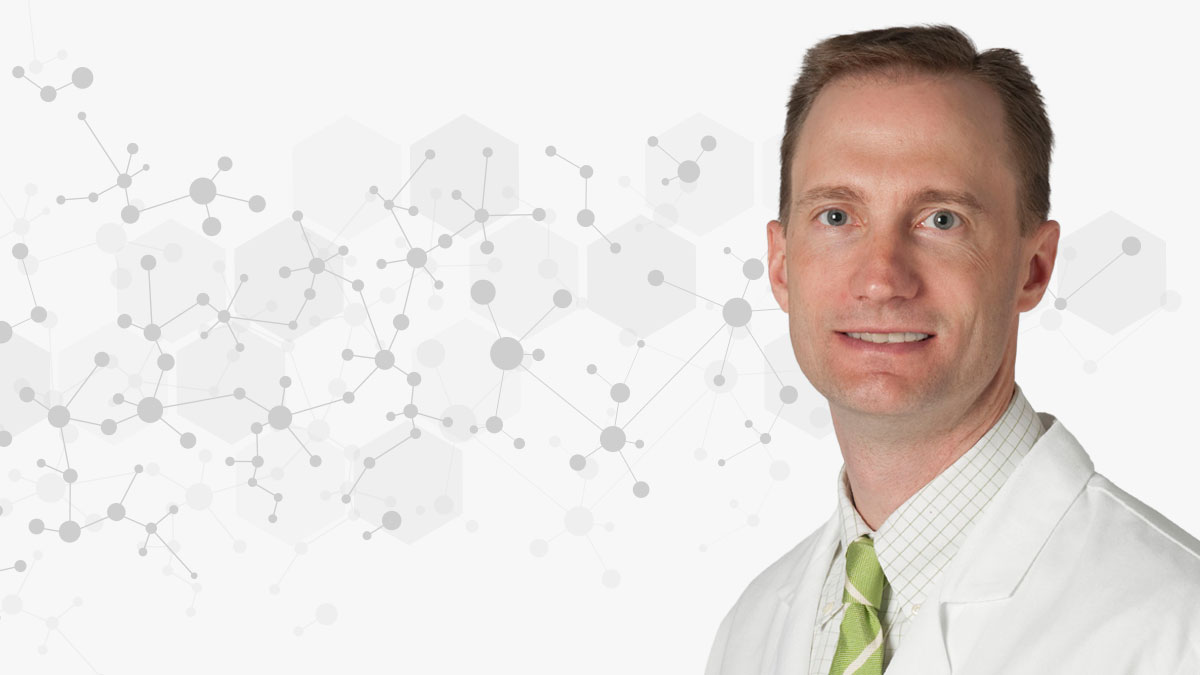
Understanding the Research Impact of the Digital Assessment Center
Jay Alberts, PhD, shares how Cleveland Clinic’s Digital Assessment Center is accelerating neurological research and advancing patient care.
Advertisement
Cleveland Clinic is a non-profit academic medical center. Advertising on our site helps support our mission. We do not endorse non-Cleveland Clinic products or services. Policy
Recent Episodes
Advancing Recovery Through Early Mobilization in Neuro Care
Adam Barron, MD, and Natalie Lilly, PT, DPT, explore the evolving evidence behind early mobilization in neurocritical care.
Learnings of having Embedded Psychiatrists in Neurological Clinics
Drew Cumming, MD, reviews the impact of embedded psychiatry in neurology and the benefits of integrating behavioral health expertise into th…
Behavioral Health Protocols for Suicidal Ideation
Brianne Markley, PhD, explains how screening tools, risk assessment and safety planning can help clinicians recognize and respond to suicida…
Video content: This video is available to watch online.
View video online (https://cdnapisec.kaltura.com/p/2207941/sp/220794100/playManifest/entryId/1_69visu51/flavorId/1_5f3sgelj/format/url/protocol/https/a.mp4)
Transcript
Neuro Pathways Podcast Series
Advertisement
Cleveland Clinic is a non-profit academic medical center. Advertising on our site helps support our mission. We do not endorse non-Cleveland Clinic products or services. Policy
Release Date: July 15, 2026
Expiration Date: July 14, 2027
Estimated Time of Completion: 30 minutes
Understanding the Research Impact of the Digital Assessment Center
Jay Alberts, PhD
Description
Each podcast in the Neurological Institute series provides a brief, review of management strategies related to the topic.
Learning Objectives
- Review up to date and clinically pertinent topics related to neurological disease
- Discuss advances in the field of neurological diseases
- Describe options for the treatment and care of various neurological disease
Target Audience
Physicians and Advanced Practice providers in Family Practice, Internal Medicine & Subspecialties, Neurology, Nursing, Pediatrics, Psychology/Psychiatry, Radiology as well as Professors, Researchers, and Students.
ACCREDITATION
In support of improving patient care, Cleveland Clinic Center for Continuing Education is jointly accredited by the Accreditation Council for Continuing Medical Education (ACCME), the Accreditation Council for Pharmacy Education (ACPE), and the American Nurses Credentialing Center (ANCC), to provide continuing education for the healthcare team.
CREDIT DESIGNATION
- American Medical Association (AMA)
Cleveland Clinic Center for Continuing Education designates this enduring material for a maximum of 0.50 AMA PRA Category 1 Credits™. Physicians should claim only the credit commensurate with the extent of their participation in the activity.
Participants claiming CME credit from this activity may submit the credit hours to the American Osteopathic Association for Category 2 credit. - American Nurses Credentialing Center (ANCC)
Cleveland Clinic Center for Continuing Education designates this enduring material for a maximum of 0.50 ANCC contact hours. - Certificate of Participation
A certificate of participation will be provided to other health care professionals for requesting credits in accordance with their professional boards and/or associations. - American Board of Surgery (ABS)
Successful completion of this CME activity enables the learner to earn credit toward the CME requirements of the American Board of Surgery’s Continuous Certification program. It is the CME activity provider's responsibility to submit learner completion information to ACCME for the purpose of granting ABS credit.
Credit will be reported within 30 days of claiming credit.
Advertisement
Podcast Series Director
Andreas Alexopoulos, MD, MPH
Epilepsy Center
Additional Planner/Reviewer
Ari Newman, BSN
Faculty
Jay Alberts, PhD
LRI Biomedical Engineering
Host
Glen Stevens, DO, PhD
Cleveland Clinic Brain Tumor and Neuro-Oncology Center
Agenda
Understanding the Research Impact of the Digital Assessment Center
Jay Alberts, PhD
Disclosures
In accordance with the Standards for Integrity and Independence issued by the Accreditation Council for Continuing Medical Education (ACCME), The Cleveland Clinic Center for Continuing Education mitigates all relevant conflicts of interest to ensure CME activities are free of commercial bias.
The following faculty have indicated that they may have a relationship, which in the context of their presentation(s), could be perceived as a potential conflict of interest:
| Glen Stevens, DO, PhD | DynaMed | Consulting |
|---|---|---|
| Jay Lance Alberts, PhD | Ceraxis Health Inc. | Ownership interest (stock, stock options in a publicly owned company) Intellectual property rights (Royalties or patent sales) Consulting |
| Qr8 Health | Ownership interest (stock, stock options in a publicly owned company) Intellectual property rights (Royalties or patent sales) Consulting | |
| Glen Stevens, DO, PhD | ||
| Jay Lance Alberts, PhD | ||
| DynaMed | ||
| Ceraxis Health Inc. | ||
| Consulting | ||
| Ownership interest (stock, stock options in a publicly owned company) Intellectual property rights (Royalties or patent sales) Consulting | ||
| DynaMed | ||
| Qr8 Health | ||
| Consulting | ||
| Ownership interest (stock, stock options in a publicly owned company) Intellectual property rights (Royalties or patent sales) Consulting |
All other individuals have indicated no relationship which, in the context of their involvement, could be perceived as a potential conflict of interest.
CME Disclaimer
The information in this educational activity is provided for general medical education purposes only and is not meant to substitute for the independent medical judgment of a physician relative to diagnostic and treatment options of a specific patient's medical condition. The viewpoints expressed in this CME activity are those of the authors/faculty. They do not represent an endorsement by The Cleveland Clinic Foundation. In no event will The Cleveland Clinic Foundation be liable for any decision made or action taken in reliance upon the information provided through this CME activity.
HOW TO OBTAIN AMA PRA Category 1 Credits™, ANCC Contact Hours, OR CERTIFICATE OF PARTICIPATION:
Go to: Neuro Pathways Podcast July 15, 2026 to log into myCME and begin the activity evaluation and print your certificate If you need assistance, contact the CME office at myCME@ccf.org.
Copyright ©2026 The Cleveland Clinic Foundation. All Rights Reserved.
Introduction:
Neuro Pathways, a Cleveland Clinic podcast exploring the latest research discoveries and clinical advances in the fields of neurology, neurosurgery, neurorehab, and psychiatry.
Glen Stevens, DO, PhD:
The Neurological Assessment Center is redefining how clinicians capture objective neurological data and integrate it into everyday care. This innovative model will be housed in Cleveland Clinic's new Neurological Institute building opening in 2027. In this episode of Neuro Pathways, we explore how this approach is reshaping neurologic research from identifying early predictors of disease to dramatically increasing the speed and scale at which insights can be generated. I'm your host, Glen Stevens, neurologist, neuro-oncologist in Cleveland Clinic's Neurological Institute and joining me today is Dr. Jay Alberts. Dr. Alberts is vice chair of innovation at Cleveland Clinic's Neurological Institute. Jay, welcome to Neuro Pathways.
Advertisement
Jay Alberts, PhD:
Excellent. Thank you so much, Glen.
Glen Stevens, DO, PhD:
So, Jay, let's start by having you introduce yourself to our listeners. Where did you train? When did you come to Cleveland? What do you do at the Cleveland Clinic?
Jay Alberts, PhD:
Yeah, for sure. So, I came to the Cleveland Clinic almost 21 years ago to the date. And I was previously at Emory and Georgia Tech, and I trained at Arizona State University in biomedical engineering and neuroscience.
Glen Stevens, DO, PhD:
Good. And what do you do primarily here?
Jay Alberts, PhD:
So, I'm in the Department of Biomedical Engineering, but I'm also in the Center for Neurological Restoration. And I have a lot of research related to Parkinson's disease and Alzheimer's, and really trying to understand neuro mechanisms of disease. And then being here trying to develop technologies, interventions, to change the course of those diseases.
Glen Stevens, DO, PhD:
Great. Well, Jay, I only heard great things about you, so it's a pleasure to have you with us here today. So, I came to Cleveland in 1992. And I was trying to figure out today if there's any way I could actually determine the footprint of what the Clinic looked like when I showed up here in '92. But I know the buildings that have gone up, and it's probably two thirds bigger, maybe even three quarters bigger than when I showed up. So, it's unbelievable.
Advertisement
And of course the new Neurological Institute building really is sort of a paradigm shift for what's going on, and the way that we're going to look after patients, and I'm excited to hear about things on the research side. But I guess just to sort of set the table a little bit, the new building, a million square feet, I think, and again, this is probably a moving target, but a couple of hundred inpatient beds, maybe up to 300, who knows what else they would carve out? Outpatient rooms as well as surgical suites and intensive care units.
So fully integrated. And I remember hearing something from Dr. Machado once, and he said, "The building, the new Neurologic Institute building, is a partner in patient care, and it makes the building a caregiver." And I'm sure you're going to help explain this to us, but it's kind of a neat thing, isn't it?
Jay Alberts, PhD:
Yeah. No, I think it is. And I think that's where I think the interesting and unique aspect of this building is that it's not simply a building. It is part of the care, and it is a caregiver for patients. And that's where it's the super exciting things that are going to be going on in that aspect, but in the building in general to make it exciting.
Glen Stevens, DO, PhD:
Yeah. In neuro-oncology, we're staying in the Cancer center, so we're not physically moving, but of course ORs are there, in patients are there. So, we'll certainly be over there a fair bit. So, we had Dr. Bermel on the program recently, and those interested could certainly go listen to his podcast. And he talked a bit about the assessment center and its impact on the clinical level, but we're going to have you discuss it on the research level. But tell us a little bit about what, for our listeners that haven't heard, what the assessment center is.
Advertisement
Jay Alberts, PhD:
Yeah. So, the assessment center is really revolutionary in terms of its evaluation of motor and cognitive functioning. So, we're going to have an assessment where all patients go through a walking station. They do a walk and they make a turn and come back. They do a manual dexterity assessment, very objective quantitative assessment of manual dexterity and function. And then a series of cognitive assessments as well. And so, I think the interesting part there is, lots of interesting things, but one is that, again, this is integrated into the clinical workflow. And the real important part here is that it is standardized. It's a standardized approach. And so then we can start to have better tracking of the disease state, et cetera.
Glen Stevens, DO, PhD:
Yeah, it's pretty exciting, right? Before the patient would come see me, instead of just the blood pressure and the heart rate, you've already collected all this data.
Jay Alberts, PhD:
I'm going to say that what we're collecting are really the neurological vital signs. Because if you think about, from your patients or other patients, walking mobility is very important. Hand function is very important. Can they button their shirt or tie their laces, and things like that? And obviously cognitive function is important, not only just from just activities of daily living, but also just management of medication. I mean, if you think about the difficulty or the challenges associated with medication management, they're tremendous. And medication non-adherence is a big problem. And so we can start to look at those issues in terms of by evaluating cognitive function.
Glen Stevens, DO, PhD:
Yeah. I think I was reading something that you spoke about before where you called, I think, gait assessment, the sixth vital sign.
Jay Alberts, PhD:
Yes, exactly.
Glen Stevens, DO, PhD:
And maybe cognitive is the seventh, as it goes through. But you're right, I think, that these things... I mentioned with Dr. Bermel when we talked that, when my kids were growing up, we would always play the game of watching someone walk, and I would ask them, what does that gait pattern, what's their neurologic problem? Now, I don't know that I was always 100% correct, but my kids, none of them went into medicine, but they're excellent at picking up abnormalities with gait.
Jay Alberts, PhD:
Yeah. And I think that is super interesting, being in the sense that it really is a view into neurological function. And those changes, subtle changes in arm swing, for example, may be indicative of Parkinson's disease. And other individuals who aren't as skilled as you or your children can't pick that up. And so now we're going to quantify that and provide that information to the provider.
Glen Stevens, DO, PhD:
So, a lot of this was developed in-house. I imagine a lot by you and others who work with you. So, tell us a little bit about that process and why you decided that we would do it in-house, or is there not something out there that you could have used?
Jay Alberts, PhD:
Yeah. So, there are different aspects or different technologies that are out there. Certainly markerless motion capture is out there, hand function assessments are out there. The problem is it's a little bit like putting a square peg in a round hole. They weren't designed for clinical integration. They were designed for use in research environments. And where you have 30, 40 minutes with an individual or a patient to marker them up or to get them through the paradigm, and then you have 30 minutes or more to analyze the data.
And that just isn't going to work. And Dr. Machado and I were talking about this, that this has to be integrated into clinical practice. And part of that not only is integrating into the workflow, but a big aspect is integrating those data into the electronic health record. Because you have to be able to discuss these data with the patient to make sense of it. And to me, that is an exciting part of it that we are using data now to bring the patient and the provider together on the same page. And so there just really were no other systems out there that we could utilize that had this level of integration.
Glen Stevens, DO, PhD:
So, I might be getting into the weeds too much here, but we've all seen these things on TV where people have markers on their limbs, and you sort of see a stick diagram of somebody that's moving. But we're not putting markers on anyone, right? How are we determining their motion without specifically marking them?
Jay Alberts, PhD:
Yeah, exactly right. And that was sort of my motivation, this markerless motion capture. And if I'll deviate a little, if you ever saw the movie Rogue Nation, Mission Impossible, there was a situation where they're walking down and everyone has this unique gate signature. But that was in some ways some of the motivation.
And so, what we can do is we can use the depth camera and the RGB from a series of cameras that are off the shelf. And then we've developed a technology that allows us to hand off that image to the next camera. And so that's where the novelty and the innovation comes in the sense that there's no area in that room that the cameras aren't seeing something and then handing that image off to the next camera.
Glen Stevens, DO, PhD:
So, I assume somewhere in the institution, we're doing these various, the voice, the drawing, the gate somewhere, right? We're doing it currently.
Jay Alberts, PhD:
Yes, exactly.
Glen Stevens, DO, PhD:
What do we do?
Jay Alberts, PhD:
So, we haven't done the markerless motion capture anywhere yet, but we have in the MS Center and the Center for Neurological Restoration for Multiple Sclerosis and Parkinson's respectively, they have been using sort of a smaller version of this. We've been calling them the waiting room of the future. And they've been gathering these types of data for a number of years now.
There, what we've been using is an iPad to monitor their walking speed and then also some balance aspects. But this, what we'll have now is, to your point earlier with the children, seeing arm swing and things like this, now we will have all of that information. And so I think what we've done in the past is really set the stage to industrialize and push this to the entire neurological institute, and hopefully at some point beyond.
Glen Stevens, DO, PhD:
Yeah. I mean, the key is standardized and objective, not subjective.
Jay Alberts, PhD:
You are preaching to the choir.
Glen Stevens, DO, PhD:
Because we run into this all the time, that you check someone's reflexes. And there's parameters for what a reflex is, but your parameter may be a little different than mine. So it's hard between individuals to determine, is this the same number that I thought somebody else got? Or you're looking at manual muscle testing. Is this the same or not? It's so much more subjective. So this just sounds like it has the potential to be so much more objective.
Jay Alberts, PhD:
No, absolutely. And that really is the heart of it is it's just objective and very quantitative data. And so you're probably familiar with the Unified Parkinson's Disease Rating Scale, the thumb and index finger and things. And so there's data out there that show that basically whoever taught the person who taught you, basically there's this familial effect in terms of you do it the way the person taught you and they did it. And so there's these very nice trees. And so we're trying to remove that. And that has implications obviously for clinical care to, again, talk to the patient about where they are and what the effects of this different medication might be, et cetera.
And also from a research perspective, you think about like Parkinson's, Alzheimer's, other neurological diseases, and frequently we use these very subjective measures for clinical trials. And there could be a whole host of pharmaceutical interventions out there that might actually show benefit, but we've had such a noisy measure from an outcome perspective that the signal is swamped in this noise. And so I think that's where we also have an opportunity is to really improve our understanding of different interventions and expand our opportunity to do more clinical trials here.
Glen Stevens, DO, PhD:
So just varying a little bit, huge amount of data is going to get put into Epic. And maybe this will be an evolution, but as a caregiver, how will I see that data? Is it going to be a printed summary? Do I look at raw data? Is it going to show me? Am I going to listen to a voice if they do it? Am I going to see the drawing?
Jay Alberts, PhD:
Yeah. So in the voice, you'll hear the voice and there will be some metrics there. Same with the drawing. And then the gait, what we're doing there, which I think is very interesting and relevant, is providing you the image with the stick figure, as well as providing it with some context. So if someone is walking 1.1 meters per second, they can make it across Euclid Avenue just fine. But if they're walking 0.8 meters per second, they really can't make it across Euclid Avenue very well. And so we're putting it into those contexts of the sense that so you can have a conversation with your patient about it and what it actually means. And so we're hoping that will, again, bring the patient and the provider on the same page.
Glen Stevens, DO, PhD:
Again, I'm out of my lane a little bit, but I think that the threshold for gait is 0.6 meters per second. Anything below that, fall risk increases-
Jay Alberts, PhD:
Tremendously. Exactly right.
Glen Stevens, DO, PhD:
Eventually, which-
Jay Alberts, PhD:
Yeah, exactly.
Glen Stevens, DO, PhD:
... would then be a very important marker for predicting somebody's next fall.
Jay Alberts, PhD:
Exactly. And so what we don't do very well, however, is we don't predict the first fall very well. And so these data will help us predict that first fall. And because we have a turn in there, what we also will be able to do is you can then tell your patient, "Hey, let's go to physical therapy. Let's recommend you to go to physical therapy. And the reason is you either have slow gait or maybe you can't turn very well." And so that will result in a warm handoff between you and the physical therapist because now they will know what to target.
Glen Stevens, DO, PhD:
So, it sounds like you're going to have a lot of data, great data, maybe too much, but you'd probably say never-
Jay Alberts, PhD:
Never too much.
Glen Stevens, DO, PhD:
... too much data. But more objective, which obviously, without knowing the field at all, would allow you to do much better research. You want to talk about that?
Jay Alberts, PhD:
Oh yeah, for sure. I think as I alluded to, first of all, I think it's going to give us a better understanding of what's the signal of these different medications or interventions or surgical procedures that we are doing here. So that will be the first thing. The other thing that will be very important with this objective quantitative data and the volume is we talk all about AI, right?
Glen Stevens, DO, PhD:
That was going to be my next question, so you might as well just jump into it.
Jay Alberts, PhD:
So first of all, I think we are, as Gartner has the plot of technology hype, we are entering the peak of inflated expectations, and at some point we will go down to the trough of disillusionment, and then we'll go to the plateau of-
Glen Stevens, DO, PhD:
A philosopher as well.
Jay Alberts, PhD:
Plateau of productivity. But I think we at the Cleveland Clinic will be able to go to that plateau faster because we have good data. There's no shortage of data in medicine. The problem is a shortage of good data. And even if you look at AI, so if you go home and say, oh, create a face, a smiling face or something like that, AI will do a fantastic job. But if you ask AI to create an image of you holding a cup, and moving it or something like that, it doesn't do as well.
And the reason is because there's billions and billions of images of people's face, but people don't take a lot of pictures of their hands. So AI doesn't do a very good job of doing things with the hands. And so that is analogous here in the sense that we are going to collect really, really high quality data in these cognitive aspects as well as motor function, so that now we can start to predict what's going to happen and really create digital twins for neurological disease.
Glen Stevens, DO, PhD:
So, on your next metric they're going to be looking at, you're not producing enough publications with all this data that's coming out because now you have so much data, right?
Jay Alberts, PhD:
Yes, yes, yes.
Glen Stevens, DO, PhD:
As it comes out. Where's all the data stored?
Jay Alberts, PhD:
Yeah. So some of the data will go right to Epic and then the other data will go to Cleveland Clinic database.
Glen Stevens, DO, PhD:
And no issue with Epic in handling the data. I mean, I'm not sure what kind of volume is going into it.
Jay Alberts, PhD:
Yeah. No, so these are giant files. But what we're doing is we're stripping them down and only putting the video and the outcome summary data into Epic. So we're not clogging Epic up.
Glen Stevens, DO, PhD:
Any specific research questions, a priority you're looking at?
Jay Alberts, PhD:
Yeah. So very interested in the falls aspect, predicting those, and for across the board. Also very interested in taking this and looking at it from a predictive or personalization medicine. So, if you come in and you present with X, Y, and Z on these outcomes, at some point we're going to have 5,000 other people who present exactly the same way. And we can then look to see how do you respond to this intervention or that intervention. I think that to me is super exciting. The other part that is very exciting is since we will have, again, these neurological vital signs and objective data pushing this back to primary care and seeing, okay, you're 62, and this is what your gait or cognition looks like. This is the probability that you might have one of these neurological diseases.
Glen Stevens, DO, PhD:
Jay, I wish I was 62. I might have to get my assessment. So currently before they see the clinician, they're going to do the three things, the gait, the complex drawing, and the verbal. What's the fourth one or the fifth one? Or have you guys thought about what other things you'd like to integrate in?
Jay Alberts, PhD:
Yeah, I would love to, so we're doing a study now with 200 older adults and looking at their ability to go up and down stairs. Stairs are a big problem. And we haven't fully boiled that project down yet. And so to me, the next phase would be the integration of stairs into these types of assessments as well.
Glen Stevens, DO, PhD:
Yeah, I think that's great actually. I don't think I'm going out of school here, but my wife had a hip and then a knee replacement. And I remember after her hip replacement, because we're in an old Shaker house, so we're vertical. And I remember when she came home and we looked at the stairs, and I thought we have to sell our house. I don't think she can climb. I mean, I think maybe she could get up, but I'm so paranoid about coming down. So, as we all get older, stairs are a big issue. I like that you're going to look at that because this is really enabling people to stay in their home.
Jay Alberts, PhD:
Exactly right. And again, it goes to this issue of predicting falls, and then identifying what should be treated on a physical therapy perspective. If someone is slow going up the stairs, they probably have a muscular strength issue. So let's get them to the person who can help their muscular strength. Going down, they could have some perceptual motor issues. So again, these are different things, and it becomes much more patient specific in terms of our recommendations.
Glen Stevens, DO, PhD:
So, this would seem obvious, but maybe not. I would assume that with all the data and everything getting collected so quickly, that we could turn things around faster. Or is it not that simple in terms of how we used to have to collect data?
Jay Alberts, PhD:
No, I think we absolutely will be able to turn things around faster. I think it's going to be like, from a research productivity perspective, it's going to be we're transitioning from a golf cart to an F1 car because we will have standardized objective quantitative data. I think our biggest challenge is going to be getting people engaged and making sure that we have the correct statistical support to help these different projects.
Glen Stevens, DO, PhD:
So, the key of all these things is to predict what's going to happen. So, I really see that's what's going to happen. It's going to change the paradigm of how we look at patients. And we're more forward thinking, your risk is this, you need to do this now.
Jay Alberts, PhD:
Yeah, absolutely. And I think we're going to do that really well here, and we're going to develop that really well here, which is super exciting for obviously the patients are at the Cleveland Clinic. What also gets me excited is, I'm from a very tiny town in Iowa, and so if you have Parkinson's, you have to go 75 miles to a movement disorders neurologist or a neurologist in general. So, what happens is they just don't go. But now these data can be used potentially by a primary care provider in small town Iowa, and to help them make better treatment decisions. And so to me, that is what the bigger play here is.
Glen Stevens, DO, PhD:
So, I'm glad you just mentioned that. So, I'm seeing a patient virtually. Am I going to be able to capture any of these things virtually or is that a goal down the road?
Jay Alberts, PhD:
That's definitely a goal down the road. And some of our technology, we can already turn that on to do it. Yeah.
Glen Stevens, DO, PhD:
Because as you mentioned, one of the benefits of virtual is that some... I'm from a small town in Canada, and it is, it's difficult. You don't have specialists, people can't physically get there. But they'd like to have the same quality of care-
Jay Alberts, PhD:
For sure. Yeah.
Glen Stevens, DO, PhD:
... looking after them. So, if it could be incorporated, certainly would be very beneficial.
Jay Alberts, PhD:
Yeah, absolutely.
Glen Stevens, DO, PhD:
Active trials ongoing now in this, or we're waiting till the building opens, or are you doing some at the center that you currently have?
Jay Alberts, PhD:
Yeah. So, we are using many of these measures now for current outcomes in my NIH sponsored clinical trials related to the impact of exercise and deep brain stimulation on Parkinson's motor and cognitive functioning. And those will be important because that will provide data, I don't want to say normative, but some levels of normative data to understand how things are potentially changing.
Glen Stevens, DO, PhD:
So, I'm listening to the podcast in some place, and I'm going, man, that sounds really interesting. We're not doing that at our center. Sounds kind of custom built. Is this something down the road that could other healthcare centers could use?
Jay Alberts, PhD:
Absolutely. And I think that's how we've really envisioned it is that this is a model, hopefully a new model of care going forward. That whether you're in a small town hospital in Northwest Iowa or Canada, that there's not a giant barrier to entry here from a cost perspective. And that was really a big aspect of our work here.
Glen Stevens, DO, PhD:
And from a time perspective for patients from when they hit the door, how much time are we adding to their-
Jay Alberts, PhD:
It should be less than 20 minutes. And again, it's important to note that this is part of the visit. And so your visit starts at 3:00, and that's when you start to see the physician, when you walk in the building.
Glen Stevens, DO, PhD:
Yeah. I was mentioning to Rob Bermel when we were chatting and going back to the gait. He had said, "I used to really love in the old days, I'd go out to the waiting room and I would pick up the patient and bring them back because I wanted to watch their gait. Or if I was back and they were coming, I'd always watch them walk to the room," for the reasons that we mentioned before. But I think observation has to be at the forefront of what we're doing. I just didn't know that I was the computer of the past, I guess.
Jay Alberts, PhD:
Exactly. There's nothing that substitutes the area between your left and right ear.
Glen Stevens, DO, PhD:
Yeah. I have faulty circuits. That's the current problem that I'm dealing with though. Some parts may need replacing. Where's the technology going to go? Maybe you don't know, but where is it going?
Jay Alberts, PhD:
Yeah. No, I think right now we have seven cameras, and we're already working to shrink that down to fewer cameras. We can do that. We will eventually. I think we're also going to be doing, we are doing some work in terms of looking at upper extremity movements as well, in particular for patients with stroke. And then I think there will be a big push really on the data analytics aspect and the predictive analytics in terms of disease prediction as well as response to intervention.
Glen Stevens, DO, PhD:
So, for the gait, it's 25 meters or 25 yards or it's just-
Jay Alberts, PhD:
It's four and a half meters, and then a turn, and then four and a half meters back.
Glen Stevens, DO, PhD:
Oh, okay. 25 feet maybe. Sorry.
Jay Alberts, PhD:
Yeah, exactly.
Glen Stevens, DO, PhD:
So, what happens with patients that are in wheelchairs, canes, those types of things?
Jay Alberts, PhD:
Sure. So, wheelchairs, obviously we won't have them do the gait assessment, but we do, and this is kind of a novel aspect of the technology and why we built it ourselves, is we can distinguish a leg, an arm from a cane and such. So, we can still build the human skeleton even if they are using a walker or a cane.
Glen Stevens, DO, PhD:
And how much of that distance, 25 feet, do they need to do to capture it?
Jay Alberts, PhD:
Ideally, they would do all, but you could actually calculate gait velocity from a two meter walk. So, we'll get as much information as we can from the test.
Glen Stevens, DO, PhD:
So, our time's starting to come to a close here, but as you look forward, things that you're excited about research-wise that we haven't mentioned or you want to reiterate?
Jay Alberts, PhD:
Yeah, I think I'm really interested in and excited about obviously all of the things we've talked about, but also working with junior faculty here who are really interested in asking and answering really good research questions because now we're going to have the data to do that. Within a month, we're going to have more data than any other center or any other system or nonprofit in the world. And so to me, I'm excited about working with the next generation of clinician scientists to ask and answer really good provocative questions.
Glen Stevens, DO, PhD:
Yeah. One of the young physician scientists in our group, Dr. Dhawan, is doing a clinical trial with brain tumor patients with wearables. And they're essentially using a watch. And if they have a watch, they can incorporate that. If they don't, then one's provided. But it's a lot of the same type of things, that we're looking at it for, can it be an early marker for disease progression. That, hey, they're now using the right arm less. Hey, they're mobile less and it correlates with the MRI scan showing a change. All these biomarkers that can help us understand. So, I think this technology is being utilized in lots of different parameters.
Jay Alberts, PhD:
Yeah. No, absolutely. And there's plenty of data out there, like the Rotterdam Study shows that these instrumental activities of daily living start to decline five to seven years before the onset of neurological disease, and now we can start to measure those.
Glen Stevens, DO, PhD:
Any idea percentage of patients that won't want to do these things that come into the building? I'm sure everybody will be encouraged to do it. Is there a thought as to-
Jay Alberts, PhD:
I don't know. We've had a really good response from the waiting room of the future. I think it honestly becomes an issue related to the provider. Because if you're asking a patient to do something, and if you don't talk to them about what they just did, then it loses importance. And so I think if the provider is engaged, and says, "Hey, here's your gait, looks good," or, "Hey, you've got some changes here. We should be thinking about physical therapy," then I think the patient will do it and will want to do it. Because the patients are always asking, "How am I doing," after an assessment. And you can give them a score on the UPDRS, which is zero to 132. You can say, "Oh, you're a 72 today." Well, what does that mean to them?
Glen Stevens, DO, PhD:
I guess as we're sort of wrapping up here, final takeaways, or things that we haven't discussed that are important.
Jay Alberts, PhD:
Yeah, I think the importance here, lots of things, but I think obviously Dr. Machado's leadership, and providing the opportunity to rethink what a building is, and to put this technology in. And really to go all in terms of integrating technology into clinical care and research into clinical care. I think it's very forward thinking.
Glen Stevens, DO, PhD:
Yeah. And just one last thing, if I'm a new patient to the institution, what am I hearing before I show up? Is someone telling me that I'm going to do these tests ahead of time or do I find out then?
Jay Alberts, PhD:
So, the way we're looking at that, and Dr. Bermel could have probably spent more time on it, but they would basically be told that their appointment is at 11:00. They will go through these assessments at 11:00, and then they will see their provider. But again, there's value there because all of that data is going to be into the electronic health record, so the provider can actually use it and get a good understanding of what this patient looks like before they even walk through the door.
Glen Stevens, DO, PhD:
Well, Jay, I'm glad you dropped by today and tell us the Neurological Institute building in the future. I'm so excited to see it. And I'm not getting any younger so I may be a patient there one day and utilize all those things. But very exciting. And I know that all the residents and staff I talk to are very excited about it as well. And ultimately we're all here for the patients, and this is just going to give us better patient care. So, appreciate all you do.
Jay Alberts, PhD:
Excellent. Thank you for having me. Appreciate it.
Glen Stevens, DO, PhD:
All right.
Closing:
This concludes this episode of Neuro Pathways. You can find additional podcast episodes on our website, clevelandclinic.org/neuropodcast, or subscribe to the podcast on iTunes, Google Play, Spotify, or wherever you get your podcasts. And don't forget, you can access real-time updates from experts in Cleveland Clinic's Neurological Institute on our Consult QD website. That's consultqd.clevelandclinic.org/neuro, or follow us on Twitter @CleClinicMD , all one word. And thank you for listening.
Recent Episodes
Advancing Recovery Through Early Mobilization in Neuro Care
Adam Barron, MD, and Natalie Lilly, PT, DPT, explore the evolving evidence behind early mobilization in neurocritical care.
Learnings of having Embedded Psychiatrists in Neurological Clinics
Drew Cumming, MD, reviews the impact of embedded psychiatry in neurology and the benefits of integrating behavioral health expertise into th…
Behavioral Health Protocols for Suicidal Ideation
Brianne Markley, PhD, explains how screening tools, risk assessment and safety planning can help clinicians recognize and respond to suicida…
Never miss a moment - subscribe now.
Listen to the Health Essentials Podcast on your favorite streaming platform.
Other Podcasts You May Love
Beyond Leadership
Hosts Jim Pae and Elizabeth Pugel escort you through a network of thought leaders, sharing world-cla…
Beyond the Pages: CCJM Podcast
Beyond the Pages: CCJM Podcast takes the listener more in-depth into Cleveland Clinic Journal of Med…
Butts & Guts
A Cleveland Clinic podcast exploring your digestive and surgical health from end to end. You’ll lear…
Cancer Advances
A Cleveland Clinic podcast for medical professionals exploring the latest innovative research and cl…