



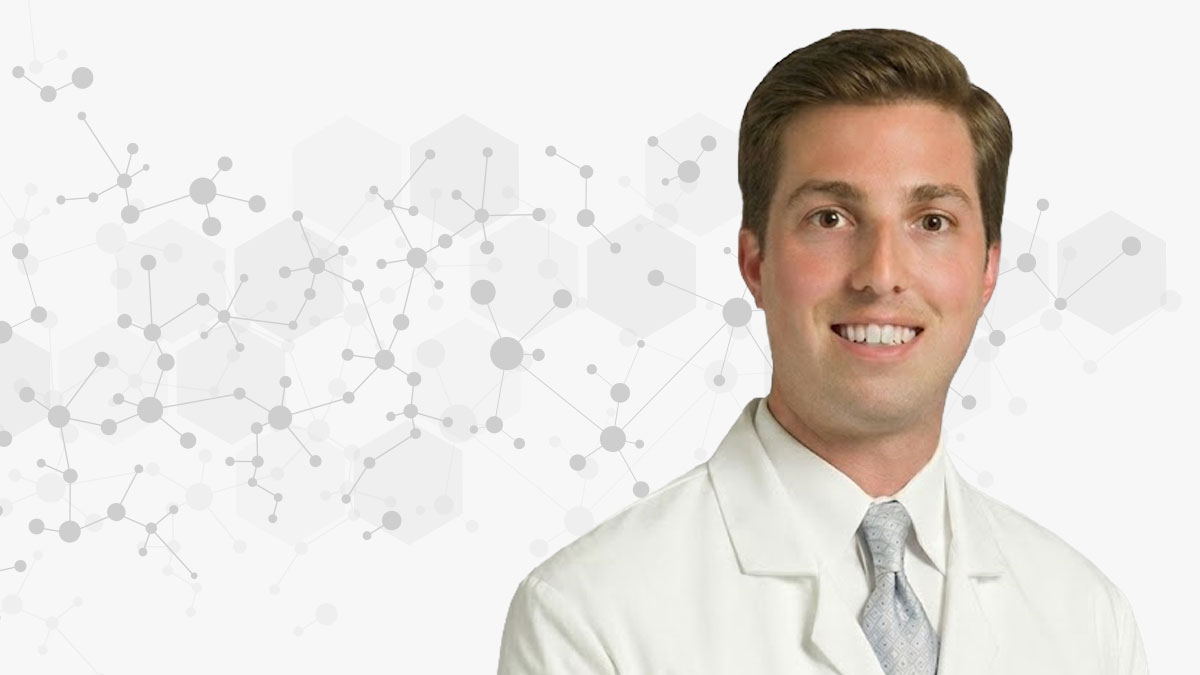
Clinical Impacts of the Digital Assessment Center
Robert Bermel, MD, highlights the role of Cleveland Clinic’s Digital Assessment Center in advancing data-driven neurological care.
Advertisement
Cleveland Clinic is a non-profit academic medical center. Advertising on our site helps support our mission. We do not endorse non-Cleveland Clinic products or services. Policy
Recent Episodes
Behavioral Health Protocols for Suicidal Ideation
Brianne Markley, PhD, explains how screening tools, risk assessment and safety planning can help clinicians recognize and respond to suicida…
Transforming Epilepsy Diagnosis and Treatment Through AI-Enabled Infrastructure
Imad Najm, MD, discusses how AI-enabled infrastructure and advanced EEG analysis are transforming epilepsy diagnosis.
Delirium in the Hospital Setting: Recognition, Risks, and Management
Anna Shapiro Krew, MD, and Christopher Strayhan, BSN, RN, explain how multidisciplinary care and environmental design can help reduce deliri…
Video content: This video is available to watch online.
View video online (https://cdnapisec.kaltura.com/p/2207941/sp/220794100/playManifest/entryId/1_ejxuvizg/flavorId/1_5f3sgelj/format/url/protocol/https/a.mp4)
Transcript
Advertisement
Cleveland Clinic is a non-profit academic medical center. Advertising on our site helps support our mission. We do not endorse non-Cleveland Clinic products or services. Policy
Neuro Pathways Podcast Series
Release Date: July 1, 2026
Expiration Date: June 30, 2027
Estimated Time of Completion: 30 minutes
Clinical Impacts of the Digital Assessment Center
Robert Bermel, MD
Description
Each podcast in the Neurological Institute series provides a brief, review of management strategies related to the topic.
Learning Objectives
- Review up to date and clinically pertinent topics related to neurological disease
- Discuss advances in the field of neurological diseases
- Describe options for the treatment and care of various neurological disease
Target Audience
Physicians and Advanced Practice providers in Family Practice, Internal Medicine & Subspecialties, Neurology, Nursing, Pediatrics, Psychology/Psychiatry, Radiology as well as Professors, Researchers, and Students.
ACCREDITATION
In support of improving patient care, Cleveland Clinic Center for Continuing Education is jointly accredited by the Accreditation Council for Continuing Medical Education (ACCME), the Accreditation Council for Pharmacy Education (ACPE), and the American Nurses Credentialing Center (ANCC), to provide continuing education for the healthcare team.
CREDIT DESIGNATION
- American Medical Association (AMA)
Cleveland Clinic Center for Continuing Education designates this enduring material for a maximum of 0.50 AMA PRA Category 1 Credits™. Physicians should claim only the credit commensurate with the extent of their participation in the activity.
Participants claiming CME credit from this activity may submit the credit hours to the American Osteopathic Association for Category 2 credit. - American Nurses Credentialing Center (ANCC)
Cleveland Clinic Center for Continuing Education designates this enduring material for a maximum of 0.50 ANCC contact hours. - Certificate of Participation
A certificate of participation will be provided to other health care professionals for requesting credits in accordance with their professional boards and/or associations. - American Board of Surgery (ABS)
Successful completion of this CME activity enables the learner to earn credit toward the CME requirements of the American Board of Surgery’s Continuous Certification program. It is the CME activity provider's responsibility to submit learner completion information to ACCME for the purpose of granting ABS credit.
Credit will be reported within 30 days of claiming credit.
Advertisement
Podcast Series Director
Andreas Alexopoulos, MD, MPH
Epilepsy Center
Additional Planner/Reviewer
Ari Newman, BSN
Faculty
Robert Bermel, MD
Mellen Center
Host
Glen Stevens, DO, PhD
Cleveland Clinic Brain Tumor and Neuro-Oncology Center
Agenda
Clinical Impacts of the Digital Assessment Center
Robert Bermel, MD
Disclosures
In accordance with the Standards for Integrity and Independence issued by the Accreditation Council for Continuing Medical Education (ACCME), The Cleveland Clinic Center for Continuing Education mitigates all relevant conflicts of interest to ensure CME activities are free of commercial bias.
The following faculty have indicated that they may have a relationship, which in the context of their presentation(s), could be perceived as a potential conflict of interest:
Glen Stevens, DO, PhD
| Company | Relationship |
|---|---|
| DynaMed | Consulting |
| Company | |
| DynaMed | |
| Relationship | |
| Consulting |
Robert Bermel, MD
| Company | Relationship |
|---|---|
| Genentech/Roche | Consulting; Research |
| Genzyme | Consulting; Teaching and Speaking |
| Novartis | Consulting |
| Qr8 Health | Intellectual property rights (Royalties or patent sales) (Ended: 12/31/2025 |
| Company | |
| Genentech/Roche | |
| Relationship | |
| Consulting; Research | |
| Genzyme | |
| Relationship | |
| Consulting; Teaching and Speaking | |
| Novartis | |
| Relationship | |
| Consulting | |
| Qr8 Health | |
| Relationship | |
| Intellectual property rights (Royalties or patent sales) (Ended: 12/31/2025 |
All other individuals have indicated no relationship which, in the context of their involvement, could be perceived as a potential conflict of interest.
CME Disclaimer
The information in this educational activity is provided for general medical education purposes only and is not meant to substitute for the independent medical judgment of a physician relative to diagnostic and treatment options of a specific patient's medical condition. The viewpoints expressed in this CME activity are those of the authors/faculty. They do not represent an endorsement by The Cleveland Clinic Foundation. In no event will The Cleveland Clinic Foundation be liable for any decision made or action taken in reliance upon the information provided through this CME activity.
HOW TO OBTAIN AMA PRA Category 1 Credits™, ANCC Contact Hours, OR CERTIFICATE OF PARTICIPATION:
Go to: Neuro Pathways Podcast July 1, 2026 to log into myCME and begin the activity evaluation and print your certificate If you need assistance, contact the CME office at myCME@ccf.org.
Copyright ©2026 The Cleveland Clinic Foundation. All Rights Reserved.
Introduction:
Neuro Pathways, a Cleveland Clinic podcast exploring the latest research discoveries and clinical advances in the fields of neurology, neurosurgery, neuro rehab, and psychiatry.
Glen Stevens, DO, PhD:
The Neurological Assessment Center is redefining how clinicians capture objective neurological data and integrate it into everyday care. This innovative model will be housed in Cleveland Clinic's new Neurological Institute building opening in 2027. In this episode of Neuro Pathways, we explore the clinical impact of the assessment center and what it means for more precise data-driven neurological care. I'm your host, Glen Stevens, neurologist, neuro-oncologist in Cleveland Clinic's Neurological Institute. And joining me today is Dr. Robert Bermel, neurologist and director of the Mellen Center for Multiple Sclerosis Treatment and Research at Cleveland Clinic. Rob, welcome to Neuro Pathways.
Advertisement
Robert Bermel , MD : Glen, thank you so much for having me.
Glen Stevens, DO, PhD:
So, Rob, I've known you for a long time, but for those out there that don't know you, tell us a little bit about yourself, how you made your way here, what do you do? You can even throw in a fun fact about yourself if you want.
Robert Bermel, MD:
Sure. So now this marks, I think I've been in Cleveland Clinic 24 years counting my training. So trained in the early 2000s and stayed on faculty and now have the distinct honor of leading the Mellen Center, which is a wonderful group of clinicians and scholars and scientists all dedicated to basically transforming the journey for patients with MS and hoping to lead the search for a cure. And that's what has guided us through all these years.
Glen Stevens, DO, PhD:
So you're involved in a lot of exciting stuff going on, so we'll get into that, but tell us a little bit about the new neurologic building that's going to open soon.
Robert Bermel, MD:
Sure. So, the new Neurological Institute building on Cleveland Clinic's main campus is essentially an integrated neurological healthcare facility. It's an inpatient and outpatient and surgical facility all in one building, everybody under one roof, all working toward the same objective to make the earliest diagnosis possible, get the patient on the best treatment possible and then discover treatments for those who come after us for the future.
Advertisement
And it's going to have some spaces that are going to look familiar to people, like inpatient rooms. Ours will be somewhat more comfortable and somewhat larger and have a little bit more technology in them than rooms people might be used to, but still just inpatient rooms. Outpatient exam rooms and other spaces for physicians to work in in the outpatient setting, pretty typical, but it's also going to have some really novel spaces in it that are going to facilitate unique work and unique insights on patients. And the assessment center is one of those novel spaces that's completely new, completely different, unlike anything else that exists out there.
Glen Stevens, DO, PhD:
Yeah. I'm excited to talk about the new assessment center, which I know you're very intimately involved with. I saw a quote that you had, I don't know if you're the original one that had the quote, but I'll give it to you and I'll just quote something that I saw that you said and you said that the new assessment center, the building, the NI building itself with this new assessment center is designed to be a partner in patient care. I think that's a great statement, right? That the actual building is a partner in the care of a patient.
Robert Bermel, MD:
That's right.
Advertisement
Glen Stevens, DO, PhD:
Fascinating.
Robert Bermel, MD:
The building should contribute to the care of the patient.
Glen Stevens, DO, PhD:
Yeah, it's fascinating, right?
Robert Bermel, MD:
It should make people feel better as they walk through it. There should be natural light. There should be spaces for family members to gather and spend the night with their loved one if they're in the hospital if they wish. There should be spaces that actually facilitate the care. The spaces should be designed in a way that's safe for patients, that make it easy for them to be safe in the hospital. Yeah, that's right. The building should actually be a partner with us and should be a caregiver in itself.
Glen Stevens, DO, PhD:
And you'll get into this, but independent of something that you or I would do with the patient, the building itself is set up to integrate with the patient to collect data.
Robert Bermel, MD:
Very, very true. So, we're very fortunate at Cleveland Clinic. We have extremely skilled providers, clinicians, people who have more knowledge in their heads than pretty much anyone else in the world about some particular disorders. And for patients who are lucky enough to have time to sit down with those providers or the providers to have time to assess those patients, it's a wonderful thing.
I think what we're trying to do is also simultaneously put more information in the hands of those incredible providers and not start the visit with a collection of information where the provider spends most of the visit collecting data about how the patient's doing, but rather can spend the time sitting side by side with the patient and actually making treatment decisions and recommendations and following up and assessing how a treatment's working. So, this turns the provider, the idea is to turn the provider from a collector of information only using a stethoscope, a reflex hammer, a tuning fork where they have to deduce and figure everything out themselves, to an integrator of data and information and a decision-maker so that they can use their expert knowledge and expert tools that they have to truly explain to the patient and help the patient.
Glen Stevens, DO, PhD:
Yeah. I think it's fantastic. I had a discussion with one of our fellows this week about patient satisfaction, patient experience, those types of things. And I said, "The patient doesn't want you staring at the screen. The patient wants to feel that they have your attention, you're looking at them, you're sharing with them, you're spending less time just doing... If you're looking at the screen, you're looking at it together, right? You're sharing something that's on the screen there. So, it's right in line with where things are going. And as someone who also uses the healthcare system, it's how I would feel about it. When I go there and someone's just staring at a screen and just asking me questions, just typing away, it's easy to get lost.
Robert Bermel, MD:
Yeah. You're exactly right about the patient experience piece. You also know from your background in neuro-oncology that you guys rely very heavily on objective data. So, tumor genotyping, searching for circulating tumor DNA, pathology, imaging of multiple modalities, right? This is rich, deep, objective information and we're trying to bring the other fields of neurology, I think, into that. In MS, we have MRI that we rely heavily on. We have liquid biomarkers now. We check neurofilament light in our patients to look for disease activity. And when you think about the breadth of information that we have, the clinical exam in some ways is the weak point. We can sort of get a gauge for how it's going, but we don't have much objective information for how the patient is doing.
I distinctly remember a couple of patients, one with MS and one with Parkinson's disease who were adamant that they're getting worse and they come and they say, "Doctor, I'm getting worse. I can feel I'm getting worse." And in MS, the common situation is that they'll say, "Doctor, you tell me my MRI is stable but yet I feel like I'm getting worse." And we want to be able to measure that and substantiate that. The patient I think knows what's happening and our measurement systems have lagged behind.
A second patient with Parkinson's says every time she goes to her doctor, she thinks she knows she's getting worse, but the clinical exam doesn't tell that there's any of these subtle differences. And likewise, in that case, we want to be able to substantiate what the patient's feeling with some objective measures that truly measure how they're functioning and catch up to how the patient's feeling basically.
Glen Stevens, DO, PhD:
Yeah. In brain tumor, Dr. Dhawan, one of our younger faculty members has an ongoing project with wearables and it's just fascinating data where, hey, the patient, you can sort of see where the patient started using the right arm less or the patient was ambulating less or the patient was lying down more. I mean, it's truly there's all this objective data that's out there that you can then say, yeah, there's definitely something and this is where the change was.
I remember back if you want to go Luddite and non-digital with this, I remember when I was doing neuromuscular and they were looking at Lou Gehrig and they're trying to figure out when did Lou Gehrig, when did his ALS really sort of become apparent? And they did this great study where they looked at this batting average and they could almost sort of pinpoint the onset of where it sort of crossed the line and it went because the data was there, because baseball people just love data and they collect all this data and it was there and it was objective and you could see the split where it was. Now unfortunately they couldn't treat it, But they could at least define it.
Robert Bermel, MD:
It's a really good point. And I think the first step to finding better treatments is probably better characterizing what's going on with people and developing measures to actually test whether our treatments are working or not. And so, the more sensitive of the measures we get, the better we can be specific about diagnosis and timing of things. Well, I think we'll set things up much more favorably for developing newer, better treatments.
Glen Stevens, DO, PhD:
So, let's go through some of the domains that are probably useful for everybody. Gait.
Robert Bermel, MD:
Yeah. So, I think in the assessment center in the new NI building, we've relied on some measures that are useful for pretty much everybody in terms of neurological function, things like gait. In our setting, that's going to be measured basically by having the patient naturally walk. They can use an assistive device if they use one typically, but they're going to walk about 25 feet, turn and walk back. There's a series of seven cameras that's watching the patient walk. We don't have to put any markers on them at all and the cameras behind the scenes process the data. It's about seven gigabytes of data per walk and it turns the patient basically into a stick figure within the computer so that we, in a de identified way, can measure every joint angle, every limb movement, every subtlety about their gait and develop some measurements, number one, and conclusions about how their walking is.
We're also doing a fairly classic brief cognitive test that takes about a minute and a half to do where a patient has to, on a touchscreen, copy a complex figure. They're shown a figure on the screen and they just have to copy it in a box right next to it. They're given about a minute and a half to do that and that gives very valuable information about cognitive function, visuospatial processing, and a little bit about dexterity. We have the capability to do some brief memory tests if required by the individual patient's provider and very typical dexterity test called the Nine-Hole Peg Test that's in our hands now in electronic form where it automatically records the scores of all these things and gets them into the chart.
There's also some really cool future looking type analyses. An example of one of these is a voice pattern analysis and so there's a lot of emerging data showing that based on the speed and the cadence and the quality of someone's speech that you can actually identify very early signals of things like Parkinson's or tremor or even other neurological conditions.
And so, by collecting a very short sample of someone's voice, we think we can find maybe even early signals of things and have ways to diagnose these disorders even earlier than we can pick up on them if we're sort of looking with our own eyes and listening with our own ears, the computer analysis of these things these days can be very powerful. We don't know exactly how to use that yet, but this is one example of how we're sort of leaning into something that may approach what one of our colleagues years ago called a biometric chamber where ideally like in a very future Star Trek type of sense, someone could be in a chamber that would, quote, "Scan them and identify if they had any disorders and what they had and what to focus on." And so this is our little foray, I think into a domain like that.
Glen Stevens, DO, PhD:
Yeah. If we knew what everything meant that we were collecting, it would mean that we're not thinking far enough in the future. Yeah,
Robert Bermel, MD:
That's exactly right.
Glen Stevens, DO, PhD:
I would always say if you can only test one thing, look at the gait. And for years and years and years, I would always watch the patient come back from the front room into the exam room and I would get so much information just watching them that I think the fact you're collecting this in so much more objectively than Stevens' old eyes there, I think this is very exciting stuff and will have huge ramifications down the line for patients.
Robert Bermel, MD:
Well, I think the Stevens' eyes are probably super valuable and highly skilled and I have to say that in addition to the use for diagnosis and for treatment monitoring and for quantifying some of these things, I think technology like this has a role potentially of standardizing things and democratizing the type of learned eye that you're talking about because to be frank, there are people that live in lots of areas even around Ohio where they don't have access to Stevens' eyes. And so being able to put potentially a tool in other hands as well, if we get this to work in our facilities, potentially something like this could exist even beyond our facilities that helps neurologists everywhere to make more I think informed diagnoses and treatment choices potentially.
Glen Stevens, DO, PhD:
So, time wise, how much time are patients going to send in this assessment center?
Robert Bermel, MD:
So, I think everybody's used to a visit flow where they're brought back to an exam room in a traditional doctor's office and the medical assistant does your blood pressure and pulse and temperature and talks about your medications with you and things. And so we're actually putting all those activities down in the assessment center. So, the assessment center in addition to neurological assessments actually will automatically acquire vital signs as well while the person is sitting at one of the workstations.
And so, we can sort of kill two birds with one stone, if you will. We can use some of the time that would have been used for that medical assistant pre-visit in the assessment center. On average right now, it's taking seven to eight minutes per patient. I think there are some patients if you have trouble with some of these things, it could obviously take a little bit longer and for some it might take less time if they are coming for a follow-up visit, say they've done it once before, they may be faster at it the second time, but we're thinking it's going to take 10 to 15 minutes for an average person to do this and it's going to be incorporated in the routine care of all doctor's visits and provider visits in the new Neurological Institute building.
And so that contemplates maybe hundreds of patients per day, maybe 700 patients per day. And so we actually have two spaces, two neurological assessment centers, one on the first floor, on the second floor, all staffed by medical assistants and the goal is to get people in and out. We're actually allotting a half hour that it's going to be scheduled for in advance of people's visits to leave enough time for people to get in and out and get to the bathroom maybe after, get into the elevator, get to their appointment, things like that.
What's important is that the doctor, when the patient comes to the exam the doctor will have all the information from the assessment center in the electronic medical record in front of them in the form of gauges on a dashboard. And so they'll be able to sit with the patient and review exactly how they did on the testing and how that testing informs maybe their care.
Glen Stevens, DO, PhD:
Is it going to give you a printout and say something about the various components? What's the format?
Robert Bermel, MD:
Well, I think back in the old days, maybe it would be a printout, Glen.
Glen Stevens, DO, PhD:
Oh, sorry, sorry. Yes. I meant an electronic visual.
Robert Bermel, MD:
These days, we're going to push some of the results to the patient's MyChart so that the patients can have access and review their findings. Important in that is giving people some context in this. A lot of what we're talking about, people are not used to looking at these measures and so there is a little bit of a learning curve for all the doctors and certainly for patients. And so putting context around that, things like, well, what is a normal gait speed? What is a normal performance on this complex figure drawing task is something that we've put a lot of work into and we're currently running what we call a validation study where we're developing some of those normative values for those things.
Glen Stevens, DO, PhD:
Yeah. I remember, I mean the folks over at the Mellen Center have done a great job for a long time. I remember years ago you were always patients who would do timed walk in the halls-
Robert Bermel, MD:
With a stopwatch.
Glen Stevens, DO, PhD:
With the stopwatch, they were doing the peg hole test as it's going through. So you're just incorporating things you've done for a long time and then augmenting it and of course supercharging it.
Robert Bermel, MD:
Correct. Yeah. It's sort of the same spirit, which is to acquire objective neuro-performance tests at each visit so that we can follow how somebody's doing over time. We used to do it with a stopwatch. Now we're applying some new technology to, number one, make it more routine, make it easier, make it less dependent on the human to click the stopwatch and then type the right values in. But also like you said, adding some technology to it that gives us even richer and more detailed information than just the stopwatch could collect.
Glen Stevens, DO, PhD:
And I don't want to derail this, but there's also the big brain study that's ongoing. Do the people that are in the brain study do these same types of tests or... Because it's been going on for a while now, it wasn't available.
Robert Bermel, MD:
It's an important connection to make because what we'll have with people coming through the assessment center, many of them have known neurological conditions and then we'll be able to identify signatures of say Parkinson's or MS or other neurological diseases in the assessment center that then we may be able to look in the brain study data set and look for some of those signatures, use the voice pattern analysis as an example in healthy aging individuals to look for the earliest signs of those things. And so the voice pattern analysis is one that does overlap. We're going to begin to now integrate things like the gait analysis and the complex figure drawing in the brain study as well, because you're right, there's strength in using both of those groups to learn about neurological disease.
Glen Stevens, DO, PhD:
If you need a normal aging volunteer, you can always call me.
Robert Bermel, MD:
I hear they're paying 50 bucks, so yes.
Glen Stevens, DO, PhD:
Obviously, this is day one patients are going to start doing this, things are going to come. How are physicians going to prepare for this information? Understanding the information that they get, what are we going to do for the group?
Robert Bermel, MD:
Well, we have to acknowledge, number one, that is different a little bit. For MS providers, like you pointed out, we've been relying on some of these data for a long time. Parkinson's providers at Cleveland Clinic have been relying on objective data in a different format for a long time as part of the waiting room of the future that MS and Parkinson's use to collect objective data. For others, it may require some education, some experience. And so, we're going to begin to ease people into this even before the building opens. So, we're piloting this in a prototype clinical space in the S Building on main campus in our current neurological space, basically starting now and in the second half of 2026. This will help providers get used to this. We're going to provide educational materials, of course.
And then the adoption of something like this follows probably the adoption of any new technology, which is there will be some people that enthusiastically dive in and want to be exposed and want to learn about it. There may be others that hold back a little bit and are curious about it. And then I think over time, those groups change. Glen, you may remember Marie Namey, who is a long time advanced clinical nurse specialist at the Mellen Center for many decades, one of the most devoted people to MS care.
And when we first introduced the iPads, which were doing some of these things, she said, "I don't need these iPads. I've got my stopwatch. I've got this. I've got that." And about three months went by that the patients were doing this before one day technology was down for the day, the network was down or something, it wasn't working. And sure enough, I get an email from Marie that's angry and says, "How am I supposed to practice without this iPad data?" You guys need to get your technology together because this is critical to how I practice."
So, it took Marie about three months to adopt this and that gives me hope that there's a curiosity inherent I think in neurologists and in providers. There's a gap I think that we're filling also, and I think that probably it's human nature for some to be skeptical and others to adopt early, but quickly I think we'll see that the Cleveland Clinic way of doing this may change quite a bit.
Glen Stevens, DO, PhD:
So, on the upper levels of the Neurologic Institute are hospital beds. Do you envision a point in the not too distant future where the same technology will be incorporated to the inpatient side?
Robert Bermel, MD:
That's a really interesting leap to make. What's fascinating about this, it's not only useful to the neurologist and for diagnosis and treatment monitoring, but falls is something that we're really concerned about in preventing falls at home, certainly preventing falls in the hospital. And so these gait assessments up on the inpatient floors in some existing alcoves that are already allocated for rehabilitative services for physical therapy assessments and things would be a natural fit.
And so I think that could be a quick follow-on once we demonstrate the value of this because you could imagine tailoring services for someone based on a detailed gait assessment and saying, "Well, you can go home, but you might need a little bit more attention or you might need a little bit more therapy, or you're somebody who might need some more intensive inpatient therapy before we release you to a home environment," because really we want to prevent people from having setbacks, we want to prevent people from falling, and if we could find a way to identify who that's going to be and what services people need, this might be a great tool to do that.
Glen Stevens, DO, PhD:
Yeah. And independent of the neurologic, I have a loved one that just had a knee replacement and it's always sort of, well, how's the walking? And it's going to be variable. But after you collect enough data on people that are one, two days post-op, you'd have a pretty good idea of who's someone that's going to do fine and who's someone that would be at risk. So, the implications for this would just seem to be-
Robert Bermel, MD:
The orthopods are sniffing around our laboratory area actually and they're very interested in helping to characterize gait pre and post these joint replacements, but even some upper extremity functions. So, we're working with them to develop some shoulder mobility type measures that this marker less motion capture technology that was developed by Dr. Alberts' lab here in biomedical engineering may unlock for them. It's pretty fascinating.
Glen Stevens, DO, PhD:
I didn't see any flyers on the telephone poles outside the Clinic looking for patients that wanted to get involved with a pre-dive to see how these things work, but I'm sure that you've taken patients through some of these iterations. How do patients like it or how do they feel about it?
Robert Bermel, MD:
Correct, yeah. We're about halfway through enrollment in our validation study. So, it's going to be a total of 180 participants. We've got about 90 in already and it is still open for enrollment. The patient feedback has been very positive so far. It's designed to be quick and easy for patients. And if we do our jobs right, what'll be quick and easy for patients then when they go up to the exam room and sit with the provider, we'll provide super rich, valuable information. So that's a bit of a magic trick, I think, to turn something that seems effortless on the patient's part into something that's extremely data rich and valuable for the provider and the patient making decisions together.
Glen Stevens, DO, PhD:
Yeah. Where's the future of this?
Robert Bermel, MD:
Well-
Glen Stevens, DO, PhD:
Do we still need you and me?
Robert Bermel, MD:
I think that you could easily make the leap also to see that when you have a lot of data that you could leverage things like artificial intelligence to help glean things from data patterns that maybe humans wouldn't immediately notice. And so we're not there yet, that's for sure. But in the future, if there was some sort of data analytics that you could layer on and help the provider to generate some insights out of the data that they can't see with the naked eye, I think that would be amazing.
For now, one thing that we're working on is actually spreading this technology out across Cleveland Clinic Neurological Institute hub sites so that it would not just be available on the main campus, but be available at our east side neurological hub in Beachwood, west side hub, southern hub, and potentially in Florida and in Nevada as well so that again, we begin to kind of democratize this and give more people access to this technology.
Glen Stevens, DO, PhD:
So, I come in and I have a walker or I'm in a wheelchair. I could still do the cognitive things, the peg test, those types of things, but what about the walking? Do you still do it if I have a cane or a walker but not a wheelchair or...
Robert Bermel, MD:
So, one of the questions is, are you able to walk 25 feet? A lot of people come to our campus in a wheelchair from the car, from their vehicle, just because it's a long distance and we don't want them to fall. We just want to zip them to where we need to get them. And if we ask them, "Can you walk 25 feet?" They'll say, "Well yeah, I might be a little stiff for a moment, but I think I could do it or I need a cane." We're going to have some assistive devices on hand.
So have a cane, have a walker, have a rollator so that if somebody comes in a wheelchair but can do it with a rollator, for instance, we provide that and we let them do it. And the space will be staffed by medical assistants whose job it is to know how to facilitate these sorts of things. And so even though it's technology at its core, it's going to be human on the surface with human beings helping people through these assessments and making decisions about, "Well, this part's not right for you today, but we'll help you do the rest of it." Things like that.
Glen Stevens, DO, PhD:
Yeah. I guess you need someone there because you know how loved ones are, they like to help so they'll help with the drawing or they'll help with the peg test.
Robert Bermel, MD:
We don't want it to feel like a test, that's for sure, but in the end we do need a true assessment of the patient's function, so no helping.
Glen Stevens, DO, PhD:
So, things I haven't touched on that are important that I've missed?
Robert Bermel, MD:
Well, I think the other point to make is that this is an incredibly collaborative effort. It's really cool when departments like the Neurological Institute can partner with biomedical engineering and I mentioned Dr. Jay Alberts and his lab and how they were instrumental in developing the marker less motion captured gait, but also even things like information technology, ITD at Cleveland Clinic and engineering to help us work some of this magic where the data, literally while the patient's in the elevator going up to the floor in just a matter of a couple of minutes, we can process seven gigabytes of real-time gait data plus the cognitive data and put it in the hands of the provider figuratively. It's actually in the electronic medical record so that it's ready to go at the desk side when the patient arrives to the room. And so that type of teamwork is something that a place like Cleveland Clinic really does well and it's been amazing to be a part of.
Glen Stevens, DO, PhD:
Well, I'm looking forward to you coming back and telling me about cases that were busted wide open because of the use of the system and how patients are enjoying it.
Robert Bermel, MD:
Absolutely. I look forward to it too. And I thank you, Glen, for the opportunity to talk about this today.
Closing:
This concludes this episode of Neuro Pathways. You can find additional podcast episodes on our website, clevelandclinic.org/neuropodcast, or subscribe to the podcast on iTunes, Google Play, Spotify, or wherever you get your podcasts. And don't forget, you can access real-time updates from experts in Cleveland Clinic's Neurological Institute on our Consult QD website. That's consultqd.clevelandclinic.org/neuro, or follow us on Twitter @CleClinicMD , all one word. And thank you for listening.
Recent Episodes
Behavioral Health Protocols for Suicidal Ideation
Brianne Markley, PhD, explains how screening tools, risk assessment and safety planning can help clinicians recognize and respond to suicida…
Transforming Epilepsy Diagnosis and Treatment Through AI-Enabled Infrastructure
Imad Najm, MD, discusses how AI-enabled infrastructure and advanced EEG analysis are transforming epilepsy diagnosis.
Delirium in the Hospital Setting: Recognition, Risks, and Management
Anna Shapiro Krew, MD, and Christopher Strayhan, BSN, RN, explain how multidisciplinary care and environmental design can help reduce deliri…
Never miss a moment - subscribe now.
Listen to the Health Essentials Podcast on your favorite streaming platform.
Other Podcasts You May Love
Beyond Leadership
Hosts Jim Pae and Elizabeth Pugel escort you through a network of thought leaders, sharing world-cla…
Beyond the Pages: CCJM Podcast
Beyond the Pages: CCJM Podcast takes the listener more in-depth into Cleveland Clinic Journal of Med…
Butts & Guts
A Cleveland Clinic podcast exploring your digestive and surgical health from end to end. You’ll lear…
Cancer Advances
A Cleveland Clinic podcast for medical professionals exploring the latest innovative research and cl…