



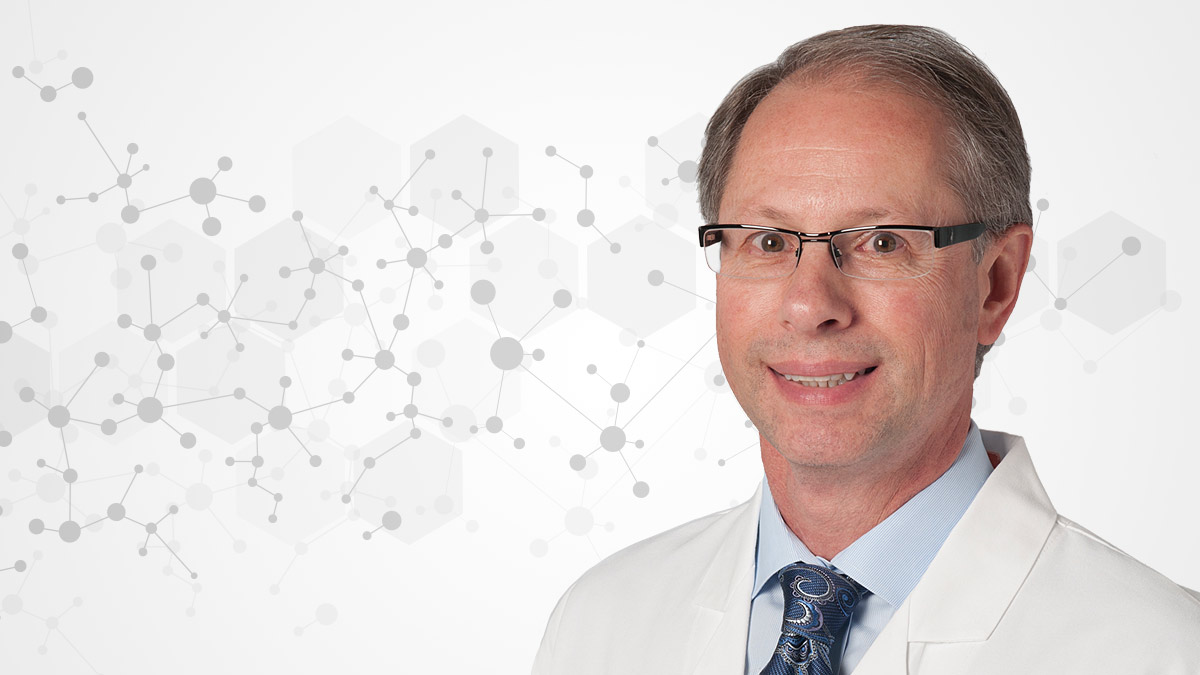
CAR T-cell Therapy Trials for Multiple Sclerosis
Jeffrey Cohen, MD, discusses the emerging role of CAR T-cell therapy in the treatment of multiple sclerosis.
Advertisement
Cleveland Clinic is a non-profit academic medical center. Advertising on our site helps support our mission. We do not endorse non-Cleveland Clinic products or services. Policy
Recent Episodes
Behavioral Health Protocols for Suicidal Ideation
Brianne Markley, PhD, explains how screening tools, risk assessment and safety planning can help clinicians recognize and respond to suicida…
Transforming Epilepsy Diagnosis and Treatment Through AI-Enabled Infrastructure
Imad Najm, MD, discusses how AI-enabled infrastructure and advanced EEG analysis are transforming epilepsy diagnosis.
Delirium in the Hospital Setting: Recognition, Risks, and Management
Anna Shapiro Krew, MD, and Christopher Strayhan, BSN, RN, explain how multidisciplinary care and environmental design can help reduce deliri…
Video content: This video is available to watch online.
View video online (https://cdnapisec.kaltura.com/p/2207941/sp/220794100/playManifest/entryId/1_c7v5q1fu/flavorId/1_5f3sgelj/format/url/protocol/https/a.mp4)
Transcript
Neuro Pathways Podcast Series
Advertisement
Cleveland Clinic is a non-profit academic medical center. Advertising on our site helps support our mission. We do not endorse non-Cleveland Clinic products or services. Policy
Release Date: June 15, 2026
Expiration Date: June 14, 2027
Estimated Time of Completion: 30 minutes
CAR T-cell Therapy Trials for Multiple Sclerosis
Jeffrey Cohen, MD
Description
Each podcast in the Neurological Institute series provides a brief, review of management strategies related to the topic.
Learning Objectives
- Review up to date and clinically pertinent topics related to neurological disease
- Discuss advances in the field of neurological diseases
- Describe options for the treatment and care of various neurological disease
Target Audience
Physicians and Advanced Practice providers in Family Practice, Internal Medicine & Subspecialties, Neurology, Nursing, Pediatrics, Psychology/Psychiatry, Radiology as well as Professors, Researchers, and Students.
ACCREDITATION
In support of improving patient care, Cleveland Clinic Center for Continuing Education is jointly accredited by the Accreditation Council for Continuing Medical Education (ACCME), the Accreditation Council for Pharmacy Education (ACPE), and the American Nurses Credentialing Center (ANCC), to provide continuing education for the healthcare team.
CREDIT DESIGNATION
- American Medical Association (AMA)
Cleveland Clinic Center for Continuing Education designates this enduring material for a maximum of 0.50 AMA PRA Category 1 Credits™. Physicians should claim only the credit commensurate with the extent of their participation in the activity.
Participants claiming CME credit from this activity may submit the credit hours to the American Osteopathic Association for Category 2 credit. - American Nurses Credentialing Center (ANCC)
Cleveland Clinic Center for Continuing Education designates this enduring material for a maximum of 0.50 ANCC contact hours. - Certificate of Participation
A certificate of participation will be provided to other health care professionals for requesting credits in accordance with their professional boards and/or associations. - American Board of Surgery (ABS)
Successful completion of this CME activity enables the learner to earn credit toward the CME requirements of the American Board of Surgery’s Continuous Certification program. It is the CME activity provider's responsibility to submit learner completion information to ACCME for the purpose of granting ABS credit.
Credit will be reported within 30 days of claiming credit.
Advertisement
Podcast Series Director
Andreas Alexopoulos, MD, MPH
Epilepsy Center
Additional Planner/Reviewer
Ari Newman, BSN
Faculty
Jeffrey Cohen, MD
Mellen Center
Host
Glen Stevens, DO, PhD
Cleveland Clinic Brain Tumor and Neuro-Oncology Center
Agenda
CAR T-cell Therapy Trials for Multiple Sclerosis
Jeffrey Cohen, MD
Disclosures
In accordance with the Standards for Integrity and Independence issued by the Accreditation Council for Continuing Medical Education (ACCME), The Cleveland Clinic Center for Continuing Education mitigates all relevant conflicts of interest to ensure CME activities are free of commercial bias.
The following faculty have indicated that they may have a relationship, which in the context of their presentation(s), could be perceived as a potential conflict of interest:
Glen Stevens, DO, PhD
| Company | Relationship |
|---|---|
| DynaMed | Consulting |
| Company | |
| DynaMed | |
| Relationship | |
| Consulting |
Jeffrey Cohen, MD
| Company | Relationship |
|---|---|
| Astoria Biologica, Inc. | Consulting |
| Astra Zeneca | Consulting |
| Bristol-Myers Squibb Co | Consulting |
| Celltrion | Consulting |
| Convelo | Consulting |
| Kite Pharma Inc. | Consulting |
| Legend Biotech | Consulting |
| Novartis | Consulting |
| polTreg | Consulting |
| PSI Pharma Support America, Inc. | Consulting |
| Viatris, Inc | Consulting |
| Company | |
| Astoria Biologica, Inc. | |
| Relationship | |
| Consulting | |
| Astra Zeneca | |
| Relationship | |
| Consulting | |
| Bristol-Myers Squibb Co | |
| Relationship | |
| Consulting | |
| Celltrion | |
| Relationship | |
| Consulting | |
| Convelo | |
| Relationship | |
| Consulting | |
| Kite Pharma Inc. | |
| Relationship | |
| Consulting | |
| Legend Biotech | |
| Relationship | |
| Consulting | |
| Novartis | |
| Relationship | |
| Consulting | |
| polTreg | |
| Relationship | |
| Consulting | |
| PSI Pharma Support America, Inc. | |
| Relationship | |
| Consulting | |
| Viatris, Inc | |
| Relationship | |
| Consulting |
All other individuals have indicated no relationship which, in the context of their involvement, could be perceived as a potential conflict of interest.
CME Disclaimer
The information in this educational activity is provided for general medical education purposes only and is not meant to substitute for the independent medical judgment of a physician relative to diagnostic and treatment options of a specific patient's medical condition. The viewpoints expressed in this CME activity are those of the authors/faculty. They do not represent an endorsement by The Cleveland Clinic Foundation. In no event will The Cleveland Clinic Foundation be liable for any decision made or action taken in reliance upon the information provided through this CME activity.
HOW TO OBTAIN AMA PRA Category 1 Credits™, ANCC Contact Hours, OR CERTIFICATE OF PARTICIPATION:
Go to: Neuro Pathways Podcast June 15, 2026 to log into myCME and begin the activity evaluation and print your certificate If you need assistance, contact the CME office at myCME@ccf.org.
Copyright ©2026 The Cleveland Clinic Foundation. All Rights Reserved.
Introduction:
Neuro Pathways, a Cleveland Clinic podcast exploring the latest research discoveries and clinical advances in the fields of neurology, neurosurgery, neurorehab, and psychiatry.
Glen Stevens, DO, PhD:
CAR T-cell therapy has transformed the treatment of certain cancers and now this powerful immunotherapy is being explored for autoimmune diseases, including multiple sclerosis. In this episode of Neuro Pathways, we explore the evolving role of CAR T-cell therapy trials in multiple sclerosis. I'm your host, Glen Stevens neurologist, neuro-oncologist in Cleveland Clinic's Neurological Institute. And joining me for today's conversation is Dr. Jeffrey Cohen, MD. Dr. Cohen is a staff neurologist in Cleveland Clinic's Mellen Center for Multiple Sclerosis. Jeff, welcome to Neuro Pathways.
Jeffrey Cohen, MD:
Well, thank you very much for the invitation.
Glen Stevens, DO, PhD:
So why don't you first start by telling us a little bit about yourself, where you came from before you came to the clinic, your training, and what you do here?
Advertisement
Jeffrey Cohen, MD:
Well, so I did my neurology training at the University of Pennsylvania. I've actually been at the Cleveland Clinic for quite a long time. I came here in 1994 primarily to take over the clinical trials program in the Mellen Center. I was center director for several years and I continue to direct the neuroimmunology fellowship.
Glen Stevens, DO, PhD:
So, I've mentioned on the podcast before about my mother had multiple sclerosis and of course this was in the '60s and she was diagnosed, but of course thought had many different things and unfortunately there were no real treatments available at that period of time. So I'm always fascinated by the evolution of what's available for treating multiple sclerosis. I came in '92 and interferons were just starting at that period in time so it's really quite impressive. So, I'm really excited that you're here and all this is going on. But before we jump right into it, sort of give us the bullet point. What is multiple sclerosis for those that don't understand and what's going wrong in multiple sclerosis that it gets worse?
Jeffrey Cohen, MD:
So MS is a chronic neuroinflammatory disease. The consequences of the abnormal inflammation within the nervous system causes demyelination, but also damages the nerves themselves. So there's axonal loss and neurodegeneration. One of the areas that our understanding of MS has evolved is that we now sort of distinguish two patho mechanisms in MS. One would be focal lesion activity, so that's what clinically is most directly reflected in relapses and it's what causes the abnormal lesions on MRI. But then there's a second biology that's probably some combination of non-resolving chronic inflammation behind the blood-brain barrier and neurodegeneration and that's what leads to progression. The reason why that's important is that we have the benefit of now more than 20 disease modifying therapies and they're mostly effective for that first biology. We now have treatments that are very effective in stopping relapses and stabilizing the MRI, but none of those therapies is particularly helpful for progression.
Advertisement
Glen Stevens, DO, PhD:
So, the obvious question is, what's the current unmet need? And it would seem the current unmet need is that.
Jeffrey Cohen, MD:
Yeah. So the main unmet needs at the moment are in addition to symptomatic therapy, which we don't do a very good job at, would be one is that occasional patient who continues to have activity relapses or MRI changes despite the available therapies. Those patients fortunately are relatively rare, but the main unmet need would be effective treatments for progression.
Glen Stevens, DO, PhD:
So they talk about immune resetting. What is immune resetting?
Jeffrey Cohen, MD:
So that's the concept that following potent immune depletion, for example, with a B-cell depleting monoclonal antibody, the immune system reconstitutes in a more normal way. It has perhaps a less autoimmune reactivity and a more normal phenotype that's less pro inflammatory. So the consequence of that is that after an immune resetting therapy, one might not require ongoing treatment, that you treat the patient for some length of time and then after that they have a durable remission.
Glen Stevens, DO, PhD:
So it seemed that one day I just heard about B cells and multiple sclerosis. And again, it's not my area that I treat in, although my mother had the disorder and I kept thinking, "What am I missing? Why do I not know this or understand?" When did B cell, or have they been on the radar for decades on the research level but just never sort of went there? Or tell me a little bit about the B cell story.
Advertisement
Jeffrey Cohen, MD:
Certainly. I mean, it's actually sort of a fascinating story. I mean, we always thought of MS historically as a T-cell mediated disease, largely as a result of the many, many studies of experimental autoimmune encephalitis, an animal model of MS, which is primarily T-cell driven. But there always was some indication that B cells in some way or another might be involved. First of all, oligoclonal bands, which reflect antibody synthesis behind the blood brain barrier, that's been a long recognized feature of MS. Also in some animal models, administration of antibodies against myelin components accentuates the disease. So there was always this, I would say, kind of secondary thought that in some way B cells or humeral immunity might be involved. And so that ultimately led to trials of rituximab.
Glen Stevens, DO, PhD:
Yeah. I remember when they started using rituximab, I thought, "What are you guys doing?"
Jeffrey Cohen, MD:
Yeah, no, exactly. And what was very surprising was how potent the efficacy was of rituximab. But beyond that, what was even more surprising was how fast it appeared to work. It started reducing MRI lesion activity and relapses within weeks, which indicated that first of all, B cells are important in the pathogenesis of MS, but also they're important, probably not because they ultimately lead to production of antibodies by differentiating into plasma cells, but it's probably more due to other immune functions of B cells. And now at this point, the cell depleting monoclonal antibodies are preferred therapy.
Glen Stevens, DO, PhD:
So, I guess the thing I didn't or have not understood enough with it is it's a large protein and it's not getting into the brain.
Jeffrey Cohen, MD:
Right.
Glen Stevens, DO, PhD:
So, I can see that it's depleting the B cells peripherally, but how is that helping the multiple sclerosis? Is it then depleting the number of B cells that are then going to go into the CSF that are going to cause a problem or is it having some other effect?
Jeffrey Cohen, MD:
Well, one idea would be is that the biology that drives relapses and MRI activity ultimately results from a peripheral immune process. That's the so called outside-in theory. And by potently depleting B-cells within the blood, those monoclonal antibodies are effective for the disease. But that was one of the points I was making a few minutes ago, which is that the biology that drives progression doesn't appear to be as dependent on that process or it's sequestered behind the blood-brain barrier and monoclonal antibodies don't get into the brain very well. So that may be why they're not so effective for progression.
Glen Stevens, DO, PhD:
For that part, yeah. So, then we get to the CAR T-cell. Tell me what a CAR T-cell is or what it stands for.
Jeffrey Cohen, MD:
So, a CAR T-cell is a so called effector T-cell that's been engineered to express a CAR or a chimeric antigen receptor. So that's a synthetic antigen receptor that has several components, an extracellular component that's usually derived from a monoclonal antibody, which recognizes antigen or a target protein. And then that's linked through the membrane to a cell activation domain. So what that allows for is a T-cell that's directed against a specific target that then when it encounters that target on another cell, becomes activated, proliferates, and then kills that other cell. So the original CAR-Ts were developed to treat hematologic malignancies, primarily B cell derived cancers, so lymphoma, some leukemias, multiple myeloma. And they were the seven CAR-T products that are now approved are directed either against CD19, which is a marker on B-cells or what's called BCMA or B cell maturation antigen, which is a marker of plasma cells.
And they've really transformed the therapy of those malignancies because they're very effective at killing those cells, not only in the blood, but also within tissues. That's one of the main advantages of CAR T-cells is that they migrate throughout the body and can kill their target cell within the tissues, for the purpose of this discussion today, including within the central nervous system. And so that approach has been available to treat cancer now for a while. There's currently seven CAR-T products approved to treat B cell related hematologic malignancies, but because those same B cell targets may be involved in autoimmune disease, that's what led to the idea that they might be effective for treating multiple sclerosis, other neurologic immune disorders, and also some rheumatologic disorders.
Glen Stevens, DO, PhD : And as you mentioned, one of the benefits is it will cross into the blood-brain barrier.
Jeffrey Cohen, MD:
Yep.
Glen Stevens, DO, PhD:
So, then it will depopulate the B cells and then the immune system then has to reset or-
Jeffrey Cohen, MD:
Right. So, the rationale in multiple sclerosis would be that the CAR T-cells very effectively deplete B cells, not only in the blood, but also in the peripheral lymphoid tissues and also within the nervous system. So that leads to rapid potent efficacy initially. And then as the B cell populations come back that they would come back in a more normal fashion. So that would lead to more durable efficacy.
Glen Stevens, DO, PhD:
I guess we might as well just chat about it now. I mean, you're getting rid of cells that have an important function. So the negative of doing that, what are you seeing? Or is it more theoretical than it is actual?
Jeffrey Cohen, MD:
Well, so with the B cell depleting monoclonal antibodies, long-term risk of infection is the main drawback. With long-term therapy, they lead to decreased antibody levels, hypogammaglobulinemia and after several years you start to see an increase in infection. So that would be the obvious, one of the hypothetical risks of CAR T-cells because they deplete B cells even more. One of the mitigating factors against that would be is the B cells populations do come back so that would restore hopefully immunity to infections. Now there are some other potential adverse effects of CAR T. Currently, most protocols include low-dose chemotherapy prior to their administration. That's to make, as it were, to make room in the immune system for the CAR T-cells to expand. Also, it lessens the chance of rejection.
And then there may be consequences of the infusion itself, two very characteristic adverse effects. One is called cytokine release syndrome. So that's probably reflects the activation of the CAR T-cells and their very rapid killing of their target cells with the release of soluble mediators that then can lead to adverse consequences. And then what's called ICANS, immune cell activation associated neurotoxicity. And so that's neurologic complications of CRS probably. And then finally, there's a very interesting adverse effect with BCMA CAR T, which is where there's sort of a subacute development of a syndrome that looks like a rapidly progressive dementing illness with Parkinsonian features. The mechanism of that's not so clear yet, although it's suspected to either be a late consequence of ICANS or perhaps some cross-reactivity between BCMA on myeloma cells and expression on neurons, but that's still being worked out. And then the long-term consequences are mainly related to infection.
Glen Stevens, DO, PhD:
Yeah. And I guess part of the difficulty is who gets MS? Young people.
Jeffrey Cohen, MD:
Right, exactly.
Glen Stevens, DO, PhD:
So, as you said, with your two-stage model, as you presented earlier, you would probably want to use this early on in young people, so it's kind of hard to know the long-term consequences of these treatments.
Jeffrey Cohen, MD:
Yeah, no, exactly. I mean, it's very early days with CAR T in autoimmune diseases, but one of the potential advantages might be very potent efficacy upfront and then long-term durable efficacy that may allow the person with MS to not require other disease therapy for a while.
Glen Stevens, DO, PhD:
And is it a single treatment that a patient would do or you're anticipating or would they need an additional treatment somewhere down the line, but it's so new we wouldn't know?
Jeffrey Cohen, MD:
I mean, right now the hope is that it would be a single treatment or at least a very infrequent treatment. The remissions in cancer sometimes have been very durable and sometimes leading to permanent drug-free remission.
Glen Stevens, DO, PhD:
So, trials, which is your area of expertise and have been quite involved. Well, talk about some of the trials ongoing that you're doing or others that-
Jeffrey Cohen, MD:
Yeah. So there's a tremendous interest in CAR T in autoimmune diseases. So it's being explored in lupus, a variety of other rheumatologic conditions, multiple sclerosis, neuromyelitis optica, Devic's disease, MOGAD, myelin oligodendrocyte glycoprotein-associated disease, autoimmune encephalitis, myasthenia gravis. In all those conditions, it's relatively early days, but in some of the conditions, for example, lupus and myasthenia, the results have really been spectacular. Patients with treatment refractory myasthenia or lupus who rapidly go into remission with follow-up for now for a few patients for a couple of years with sustained remission. The results in MS are still somewhat preliminary, but in the patients we've treated, other patients in the trials in which we're participating and then some of the other trials that are being done, there's been very rapid discontinuation of relapses and in people with more progressive disease, either stabilization or improvement in disability that's persisted in some of our patients for now a year.
Glen Stevens, DO, PhD:
And what phase is it? Are they in phase one?
Jeffrey Cohen, MD:
So, there's a large number of phase one that are ongoing and then some of the products are now moving into phase two.
Glen Stevens, DO, PhD:
And who's the ideal candidate? Is it someone who's been through a lot of treatments, not been through a lot of treatments, has frequent relapses? Because you mentioned you probably looked at the relapsing group and the chronic progressive group as separate entities.
Jeffrey Cohen, MD:
Yeah. So we're still working out for whom CAR T is most beneficial, at least in the MS sphere. So current trials are including some cohorts with active treatment refractory relapsing MS. So people that have failed typically at least one of the high efficacy therapies like B cell depletion monoclonal and then also people with non-active progressive MS. That's actually the group where there's a big unmet need and we have a large number of people that have approached us with interest in participating in those trials for obvious reasons because our treatments are not very consistently effective in that group.
Glen Stevens, DO, PhD:
Trials throughout the country, is it hard for patients to get on trials if they want to or few slots are available or...
Jeffrey Cohen, MD:
Currently, most of the trials are relatively small phase one studies with only a few slots per center and fairly restrictive eligibility criteria, but there are a large number of trials that are either underway or planned. We're, for example, involved in five trials currently, one that's finished recruiting, one that's almost finished recruiting and then three more in startup. So the field is moving very quickly and most of the current trials are with older CAR T products, ones that have been around for a while, but the other area in which the field is progressing very quickly is developing more sophisticated, more advanced CAR T constructs. So reactivity with other antigens potentially to kill other cancer cells or that might affect other immune populations, CAR T constructs that more efficiently lead to cell activation and less what's called exhaustion. Cancers tend to have immunosuppressive properties. So one of the ways that cancers escape CAR T therapy is by causing exhaustion as it were in the CAR T and then some other approaches that would be more convenient.
So for the current CAR T are all autologous, they're generated from the patient's lymphocytes themselves, but there also now are allogeneic CAR T products, which would be off the shelf. And in fact, there's also in vivo CAR T being tested where you engineer the cells within the body so it doesn't require chemotherapy and it doesn't require cell production, which takes a few weeks.
Glen Stevens, DO, PhD:
Clear exclusionary criteria, what types of things?
Jeffrey Cohen, MD:
Right now, they're mostly for safety, things that would make CAR T more dangerous. So infection, ongoing infections or risk of infections, in the autoimmune space, known cancer. And then currently like a lot of phase one studies, there's an upper age limit and so for upper disability level, mostly for safety at this point. My expectation is that if the current experience continues to be so promising that the subsequent phase two studies would not be as restrictive.
Glen Stevens, DO, PhD:
So not to derail this talk, but stem cells, completely separate, different type of mechanism or tries to get at the same problem?
Jeffrey Cohen, MD:
Well, so cell therapy in general has been one area that's gotten a lot of interest as a way of meeting some of the unmet needs. So for people with relapsing MS and continued activity despite treatment, hematopoietic stem cell transplant's been considered for a while now. So we're involved NIH sponsored randomized trial of that to see how it stacks up against our high efficacy therapies to try to determine where to put hematopoietic stem cell transplant in the overall algorithm. Right now, it's kind of a last resort therapy, but there's a pretty sizable literature that indicates that it has very potent efficacy that's very long-lived, sometimes permanent. So perhaps we ought to consider it in more people than we currently do.
And then there's the whole other side of cell therapy, which I think you were getting at, which is cell therapies to try to promote repair, an additional big unmet need in patients. People don't want to merely stop getting worse. They also want to get better.
Glen Stevens, DO, PhD:
Yeah, which is the other direction that I wanted to go to, but I don't know what we really know about that.
Jeffrey Cohen, MD:
Yeah. So that's where there have been a number of things tried. There were a number of studies of so called mesenchymal stem cells. We were involved in a couple of those. Strong rationale, but unfortunately the experience was not very promising. They don't seem to be very effective in promoting repair of the nervous system. There have been a couple of studies of neural stem cells. We'll see how that goes. They require direct injection into the brain, which I guess is feasible but not ideal. Then where I think we're more likely to make progress is pharmacologic approaches that stimulate the intrinsic repair mechanisms within the brain. That's going to be, from a technical point of view, much less challenging and there are a number of agents now moving into testing that may have that ability.
Glen Stevens, DO, PhD:
Yeah. I suspect because that is a difficulty in the field that it's going to drive CAR T-cell younger and younger because you want to get it before the damage is there. If you had something could repair it, then it's easier to try other therapies, less risk, those types of things. And I suspect this will come over time. It just takes time. Look where the field's gone in 25, 30 years.
Jeffrey Cohen, MD:
I think the other important thing is that we previously categorized MS patients into distinct groups, relapsing, remitting, secondary progressive, primary progressive-
Glen Stevens, DO, PhD:
I remember all the graphs.
Jeffrey Cohen, MD:
Exactly. We're now realizing that those categories are largely artificial and that I spoke earlier about the biologies of relapse and the biologies of progression. What we now are becoming increasingly aware of is that both those biologies are present throughout the course to varying degrees in most patients. So the point is that treatments for progression are not just necessary later on in the disease. They may be helpful early on to stop that gradual deterioration right from the beginning.
Glen Stevens, DO, PhD:
So PML, risk with the CAR T?
Jeffrey Cohen, MD:
It's not been seen in autoimmune diseases. It has been seen in some patients treated with cancer.
Glen Stevens, DO, PhD:
Are you monitoring for it? Because I know in some therapies with multiple sclerosis, you guys monitor it quite closely.
Jeffrey Cohen, MD:
Yes. I mean, that's one of the things that's being looked at in the phase one studies.
Glen Stevens, DO, PhD:
But at least at this point?
Jeffrey Cohen, MD:
So far it's not been seen.
Glen Stevens, DO, PhD:
Not been an issue. You mentioned the collaboration that you give chemotherapy drugs. Who do you work with with the CAR T? The general sort of timeline for somebody.
Jeffrey Cohen, MD:
Yeah. So, one of the benefits we've had here at Cleveland Clinic is that the cell therapy group in the Taussig Cancer Center has been very receptive, very interested in pursuing autoimmune indications for some of the cell therapies that they previously used to treat cancer. And that collaboration has been really critical for us to pursue this. So we work some of the names, Paulo Kami, Claudio Brunstein, we work very closely with them, Marcelo Pasquini. So those are the people that are involved in the cell therapy for cancer and they've also now become quite experienced with cell therapy for autoimmune diseases. But that collaboration is critical, we don't want to have to develop all that expertise and technical resources ourselves. We utilize the transplant unit.
Glen Stevens, DO, PhD:
Yeah. It's a great union of two programs that can come together and make unbelievable changes in patients that have multiple sclerosis. Quite exciting in the field.
Jeffrey Cohen, MD:
Yeah. No, we're really excited about CAR T and optimistic that they're going to turn out to be a very helpful therapy.
Glen Stevens, DO, PhD:
So, as we're closing, barriers as going forward with the utilization of this on a larger scale if trials prove to be positive?
Jeffrey Cohen, MD:
I would say two main barriers. One is that currently, in part because we're taking a very careful approach, people are hospitalized for 10 days, 14 days at the time of the administration. Usually that's not necessary. Most patients, at least in the autoimmune space, have had very little, if any, complications and they mostly watch TV for two weeks. But the reason for that is because some of the potential complications can develop quite rapidly. So you need the capability of monitoring them closely and getting them into the hospital quickly so it's easier to some extent to just keep them in the hospital. But at some point if our program continues to expand, we may exceed the number of beds. So there is a push for outpatient CAR T, but that'll require development of some procedures to have people close by and close monitoring and then admitting quickly. The other current barrier is it's quite expensive, but that's a discussion not only in the autoimmune space, but in the cancer space in fact.
Glen Stevens, DO, PhD:
Well, of course, if you have someone that's 30 years old and develops MS and they're going to live 50 years, the cost of upfront treatment versus long-term, hard to know how different it-
Jeffrey Cohen, MD:
Yeah, yeah. As you know, the payers don't always think that way.
Glen Stevens, DO, PhD:
Yes. They do not look at it that way we're looking at it, but... Closing remarks, things we haven't covered that you think are important or closing statement.
Jeffrey Cohen, MD:
So we touched on I think a couple of the big changes in how we think about MS. I would say the other big change now is how we make the diagnosis and in particular the diagnostic criteria. Traditionally, to diagnose MS we required clinical attacks and then demonstration of what's called dissemination in space. So anatomic dissemination and dissemination in time, demonstration that it's a disease process that evolves over time clinically. Now with some of the revisions of the diagnostic criteria, we could use MRI and CSF to fulfill some of those criteria. But the big change in the criteria that were just released in 2024, the so called McDonald criteria is that it now provides for the ability to make the diagnosis even before someone's had an attack with the requirement for other data, MRI and so forth. So we've moved to a much more biologically oriented diagnostic process and so that hopefully will lead to earlier diagnosis, more accurate diagnosis, and the ability to institute therapy earlier where it's more likely to work.
Glen Stevens, DO, PhD:
Yeah. I'm glad you brought that up. I think it's very important and we appreciate all you do and I hope to get you back in the future and you can update us on all the great things you're doing.
Jeffrey Cohen, MD:
Thank you. I appreciate the invitation.
Closing:
This concludes this episode of Neuro Pathways. You can find additional podcast episodes on our website, clevelandclinic.org/neuropodcast, or subscribe to the podcast on iTunes, Google Play, Spotify, or wherever you get your podcasts. And don't forget, you can access real-time updates from experts in Cleveland Clinic's Neurological Institute on our Consult QD website. That's consultqd.clevelandclinic.org/neuro, or follow us on Twitter @CleClinicMD , all one word. And thank you for listening.
Recent Episodes
Behavioral Health Protocols for Suicidal Ideation
Brianne Markley, PhD, explains how screening tools, risk assessment and safety planning can help clinicians recognize and respond to suicida…
Transforming Epilepsy Diagnosis and Treatment Through AI-Enabled Infrastructure
Imad Najm, MD, discusses how AI-enabled infrastructure and advanced EEG analysis are transforming epilepsy diagnosis.
Delirium in the Hospital Setting: Recognition, Risks, and Management
Anna Shapiro Krew, MD, and Christopher Strayhan, BSN, RN, explain how multidisciplinary care and environmental design can help reduce deliri…
Never miss a moment - subscribe now.
Listen to the Health Essentials Podcast on your favorite streaming platform.
Other Podcasts You May Love
Beyond Leadership
Hosts Jim Pae and Elizabeth Pugel escort you through a network of thought leaders, sharing world-cla…
Beyond the Pages: CCJM Podcast
Beyond the Pages: CCJM Podcast takes the listener more in-depth into Cleveland Clinic Journal of Med…
Butts & Guts
A Cleveland Clinic podcast exploring your digestive and surgical health from end to end. You’ll lear…
Cancer Advances
A Cleveland Clinic podcast for medical professionals exploring the latest innovative research and cl…