



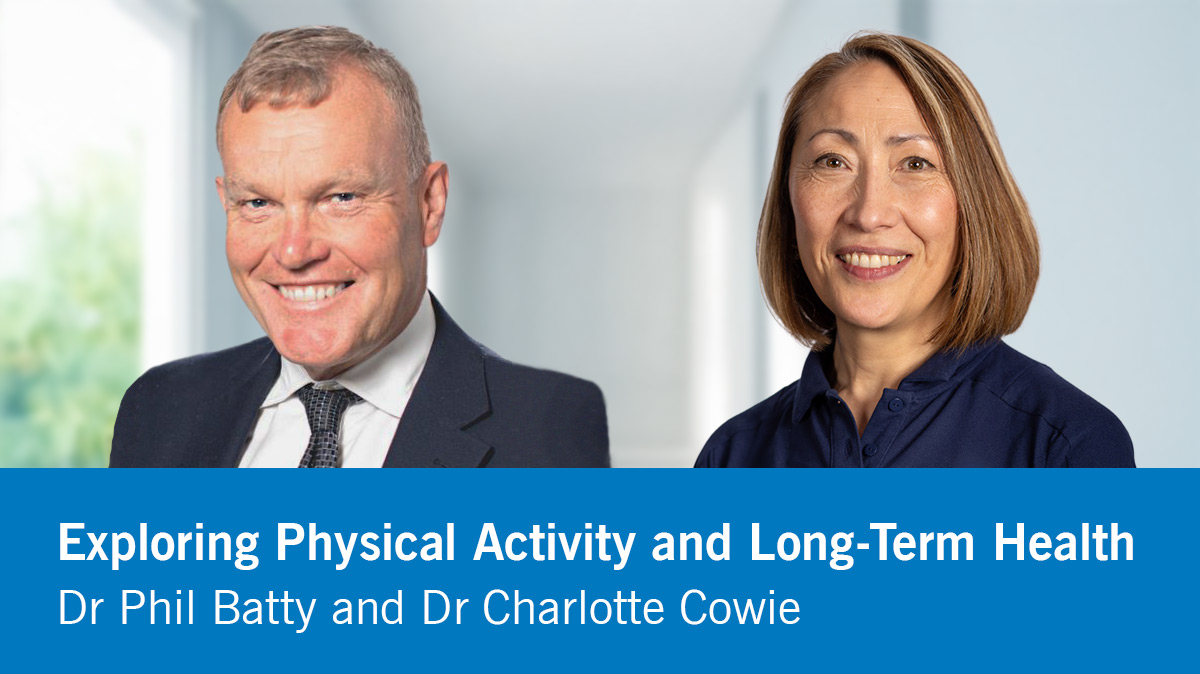
Exploring Physical Activity and Long-Term Health with Dr Phil Batty and Dr Charlotte Cowie
In this episode of Exploring Health with Cleveland Clinic London, host Mr Kash Akhtar, Consultant Orthopaedic Knee Surgeon, is joined by two of the UK’s leading experts in Sports and Exercise Medicine, Dr Phil Batty and Dr Charlotte Cowie. Together, they explore why physical activity is a cornerstone of long-term health and wellbeing, how injuries can limit our ability to stay active, and what we can learn from elite athletes about moving better, training smarter and recovering well.
From the risks of poor training and overload to the benefits of early health screening and structured programmes, this conversation offers practical guidance for anyone looking to stay active, prevent injury or return to exercise with confidence.
Advertisement
Cleveland Clinic is a non-profit academic medical center. Advertising on our site helps support our mission. We do not endorse non-Cleveland Clinic products or services. Policy
Recent Episodes
Exploring Stroke with Dr Arvind Chandratheva
In this episode of Exploring Health with Cleveland Clinic London, host Mr Kash Akhtar, Consultant Orthopaedic Knee Surgeon, is joined by Dr…
Exploring Health Checks That Could Save Your Life (Part 2) - Dr Simon Hodes, Dr John Whitaker and Dr Umasuthan Srirangalingam
In this episode of Exploring Health with Cleveland Clinic London, host Mr Kash Akhtar, consultant orthopaedic knee surgeon, continues his co…
Exploring Health Checks That Could Save Your Life (Part 1) - Dr Simon Hodes, Dr John Whitaker and Dr Umasuthan Srirangalingam
In this episode of Exploring Health with Cleveland Clinic London, host Mr Kash Akhtar, consultant orthopaedic knee surgeon, is joined by thr…
Video content: This video is available to watch online.
View video online (https://cdnapisec.kaltura.com/p/2207941/sp/220794100/playManifest/entryId/1_hnoajbi7/flavorId/1_5f3sgelj/format/url/protocol/https/a.mp4)
Transcript
Mr Kash Akhtar
Advertisement
Cleveland Clinic is a non-profit academic medical center. Advertising on our site helps support our mission. We do not endorse non-Cleveland Clinic products or services. Policy
Welcome to the latest edition of ‘Exploring Health with Cleveland Clinic London’. I'm your host, Kash Akhtar, a Consultant Orthopaedic Knee Surgeon. Thank you to Cleveland Clinic Philanthropy UK for supporting this podcast. Today we're talking about something that affects all of us, exercise, fitness, movement, injuries, and trying to stay active through it all. This is a conversation about why physical activity is crucial for our long term health and well-being, how musculoskeletal injuries can either prevent us from staying active, or even arise as a result of poor training, or overload and how the world of elite sport can teach us valuable lessons for keeping everyone moving better and smarter. So, if you've ever been sidelined by a sports injury, struggle to stay active because of pain or fear, or wanted to understand how top level athletes recover and return to play, then this episode is for you. Joining me today are two of the UK's leading experts in sports and exercise medicine. Dr Phil Batty, a consultant in sports next side medicine here at Cleveland Clinic London. Phil's a former team doctor to the English rugby team, Manchester City and various other Premier League teams. He now works at Lords with the multitude of cricket teams and also with the English National Ballet. Phil has treated elite athletes for decades and brings that same expertise to help people from all walks of life move and perform better and he's been a great help to me as well for some of my trickier non-surgical cases. And Dr Charlotte Cowie, a consultant in sport and exercise medicine who has recently joined our team here at Cleveland Clinic London, Charlotte's Chief Medical officer at the Football Association overseeing the health and performance of the England national teams, and she has led on injury prevention, medical strategy and research at the highest level of sport. We've also recently had Mark Gillette on one of our previous episodes, who is head of medical for the Premier League. And Mike Burden has also recently joined our SEM ranks, and we're delighted to have Charlotte join our team. It's a real coup for us. So, let's start with the basics. Why is physical activity such a fundamental pillar of good health?
Advertisement
Dr Phil Batty
Well, exercise is a very underused therapeutic and prevention tool. It's something that we're not really taught much about at medical school or within the medical curriculum, but there's a whole host of research out there and if we look at the sort of chief medical officer’s guidelines, There is very, very strong evidence that those that exercise live longer has got preventative effects for cardiovascular disease, as most people know. But it's also got preventative effects for eight different cancers. We don't exactly know why, but significant reduction in lung cancer, breast cancer, colon cancer for those that are exercising more. It also has a significant effect on improving musculoskeletal pain. So there are really many health benefits from exercise, and I believe that it should be part of a therapeutic toolbox for all doctors. So most chronic diseases, for me, the first line management should be some form of exercise intervention before reaching for the prescription pad.
Mr Kash Akhtar
And actually, there's all these psychological benefits as well. I mean, huge mental health benefits.
Dr Phil Batty
Absolutely. The reduction in depression; 30% reduction in depression amongst those that have become fitter and are exercising more regularly. There's really a whole holistic reason, many reasons why people should be exercising more for the benefit of their health uhm, one of my cardiovascular colleagues here at Cleveland Clinic said that getting people fitter is 8 times more effective than any drug related to cardiovascular fitness. It's certainly comparable to statins in terms of preventing heart disease and many other issues. It's certainly as effective one drug to sort of prevent diabetes, Metformin. in terms of turning those with pre-diabetes to diabetes, an exercise regime is certainly far more effective than the medication.
Mr Kash Akhtar
People have said only that if you were able to prescribe it, its effects would be phenomenal beyond any wonder drug that's out there.
Dr Charlotte Cowie
Yeah. It would be the most effective drug ever invented if it were a medicine and the side effects obviously are relatively, you know, trivial as well. And but I guess musculoskeletal injury is the one thing that may result from exercise that people just become aware of and sometimes get put off by and so I, we'll go on to it later, won't we? But I think that's the one, That's the thing that’s worth talking about.
Mr Kash Akhtar
I think the main side effect for me is spending loads of money on more and more kit that I don't need. I think that's the main challenge.
Dr Phil Batty
Well, you, I don't know, You’ve gone up in the world. You’ve got personalised kit now. I think yeah, you've got your own merch, yeah.
Dr Charlotte Cowie
Yeah, well. The main reasons that people, some people, embark on exercises because of the amount of equipment involved or get better or, you know.
Mr Kash Akhtar
Yeah, absolutely. And get better and nicer trainers and things.
Mr Kash Akhtar
So Charlotte, can you tell us about the link between inactivity and long-term health outcomes?
Advertisement
Dr Charlotte Cowie
I guess it's just the converse of what we've been talking about. It's a failure to capitalise on one of the simplest ways that you can prevent yourself from becoming ill. So again, you know when we talk about some metabolic syndromes and some of the difficulties that people get into. I suppose the training effect is a positive reinforcement so that it does mean that stronger you get, the more you're able to exercise the more capable you become and the better the effect of the medicine that you're taking. And conversely, the less exercise you take, the more you can sink into that situation where perhaps you're overweight. Perhaps you're less mobile. And so all of those things start to spiral in on each other. Mental health as well can become a demotivator. And so I guess it's important if we're trying to encourage people to exercise. Thing and I guess the other thing that is really clear from the evidence is that you don't have to be running marathons or being an elite athlete to benefit from exercise. Just small, modest amounts of really low level exercise, like walking like just, you know, getting out the car a little bit earlier when you go to work, all of those little things actually make quite a big difference when they accumulate over a lifetime.
Advertisement
Mr Kash Akhtar
I think some people think that exercise has to be: you go from doing very little or nothing to. I'm training for a marathon level and I've read this interesting quote that was anything above 0 compounds.
Dr Charlotte Cowie
Exactly.
Mr Kash Akhtar
And just doing a little bit little bit exactly as you're saying, walking a couple of steps earlier getting off the tube a couple of steps earlier and going for a lot of walking a little bit further, that's a really easy thing people can introduce and various other things.
Dr Charlotte Cowie
Or if they sit all day at a desk, you know, just getting up every so often and moving around and coming and sitting back down again, yeah, can really make a difference.
Mr Kash Akhtar
Well, Phil sits on a big bouncy ball in clinic instead of using a chair. Don't you?
Dr Phil Batty
I do. I've done it for many years. Partly because it sort of just engages your core. Sitting is not a healthy activity. So, it just engages the core. I've done it for 20 years. It's quite interesting really because 20 years ago everybody thought it was bonkers. Now less people think I'm bonkers.
Mr Kash Akhtar
Still think you're a bit bonkers
Dr Phil Batty
Advertisement
Yeah, I know. But people will come in and say, oh, that's a good Idea, I need to do that for my back. That's why I'm here. People are working 18 hours a day, sat at the desk and then, you know, those are some of the interventions and some of the things people live busy lives. So, my interventions are trying to give people no excuses. There's things you can do at work to just get some exercise. You can take the stairs instead of the lift. You can sit on a ball. You can take some elastic bands and do some resistance work at work. There's things you can do. So I try and create a sort of plan that fits with their lifestyle so that they can do it at work. I mean one of my favourite quotes is a quote from Edward Stanley who said in 1873 that those that do not have sufficient time for exercise will sooner or later have to find time for illness.
Mr Kash Akhtar
So true.
Dr Charlotte Cowie
That's a good one.
Dr Phil Batty
Yeah, and that's 1870. Before we'd invented a scientific method. That's clearly based on observation. He was an ex UK Prime Minister. Now, there's only ever been 60 seconds in a minute. There's only ever been 60 minutes in an hour, etcetera. Time is finite and we've got lots of things that save time that they didn't have all those years ago because they I think we're pretty busy then with taking a day to do the washing and various bits and pieces. So it's a theme that I think is is really important that people factor in some movement and exercise within their schedule. And I don't see why anybody can't do it however busy they are.
Mr Kash Akhtar
I mean, standing desk is another thing. Some people have treadmill under their desk now, so there are things if you can incorporate it into your daily practise at home that will be... that’s better isn’t it?
Dr Phil Batty
Yeah, that is absolutely better. And there is always a way to sit down with somebody and say. Well, you know, you can find some time here. You can get off the tube and stop earlier. Yeah, you can climb the stairs instead of taking the escalator at the tube. There's there's always different ways of factoring in things, but, it does involve a change of mindset.
Dr Charlotte Cowie
Yeah, I think that's the thing. You've probably got to find a motivation as well, haven't you to do it, whether that's staying injury free or whether that's being able to be fit enough to kick a ball around with the kids or, you know, whatever it is. There is always time isn't there. If you make time, nobody is ever going to not brush their teeth every day. You just find the time because it's something you got into the habit of doing. I think there are things that stop people from doing even the simplest things, and I guess you just have to find that key sometimes, don't you?
Dr Phil Batty
And I think that's one of our tricks is to be motivational and find the latch to motivate the patient.
Dr Charlotte Cowie
Hmm. And then sometimes also if somebody is suffering from musculoskeletal injury, for instance, is finding a set of exercises that they can do, but also help them prevent it from getting back again. And that's quite a good motivation as well as somebody finds because exercise can be quite boring as well, particularly in that context. So you know, people having to do the same exercise every day, and not necessarily... the bad thing that it has, is the verse to a pill that you could take and you suddenly feel better is that you have to do it regularly and the first time you do it doesn't necessarily get you the result you're aiming for. So unless you do it regularly for a period of time and and reap the benefit and understand why you're doing it, I guess that's another key thing in motivation isn't that people have to take a bit of a leap of faith.
Mr Kash Akhtar
Absolutely, yeah. But I do want to say when I see you sitting on that huge beach ball on your computer, I'm so tempted to come in and volley the ball. So tempting.
Dr Phil Batty
I know you are. I know you. And in fact, I once left the ball in a room where you and one of our other colleagues, Tim Spalding, were, and I came back and it had a puncture in it and I'm deeply suspicious, I'm deeply suspicious.
Mr Kash Akhtar
I plead the 5th.
Dr Phil Batty
Yeah. it was not a cool image sat on the ball with this 'psssssst’ sound in front of the patient. It wasn't... It wasn't a good look.
Mr Kash Akhtar
Tim Spalding is a bad man. That's all I can say. So, so many people want to move more, but injuries, especially musculoskeletal, MSK injuries, can. In the back, what are some of the most common injuries that you see that can disrupt movement or exercise habits.
Dr Charlotte Cowie
I guess. The difficult thing with injury is quite often, so I mean, if you play a contact sport or a collision sport, obviously the obvious injuries that can happen from that, but a lot of injuries are actually more overuse type injuries. So they're things that gradually come on, which means that people don't necessarily realise that it's going to be a problem. People think ohh, you know, they get little aches, you know, DOMS pain when they train and they think it's gonna go away.
Mr Kash Akhtar
DOMS being
Dr Charlotte Cowie
So delayed onset muscles, muscle soreness. So the achiness you get in your muscles the day after you've worked really hard at the gym or done some unaccustomed exercise, which actually just goes away on its own, so no need to be worried about that. In fact, sometimes just getting going again and getting your muscles moving helps it to settle down. But because of that and most people have experienced that, I think a lot of people think, Oh well, you know, it'll probably settle down. It'll probably get better. And before they know it, they've maybe been sort of three or four weeks with a pain, perhaps getting worse or not settling down before they realise it’s something they need to do something about and then they have to go and see somebody. And then I guess the other really difficult thing is there is a tradition which we shouldn't encourage amongst doctors where patients go along and say, you know, doctor, it hurts when I do this and the doctor says well stop doing that then and so, you know, they become more and more narrow in terms of what they're able to do. And so some of. What, you know, we've trained to do is try and make sure that people are able to carry on exercising, even if, as part of their exercise, they can't do or an element of their body, they're not able to use and then gradually build up the competency and the robustness in that area until that's parallel with everything else and they're able to continue.
Mr Kash Akhtar
So, you're describing cross training. I guess where if you can't do one particular type of exercise, there are other aerobic or fitness activities that you can do.
Dr Charlotte Cowie
Yeah. Absolutely. Yeah. Yeah. You can either modify what you're doing to protect the area, you know, depending on what you're doing. Or you can do something else that just maintains your fitness, maintains your strength whilst that area is recovering.
Mr Kash Akhtar
And if, when you talk about... you mentioned some injuries that are from repetitive. So a lot of those things would be tendinopathies: inflammations of tendons, tennis elbow. Various things like that.
Dr Charlotte Cowie
Yeah, Achilles tendonopathy, latella tendinopathy. Those kind of things, yeah.
Mr Kash Akhtar
Yeah. And for those, do you think it's overuse or under preparation or something else?
Dr Charlotte Cowie
Yeah, it's a bit of both, I guess, isn't it? And I think one of the really interesting things about managing those is if you don't find out what it was that started off in the first place, you can do all sorts of treatments and. Put it down. But if they keep making the same error, it will come back again and that could be related to equipment. It could be related to technique, it could be going into something too quickly and genuinely overusing. So if it was just that that somebody started doing something, they did too much of it too soon, then you can just take them back and start them in a more gradual pace. But if it was...
Mr Kash Akhtar
Which you see a lot during marathon training. Yeah, that's so common.
Dr Charlotte Cowie
Yeah. Yeah. So there's a whole yearly pattern, isn’t there Phil? that we see. Like we're depending, you know, skiing injuries and tennis injuries, marathon injuries depending on sort of what people are doing. But yeah, certainly like Marathon is in terms of the amount of endurance you have to build up, if you start from scratch to get to run a marathon is in. Enormous. And if you know you're lucky in a way, if you don't run into something at some stage that feels a bit uncomfortable, all that starts to awaken.
Mr Kash Akhtar
Or iliotibial band syndrome or something?
Dr Charlotte Cowie
Exactly, yes.
Dr Phil Batty
Yeah, tendon issues are interesting because
Mr Kash Akhtar
We as surgeons run away from them, as you know and with good reason, because there isn't a great surgical solution to them. They are frustrating. But tendons, occasionally they can be back down, medical problems or they could be related to some medication, but that's pretty unusual and it’s usually tendons don't like sudden increase in activity or sudden decrease in activity. They don't like either really, so it can occur from a big jump. It can and some people can make a big jump and get away with it. You know, they do. People do make massive strides and get away with it. Some people can't. But also, you know, if people have been unwell and bedridden and they've not trained for a while and then they go back, that's often a time when things occur. I think the other thing, though, it's important to train around an injury. And sometimes it's you actually do need to train through an injury as well with guidance.
Mr Kash Akhtar
Particularly with tendons,.
Dr Phil Batty
Particularly with tendons. Most medical interventions, sometimes we have to make things worse in order to get them better. That often happens in surgery. For example, if you operate on a knee, you know for a defined period of time, depending on the nature of the operation the patient may be worse for a few days or weeks or something before they feel the benefit of the surgery, and that's sort of understood. If you take a medication, you might get some initial side effects. You might feel a bit nauseous to start off with. You might get a bit of a headache or something, but if it's not too bad. Largely people or you might get a bit of diaorrhea. Most people will persevere. It's slightly different with exercise and these things. If there's a bit of pain or something, or sometimes there needs to be a little bit more pain to stimulate some healing under guidance, then, people attempted to just think, OK, that hurts, I better stop. Yeah.
Mr Kash Akhtar
Which is a mistake…
Dr Phil Batty
Which can be a mistake. It's not always a mistake, but under guidance. Encouraging people. Yeah, we are going to have to work through a bit of pain to get over the pain is something we have to do for a number of conditions including back pain, but that that that's sort of a bit of anathema. And people don't quite understand that the same way that they would understand being worse from a temporary side effect from medication or from post op pain.
Mr Kash Akhtar
And it's funny you mention that because often if they've torn their ACL, they have a period of prehabilitation and get to a point where life is normal and they're often back in the gym. they're running, they're not doing pivoting, twisting sports, but they're doing everything as a normal life, going on a holiday, not even aware of it. And I do say to them, look, if we do this operation for two or three months, you're gonna be a significantly back worse off than you are now with the goal of getting a higher end point at the end of it and. So that's exactly we're describing. Can I ask what is load management? And what role does it play? I mean that comes it leads on to what you're saying, wasn't it?
Dr Charlotte Cowie
Yeah. Yeah, it does. I mean, lots of people have different definitions on load management. lots of people measure it in different ways as well, right. And we talk about GPS in football a lot as being the way that you manage load, but actually it doesn't it.
Mr Kash Akhtar
Those, the bra tops, right?
Dr Charlotte Cowie
So I guess, you know, it depends how you want to measure it, but effectively what we're talking about in terms of typically Achilles tendonopathy those kind of things is managing acute versus chronic load, which is a concept which is that if you gradually load up, take the marathon analogy. If I asked, I don't know how much you run, but if I asked you to run a marathon tomorrow it would be, unless you've already run one, you've been training, it would be very difficult. but if you knew you had to run one in a year's time then you would start training.
Mr Kash Akhtar
It'd still be difficult for me.
Dr Charlotte Cowie
It would still be quite difficult, yeah. But you'd stand a chance, or you might run a half marathon. So you can gradually build up and you can manage more if you will gradually. But if you try to do something suddenly you will get injured. And so there's this concept of acute and chronic load, which is that you can build up load. And actually if you build up gradually, you can take a lot of load. But if you, as Phil was saying with Achilles tendinopathy, you either do too little then then you do a bit more. It's an overload. And what you're used to in terms of your chronic load is what determines what you can put up with, and that might be right up here. It might be like, right. And here acute load is whether you're up here or down here, you do more than you can currently manage, and that's when injury tends to occur.
Dr Phil Batty
And in the professional sports, they get quite intuitive here. So they'll notice patterns with different players and different sports that if they do a certain load, they are much more likely to break down with injury.
Mr Kash Akhtar
And this is a phrase I hear, ‘The Red Zone’ is that related to that?
Dr Phil Batty
Yeah. That’s...No, it's, well, it's a sort of danger risk assessment sign. It's very difficult. But for example, in cricket, There will be bowlers that they know that if they go above a certain number of overs competitively, they're going to they're more likely if their back is going to start screaming or they're more likely to suffer a recurrence of a disc or a stress injury around the spine, and that can vary from one player to another. But once you've got a pattern of that. You know, then the sort of medical and sport science teams in those sports will be alerting the coaches to the dose, it's effectively, the dose of if we're thinking of a drug, we're thinking of the overall dose of the drug that they're allowed to. And we don't have the metrics in terms of the general population, but it's similar to the general population. Everybody has a breaking point. There's a point that if we exercise at any level, that all of us would get an injury so we want to avoid that in some ways, and as Charlotte said, the health benefits of exercise. Actually, if you look at the dose of exercise to get the health benefits is not that much. It equates to sort of brisk walking and some strength two or three times a week which can be body weight or some resistance bands. It's not that much when you start to get into elite sport, you actually reach a level where there is a greater on exercise. Is particularly related to musculoskeletal health in terms of injury, so in those doses, the risk of to health, i.e. injury, really does slightly increase compared to other people that are doing the health. So the sweet spot is not that demanding and anything above that there's a diminishing return. And if you get too much, actually, the risk to health in terms of injury increases.
Mr Kash Akhtar
It's so interesting that you mentioned Pro Sports Elite sports there. That's the segue I wanted. So thank you for doing my job for me. You've both worked at the highest levels of elite sport. What lessons from managing athletes, do you think applied just as well to Gen Pop - the general population?
Dr Charlotte Cowie
So I think a a human body is a human body and a musculoskeletal system is a musculoskeletal system. And I think one of the things that elite and professional athletes benefit from is having people around them all the time. That can work with them. That can really monitor and understand how injuries develop and rehabilitate. Day on day and I think a lot of the ways that we manage things like Achilles, tendinopathy or a lot of common problems have probably developed from people trying out those treatments in elite sports and finding out what works and what doesn't when they've got 100% focus, you've got an athlete whose job it is to do those rehab exercises we were talking about earlier that nobody wants to do. And somebody will stand over and watch them do it if they don't want to do it and you're able to monitor that trajectory in a relatively, I suppose, noise free environment, and certainly you're talking about football, a lot of the time with considerable resource behind it as well. And so I think it allows us to understand and try out things and see how they work in an ideal situation under pressure. But a lot of those things are exactly the same managed in the same way and translatable. Into all sorts of other environments you know, and I think the other thing we you know we see a lot of stuff in, in sports as well and so. And we're trying to get people back to absolutely as Phil saying, you know, the things that they're aiming for are superhuman, really. And so they're always functioning right at the edge of their capacity. They have to in order to be competitive. And so and getting them to that level of function requires a degree of concentrated effort, which means that I think, you know that. There's lots that you can learn about the attention to detail that's needed to try and get somebody right.
Dr Phil Batty
I think professional sport has had a huge impact on practice in professional sport there is there is an urgency to get people back as soon as possible. There's a lot of money at stake and players want to get back in order to 1) compete but also be successful and get the next contract. So , there are novel treatments that have been introduced in sport first before they've been tried elsewhere on a risk managed basis. Before the scientific evidence is there, because it takes a lot of time to build up the science. So I think there's been a number of techniques, both from an injection perspective and platelet rich plasma and some of those techniques together with some of the surgical techniques that have occurred. I think the biggest effect it has had because professional sport is international. And because the professional footballers in the Premier League are worldwide, it has brought a cohort of people together with different health experiences, both in their own countries and elsewhere, so it's brought an international community of interested sports physicians and orthopaedic surgeons. Together with a common interest to start sharing ideas. And I think that has had a huge effect in terms of the way that practices developed years ago, there was just the odd guru and people would go off to Colorado or somewhere else for surgery. Now there's a whole international network of people that are very well respected that, yes to some degree are in competition with each other, but they generally collaborate particularly on their data regarding surgical techniques and I think that's had a huge effect in terms of practice for the general population.
Mr Kash Akhtar
And it's interesting mentioned that because I hadn't thought of this but when I was a junior doctor, patients who would have an ACL extraction would sometimes would go into a plaster cast and be on the ward for like 10 days, and now it's a day case operation takes under an hour to do and they're not on any kind of brace. And I think you know now all my patients at Cleveland Clinic, London get an ice machine, cryotherapy, which I'm sure has come from pro sports because it wasn't there before. They're now getting electrical muscle stimulators. These devices, that’s all coming from you guys.
Dr Phil Batty
Even occasionally CPM and stuff of that nature has all come from [us].
Mr Kash Akhtar
Yeah, and now I'm seeing increasing in the rehab. I'm seeing things like that I've not seen before like blood flow restriction therapy and new things. And I'm assuming that's from pro sports.
Dr Charlotte Cowie
Absolutely, yeah. Yeah, it is. Yeah. So I think people try stuff, as Phil says, and people take risks as well because they have to. There's a massive time scale, there's massive, all sorts of personal and, you know, financial things at stake.
Mr Kash Akhtar
And professional. Yeah, motivation.
Dr Charlotte Cowie
Yeah but that element of taking a risk on something that may or may not work. Is something that you have to do in that situation. If you can make, I guess the other thing is you know I think we talk all the time about sort of 6 pointer matches and that kind of thing. When you get to the end of the season. If you get an important striker back on a Monday and the important match was on a Sunday. That's no good, you know, like 24 hours makes a massive difference, you know, in professional sport or even more so in Olympic sport. You know, you have one chance every four years to be at the top of your sport if you're better two days later, too late, you won't have a chance. The next, you know, maybe the next time round, and also all of your funding depends upon your performance. So if you don't perform at that Olympics, you're probably danger of losing your livelihood. And so I think the concentration that that brings to bear, and I guess the other thing that is massive in sport, which I've sort of. Forget sometimes is MDT working as well a little bit as you've talked about sort of collegiate working between specialists, you know, working together in the same room as a physio, strength and conditioning coach so that, you know, something like blood flow restriction, for instance, has come from a strength and conditioning angle, but people have seen the opportunity within rehabilitation of injuries to employ that. And so those sort of different mindsets working together as well, really helps to to move things on, I think.
Mr Kash Akhtar
That's a great point, and I've treated, you know, some professional athletes and been involved. Some, you know, medicals and signings and the thing that's interesting. Particularly the injuries, the data that comes is unreal because you have club doctor, club Physio, S&C coaches and you get absolute phenomenal amounts of really quite detailed data and then things that necessarily we're not used to seeing. And so it is just trying to get your head around that, but you can see that these players are very closely monitored and everything they do is, you know.
Dr Charlotte Cowie
Noted. Yeah, and you can see how effective you've been because you can measure it as well. Yeah. So yeah, yeah.
Dr Phil Batty
The data as an aside is a really interesting issue, because you know, just as players have image rights, so if their image is being used they they can generate some income from it. There's now ownership issues about who owns the data in terms of these metrics. And really it's the players that own that information largely.
Mr Kash Akhtar
Not the club?
Dr Phil Batty
Yeah. It's their data. Just as the medical records belong to the patient.It’s about to be monetised for various reasons, including the gaming industry and how players will perform to match their data on some of the games it's, it's fascinating to see where that's going to go. They'll feed that data into the game. So that the player is performing a certain way in reality to their data.
Mr Kash Akhtar
Got you. Yeah.
Dr Charlotte Cowie
It is interesting though, talking about Translatability though, the same thing is happening with wearables, right? In terms of the data that people can collect on themselves. So all of those sort of Oura rings and GPS that people use in their cycling and their heart rate variability, all of that kind.
Mr Kash Akhtar
Yeah. The everyone I see, yeah, the Garmin trackers and the whoops I see when a patient comes in and on their wrist. You kind of know where you are, yeah.
Dr Charlotte Cowie
Yeah, but I mean, all of that really helps in terms of being.
Dr Phil Batty
It does.
Dr Charlotte Cowie
It's, it's incredible. You know what you can monitor now in terms of load management, you can really sort of look into that in detail and instead of saying you know, Cycled, you know, 20 miles. You can look at, you know, what intensity that was. You know what your hare was all of those things that actually make quite a difference to how much load there was in that 20 miles. And that's how, you know, breaking down GPS. You know, people don't talk about how many kilometres of footballers running a match cause it's not actually that many kilometres. It's the number of accelerations and deceleration that is really dictates the load. So I think that kind of data will just come and make things more and more sort of interpretable. I suppose in terms of what people are doing.
Dr Phil Batty
You know that happened to me personally. So I plod and run regularly, but I noticed over a period of time my running was really going off and initially thinking OK, you know, I might have a cold. OK, I'm getting a bit older and why? But then I looked at the data and I thought. This isn't right. When I looked at it and it sort of indicated me to sort of recognise I needed a medical intervention, which I then had and it's fine again, but it sort of triggered me into some action based on that. On that data, it can be really useful.
Mr Kash Akhtar
Yeah, it's interesting you say about accelerations and decelerations. When I play 7 aside, I've got 3 sprints in me. And say I've got to use them wisely, and that's how you guys. When do you want them. Now it makes sense from what you’re saying.
Dr Charlotte Cowie
Yeah. How long are they as well, That's part of the problem. Yeah. Long ones got a hamstring injury at the end, hasn’t it?
Dr Phil Batty
Yeah, yeah. Not very long. Yeah, and. And they won't be going back to goal. They won't be trying to help the goalkeeper. Yeah.
Mr Kash Akhtar
No, no, not going in nets. Are we doing enough to apply what we've learned from sport science to the rest of us? I mean, you both are in this field, but you are seeing a lot of it at the moment. I imagine with the Football Association. The data that comes through the big data so you know, are we doing enough to apply learnings to patients?
Dr Charlotte Cowie
Yeah, I mean, I think in terms of data, I think that's really difficult and it's really hard when you're dealing with an individual to say, well, you know our data on average shows this because people are so variable and a lot of that data isn't sort of as reliable, but also one of the things that I'm investigating at the moment actually is that you know, we do injury surveillance in the in the professional game, in the men's and women's game, and from that you can map out how frequent different injuries are. You know, the incidents of hamstring injuries, Acls, etcetera. But what you can't necessarily do is assume that in grassroots football, for instance, that's the same. You know, the circumstances are so different in terms of pitch quality and overall fitness and that kind of thing that I think sometimes the mistake would be to extrapolate from elite sports and say, well, this is what happens here and so automatically. That's what happens in everybody. I think you probably gotta take all of those separate factors like we're saying earlier with somebody, if what somebody mainly does during the day is sit at a desk, physiologically and anatomically, musculoskeletally, That's quite a different type of life to somebody who you know runs around for a living and…
Mr Kash Akhtar
Yeah, training every single day
Dr Charlotte Cowie
Yeah, and their training constantly. Yeah. So I think there are definitely principles that you can take and you know, as we've already said, injury management in general population has massively benefited from some of the sort of the step breakthroughs or step fours that made been made in elite sport, but it, you know, maybe that's where some people get frustrated that they look at, you know, what's happening in elite sport and they're trying to sort of get to that level or mimic what's being done in terms of training regimes and that kind of thing. And again, as we were saying earlier, you know, you just have to do something that's well within your capacity and build. And that's the way all of those people have actually got to the level that they're at. They haven't started at that level. So there's some things that you can extrapolate and some things that are really very different.
Dr Phil Batty
In summary, I mean exercises for different reasons and we've got to understand the different reasons the exercise might be to help rehabilitate from an injury. And that's one type of exercise. It might be exercise for health that somebody wants to exercise to be healthy. And you know, that's that's really what all of us in medicine should be encouraging people to do. And then you get exercise for performance. And even Joe Public, they may have some performance goals which might be I want to run a marathon in less than 3 hours. It might be I want to do that and that's another way of supporting in terms of how we would do that sort of professionally. But understanding the reasons for exercise is important. Some people are really in stressful jobs and they're quite anxious and they need to do their support mechanism is to do often its endurance activities to stay balanced in terms of their life. Now that life might seem unbalanced to you or I, but they need to do these events and the fact that they're doing these events is actually keeping them healthy, keeping them off some other medication that you know other people might prescribe for them. And so if they're not doing that it can have a sort of catastrophic effect on their mental health, so supporting people for exercise, for rehabilitation, just exercise for health and exercise for performance. Is really important, albeit you know they're not going to be professional athletes, they still may have some performance goals and that's fine that you know, if that makes life challenging and interesting, we should all feel that life is challenging at times.
Mr Kash Akhtar
Yeah. It's interesting. You remind me of a consultation I had this morning with a very senior, you know, CEO level type person, and they said they run for exactly the reason you say to manage stress, to manage pressures and said my knee hurts. So when does it hurt? Every time I run beyond 50 miles. Mile 51, it always hurts. And I was thinking you could just stop at 50. But you know when, but obviously when someone has a goal, you've got to support them to get to the best you can to what they want to do. Not every injury needs an operation. Now, I would totally agree. It's always better to treat things and operatively when we can. And you know that's my ethos. What would you say are effective strategies for the non-surgical management of sporting injuries?
Dr Charlotte Cowie
For a lot of non-surgical injuries, as we were saying before, understanding effectively the mechanism of injury is really important, not just, I mean we talk about a lot in sort of traumatic injuries. You know, we go back and look at an ACL or something and look at what happened on the pitch. The video or you know that internal rotation occurred or you know, there was no contact, et cetera, all that kind of thing. But actually the way that something happened is quite often the way to reverse it and get it back to where it was before you started and so I think a lot of understanding of that unpicking of that and then applying that to a rehabilitation or an intervention that just gets somebody back to how they were before. It is probably for me, really key you know that first history taken an ongoing history where you keep on inquiring and inquiring and inquiring. So if you take, for instance, that example of the ACL, what you see often is people play that back, the video and and go, oh, that's, you know, he pivoted. He changed direction and you know, then that twist happened and you just think, yeah, that did. But that's in a sport where that person twists and pivots and changes direction and decelerates every day. Why did it happen then? And you look at, for instance, incidents of injury within football obviously is an area I know well where the rate of injury goes up every 3rd through the first half drops down again at half time and then starts to go up again as you get towards 90 minutes and so. There's a fatigue element, obviously within that. So, they're all sorts of things that you unpick and unpick and go well. Why did that happen? Well, why did that happen? And why did that happen until you get to the nub of what it is that you want to sort of address? That I think is quite a lot of how you treat things non-surgically.
Dr Phil Batty
I absolutely agree. I think the history is really important. The story is key. I think if you listen hard enough and ask the right questions, patients will tell you what's wrong with them. Yeah, I think you get more information from examine them physically and then I think you you get a bit more information from a scan, really.
Mr Kash Akhtar
But the scan usually is to confirm what you think it is really.
Dr Phil Batty
It is and scans are great. They're as good as we've got, but I often align them to sort of the movie industry. If you think where the movie industry was 100 years ago with sort of Laurel and Hardy films, black and white sort of, not even really moving, you know, you're laying in a tube. It's a... we're looking at sort of shadows and they're not really moving effectively. You can sort of do people claim to do moving scans, but they're basically serial static scans. They're not a true moving scan, so…
Mr Kash Akhtar
And you’re not standing either for certain things.
Dr Phil Batty
And you're not standing. Or if you do stand the quality of the scan, it is often a lot less than sort of the quality of the magnets less. So I think my worry is that people are sort of focusing more on treating the scans sometimes and not the actual overall patient. I think that's true. I think there's a lot of things you can compensate for by just simply going through sort of an algorithm of getting rid of pain and swelling, you know, and attacking that first then getting range of motion back as much as possible and being sequential about this and understanding it's a ladder then getting strength back and strength is. For me, the single most important issue, yeah, in terms of progressing people and muscle balance around a joint, then you can get into sort of higher demand activities, straight line running things of that age before you go back into a sports specific environment. And I think strength is often under cooked in terms of a rehabilitation process and particularly around the knee. Particularly related to hamstring to ACL injuries and also hamstring injuries and anterior knee pain. I think hamstring strength is key and I think it's often underdone because hamstring strength exercises are horrible. And they hurt. They hurt.
Mr Kash Akhtar
Yeah, they are. I broke my nose trying to do Nordics.
Dr Phil Batty
That's one way of doing it. That's one way of doing it. We've obviously got an excellent ENT surgeon at the Cleveland Clinic, haven’t we? Yeah, but. But I think there's a lot of things if you can get if you can work through that process. And I think that process is just as important for non surgical patients as surgical patients, postoperative surgical patients, yeah.
Dr Charlotte Cowie
And it is important for surgical as well, isn't it? And I think that whole thing particularly I think if somebody had surgery, but all of those injuries, if something doesn't hurt anymore, people think it's better. Yeah. And that often, depending particularly on how severe the injury is. But it's also how long it is since they were at full fitness is only the start of a journey of rehabilitation, which if they don't fulfil we'll send them back to square one again in the end, or halt their progress so that understanding you've gotta build up the strength and you. Got a pass a series of - We talk about criteria based rehabilitation. Don't we?- We've got to pass a series of functional criteria that test how good you are before you get back to the action.
Mr Kash Akhtar
Before you go. Next level and the next level.
Dr Charlotte Cowie
Yeah, yeah, absolutely. Yeah.
Dr Phil Batty
And the scan will tell you really good information about the anatomy, but it doesn't tell you about how it works. the function. It doesn't tell you the function stuff.
Mr Kash Akhtar
It will tell you. Yeah, it will tell you what's wrong, but it, but it won't tell you how badly wrong it is. A lot of the time for these things that I see.
Dr Phil Batty
And you'll also find some stuff that's of no significance. That's about normal and people can go down rabbit holes treating those and get into difficulty.
Mr Kash Akhtar
A lot of has a lot, yeah. Yeah. And so you'll get a scan that will have 6 or 7 findings, of which one is pertinent and the other incidental, you know there are, there is some fluid with the other tibial band, the lateral femoral condyle and keeping with, you know, low grade ITB syndrome in the correct clinical context, these kind of things, the thing that's interesting and the challenge that I'm having is more and more patients are now having scans without having been seen a lot. And as you say, it's a static test that doesn't necessarily give you much of all the answers that you need. It is possible in extreme situation that you've sorry to bring back to knees, but I mean it's kind of all I know and you've torn your ACL and the fibres are sat there and when you're lying in the scanner on your back, the fibres have come back to where they are and it's and that's this static test. But when I can do a lachman test and I can displace those fibres, I can see whether you've torn it partially or fully. And so exactly you say. And so there is a challenge that people are relying on scans overly and their history and the examination. There's so many patterns of things that you and I and Charlotte that we see that I think people are overlooking, the art and the role of the clinician and making that diagnosis. And certainly, many insurance companies and physios that I know are now sending patients direct for scans and then they get this thing about 8 things they're like, ohh bleep now help.
Dr Phil Batty
Yeah, I agree with you, I think the information we gather from scans is far better if we can have a sort of theory in our mind before we get this scan. I also think it's really important a clinician gets the story and examines the patient to put on the request form for the scanner to give the radiologist that's reporting it a really good clue. For what you're looking at…
Mr Kash Akhtar
Yeah, and where the focus is this.
Dr Phil Batty
And what the where the focus is, they'll report and everything but so that they can really focus on that issue. And without the benefit of that, I also personally discuss with patients in advance of the scan because they'll often get the results direct. You know they'll often get it direct. They can, they can have access to it really quite quickly through information technology that way. I'll often discuss with them normative data for asymptomatic people regarding meniscal tears, lumbar disc prolapse and other things and you know I’ll say you know that we might find something that's insignificant or what have you, but this is where we've going to do it. It's very difficult if there are 8 things on a scan to start unpicking that and saying, well, I don't think that's what I mean. I don't think that's what I don't think that. I think that's the one. It becomes a much more challenging consultation I think.
Mr Kash Akhtar
And I might…
Dr Charlotte Cowie
And that's where it comes back to your clinical. Again, doesn't it? And if the place where the pathology is distant from the place that they've got their pain, which doesn't fit.
Mr Kash Akhtar
Yeah, if it's on the other side of the joint. Your body. Yeah.
Dr Charlotte Cowie
Yeah, yeah, yeah. Or, you know, it doesn't fit the history that you're getting then, you know, that's the art, I suppose of it, isn't it? Or what we like to do in our job is to match that finding up, scanning I guess is a tool to help us make a clinical decision that's based on a lot more information than just that.
Mr Kash Akhtar
Absolutely. And it's interesting what you said, Phil, about the fact that I'll often say to someone they're in their 50s or 60s, there is a chance, a fair chance that the MRI will show that you have a meniscus tear, a shock absorber tear but that's not what you're here for. And that's not what we're treating. I will often pre-warn people of that.
Dr Phil Batty
I think that's good practice. Because it just diffuses any anxiety that that people have. I mean the other thing that's happening, and actually it hasn't been bad now. What I'm what I'm finding now is people are sort of cut and pasting their MRI reporting to AI, Chat GPT, and then getting an opinion from Doctor, Doctor Google is dead. Doctor Google is dead. So we find that. But the issue then though is it particularly from a surgical perspective if you intervene and you take away something that's not the pain generator, you're actually making that knee worse, they may end up being worse than they were and often are. So it's critical that we choose the right pathology, the right abnormality to treat.
Mr Kash Akhtar
Absolutely.
Dr Charlotte Cowie
There's also even if you've got the right pathology and one of the things that has been shown again and again and again is that symptoms don't match radiological severity either, do they? So I think that's, that's the other thing that, you know what we know if you do assigning medical on a a football player, you're going to find from the age of maybe 23 -
Dr Phil Batty
25, 25% will have a miniscule tear in.
Dr Charlotte Cowie
Yeah, they'll, they'll have. There’ll be something in there. You'll find something. And I remember quite early on in my footballing days. Sent an MRI scan to a radiologist who looked at it and said if I had seen this and I didn't know who the person was I would have said they probably won't be able to walk. And they were somebody who's playing 50 games a year. And so it is, It's fascinating, isn't it? I think that's the other thing is sort of labelling people by telling them that they've got pathology and they've got wear and tear and all of these things which are actually not indicative of function at all.
Mr Kash Akhtar
And you'll see people with relatively essentially normal MRI's. Who are in a lot of pain, it just doesn't match.
Dr Charlotte Cowie
Yes, absolutely. And it's encouraging then, because you can, you're more likely to encourage them to push through then, aren't you? So it can be reassuring to find nothing.
Mr Kash Akhtar
For sure, yeah.
Dr Phil Batty
It is so, so following Charlotte's discussion, which is true. I recall we did a medical on somebody that had had extensive surgery to the knee at the at a young age. They'd had their meniscus removed at 19. And so I saw them about 23 and we did an MRI scan cause I didn't MRI every joint to that stage. But when they'd had surgery, I tended to MRI. And he'd got a huge osteochondral defect on his femur with bone edoema, so there's obviously a lot of stress.
Mr Kash Akhtar
Yeah. A lot of bone bruising.
Dr Phil Batty
A lot of bone bruising and stuff. I'd sort of advise the risk and within the contract they put a clause in the contract to say that if there's anything related to this particular knee that was for more than 12 weeks, which would allow for another injury, like a medial collateral ligament or something of that nature. If it was more than 12 weeks from this injury, he wouldn't get paid so that the player would share the risk with the club. He never had a problem. He played with us for years. They renewed his contracted, did really well. They stuck the same clause in three years later when he signed, he signed another contract, did really well, never had a problem with that knee.
Mr Kash Akhtar
Which proves that scans are not the be all end at all, and we've gotta be really careful as a community and musculoskeletal community, not to come too over reliant on them. Can I ask you what the role of Physio is just for people listening who want who don't know what physio, everyone knows what a physio is but not everyone knows what a physio does. I was wondering what you would say.
Dr Phil Batty
Largely in terms of my practice physiotherapists get people better for me and I help them. That's largely what happens. Physiotherapists use a number of techniques. Some you know, some will have different specialties and we can argue about the effectiveness of different modalities that they treat methods. But basically they can use manual therapy. They can use some modalities, electrical therapy of different sort. They can use other skills like manipulation and acupuncture, but largely they will be using exercise as a therapeutic tool. The main source of physiotherapy will be using exercise as a therapeutic tool, monitoring patients while they're doing the exercise to check their response, checking they're doing the exercises technically correctly and then encouraging them to continue those exercises at home to before they see them at the next appointment. They are a hugely underused resource, there are just are not enough physiotherapists in the NHS. Some physiotherapists have got extended skills, some inject, some will also do ultra sound scannings and things of that nature. They will have developed specialist skills. Personally, I've learned a lot from physiotherapists over the years in terms of my practice, huge amount from some excellent people that have taught me probably more than the medical profession has to be honest with you. But like doctors, there's good and bad doctors, there's good, bad physiotherapists. And just because somebody hasn't responded to physiotherapy doesn't mean to say that they won't respond to good physiotherapy or a different method of physiotherapy, a different approach.
Mr Kash Akhtar
Yeah, a different approach for sure.
Dr Phil Batty
Part of my role is to consider some of the tools I have, some of the pain relieving mechanisms I have, injections being one method, so that I can sort of get somebody out of pain.
Mr Kash Akhtar
To facilitate rehab.
Dr Phil Batty
Yeah. To facilitate them doing the exercises that that the physiotherapist needs them to do to get better, to get over the hump. So sometimes we'll do some interventions to help them if the exercise is just too painful for them.
Dr Charlotte Cowie
I mean, it's a great relationship, isn't it? I mean, one of the things I really love about sports medicine is that relationship within the MDT, physio particularly probably a really close one of the ability to sort of compare, do the same examination and just get some extra input, some cognitive diversity, I guess, in terms of how you look at something, look at things, something in a different way. Or just go, is this just me or did you see? As somebody who's really used to seeing and examining and getting hands on joints, muscles day in, day out, I think that extra skill within your team and with your ability to not just treat but assess a patient as well is really important.
Mr Kash Akhtar
I mean, every single patient that I see gets physiotherapy and I speak multiple physios, multiple times a day in the way that you do Phil and the way that you do Charlotte. Because it is a key part of getting patients back to where we want to go because we need to shift the mindset from rest until it feels better to active recovery and prevention.
Mr Kash Akhtar
Can I ask why do you think that MSK musculoskeletal health is under recognised as a public health issue? Is it because it doesn't cause immediate harm or you know, like a stroke? Or a heart attack?
Dr Charlotte Cowie
Yeah, it's not a killer in the same way, I guess is it right? And I think you know, even when you reflect on our medical school training. I mean the even in terms of anatomy, it's probably the thing that people spend least time on, you know, medical training, either the amount of time that's spent on musculoskeletal examination is, is really scant, compared justifiably with things that you know are real killers and will kill you in emergency and I I do get that. But I think it's probably the poor cousin, isn't it, of lots of other areas of medicine.
Mr Kash Akhtar
And longer term there's actually more morbidity and mortality from a lack of muscularskeletal health.
Dr Charlotte Cowie
I think that's the thing, it should be invested in more. It's a false economy, not to invest in that area and also of the things that a GP sees in primary care as I understand it, it's about a third, isn't it? Of what GP see in their in their…
Dr Phil Batty
So it's it's about 1/3. It causes huge impact on the economy in terms of time off work from sickness. There's huge economic issues and you're right, nobody really dies, well nobody directly dies of it. There'll be indirect health costs. You know, it's a bit of a Cinderella forgotten thing. That's part of the specialty, sports and exercise medicine specialty was created really as part of the 2012 Olympic legacy, created about 2008 as such and the plan was for sports and exercise medicine physician to be in every DGH and every hospital to help promote multidisciplinary teams, you know, and also working in the community. To address some of the MSK issues. Unfortunately, due to sort of the austerity programme and what have you, that plan never took place after the Olympics.
Mr Kash Akhtar
A lot of people struggle to find posts within the National Health Service.
Dr Phil Batty
And well, they have. So people are being trained and there are no jobs in the National Health Service. Everybody's got a bills to pay, so they're they're largely having to work in the private sector, which is…
Mr Kash Akhtar
Or clubs or…
Dr Phil Batty
Or clubs or do things for that nature to sort of sustain their practice. So, I think it's somewhat short sighted.
Mr Kash Akhtar
What do you think the future is for Sports and Exercise medicine, Charlotte? I'm not gonna hold you to this in five years. I won't watch this back and go ‘she was’…
Dr Phil Batty
So we're gonna get rid of all orthopaedic surgeons. All knee surgeons. Yeah. Don't worry about AI. Yeah.
Dr Charlotte Cowie
I guess the ideal would be that somebody demonstrated the economic benefit of having high quality MSK care and you know, once you look at the quality of life issues, the long term health issues and as you say, Phil the economic consequences you would hope at some point it would just become more recognised in terms of what it can contribute. Both in the NHS and the general population. Not just in elite sport, where I think it is actually pretty well established now. The difficult thing in some ways is that depending on where you're working and where you're recruiting, actually not that many people are coming through those sport and exercise medicine training pathways. And so where there is a need for people within elite sport, sometimes it's actually quite hard to find doctors who are willing to give the time and have got the right training. And so I guess my hope and my aspiration would be that the number of people who will put in training posts increases. And we have a general increase in the number of people who are career sport and exercise medicine physicians because I think we are still in the situation, and this is not to do down this at all, but a lot of people who are working in sport and exercise medicine are actually a GP with a special interest, for instance. And I don't think, if you took every sports medicine post that needs filling or could be filled, there are enough of us at the moment to be able to fill those, and so it probably requires a bit of a vision as to what that needs to be like for it to really expand to where it should and could be.
Mr Kash Akhtar
But the challenge I think for that vision from a political from a funding point of view, is that you're talking potentially decades for a long term return and not everyone and people aren't generally thinking on that time scale.
Dr Phil Batty
I don't think it would take decades. I don't think it would take terribly long if there was input. I think there's sport exercise and medicine has basically three arms really, as stuff. There's the elite team performance support. There's musculoskeletal medicine, which is largely what we're talking about and there is the therapeutic use of exercise for medical conditions. Of which probably the most established is for ischemic heart disease and cardiac rehabilitation. So there, there are three arms to where it goes.
Mr Kash Akhtar
That's the arm we probably hear about the least.
Dr Phil Batty
Yeah I know. So there needs to be a vision as you say, and there needs to be some imagination and somebody needs to sort of pull this together. The use of multidisciplinary teams with sports and exercise medicine, working with a whole team of physiotherapists, possibly treating groups of people rather than it being individual. Having a group knee, having a group hip session, having a group back session, having a group diabetes session, etcetera. They do that in mental health rehabilitation. They do that in cardiac rehabilitation, but we don't tend to do it in musculoskeletal rehabilitation. We do that in professional sport, don't we….
Dr Charlotte Cowie
And there are pockets of excellence, aren't there
Dr Phil Batty
That there are there are but…
Dr Charlotte Cowie
around the place and how we get that to spread, I don't know…
Dr Phil Batty
And the use of apps and protocols and some of the technology to support patients at home with some of the data, there needs to be a whole rethink about and it wouldn't cost a fortune, I don't think. But I think it needs a complete rethink in the way that people go about issues and one of those things is having group sessions rather than the individual. A group session for two hours for four people will be far more useful than a 30 minute for one, in terms of if you're trying to sort of scale this in some way.
Mr Kash Akhtar
Yeah. You mentioned the MDT, you forgot surgeons but I'll let it slide.
Dr Phil Batty
Yeah. No. Well, surgeons, surgeons will be there. Well, look, I think a lot of things can be dealt with by the physiotherapy team working to protocols. And I think a very small number will end up going to the sport and exercise medicine physician and then a smaller number, but there'll be plenty of them, will end up going to the orthopaedic surgeons. But I think the net effect of that will be that the orthopaedic surgeons probably will be converting more of their outpatient patients to surgery than they possibly do at the moment.
Mr Kash Akhtar
Yeah, but interestingly at the moment, a lot of my patients, the majority more than half go back then to sports and exercise medicine or to physiotherapy with an appropriate plan if they don't need surgery. And so, you know, there's definitely a role, I think for surgeons to play in, in an MDT as well that doesn't involve the surgery.
Dr Phil Batty
I agree.
Mr Kash Akhtar
You've been listening to exploring health for Cleveland Clinic, London. I'm Kash Akhtar and a huge thank you to our guests today, Doctor Charlotte Cowie and Doctor Phil Batty. Until next time, keep moving. Stay curious and take charge of your health. If you've been listening or watching and want to take charge of your health, please check out the links in the show notes For more information. And if you found this conversation valuable, then please don't forget to subscribe, leave a review and share it with someone who needs to hear this.
Visit the Cleveland Clinic London website to learn more about health assessment and performance medicine.
If you found this episode valuable, please consider subscribing, leaving a review, and sharing it with someone who may benefit.
Exploring Health is supported by Cleveland Clinic Philanthropy UK and is available on all major streaming platforms, including YouTube.
Recent Episodes
Exploring Stroke with Dr Arvind Chandratheva
In this episode of Exploring Health with Cleveland Clinic London, host Mr Kash Akhtar, Consultant Orthopaedic Knee Surgeon, is joined by Dr…
Exploring Health Checks That Could Save Your Life (Part 2) - Dr Simon Hodes, Dr John Whitaker and Dr Umasuthan Srirangalingam
In this episode of Exploring Health with Cleveland Clinic London, host Mr Kash Akhtar, consultant orthopaedic knee surgeon, continues his co…
Exploring Health Checks That Could Save Your Life (Part 1) - Dr Simon Hodes, Dr John Whitaker and Dr Umasuthan Srirangalingam
In this episode of Exploring Health with Cleveland Clinic London, host Mr Kash Akhtar, consultant orthopaedic knee surgeon, is joined by thr…
Never miss a moment - subscribe now.
Listen to the Health Essentials Podcast on your favorite streaming platform.
Other Podcasts You May Love
Health Essentials
Tune in for practical health advice from Cleveland Clinic experts. What's really the healthiest diet…
Love Your Heart
A Cleveland Clinic podcast to help you learn more about heart and vascular disease and conditions af…

Nurse Essentials
Nurse Essentials is a podcast about all things nursing - from tips for making your next shift easier…
Neuro Pathways
A Cleveland Clinic podcast for medical professionals exploring the latest research discoveries and c…