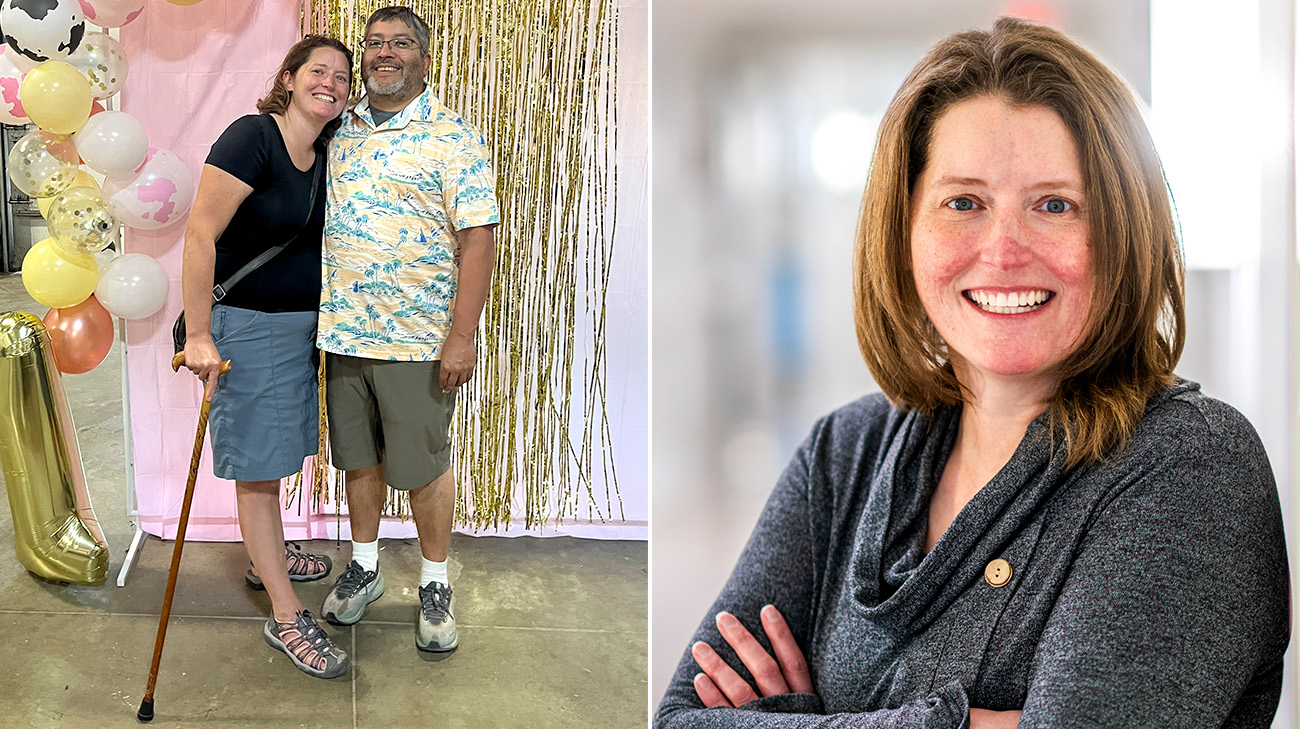
On May 5, 2005, Grace Miller says her life changed forever. It was the 24 year old’s second year of law school when symptoms of fatigue, numbness, vertigo and vision loss prompted her to get checked out.
“The doctor told me I had multiple sclerosis, and I just started crying. I didn’t know too much about the disease at the time, but I knew it was serious,” says Grace of central Indiana.
In the years that followed, Grace thought the disease could eventually limit her mobility and take away the activities she loved most. In 2025, she pursued CAR T‑cell therapy for multiple sclerosis (MS) – an investigational treatment being studied for its potential to slow the disease.
“When I was first diagnosed, I thought I was ultimately going to become bedridden. But after learning more about the disease and undergoing this treatment, I’m hopeful again for the first time since my diagnosis,” says the now 45-year-old mom.
Reflecting on her health journey, Grace says it took trial and error and multiple treatment paths to get to where she is today. Among her symptoms, extreme fatigue was the first one she noticed. In 2002, she saw a neurologist and was diagnosed with narcolepsy, but a few years later, more symptoms followed.
“What precipitated my MS diagnosis was a severe case of vertigo, and then I also lost most of my vision – 100% of my vision in one eye and about 90% of my central vision in the other,” says Grace.
After visiting an eye doctor, Grace followed up with her neurologist, who asked if she had ever experienced numbness in her legs.
“That’s weird, I thought. I did have this one spot in my leg that got numb when I walked or ran. After talking about my symptoms more with the neurologist, I started getting the testing that ultimately confirmed my MS diagnosis,” says Grace.
After her diagnosis, Grace was given steroids to help with her vision and then started on a medication regimen that kept her MS symptoms under control for a time. With her health stabilized, she embraced an active life – taking up running, completing multiple half marathons, finishing law school, launching a career as a practicing attorney and raising two children. But as the years passed, her symptoms gradually became more difficult to manage.
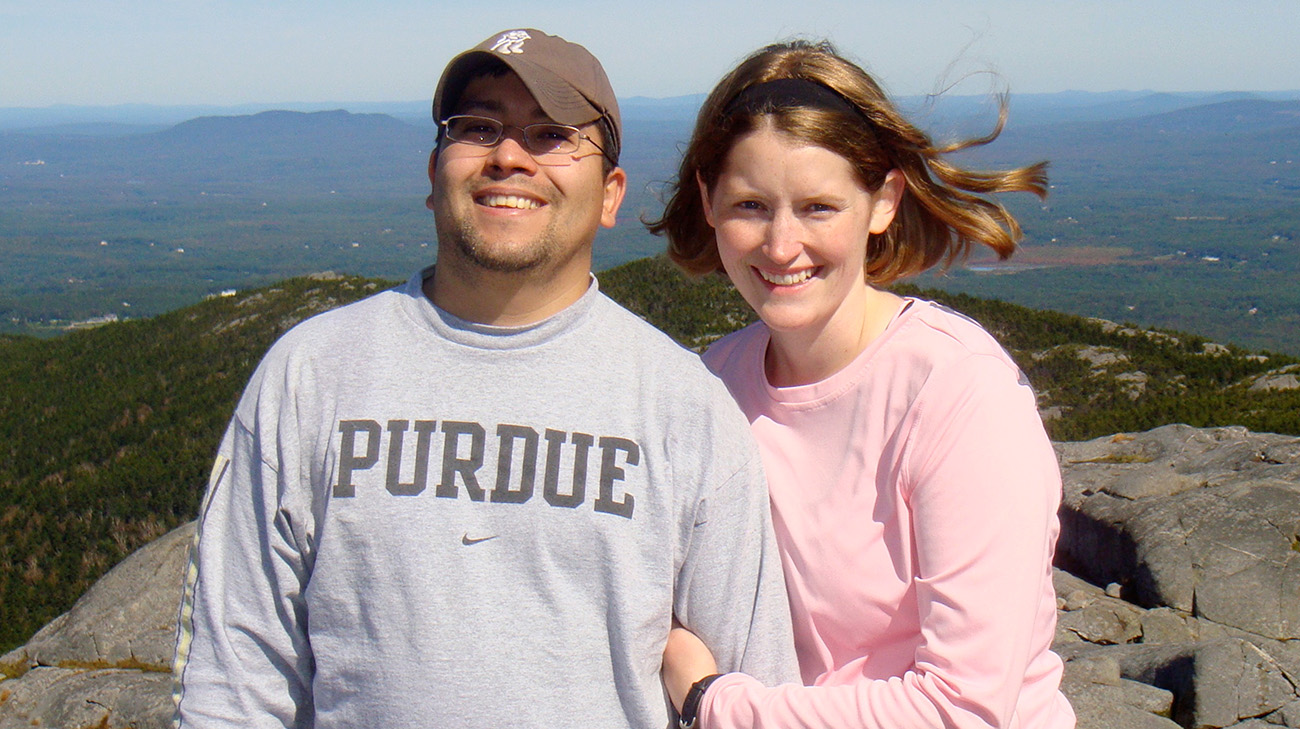
Grace with her husband, David. Grace was able to manage her MS symptoms for some time with medication, but her symptoms eventually started progressing and slowing her down. (Courtesy: Grace Miller)
“I eventually stopped running and noticed my walking slowing down. My eyes would also quiver because of a condition called nystagmus from my MS – making it more difficult to read and drive long distances. Over time, I realized my body couldn’t do the same things it used to. It was a gradual progression, and I just kept declining,” says Grace, who started walking with a cane in 2021.
Medication adjustments offered little relief. And following her local neurologist’s retirement, she set her sights on Cleveland Clinic.
“I knew I needed to go someplace on the forefront of medical technology,” says Grace.
Once at Cleveland Clinic, Grace was eager to try any new potential treatments being studied for MS, including CAR T-cell therapy.
“Grace has progressive MS, a form of the disease where symptoms steadily worsen over time. While we’ve made great progress in MS treatment overall, current medications are not as consistently effective for progressive MS,” says Cleveland Clinic neurologist Jeffrey Cohen, MD.
Dr. Cohen explains that CAR T-cell therapy has already been approved to treat certain cancers. The process involves taking a patient’s own immune cells (T cells) and genetically reprogramming them to find and destroy cancer cells.
Researchers are now studying this treatment for select autoimmune diseases including MS, a condition in which the immune system mistakenly attacks myelin – the protective layer around nerves that helps the brain and body communicate. In MS, CAR T-cell therapy aims to target specific immune cells called B cells that drive this damage.
“Unlike other treatments that only go after B cells in the blood, CAR T-cell therapy goes a step further by also targeting and eliminating those disease-causing cells in the tissues, including within the nervous system. By removing these cells, the hope is the immune system can recover and reset – potentially leading to immediate and sustained control of autoimmune diseases like MS,” says Dr. Cohen.
Grace waited until researchers launched early clinical trials to study the potential treatment option. After confirming she was a good candidate for CAR T-cell therapy, she received the call she had been waiting for.
“When I found out I was eligible for the trial, it was like I had won the lottery,” exclaims Grace. “I knew the damage MS had already done to my body couldn’t be reversed, but I was eager to try anything that could potentially change the progression of this disease.”
Grace was enrolled in a Phase 1 CAR T-cell therapy trial at Cleveland Clinic, and in March 2025, she began the treatment process. She became the first patient at Cleveland Clinic and was among the first few in the country to get CAR T-cell therapy for MS.
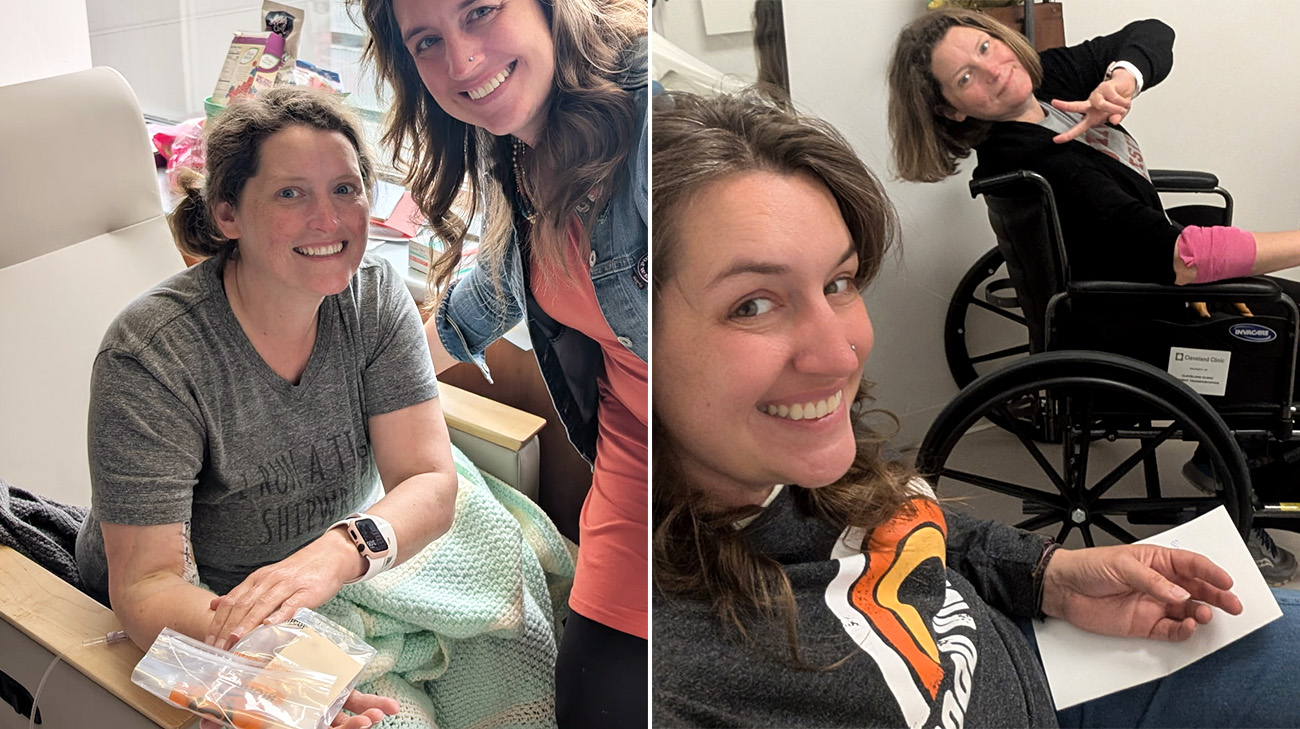
Grace with her sister, Hannah, as she underwent the CAR T-cell therapy treatment process at Cleveland Clinic. (Courtesy: Grace Miller)
The process began with T cells being collected from Grace’s blood. These cells were then sent to a lab to be genetically reprogrammed to target the disease-causing B cells. Before the modified cells were infused back into her body, Grace underwent a short course of chemotherapy to create space in her immune system for the new CAR T cells to integrate and work effectively. Lastly, the genetically modified cells were infused back into Grace. Her care team then monitored her for some time.
“I felt good after the treatment and was even doing yoga in my hospital room. While I did experience some expected side effects from the chemotherapy, I felt strong and hopeful overall,” says Grace.
According to Dr. Cohen, the body does try to repair itself from the damage of MS, but for many people, the disease progresses faster than those repair mechanisms can keep up with. Over time, that imbalance is what leads to worsening symptoms. After undergoing CAR T-cell therapy, the hope is that by potentially stopping the immune system from causing further damage, the body has time to heal. And because the brain can adapt, combining this treatment with physical therapy may help the brain form new neural pathways and relearn movement patterns that MS disrupts.
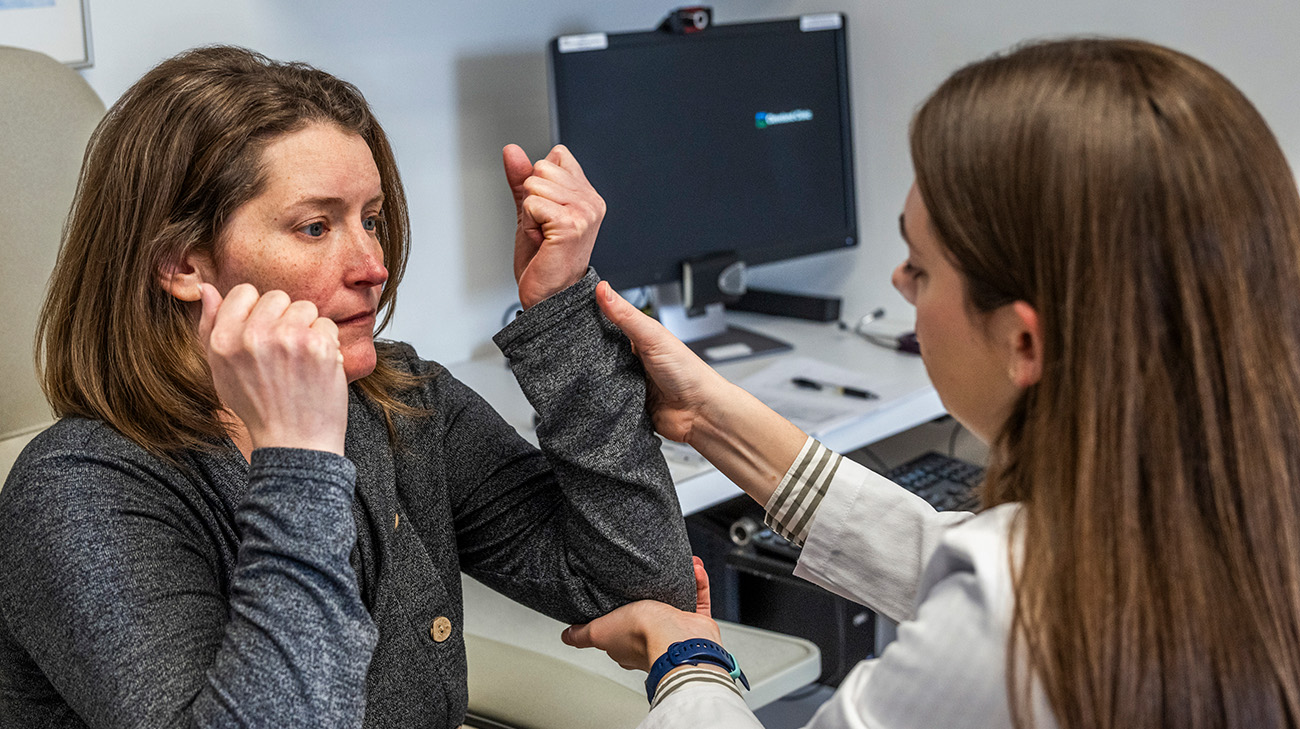
After undergoing CAR T-cell therapy for MS, Grace’s care team will continue closely monitoring her. (Courtesy: Cleveland Clinic)
“We know the body naturally tries to compensate for damage, either by repairing the affected nerves or by allowing other ones to take over those functions. That ability is called neuroplasticity, and there’s growing evidence physical therapy can help promote it. The goal is to stop the ongoing damage as effectively as we can and then support the body’s natural ability to repair itself,” says Dr. Cohen.
After undergoing CAR T-cell therapy and having ongoing physical therapy, Grace is noticing gradual, measured improvements. Before this treatment, Grace says her legs would shake uncontrollably when she stood up. Now, she’s able to stand without her legs shaking. While she still uses her cane occasionally as she works to rebuild those new neural pathways, Grace says she’s able to walk longer distances. Her eye symptoms due to nystagmus have also improved, allowing her to drive farther distances as well.
“I was even able to hold my friend’s little girl in my arms for the first time. Before, I thought this wasn’t safe because I didn’t feel strong enough,” says Grace. “These may seem like small milestones, but for me, they’ve been life-changing. The improvements have been gradual but constant.”
CAR T-cell therapy for MS is still being studied and carries possible risks and side effects. Researchers are still determining whether it’s a viable treatment and who it could help, making careful conversations between doctors and patients essential when weighing potential benefits against unknowns. Dr. Cohen says reaching this point has required – and will continue to require – a highly coordinated, multidisciplinary effort, including Claudio Brunstein, MD, the cellular therapy lead investigator at Cleveland Clinic, as well as research teams from Cleveland Clinic Cancer Institute and Mellen Center for Multiple Sclerosis.
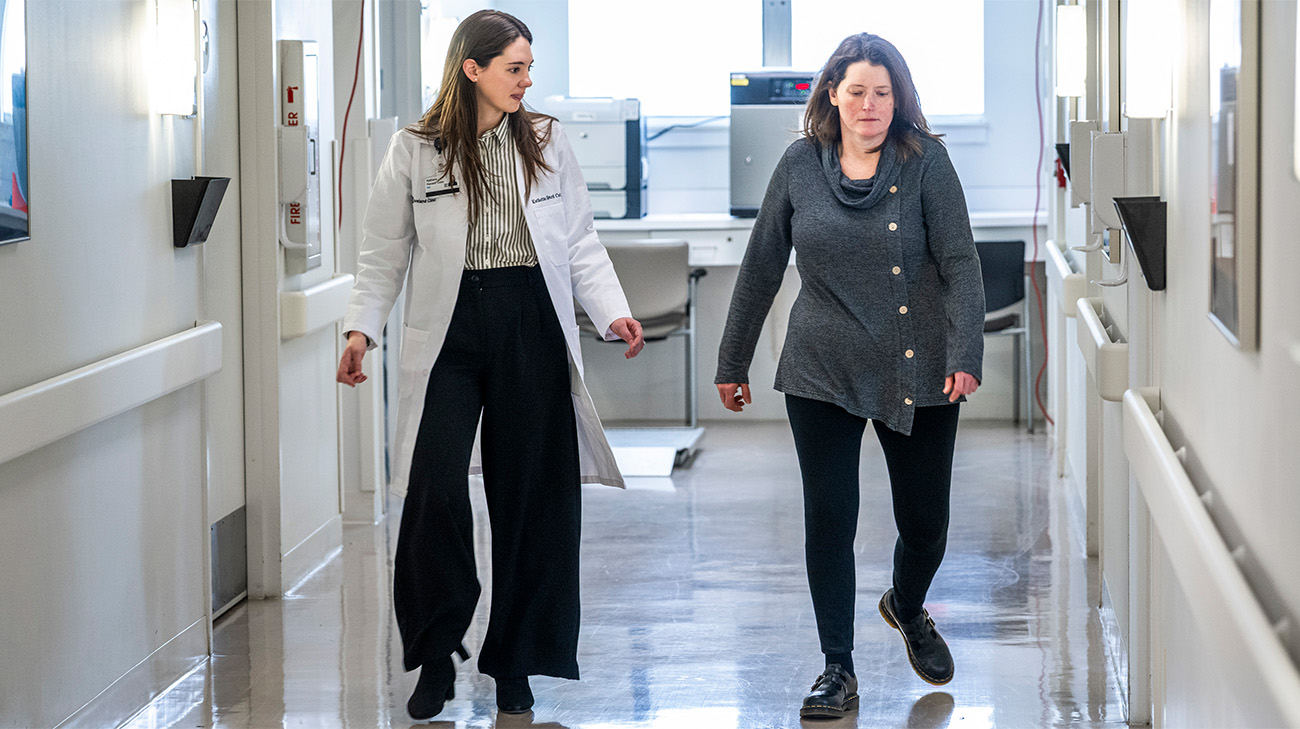
Grace walking during a follow-up appointment at Cleveland Clinic after undergoing CAR T-cell therapy. (Courtesy: Cleveland Clinic)
“Although we’re still early in understanding whether CAR T-cell therapy can be effective for MS, the initial results have been encouraging,” says Dr. Cohen. “They reflect increasing interest in applying this therapy to progressive forms of the disease.”
Graces continues following up with her care team. While there are still many unknowns, she says she’s grateful for the progress she’s made so far.
“I'm looking forward to hopefully continuing to get better. Even having the chance to potentially improve my condition didn’t seem possible before this treatment. I’m excited to have been one of the first to have CAR T-cell therapy for MS, and I’m hopeful it can help others down the road,” says Grace.
Related Institutes: Neurological Institute, Cleveland Clinic Cancer CenterPatient Stories
Good Health, Close to Home: How Cleveland Clinic Confirmed One Couple’s Decision to Move
Aug 25, 2026

After Devastating Knee Injury, Mental Health Support Fuels Soccer Comeback
Aug 20, 2026