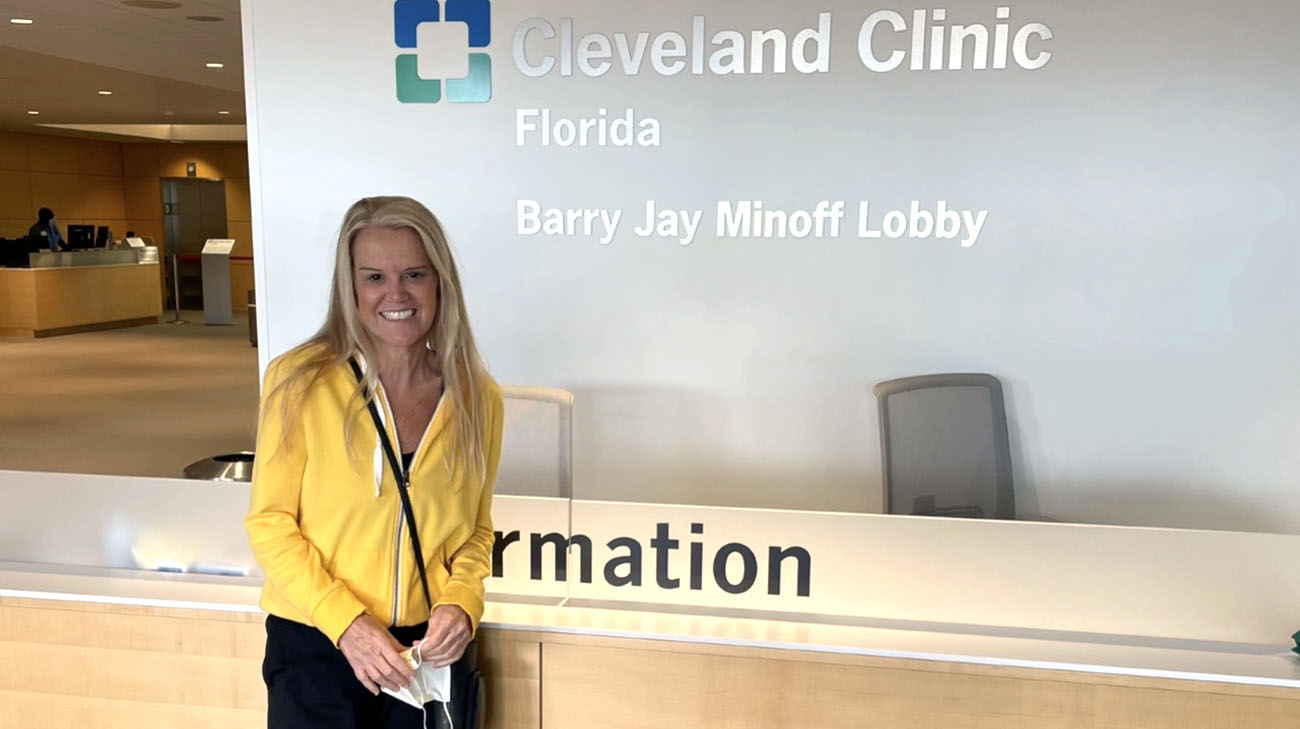
Though she’s had to make some adjustments, Susan Rosenthal is happy she finally got medical treatment that drastically improved her quality of life.
“I’m pretty sure Cleveland Clinic saved my life,” she says. “I’m not suffering anymore.”
Susan, 60, was diagnosed with cervical cancer in 2001 and underwent a radical hysterectomy (removal of the uterus, cervix, fallopian tubes and ovaries) at a clinic near her home in Bonita Springs, Fla. Two years later, the cancer came back in the same area of her body. She underwent radiation and chemotherapy treatment for about 10 weeks and has been cancer-free since.
However, in 2018, she started having what she described as “ridiculous stomach issues.”
“Food was going right through me,” she says. Immediately after eating she would have to go to the bathroom. It got to the point that she would time her eating and stop around noon if she had plans to go out that night.
Susan lived with the discomfort and inconvenience for a few years after that. It did not get better and by the time she made an appointment with a gastroenterologist, it was 2022. She underwent a colonoscopy and the results showed she had a colon stricture (a narrowing of an area of the large intestine) that was most likely caused by the radiation treatments she had in 2003. She had surgery a week later to fix the stricture.
“I was in extreme pain after that,” Susan says. The pain was so bad, Susan had to stay in bed most of the time. Despite taking prescribed pain medicine, it did not get better.
“I was just miserable,” she says. To make matters worse, her struggle with frequent bowel movements remained.
A gastroenterologist who had been treating Susan and trying to help her with the pain, was out of ideas. In early 2023, she referred Susan to Dana Sands, MD, a colorectal surgeon at Cleveland Clinic Weston Hospital. Desperate for answers and relief, Susan traveled the two hours to Cleveland Clinic in Florida in Weston. She first underwent examination by gastroenterologist Adalberto Gonzalez, MD. Dr. Gonzalez told Susan she would need another surgery and that he would get her in to see Dr. Sands quickly.
“I instantly loved her,” Susan says about meeting Dr. Sands. “She was very straightforward about everything, and I had confidence that she could fix me.”
Dr. Sands recommended a plan to fix Susan’s issue that would require three surgeries: The first would undo what was done in the previous surgery to fix the stricture. Susan would come out of surgery with a temporary ileostomy bag (a pouch worn over a stoma, or drain, to collect digestive waste from the small intestine) while she healed. The second surgery would repair Susan’s colon (she would keep the ileostomy bag while she healed); and the third would be for the removal of the bag once her colon had healed and was working well on its own.
After the first surgery, which took place a week after she met Dr. Sands, Susan said she “felt the best I had in years.”
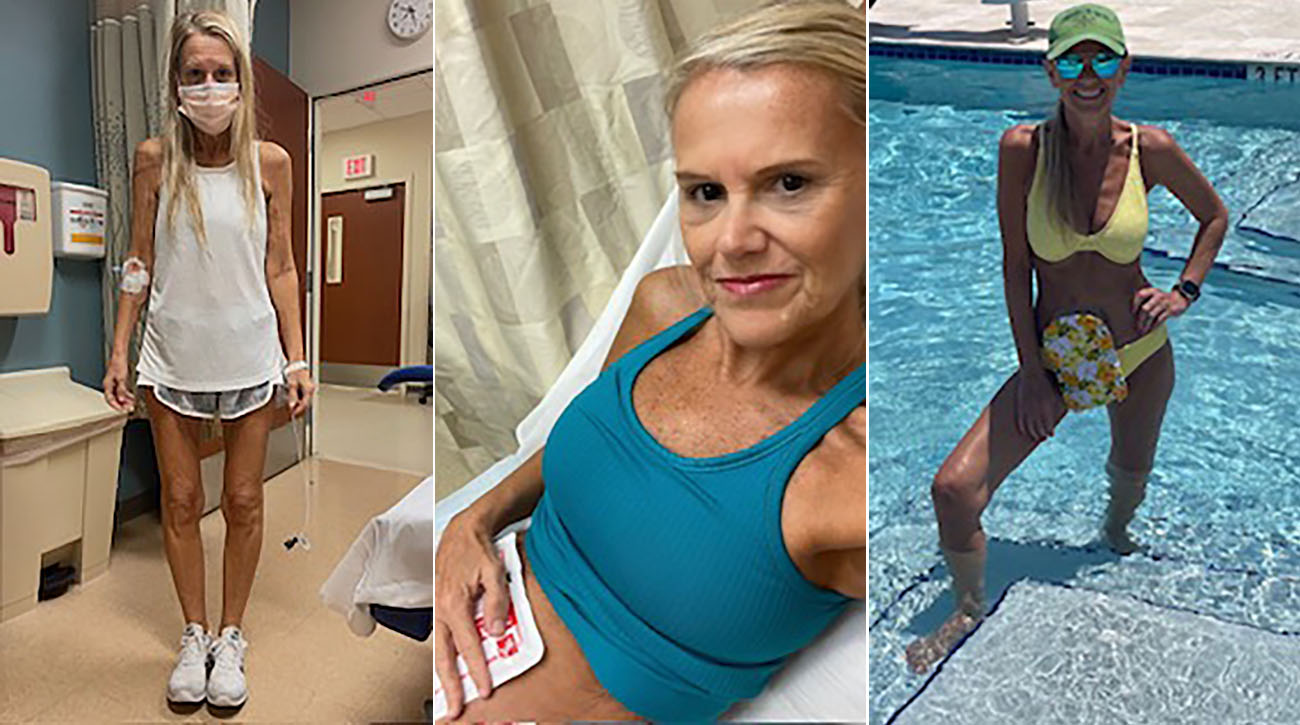
Susan Rosenthal before and after surgery (Courtesy: Susan Rosenthal)
About six months later, in September 2023, Susan had the second surgery to repair her colon. During the surgery, Dr. Sands and her team did all they could, but Susan’s colon had been damaged beyond repair and likely could have caused life-threatening problems in the future. There was excessive scar tissue, and the stricture was so low that some of the rectum had to be removed as well. Susan was put on a permanent colostomy bag (a pouch outside the body that is connected to a stoma in the abdomen to collect fecal waste).
During her two weeks of recovery in the hospital, Susan took time to process and accept her new situation.
“I couldn’t let this stop me,” she says. “I had to wrap my brain around how I was going to live with a colostomy bag. But I was happy that I could finally eat, gain weight back, go out and enjoy life. I don’t let this stop me because it stopped me for so long. I just decided I’m going to make the best of this.”
She has embraced her new normal, buying bag covers that her friend makes and sells and going to the beach in her bikini.
She says it was bittersweet when she was fully released from Cleveland Clinic because she loves the staff so much.
“There was not a person who wasn’t good to me,” Susan says. “Everybody was amazing. I can’t say enough about Cleveland Clinic.”
Related Institutes: Digestive Disease & Surgery Institute
Patient Stories
Personalised Neurorehabilitation Helps British Paralympian Redefine What Matters
Sep 10, 2026

Black Eye On Baby Monitor Helps Mother Uncover Daughter's Rare Eye Cancer
Sep 7, 2026