



Postpartum starts immediately after childbirth and generally lasts six to eight weeks. Your body goes through many physical and emotional changes during this time, with some symptoms lasting months after you give birth. Getting rest, allowing your body time to heal and eating nutritious foods can help you recover from childbirth.
Advertisement
Cleveland Clinic is a non-profit academic medical center. Advertising on our site helps support our mission. We do not endorse non-Cleveland Clinic products or services. Policy
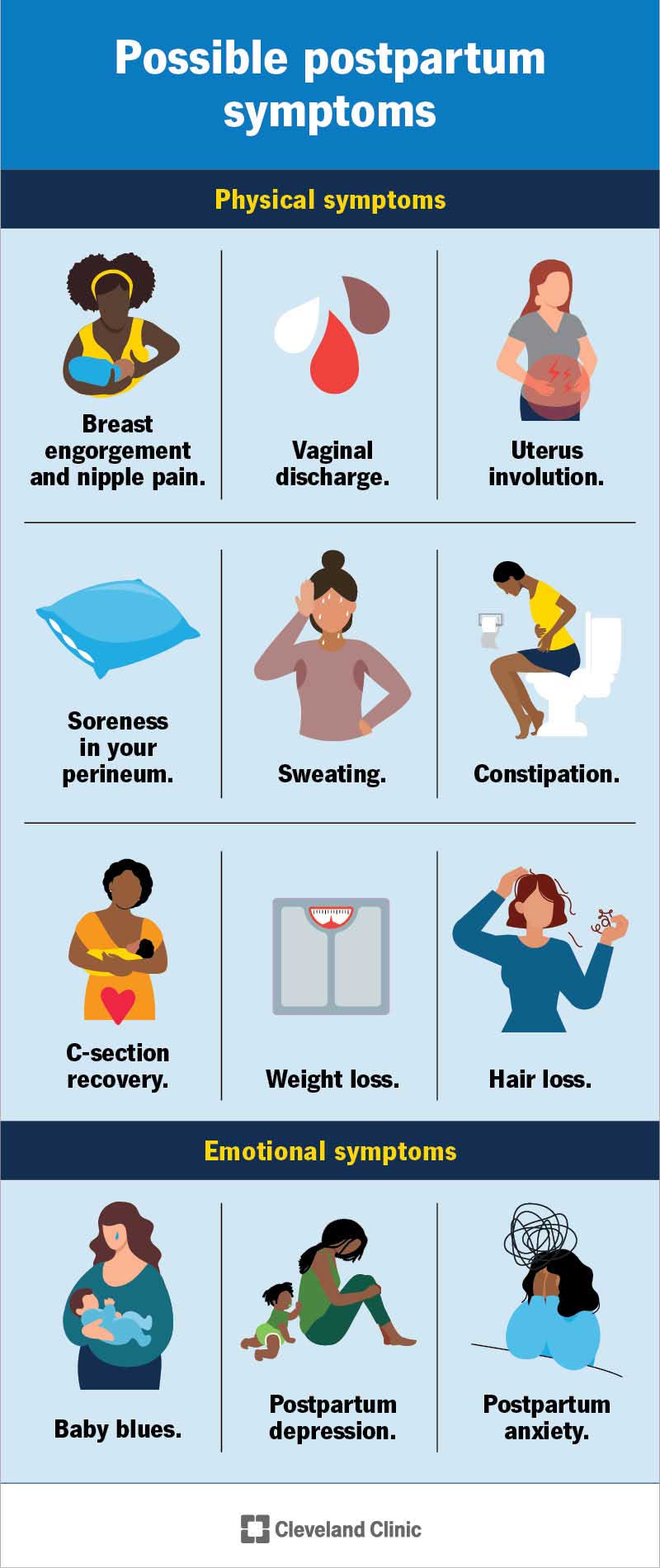
Image content: This image is available to view online.
View image online (https://my.clevelandclinic.org/-/scassets/images/org/health/articles/postpartum)
Postpartum (or postnatal) refers to the period after childbirth. Most often, the postpartum period is the first six to eight weeks after delivery, or until your body returns to its pre-pregnancy state. But the symptoms and changes that occur during the postpartum period can last far beyond eight weeks.
Advertisement
Cleveland Clinic is a non-profit academic medical center. Advertising on our site helps support our mission. We do not endorse non-Cleveland Clinic products or services. Policy
Major body and life changes are happening at the same time during the postpartum period. Some changes are physical — for example, breast engorgement and vaginal bleeding. Other changes occur due to changing hormones. The bottom line is, giving birth is a major physical and emotional challenge. Being a caregiver and adjusting to life with an infant during the postpartum period is also incredibly demanding.
Pay attention to how you feel after giving birth and let your healthcare provider know if something feels off. Just because you gave birth doesn’t mean your care ends or that your health isn’t important. You should try prioritizing resting and taking care of your health in addition to caring for your baby.
Your healthcare provider will schedule postpartum checkups with you so they can continue to monitor your recovery and healing. It’s important to attend these appointments because this is where your provider can identify potential complications. This is also a time when you can ask questions and have honest conversations about your healing.
Your recovery — like your pregnancy — is unique to you. There isn’t a one-size-fits-all timeline to postpartum. But there’s a general timeline of what you can expect.
Advertisement
Some of the things you can expect in the hours and days immediately after birth are:
Healthcare providers classify postpartum into three phases: the acute phase, the subacute phase and the delayed phase.
You go through significant changes in the postpartum period. A lot of them happen naturally due to hormone changes. Symptoms can be physical, emotional or a combination of both.
Advertisement
Physical symptoms in postpartum affect your body — things like what it does, what it looks like and how it feels. Some of the most common physical symptoms in postpartum are:
Advertisement
Emotional symptoms in the weeks and months after childbirth involve anything that affects your mind, your stress level or your body image.
Advertisement
Many health conditions can begin after delivery. Your healthcare team monitors you in the hours and days after birth to watch for some of the more severe conditions. Some symptoms are normal after delivery, but others can be a sign of a problem.
Some of the most serious conditions that can happen in the postpartum period are:
The best thing you can do for your health after you give birth is listen to your body. If something doesn’t feel right, please reach out to your healthcare provider. You don’t have to wait until your postpartum checkup to call your pregnancy care provider with questions or concerns. Your recovery and overall health are important to them.
One of the most important things you can do for yourself after giving birth is to allow yourself time to rest and heal. While this may be easier said than done, getting rest allows your body and mind time to recover. Ask for help when you need it. This could mean limiting visitors, asking for help with childcare or asking for help with things like cleaning and making meals.
Other than resting, some of the other ways to take care of yourself in the weeks after delivery could involve:
Some postpartum symptoms could be signs of a problem. You shouldn’t ignore your symptoms or feel shame discussing how your recovery is going. If you have concerns either about how you’re healing or how you feel, it’s best to contact your healthcare provider.
Some symptoms you should watch for include:
If you have feelings of harming yourself or your baby, please call 911 or call, chat or text the Suicide and Crisis Lifeline at 988.
The postpartum period is a time of adjustment and transition. People don’t talk very much about the postpartum period, and it might leave you feeling lonely or unprepared. It’s important to remember that you’re not alone! While pregnancy seems to get more attention, the postpartum period is just as important. You’re learning how to deal with lots of physical and emotional changes, as well as trying to adjust to life with a newborn.
Some symptoms in postpartum are expected and nothing to worry about, while others can be signs that something else is going on. Be kind to yourself while you adjust, prioritize your well-being as much as you can and reach out for support from your healthcare provider if necessary. Even if you feel OK, it’s important to attend all your postpartum checkups. This is where you can ask questions and where your provider can spot potential problems.



Sign up for our Health Essentials emails for expert guidance on nutrition, fitness, sleep, skin care and more.
Learn more about the Health Library and our editorial process.
Cleveland Clinic’s health articles are based on evidence-backed information and review by medical professionals to ensure accuracy, reliability and up-to-date clinical standards.
Cleveland Clinic’s health articles are based on evidence-backed information and review by medical professionals to ensure accuracy, reliability and up-to-date clinical standards.
You’ve had your baby, but your care doesn’t end when you leave the hospital. Cleveland Clinic offers expert postpartum care during the fourth trimester.
