



Cognitive behavioral therapy (CBT) is a goal-focused talk therapy. It teaches you practical ways to manage stress, unhelpful thoughts and emotions. It may help manage mental health conditions like anxiety, depression and PTSD. It can also support physical health issues and life transitions.
Advertisement
Cleveland Clinic is a non-profit academic medical center. Advertising on our site helps support our mission. We do not endorse non-Cleveland Clinic products or services. Policy
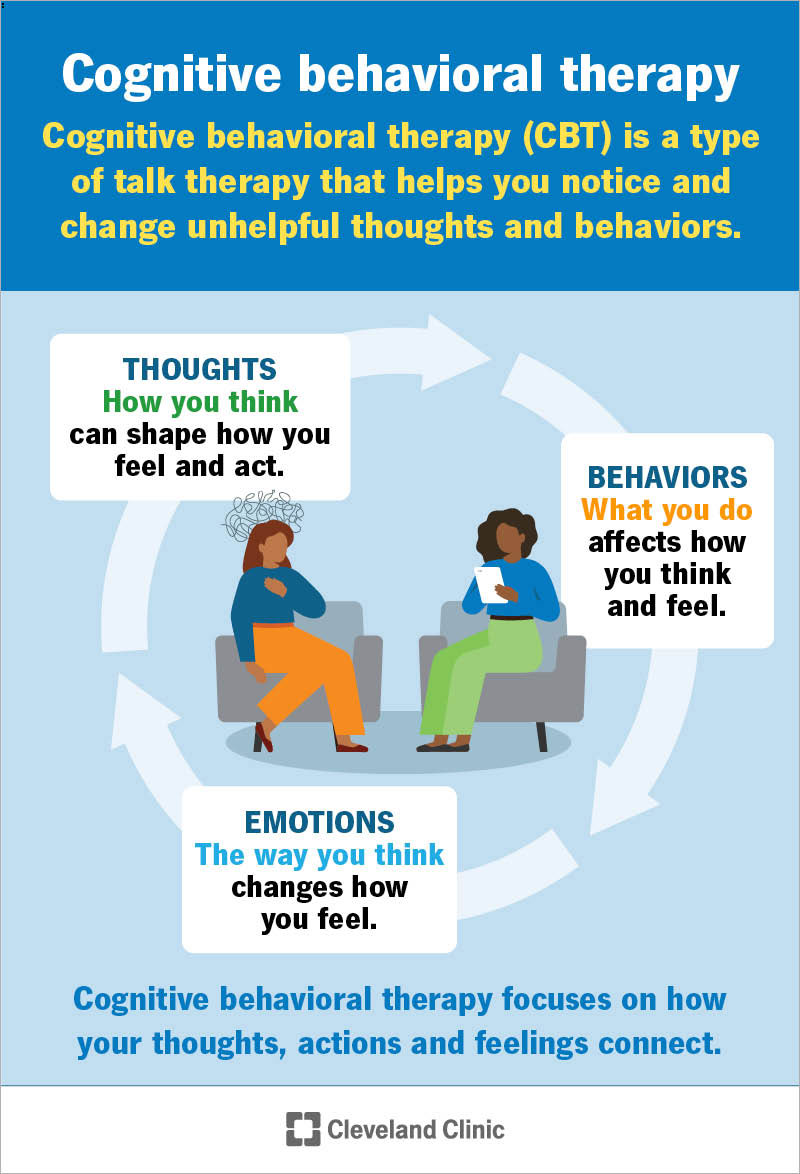
Image content: This image is available to view online.
View image online (https://my.clevelandclinic.org/-/scassets/images/org/health/articles/cognitive-behavioral-therapy)
Cognitive behavioral therapy (CBT) is a type of psychotherapy (talk therapy) that helps you notice and change unhelpful thoughts and behaviors. It focuses on how your thoughts influence how you feel and behave.
Advertisement
Cleveland Clinic is a non-profit academic medical center. Advertising on our site helps support our mission. We do not endorse non-Cleveland Clinic products or services. Policy
In CBT, you learn practical skills to handle stress and challenges. This may include practicing new ways of thinking or trying small exercises between sessions. CBT may help you manage mental health conditions or support you through difficult situations.
This common type of therapy is based on a few core principles:
CBT usually takes place over a limited number of sessions. You can use CBT on its own or with medication and other treatments. Your therapist will tailor therapy to your specific needs.
CBT commonly helps manage mental health conditions like anxiety and depression. It may also help with other mental and behavioral health conditions, including:
CBT is often used along with medication and other treatments for conditions like bipolar disorder, schizophrenia and some personality disorders.
Advertisement
It can also help you manage certain physical health conditions, especially when symptoms relate to stress or coping challenges, like:
In addition, CBT can support you through everyday challenges and life changes, including:
CBT takes place in a safe, supportive and nonjudgmental setting, where you can speak openly and privately with a trained mental health provider. They’ll collaborate with you regarding your concerns and goals.
Your therapist uses questions and discussion to help you see situations in a new way. Over time, you learn healthier ways to manage unhelpful thoughts and improve your ability to respond to stressful situations.
Progress doesn’t happen overnight. Many of these skills require practice over time. Some parts of therapy may feel uncomfortable, but that’s a normal part of change.
Here’s what you can expect during CBT:
Here are some common CBT techniques that you might learn and practice:
This type of therapy can be helpful, though progress often takes time and practice. Research shows that CBT may support a wide range of mental health conditions, as well as some physical conditions.
One benefit of CBT is that it’s structured and goal-focused. You work with your therapist on specific skills to change unhelpful thoughts and behaviors. This may make problems feel more manageable. It’s also collaborative and personalized, meaning your therapist works with you at your own pace to focus on your needs and goals.
Advertisement
You can try CBT on its own or alongside medications. For some conditions, using CBT with a medication may improve results more than either treatment alone. Another benefit is that therapy helps you build skills you can keep using over time, even after therapy ends.
While therapy can be helpful for many people, it doesn’t work the same way for everyone and may have some limits. These could include:
Advertisement
CBT is one option among many. A healthcare provider or therapist can help you decide whether this is a good fit for you and suggest other approaches if your needs change.
Sessions usually last about 60 minutes and may occur weekly, biweekly or monthly depending on your needs. Many people attend therapy for eight to 12 visits. Sometimes, more sessions are needed.
CBT should move at a pace that feels right for you. If there’s a topic that feels too hard to talk about or you don’t feel ready yet, it’s OK to say so. Sharing how you feel helps your therapist adjust your care.
Coping skills are tools you can use in everyday life to handle difficult situations better.
Here are a few examples:
Contact your healthcare provider if symptoms start to get worse or you notice a big change in how you feel.
Advertisement
Get help right away if you have thoughts about suicide or harming yourself or others. You can call or text the Suicide & Crisis Lifeline at 988 (U.S.), available 24/7. If you’re in immediate danger, call 911 or your local emergency number.
Trained mental health providers offer cognitive behavioral therapy. People of all ages, including children, can benefit from it.
Finding the right therapist can take time. Try not to get discouraged. Start by asking your primary care provider or talking with trusted friends or family members who may have recommendations.
You can also search online through local or state psychology associations or therapist directories. Your insurance company may also have a list of covered providers.
Before scheduling an appointment, make sure the therapist is licensed in your state and has experience treating your specific concern. Many therapists list this information on their website. If you’re unsure, you can call or email their office to ask questions before deciding.
Cognitive behavioral therapy is more than just talking. It’s about learning, practicing and building tools that help you face life’s challenges with more confidence. Whether you’re navigating anxiety, managing a health condition or just feeling stuck, CBT may give you practical ways to better understand yourself.
Progress doesn’t always happen quickly. Each step — even a small one — can help you feel more grounded and supported.



Sign up for our Health Essentials emails for expert guidance on nutrition, fitness, sleep, skin care and more.
Learn more about the Health Library and our editorial process.
Cleveland Clinic’s health articles are based on evidence-backed information and review by medical professionals to ensure accuracy, reliability and up-to-date clinical standards.
Cleveland Clinic’s health articles are based on evidence-backed information and review by medical professionals to ensure accuracy, reliability and up-to-date clinical standards.
Your mental well-being is just as important as your physical well-being. Cleveland Clinic’s mental health experts can help you live life to the fullest.
