


Overview
The Neuroendovascular Intervention (NIR) fellowship program at the Cleveland Clinic was established on July 1, 2003. The duration of the program is two years, and both years are ACGME accredited. Applications to the NIR fellowship program are accepted from the following candidates:
- Successfully completed ACGME accredited Neurosurgery residency.
- Successfully completed ACGME accredited Radiology residency, followed by a 1-year Neuroradiology fellowship.
- Successfully completed ACGME accredited Neurology Residency, followed by either Vascular Neurology or Neurocritical Care fellowship.
All trainees will use the first year of the program as a preparatory year, which is tailored to their particular background and needs. The general goal of the preparatory first year is to expand the trainees’ exposure to diagnostic neuroangiography, and to broaden their exposure to clinical Neurosurgery and Neurology (including clinical signs/symptoms, natural history, treatment planning, physiological monitoring, intracranial pressure/ pathophysiology, pharmacology, and neurological intensive care management). Objectives for the first preparatory year include excellent patient care, demonstrate ability to perform and interpret diagnostic neuroangiography, demonstrate command of imaging and clinical diagnosis of (endo) vascular disorders, and demonstrate competency in directing ward care of endovascular cases.
Interpretations of diagnostic and interventional procedures are double read by senior staff throughout the first and second year. All interpretations are performed based on digital images on workstations distributed throughout the Imaging Institute using voice recognition software to expedite reporting to the referring services. Images are stored centrally on a large digital archive, providing ready access to nearly all digital imaging studies dating back more than 10 years. Procedures are initially performed by the staff for teaching purposes. Subsequently, the trainee performs the procedures under direct supervision and then assumes more independence once competence is demonstrated. During the second year of the fellowship, the Senior Staff will have the responsibility of the primary operator and the trainee will serve as first assistant.
Neuroendovascular Intervention Fellows and residents are responsible for reviewing diagnostic CT’s and MR’s. Diagnostic angiograms may be occasionally shared between a first-year neuroradiology fellow and the NIR fellows, but the first-year NIR fellow will perform the majority of diagnostic cerebral and spinal angiograms. During the second year, the fellow assumes a more proactive and independent role by participating in and performing the bulk of the neurointerventional procedures. Dictations are also shared during the fellowship and are distributed by the staff.
Neuroendovascular Intervention Fellows are expected to participate in clinical conferences and regular daily patient management rounds in conjunction with the NICU, Neurology, Neurosurgery, Neuropathology, Otolaryngology, Ophthalmology, Vascular Surgery, General Medicine, and Pediatric subspecialties. The fellow is also expected to participate in the didactic and patient management conferences which are held with the divisions of Neurology, Neurosurgery, Neuropathology, Vascular Surgery, Otolaryngology, and Ophthalmology on a regular basis. All other clinical conferences are open to fellows. They are actively encouraged to attend all conferences but are required to attend weekly Cerebrovascular Case conferences, neurosurgery patient management conferences, quarterly endovascular M&M’s, and monthly journal clubs. A dedicated biweekly 2-hour “Fellowship Educational Conference” was established 2-3 years ago to allow direct interaction, teaching and mentoring between staff and fellows, consisting of case discussions, didactic topic presentations, research debates, endovascular device reviews and fellow feedback.
The NIR fellows are expected to prepare several one-hour didactic presentations during their fellowship in their first and second years. The trainees also have teaching responsibilities with one-to-one teaching of residents and medical students during the daily reading sessions. They also work with the residents on Neuroradiology rotations to acquire additional interesting cases for weekly case conferences in which they are the primary presenter. Staff members are also present at each conference to aid and facilitate the discussions.
Neuroendovascular Intervention staff are actively involved in research, and the NIR fellow is strongly encouraged to participate in basic and/or clinical research during the two years of their fellowship. They are strongly encouraged to present research at local and national meetings and to prepare manuscripts for publication during these two years.
Each trainee is evaluated by staff members on a quarterly basis, and all forms are forwarded to the NIR program director for review. Combined six-month evaluations are submitted to the Graduate Medical Education Office and are reviewed with the trainee on a semi-annual basis by the Clinical Competency Committee.
Benefits
Salary
PGY-6 Salary: $84,180*
*reflects 2026 salary and is subject to change
Academic Funding
- Up to 5 days for meetings per year.
- Up to $4,000 for oral presentations.
- Up to $1,000 for attendance only meetings.
- $1,000 GME Discretionary Funding
- $850 Imaging Book Fund
Vacation and Time Away
- 15 vacation days per year.
- 5 personal/interview days per year.
Additional Benefits
- At least 4 weeks of elective rotations.
- Cleveland Clinic iPhone for the year.
- Comprehensive medical/dental/vision insurance.
- Paid family leave: 12 weeks of paid leave after giving birth or 4 weeks of paid parental leave for a new child
- Employee Assistance Program.
- Employee Wellness Program includes free gym membership.
Our Faculty
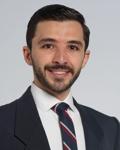
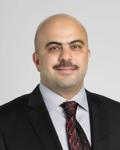
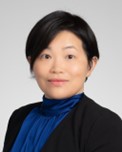
Gabor Toth, MD
Program Director
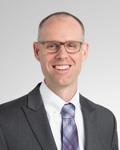
Mark Bain, MD
Program Director, Neurosurgery Fellowship
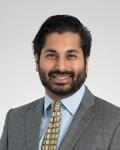
M. Shazam Hussain, MD
Director, Cerebrovascular Center
Our Fellows
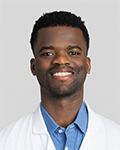 |
Jude Charles, MD 2025-2027 Hometown: South, Haiti Residency: University of Miami Hospital, Jackson Health Systems, Miami FL Medical School: Université Notre Dame d'Haïti |
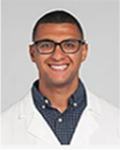 |
Ahmed Kashkosh, MD 2024-2025, 2026-2027 Hometown: Potsdam, NY Residency: Cleveland Clinic, Neurological Surgery Medical School: University of Pittsburgh School of Medicine |
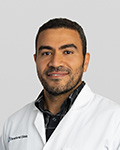 |
Mahoud Mohammaden, MD 2026-2028 Hometown: Nag Hammadi, Egypt Residency: Emory University, School of Medicine, Neurology/Vascular Neurology Medical School: Assiut University Faculty of Medicine |
Our Alumni
Class of 2026
| Residency | Employment After Fellowship | |
| Rebecca Achey, MD | Cleveland Clinic, Neurological Surgery | Neuroendovascular Intervention |
| Muhammad Nagy, MD | JFK Medical Center | Neuroendovascular Intervention |
Class of 2025
| Residency | Employment After Fellowship | |
| Maria Martucci, MD | Cleveland Clinic, Florida | Providence Health System, CA |
Class of 2024
| Residency | Employment After Fellowship | |
| Ammar Abdulrazzak, MD | University of Arizona | Cleveland Clinic, OH |
Class of 2023
| Residency | Employment After Fellowship | |
| Anas Alrohimi, MD | University of Alberta | King Faisal Specialist Hospital and Research Center |
| Abhi Pandhi, MD | University of Tennessee | Intellirad Imaging, Miami, FL |
Class of 2022
| Residency | Employment After Fellowship | |
| Ashutosh Mahapatra, MD | University of Miami | Cleveland Clinic, OH |
Class of 2021
| Residency | Employment After Fellowship | |
| Alex Witek, MD | Cleveland Clinic | SSM Health, Madison WI |
Class of 2020
| Residency | Employment After Fellowship | |
| Lila Sheikhi, MD | Cleveland Clinic | Doing locums work currently |
How to Apply
Next Available Cycle: 2028-2030
We will be interviewing for one fellow to join our team
Application process
- All applications must be submitted through ERAS.
- Fellowship application form
- Applications sent directly to Cleveland Clinic will not be accepted.
- Download the fellowship application
Required documents:
- Fellowship application form (downloadable via ERAS)
- Current Curriculum Vitae
- Medical school transcripts and diploma
- USMLE/COMLEX scores
- Three letters of recommendation
Interview timeline:
- Candidates will be contacted after December 2026
- All interviews will be conducted virtually in early 2027 (February/March)
Important match dates (2028–2030 cycle)
As part of the National Neuroendovascular Intervention Fellowship Match (NNIFM):
- ERAS opens to applicants: November 2026
- Program viewing opens: December 2026
- Interviews: February/March 2027
- Rank Order List opens: March 2027
- Quota confirmation deadline: April 2027
- Rank Order List deadline: April 2027
- Match Day: May 2027
Contacts
Match-related questions: NIFellowshipMatch@snisonline.org
Program-specific questions: imagingfellowship@ccf.org
Gabor Toth, MD, FAHA
Program Director
Vascular Neurology and Endovascular Neuroradiology
Cerebrovascular Center
Cleveland Clinic Neurological Institute
9500 Euclid Avenue, S80
Cleveland, OH 44105
216.636.5860
tothg@ccf.org
Darlene Newton
Fellowship Coordinator
Cleveland Clinic
9500 Euclid Ave., L10
Cleveland, Ohio 44195
216.445.7110
newtond6@ccf.org
