



Neurogenic bladder refers to what happens when an injury or disease interrupts the electrical signals between your nervous system and bladder function. It can’t be cured. But you can manage your symptoms. Treatment options include lifestyle changes, catheters and medications.
Advertisement
Cleveland Clinic is a non-profit academic medical center. Advertising on our site helps support our mission. We do not endorse non-Cleveland Clinic products or services. Policy
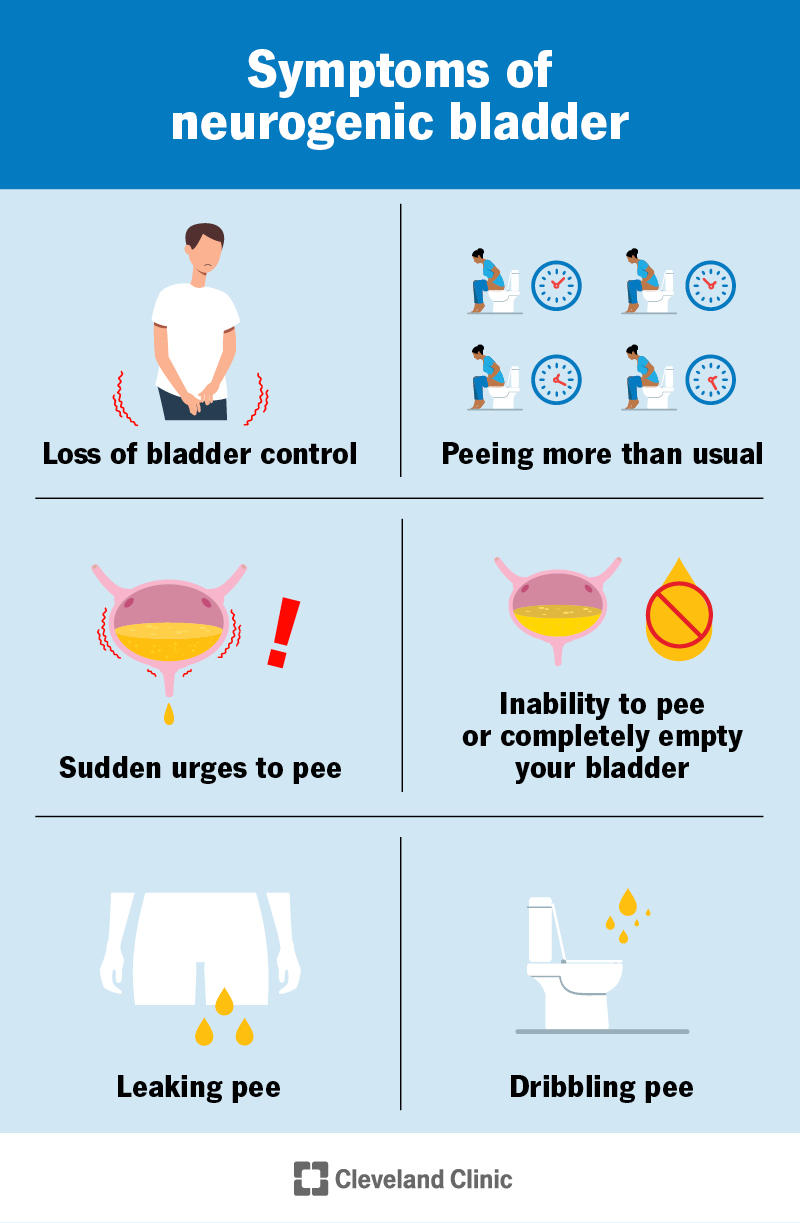
Image content: This image is available to view online.
View image online (https://my.clevelandclinic.org/-/scassets/images/org/health/articles/neurogenic-bladder)
Neurogenic bladder is the term for what happens when neurological (nervous system) conditions affect how your urinary bladder works. Your nervous system consists of your:
Advertisement
Cleveland Clinic is a non-profit academic medical center. Advertising on our site helps support our mission. We do not endorse non-Cleveland Clinic products or services. Policy
Your nerves send electrical signals between your brain and every other part of your body. The electrical signals tell your body to function — to move, to breathe and even to pee.
Neurogenic bladder occurs when a problem with your brain, nerves or spinal cord causes you to lose control of your bladder. Another name for neurogenic bladder is neurogenic lower urinary tract dysfunction (NLUTD).
There are two major types of bladder control problems that link to neurogenic bladder. They depend on the affected nerves and the nature of the damage. The types include:
The most common symptom of neurogenic bladder is being unable to control when you pee. Other neurogenic bladder symptoms depend on the type you have.
Overactive bladder symptoms may include:
Underactive bladder symptoms may include:
Advertisement
Neurogenic bladder can be congenital (present at birth). Birth defects that may cause neurogenic bladder include:
Common neurological conditions that may cause neurologic bladder include:
Other conditions that may cause neurogenic bladder include:
If you have neurogenic bladder, you’re at a higher risk for other conditions that affect your urinary system. These may include:
Neurogenic bladder can also make you nervous to go out in public because you may worry about leaks or odors. This can cause feelings of anxiety, depression and loneliness. It’s important to recognize these feelings and reach out to a healthcare provider for help.
A healthcare provider will review your medical history, ask questions about your symptoms and recommend a physical exam. If they suspect neurogenic bladder, they may recommend nervous system and bladder tests. These may include:
During urodynamic testing, a provider may place special sensors near your urethra or rectum to make sure your muscles and nerves in those areas are working properly.
They’ll also likely refer you to a specialist.
A urologist who specializes in neurourology can help treat neurogenic bladder. A urologist is a medical doctor who specializes in diagnosing and treating conditions that affect your urinary system, as well as the male reproductive system and the female reproductive system. Neurourology is the study of neurological conditions that affect your urinary system.
No, you can’t cure neurogenic bladder. But treatments can help you manage your symptoms.
Healthcare providers will work with you to decide on a treatment plan that’s appropriate for what’s causing neurogenic bladder. Some neurogenic bladder treatments include:
Advertisement
While not a treatment, healthcare providers often first suggest absorbent underwear to help prevent wetness and odors while protecting your skin and clothing. Bed pans and rubber sheets can help protect mattresses and bed linens.
They may also recommend lifestyle changes. These may include avoiding certain foods or drinks that can irritate your bladder, like alcohol, caffeinated drinks like coffee and carbonated drinks like soda pop. If you have diabetes, monitoring your blood sugar (glucose) levels can help. Treating constipation can also help.
Bladder training is a nonsurgical treatment that may help treat neurogenic bladder. You may need to keep a bladder diary in which you record:
This information helps you establish a pattern of when you should try to pee throughout the day.
Kegel exercises can also help you strengthen your pelvic floor muscles so you have more control over when you pee.
In some cases, long-term use of tamsulosin (Flomax®) may help treat neurogenic bladder.
If you’re already in treatment for a type of disorder that affects your nervous system, chances are that healthcare providers will already know how to address the issue of neurogenic bladder. Still, it’s important to be honest with providers about issues you face. Make sure to speak to a provider if you have new or worsening symptoms. This includes symptoms that may indicate an infection, like pain or a fever.
Advertisement
Many people worry about neurogenic bladder because there isn’t a cure. Sometimes, your symptoms may improve. But other times, they get worse. However, you can manage your symptoms. Many people can manage symptoms with lifestyle changes, medications and catheterization. Most people don’t need surgery to treat it. A healthcare provider will give you a better idea of what to expect according to the type of neurogenic bladder you have and its cause.
A neurological condition can disrupt your life in many ways, including how your bladder functions. Though there isn’t a cure for neurogenic bladder, treatments are available to help manage your symptoms. There are also advances in medical care and ongoing research for more effective treatments to help you adapt to and manage neurogenic bladder. If you have any questions, reach out to a healthcare provider.
Advertisement



Sign up for our Health Essentials emails for expert guidance on nutrition, fitness, sleep, skin care and more.
Learn more about the Health Library and our editorial process.
Cleveland Clinic’s health articles are based on evidence-backed information and review by medical professionals to ensure accuracy, reliability and up-to-date clinical standards.
Cleveland Clinic’s health articles are based on evidence-backed information and review by medical professionals to ensure accuracy, reliability and up-to-date clinical standards.
Cleveland Clinic’s primary care providers offer lifelong medical care. From sinus infections and high blood pressure to preventive screening, we’re here for you.
