



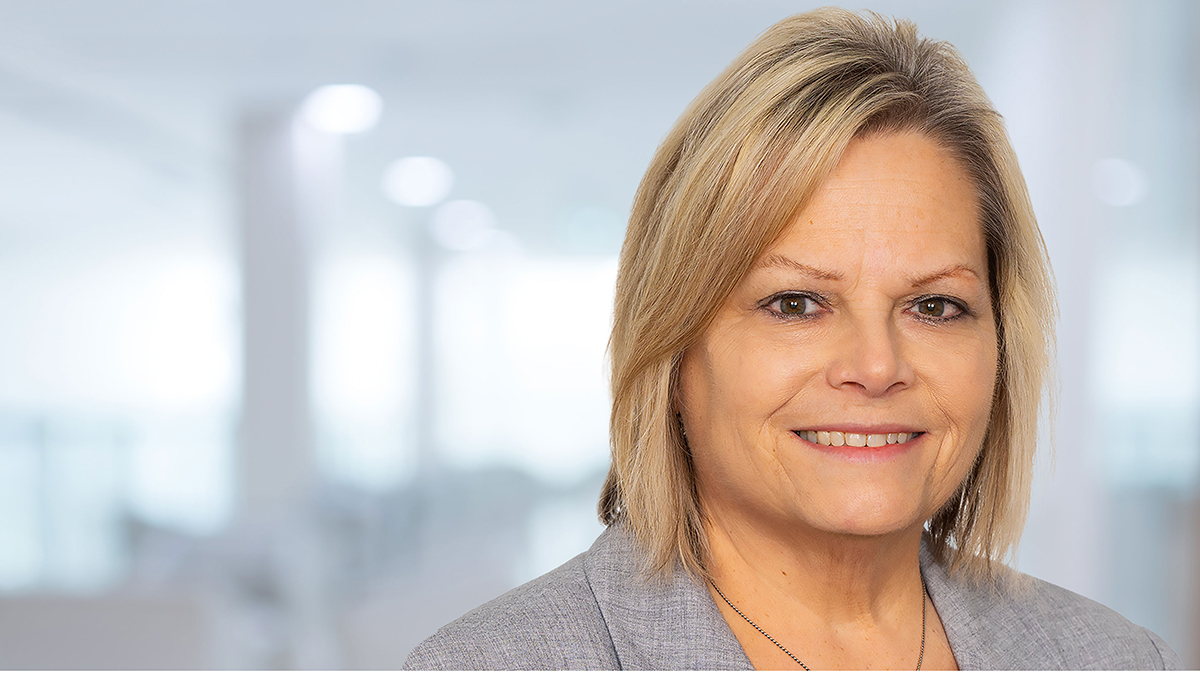
Empowering PCNAs to Deliver World-Class Care
Patient care nursing assistants provide invaluable care at the bedside alongside clinical nurses. "I'm very passionate about our PCNAs, especially on medical-surgical units," says Barbara Zinner, DNP, RN, NE-BC, CENP, Vice President, Chief Nursing Officer at Cleveland Clinic Marymount Hospital and Marymount Sports Health. "I've put some focus and some energy into making sure that they are recognized, rewarded and developed." In this podcast episode, Dr. Zinner shares strategies and initiatives that support PCNAs.
Advertisement
Cleveland Clinic is a non-profit academic medical center. Advertising on our site helps support our mission. We do not endorse non-Cleveland Clinic products or services. Policy
Recent Episodes
Leaning into Evidence-Based Practice
Evidence-based practice involves three factors: using high-quality research to guide nursing practice, relying on clinical expertise and inv…
Caring for Patients with Chronic Lung Disease
Four to six percent of Americans live with some form of chronic lung disease, and it remains one of the leading causes of death and illness…
Back to School: Is it Time to Pursue Another Nursing Degree?
Lisa Baszynski, DNP, RN, NE-BC, Associate Chief Nursing Officer (ACNO) for nursing education and professional development at Cleveland Clini…
Video content: This video is available to watch online.
View video online (https://cdnapisec.kaltura.com/p/2207941/sp/220794100/playManifest/entryId/1_rd92kn5a/flavorId/1_5f3sgelj/format/url/protocol/https/a.mp4)
Transcript
Carol Pehotsky:
Patient care nursing assistants, patient assistants, patient care assistants. As Shakespeare would say, "A rose by any other name wouldn't smell as sweet." No matter what the role is called in your organization, the caregivers who provide that care at bedside with us are so important, not just to the nurse and PCNA (Patient Care Nurse Assistant) relationship, but to our relationship with our patients and making sure that we're always providing the best care even when it's in partnership with other colleagues. I'm joined today by Dr. Barb Zinner to talk more about what she and our colleagues across the organization are doing to help empower and develop our PCNAs.
Advertisement
Cleveland Clinic is a non-profit academic medical center. Advertising on our site helps support our mission. We do not endorse non-Cleveland Clinic products or services. Policy
Carol Pehotsky:
Hi, and welcome to Nurse Essentials, a Cleveland Clinic podcast where we discuss all things nursing, from patient care to advancing your career, to navigating tough on the-job issues. We're so glad you're here. I'm your host, Carol Pehotsky, Associate Chief Nursing Officer of Surgical Services Nursing.
Carol Pehotsky:
Welcome back everyone. A lot of us who are nurses spend some time, either before going to nursing school or during nursing school, working in some sort of patient care assistant type role. I had the great pleasure of being a Behavioral Health Technician during my nursing school career and it was this wonderful mix of tapping into some of my previous schooling and experience in psychology, but also really getting some fantastic hands-on care with the patients we served. At Cleveland Clinic, we refer to a lot of those roles as Patient Care Nursing Assistants and such fantastic colleagues. Some of them are career PCNAs, some of them are doing this during nursing school, but no matter what road they took to get to us or which road they travel, PCNAs are such valued colleagues that help us deliver the type of care and the level of care that our patients expect.
Carol Pehotsky:
So, on that topic of supporting our PCNAs and partnering with them and helping develop them, it's my great pleasure and honor to introduce our guest today, Dr. Barb Zinner. Barb is the Vice President, Chief Nursing Officer of Marymount Hospital and Marymount Sports Health. Barb, welcome. Thank you for joining me today.
Advertisement
Dr. Barb Zinner:
Thank you, Carol. It's truly an honor to be here.
Carol Pehotsky:
You are super passionate about this topic, and I can't wait to get into it, but first, if you wouldn't mind indulging me, can you share a little bit with our audience about your nursing journey?
Dr. Barb Zinner:
Oh, sure. I have had a wonderful, wonderful nursing journey. I graduated from Bowling Green State University. My first job was here in Cleveland at the Cleveland VA in the intensive care unit. Moved on from there to St. Vincent Charity Hospital into management. And I've been here at Cleveland Clinic Marymount Hospital. In June, it'll be 32 years.
Carol Pehotsky:
Wow, that's amazing.
Dr. Barb Zinner:
Yes. Blessed, humble, thankful. I came here as a Critical Care Educator, moved into the Director of Education when we had both positions and then was moved back into nursing as the Nursing Director, and then for the last 13 years as the Chief Nurse. Again, honored, blessed, and so humbled to be in this role at Marymount Hospital for that amount of time.
Carol Pehotsky:
And a great example of there isn't one path to take to go into leadership and to be able to lead an amazing team like you do at Marymount Hospital. Let's talk about PCNAs. From your perspective, how do PCNAs contribute to the overall quality of the patient care we provide?
Dr. Barb Zinner:
I'm very passionate about our PCNAs and especially on the medical surgical units. We know we're living in the world of a nursing shortage. We know that on med-surg it's even more difficult to get the registered nurses. And so now, it is even more important to make sure that patients have caregivers. We really took a deep dive into how are we going to provide care on med-surg? Ultimately, what really popped up is we have to create a strong team and that team is the registered nurse alongside, equally important, is that patient care nursing assistant. So, knowing that I've put some focus and some energy into making sure that they are recognized, rewarded, and developed.
Carol Pehotsky:
Fantastic. Let's go into each of those. Let's start with develop. We certainly have the great pleasure of sometimes hiring folks into this PCNA role who have experience, but oftentimes this might even be their very first healthcare role. So how do we approach that initial onboarding? We'll start there, the onboarding of PCNAs, how do we really help people who are maybe new to healthcare learn not just the role, but their role within our organization?
Dr. Barb Zinner:
Well, Carol, we are very blessed that we have Lisa Baszynski, our associate chief nursing officer for education, and her team does an excellent job when we hire getting the PCNAs, the new hires through a wonderful, very comprehensive orientation. From there, they come to each of the hospitals and that's when each hospital spends time making sure that their orientation is tailored to what they need and making sure not only is their orientation picture perfect, but the retention also. So, it's one thing to hire the candidate in and to orient them, but it's equally important to retain them.
Advertisement
Dr. Barb Zinner:
And I like to share with you what I consider with the PCNAs. I call them the three buckets. The three buckets are, if you're a caregiver at Cleveland Clinic for a PCNA, you may want to go to nursing school. That's one bucket that they're trying to get into a nursing school. They want to be a nurse. There's another bucket that they are in nursing school. And then the third bucket, which I believe I've really honed in on is what we call the pros in place. PCNAs who want to continue to be an excellent PCNA.
Dr. Barb Zinner:
They tell me, "Barb, I don't want to go to nursing school. I want to keep doing what I do right now because this is my passion. This is my place. This is what I've meant to be." The pros in place is what we've really spent some time honing in on. And how have we done that? Well, you may know already that under Dr. Mary Beth Modic, she has established the Magnus journey. It's not a program; it is a journey. And we know Magnus is a Latin word that represents greatness, powerful and important. And in her journey, we've had assistant nurse managers, nurse managers, registered nurses in the Magnus journey for that reason to empower them.
Dr. Barb Zinner:
I approached our boss, Meredith Fox, and I said, "Can we do a PCNA Magnus?" And she said, "Absolutely. Talk to Mary Beth." So, Dr. Mary Beth Modic took it upon herself. She's had probably five cohorts of a PCNA Magnus journey so that the pros in place continue to develop. It has been transformative. The PCNAs that have been in her cohorts come from all the hospitals, not just Marymount. We're talking that every hospital sends their pros in place to its four sessions, but it truly is a journey. And then from the journey, they were so empowered that we asked to keep them together. Now we call it the PCNA Task Force, and they come together every third week. It's all volunteer. They come here to Marymount, and we ask them what keeps them up at night. What would they like to work on? And they have worked on some wonderful initiatives.
Advertisement
Dr. Barb Zinner:
They've helped define and share what AM care should look like. They help define and share what the HS care should look like. They know that they're the ones that when we have a candidate coming in for a shadow experience, that they're the ones that are with this candidate showing them their unit. They said, "These are the questions we need to ask this potential candidate so that they fully understand what our PCNA role is." They develop the questions.
Carol Pehotsky:
So, they're really doing a peer interview almost when they're shadowing. Oh, it's fantastic.
Dr. Barb Zinner:
Yes. That's really where our development is and we're always looking to expand those to come on board to the PCNA Magnus Task Force.
Carol Pehotsky:
Fantastic. What are some of the topics or themes that are covered in that PCNA Magnus journey?
Dr. Barb Zinner:
The Magnus journey truly isn't about empowerment. Mary Beth does a wonderful job on words matter to really be aware of the choice of words and how you say them. There's a lot of role playing and skill development for the PCNAs, how they were before and how they were after. As I keep saying, it's transformative.
Carol Pehotsky:
You've also done a lot of work with the team in terms of PCNAs precepting PCNAs and really feeling empowered to say, "Come along with me on this journey." What sort of things have you done to help develop that PCNA preceptorship to have those skills, but also that sense of ownership?
Advertisement
Dr. Barb Zinner:
Again, I have to give my colleagues such great credit because Lisa Baszynski and her team created a PCNA preceptor program.
Carol Pehotsky:
Fantastic.
Dr. Barb Zinner:
You can't ask for more than that. What we have done with the Magnus group is role played on how do you deliver sometimes some difficult feedback to the person that you're precepting without creating negativity? How do you give that? And they were so thankful, again, for choosing the right words, but being able to deliver the message for the sole goal of helping this new hire.
Carol Pehotsky:
Sounds a lot like shared governance too. Can you talk a little bit about how you and some of our other leaders in the organization have really said, whether it's Task Force members or others, how do we incorporate our PCNAs into that shared governance model that we have?
Dr. Barb Zinner:
Again, I have to give my other colleague, Dr. Shannon Kunberger, the VP Chief Nurse at Euclid, where she has included PCNAs in her hospital nursing practice council and that's worked very, very well. I can say that I'm well aware that each hospital has a PCNA council in of itself and Shannon took it a step further and included her PCNAs in the hospital with the other registered nurses. It is important that we hear their voice. They're the ones truly at the bedside along with their team member, the registered nurse. Equally important is that RN, PCNA paired up team. We really need to ask and listen and ask them to help us create the best solutions for change.
Carol Pehotsky:
So, you've led beautifully into the next question, which is that we're doing really fantastic things. The rubber meets the proverbial road when it comes to at the bedside that RN and that PCNA, each of whom might have some preconceived notions about each other's roles and the interactions, et cetera. What sort of work has been done to really highlight the importance of mutual respect and communication?
Dr. Barb Zinner:
Within the PCNA Magnus Group, we talk about walking in your shoes to really stop, pause and make sure that you understand or you try to understand what someone else is doing in that moment to be kind to really, just stop and pause and say, "I wonder what their journey has been, what their story is?" I also say when I used to leave a shift is, I would do a self-reflection. And we asked the PCNAs to do a self-reflection and what we have them ask themselves is, "Did I help or did I hinder today?"
Carol Pehotsky:
Oh, that's good.
Dr. Barb Zinner:
Some self-reflection to say, "Oh, tomorrow I am going to make sure that I definitely can answer that question by saying, I helped."
Carol Pehotsky:
That's probably wise counsel to us all. No matter what role we have. And so, with this focus and development our PCNAs, what sort of things are you seeing in terms of whether either measurable outcomes or that nurse to PCNA interaction and the patient experience?
Dr. Barb Zinner:
So, what I have observed is so much increased confidence within the PCNAs. They speak up advocating for the patient. They speak up in reference to always doing the right thing. Some of the group and the PCNA Magnus have presented at conferences, at meetings, which they say to me, "I would've never done this before." And they present themselves as highly professional. There is confidence that is palpable and visual with the PCNAs who have gone through this.
Carol Pehotsky:
So, listeners, you may be listening from all sorts of states. Of course, listen to your Nurse Practice Act in your state, but in the state of Ohio, certainly they're defined rules and regulations around the task of delegation. There are expectations of the registered nurses. With this confidence that's coming out of the PCNAs, are you seeing that delegation and that conversation changing at the bedside between the registered nurses and the PCNAs?
Dr. Barb Zinner:
What I have seen is more understanding between the two of what delegation is and how communication between the two is utmost important, that checking in with each other is happening more so than ever before.
Carol Pehotsky:
Patients are too complex. Their care is changing too rapidly to wait for a change of shift to have that communication, yes?
Dr. Barb Zinner:
Right. We really push that the RN and the PCNA get a report together on their patients and that during their shift that they come together to give updates, and then at the end of the shift, that they come back together for a quick wrap up.
Carol Pehotsky:
Fantastic. So going back to your buckets, I love that. Some of us, myself included, are in that middle bucket of we're in school and we're going along and we certainly know that we have PCNAs who are not yet on that nursing school journey but are looking to do that. What sort of support do we have in place, or have you seen leaders provide? Let's start with the PCNA individual who is not yet on a nursing school journey, but wants to do that also with the commitments of work and how can we better support those individuals?
Dr. Barb Zinner:
I believe one of the very first things that we do across the board is to try to pair them up with someone who is in school. It's so important. Carol, you and I both know, we did it working full-time, that they fully understand that anyone who is working full-time in any position fully understands what it's like to carry a full-time load in school and work at the same time. We try to pair them up with somebody, at least one time, so that they fully understand what their life is going to be like while they're in school. It's different, and you have to be prepared for that because we want them to be successful.
Dr. Barb Zinner:
We want them to be successful in their performance at work, and we want them to be equally successful in school. We want them to go in eyes wide open. So, we try to pair them up so that they fully understand what it's going to be like. What else do we do? We will help them as much as we can get to the right school for them. We will give them options, but ultimately, it's their decision about what school is the best one for them. We want to educate them as much as we possibly can on their options.
Carol Pehotsky:
We're very fortunate in both Ohio and in Florida. There's a range of nursing schools that surround all our hospitals. So, it's a great point about... It's a journey no matter what path you take. And you're right, our educational colleagues are also so amazingly helpful and knowledgeable when it comes to the different nursing schools in our areas and having that sense of this program versus that and what they look like.
Dr. Barb Zinner:
And then Carol, we know that we've also invested in helping some of our PCNAs to enter the LPN program, Licensed Practical Nurse program, and hopefully then they'll move on to the Registered Nurse to RN program. But that is a wonderful stepping stone. Here at Marymount years and years ago, we had our own LPN program that has, of course, since closed. We've always had LPNs here and we believe in the role that they play. They're a highly important role and we are thankful that we have always had LPNs here. And I know that we are also helping our PCNAs get into the LPN program as well as the Registered Nurse program.
Carol Pehotsky:
Yes. The path to nursing can take all sorts of forms. And it's lovely that in our geographic area, there are those options that we can help our PCNAs pursue. So, being a Nurse Manager, the hardest role in the Cleveland Clinic, I think we both argue, how can they best support really each of those buckets? How do I support the pro in place? But either that person who's looking to get on that nursing school journey or on that nursing school journey, we have patients that serve 24-7. What are some things that nurse manager can do?
Dr. Barb Zinner:
One of the great things that all nurse managers do across the board here is they create that individual relationship with their caregivers sitting down talking to them, asking them, "What matters most to you and how can I help you get there?" We call them check-ins. Nurse managers are doing them all the time. That's one very simple but powerful way of retaining caregivers, letting them know you care. I want to know what matters most to you and how can I help you get there? I do know that the managers are creating those relationships. They're asking those questions and they're asking the PCNAs, "How can I help you get there?" If it's a pro in place, they're looking at them to be the leaders on their unit. They're looking to them to be the preceptors for any new hires coming in place. They're making sure that if any new initiatives rolled out, that they're the first ones that fully understand it so that they can role model whatever the change is to the rest of the caregivers.
Dr. Barb Zinner:
Those in school are making sure that they're doing okay. They're making sure that they are at a place where they can continue performing at work and in school. They may be looking at their schedules, having that collaborative discussion to make sure that the work requirements can be met equally with the school requirements. Those conversations are happening and those that want to be thinking of school, they're making sure that they get educated to make the right decision for them.
Carol Pehotsky:
Absolutely. If you're somebody on that nursing school journey, know that your nurse leaders want to work with you and then that's a dialogue, right? It's a back and forth that says, "What are some absolutes?" I have clinicals on Tuesdays versus we want you to be successful. We want you to have enough time to study and to read, et cetera. And in a full or part-time role, this is what that looks like from an employment standpoint. Any other thoughts on that angle? Again, I can just imagine nurse managers saying, "Hey, I have all these shifts to fill, and I want to be flexible." But maybe what's some feedback for that PCNA who is in nursing school? How would you recommend they bring that to their nurse managers and really make that a partnership?
Dr. Barb Zinner:
I would agree with you that there's always, for the manager, patients to care for. I'm going to say in the world that we are in today, it is equally important to retain who you have, and their thought process has been, how can I do both? How can I compromise, collaborate with the PCNA, with my caregiver, so that I get the best of both worlds? I get this PCNA who wants to be a nurse and hopefully will then take a position on the unit as well as making sure the patients are being taken care of. I believe as leaders, it's our duty to continue growing our nursing profession and this is just one way in which we can do that. By opening ourselves up to think differently and to advocate for equally important the patient and the caregiver, yet getting to a solution that meets both needs. I think that that shift in the mindset truly has happened with our nurse managers.
Carol Pehotsky:
It's also that nursing student having some willingness to be creative and flexible. What does it look like? How can we meet in the middle? And/or we're very fortunate that we have also PRN type roles. So, if it really is becoming, I'm not going to be successful in nursing school and still work full or part-time hours, it might be time to have that dialogue that says, “what does it look like to stay connected, but maybe not in that many hours of work?”
Dr. Barb Zinner:
And that's the beauty of being within the Cleveland Clinic Enterprise. We have other options to keep the caregiver actively employed.
Carol Pehotsky:
It's playing the long game, right?
Dr. Barb Zinner:
Yes.
Carol Pehotsky:
Investment now will absolutely reap benefits in the future. So, you've shared so many great and helpful tips for our audience today. I'm confident there are leaders listening who are not part of Cleveland Clinic. Their wheels are turning about how they can support their PCNAs. So, somebody's thinking about starting that journey. What advice do you have for them, resources or thought processes they need to undergo to start this journey in their organization?
Dr. Barb Zinner:
First and foremost, I would make sure that you have the voice of the PCNAs heard, that you have a venue, a forum, a dedicated time that you listen, that you ask and listen to the voice of the PCNA. From there, I would advocate that the managers are having those conversations with all their PCNAs to say, "What bucket are you in? Do you want to strive to be that pro in place? Are you in nursing school? Do you want to go to nursing school?" And then the second one is, how can I help you get there? And then the third one for the pros in place is, what type of journey... Remember, again, our Magnus is not sessions, it's a journey. What type of content would you need to put in place for your PCNAs to attend to really, really show them how much they mean to the organization so that they truly feel their greatness, they're powerful and that they're important. What type of a journey would you need to put in place to really show that they truly are vital to the organization?
Carol Pehotsky:
Well, and the Magnus part, of course, has structure around it in terms of caregivers who lead those efforts. But your point is well taken that having those conversations is part of a nurse leader's job. It isn't necessarily something else to do. It's considering things differently and meeting caregivers where they are. Thank you so much. You shared such great wisdom with us today. Before we sign off, what's one skill you've always wanted to learn?
Dr. Barb Zinner:
Well, the skill that I've always wanted to learn is to play the piano so that I could write a song.
Carol Pehotsky:
Oh, cool. Thank you so much for joining me today.
Dr. Barb Zinner:
Thank you, Carol.
Carol Pehotsky:
As always, thanks so much for joining us for today's discussion. Don't miss out. Subscribe to hear new episodes wherever you get your podcasts. And remember, we want to hear from you. Do you have ideas for future podcasts or want to share your stories? Email us at nurseessentials@ccf.org. To learn more about nursing at Cleveland Clinic, please check us out at clevelandclinic.org/nursing. Until next time, take care of yourselves and take care of each other.
Carol Pehotsky:
The information in this podcast is for educational and entertainment purposes only and does not constitute medical or legal advice. Consult your local state boards of nursing for any specific practice questions.
Recent Episodes
Leaning into Evidence-Based Practice
Evidence-based practice involves three factors: using high-quality research to guide nursing practice, relying on clinical expertise and inv…
Caring for Patients with Chronic Lung Disease
Four to six percent of Americans live with some form of chronic lung disease, and it remains one of the leading causes of death and illness…
Back to School: Is it Time to Pursue Another Nursing Degree?
Lisa Baszynski, DNP, RN, NE-BC, Associate Chief Nursing Officer (ACNO) for nursing education and professional development at Cleveland Clini…
Never miss a moment - subscribe now.
Listen to the Health Essentials Podcast on your favorite streaming platform.
Other Podcasts You May Love
MedEd Thread
MedEd Thread explores the latest innovations in medical education and amplifies the tremendous work…
Health Essentials
Tune in for practical health advice from Cleveland Clinic experts. What's really the healthiest diet…
Beyond Leadership
Hosts Jim Pae and Elizabeth Pugel escort you through a network of thought leaders, sharing world-cla…
Studies in Empathy
Join Cleveland Clinic Patient Experience leaders and a group of guests with a wide range of experien…