



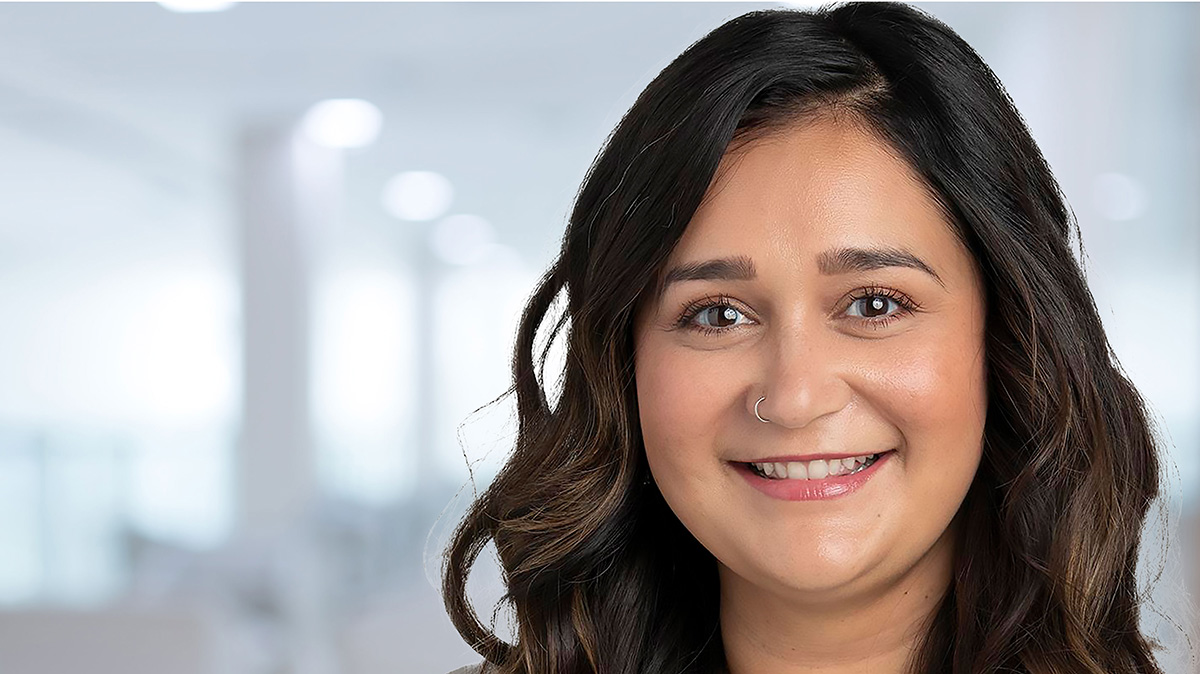
Caring for Patients with Lung Cancer
While lung cancer is among the top three most common cancers in the United States, research has led to new understandings of the disease and new treatments for it. During her two years in thoracic medical oncology with the Cleveland Clinic Taussig Cancer Center, Alexandria Jordan, PA-C, has treated many of the same patients - some who have lived with metastatic lung cancer for a decade. In this episode of Nurse Essentials, she discusses the latest science behind lung cancer, as well as the role of nurses on her interprofessional team and how they support patients.
Advertisement
Cleveland Clinic is a non-profit academic medical center. Advertising on our site helps support our mission. We do not endorse non-Cleveland Clinic products or services. Policy
Recent Episodes
Leaning into Evidence-Based Practice
Evidence-based practice involves three factors: using high-quality research to guide nursing practice, relying on clinical expertise and inv…
Caring for Patients with Chronic Lung Disease
Four to six percent of Americans live with some form of chronic lung disease, and it remains one of the leading causes of death and illness…
Back to School: Is it Time to Pursue Another Nursing Degree?
Lisa Baszynski, DNP, RN, NE-BC, Associate Chief Nursing Officer (ACNO) for nursing education and professional development at Cleveland Clini…
Video content: This video is available to watch online.
View video online (https://cdnapisec.kaltura.com/p/2207941/sp/220794100/playManifest/entryId/1_7km7g8s7/flavorId/1_5f3sgelj/format/url/protocol/https/a.mp4)
Transcript
Carol Pehotsky:
There have been so many advances in cancer care throughout the years and specifically in lung cancer. Patients are being given the opportunity to live longer and to develop a quality of life. Despite all of this, we do know unfortunately that lung cancer remains in the top three cancers globally and in the United States and remains one of the leading causes of cancer death worldwide. I'm joined today by Alexandria Jordan, certified physician assistant, to discuss current state in lung cancer care and how nurses can support patients along their journey.
Advertisement
Cleveland Clinic is a non-profit academic medical center. Advertising on our site helps support our mission. We do not endorse non-Cleveland Clinic products or services. Policy
Hi, and welcome to Nurse Essentials, a Cleveland Clinic podcast where we discuss all things nursing, from patient care to advancing your career, to navigating tough on the-job issues. We're so glad you're here. I'm your host, Carol Pehotsky, Associate Chief Nursing Officer of Surgical Services Nursing.
Welcome back everyone. Our topic today is about lung cancer, and the unique care needs of patients with this disease. As I was reflecting on and preparing for this episode, I was very young, probably at the ages of four to six, when a family member did end up with lung cancer. It was somebody larger than life who honestly, my memories of them are basically behind a cloud of smoke. This was in the 70s. A lot of smoking happened back then. So, when that person eventually passed away, then in my head it was like, lung cancer equals smoking. We all know smoking is bad. And that's where my six-year-old brain went.
Unfortunately, fast-forward to many years later, another relative of mine on that same side of the family ended up passing away from lung cancer as well. This was 22 years ago, so they never really did know why. Was it family? Was it something else they were exposed to? But a young family member, it really shook all of us, especially me thinking that lung cancer equals smoking and this was absolutely not the case. It is the second most common cancer in the United States, I believe. And with that, I'm pleased and delighted to introduce you all to Alexandria Jordan. Alex is joining us from our Taussig Hematology and Oncology Center, and she's a certified physician assistant. Thank you so much for joining me today, Alex.
Advertisement
Alexandria Jordan:
Hi, thank you for having me, Carol. Happy to be here.
Carol Pehotsky:
Yes. Before we get into the nuts and bolts, can you tell us a little bit about your career? What got you interested and excited about healthcare and where your journey has taken you?
Alexandria Jordan:
Okay. Similarly, when I was young, a family member had cancer, not lung cancer, but I was exposed to it when I was 10. My family member having that is okay now.
Carol Pehotsky:
Oh, good.
Alexandria Jordan:
However, I always was drawn to oncology care. And I knew I wanted to work in medicine. Going through undergrad, I knew I was pre-med or some sort of medical career. I worked in an outpatient dermatology office for three years.
Carol Pehotsky:
Nice.
Alexandria Jordan:
I realized I worked closely with the PAs there and I said, "I'm going to go to PA school. I think this is great." They saw patients, they did procedures, they did a lot. So ended up going to PA school. I went to Barry University in Miami Shores, Florida.
Carol Pehotsky:
Nice.
Alexandria Jordan:
So, I got to live in Florida, South Florida for three years. It was great.
Carol Pehotsky:
And you still managed to pay attention and go to school. Good job.
Alexandria Jordan:
For the most part. No, I'm just kidding. Yes, I did. I did pretty well. During my PA school time, I had rotations in surgery and emergency medicine. Didn't do an oncology rotation. However, the surgery rotation led me to my first career choice as a physician assistant, which was working in thoracic surgery where I worked for three years at Lahey Hospital Medical Center in Burlington, Massachusetts.
Carol Pehotsky:
Oh, wow. Okay.
Alexandria Jordan:
That was my first career.
Carol Pehotsky:
Did you actually scrub in and assist?
Alexandria Jordan:
Yes.
Carol Pehotsky:
Nice.
Alexandria Jordan:
I did. I saw a lot of patients pre-op with the surgeons. I saw them intra-op. I was in there. They were doing a lot of robotic surgeries then. And saw them post-op, rounded on them on the floor.
Carol Pehotsky:
Nice.
Alexandria Jordan:
I also did an outpatient clinic. So, I just saw these patients, continuity of care. I got married. Some of them made me these cute little gifts.
Carol Pehotsky:
Love it.
Alexandria Jordan:
I loved that patient interaction, that one-on-one, getting to know them. But after we got married, we decided we wanted to move closer to home. My husband's from here. Like I said, I did a rotation in emergency medicine and I really liked it. It was a variety of things. And I ended up working at Cleveland Clinic emergency room here at main campus and did that for five years. It was great.
Carol Pehotsky:
Wow. You saw everything.
Alexandria Jordan:
I saw everything. I used to joke, I'm a jack of all trades, master of none.
Carol Pehotsky:
That's all right.
Alexandria Jordan:
The physicians down there are brilliant. We have so many complex cases that come through Cleveland Clinic main campus, but I kept missing that patient interaction where I can admit them to the hospital, but what happens after they get into the hospital or I can discharge them home, but what happens after they get home? That camaraderie with a patient on their journey through their healthcare scare. And ultimately after five years, I decided to start looking on the job board at Cleveland Clinic and I saw that they had a lung cancer oncology position. I said, "Wow, I did thoracic surgery. I know a lot about just medicine in general, working in the emergency room." I applied and I got it and it was one of the most amazing career changes for me.
Advertisement
Carol Pehotsky:
[inaudible].
Alexandria Jordan:
And the team, the doctors I work with, the nurses I work with, they have been amazing. They've been so supportive. When I transitioned, it was just great. The APPs that I work with were great at helping me orient to the institute because it's outpatient medicine now. And just getting an idea of just how the things flow there.
And I got to see my own patients and help. I tell all my patients the first time I meet them, I say, "I'm an extension of your doctor. I am here to answer questions, if you have any concerns that I cannot address, I will reach out to your doctor. I will call them when I leave the room. I will reach out to them. They're always within a phone call away from me if I can't address it, but I just want you to know that I'm here on this journey with you." So that's what led me to lung cancer.
Carol Pehotsky:
So, we know a lot more about what potentially can cause lung cancer, what is and is not modifiable. Talk through a little bit about what we know in terms of that these days with science.
Alexandria Jordan:
With the science, they've been identifying these genetic mutations that are happening in the tumors, whether there's the most common one is EGFR where there's a specific mutation in the epidermal growth factor receptor and it starts to formulate this lung cancer, adenocarcinomas type, and then those ones can be a little bit more aggressive because people don't realize that they're going to get lung cancer because it's very classic, non-smoker, usually younger and they present because they were having a chronic cough or back pain-
Advertisement
Carol Pehotsky:
Oh gosh.
Alexandria Jordan:
... or something incidental and it turns out that they had a primary lesion in their lung-
Carol Pehotsky:
Oh wow.
Alexandria Jordan:
... that ended up spreading elsewhere. But the nice thing about that is that there's been so much research. They found that mutation and they were able to target that mutation with TKIs, which are tyrosine kinase inhibitors and stop the growth-
Carol Pehotsky:
Oh wow.
Alexandria Jordan:
... the continued replication of the cancer cells and lead to cancer cell typical death. And sometimes these patients, and not just EGFR, but I have patients with, there's many different mutations, ALK mutations, there's a BRAF V600E mutation, and there's many different mutations, but they'll start the targeted therapy and they'll say, "Within five days I felt better."
Carol Pehotsky:
Really?
Alexandria Jordan:
That's how quickly these drugs are working for these patients.
Carol Pehotsky:
That's amazing. So not just identification, but the treatment has come a long way.
Alexandria Jordan:
So far. And they're not in for chemo. They don't come in to get chemotherapy at all. They just take their pills every day and they come in every three months-
Carol Pehotsky:
Oh wow.
Alexandria Jordan:
... for CT scan surveillance.
Carol Pehotsky:
Wow.
Alexandria Jordan:
And yes, just to keep an eye on it. So, they're taking medicine at home. They don't have to feel like... A lot of patients feel like they're sick-
Advertisement
Carol Pehotsky:
Sure.
Alexandria Jordan:
... when they come in and get their chemo and having to come in the infusion, but this is a change for them. And I feel like this is more... Even when I worked in lung cancer, I don't remember hearing about really any of these specific targeted therapies 10 years ago. So, there's been a lot of evolution in the way we treat lung cancer and these specific mutations.
Carol Pehotsky:
So, I appreciate that you came from thoracic surgery where you probably did some wedge resections or other things for cancer. Has that evolution and therapy resulted in fewer surgeries or maybe just different types of cancer still need some lung type of surgery?
Alexandria Jordan:
An EGFR mutation, if it's an early stage, they're still going to get surgery. You want to get it out. The goal is to get the cancer out and then they go on indefinite oral therapy typically. It used to be three years. They're trying to change it to be an indefinite Osimertinib therapy is the targetable mutation therapy.
Carol Pehotsky:
All right. Thank you. So much that these patients go through on this journey. Let's start at the beginning. Somebody does come in, whether they are a smoker or they're somebody with a cough and they receive this diagnosis, that could happen inpatient setting, it could happen outpatient setting. Nurses could be presented with that situation in a variety of settings. What advice do you have for them? What do you do to help support patients through these very early days of diagnosis?
Alexandria Jordan:
I want them to know that I'm their advocate. This is a very vulnerable time, getting diagnosed with cancer in general, and then the statistics of lung cancer out there, which patients kind of have guilt if they're smokers, but also if they're non-smokers, "Hey, I didn't smoke."
Carol Pehotsky:
What did I do wrong?
Alexandria Jordan:
Yes.
Carol Pehotsky:
Oh, gosh.
Alexandria Jordan:
I want them to know that I'm an advocate. I get to know them very, very well, the ones that are in chemotherapy or immunotherapy, which we can talk about later. I see them every three to four weeks. So those initial visits, I want them to know that I'm someone that they can count on. I'm an advocate. I'm going to help them however I can. The nurses on the team have been so helpful. They give patient education. They meet with the patient at their first infusion where they go through all the drugs. I go through it in their office visit with me, but then they do it more in depth. They give them a thermometer. They give them a binder with everything.
Carol Pehotsky:
Oh, good.
Alexandria Jordan:
And they go home with a little Cleveland Clinic bag, knowing that it's okay to be scared. The first question I ask them is, "How do you feel today?" And I would say, 90% say nervous.
Carol Pehotsky:
Of course.
Alexandria Jordan:
And I say, "That's totally normal and that's fine. I'm here to help you." Then I go through everything that they're going to be getting. In our specific EMR, there's this infusion system-
Carol Pehotsky:
Oh, nice.
Alexandria Jordan:
...that we can look at all the orders and I go through each medicine that they're getting. So, they understand it, even their antiemetics, any steroids that they might need. And then I go through each chemotherapy or immunotherapy drug that they're getting and explain their side effects, just so they have an idea of what's going in their body because they're getting these drugs that are not normal.
Carol Pehotsky:
And they've probably only heard bad things about them, if anything.
Alexandria Jordan:
For sure.
Carol Pehotsky:
The fear of the diagnosis, and I'm sure also the fear of what the treatment is going to do to me as well.
Alexandria Jordan:
Yes. And "Oh, my cousin had this and they were horrible. They were sick." And I tell them, "Let's focus on you. I treat my patient and I make sure that you're okay and comfortable."
Carol Pehotsky:
And with even the early conversation we had about this targeted therapy, it really is individualized medicine. So, you won't have the same experience as someone else.
Alexandria Jordan:
Exactly. I had someone come and say, "Well, so-and-so had to take this pill every day. Why don't I get that?" "Well, they probably had a different type of lung cancer." "Well, aren't they all the same?" "No."
Carol Pehotsky:
Yes. And thank goodness we have the science to help us do that targeted therapy.
Alexandria Jordan:
Yes.
Carol Pehotsky:
That's fantastic. You mentioned immunotherapy. Let's go there next. Tell us a bit more about what those treatments look like for patients with lung cancer.
Alexandria Jordan:
Immunotherapy is an amazing development in the treatment of any type of cancer. They specifically are targeting the PD-L1 or PD-1 inhibitors. And some of them also are inhibitors for the CTLA-4. The one we typically work with is going to be a PD-L1. Essentially how I describe it to patients is your cancer is hiding under an invisibility cloak. It's the easiest way to describe it to my patients. And this immunotherapy binds to the invisibility cloak to expose your cancer. Your body identifies that that is not normal tissue and attacks. So, it makes your immune system get rid of your cancer. It doesn't do anything to your cancer directly, but it-
Carol Pehotsky:
Frees it up to do its job.
Alexandria Jordan:
It frees it up because otherwise your body would take care of things. It doesn't like anything that's not normal. So essentially, it's great, right? We found the cure for cancer. Unfortunately, though, we have these invisibility cloaks throughout our entire body, whether it be on our skin, our thyroid, our kidneys, our liver, our lungs, that it can remove our invisibility cloak to normal tissues and you can get immunotherapy-related dermatitis. You can get thyroiditis where we monitor TSH levels. You can get colitis where you get excessive diarrhea. Typically, manageable with over the counter for the skin. Diarrhea, we can do anti-diarrheals. And then thyroid, we can give Levothyroxine. However, if it gets really bad, patients have to go on systemic steroids, which are at high doses, would counteract the effects of immunotherapy because we're trying to stop the immune system from working.
Carol Pehotsky:
Yikes. Yes.
Alexandria Jordan:
So, we tend to stop immunotherapy if something gets too severe, inflammation of the lungs, inflammation of the kidneys, inflammation of the liver. We've held treatment on patients because we want to see things fizzle, go down without steroids or we're able to monitor it with over the counter, which is great. Skin, we can do topical steroids, which are fine. Or you can do antihistamines for any type of itching and then lots of lotion. I tell everyone lots of lotion. Avoid the sun.
Carol Pehotsky:
And you mentioned this at the beginning, so let's return to that team. You are a member of an interprofessional team. Talk to us a little bit about what that patient can expect in terms of the various team members that are taking care of them and the nurse's role in that team.
Alexandria Jordan:
The nurse's role is your point of contact where you're calling in, you're sending a MyChart message, they are taking that and they are reaching out to either myself or the patient's primary oncologist. They're amazing for the patients because they need that. It's almost, you can't say one-on-one nursing, but they are one-on-one nursing. They call them my patients. They have a list.
Carol Pehotsky:
Sure. That's the same relationship that keeps you coming back for more too.
Alexandria Jordan:
Yes. They have this great relationship with their patients and ultimately, they are advocates for them just like I am. My team is great.
Carol Pehotsky:
I assume there's also a bounce between oncologists and pulmonologists and other stakeholders as well. How do you help coordinate all of that care and make sure we're all on the same page?
Alexandria Jordan:
I will say the advancements with electronic medical records have made it helpful for a patient. I was discussing with my husband recently about how we're able to reach out to providers even in different hospital systems quicker because of the EMR. And I think about 20 years ago-
Carol Pehotsky:
Not the case.
Alexandria Jordan:
It's not the case.
Carol Pehotsky:
Even if you had the same software, it still didn't talk to each other, but now it does.
Alexandria Jordan:
Quicker communication with other providers, whether it be someone in the Cleveland Clinic in Medina or someone here at main campus that we're able to get answers quicker. I'm able to use our EMR to message a pulmonologist, "Hey, I think they need an adjustment to their inhalers. Can you help manage that?" Surgeon, just so you know, this is their last treatment. Do you want to get started with the pre-op clearance, so they know that it's in their queue or they'll reach out to me? I had someone reach out to me about a patient that's planning to have surgery, that there's constantly that team approach to making sure that we're all in communication. An example that's not related to COPD or pulmonology is the example we had discussed earlier that I had a patient having severe back pain, severe.
Carol Pehotsky:
Oh no.
Alexandria Jordan:
That they had seen a spine surgeon who said, "I can work on your spine." And they planned the surgery, day of surgery comes, platelets are too low.
Carol Pehotsky:
Oh no.
Alexandria Jordan:
They weren't that low, but I could see his caution.
Carol Pehotsky:
Sure.
Alexandria Jordan:
And ultimately, they came back to me so uncomfortable, telling me that the back pain was so bad, that they were seeing palliative medicine for pain management. It just was not getting any better. And the surgeon was also concerned about a lesion on their gluteal region-
Carol Pehotsky:
Oh.
Alexandria Jordan:
... that could have been a source of an infection; however, it was healing. So, they had a dermatologist that I ultimately was able to reach out to. I started in the EMR.
Carol Pehotsky:
That's a lot to coordinate already.
Alexandria Jordan:
In the EMR, I attached the surgeon, the dermatologist, and the classical hematologist all in the EMR system. And I said, "Updated picture in the chart, please clear that it does not appear infected to me. Dermatology needs to clear. Classical hema, can you clear her with her platelets?" They ultimately got rescheduled the same day for their surgery that they were cleared by classical hematology.
Carol Pehotsky:
Oh, fantastic.
Alexandria Jordan:
And it was two days later.
Carol Pehotsky:
That's fantastic.
Alexandria Jordan:
It's amazing. This is a great story for the success of our EMR system.
Carol Pehotsky:
Yes. And for that patient.
Alexandria Jordan:
Yes.
Carol Pehotsky:
That's fantastic.
Alexandria Jordan:
They have been so happy. Two months later, they were hiking with their-
Carol Pehotsky:
Oh my gosh.
Alexandria Jordan:
... family in Utah-
Carol Pehotsky:
Oh wow.
Alexandria Jordan:
... and having a great time.
Carol Pehotsky:
That's fantastic. A cancer diagnosis, whether it's lung or other, doesn't necessarily mean I'm just going to do treatments and that's what my life has become. How do we get folks to a quality of life that works for them? How do we support them on that journey, whatever that looks like?
Alexandria Jordan:
Yes. That is a common misconception when you're getting chemotherapy is that you're just going to be sick all the time. The goal of chemotherapy when you're having it for a palliative approach where we look at two different intents, curative intent versus non-curative intent. Curative is, you're going to treat it, you're going to try to eradicate it. There's a different pathway for that, but non-curative is usually metastatic disease. And for some patients, there's a stigma that puts stage four as this, like it's a bad diagnosis where we can give you the medicines to control it, to give you the quality of life.
I look at that as a chronic disease at this point. I know it's not equivalent, but I explain it to patients that we're giving you the drugs to control your cancer so it doesn't grow and spread elsewhere so that you can have a quality of life that you love and you can spend time with family, you can do fun things with them as long as it makes you happy. It's all about extending your life but giving you a good quality of life.
Carol Pehotsky:
Yes.
Alexandria Jordan:
I see a lot of these patients every three to four weeks and we have this discussion. I always give them the option. I say, "If you're feeling good and you're up to it, your labs look good, you can go to treatment if you'd like to." And some say... It gives them the option rather than them feeling like it's required. And most say, yes, I want to do it. And I'd say, "I agree." Or some patients, we have that discussion where I'm saying, "You're not looking very good. Your labs look okay, but you-
Carol Pehotsky:
Don't look like you did three weeks ago.
Alexandria Jordan:
So, we can always push back a treatment, skip this treatment, because I want you to be happy and comfortable and I don't want you to feel like you're sick to the point where you can't enjoy your life.
Carol Pehotsky:
Sometimes unfortunately we have to get to the goals of care. How have you approached that with patients that you're sensing from them that their quality of life is decreasing, or the labs or what have you is looking like it might be time for palliative care?
Alexandria Jordan:
It's hard because in my role, I typically don't have a goals of care. I guess when you're saying palliative care or hospice discussion, that is something the oncologist typically has with them. They started the treatment, they know this patient from the beginning, more so than me, but I see them more frequently that I think it is important that the oncologist gets circled back in. Like I said, I reach out to the oncologist and I say, "Hey, so-and-so's not doing good. I think we need to do something." I've done that before and it turns out that there was disease progression or they just were not doing well and...
Carol Pehotsky:
And they have that relationship with you. I'm sure it's so meaningful for you to be part of that conversation because you see them every three weeks and you know what they've been going through.
Alexandria Jordan:
Yes. And sometimes the oncologist will tell me, "You've seen them more, what do you think?" And I say, "I think you need to have that discussion."
Carol Pehotsky:
What are some misconceptions about lung cancer, especially from patients? I think one of them is, "I'm just going to be sick."
Alexandria Jordan:
You can't live your life.
Carol Pehotsky:
The hourglass is flipped and it's just a matter of time. What misconceptions do you see either in the patient population or their families?
Alexandria Jordan:
Did mention this, a lot of patients think that smoking causes this. That's a huge misconception. Some patients think it's, "Ugh, I'm going to die." I've been in the oncology position with Taussig for two years now, and I've had some of the same patients the whole time.
Carol Pehotsky:
That's awesome.
Alexandria Jordan:
With metastatic lung cancer.
Carol Pehotsky:
Wow. Yes, there you go.
Alexandria Jordan:
The advancements that are going on, and some of them have had this for 8, 10 years.
Carol Pehotsky:
Wow. I'm sure an incredibly rewarding field, but sometimes a very challenging field.
Alexandria Jordan:
Yes.
Carol Pehotsky:
How do you take care of you?
Alexandria Jordan:
I listened to your podcast this morning and I said, "Okay, I do sleep well."
Carol Pehotsky:
Get in the zone.
Alexandria Jordan:
Yes, I was getting in the zone. I wanted to get an idea and I was like, "Oh, this is a really good podcast." And I guess I'm doing these things because I try to prioritize my sleep. I pack my meals everyday.
Carol Pehotsky:
Good job. Wellbeing. It's important.
Alexandria Jordan:
Wellbeing. I try to exercise. There is a disassociation I think a lot of us have to do from their job and go home and just be present. I have two young kids, they keep me very busy, but I think about my patients. If they pass, the nurses, they're amazing. They'll do sympathy cards for our patients and then we send them to the families. Ultimately, you take a moment, and you think about them and everything that you did for them and hope that you made a difference.
Carol Pehotsky:
And I'm sure you did.
Alexandria Jordan:
I hope so.
Carol Pehotsky:
Well, thank you so much for joining me today. Before we call it a day, we're going to flip to at least one less heavy question to let our audience get to know you a little bit more as an amazing human being, as well as an amazing provider who's delivered fantastic care to our patients. What's the best piece of career advice you've ever received?
Alexandria Jordan:
Trust your gut.
Carol Pehotsky:
Which you have all along, it sounds like.
Alexandria Jordan:
I have. I've had patients that I think my emergency medicine background also helps. I have diagnosed many conditions for very sick patients that are in the outpatient lung cancer setting and I've had to send a rapid response to the emergency room because they need rapid interventions that we can't do outpatient. Just listening to my gut has been very rewarding because I know that I'm helping the patient because I knew that something was wrong.
Carol Pehotsky:
Absolutely.
Alexandria Jordan:
It takes a while though to get there in your career.
Carol Pehotsky:
Absolutely.
Alexandria Jordan:
As the baby PA ...
Carol Pehotsky:
I don't have a gut. What am I supposed to do?
Alexandria Jordan:
It took me a while to get there. I've been a practicing PA for 10 years now, so it takes a while to get there and be comfortable with saying, "No, that patient is sick. They need to be seen quickly."
Carol Pehotsky:
And it is better to say something and be wrong than not.
Alexandria Jordan:
Yes, this is very true.
Carol Pehotsky:
And as you know, Cleveland Clinic has revised our organizational values this year, and we now have three core values, serve with heart, succeed as one team and shape the future. Which value resonates with you the most?
Alexandria Jordan:
I like one and two. Serve with heart as a person. As a provider, I know I'm trying to lead with my heart and take care of my patients. I try to treat them as how my family members should be treated and try to be an advocate for them. But also, we can't succeed in healthcare without being a team, whether it's oncology, working with pulmonology surgeons, spine surgeons, dermatology, we all work together as a team for one patient to make sure that each patient is taken care of the right way and hopefully the most comfortable for them.
Carol Pehotsky:
Thank you so much for joining me today.
Alexandria Jordan:
Yes. Thank you for having me.
Carol Pehotsky:
As always, thanks so much for joining us for today's discussion. Don't miss out. Subscribe to hear new episodes wherever you get your podcasts. And remember, we want to hear from you. Do you have ideas for future podcasts or want to share your stories? Email us at nurseessentials@ccf.org. To learn more about nursing at Cleveland Clinic, please check us out at clevelandclinic.org/nursing. Until next time, take care of yourselves and take care of each other.
The information in this podcast is for educational and entertainment purposes only and does not constitute medical or legal advice. Consult your local state boards of nursing for any specific practice questions.
Recent Episodes
Leaning into Evidence-Based Practice
Evidence-based practice involves three factors: using high-quality research to guide nursing practice, relying on clinical expertise and inv…
Caring for Patients with Chronic Lung Disease
Four to six percent of Americans live with some form of chronic lung disease, and it remains one of the leading causes of death and illness…
Back to School: Is it Time to Pursue Another Nursing Degree?
Lisa Baszynski, DNP, RN, NE-BC, Associate Chief Nursing Officer (ACNO) for nursing education and professional development at Cleveland Clini…
Never miss a moment - subscribe now.
Listen to the Health Essentials Podcast on your favorite streaming platform.
Other Podcasts You May Love
MedEd Thread
MedEd Thread explores the latest innovations in medical education and amplifies the tremendous work…
Health Essentials
Tune in for practical health advice from Cleveland Clinic experts. What's really the healthiest diet…
Beyond Leadership
Hosts Jim Pae and Elizabeth Pugel escort you through a network of thought leaders, sharing world-cla…
Studies in Empathy
Join Cleveland Clinic Patient Experience leaders and a group of guests with a wide range of experien…