



Advances in Treating Ventricular Septal Rupture
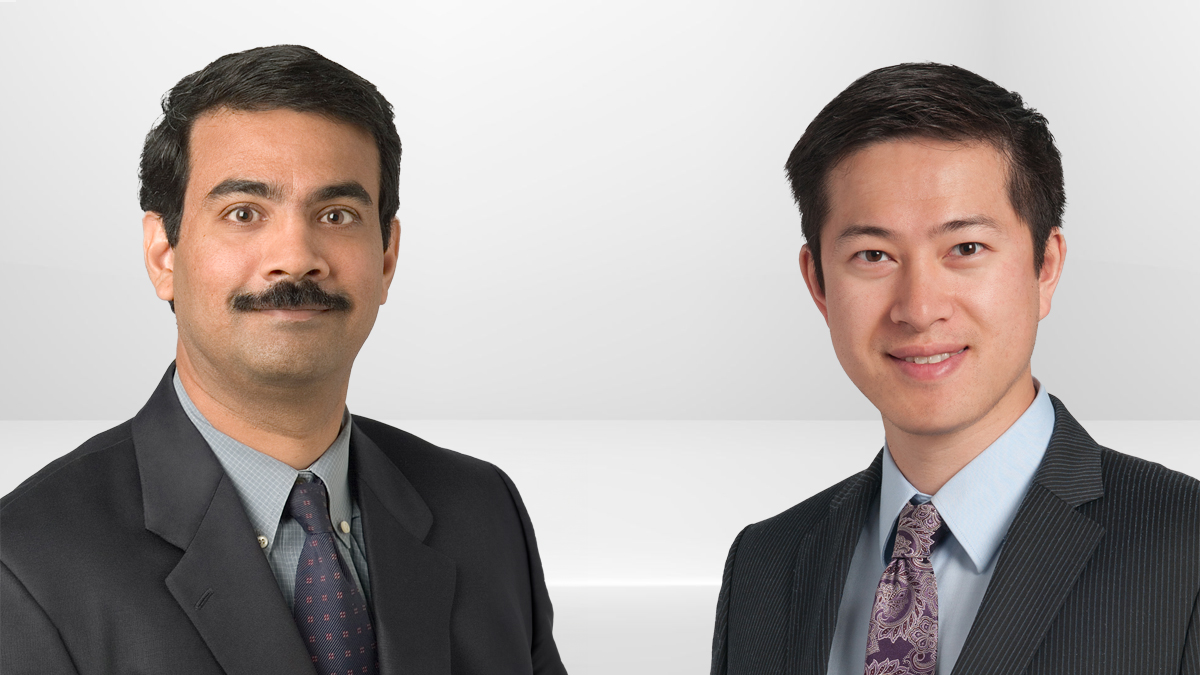
Venugopal Menon, MD, and Michael Tong, MD, explain how modern advances are transforming treatment for a rare but life-threatening complication after a heart attack: ventricular septal rupture. Learn why early transfer to an expert center matters, how mechanical support devices buy time for recovery and why surgery remains the definitive solution for saving lives.
Advertisement
Cleveland Clinic is a non-profit academic medical center. Advertising on our site helps support our mission. We do not endorse non-Cleveland Clinic products or services. Policy
Recent Episodes
Ask the Heart Doctor | Genomics: Precision Medicine for Your Heart
In this Ask the Heart Doctor discussion, Cleveland Clinic experts explain cardiovascular genomics and how genetic testing can help identify…
Ask the Heart Doctor | Heart Failure: Surgical Options and Mechanical Support
Heart failure affects millions of people and can range from mild symptoms to advanced disease. In this episode, discuss how heart failure is…
Quick Questions: Mitral Valve Prolapse
Marc Gillinov, MD, explains what mitral valve prolapse is and how it is diagnosed. He also discusses when mitral valve prolapse can lead to…
Video content: This video is available to watch online.
View video online (https://cdnapisec.kaltura.com/p/2207941/sp/220794100/playManifest/entryId/1_ajd9o4og/flavorId/1_5f3sgelj/format/url/protocol/https/a.mp4)
Transcript
Announcer:
Welcome to Love Your Heart, brought to you by Cleveland Clinic's Sydell and Arnold Miller Family Heart, Vascular and Thoracic Institute. This podcast will explore disease prevention, testing, medical and surgical treatments, new innovations and more. Enjoy.
Advertisement
Cleveland Clinic is a non-profit academic medical center. Advertising on our site helps support our mission. We do not endorse non-Cleveland Clinic products or services. Policy
Venu Menon, MD:
Hi, I'm Venu Menon. I'm the Director of the Coronary ICU at the Cleveland Clinic, and today I have with me Dr. Michael Tong, one of our heart failure cardiothoracic surgeons. We are going to talk about a condition that, though rare is really challenging. It's a mechanical complication of shock that occurs rarely, especially in patients who don't get early reperfusion. That is, they present late after myocardial infarction, and we are not able to open up the artery, or we open up the artery too late. In that setting, the underlying myocardium necrotizes, and gives rise to a break in the walls of the ventricle between the two chambers, causing a condition called a ventricular septal defect.
Now, in some patients, that can be asymptomatic, but in others it prompts hemodynamic instability and causes circulatory collapse. So, whether the patients are stable or whether they're not, the end treatment for all of these patients is a primary surgical repair. Having someone as experienced as Michael here, it remains a unique surgical challenge. So, Michael, what are your views on mechanical complications and especially ventricular septal rupture?
Michael Tong, MD:
This is historically a very deadly condition. When you've had a heart attack and the wall in between the left and the right heart has disintegrated because of the heart attack, what you end up with is a situation where, typically, blood from the left heart, instead of being pumped out into the body and through the aorta, it is actually pumped back into the right side of the heart. In these patients, we often see that these patients are in shock, there's not enough blood flow going through the body. Because there's so much recirculation from the left heart into the right heart, the lungs often get flooded as well, and patients end up with respiratory distress as well.
Advertisement
Historically, the only way to really treat these patients is to take them to surgery. But you can imagine when we have a situation where the wall in between the left and the right heart, what we call the ventricular septum, the quality of that tissue is so fragile, it's like trying to put sutures into raw hamburger meat.
The quality of the tissue is so poor that it doesn't even hold onto sutures well. That's why, where if you look at some of the historical literature, when you operate on these patients in that setting, you can have expected mortalities northwards of 30% to 50%. Hence, this is a condition where you're often in a situation where the patients will die if you don't take them to surgery. And if you do take them to surgery, they're often still going to die, because sometimes it's not even the damage on the heart itself, but the fact that these patients haven't been getting blood flow through their body for a period of time, a few days. Often they come in, their liver is in failure, their kidneys are in failure, their brain may be in a comatose state, and it makes it an extremely, extremely challenging situation that historically we've had significant challenges.
Now the good news is that with modern advances in mechanical circulatory support, we've really changed the way that we approach these patients. Particularly, we have a mechanical pump now, it's a very small pump. It's called a micro axial pump, and it's placed under the collarbone through an artery called the axillary artery. When this pump sits in the left ventricle across the aortic valve, what it allows us to do is suck the blood from the left ventricle and eject it straight into the aorta. What this will allow us to do is decrease the shunt or decrease the blood flow that goes from the left ventricle to the right ventricle.
That allows us to accomplish a few things. Number one, it resolves the heart failure. Patients are no longer in failure because now we have adequate blood flow going through their body. It allows the kidneys, the liver, the brain to recover, and also it buys us time. When patients have a heart attack and the muscle in between the left and right wall is necrotic, it takes typically about two to three weeks for that wall to start fibrosing or creating scar tissues, where then we can go back in and fix it with a much more reliable suturing technique where the stitches can actually hold. We'll put these pumps into the patients, and we'll have these patients wait in the ICU for about two weeks or so. During this time, we can get the breathing tube out. We can have the patient walk around in the ICU. It allows us to buy some time to let their organs recover. Then, when we take them to surgery, it makes the repair much simpler because the tissue quality is so much better and we can repair with much higher reliability.
Venu Menon, MD:
I think those are really important points, Michael. One of the things is that this is such a rare complication that I think really having a surgical center of expertise with a lot of consultants appears to be really important. I think one of the things that we've done really well, especially to support smaller community hospitals, is create a shock team. I think the one piece of advice we would like to give is whether the patient is stable or not in the setting of a mechanical complication, I think it's really important for those people to be transferred to an institution like ours.
Advertisement
That's something that we've done in the guidelines now that I think is really favorable because some of these folks, they look relatively good, they're in a smaller institution, they get watched till things really go south, and then it becomes a little too late for us to salvage. What do you think about this concept of folks just being called up on the shock team and are deciding to triage and transfer them to our institution or similar institutions around the country?
Michael Tong, MD:
The ways we can support a failing heart these days have increased leaps and bounds compared to only 10 years ago. 10 years ago, we probably only had the balloon pump and ECMO. In many hospitals, that's still the only two technologies that are available. But in addition to that, we have many other different devices now that we can utilize with both short-term and long-term shock.
One of the things that we've established here over the last seven, eight years is the shock team, as you mentioned. What the shock team does is any hospital can call us, call our transfer center, and say, I would like to activate the shock team. Within about two to three minutes, you're going to have a heart surgeon, a heart failure heart surgeon, you're going to have the intensivist in the cardiac care unit, you're going to have a heart failure cardiologist and an interventional cardiologist get on the phone call with you within two to three minutes and we can then discuss your patient with you.
Advertisement
If you feel that this patient needs a higher level of care, we can make the decision and get the patient to us very, very rapidly. We have helicopters and fixed-wing transport on standby at all times to bring critically ill patients here for advanced care. Also, if you have a patient that you just want some advice on, we can provide you that advice. Maybe it's a patient that you may not even necessarily have a good understanding of what's going on or how to think through the problem, and we can guide you there. But I think of all the services that we offer to our community hospitals and to our surrounding hospitals and even hospitals that are further away, this is probably one of the best programs that we have developed that serves the community.
For patients, what it allows them to have, is access to the highest level of care. And for these critically ill patients, such as those patients with ruptured ventricular septums, it is really a specialty. To repair these patients, it's really something that we don't see very often. Most centers may only see one patient or two patients a year. So, a surgeon, this individual surgeon, may not see these patients, maybe even their whole lifetime. To expect that the patient's going to get the most suitable surgery for them sometimes can be quite difficult, depending on the center.
Advertisement
This is something that a center like ours, we see probably anywhere between 8 to 15 of these patients a year. We have that expertise where we can really tailor the strategy for that patient. That can include just treating these patients medically. That can include taking them to surgery right away. That can also include putting in a temporary mechanical pump to stabilize them and then taking them to surgery. We'll be able to give you that tailored device that's specific for that patient to get the best outcome.
Venu Menon, MD:
I think it's important having that real experience of making a decision of who can benefit and who cannot. Because in the margins, there are certainly elderly people who are frail, who've had multiple strokes who shouldn't go through these invasive procedures. At least for the family to have the confidence that people at the top of their game can look at a substrate and really say there's no modifiable agent there, I think helps them with some closure.
Finally, Mike, I think the one thing I think we should emphasize is, while there's been a whole lot of advances in structural intervention and there are niche patients with papillary muscle rupture who may get temporary benefit or even better benefit from things like the clip, things like the ventricular septal rupture, the default strategy should be definitive surgery because our experience with these temporizing devices have just been that. They haven't really given us feasible improvement in substrate to really change outcomes. So, doing all of these things in the cath lab, it really needs a surgical input as to whether definitive surgery is feasible or not.
Michael Tong, MD:
Correct, absolutely. The ideal treatment for these patients that will give them the best outcome is with surgery and with definitive repair that allows us to close the entire hole. However, there are situations where maybe the patient is just too unstable, or the patient has too many other issues that the surgery is just not possible for them. In which case, we may consider a plug by one of our interventional cardiology colleagues just to get some temporary relief, just to decrease the blood flow from the left to the right. However, they're rarely the definitive treatment for these patients. At best, it just buys us a little more time, allows us to stabilize the patient before surgery.
Ultimately, what we need to do is get these patients to surgery, but not just get them to surgery, get them to surgery when they're in a more optimal state. This is where mechanical support has truly revolutionized the treatment. I talked about earlier how historically when you take these patients to surgery, the mortality is over 30% to 50%. Now with our modern approach to these patients, if we can safely stabilize these patients and then get them to surgery, we can do these patients with the risk of less than 5%. That's been our results over the last five years. When we take these patients now with our modern approach, buy some time, allow the ventricular wall to heal before taking them to surgery, that has been our results. That really has revolutionized this treatment for this group of very critically ill patients.
Venu Menon, MD:
Thanks for your insight, Mike. I think one of the things that you learn humility from is things like mechanical septal rupture. We've made such significant advances in medicine, but we still know that at the margins, there are people who are really succumb to this deadly illness. I think our ability to offer this kind of combined approach, where a team looks at a really complex problem like this and delivers great care, is probably the best thing for both families and for our referral base. Thank you for your time on that.
Michael Tong, MD:
Absolutely. The other thing that I would mention is that when we repair these walls, because the quality of the tissue is so poor, sometimes the repair can fail. What I mean by that is even though initially it may look like the repair worked and it was successful in sealing the hole, because the muscle is still very poor quality, although it's better than when the wall rupture first happened, sometimes the necrosis can be ongoing. What we sometimes will see is that patients can have a second rupture or that the initial repair may fail.
We went back and looked at our entire series over the last 50 years, and in fact, we've had 38 patients who needed a second surgery for ventricular septal rupture. Many of those patients were done elsewhere and then transferred here, and some of those patients were done here, and unfortunately, their repair either failed right in the operating room or was found to have failed at a later point.
So, when these are picked up on subsequent echoes or patients remain symptomatic, it's important, I think, for providers to know that we can often go back in a second time and do these surgeries. Now, this is really something that's quite rare. We've had 38 cases in the last 50 years, so less than one case a year, but our outcomes have actually been really quite good when we repair these ventricular septal ruptures a second time.
In fact, if you look at post-2000, the ten-year survival after one of these repairs is close to 60%, 70%, which is really, truly remarkable when you consider just how sick these patients are. This is something that, again, I want to make sure that our audience recognizes, that as bad as this condition is and as difficult the initial surgery is, if there's a residual leak across the wall or if the repair fails, sometimes we can offer a second surgery, and this is something that our audience can keep in mind.
Venu Menon, MD:
I think it's a really important message. I hope you enjoyed this conversation. More to come later. Thank you for listening to Love Your Heart podcast.
Announcer:
Thank you for listening to Love Your Heart. We hope you enjoyed the podcast. For more information or to schedule an appointment at Cleveland Clinic, please call 844.868.4339. That's 844.868.4339. We welcome your comments and feedback. Please contact us at heart@ccf.org. Like what you heard? Subscribe wherever you get your podcasts or listen at clevelandclinic.org/LoveYourheartpodcast.
Recent Episodes
Ask the Heart Doctor | Genomics: Precision Medicine for Your Heart
In this Ask the Heart Doctor discussion, Cleveland Clinic experts explain cardiovascular genomics and how genetic testing can help identify…
Ask the Heart Doctor | Heart Failure: Surgical Options and Mechanical Support
Heart failure affects millions of people and can range from mild symptoms to advanced disease. In this episode, discuss how heart failure is…
Quick Questions: Mitral Valve Prolapse
Marc Gillinov, MD, explains what mitral valve prolapse is and how it is diagnosed. He also discusses when mitral valve prolapse can lead to…
Never miss a moment - subscribe now.
Listen to the Health Essentials Podcast on your favorite streaming platform.
Other Podcasts You May Love
Beyond Leadership
Hosts Jim Pae and Elizabeth Pugel escort you through a network of thought leaders, sharing world-cla…
Beyond the Pages: CCJM Podcast
Beyond the Pages: CCJM Podcast takes the listener more in-depth into Cleveland Clinic Journal of Med…
Butts & Guts
A Cleveland Clinic podcast exploring your digestive and surgical health from end to end. You’ll lear…
Cancer Advances
A Cleveland Clinic podcast for medical professionals exploring the latest innovative research and cl…