



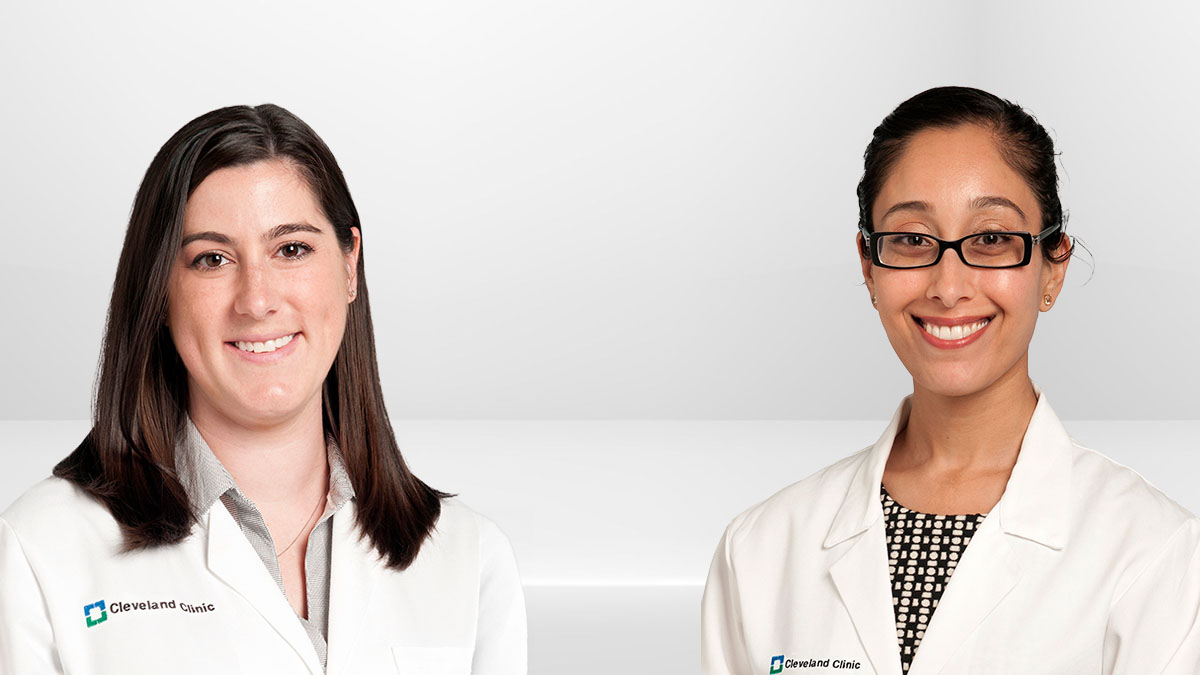
Women's Integrated Sports, Exercise and Research
Learn how Cleveland Clinic’s new WISER (Women's Integrated Sports, Exercise and Research) program supports women at every stage of their athletic journey. Tamanna Singh, MD, and Marie Schaefer, MD, share how this comprehensive center helps athletes improve performance, recover from injury and stay healthy through all phases of life.
Advertisement
Cleveland Clinic is a non-profit academic medical center. Advertising on our site helps support our mission. We do not endorse non-Cleveland Clinic products or services. Policy
Recent Episodes
Ask the Heart Doctor | Genomics: Precision Medicine for Your Heart
In this Ask the Heart Doctor discussion, Cleveland Clinic experts explain cardiovascular genomics and how genetic testing can help identify…
Ask the Heart Doctor | Heart Failure: Surgical Options and Mechanical Support
Heart failure affects millions of people and can range from mild symptoms to advanced disease. In this episode, discuss how heart failure is…
Quick Questions: Mitral Valve Prolapse
Marc Gillinov, MD, explains what mitral valve prolapse is and how it is diagnosed. He also discusses when mitral valve prolapse can lead to…
Video content: This video is available to watch online.
View video online (https://cdnapisec.kaltura.com/p/2207941/sp/220794100/playManifest/entryId/1_5fdgkxq5/flavorId/1_5f3sgelj/format/url/protocol/https/a.mp4)
Transcript
Announcer:
Welcome to Love Your Heart, brought to you by Cleveland Clinic's Sydell and Arnold Miller Family Heart, Vascular and Thoracic Institute. This podcast will explore disease prevention, testing, medical and surgical treatments, new innovations and more. Enjoy.
Advertisement
Cleveland Clinic is a non-profit academic medical center. Advertising on our site helps support our mission. We do not endorse non-Cleveland Clinic products or services. Policy
Tamanna Singh, MD:
Hi, everyone. Thank you so much for joining the two of us. I'm Dr. Tamanna Singh. I'm the director of the Sports Cardiology Center as well as our stress lab here at the Heart, Vascular and Thoracic Institute.
Marie Schaefer, MD:
And I'm Dr. Marie Schaefer. I'm in the Department of Orthopaedics where I'm a sport and exercise physician. I'm the head team physician of Cleveland State University, and I serve on the NCAA's Health and Safety Committee.
Tamanna Singh, MD:
Today, we're really excited to talk to you about a wonderful new program that Dr. Schaefer and I have been working on called the Women's Integrated Sports Exercise and Research, or WISER.
Dr. Schaefer, tell me a little bit about how we came up with this idea, and what this program means, and what is it for?
Marie Schaefer, MD:
Yeah, so this has been probably several years in the making now. About 18 months ago, I know we were having a conversation at a pro-women's sport breakfast, and it all just kind of came together at that point in time that there was a big gap in the healthcare of women in the sports space. We were kind of brainstorming ideas on how to take this on. WISER was ultimately born from that.
Women in sports are not as studied as our male counterparts. We were thinking what is a novel approach to treat women comprehensively, make sure that we include research in this, and really get to celebrate the woman athlete.
Advertisement
Tamanna Singh, MD:
Exactly. I think only about 6 to 9% of publications actually focus on women athletes specifically. I know that was one thing that the two of us really shared in terms of trying to develop a clinical program that also allowed for us to generate an abundance of research so that we can get very specific biological female advice for the athlete.
Marie Schaefer, MD:
We always say in orthopaedics that children are not just small adults. I think the same thing's true about the women athlete, that women do sports differently, have different musculoskeletal makeup, and certainly have different features in the heart as well.
Tamanna Singh, MD:
Oh, certainly. Can you tell us a little bit about why WISER is different from all of those other programs that are popping up, which we're very excited to see. We want to see women athletes supported everywhere, but I know we both were really intentional about creating something new within WISER.
Marie Schaefer, MD:
A lot of the female and women-specific programs throughout the country are aiming to be highlighting the women athlete, but I think ours takes that next step up in being a really comprehensive center. Our idea is that we want to be cross-institute across the Cleveland Clinic.
So I mean, you are in the Heart, Vascular and Thoracic Institute, I'm in orthopaedics, and we're partnering with a lot of people from our sports dietician, to our psychologists and psychiatry partners. I know we'll certainly talk about our other partner, here in a little bit, too in the area of sports social work. We're aiming to make this a visit where women can come in, address the problems that they have, and even if their problem is “I'm not performing as well as I normally have been or that I know that I can”, and how we can use this multidisciplinary approach to treat it. Also focus on things that are important to women, making sure we get this done in a timely basis, that we have great follow-up. Communication is one of our highlights. At the same time, supporting all the awesome women's events in our community.
Tamanna Singh, MD:
Oh, exactly. The way we've been kind of trying to describe it visually is kind of like an orb, or a galaxy, or a track for our athletes. I know we've talked a lot about four different care models. We really want to be there to support performance, however our women athlete defines it. Because it could be someone going into sport, exiting sport, interested in sport, but trying to incorporate movement. We wanted to create that optimizing performance kind of care package.
We also wanted to focus on those athletes who come in with acute injuries, whether they be musculoskeletal, or someone going through a pregnancy, or a postpartum scenario where they're kind of finding it difficult to get back into competition. I know we had talked a lot about integrating our community and having event care support right on site.
And then finally, athletes come in many different flavors, and we acknowledge everybody incorporates movement, but we certainly wanted to make sure that we had a package that was creative and comprehensive enough for our athletes that are hopefully coming to Cleveland. Women's soccer, women's basketball, really on that professional level.
I mean, what makes us different is that we have that clinical approach and we really intertwine the medical aspect of the individual with what's going on in their mind, their psyche, and what resources do they need, what access are they looking for. That's where our social work piece comes into play.
Advertisement
Marie Schaefer, MD:
Absolutely. It is so hard sitting in the patient chair every once in a while, as we do. You go from one doctor in a super subspecialty, and then you need to incorporate several other people on your care team. It's very hard to access that. That's where our athlete support person is going to be ideal.
Tamanna Singh, MD:
Oh, exactly. WISER, one of the novel features and the way we've described that piece is having an athlete support team. The athlete support team will be in direct communication with our medical providers, of which we have eight to nine, and also direct communication with our athlete. They will be engaged in their clinical care and they will kind of be that ooey gooey middle of that Oreo cookie where they'll be able to break everything down when it comes to that comprehensive athlete's care, and be able to provide those services when an athlete says, "How do I see five different providers in a day?" or, "how do I go to practice and still find a daycare for my kids?" We know that women's lives are very busy, and that can often times get in the way of them getting direct access and timely access to care. I think that's where our athlete support team will be really helpful.
Marie Schaefer, MD:
Absolutely. As we kind of break down the different types of people that we're seeing, I'll ask you how are we defining our athletes?
Advertisement
Tamanna Singh, MD:
So an athlete is really anybody who really wants to incorporate movement into their lives. I think a lot of times people certainly probably come into your office and come into mine saying, "I'm not an athlete, I just run a couple of times a week, or I walk, or sometimes I go for a bike ride." But I think if you're intentional about wanting to move, you're an athlete. We want women to feel welcome to WISER. We don't want this to be elite care for elite people. We really want this to be elite care for anyone who really wants to get into physical activity. We know from a musculoskeletal perspective, that's certainly important for maintaining physicality and functionality. Certainly from a cardiac perspective, a lot of what we do is predicated on incorporating physical activity into your life.
Marie Schaefer, MD:
100%. Speaking of that, especially since we're on this heart podcast here, so from a cardiology perspective, how would you describe how a woman's heart is different than some of the males?
Tamanna Singh, MD:
Oh, it's very different. I mean, what we're learning all the time is that particularly when it comes to cardiovascular disease onset as well as onset of heart attacks and strokes, women have the protectiveness of estrogen until they don't. That can really vary from maybe as early as 35 to 40, to maybe 45 to 50, and so on and so forth.
Advertisement
I always tell a lot of my women patients athletes or non, "Hey, we really should get a check on things like your cholesterol, your blood pressure levels, your basic cardiovascular risk factors early on” so that when we do enter more of a period of transition with the decline in estrogen, we can either talk about hormone replacement therapy options, or we can talk about intentional movement, because we know things like movement and nutrition play a huge role in helping to control some of those transitional symptoms that we see.
Marie Schaefer, MD:
Yeah, no, and I think that estrogen is our key player too in how the athlete ages regarding bone health, and making sure that as our younger athletes are growing up, and hopefully growing up in our WISER care model, that we're finding ways early on while they have those high supplies of estrogen to really maximize the benefit to the bone health so that by the time that they reach that perimenopause, menopause, postmenopause era, their risk of stress fractures and bone injury is going to be lesser and lesser as we're paying more attention to it.
Quite honestly, we need more research in that field to understand exactly how do we do that. We have a lot of thoughts theoretically about putting that into action with a big female population that we hope to collect with WISER, I think is really going to explode that field.
Tamanna Singh, MD:
Yeah. I think you keyed in on that longitudinal component about WISER. We're really looking to take care of women athletes as young as our adolescent athletes all the way to, one of my oldest athletes is an 86-year-old triathlete who's still competing. We really want to make sure that we target, like you said, bone health at a young age, certainly looking at iron deficiencies, and nutritional issues, and disordered eating habits as that carries through when they're thinking about family planning or maybe not even thinking about family planning, but trying to get that variability in their edge and competitiveness, certainly incorporating a cardiovascular assessment too. Then as they're transitioning into their forties, and fifties, and sixties and so on, we have now just an abundance of data, not just scientifically, but for the clinical care of that individual that allows for us to be more individualistic about our approach.
Marie Schaefer, MD:
Yes, we had a really good pilot that we did earlier this summer where we worked with the women's senior softball league. They were fantastic in giving us a lot of feedback about things that they'd like to see from their doctors and how they'd like to be communicated with. I think I knew this in the back of my head, but it was really enlightening to hear them say that we were the first people who really considered them an athlete, and that as you age, your identity changes. I think a model like WISER can really help to embrace that, "Hey, you are an athlete. Yes, you might not be running a five-minute mile anymore, but you are going out there and there are certain cardiovascular, certain musculoskeletal bone changes that are happening throughout that lifespan." We still need to think of everyone as they age as an athlete if that's what they're choosing to do.
Tamanna Singh, MD:
Yeah. Just on that thread, I guess my question for you would be, what message do you think any woman athlete on any level should really understand about their general health and musculoskeletal health? Because I know you do both family medicine as well as sports medicine.
Marie Schaefer, MD:
Yeah, so I think that at any level of health, we need to incorporate exercise into it. There are different types of exercise that are different as you age. It's more important, at some levels, to increase your cardiovascular, at some levels to increase your resistance training, increase your weight training. Coming back from an injury, all of that gets thrown in the wind, and we have to recreate that specialized model.
Tamanna Singh, MD:
It's very similar in the cardiac world too, in terms of just activity and nutrition, anything that really supports musculoskeletal health certainly directly supports cardiovascular health. I think WISER is going to be really comprehensive for both you and I, as well as the rest of our core provider team.
Marie Schaefer, MD:
Well, and in the end, it's going to benefit the patient, absolutely the most.
Tamanna Singh, MD:
Exactly.
Marie Schaefer, MD:
That's just going to be the comprehensive care model that athletes are looking for.
Tamanna Singh, MD:
I think at the end of the day, our mission certainly as clinical providers on the day-to-day as well as in terms of our intentionality with this program is to really have our athletes and our women feel empowered, and feel like they have control over their health. I think if we can do that, and we can remind them they have agency, and they can speak up, and we're here to listen, and we're here to engage and advise, I think our program will be successful. I'm excited for our women athletes to be happy.
Marie Schaefer, MD:
Thinking of another part of our population that we take care of, you and I first met really back taking care of a lot of the colleges that Cleveland Clinic has contractual relationships with. Being the head team physician at Cleveland State, and you being our team cardiologist, it's been amazing. One big part of what we've been learning over the last several years is the importance of cardiac screenings for all of our athlete population. What is the best way to go about doing screenings from a cardiac perspective?
Tamanna Singh, MD:
Yeah, that's a million-dollar question because depending upon who you ask, it can be quite controversial. In the sports cardiology network, at least nationally as well as internationally, many of us feel that if you do want to include a cardiac risk assessment or "EKG screening", you really have to be intentional about how are you doing that test? Why are you doing it? Who's interpreting it? Who's going to pay for it? And what are you going to do with that information? I think if you're able to have answers and address that pathway very clearly, concisely, and remember that anything you do can always have an implication on the athlete, if you maintain that intentionality, then you can do it right.
So, I don't necessarily advocate incorporation of cardiac risk assessment for every single individual. I think the way that we do it, very targeted on our higher risk individuals, our athletes certainly at our colleges and universities around us, knowing that I'm interpreting them. I have the training to do so. We have a backup plan with respect to finances. We are ensuring that we're not keeping that athlete out of play for hopefully more than 48 to 72 hours. I think we do it quite successfully.
But not everybody needs to do it. Correct. I think if you are thinking about incorporating that into your own practice or into your own community, really sit down with your key stakeholders and make sure that you have trained providers to help guide you and to actually help facilitate.
Marie Schaefer, MD:
Yeah, and I think that's a really good point because we have that nice structure, especially speaking on behalf of Cleveland State, where we have as a team physician, those are my primary care patients for the next four years, and we are able to follow them continually throughout. It’s been an invaluable asset. We've caught a few people who have had risky situations that were able to be addressed, and managed, and risk stratified, and gone on and have really successful careers.
Tamanna Singh, MD:
Yeah, I think that's also key to highlight. A lot of times, people get really scared, certainly so. Athletes are a little nervous, particularly if you're 18 or 19 and coming to a cardiologist visit. But for the most part, we get everybody back to sport, hopefully healthier than they were to start. I think we have that same intention for our young women who are going to be entering their college years, and certainly a lot of their early years in sport, hopefully with us as we embark on this new program.
But yeah, I mean, I think we could talk about this for days, Dr. Schaefer.
Marie Schaefer, MD:
I think we could.
Tamanna Singh, MD:
I will say, though, I think at least in terms of what we're creating here, we are really excited to get this launched Really excited to meet more women who are excited about sport and movement, and really excited to see where this takes us.
In terms of how people can reach out to us if they're interested in learning more about us or getting an appointment, I would say one of the easiest things to remember is our email address. It's just wiser@ccf.org.
How else can patients and athletes get in touch with us?
Marie Schaefer, MD:
Yeah, so all of our information is going to be located on our care page. Any referring healthcare provider can reach out, and we can certainly get them established with the program. I think kind of an important take-home message with referrals is that everybody qualifies. Anyone who identifies themselves as an active individual who wants to stay healthy and active, and considers themself an athlete is welcome in our group.
Tamanna Singh, MD:
Absolutely. Thank you so much for joining me today.
Marie Schaefer, MD:
No, thank you. I appreciate it.
Announcer:
Thank you for listening to Love Your Heart. We hope you enjoyed the podcast.
For more information or to schedule an appointment at Cleveland Clinic, please call 844.868.4339. That's 844.868.4339. We welcome your comments and feedback. Please contact us at heart@ccf.org. Like what you heard? Subscribe wherever you get your podcasts, or listen at clevelandclinic.org/loveyourheartpodcast.
Recent Episodes
Ask the Heart Doctor | Genomics: Precision Medicine for Your Heart
In this Ask the Heart Doctor discussion, Cleveland Clinic experts explain cardiovascular genomics and how genetic testing can help identify…
Ask the Heart Doctor | Heart Failure: Surgical Options and Mechanical Support
Heart failure affects millions of people and can range from mild symptoms to advanced disease. In this episode, discuss how heart failure is…
Quick Questions: Mitral Valve Prolapse
Marc Gillinov, MD, explains what mitral valve prolapse is and how it is diagnosed. He also discusses when mitral valve prolapse can lead to…
Never miss a moment - subscribe now.
Listen to the Health Essentials Podcast on your favorite streaming platform.
Other Podcasts You May Love
Beyond Leadership
Hosts Jim Pae and Elizabeth Pugel escort you through a network of thought leaders, sharing world-cla…
Beyond the Pages: CCJM Podcast
Beyond the Pages: CCJM Podcast takes the listener more in-depth into Cleveland Clinic Journal of Med…
Butts & Guts
A Cleveland Clinic podcast exploring your digestive and surgical health from end to end. You’ll lear…
Cancer Advances
A Cleveland Clinic podcast for medical professionals exploring the latest innovative research and cl…