



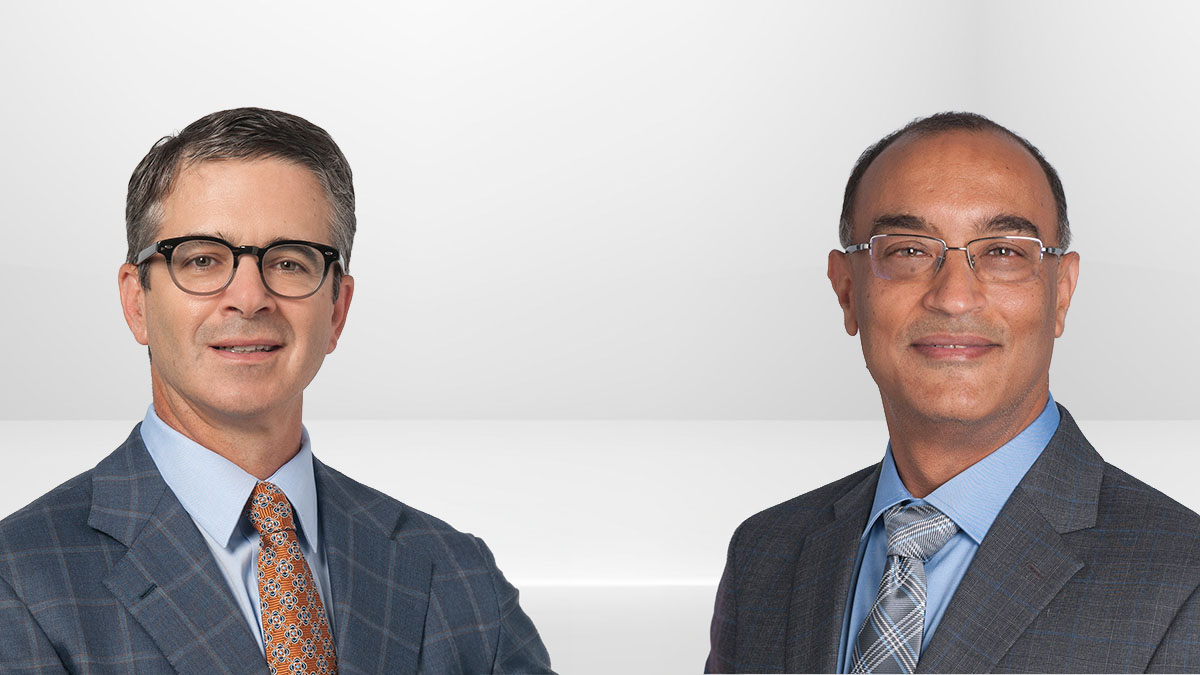
Surgical Myectomy for Hypertrophic Cardiomyopathy
Milind Desai, MD, and Nicholas Smedira, MD, review contemporary diagnostic pathways and surgical decision making for hypertrophic cardiomyopathy. The discussion examines advanced imaging, outcomes from high volume centers, emerging surgical techniques and the evolving role of myosin inhibitors in obstructive and non-obstructive disease.
Looking to refer a patient? Please reach out to our Physician Referral team Mon. - Fri., 8 a.m. - 5 p.m. (ET) at 855.751.2469.
Advertisement
Cleveland Clinic is a non-profit academic medical center. Advertising on our site helps support our mission. We do not endorse non-Cleveland Clinic products or services. Policy
Recent Episodes
Management of Complex Aortic Valve Endocarditis
Milind Desai, MD, and Per Wierup, MD, discuss the evaluation and management of high-risk aortic valve endocarditis, including indications fo…
Lepodisiran and the Emerging Role of Oxidized Phospholipids in Lipoprotein(a) Risk
Luke Laffin, MD, speaks with Steven Nissen, MD, about findings from the ALPACA trial evaluating lepodisiran and its effects on oxidized phos…
Talking Tall Rounds®: Updates on Less Invasive Cardiac Surgery
In this excerpt from Tall Rounds®, Gianluca Torregrossa, MD, discusses minimally invasive and totally endoscopic coronary artery bypass graf…
Video content: This video is available to watch online.
View video online (https://cdnapisec.kaltura.com/p/2207941/sp/220794100/playManifest/entryId/1_qqkojm75/flavorId/1_5f3sgelj/format/url/protocol/https/a.mp4)
Transcript
Announcer:
Welcome to Cardiac Consult, brought to you by the Sydell and Arnold Miller Family Heart, Vascular & Thoracic Institute at Cleveland Clinic. This podcast will explore the latest innovations, medical and surgical treatments, diagnostic testing, research, technology and practice improvements.
Advertisement
Cleveland Clinic is a non-profit academic medical center. Advertising on our site helps support our mission. We do not endorse non-Cleveland Clinic products or services. Policy
Dr. Milind Desai:
Thank you for joining us on this episode where we discuss various treatment strategies and workup strategies for patients with hypertrophic cardiomyopathy. I'm Milind Desai, Director of the HCM Center, and along with me is Dr. Nick Smedira.
Dr. Nicholas G. Smedira, MD:
So, Milind, we've been treating patients with hypertrophic cardiomyopathy for 30 years. There's been an amazing evolution and revolution in both how we diagnose patients and how we treat them. Thirty years ago, we basically had echocardiography, and the drugs that we had weren't all that effective in their therapy. Tell the audience what you use now for diagnosing and how you decide when a patient should have treatment and/or surgery.
Dr. Milind Desai:
We have come a long way in terms of diagnosis and management of hypertrophic cardiomyopathy patients over the last two or three decades. Echo still remains the first line and the primary modality of how we evaluate the patients. The only difference is that we have gotten savvier at identifying pattern recognition, and more importantly, ascertaining whether or not they have obstructive HCM physiology or non-obstructive HCM physiology using various techniques.
For instance, we routinely use provocative maneuvers to bring out left ventricular outflow tract obstruction. If you look for obstruction only at rest, you see it in about 25% of patients. If you provoke them, that number, at least in a referral center like ours, can go as high as 70%.
Advertisement
In a recent paper we published on almost 1,300 patients who underwent stress echocardiography, all deemed asymptomatic by us, about 22% had latent outflow tract obstruction not picked up on any other modality. We've gotten very good at identifying obstruction and anticipating it.
We've also evolved in our thinking that not all HCM patients have obstruction driven only by thick walls. We've identified concomitant mitral valve problems and papillary muscle problems. Once we started using advanced imaging like cardiac MRI, these became clearer. We now use a combination of echo, MRI, and sometimes CT to make a conclusive diagnosis and decide appropriate therapy.
MRI is also extremely good at identifying and quantifying myocardial fibrosis, or scar. A recent large NIH-sponsored multicenter study of almost 2,750 patients showed that scar assessment by MRI provides incremental prognostic value.
When I see these patients, I think through three things: Is this HCM? Is it obstructive? And where is the obstruction coming from? That helps determine lifestyle modification, medical therapy, newer therapies, or whether an invasive procedure is appropriate.
So Nick, when I send you a patient I think needs septal reduction therapy, how do you decide what to do, when to do it, and how much muscle to remove?
Dr. Nicholas G. Smedira, MD:
I use the imaging studies you outlined to determine whether this is purely a muscle problem or whether other structures like the mitral valve or papillary muscles are involved. We've learned that some patients have a primary mitral problem, a primary septal problem, or a combination of the two.
Using imaging and additional intraoperative testing, I determine which operation is indicated. Over 20 years, I've developed techniques to adjust the mitral valve position so it no longer contributes to obstruction, often along with septal muscle resection.
Dr. Milind Desai:
About 15% to 20% of our practice involves addressing structures beyond the septum, such as the mitral valve and papillary muscles, which requires significant expertise. We’ve performed more than 3,500 surgical myectomies between 2002 and 2021 with mortality rates under 0.5%, often near zero.
When procedures are done at experienced centers like Cleveland Clinic, we do not see an outcomes penalty even with more complex interventions. Experience across imaging, clinical evaluation, and surgery working together drives these outcomes.
Dr. Nicholas G. Smedira, MD:
This is truly a team approach. The surgery usually takes three to four hours, with a hospital stay of four to five days. We expect complete elimination of obstruction and often elimination of anti-obstruction medications, though arrhythmia risk is a separate issue.
Advertisement
Patients often ask whether they need a defibrillator after surgery. How do you approach that?
Dr. Milind Desai:
Assessment for defibrillator need and assessment for procedural therapy are separate decisions. We use ACC/AHA and European criteria that include family history, wall thickness, scar burden, syncope, ventricular arrhythmias, and ventricular dysfunction. Every HCM patient should be evaluated annually for sudden cardiac death risk.
Recent data suggest that scar burden greater than 9% of left ventricular mass is an independent risk factor, which will likely influence future guidelines.
Dr. Nicholas G. Smedira, MD:
There has also been interest in less invasive approaches like alcohol septal ablation and newer transcutaneous energy-based therapies, though results are mixed. The most exciting innovation is beating-heart myectomy, where we remove muscle while the heart is still beating and assess results immediately by echocardiography.
We expect this to play a major role in the future, with U.S. trials planned in conjunction with the FDA.
Dr. Milind Desai:
Innovation requires high-volume centers and experienced surgeons. Despite excellent outcomes at expert centers, about 70% of septal reduction therapies in the U.S. are still performed at lower-volume centers.
Advertisement
Medical innovation has also advanced, particularly with cardiac myosin inhibitors like mavacamten and aficamten. These drugs effectively reduce obstruction, improve symptoms, and improve quality of life in selected patients, and may reduce the need for surgery.
The future is bright, with better diagnostics, medical therapies, procedural innovations, and even gene therapy on the horizon.
Dr. Nicholas G. Smedira, MD:
How do you navigate all these options in practice?
Dr. Milind Desai:
Shared decision-making is key. We discuss medical therapy, surgical myectomy, and septal ablation depending on patient age, risk, preferences, and local expertise. Some patients prefer medication first, others want definitive surgical therapy. It’s never one-size-fits-all.
Dr. Nicholas G. Smedira, MD:
Are there differences between mavacamten and aficamten?
Dr. Milind Desai:
They are similar in efficacy, with subtle pharmacologic differences. Mavacamten has a longer half-life, while aficamten requires higher doses for effect. Both require careful titration and monitoring of ejection fraction.
Dr. Nicholas G. Smedira, MD:
We also see patients without obstruction. What’s your approach there?
Dr. Milind Desai:
This is a heterogeneous and challenging group. We’ve cautiously pursued debulking myectomy in selected patients after extensive evaluation. Medical therapy trials in non-obstructive HCM have shown limited benefit so far, but innovation continues.
Advertisement
Dr. Nicholas G. Smedira, MD:
It’s an exciting time for patients.
Dr. Milind Desai:
Absolutely. Thank you for listening. We hope this was informative and look forward to continued engagement.
Dr. Nicholas G. Smedira, MD:
Thank you.
Announcer:
Thank you for listening to Cardiac Consult. For more information or to refer a patient to Cleveland Clinic, please call 855.751.2469. We welcome your comments and feedback at heart@ccf.org. Subscribe wherever you get your podcasts or listen at clevelandclinic.org/cardiacconsultpodcast.
Recent Episodes
Management of Complex Aortic Valve Endocarditis
Milind Desai, MD, and Per Wierup, MD, discuss the evaluation and management of high-risk aortic valve endocarditis, including indications fo…
Lepodisiran and the Emerging Role of Oxidized Phospholipids in Lipoprotein(a) Risk
Luke Laffin, MD, speaks with Steven Nissen, MD, about findings from the ALPACA trial evaluating lepodisiran and its effects on oxidized phos…
Talking Tall Rounds®: Updates on Less Invasive Cardiac Surgery
In this excerpt from Tall Rounds®, Gianluca Torregrossa, MD, discusses minimally invasive and totally endoscopic coronary artery bypass graf…
Never miss a moment - subscribe now.
Listen to the Health Essentials Podcast on your favorite streaming platform.
Other Podcasts You May Love

Butts & Guts
A Cleveland Clinic podcast exploring your digestive and surgical health from end to end. You’ll lear…

Health Essentials
Tune in for practical health advice from Cleveland Clinic experts. What's really the healthiest diet…
Love Your Heart
A Cleveland Clinic podcast to help you learn more about heart and vascular disease and conditions af…
Neuro Pathways
A Cleveland Clinic podcast for medical professionals exploring the latest research discoveries and c…