



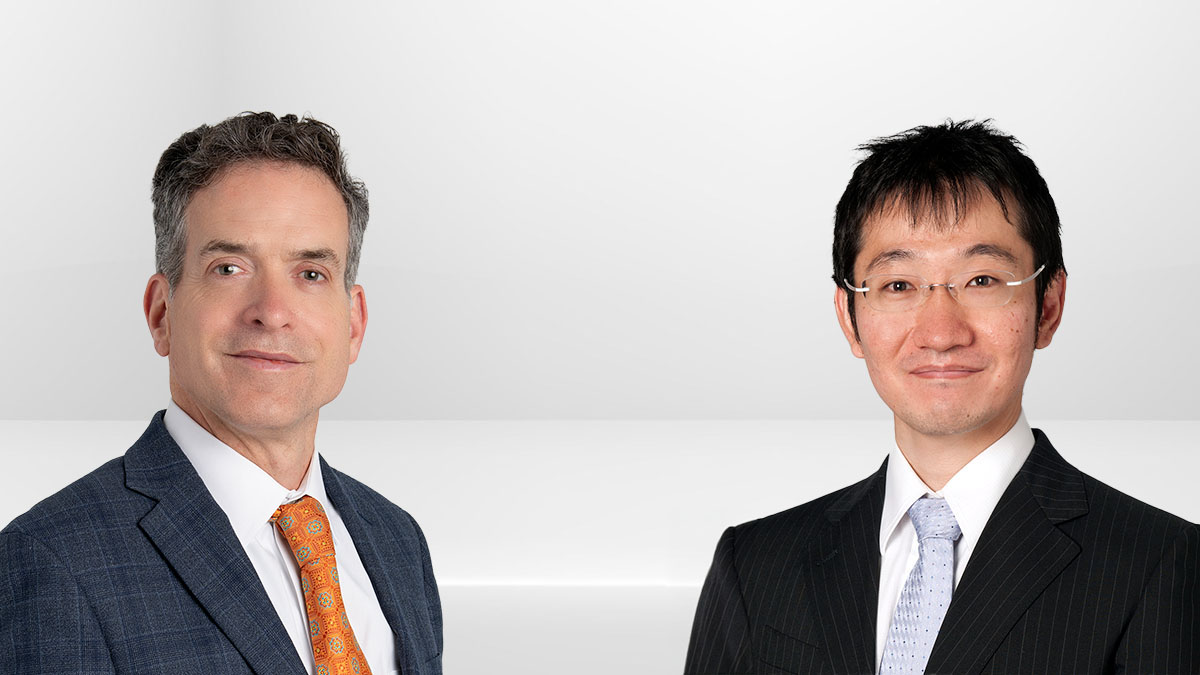
Cardiac Surgical Support for High Risk Lead Extraction
Thomas Callahan, MD, and Shinya Unai, MD, discuss the role of cardiac surgical backup during transvenous lead extraction. The conversation examines risk stratification, preoperative planning and rescue strategies for vascular and cardiac injury.
Looking to refer a patient? Please reach out to our Physician Referral team Mon. - Fri., 8 a.m. - 5 p.m. (ET) at 855.751.2469.
Advertisement
Cleveland Clinic is a non-profit academic medical center. Advertising on our site helps support our mission. We do not endorse non-Cleveland Clinic products or services. Policy
Recent Episodes
Talking Tall Rounds®: Updates on Less Invasive Cardiac Surgery
In this excerpt from Tall Rounds®, Gianluca Torregrossa, MD, discusses minimally invasive and totally endoscopic coronary artery bypass graf…
CTX310 and the Future of Gene Editing for Lipid Disorders
Steven Nissen, MD, and Luke Laffin, MD, discuss one-year follow-up data for CTX310, a CRISPR-Cas9 gene-editing therapy targeting ANGPTL3 to…
Evaluating Kylo-11 for Long-Acting Lipoprotein(a) Suppression
Steven Nissen, MD, and Ashish Sarraju, MD, discuss early clinical data on Kylo-11, a novel therapy that produced substantial reductions in l…
Video content: This video is available to watch online.
View video online (https://cdnapisec.kaltura.com/p/2207941/sp/220794100/playManifest/entryId/1_e8sfxmvl/flavorId/1_5f3sgelj/format/url/protocol/https/a.mp4)
Transcript
Announcer:
Welcome to Cardiac Consult, brought to you by the Sydell and Arnold Miller Family Heart, Vascular & Thoracic Institute at Cleveland Clinic. This podcast will explore the latest innovations, medical and surgical treatments, diagnostic testing, research, technology and practice improvements.
Advertisement
Cleveland Clinic is a non-profit academic medical center. Advertising on our site helps support our mission. We do not endorse non-Cleveland Clinic products or services. Policy
Thomas Callahan, MD:
I'm Tom Callahan from Cleveland Clinic, and today I'm delighted to be joined by Dr. Shinya Unai, who's one of our cardiac surgeons at Cleveland Clinic, and really one of the ones who's willing to take on some of the most challenging cases. Shinya, thank you so much for joining us today.
Shinya Unai, MD:
Thanks for having me. My name's Shinya Unai, one of the heart surgeons at the clinic.
Thomas Callahan, MD:
So, thank you again. Shinya, I'm hoping that we can get some insight from a really top-flight cardiac surgeon on rescue for vascular and cardiac emergencies during TLE (transvenous lead extraction). Thanks for being part of this conversation. You've given a couple of talks on this subject, but let's just start by talking about does cardiac surgery backup per se. How does that make a difference?
Shinya Unai, MD:
So, I think it has made a large difference when you look at the results of lead extraction backup. I usually reference to a paper that was published back in 2014 that our group looked at the results of lead extractions, which showed good results, but there were about 1% - 2% of major complications.
At the time, all these high-risk lead extractions were done in the EP (electrophysiology) lab with no formal surgical backup. However, about 1% of the patients required surgical intervention for major complications, for injuries to the innominate vein, right atrium and sometimes arterial structures. Even though the surgical repair was successful, about 30 to 40% of the patients did not survive the discharge.
Advertisement
Thomas Callahan, MD:
Yeah. I mean, I think that's in sharp contrast to what the numbers look like after we formalized the surgical backup. Before this 2014 paper, we enjoyed the incredible backup from the cardiac surgery team here, but really, the backup was less formalized. If there was an emergency, we would call, and our surgeons would come down and help.
But I think there was more of a delay with that process. We moved into the operating room with a much more coordinated process. Our surgeons typically meet with the surgeons preoperatively even, so that they have an understanding of all the patient's anatomy and comorbidities before backing us up. I think that resulted in a pretty dramatic change in the outcomes when rescue is required.
Shinya Unai, MD:
I agree with that. As Dr. Callahan explained, we formalized a backup strategy with the surgeons. The backup process starts before us going to the operating room. We see the patients preoperatively, we look at the CT scans, the echoes and heart caths. Depending on the anatomy, we decide what approach is more appropriate, either a thoracotomy versus sternotomy.
Even before that, we talk to patients and family about whether they even want their chest open in the event of an emergency. The other is that we, as a surgeon and collaborating with the EP physicians, we have to determine whether this patient is a candidate for a backup.
For example, an 85-year-old with multiple comorbidities in a wheelchair may not be appropriate to open the chest in the event of an emergency, whereas a 60-year-old with a low ejection fraction with prior bypass surgery, on the surface, may look like a good candidate for a backup in the event of an emergency or bleeding. But if we involve a heart failure cardiologist and have a plan, for example, an LVAD as a backup in the event that we can't come off bypass or if we have issues afterwards, that patient may be a good candidate for backup.
We have all these discussions before taking the patient to the operating room, and I think that has helped with the process and led to better outcomes.
Thomas Callahan, MD:
Yeah, I totally agree. It's really great having that preoperative insight from the cardiac surgical team. As you stated, there are some patients that on the surface, from an electrophysiology standpoint, we think this patient should be an acceptable risk and reasonable for rescue, but there are nuances that we don't see or encounter day-to-day that our cardiac surgeons do. There are nuances that you clearly understand that it's just not something that's in our usual scope of practice. By involving the cardiac surgical team very early, before we get to the OR, I think we've been able to drastically change our outcomes.
Advertisement
The other piece that's interesting to me, within the EP and extraction community, there is a conversation about moving extractions out of hybrid ORs and back to the EP lab. I think a large part of that conversation, a large driver is just the logistics. Everybody's struggling for OR time. There's just a limited time. Everybody's competing, whether it's CT( cardiothoracic) surgery, structural, vascular surgery, EP, and so that resource is quite valuable and limited. To try and open up more ability to do extraction in a timely fashion, people are talking about moving to the EP lab. Then there's the other question about, is it safe?
I guess my standpoint, what I want is for my surgical team to be comfortable. I don't think there's anything special about the hybrid OR versus an EP lab. It's just logistically, can we make it work, and are the surgeons comfortable doing a rescue in that location? What are your thoughts?
Shinya Unai, MD:
So, I think the problem with resources are real, and we're all struggling to have OR space. I think before trying to set up the EP lab to be able to perform a surgical backup or surgical rescue, I think the more important thing is to identify which patients are really at higher risk of needing a surgical backup.
Advertisement
For example, older ICD leads and prior sternotomy, patients that have a hostile chest, those patients really have to be done in the operating room. Some patients who are less risky may be okay to be performed in the EP lab. For example, if the patient has not had a sternotomy and is a primary chest, it will be a relatively more straightforward rescue compared to those that had previous bypass surgery with a patent bypass graft.
So, I think a less risky surgical backup may be fine to do in the EP labs. But then the other piece is to have all the equipment available and ready in the EP lab. As long as we have a bypass, surgical instruments and necessary personnel in the operating room, I think it can be done.
Thomas Callahan, MD:
Right. Yeah, that's a great point. If it's going to be done in the EP lab, there has to be a lot of thought and planning so that if a rescue is required, all the equipment is there, and that you and any surgeon would have what you need to successfully rescue the patient.
Let's move a little bit into the nitty-gritty. In the rare event that we have a tear or vascular injury, we're quickly handing over the patient to the cardiac surgical team. I always feel like what we're handing you is basically a trauma surgery. It's a closed chest trauma. I wonder, can you comment on that? Are there other procedures, other surgeries that you do that are similar in any way that prepare you for what you deal with when you have to do a rescue?
Advertisement
Shinya Unai, MD:
So, I think as a cardiac surgeon, we're all used to emergency surgeries. Sometimes we do have to open the chest emergently in the operating room as well. But once we open the chest and get control of the bleeding, then we can pause a little bit and figure out how to fix the issue. Once we go on bypass, once we identify where the tear is, it's not a straightforward process, but a lot of times the repair can be done safely.
What is similar to the venous reconstruction that we need to do in the event of an injury is when I do endocarditis surgery or even heart transplants, there are leads that are scarred into the vein that sometimes we need to remove completely, especially in patients who have endocarditis and infection. In those situations, I do open the innominate vein all the way down to the SVC (superior vena cava), remove all the scar tissue and the leads completely, and reconstruct the venous structures. That is fairly similar to what we need to do. The technical aspect is fairly similar to what we need to do in the event of a lead extraction injury.
Thomas Callahan, MD:
This is always fascinating to me. I'm always curious what you find when you're removing leads in the controlled setting of a planned open-heart surgery. Where do you typically find the most challenges in terms of fibrosis and binding of the leads?
Shinya Unai, MD:
It's almost always along the innominate vein at the left and right innominate junction to the SVC, where the scarring is the worst. The more challenging situations are when the innominate vein is totally scarred and barely any lumen with a few leads going through, those are the situations that can be quite challenging. But a lot of times after removing the scar and augmenting the innominate vein with, I typically try to use autologous tissue, but after I do that, we can restore flow or lumen of the innominate vein. I think that can provide not only drainage, but also access for future needs in the event that this patient needs some leads or something from the left side.
Thomas Callahan, MD:
Right. Can you comment on steps that we as extractors can take to make the job of a cardiac surgeon easier in the event of a rescue? I think about things like quickly inflating an occlusion balloon in the SVC if we've been working in that area and trying to get the i-i out of the way so that the surgeons can quickly move in and do their work. What other steps do you think would be helpful for an extractor to think about in that early part of a rescue?
Shinya Unai, MD:
No, I think those are two great points. The bridge balloon gives us a few more minutes to open the chest, control bleeding and establish cardiopulmonary and bypass. The other thing is if the patient had previous cardiac surgery, if there are going to be adhesions, it's usually much faster to initiate cardiopulmonary bypass through a peripheral cannulation from the groin. Having arteriovenous sheaths in the groin would help with the rescue process.
Thomas Callahan, MD:
Yeah, that's a great point. That's always part of our preoperative huddle at the very beginning of the case. We talk about the rescue plan, and if a patient's had a prior sternotomy and if peripheral cannulation is the plan, then we make sure that we have that access in place, dedicated access, arterial and venous for our cardiac surgeons in the event that you need to go that way for a rescue.
We talked a little bit about trying to, when you do repairs of the innominate vein, thinking about making it easier if we needed to put leads in place down the road. I think now about the similar situation where we're thinking more and more about the tricuspid valve, and as device and lead management specialists, we're thinking, "What can we do to preserve or facilitate eventual repair to this tricuspid valve?"
So, a lot of that comes down to leadless pacemakers. What are your thoughts there? You think leadless pacing gets in the way when you're trying to do tricuspid valve repair? Do you have worries about us placing leadless pacemakers across your repaired valves?
Shinya Unai, MD:
No, I think leadless pacers are great, and it rarely becomes an issue when we do tricuspid surgery afterwards. A lot of times, even if I try to remove a leadless pacer in the event of endocarditis, it is very difficult to find the device since it's so small, and it's usually buried within trabeculae. It rarely becomes an issue doing tricuspid valve surgery afterwards.
I don't know of any data on this, but I'm sure it'll help reduce the risk of, for example, having a lead going through a replaced tricuspid valve, a prosthetic valve. I can't imagine that is good for a prosthetic valve. Even for a repaired tricuspid valve, a lead going through that, I'm sure that that would decrease the durability of a repair as well.
Thomas Callahan, MD:
Right. Yeah. All great thoughts. Well, I can't thank you enough for joining today. I mean, these are incredible insights. I'll just take the opportunity to thank you for the times that you've helped us out in the OR and for always being there as our guardian angel. I really appreciate all the efforts from you and the rest of our cardiac surgeons.
Shinya Unai, MD:
Thank you. Thank you for having me.
Announcer:
Thank you for listening to Cardiac Consult. We hope you enjoyed the podcast. For more information or to refer a patient to Cleveland Clinic, please call 855.751.2469. That's 855.751.2469. We welcome your comments and feedback. Please contact us at heart@ccf.org. Like what you heard? Subscribe wherever you get your podcasts, or listen at clevelandclinic.org/cardiacconsultpodcast.
Recent Episodes
Talking Tall Rounds®: Updates on Less Invasive Cardiac Surgery
In this excerpt from Tall Rounds®, Gianluca Torregrossa, MD, discusses minimally invasive and totally endoscopic coronary artery bypass graf…
CTX310 and the Future of Gene Editing for Lipid Disorders
Steven Nissen, MD, and Luke Laffin, MD, discuss one-year follow-up data for CTX310, a CRISPR-Cas9 gene-editing therapy targeting ANGPTL3 to…
Evaluating Kylo-11 for Long-Acting Lipoprotein(a) Suppression
Steven Nissen, MD, and Ashish Sarraju, MD, discuss early clinical data on Kylo-11, a novel therapy that produced substantial reductions in l…
Never miss a moment - subscribe now.
Listen to the Health Essentials Podcast on your favorite streaming platform.
Other Podcasts You May Love
Butts & Guts
A Cleveland Clinic podcast exploring your digestive and surgical health from end to end. You’ll lear…
Health Essentials
Tune in for practical health advice from Cleveland Clinic experts. What's really the healthiest diet…
Love Your Heart
A Cleveland Clinic podcast to help you learn more about heart and vascular disease and conditions af…
Neuro Pathways
A Cleveland Clinic podcast for medical professionals exploring the latest research discoveries and c…