



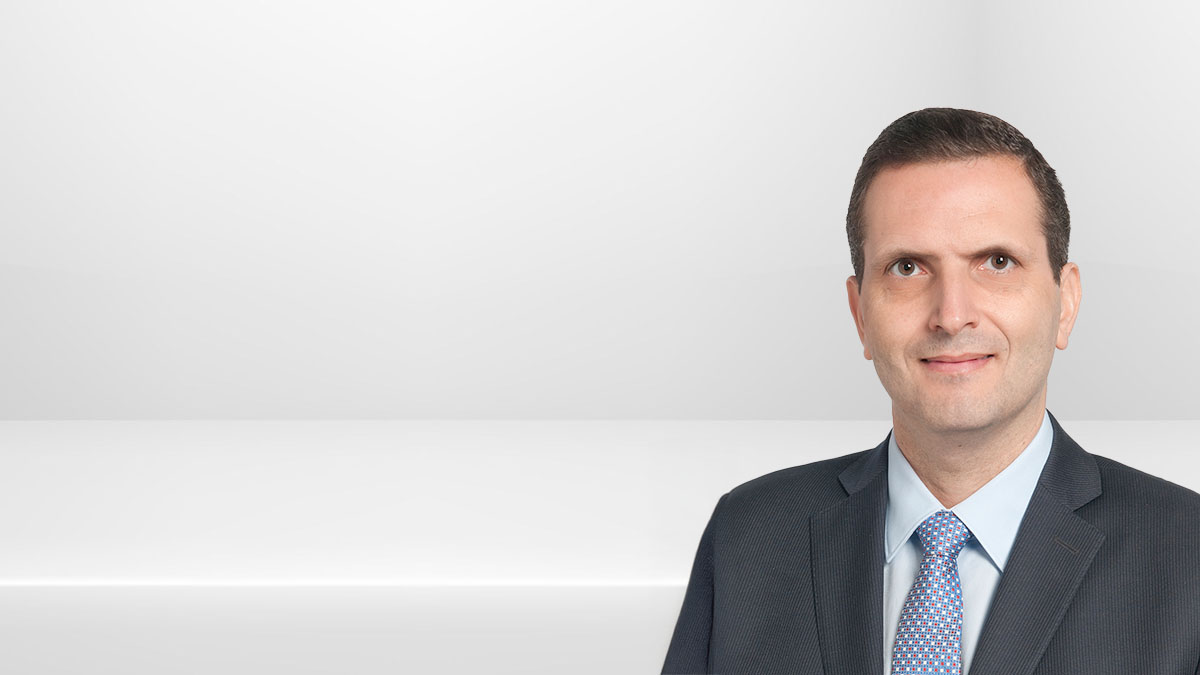
Coronary Artery Surgery Updates and Outcomes
Faisal Bakaeen, MD provides an update on the state of coronary artery surgery.
Advertisement
Cleveland Clinic is a non-profit academic medical center. Advertising on our site helps support our mission. We do not endorse non-Cleveland Clinic products or services. Policy
Recent Episodes
Lepodisiran and the Emerging Role of Oxidized Phospholipids in Lipoprotein(a) Risk
Luke Laffin, MD, speaks with Steven Nissen, MD, about findings from the ALPACA trial evaluating lepodisiran and its effects on oxidized phos…
Talking Tall Rounds®: Updates on Less Invasive Cardiac Surgery
In this excerpt from Tall Rounds®, Gianluca Torregrossa, MD, discusses minimally invasive and totally endoscopic coronary artery bypass graf…
CTX310 and the Future of Gene Editing for Lipid Disorders
Steven Nissen, MD, and Luke Laffin, MD, discuss one-year follow-up data for CTX310, a CRISPR-Cas9 gene-editing therapy targeting ANGPTL3 to…
Video content: This video is available to watch online.
View video online (https://cdnapisec.kaltura.com/p/2207941/sp/220794100/playManifest/entryId/1_soo9ff94/flavorId/1_5f3sgelj/format/url/protocol/https/a.mp4)
Transcript
Announcer:
Welcome to Cleveland Clinic Cardiac Consult, brought to you by the Sydell and Arnold Miller Family Heart, Vascular and Thoracic Institute at Cleveland Clinic.
Advertisement
Cleveland Clinic is a non-profit academic medical center. Advertising on our site helps support our mission. We do not endorse non-Cleveland Clinic products or services. Policy
Faisal Bakaeen, MD:
Well, this is not just another CABG (coronary artery bypass grafting) story.
It's high volume, high complexity, great outcomes and significant international impact. Let me show you why. First of all, our volumes, after a dip related to the pandemic, picked up and it's going up slowly. CABG, we've done combined or isolated over 2000 cases, which is over a third of the total volume that we do. Half of those CABGs were isolated.
We do the whole spectrum of things from innovation, the minimally invasive approach, to the most complex. This is how a MiDCAB (minimally invasive direct coronary artery bypass) looks. It's doable, but the view and the resolution is not optimal. We knew that. But we have the skill to do it and to do it safely and well.
Now, look at what it looks like when you do it robotically. Beautiful, high resolution, 10x the magnification. When we do it, we do it as a team. I want to thank Dr. Murthy for relaunching the robotic CABG here. We did it over a decade ago, but the technology and application wasn't at the level that we demanded at the Clinic.
We believe now we do have that and we should do it safely and effectively. You can see us harvesting the mammary here beautifully after seeing a good LAD (left anterior descending) target. That's what it looks like at the end of the case. The patients are happy from a cosmetic standpoint and from a quality control standpoint. That graft is nicely patent.
Advertisement
Moving to the more complex kinds of things that are really only done at the Clinic. This is a physician who had angina, and he has a right coronary aneurysm. You can see here, you can barely see it this big. The contrast gets just diluted away. His right ventricle was dilating, and he was treated with Coumadin locally.
They said there's nothing much we could do for you. This is how aneurysm looked, on the right side of the panel, with the head to the top and the legs to the bottom. What we did was fully open that aneurysm and reconstruct the entire right coronary artery. That's how it looked at the end, with a vein coming off the aorta sequentially, eight times all across, supplying all the acute marginal, the right ventricular branch, the PDA (posterior descending artery) and the PL (posterolateral).
We left a normal cul de sac here to supply the coronal branches. And you know why? Because if you sacrifice the coronal branches, you get arrhythmia issues that can be fatal. He did well. He left the hospital day six and was very thankful because he suffered for many, many months being told that there's no surgical option, but palliative medical means.
Despite the complexity of the operations, including reoperations, that Dr. Shinya Unai will talk about, the mortality is way better than expected by the STS, which, by the way, doesn't adjust fully for the complex stuff that we do. Also, our patients are less likely to get complications in every single major category. We have the three star ratings, and we've had that for many, many years.
Our impact covers multiple areas in terms of publications. We guide the guidelines, we sit on steering committees, and we have unparalleled data because of the clinical stuff that we do here at the Clinic. For example, over 11,000 redo CABGs. Other centers will talk about 11 redo CABGs. We have 11,000 redo CABGs. We have redoes, CABG redoes in 100 patients with patent bilateral mammaries.
That's very unique. Nobody has studied that ever, because they don't have the numbers. They don't have the patients. They don't have the skill to do those complex procedures. We have over 100 coronary aneurysms, such as the one that I've shared with you. We have over 100 patients with a totally occluded left main and RCAs (right coronary arteries), not living because of optimal medical therapy, which is great, or PCIs. They're alive because of patent mammaries. We will be sharing that with you in more details. I will say our impact is as big as this aneurysm and even more.
What can we do? Or how can we do this? Because everybody in this room and out of this room. Thank you very much.
Announcer:
Thank you for listening. We hope you enjoyed the podcast. We welcome your comments and feedback. Please contact us at heart@ccf.org. Like what you heard? Subscribe wherever you get your podcasts or listen at clevelandclinic.org/cardiacconsultpodcast.
Advertisement
Advertisement
Recent Episodes
Lepodisiran and the Emerging Role of Oxidized Phospholipids in Lipoprotein(a) Risk
Luke Laffin, MD, speaks with Steven Nissen, MD, about findings from the ALPACA trial evaluating lepodisiran and its effects on oxidized phos…
Talking Tall Rounds®: Updates on Less Invasive Cardiac Surgery
In this excerpt from Tall Rounds®, Gianluca Torregrossa, MD, discusses minimally invasive and totally endoscopic coronary artery bypass graf…
CTX310 and the Future of Gene Editing for Lipid Disorders
Steven Nissen, MD, and Luke Laffin, MD, discuss one-year follow-up data for CTX310, a CRISPR-Cas9 gene-editing therapy targeting ANGPTL3 to…
Never miss a moment - subscribe now.
Listen to the Health Essentials Podcast on your favorite streaming platform.
Other Podcasts You May Love
Butts & Guts
A Cleveland Clinic podcast exploring your digestive and surgical health from end to end. You’ll lear…
Health Essentials
Tune in for practical health advice from Cleveland Clinic experts. What's really the healthiest diet…
Love Your Heart
A Cleveland Clinic podcast to help you learn more about heart and vascular disease and conditions af…
Neuro Pathways
A Cleveland Clinic podcast for medical professionals exploring the latest research discoveries and c…