



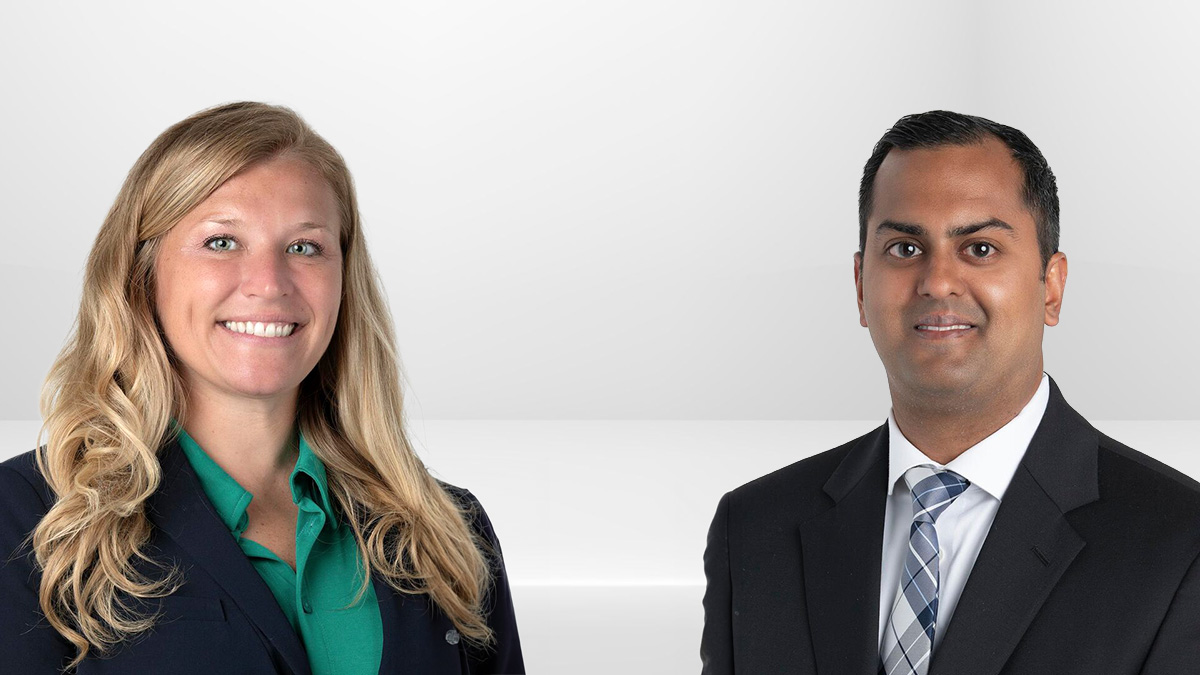
A Multidisciplinary Approach to Limb Preservation
Courtney Hanak, MD, and Ravi Ambani, MD, discuss limb preservation and amputation prevention in patients with peripheral arterial disease and chronic limb-threatening ischemia. They review diagnostic approaches to assess perfusion and tissue viability, current revascularization strategies for limb salvage, wound care, factors that influence amputation decisions and emerging technologies shaping the future of limb preservation.
Looking to refer a patient? Please reach out to our Physician Referral team Mon. - Fri., 8 a.m. - 5 p.m. (ET) at 855.751.2469.
Advertisement
Cleveland Clinic is a non-profit academic medical center. Advertising on our site helps support our mission. We do not endorse non-Cleveland Clinic products or services. Policy
Recent Episodes
Robotic Approaches to Mitral and Aortic Valve Surgery | Cleveland Clinic
Marc Gillinov, MD, and Per Wierup, MD, discuss the evolution of robotic valve surgery, including advanced mitral valve repair techniques, pa…
Infective Endocarditis Diagnosis and Management
Bo Xu, MD, and Shinya Unai, MD, discuss approaches to diagnosing and treating infective endocarditis, including indications for surgical int…
Expanding Coronary Revascularization With TECAB
Donna Kimmaliardjuk, MD, and Gianluca Torregrossa, MD, discuss the expanding role of robotic coronary artery bypass grafting, including tota…
Video content: This video is available to watch online.
View video online (https://cdnapisec.kaltura.com/p/2207941/sp/220794100/playManifest/entryId/1_mgktfq8w/flavorId/1_5f3sgelj/format/url/protocol/https/a.mp4)
Transcript
Announcer:
Welcome to Cardiac Consult, brought to you by the Sydell and Arnold Miller Family Heart, Vascular and Thoracic Institute at Cleveland Clinic. This podcast will explore the latest innovations, medical and surgical treatments, diagnostic testing, research, technology and practice improvements.
Advertisement
Cleveland Clinic is a non-profit academic medical center. Advertising on our site helps support our mission. We do not endorse non-Cleveland Clinic products or services. Policy
Dr. Courtney Hanak:
We want to thank everyone for listening to this podcast and for joining us today. I'm Dr. Hanak, Courtney Hanak. I work here at Cleveland Clinic, and I'm a vascular surgery staff physician.
Dr. Ravi Ambani:
I'm Ravi Ambani. I'm also one of the staff at Cleveland Clinic main campus. Today, as she said, we're going to talk about peripheral arterial disease, amputations, and what we think about and consider before performing an amputation.
Dr. Courtney Hanak:
Dr. Ambani, let's have you start off. What diagnostic tools are most useful in evaluating limb quality and tissue viability?
Dr. Ravi Ambani:
When we think about how we evaluate a leg with lack of perfusion, I think we start from least invasive to most invasive. I think the easiest thing is obviously a physical exam. In patients with wounds, discoloration, dependent rubor, we can start with a non-invasive study. That's arterial insufficiency studies, ankle-brachial indices, and these are the things that let you figure out what that perfusion is in a non-invasive, good cost-effective manner.
Dr. Ravi Ambani:
Now, as we go on, then you can have cross-sectional imaging with either CTA or MRA to identify the actual anatomy a little better or look for inflow lesions if you can't feel good femoral pulses. Then eventually, I think the gold standard is still a diagnostic angiography or digital subtraction angiography. That will let you see what we're looking at in terms of what the blood flow actually is to the foot and to the wound and to the toes and how we can potentially treat them in terms of either endovascular or open approaches.
Advertisement
Dr. Ravi Ambani:
Here at Cleveland Clinic, we pride ourselves on having a pretty big multidisciplinary discussion on peripheral arterial disease and chronic limb-threatening ischemia. How do you feel, Dr. Hanak, that we work together to optimize these patients for a good limb preservation outcome?
Dr. Courtney Hanak:
The people to really be praised here are the primary care physicians who are seeing these patients frontline. They're seeing them when they come into the office and then directing them to the right place. The podiatrists, primary care physicians, and many times OB-GYNs, if it's a female patient, they're acting as their primary care physician and doing a good physical exam, and then directing them to the right place. That’s really what saves their limb. Patients who have hardening of their arteries, atherosclerotic disease in one vascular bed, usually have it in other places. We rely heavily on our cardiology colleagues to risk-stratify these patients, as many times they also have coronary artery disease that needs to be addressed prior to revascularization. I think that team approach with optimal medical management and optimal intervention is lifesaving and limb-saving.
Dr. Courtney Hanak:
Dr. Ambani, what are the current best practices and revascularization strategies for limb salvage?
Dr. Ravi Ambani:
This is a hot-button topic and kind of a little controversial because, depending on which side of the coin you want to fall on, we could either talk about an endovascular-first approach or an open-first approach. With either option, I think you want a good patient outcome. In patients who are maybe functionally weaker or their heart maybe isn't as strong, I think I tend to really push forward for an endovascular first approach.
Dr. Ravi Ambani:
We always do our due diligence in getting vein mapping and looking to see if there's an appropriate tool to use for a bypass. If that's the case and the patient is pretty good from a cardiac perspective, then we'll do a revascularization with a bypass surgery. The nice thing nowadays is there are so many new technologies and so many new treatment options for patients that we can really individualize our care to each patient. That way we have kind of all the tools to use, and whatever works best in that scenario will be used.
Dr. Ravi Ambani:
When we think about how clinicians approach the management of complex wounds and infection, what are the things you look for in a high-risk patient?
Dr. Courtney Hanak:
As vascular surgeons, we love wounds. There's nothing better than seeing a patient who's had a wound for a while or has a wound, being able to bring better blood flow to it and good wound care. Then, seeing that wound heal changes somebody's life.
Advertisement
Dr. Courtney Hanak:
Wounds in general are difficult to manage as a provider. You have to be on top of the wound. You have to constantly be reassessing the wound. I think the most important thing is good communication with the patient and seeing the patient frequently. In my setting, when I deal with a wound, I see patients every one to two weeks, and mainly that's because that wound bed is going to constantly change, and you need to adapt to it. You need to have a good environment for it to heal. Debriding the wound, but also recognizing if it's too wet or too dry and applying different substitutes to the wound to help it heal is really needed. It takes a lot of effort, but it is very gratifying, and you change patients' lives.
Dr. Courtney Hanak:
Dr. Ambani, what clinical factors determine when limb salvage is no longer appropriate, and amputation should be considered?
Dr. Ravi Ambani:
I think with chronic limb-threatening ischemia patients or people with bad diabetes, I think the one thing that always forces the hand is a diabetic foot infection or pedal sepsis. I think when you have an infection that's confined to the foot that you're worried about spreading more proximally and essentially jeopardizing the patient's life, I think that's when we decide to do more of an emergency amputation for removal of the infected tissue in order to save their life. I think that's when you consider life preservation over limb preservation.
Advertisement
Dr. Ravi Ambani:
Another factor that really plays into part is when the wounds become so large or challenging to deal with that they're involving the bone underneath, and it's not impossible, but nearly impossible to clear that infection and get all that bad tissue away. We rely on our podiatry colleagues and our primary doctors to tell us, "Hey, I'm not sure this patient is going to be able to have a good outcome with a limb salvage procedure, and I think this is someone we should consider an amputation on."
Dr. Ravi Ambani:
Those are the people that when I look at them, and I counsel them, I say, "Hey, I think we've tried a lot of things to save your leg, but at this point, I think if we move forward with an amputation, you'll get a better outcome. Four to six weeks from now, you'll be getting fit for a prosthetic. You'll be walking again, you'll be rehabbed and you'll be feeling better. And I think if we continue the same path we're doing, we're just going to end up with the same outcome in terms of you not getting back on your feet and doing all the things you love.”
Dr. Ravi Ambani:
When you think about it, what are the perioperative planning steps you do to kind of reduce complications and give better long-term outcomes for patients?
Advertisement
Dr. Courtney Hanak:
I think this really starts first line with making sure the patient's blood pressure is controlled, making sure their diabetes is controlled, making sure they're on the right medications. But also even if the patient is a candidate for revascularization, introducing amputation upfront. Whenever I talk to patients about revascularization, whether it's endovascular or it's open, I'm always saying, "This could end in an amputation." The patient hearing that word multiple times prepares the patient that this could be the potential outcome, no matter what we do to try to save the patient's leg. Overall, that helps with acceptance in the long term. I think aside from that, realizing these patients are vasculopaths. If they're candidates for open revascularization, all of those patients would require some sort of cardiac workup to make sure that their heart is strong enough to get us through the operation without a major coronary event.
Dr. Courtney Hanak:
Then, aside from that, high-dose statins and aspirin with antiplatelet has been shown in any revascularization to prolong the revascularization, to get better outcomes in the long term and keep those vessels open. Initiating that at least a month prior, if you have the opportunity to.
Dr. Ravi Ambani:
Let's say we've done all that, and unfortunately, we're still at the point that we need an amputation. What are the strategies to improve their recovery, their ability to rehabilitate and their functional outcome for these procedures?
Dr. Courtney Hanak:
I think just preparing the patient, talking about amputation. The different prosthetic companies that are in the area, and if you're listening from afar in your local area, do have support groups. They have prosthetists that will come to the patient's bedside and say, "This is what you can expect if you're inpatient." There are those things available for outpatient patients with long-term wounds. I think those conversations upfront, knowing what to expect, preparing the patient for what recovery will look like, really helps them. I tell patients from the time of their amputation to the time that they would get their prosthetic is at least four months, and it could be longer than that. But just preparing them for that timeline upfront, I think, allows patients to get a lot of acceptance and to understand what life is going to look like for a couple of months before they're back walking.
Dr. Courtney Hanak:
Dr. Ambani, are there any new or relevant research trials that are going on for limb salvage?
Dr. Ravi Ambani:
As I mentioned earlier, I think the one thing that really keeps me interested in PAD care and CLTI care is the fact that we have new technologies coming out almost on a semi-annual basis. There's research that is published frequently. I think we've had two big trials recently with the BEST-CLI trial as well as the BASIL-2 trial coming out that have shown good options with an endovascular-first approach or open-first approach. Even though it's been 50 years of publishing on this, we still find new ways and new innovative techniques to treat patients. We have new stents that are coated in drug. We're getting new technologies to treat below the knee, which is probably one of the hardest things for these critical limb patients to treat. These new technologies will have drug-mounted technologies in terms of the limus drugs coming out.
Dr. Ravi Ambani:
We have new systems to perform endovascular rerouting with things like DETOUR. We have LimFlow to really give that no-option patient some options in terms of arterializing their venous system. As we keep moving forward, there's going to be more and more technology to use, and more and more ways to save patients' limbs. I think that's what really keeps us all going in terms of this space.
Dr. Ravi Ambani:
At the end of the day, when you think about the take home message for all of us and our colleagues, I think it's about being cautious and being preventative in order to prevent an amputation. As Dr. Hanak mentioned, having the best medical therapy first, that's the groundwork, the base for everything. That's where our primary doctors, our cardiologists, our other colleagues, vascular medicine colleagues, they really help with that ground-level floor. Then, as things progress and if your disease process progresses, that's when early intervention is important. Those earlier interventions can really have a long-term effect on a patient in terms of saving their leg and keeping them going for longer. I think with that, I'm going to turn it back over to Dr. Hanak for her take-home messages.
Dr. Courtney Hanak:
For any medical professional, something that kind of makes it easy for us is to have somewhat of an algorithm and a timeline. I agree with everything Dr. Ambani said, but then, say you have a patient that comes into your office that you think has some sort of peripheral arterial disease going on. I would say patients who have claudication, pain when they walk, cramping of their legs, that's a consult that can be seen in the outpatient setting and is a little less urgent. Patients who have rest pain without a wound are a consult that should probably be seen within one to two weeks, and those patients likely need intervention. Then patients with a wound are more of an urgent consult where you call in a favor, and you get the patient in as soon as possible. That's the best way that we can get to these patients, that we can help to do some limb salvage on them, and if not, get them to an amputation where we're not battling a lot of infection that can really impede their overall outcomes.
Dr. Courtney Hanak:
So, with that, we want to thank you for listening to Cardiac Consult, and we're here for you if there are any questions you need to bounce off of us.
Dr. Ravi Ambani:
Thanks again.
Announcer:
Thank you for listening to Cardiac Consult. We hope you enjoyed the podcast. For more information or to refer a patient to Cleveland Clinic, please call 855.751.2469. That's 855.751.2469. We welcome your comments and feedback. Please contact us at heart@ccf.org. Like what you heard? Subscribe wherever you get your podcasts or listen at clevelandclinic.org/cardiacconsultpodcast.
Recent Episodes
Robotic Approaches to Mitral and Aortic Valve Surgery | Cleveland Clinic
Marc Gillinov, MD, and Per Wierup, MD, discuss the evolution of robotic valve surgery, including advanced mitral valve repair techniques, pa…
Infective Endocarditis Diagnosis and Management
Bo Xu, MD, and Shinya Unai, MD, discuss approaches to diagnosing and treating infective endocarditis, including indications for surgical int…
Expanding Coronary Revascularization With TECAB
Donna Kimmaliardjuk, MD, and Gianluca Torregrossa, MD, discuss the expanding role of robotic coronary artery bypass grafting, including tota…
Never miss a moment - subscribe now.
Listen to the Health Essentials Podcast on your favorite streaming platform.
Other Podcasts You May Love
Butts & Guts
A Cleveland Clinic podcast exploring your digestive and surgical health from end to end. You’ll lear…
Health Essentials
Tune in for practical health advice from Cleveland Clinic experts. What's really the healthiest diet…
Love Your Heart
A Cleveland Clinic podcast to help you learn more about heart and vascular disease and conditions af…
Neuro Pathways
A Cleveland Clinic podcast for medical professionals exploring the latest research discoveries and c…