



Post-Transplant Care and Complications in the First Year
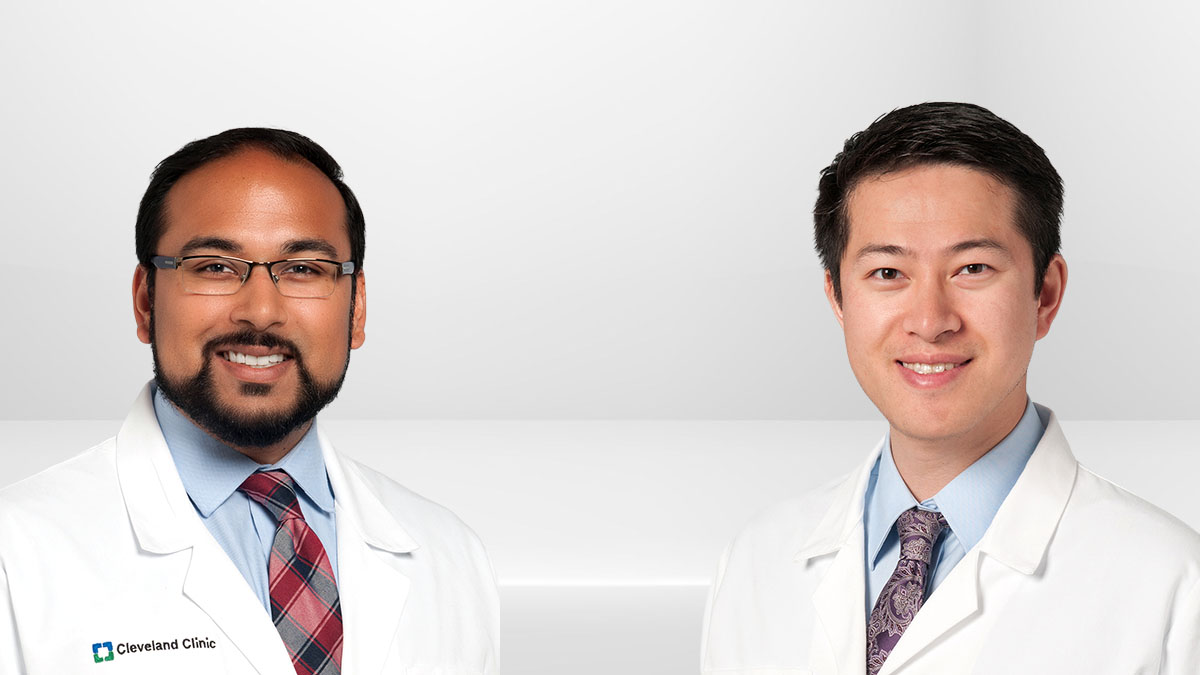
Michael Zhen-Yu Tong, MD, and Sanjeeb Bhattacharya, MD, discuss the clinical management of heart transplant patients during the first year, including immunosuppression strategies, rejection surveillance and complication recognition. They also highlight evolving technologies, donor expansion and collaborative care approaches that are improving outcomes in advanced heart failure and transplantation.
Looking to refer a patient? Please reach out to our Physician Referral team Mon. - Fri., 8 a.m. - 5 p.m. (ET) at 855.751.2469.
Advertisement
Cleveland Clinic is a non-profit academic medical center. Advertising on our site helps support our mission. We do not endorse non-Cleveland Clinic products or services. Policy
Recent Episodes
Talking Tall Rounds® Renal Denervation for Uncontrolled Hypertension
In this excerpt from Tall Rounds®, Luke Laffin, MD, discusses the evolving role of renal denervation for uncontrolled hypertension, includin…
Talking Tall Rounds® Cardiac Sarcoidosis: Systematic Team Approach to Diagnosis & Management
In this excerpt from Tall Rounds®, Cleveland Clinic experts discuss imaging modalities that aid the diagnosis of cardiac sarcoidosis. View…
Evolving Strategies in Aortic Arch Repair
Eric Roselli, MD, and Patrick Vargo, MD, discuss how advances in open, hybrid and endovascular techniques are changing the treatment of aort…
Video content: This video is available to watch online.
View video online (https://cdnapisec.kaltura.com/p/2207941/sp/220794100/playManifest/entryId/1_krjy7eig/flavorId/1_5f3sgelj/format/url/protocol/https/a.mp4)
Transcript
Announcer:
Welcome to Cardiac Consult, brought to you by the Sydell and Arnold Miller Family Heart, Vascular and Thoracic Institute at Cleveland Clinic. This podcast will explore the latest innovations, medical and surgical treatments, diagnostic testing, research, technology and practice improvements.
Advertisement
Cleveland Clinic is a non-profit academic medical center. Advertising on our site helps support our mission. We do not endorse non-Cleveland Clinic products or services. Policy
Dr. Michael Zhen-Yu Tong:
Hi, welcome to our podcast, Cardiac Consult. My name is Dr. Michael Tong. I'm the surgical director of heart transplant and LVAD (left ventricular assist device).
Dr. Sanjeeb Bhattacharya:
I'm Dr. Sanjeeb Bhattacharya, the associate medical director for the cardiac transplant program.
Dr. Michael Zhen-Yu Tong:
Terrific. Today, we're going to be talking about heart transplants. First of all, many of you may have sent patients to us. Thank you very much for your support. Thank you very much for trusting your patients with us. This is something that we never take for granted, and we do everything we can to make sure that the patients are returned back to you as good as they can possibly be.
What we're talking about today is specifically what's happening to these patients early after transplant, as well as their journey within the first year, and how we can continue to partner to make sure that they have the best outcome.
Dr. Bhattacharya, I want to first start with a little bit about the immune suppression that these patients are on afterwards. Now, some of these patients get induction therapy, some of these patients don't. Can you talk a little bit about why some patients may be receiving Thymoglobulins or Simulect, and why some patients just receive the standard tacrolimus-based immunosuppressants?
Advertisement
Dr. Sanjeeb Bhattacharya:
Yeah. I think here we take a really patient-based approach where we look at risk factors for the patient. So, things like high levels of sensitization, where they have a fair amount of antibodies to begin with, or if they have renal dysfunction, where we know that putting on high doses of tacrolimus, especially immediately post-transplant, when they're hemodynamically in a compromised state, whether they're on pressors, inotropes, et cetera, we know that it might worsen renal function. I think we look at antibodies and renal function to really assess who needs induction therapy, which would be, again, anti-thymocyte globulin or basiliximab for our program.
Dr. Michael Zhen-Yu Tong:
Yeah. I think also another category is maybe somebody who may be very sick going to surgery, where we expect that the surgery is going to be quite lengthy, and they may come out of the operating room with ATN (acute tubular necrosis). Even though they may have normal creatinine going into surgery, if we worry that they may get ATN because the surgery's going to be four or five hours on pump, then we may want to put them on Simulect just so that we don't have to stress their kidneys with tacrolimus too early.
Dr. Sanjeeb Bhattacharya:
That's an important point.
Dr. Michael Zhen-Yu Tong:
Yeah. Now, once you finish their surgery, as these patients recover in the ICU, and in the early months afterwards, talk to us a little bit about what the biopsy schedule looks like, and what are some of the changes in the biopsy schedules and some of the other monitoring methods that we have?
Dr. Sanjeeb Bhattacharya:
Yeah. Initially, in the first two months, it's very much biopsy-heavy and that's based on some of the trials that we've looked at, and using some of the newer modalities, which we'll get into. In the first month, it's fairly intense, where they're going every week, then every other week. As we start weaning down prednisone from 20 milligrams down to 17.5 or 15, we can start instituting other modalities that are non-invasive to assess for rejection. Instead of getting biopsies and right heart caths, we can use blood tests to really look for circulating cell-free DNA and gene expression profiling to see what their risk is for rejection.
And it's a great negative predictive value. If it's negative, we all feel very comfortable that there's a low risk that the patient could have any type of rejection. When they're elevated, it doesn't actually mean they're rejecting. It just means something's going on in the heart, and therefore, we would then go for further testing, including a biopsy at that point.
Advertisement
Dr. Michael Zhen-Yu Tong:
Terrific. Now, sometimes patients come a long way to see us. They could be coming from three, four, five hours away. Often, in addition to seeing us in the postoperative period for follow-up, they're also seeing their home cardiologist. What are some of the things that they should be able to look out for, a patient's own cardiologist, to signal to them that something may be happening, and they may need to come back to see us for an urgent evaluation?
Dr. Sanjeeb Bhattacharya:
Yeah. I think the biggest thing I would tell local cardiologists to really keep a keen eye out for are signs of heart failure decompensation when they have edema, elevated JVP (jugular venous pressure). A lot of the time, that can actually be rejection. Or if they start having arrhythmias and they're catching them in the office. They come in, they see atrial fibrillation, atrial flutter, some type of SVT (supraventricular tachycardia) or tachycardia where their heart rates are much higher than they're supposed to be, that's another sign that something might be going on in the heart as well. Then keeping a lookout for things like infectious causes, so things like increased cough, fevers, pneumonias, those types of things that can be brewing that are common, especially when we get into flu season and things like that.
Advertisement
Dr. Michael Zhen-Yu Tong:
And speaking of flu season, what are some of the recommendations for vaccinations post-transplant and other prophylaxis measures that we use?
Dr. Sanjeeb Bhattacharya:
Typically, we like to make sure that people are immunized prior to going into transplant. Having their hepatitis B, MMR (measles, mumps and rubella), especially all the live vaccines, because we want to make sure that they are protected. We don't do live vaccines, especially in that first-year post-transplant. That's kind of a blanking period. But then after that, we start getting back to their normal schedules of influenza vaccinations and things like that.
In terms of prophylaxis, we try to make sure we look out for opportunistic infections. PJP (Pneumocystis jirovecii) pneumonia, CMV (Cytomegalovirus), especially early if their CMV is mismatched from the donor to the recipient, they'll be on prophylactic medications in hopes to avoid those types of opportunistic infections.
Dr. Michael Zhen-Yu Tong:
Yeah. I think from a surgical side, one of the things may be surgical site infections for the patients. Often these patients come in very sick, they're in the ICU for a long period of time, and they may already have infections going into surgery. I’m thinking specifically about LVAD patients with driveline infections and then other types of infections. Afterwards, even once they leave the hospital, there's still a possibility that they may develop surgical site infections. If there's any redness, any drainage, those are all signs that they need to come back to see us for evaluation.
Advertisement
Dr. Sanjeeb Bhattacharya:
Absolutely.
Dr. Michael Zhen-Yu Tong:
So now, what do you tell patients in terms of how much activity these patients can do, as well as some of the other quality of life measures like diet, travel and going back to work?
Dr. Sanjeeb Bhattacharya:
Yeah. I think those are, again, a little tailored to each patient, depending on what type of work they're doing, et cetera. When we talk about returning to activity, we obviously want them to heal from a surgical perspective first. Once they're healed from a surgical perspective, anywhere from six weeks to three months, we then say cardiac rehab is a starting point to make sure that they have that base of aerobic activity as well as that confidence from somebody watching them, and then slowly increasing after that.
I usually tell them that you're not going to feel as if you have a new heart till like six months to about a year after your transplantation. I think that period is really important because the body still needs to recover, the body's adjusting to all these new medications, et cetera.
When we talk about returning to work, we really want to make sure that when somebody is going back to work, they're not in a situation where they're going to be exposed to different kinds of things that can cause infection. Being around a ton of people, especially if we're in flu season or COVID season, we want to make sure they're as protected as possible. So, things like masking, if they're able to work from home or to be in their separate office, I think those things are really important when they're trying to return to work.
Dr. Michael Zhen-Yu Tong:
Great. Over the last few years, we've seen an increase in the number of transplants that we're doing. Currently, nationally, we're doing over 4,000 transplants a year in the United States, which is up by 1,000 compared to just a few years ago. Here at Cleveland Clinic, last year we did over 90 transplants, and we're on track to do even more this year. Now tell us a little bit about what some of the developments are that may have led to this increase
Dr. Sanjeeb Bhattacharya:
Yeah, I think one major development is using DCD donors. These are donors by cardiac death where they don't have the typical brain death. These are patients who are then going to the operating room, and then if they are meeting certain criteria in terms of vital signs within a certain allotted period of time, we are then able to pronounce them dead, and then have a hands-off period and then sort of procure the donor after that. I think this has really opened up our donor pool, and allowed people to really have access when we didn't have as much access with DBD. I think some of the newer technologies, which I think you can talk to too in terms of increasing where we can go to get donors has been important too.
Dr. Michael Zhen-Yu Tong:
Yeah. DCD has increased the donor pool by about 30%. The newer technologies that you talked about, in the past, hearts, we would basically fill it with a cold saline and put it in a cooler surrounded with some ice, and we would travel. Because the hearts, they're undergoing ischemic changes slowly, but they're still undergoing ischemic changes, we're really limited to about a two and a half hour flight radius because it takes about half an hour to get the heart out. It takes about another two, two and a half hours to travel, and then about another 45 minutes to an hour to sew it in. We like to keep the ischemic time under four hours, so that limits how far we can go.
But now we have technology where we can keep the hearts in a constant temperature in a safer range. Also, we have machines that can continuously perfuse the heart. Either a specific solution down the coronary arteries or blood down the coronary arteries, and these hearts can be beating even as we're traveling from one part of the country to another. We can really increase the length of time that the heart remains outside the body safely. We can go to California even, and even further than that. We can go to Puerto Rico, we can go to Alaska, we can go to even Hawaii.
Now, the longer the distance, the potential for damage to the heart still increases. But nevertheless, we can safely travel three, four, five hours now. That has increased the number of donors that are available to our patients. All these factors have led to an increase in the number of transplants. Also, because these tools allow us to evaluate the heart on an ongoing basis to see whether or not they're suitable for transplant, it allows us also to utilize donors that maybe we wouldn't have utilized in the past, because maybe the walls of the heart may be a little bit thicker or the donor may be slightly older compared to the past. Overall, it's just more hearts that are available to our patients who continue to wait a long time sometimes.
Dr. Sanjeeb Bhattacharya:
With all these new technologies coming out, being on the forefront for a lot of these in terms of trials, how do you gauge which ones you think are going to be beneficial or not beneficial to sort of either enter in a clinical trial or adopt using? How do you make those judgments?
Dr. Michael Zhen-Yu Tong:
Yeah, really, the data guides a lot of what we do. Then also, it just depends on if they're brain death or they're cardiac death. If they're brain death, and they're within a short range of travel time, we can still use our standard coolers. We may keep these hearts protected within four to eight degrees so that they don't have any problems with the parts of the heart getting frozen with the ice.
If we have to go longer, if I anticipate that the ischemic time is going to be greater than four hours, then we may use a machine perfusion technology. If it's DCD, we have two ways of doing it. Either it’s a direct procurement with the OCS (organ care) system, where we take the heart out and put it in the OCS system, and the heart stays beating. Or we use what's called thoracoabdominal NRP (normothermic regional perfusion), where once the donor is pronounced deceased, then we would put the donor on ECMO (extracorporeal membrane oxygenation). When they're on ECMO, we wait an hour, let the heart recover, and then take them off ECMO. Then, we would assess the heart directly to see whether or not this heart is strong enough for us to use.
All these assessment tools are available to us now, which weren't available to us about six, seven years ago. It allows us to have a lot more comfort [knowing] that the heart that we're seeing in front of us is going to be usable for transplant. This is kind of our algorithm as we're deciding. Essentially, we want to use the least complex system. Because the more complexity you introduce, the more potential problems you have, too.
Dr. Sanjeeb Bhattacharya:
Yeah. I'm always in awe of how we have adjusted and adapted to some of the newer ways of doing things, and I give you guys a lot of credit for being on the cutting edge of all of that. As we kind of think in the future, what are you most excited about when you think about the transplant field?
Dr. Michael Zhen-Yu Tong:
I think for our patients, a lot of our patients, before they get a transplant, they have LVADs. Historically, since 2018 with the allocation change in 2018, the patients with LVADs have been disadvantaged when it comes to receiving a heart. Now just this past week, the allocation changed again. Now, the patients with LVADs, after a certain period of time, are automatically upgraded from status four to three. Then, once they've reached eight years, which will then become seven years, they get automatically upgraded to status two. So, for a lot of our patients with LVADs, this is great news because it gives them a pathway to get to a transplant.
Also, when we think about how far LVADs have come, now we have LVADs where patients' life expectancy is more or less equivalent to transplant. We're not necessarily using LVADs as a salvage. We're using this as something that can prolong the patient's life.
Because if you think about it, the average longevity after a heart transplant is about 13 years on average. If we have young patients, just giving them 13 years doesn't feel that satisfying. However, if we can bridge them with an LVAD for, let's say five to 10 years, and then give them a heart transplant, then we've increased their overall life expectancy. We can do that safely now because LVADs have gotten to the point where they're so good.
So, this is what I'm most excited about. Despite all the advances of heart transplant, the average life expectancy after a heart transplant really hasn't changed all that much over the last couple of decades, and it's stayed around 12 to 13 years approximately. Now we have better LVADs, and now the patients with LVADs have a pathway to get to transplant in a much more straightforward fashion. It allows us to overall increase the net survival for these patients.
Dr. Sanjeeb Bhattacharya:
Yeah, I think that's very important. It's a critical point you made in that, despite us advancing so much in the field, the median life expectancy is still 13 years post-transplant, which is not very long, especially when you're talking about 20, 30 years old at the time of transplant. I'm interested to see where all this non-invasive monitoring will go in terms of seeing how we can extend graft survival or patient survival with heart transplant to see if we can really be better about managing them long term.
Dr. Michael Zhen-Yu Tong:
Yeah, good. What are some of the take-home messages you have for our medical professionals who may be listening, and many of them who manage heart failure patients? What do you tell them in terms of when they should be sending patients to us and what we can do for their patients?
Dr. Sanjeeb Bhattacharya:
Well, it’s always “the sooner, the better”. Even if they feel like the patient's still doing okay, it's always still nice to have that touch point early, even though I can happily say to them, "I think you're doing well. See your cardiologist more frequently and then I can see you maybe once a year, every other year until things may be get a little bit worse, if they do." So, I think very much earlier is better.
And the other thing I usually tell people is that, when they go to transplant, I think one of the things I've heard from our colleagues who refer patients are they feel like they lose somebody that they've dealt with for five, 10, maybe longer than that in terms of years. What I try to tell them is we're not taking them from you. Our plan is to get them transplanted, but also have you have that connection post [transplant] because of all the hard work you and the patient did before, you can see them kind of reap the rewards afterwards as well.
Dr. Michael Zhen-Yu Tong:
Yeah. Also, I think another message is we're able to do more and more complex patients. Even if you look at it compared to 10 years ago, patients that we wouldn't do 10 years ago, now we have no problems doing. One area that you specialize in is the congenital heart patients, especially the patients that have reached adulthood who may have had Fontans early on, and now they're reaching their 30s and 40s and their Fontans are failing. This is something that we've been doing more and more often now with excellent outcomes. Talk to us a little bit more about some of those patients and where we can help provide care for those patients.
Dr. Sanjeeb Bhattacharya:
I think it's interesting. I think this is a patient population that's coming. They're all here, they're in their 20s and 30s, like you said, sometimes older, and they're starting to have issues, whether they have single ventricle physiology and they're getting signs of Fontan failure or they're a complex dual ventricle patient who start having worsening ventricular function or regurgitation.
Historically people would think they may not be great candidates because there is a lot going on with these patients, not only from a medical standpoint, social standpoint, et cetera, but I think we have a really nice multidisciplinary team approach, not only from our surgical colleagues or pediatric surgical colleagues, our congenital colleagues, pediatric cardiologists, social workers, dieticians, et cetera. It really has helped us, one, kind of capture these patients, seeing that we can do something for them, and then two, see how we can really manage them in the pre-transplant, transplant and post-transplant period.
Dr. Michael Zhen-Yu Tong:
Yeah. The message, there you have it. No patient is too sick, no patient is too complex. We have all the tools at our disposal. We'll do everything we can to help you and your patient. Unfortunately, there are some patients who are just beyond what we can do for them, but we're always here to help. Feel free to pick up the phone. You can call us at any time, 24/7. We're always here to help. Thank you very much. Thank you for listening to Cardiac Consult, and again, my name is Michael Tong.
Dr. Sanjeeb Bhattacharya:
I'm Sanjeeb Bhattacharya.
Announcer:
Thank you for listening to Cardiac Consult. We hope you enjoyed the podcast. For more information, or to refer a patient to Cleveland Clinic, please call 855.751.2469. That's 855.751.2469. We welcome your comments and feedback. Please contact us at heart@ccf.org. Like what you heard? Subscribe wherever you get your podcasts, or listen at clevelandclinic.org/cardiacconsultpodcast.
Recent Episodes
Talking Tall Rounds® Renal Denervation for Uncontrolled Hypertension
In this excerpt from Tall Rounds®, Luke Laffin, MD, discusses the evolving role of renal denervation for uncontrolled hypertension, includin…
Talking Tall Rounds® Cardiac Sarcoidosis: Systematic Team Approach to Diagnosis & Management
In this excerpt from Tall Rounds®, Cleveland Clinic experts discuss imaging modalities that aid the diagnosis of cardiac sarcoidosis. View…
Evolving Strategies in Aortic Arch Repair
Eric Roselli, MD, and Patrick Vargo, MD, discuss how advances in open, hybrid and endovascular techniques are changing the treatment of aort…
Never miss a moment - subscribe now.
Listen to the Health Essentials Podcast on your favorite streaming platform.
Other Podcasts You May Love
Butts & Guts
A Cleveland Clinic podcast exploring your digestive and surgical health from end to end. You’ll lear…
Health Essentials
Tune in for practical health advice from Cleveland Clinic experts. What's really the healthiest diet…
Love Your Heart
A Cleveland Clinic podcast to help you learn more about heart and vascular disease and conditions af…
Neuro Pathways
A Cleveland Clinic podcast for medical professionals exploring the latest research discoveries and c…