



Partnering with Classical Hematology: Optimizing Referrals, Diagnostics and Patient Care
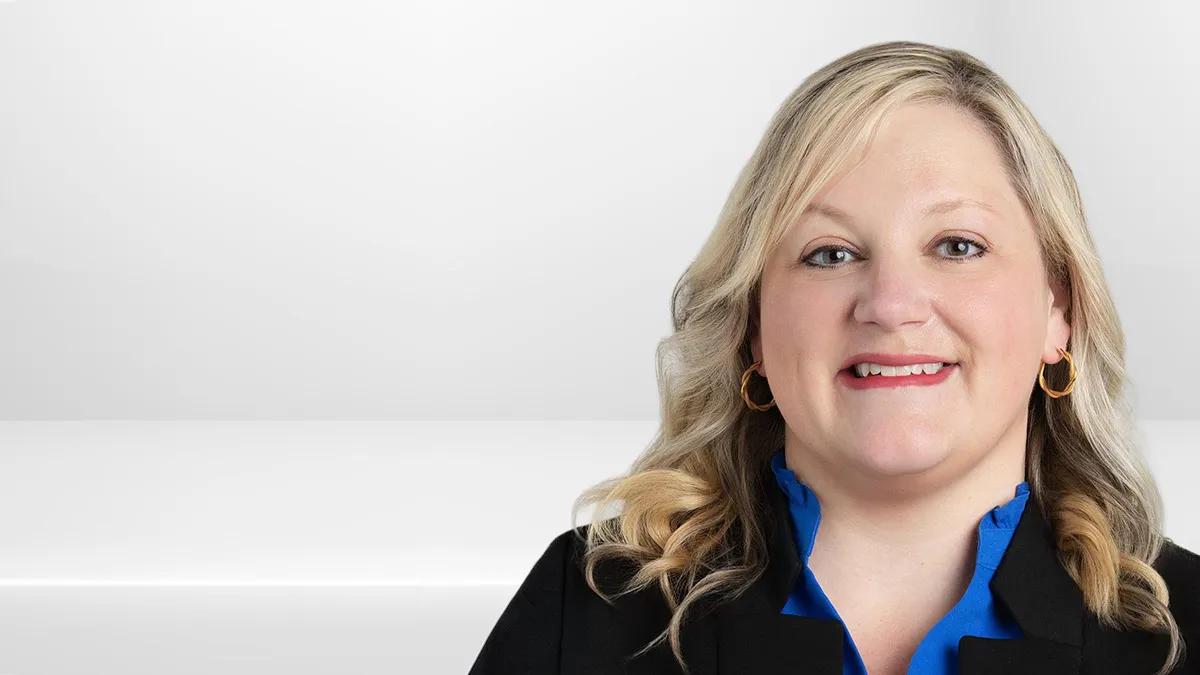
Bethany Samuelson Bannow, MD, Director of Classical Hematology at Cleveland Clinic, joins the Cancer Advances podcast to discuss how stronger collaboration between oncologists, primary care physicians and classical hematologists can improve diagnostic efficiency and patient outcomes. Listen as Dr. Samuelson Bannow shares practical referral guidance, highlights new diagnostic care pathways for common blood disorders, and explores strategies to address workforce shortages while expanding access to specialized hematology care.
Advertisement
Cleveland Clinic is a non-profit academic medical center. Advertising on our site helps support our mission. We do not endorse non-Cleveland Clinic products or services. Policy
Recent Episodes
Personalizing Pediatric Cancer Care: The Promise of Precision Oncology
As molecular profiling advances, precision oncology is reshaping cancer care for children, adolescents and young adults. In this episode of…
From Evidence to Practice: How NCCN Defines the Standard of Cancer Care
What does it take to establish the standard of care in oncology? Matt Kalaycio, MD, Vice Chair of the Cleveland Clinic Cancer Institute and…
Redefining Resectability in Advanced Rectal Cancer
What happens when a cancer is deemed unresectable? In this episode, Dr. Haniee Chung discusses how multidisciplinary care is expanding treat…
Video content: This video is available to watch online.
View video online (https://cdnapisec.kaltura.com/p/2207941/sp/220794100/playManifest/entryId/1_68y8e6mp/flavorId/1_5f3sgelj/format/url/protocol/https/a.mp4)
Transcript
Dale Shepard, MD, PhD:
Cancer Advances, a Cleveland Clinic podcast for medical professionals exploring the latest innovative research and clinical advances in the field of oncology. Thank you for joining us for another episode of Cancer Advances. I'm your host, Dr. Dale Shepard, a Medical Oncologist and Co-Director of the Sarcoma Program at Cleveland Clinic. Today, I'm happy to be joined by Dr. Bethany Samuelson Bannow, Director of Classical Hematology at Cleveland Clinic. She previously discussed evolving management in classical hematology, and that episode is still available for you to listen to. She's here today to discuss collaboration with classical hematologists. So welcome back.
Advertisement
Cleveland Clinic is a non-profit academic medical center. Advertising on our site helps support our mission. We do not endorse non-Cleveland Clinic products or services. Policy
Bethany Samuelson Bannow, MD:
Thanks. Glad to be back.
Dale Shepard, MD, PhD:
All right. So remind us a little bit about what you do here.
Bethany Samuelson Bannow, MD:
Yeah, so I direct the Classical Heme Program. So that means basically any blood disorder that's not cancer falls under us. So we do all of the autoimmune things. We do TTP, we do bleeding disorders. To some extent, we do thrombosis. So yeah, we get to work a lot with really all the specialties around the institution and the enterprise, which is really fun.
Dale Shepard, MD, PhD:
And that's what we're going to focus on now. So you really do touch upon things that impact a lot of different people. So collaboration, what makes it work best? What's the ideal setting where you'd like people to reach out and say, "Look, I need some help?"
Bethany Samuelson Bannow, MD:
Yeah. Yeah. Well, I think about it from the slightly different perspective, which is how can I empower people in other specialties to work with us? And a lot of it comes down to when an oncologist gets a new patient, that patient comes with a diagnosis and there are a million decisions that need to be made and maybe subtyping and treatment and all that. But you know what that patient has when they walk in the door. We get patients who had maybe one abnormal lab and there's really not a lot else known. And so, one of my goals when I'm working with other specialties is to empower them to have a basic idea of here's a few things that we can send to make our first visit with the patient as meaningful as possible.
Advertisement
Because when I get somebody who just had a one-time elevated white blood cell count, patient often leaves disappointed because I'm not able to give them any answers. And so we have been working on creating care pathways for diagnosis, which is a new thing. So here at the clinic, as you well know, we have many care paths, but they're really all about treatment. And so we are trying to share our paths for anemia and thrombocytopenia specifically to give people an idea, oh, hey, this patient has thrombocytopenia. Have I looked at their liver? This patient has anemia. Have I checked their iron store? So that I think is what makes the most helpful collaboration is when there's a little bit more information when they walk in the door so we can have a more meaningful visit.
Dale Shepard, MD, PhD:
And then I guess there's a lot of people out there anemic. And so I know that the classical hematologists are getting overloaded. There was virtual consults that were set up. Is it the thought that if we do some care paths and diagnosis that maybe these can be resolved without involving a specialist and leave you to the more complex cases?
Bethany Samuelson Bannow, MD:
I think that's the hope and really that benefits everybody because then the sick patients get to get in much more quickly and more efficiently. Obviously we'll see anybody who's really sick immediately, but it does cut down wait time for everybody if we're not necessarily seeing the patients who don't need us. And what we've found as we're working through these different options is often it doesn't even necessarily come down to the diagnosis. It comes down to the tools for treatment. So for example, we had a little bit of a... It was very hard for people outside of hematology to be prescribing IV iron. And IV iron is probably the number one treatment that we give to treat anemia because we have huge volumes of patients with iron deficiency anemia.
And if you think about your patients with GI cancer and endometrial cancer and even head and neck cancer to some extent, there's a lot of bleeding and patients can get iron deficient. And so making IV iron and those other treatments accessible and just letting people know how to do them has also, I think, been a really important aspect of improving that care path and maybe saving the patient an unnecessary visit, especially when they come from a non-oncology practice and then they're coming to the Taussig Cancer Institute. We have a lot of patients that that can stress them out understandably, even though we don't think they have cancer.
Dale Shepard, MD, PhD:
Makes sense. You mentioned before, sometimes you might get somebody and they've had a single CBC with an elevated white count, they're maybe a little anemic, and then they end up in a cancer institute. What would you think is, what's the sweet spot? Where would you like to see people? So I'm guessing there are people you look and go, "Wow, that was a little late. Wish I would've known about this sooner." Or the example of one CBC, maybe too early. What's the sweet spot?
Bethany Samuelson Bannow, MD:
I think it depends on the patient and the lab abnormality, but I think somewhere in between one slightly abnormal lab and somebody who's really progressively symptomatic. So maybe it is just one abnormal lab, but maybe the hemoglobin is 7.7 and the patient's having chest pain and shortness of breath and you've looked and they're not iron deficient and they don't have any other obvious causes. Well, maybe they do need to get in right away and maybe we do need to work them up for hemolytic anemia, for example. But if it's just a mildly abnormal lab, then probably repeating it is often the answer. In fact, when I get called and what should I do with this abnormal lymphocyte count or whatever, if it's not egregious, if there's not blasts, the answer is often, well, why don't you repeat it in a few weeks or a few months, depending, as long as the patient's asymptomatic. And then if it's progressive, then we'll be happy to see them. And if it goes away, great, we've saved them an appointment. But it all depends on the context.
Advertisement
Dale Shepard, MD, PhD:
So there's one thing as we think about classical hematology since you've been here, which hasn't been long, but it's infectious, the enthusiasm you have for classical hematology. And so there's a shortage of people interested in classical hematology. So how do we fix that?
Bethany Samuelson Bannow, MD:
Yeah, that is the million-dollar question. And I think it's really a byproduct of ages past. So back in the day before all of these new amazing cancer therapeutics came out, I think people went in at relatively equal rates, but then all of a sudden cancer medicine exploded and there's all these exciting new treatments and trials. And honestly, there's a lot more money that's a lot more reimbursable. And so for many decades, people have gone into oncology. Obviously it's a great specialty, but I think they just didn't really think about other alternatives because they weren't seeing it.
And when you think about the way fellowships are structured, fellows see patients, maybe they'll come to our clinic a couple times and I think they usually like, we're a pretty fun bunch, but they're not seeing as much as they're seeing of the oncology. And they'll see some of these patients who may not necessarily have needed a hematologist. We're happy to see everybody, but it's not as exciting for a fellow to see a resolved elevated white blood cell count as it is to see other things. And so we are really working to get the name of classical heme out there and share some of what we love about it. And I think it is really fun to be in this relatively narrow field, but still to get to diagnose things.
Advertisement
There's still some excitement in that, and I really want to try to share that with other faculty and fellows. And also, I think people don't realize going into classical heme is the ultimate job security. There is such a shortage that anybody trained in classical heme can have a job like that. And so I think people get the idea that maybe that's not the case. I mean, I know when I was training, I was worried what if I have to go and practice in the community or a rural area or something like that, and I don't have the skills in oncology? And even in those settings, there's always some group who wants to refer their hematology patients to a hematologist. So we're trying to get the word out about that.
Dale Shepard, MD, PhD:
I definitely trained in the hematology consult equals thrombocytopenia.
Bethany Samuelson Bannow, MD:
Yes. Yes. But sometimes thrombocytopenia is exciting. Sometimes it is TTP, but sometimes it's just that you're in the ICU and you're on three pressors and your bone marrow's tired.
Dale Shepard, MD, PhD:
Yeah. When you think about doubling back to collaboration, what are the biggest growth areas you see? Certainly oncology and things like that. Are there other specialties that you see yourself collaborating with more and more often?
Bethany Samuelson Bannow, MD:
Yeah, that's a great question. I mean, realistically, the blood touches every organ system, so there's not really anybody that we don't interact with a whole lot. I suppose maybe radiology, but IR will embolize things that are bleeding. So even there, I mean, I think we're interested in working with whoever's interested in working with us. I think we got a really interesting lecture on CHIP the other day, and because we do a lot of diagnostic work, we catch a lot of CHIP patients, and then that opens up opportunities to collaborate with malignant hematology and even cardiology and all kinds of exciting things. My personal interest, of course, is women's health. And I think that's highly relevant because we see a lot of folks with heavy menstrual bleeding. We see a lot of folks with bleeding or thrombosis in pregnancy. And so I personally think that's a huge area of collaboration. But I also think that probably every specialty except maybe prostate cancer could benefit from collaborating more with women's health, but that's my bias.
Advertisement
Dale Shepard, MD, PhD:
Are there some of those other areas that are introducing new therapies that are drawing them more into collaboration?
Bethany Samuelson Bannow, MD:
That's a good question. I think we've seen a little bit more of that over the years with malignant hematology, just because there's these more interesting thrombotic complications. And we see TMAs, for example, in bone marrow transplants and also solid organ transplants. So we see some of that. I think always cardiology and nephrology, there's a lot of overlap there. Anemia is both a consequence and a cause of some of it. We see patients with heart failure due to severe anemia. So I think those are areas that we overlap with quite a bit as well.
Dale Shepard, MD, PhD:
So as you're expanding programs and collaborations, how are you looking at spectrum of care? So in some areas, a lot of these things impact pediatrics, AYA, adults. How does that collaboration look from that standpoint?
Bethany Samuelson Bannow, MD:
Yeah. So another one of the things that I really love about classical hematology is we do lifespan care. We do bleeding disorders care. We do sickle cell and hemoglobinopathy care. And I think when that care is done right, a patient walks in, they have a care team, and from birth to death, the only thing that changes in that care team is they go from a pediatric hematologist to an adult hematologist. And all the other members of that team, the nurses and the social workers and the APPs, all of those can really span the lifespan. And so that's something I'm really privileged that our pediatrics group here is so phenomenal, and we're having a lot of conversations about how do we build this lifespan care.
So I think that's one definite perk to hematology that I'm a big fan of. And we're also thinking we want to make sure that we don't ever want somebody to feel like they're sitting on something that might be scary because they are afraid to call us. That's never the goal. The goal is for us to empower folks to feel equipped to do that. And so we are working with colleagues in primary care and sharing our care paths. Our APPs have really done amazing work. We've opened this hematology diagnostic clinic where some of these patients who just have one or two lab abnormalities and nothing else will come into that clinic and they'll get a workup.
And often they wind up going back to their primary care doctor and they do fine, but occasionally there will be something there and they do need to go on to a classical hematologist or a malignant hematologist. So really using the full spectrum of the team, colleagues in primary care and other specialties, and also APPs and other team members within our own group, I think has really helped to increase the efficiency of our hematologist slots, which is really critical as we are facing these shortages. And we're not immune to them here at the clinic. So if anybody listening is a classical hematologist and wants to come interview for a job, send me an email. I'd be happy to talk to you. But those are some things that we're trying to do to really make sure that the care gets to the patients where they are.
Dale Shepard, MD, PhD:
How have you been wrangling fellows into being interested?
Bethany Samuelson Bannow, MD:
Well, I buy them a lot of coffee. Obviously that's never a reason somebody goes into a specialty, but I do want to make sure my door is always open to fellows. I love having fellows in clinic. I think one of the places where classical hematology is disadvantaged in terms of seeing fellows is they don't get the continuity of care. If you are on the oncology wards, you very well may see the same patient two or three times in a row, or maybe you shadow with one particular oncologist in their practice and you get to see patients on repeat. And that doesn't happen quite as much in hematology. And so I try when I have a fellow in clinic to loop them in on what happens moving forward so they get an idea of not just that snapshot, but actually the full spectrum of care. I think we also have some interesting research opportunities and we have a fellow working with us on a QI continuity of care role as well. And so there's a lot of opportunities to improve care and really do really meaningful work for fellows and other trainees in hematology.
Dale Shepard, MD, PhD:
People that might be in other institutions listening in, what guidance can you give to stimulate that collaborative spirit and enthusiasm in classical heme?
Bethany Samuelson Bannow, MD:
Yeah, that's a really tough question, honestly. Enthusiasm is a challenging thing to create, but I think most classical hematologists are very enthusiastic about their jobs. I think if you get a few of us in a room, we can geek out for a long time. And so I think just chatting with your local classical hematologist and asking them what they love about their job, they'll have a list a mile long. And it may be things that people who've been in oncology for a long time haven't even though about because the landscape has changed a lot. Even since I was in fellowship 10 years ago, there are therapies that I never would've dreamed of in classical hematology. And then maybe having more conversation around these consults, not as straightforward as like, oh, the patient's anemic, give them iron. But why is this patient anemic? And what's the best way to prevent this or catch it before it starts? Or what are some other things on the differential? I think having more conversations and realizing the thought that goes into these things I think is helpful for everyone.
Dale Shepard, MD, PhD:
It's a really important field. You're doing great things to get people engaged and collaborate.
Bethany Samuelson Bannow, MD:
I just hope people leave with the message that classical hematology isn't the boring old fuddy-duddy specialty that I think some of us got the impression of in medical school. It's really a rapidly evolving field. It's very rewarding. Every day is a little bit different. Every day has some mystery to it. There's cool opportunities like lifespan care and close collaboration with other specialties that you just don't see in every area of medicine. So anybody to whom that's appealing, I think classical heme might be the right spot for them.
Dale Shepard, MD, PhD:
Appreciate you being here for some insights.
Bethany Samuelson Bannow, MD:
Thanks for having me. Appreciate your time.
Dale Shepard, MD, PhD:
To make a direct online referral to our Cancer Institute, complete our online cancer patient referral form by visiting clevelandclinic.org/cancerpatientreferrals. You will receive confirmation once the appointment is scheduled.
This concludes this episode of Cancer Advances. For more podcast episodes, visit our website, clevelandclinic.org/canceradvancespodcast. Subscribe on Apple Podcasts, Spotify, or wherever you listen to podcasts.
Thank you for listening. Please join us again soon.
Recent Episodes
Personalizing Pediatric Cancer Care: The Promise of Precision Oncology
As molecular profiling advances, precision oncology is reshaping cancer care for children, adolescents and young adults. In this episode of…
From Evidence to Practice: How NCCN Defines the Standard of Cancer Care
What does it take to establish the standard of care in oncology? Matt Kalaycio, MD, Vice Chair of the Cleveland Clinic Cancer Institute and…
Redefining Resectability in Advanced Rectal Cancer
What happens when a cancer is deemed unresectable? In this episode, Dr. Haniee Chung discusses how multidisciplinary care is expanding treat…
Other Podcasts You May Love
Beyond Leadership
Hosts Jim Pae and Elizabeth Pugel escort you through a network of thought leaders, sharing world-cla…
Beyond the Pages: CCJM Podcast
Beyond the Pages: CCJM Podcast takes the listener more in-depth into Cleveland Clinic Journal of Med…
Butts & Guts
A Cleveland Clinic podcast exploring your digestive and surgical health from end to end. You’ll lear…
Cardiac Consult
A Cleveland Clinic podcast exploring heart, vascular and thoracic topics of interest to healthcare p…