



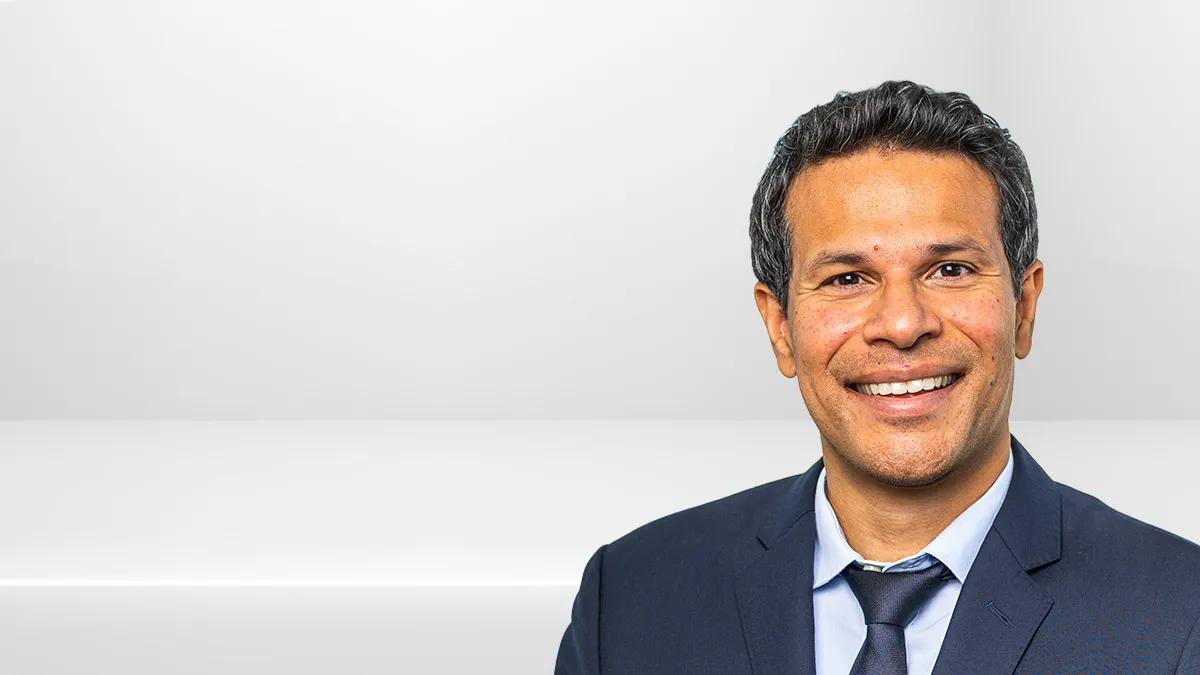
Personalizing Pediatric Cancer Care: The Promise of Precision Oncology
As molecular profiling advances, precision oncology is reshaping cancer care for children, adolescents and young adults. In this episode of Cancer Advances, Prajwal Rajappa, MD, MS, discusses how genomic sequencing, methylation profiling and multidisciplinary molecular tumor boards are improving diagnostic accuracy, informing risk-adapted treatment decisions and uncovering new therapeutic opportunities. Discover how integrated data platforms are helping translate molecular insights into personalized patient care.
Advertisement
Cleveland Clinic is a non-profit academic medical center. Advertising on our site helps support our mission. We do not endorse non-Cleveland Clinic products or services. Policy
Recent Episodes
From Evidence to Practice: How NCCN Defines the Standard of Cancer Care
What does it take to establish the standard of care in oncology? Matt Kalaycio, MD, Vice Chair of the Cleveland Clinic Cancer Institute and…
Redefining Resectability in Advanced Rectal Cancer
What happens when a cancer is deemed unresectable? In this episode, Dr. Haniee Chung discusses how multidisciplinary care is expanding treat…
Preserving Vision, Expanding Options in Uveal Melanoma
As new therapies move through clinical trials, the management of uveal melanoma is entering a period of significant change. In this episode…
Video content: This video is available to watch online.
View video online (https://cdnapisec.kaltura.com/p/2207941/sp/220794100/playManifest/entryId/1_3tvsu4ev/flavorId/1_5f3sgelj/format/url/protocol/https/a.mp4)
Transcript
Dale Shepard, MD, PhD:
Cancer Advances, a Cleveland Clinic podcast for medical professionals, exploring the latest innovative research and clinical advances in the field of oncology. Thank you for joining us for another episode of Cancer Advances. I'm your host, Dr. Dale Shepard, a Medical Oncologist and Co-Director of the Sarcoma Program at Cleveland Clinic. Today I'm happy to be joined by Dr. Praj Rajappa, Director of the Pediatric Precision Oncology Program here at Cleveland Clinic. Today, he is here to discuss that program. So, welcome.
Advertisement
Cleveland Clinic is a non-profit academic medical center. Advertising on our site helps support our mission. We do not endorse non-Cleveland Clinic products or services. Policy
Prajwal Rajappa, MD, MS:
Yeah, thanks for having me, Dr. Shepard. Excited to be here.
Dale Shepard, MD, PhD:
So, give us a little bit of an idea what you do here at Cleveland Clinic.
Prajwal Rajappa, MD, MS:
Yeah, absolutely. So, I'm a physician scientist here at the clinic. On the research side, I direct a neuro-oncology translational research laboratory that's focused on developing immune-based cellular therapies for patients with gliomas. Now, on the clinical side, I serve as the director of pediatric precision oncology here. And so, specifically, I aim to develop a comprehensive pediatric adolescent and young adult precision oncology service line that aims to integrate advanced molecular profiling, multidisciplinary expertise, as well as develop a data reporting mechanism that can help support clinical decision making and guide patient care.
Dale Shepard, MD, PhD:
Perfect. A lot of different people, different backgrounds listening in. Precision oncology, what does that mean?
Prajwal Rajappa, MD, MS:
Well, to me, our model is based with the specific intent of clinical deliverables. And so, specifically, we aim to molecularly profile and stratify tumors, given the fact that we're oftentimes in the clinic dealing with a heterogeneous subtype of various tumors.
Dale Shepard, MD, PhD:
And so, what are the sort of things we're looking at as profiles?
Advertisement
Prajwal Rajappa, MD, MS:
In terms of profiles, we aim to really perform a multi-modality sequencing approach, using the latest advanced next-generation sequencing strategies. So, for pediatric patients that come in, we'll offer whole exome sequencing. And so, this sequencing really focuses on the protein-coding regions of the genome. So, specifically, this is 1% of the genome. And interestingly enough, 85% of alterations in disease-causing mutations arise from the exome. So, potentially, clinically fruitful in terms of the yield for these types of alterations from whole exome capture. We'll also offer whole transcriptome or RNA sequencing for these patients that come in. And so, this will also give us a better insight with respect to the genes that are dysregulated in a specific type of cancer, as well as identify druggable fusions with the RNA sequencing data. And then we'll also offer DNA methylation profiling, which will help us improve our diagnostic precision-making, as well as molecularly classify these tumors based on the methylation profile.
Dale Shepard, MD, PhD:
As we think about pediatric precision oncology clinic and a program, give me an idea of what that looks like. I mean, logistically, what does that look like?
Prajwal Rajappa, MD, MS:
Yeah. So, any patient that comes here to the Cleveland Clinic and undergoes a biopsy or a surgical resection for that type of cancer will be offered this program. So, we'll have a genetic counseling component that really reviews the different types of sequencing approaches as I just described, as well as the cancer predisposition, as well that may go along with this in terms of the data that's revealed. At the same time, we'll also allocate the tissue for the different types of sequencing approaches I mentioned. And then we'll develop a molecular tumor board specific to the pediatric and AYA population, which will comprise a host of various key stakeholders. That'll include not only surgical oncologists, but medical oncologists specific to the AYA and pediatric population, as well as computational experts and data science folks who will help us annotate the molecular data in a clinically relevant fashion.
Dale Shepard, MD, PhD:
You mentioned AYA or adolescent young adult. Within our programs here at Cleveland Clinic, what's the age range that is included in AYA?
Prajwal Rajappa, MD, MS:
The AYA demographic, we're really looking at 18 to under 40 years of age.
Dale Shepard, MD, PhD:
Okay, perfect. So, you mentioned wide range of people. So, if you're including AYA, really we're talking pediatrics and adults in many cases as well.
Prajwal Rajappa, MD, MS:
Yeah, absolutely. I think that'll be important to include both sides of the spectrum so we can provide that care continuum.
Dale Shepard, MD, PhD:
When you think about gaps that you're trying to fill with this program, what are the primary gaps that you're looking to fill?
Prajwal Rajappa, MD, MS:
I think one of the major gaps is data fragmentation. And so, when I say that, of course, we're going to pursue a complementary approach with respect to the next-generation sequencing and molecular profiling, but where does that data live and how does that align with the clinical data? And so, I think that's an important aspect when we think about the longitudinal follow-up for these patients. Sometimes clinicians are often siloed in the sense that they have to piece things all together on their own. And we aim to be a service that helps provide that bridge to the care continuum, where we ensure that the molecular readout is clinically annotated and then delivered in a fashion that's meaningful to the clinical teams and the multidisciplinary tumor board. As well as provide a platform to visualize that dataset in a longitudinal fashion.
Advertisement
Another gap I would say, especially specific to the AYA population is access. And so, particularly for patients with CNS tumors and other solid tumors, including sarcomas, which I know you're an expert in, we often have fewer targeted treatment options for these patients, as well as fewer biologically driven clinical trials. So, I think that's a gap that we need to address. And hopefully, with comprehensive molecular profiling strategies, we'll be able to start to answer some of those questions.
Dale Shepard, MD, PhD:
Yeah. You mentioned the fragmentation. I mean, that's a huge issue. I mean, if I order sequencing on a patient, sometimes even just finding where the data is. It could be in an email, it could be a portal from the company, could be addended to the path report. I mean, it could be a separate lab that's listed and it's really hard to find in real time. And then, oftentimes, we've ordered it and we're looking for something actual at that moment. But again, you mentioned the longitudinal part. Maybe I have a treatment now, but maybe three treatments later, then I have to try to go find that again. Or something's not actual now, but maybe it is when we get a new trial. And so, are you envisioning a dashboard for this? Or how do you think that this is going to come together and provide a beneficial way to address those questions?
Advertisement
Prajwal Rajappa, MD, MS:
An incredibly important set of questions that you just asked, Dr. Shepard. And I will say we will try to create a dashboard as well to make sure that we can longitudinally follow these patients, not only at initial primary encounters, but also in the recurrent disease setting. So, part of what we're going to offer by launching this program is that we'll offer the molecular profiling at recurrent, multiple recurrent stages as well. And I think that's going to be important and this data can also be visualized. So, something that we're working with Dr. Tim Chan's group is developing a PEDs instance of cBioPortal, which will house and help us visualize the data with respect to all of these platforms as well.
And then we're also working with our AI team here at the Cleveland Clinic to use large language models to essentially extract the clinical record from the EMR, so that we can align that data back with the molecular data to really have that bridge moving forward. So, absolutely, I think visualizing the data, having the data reported in a uniform fashion to the clinical providers and physicians is incredibly important. And is one of the gaps that we aim to address with this pediatric and AYA precision oncology program.
Advertisement
Dale Shepard, MD, PhD:
Can you give me some examples of other cases where you've been able to use this data in a meaningful way?
Prajwal Rajappa, MD, MS:
Absolutely. So, in our model, molecular profiling will happen in the upfront setting prior to chemo and radiation therapy. And as I mentioned previously, in a longitudinal fashion. Each patient will receive three complementary forms of next-generation sequencing, the first of which as whole exome sequencing, which really interrogates the protein-coding region of the genome. Although this is representing only 1% of the genome, 85% of disease known causing variants are harbored within the exome. So, very important in terms of clinical yield. And so, in terms of exome sequencing, we've had pediatric brain tumor patients, specifically low grade glioma patients called juvenile pilocytic astrocytoma, which often arise in the cerebellum. And we've had these patients have a prevalence for harboring BRAF V600D point mutation. So, we've had a number of cases where we've had these patients come in. We've pursued whole exome sequencing, which revealed the V600D point mutation.
The patient, based on a high variant allele frequency, was put on a BRAF inhibitor, dabrafenib. And demonstrated a durable and in some cases, complete response. So, highlighting and underscoring the clinical utility of whole exome capture. At the same time, we'll also be pursuing a whole transcriptome or RNA sequencing, which will allow us to discover even actionable druggable fusions, such as NTRK fusions. So, that'll be an important consideration, in addition to understanding the gene dysregulation that often occurs in these cancer settings, which will help us inform not only tumor progression, but also a treatment response based on the pathways that are activated or down-regulated.
We'll also, as I mentioned, pursue DNA methylation profiling, which will help us improve the diagnostic precision for these tumors on a molecular basis. We've had cases in the past, in the CNS tumor population, for example, that are called medulloblastoma. And these medulloblastoma cases were subcategorized in their molecular profile. But in one case, in fact, there was a medulloblastoma patient that was reclassified to a pineoblastoma, a completely different diagnostic entity. So, underscoring the utility of methylation profiling and really nailing down the diagnostic entity of that particular tumor.
Dale Shepard, MD, PhD:
So, certainly, genomic information, really powerful for diagnosis. It's important for treatment decisions. It is frustrating sometimes getting things through review boards and things, when anytime you're looking at genetic information in adults, does that go to a next level in kids? And how do we address that?
Prajwal Rajappa, MD, MS:
Yeah. I think from the regulatory standpoint, obviously with children, the regulatory standards are even tougher and more strict. So, I think we have to be very mindful in terms of how we approach patients, how we enroll them, how we educate them and their families throughout the care process. As I mentioned, we'll be working with our medical geneticists to make sure that families and patients are educated throughout the process and are informed. And of course, there's a consent and ascent process that will also be used to make sure that each patient is enrolling in this program with all of the adequate information that they need to make those decisions.
Dale Shepard, MD, PhD:
And then as you put forward a program, is this something that primarily is going to be housed in main campus? Are we going to involve regional sites as well?
Prajwal Rajappa, MD, MS:
So, initially, we're going to roll out the program here at Main Campus. And then our plan is to then hopefully expand to our regional centers, as well as other Cleveland Clinic hospitals for the pediatric and AYA population. And speaking to the initial rollout of the program, we aim to specifically focus on CNS tumors, so patients with brain and spinal tumors, as well as solid tumors, including sarcomas. Given the unmet significant need for this patient population and the need to molecularly stratify these patients is paramount as we guide their care. And also, given the younger demographic of patients that we are treating, I think it's important to be mindful of the fact that they are undergoing neurocognitive development. So, understanding the risk stratification of these tumors will be very, very important, with respect to how aggressive we want to be with our therapeutic approaches.
Dale Shepard, MD, PhD:
And I guess, just elaborate on that. So, how can we use that? How have you been able to use this data in the past to either give more aggressive therapy, decrease the amount of treatment that was required?
Prajwal Rajappa, MD, MS:
We initially pursued a study a number of years ago that I led as a clinical research question for pediatric and young adult CNS tumor patients. And so, essentially, the basic question was, can we in a clinically relevant fashion incorporate molecular profiling and guide care? And the answer to that question was yes. In the case of methylation profiling for a common high-grade brain tumor called a medulloblastoma, we were able to risk stratify these patients using methylation profiling and advanced molecular characterization.
So, for example, a patient with a subgroup three medulloblastoma is going to be allocated into more of an aggressive treatment regimen, given that this is a high-risk situation. But a WNT-activated medulloblastoma patient, for example, will be allocated onto a treatment regimen that's less aggressive. So, the dosing with respect to higher dosing for chemotherapy or not is going to be informed by the risk stratification and molecular subgrouping. So, that was just in one type of tumor, but we've seen this across a host of solid tumors as well.
Dale Shepard, MD, PhD:
Unless we have a program to look for these, we're not going to know that.
Prajwal Rajappa, MD, MS:
Exactly. And so, we really need to stratify these tumors based on risk, so we can allocate these patients into the most appropriate treatment regimens given their age.
Dale Shepard, MD, PhD:
So, I guess a couple of age-related things. So, I see adults. And usually, when I'm looking for genetic testing or genomic testing for DNA abnormalities, I'm looking for a treatment. Is there something that targets a mutation? And I'm seeing patients who have been around for 70 years and have had enough time to develop somatic mutations. If you're seeing somebody who's five or eight, what percentage of the time when you do the testing are you finding these somatic mutations that are targetable?
Prajwal Rajappa, MD, MS:
Pediatric tumors by and large, can be specific to the younger population. But at the same time, pediatric tumors that also have adult counterparts have distinct biology. So, specifically, pediatric tumors have a lower overall mutational burden, so lower mutation rate. And given that, we've had to reflex into other advanced molecular profiling strategies, such as methylation profiling, as I just mentioned, that can help us not only diagnose these patients more effectively, but characterize them molecularly. So, given the fact that the biology's distinct between pediatric patients and older adult patients, I think we have to be really careful in terms of understanding that molecular profile, which will, as I mentioned, guide the intensity of a treatment downstream. So, I think that's a very important consideration.
Dale Shepard, MD, PhD:
Again, back to some of these pediatric challenges at times, what do we see in terms of access to medication? So, you find an actual mutation. Sometimes these drugs are approved in adults and then you're trying to use it in a nine-year-old. So, what are the challenges that you come across from that standpoint?
Prajwal Rajappa, MD, MS:
Yeah. Authorization of these FDA-approved compounds in the adult setting become quite complicated for the pediatric patients and the younger patients, just due to the toxicity profile of some of these compounds. So, I think that's one thing to be mindful of. But if there is a targetable alteration, say on DNA exome sequencing, I think it's important also to look at really the fingerprint of that data. And so, specifically, we look at variant allele frequency and this is the tissue that's assayed. So, within that tumor tissue, this is really the number of reads that are associated with that particular alteration in the tumor DNA, over the total DNA that's assayed.
So, if that variant allele frequency is higher, we can have a confidence in going in with a targeted therapy. Potentially, that will be efficacious for the treatment of that patient. But nonetheless, I think this is still an elephant in the room type of question, in terms of repurposing FDA-approved compounds for adults into the pediatric setting. But I think also, there's a limited data set that's available right now. I think as we pursue targeted therapies more so in the standard of care for pediatric and young adult and adolescent patients, I think it'll become more clear in terms of what that signal looks like and how these patients perform on those therapies. So, I think that'll be important dataset to generate as well from a correlative standpoint, as we start to pursue precision medicine for these patients.
Dale Shepard, MD, PhD:
We think very much from a logistics standpoint, as this program sort of grows, how does it incorporate into the clinical workflow? So, patient's going to come see their oncologist. They're going to be talking about a diagnosis and treatment and all that, and then we're overlaying this. How does that clinically work into the patient path?
Prajwal Rajappa, MD, MS:
It'll really take a complementary effort across various disciplines, as I mentioned earlier. And I think from a purely logistical standpoint, I think specifically from the initial patient encounter in the clinical setting with a medical oncologist, a genetic counseling team to really review the different sequencing strategies that we've outlined in this program, as well as counseling those patients. But then also, upon either biopsy or resection of those patients with their individual tumors, I think it's important to know that this involves a extremely complicated logistical coordination with respect to the coordination of the operating room, from the surgical oncology team, from the actual collection of the sample, the delivery of the sample to surgical pathology, the grossing of the sample from surgical pathology into our sequencing approaches in terms of extracting the DNA, the RNA and so forth.
So, a complicated system that needs to be orchestrated in a streamlined fashion. And so, as I mentioned, we were able to do this historically at my previous institution, so I think we'd really like to be able to do this here at the Cleveland Clinic.
Dale Shepard, MD, PhD:
So, it's going to take a village/small city.
Prajwal Rajappa, MD, MS:
Absolutely. It really will take a village to make this program work. And I look forward to engaging with all of the key stakeholders to really understand the gap areas that we can fill, as well as operationally streamlining this program that'll make sense for all of our teams.
Dale Shepard, MD, PhD:
I guess, expanding on that, you mentioned briefly before, who needs to be at the table in terms of decision-making on how you roll out, where you roll out, how you use the data, that kind of thing?
Prajwal Rajappa, MD, MS:
Yeah, great question. I'll say it's going to take a multidisciplinary effort. So, at the table, as I mentioned, we will roll out a specific pediatric and AYA molecular tumor board. And so, we'll have expertise from surgical oncology, medical oncology, as well as a molecular pathology and standard pathology as well. At the same time, we'll also include on the data side, our computational and bioinformatics experts, as well as our data scientists. So, really to bridge that care continuum between data generation, annotation and delivery of that data to the end user, which is our clinical teams.
Dale Shepard, MD, PhD:
On the adult side, tumor boards run between heme and solid tumor. Are you anticipating involvement on both sides with this program?
Prajwal Rajappa, MD, MS:
Yeah. I think as we develop the program over time, absolutely. Initially, as I mentioned, we'll roll this out for solid tumors, CNS tumors, which is our previous experience, as well as sarcoma patients. But then we'll also roll this out for and include our hematological tumors as well.
Dale Shepard, MD, PhD:
How are you envisioning perhaps that data generation through clinical trials, either investigator initiated, bringing in sponsored trials to help support what you're doing?
Prajwal Rajappa, MD, MS:
Engaging with industry sponsorship I think will also be important, in terms of providing the next generation of molecularly guided clinical trials. And I think that's going to be really important for these biologically diverse tumors, such as sarcomas and brain and spinal tumors and other rare solid tumors. I think it'll be really important to generate the data, but also understand how the data is going to inform that next generation of clinical trial infrastructure. So, that's going to be very important for us moving forward as well.
Dale Shepard, MD, PhD:
Well, it sounds like a massive effort that you got a good handle on, so rare tumors trying to figure out how to best treat them, best for patients. Great work you're doing here. Appreciate you being with us.
Prajwal Rajappa, MD, MS:
Thank you so much for having me.
Dale Shepard, MD, PhD:
To make a direct online referral to our Cancer Institute, complete our online cancer patient referral form by visiting clevelandclinic.org/cancerpatientreferrals. You will receive confirmation once the appointment is scheduled.
This concludes this episode of Cancer Advances. For more podcast episodes, visit our website, clevelandclinic.org/canceradvancespodcast. Subscribe on Apple Podcasts, Spotify, or wherever you listen to podcasts.
Thank you for listening. Please join us again soon.
Recent Episodes
From Evidence to Practice: How NCCN Defines the Standard of Cancer Care
What does it take to establish the standard of care in oncology? Matt Kalaycio, MD, Vice Chair of the Cleveland Clinic Cancer Institute and…
Redefining Resectability in Advanced Rectal Cancer
What happens when a cancer is deemed unresectable? In this episode, Dr. Haniee Chung discusses how multidisciplinary care is expanding treat…
Preserving Vision, Expanding Options in Uveal Melanoma
As new therapies move through clinical trials, the management of uveal melanoma is entering a period of significant change. In this episode…
Other Podcasts You May Love
Beyond Leadership
Hosts Jim Pae and Elizabeth Pugel escort you through a network of thought leaders, sharing world-cla…
Beyond the Pages: CCJM Podcast
Beyond the Pages: CCJM Podcast takes the listener more in-depth into Cleveland Clinic Journal of Med…
Butts & Guts
A Cleveland Clinic podcast exploring your digestive and surgical health from end to end. You’ll lear…
Cardiac Consult
A Cleveland Clinic podcast exploring heart, vascular and thoracic topics of interest to healthcare p…