



Anoxia happens when there’s little or no oxygen left in the affected body parts. It can happen because you’re not breathing, your blood isn’t circulating, or something is keeping your blood from carrying oxygen. Immediate medical attention is vital to reduce the odds of this condition causing severe tissue damage or death.
Advertisement
Cleveland Clinic is a non-profit academic medical center. Advertising on our site helps support our mission. We do not endorse non-Cleveland Clinic products or services. Policy
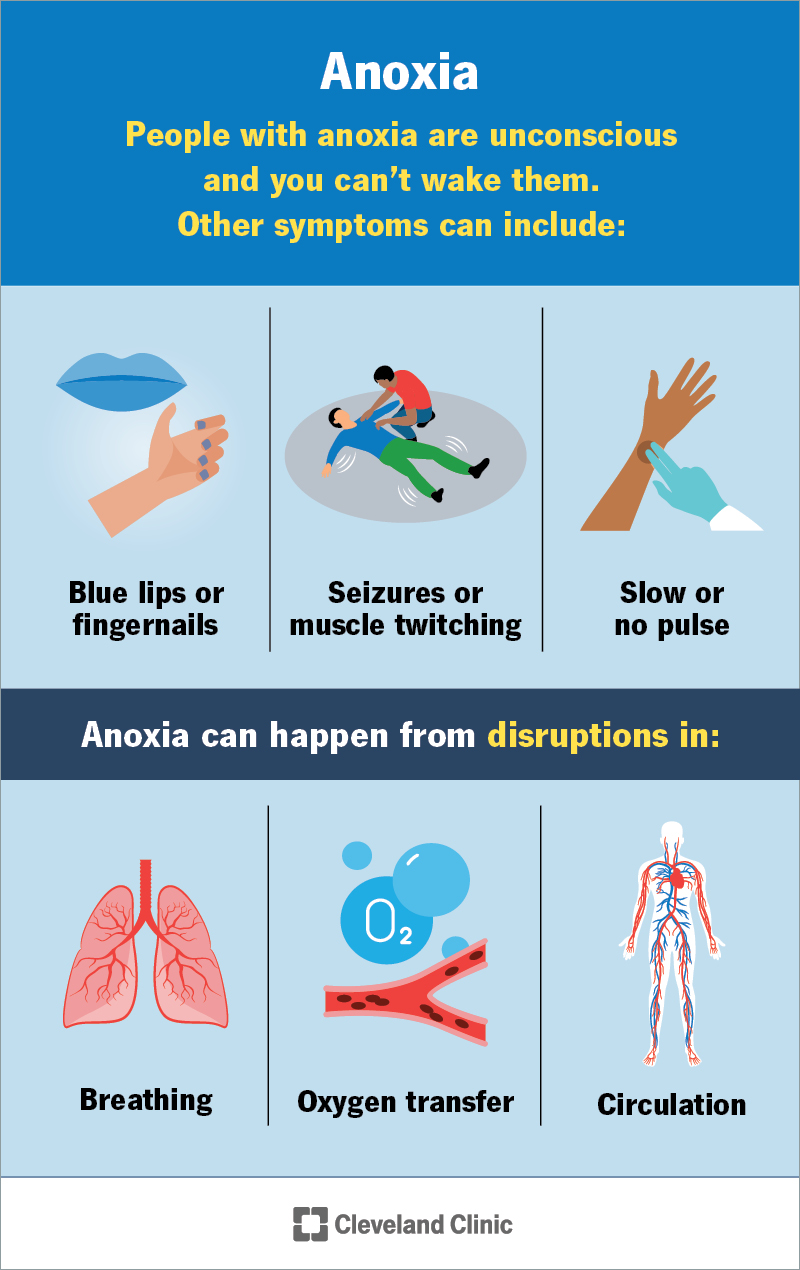
Image content: This image is available to view online.
View image online (https://my.clevelandclinic.org/-/scassets/images/org/health/articles/anoxia.jpg)
Anoxia is when you have little or no oxygen in part or all of your body. It’s similar to hypoxia (low oxygen levels) but more severe. The name of this condition comes from ancient Greek words meaning “without oxygen.”
Advertisement
Cleveland Clinic is a non-profit academic medical center. Advertising on our site helps support our mission. We do not endorse non-Cleveland Clinic products or services. Policy
Anoxia is a medical emergency that needs quick, expert medical attention.
Anoxia is what happens when hypoxia gets worse. And some tissues, like your brain, have an extremely high demand for oxygen. That’s why brain anoxia can cause permanent brain damage and death in just a few minutes without prompt treatment.
People with anoxia are unconscious and unresponsive, meaning you can’t wake them up. They may also have the following symptoms:
Anoxia can happen several ways. All of them involve disruptions in your body’s oxygen supply. Some examples include:
When your cells don’t get enough oxygen, ischemia happens. The longer ischemia lasts, the worse the damage will probably be. For some parts of your body, especially your brain, the damage from ischemia can become severe and permanent within minutes.
Advertisement
Anoxia can happen for many reasons, including:
Anoxia is dangerous because it means your body isn’t getting enough oxygen. Some tissues, especially your brain, are more sensitive to that. That can lead to:
A healthcare provider can diagnose anoxia using a physical exam and a variety of tests.
Possible tests include:
Some tests are also possible for diagnosing lingering damage or effects from hypoxia. One example of that is magnetic resonance imaging (MRI), especially brain MRI.
Treating anoxia depends partly on why it happened. Oxygen therapy is a common part of treating anoxia (or conditions that could cause it). This provides higher concentrations of oxygen than regular air.
When someone is unresponsive or isn’t breathing, first responders check the ABCs to start treatment or prevent anoxia. The ABCs stand for:
People with anoxia are unconscious. When that happens, healthcare decision-making falls to someone empowered to make those choices. That’s usually a loved one or someone legally chosen and named in an advance directive.
Many other treatments are possible, depending on the underlying cause of anoxia. A healthcare provider can explain the treatment options for your situation.
The outlook for anoxia depends mainly on two factors:
Advertisement
Brain damage can start after three to five minutes of anoxia. If it lasts longer than six to 10 minutes, permanent brain damage or brain death is more likely. Once brain death happens, life support treatments can keep your body alive temporarily, but death will happen without them.
But several other factors can determine whether anoxia causes permanent damage. And in many cases, follow-up testing is necessary before a healthcare provider can tell you about what’s most likely to happen.
Anoxia isn’t 100% preventable. But there are a few things you can do to reduce your risk of it happening. They mainly revolve around preventing conditions or situations that could lead to anoxia. Examples include:
Knowing lifesaving techniques can also help if you’re with someone who’s at risk for anoxia. These include:
Advertisement
Any condition that stops your heart or breathing is a medical emergency. You should call 911 (or your local emergency number) immediately if this happens to someone you’re with. When in doubt, act quickly, as it could save a life.
When anoxia affects someone you care for, waiting to know how it will affect them can weigh on you. Will they recover and be like they were before? If you had anoxia, you might have questions about how it might affect your life moving forward.
Whether anoxia affected you or someone you care about, healthcare providers are there to support you. They can offer options and resources that can help, no matter the situation and eventual outcome.
Advertisement



Sign up for our Health Essentials emails for expert guidance on nutrition, fitness, sleep, skin care and more.
Learn more about the Health Library and our editorial process.
Cleveland Clinic’s health articles are based on evidence-backed information and review by medical professionals to ensure accuracy, reliability and up-to-date clinical standards.
Cleveland Clinic’s health articles are based on evidence-backed information and review by medical professionals to ensure accuracy, reliability and up-to-date clinical standards.
Whether you need stitches, a broken bone set or think your appendix might be causing your abdominal pain, Cleveland Clinic’s emergency medicine team is here to help.
