



Overactive bladder is a condition that makes you pee frequently and have a strong urge to pee. You may also pee at night and leak pee at times. Causes include abdominal trauma, infection, nerve damage, medications and certain fluids. Treatment includes changing certain behaviors, medications and nerve stimulation.
Advertisement
Cleveland Clinic is a non-profit academic medical center. Advertising on our site helps support our mission. We do not endorse non-Cleveland Clinic products or services. Policy
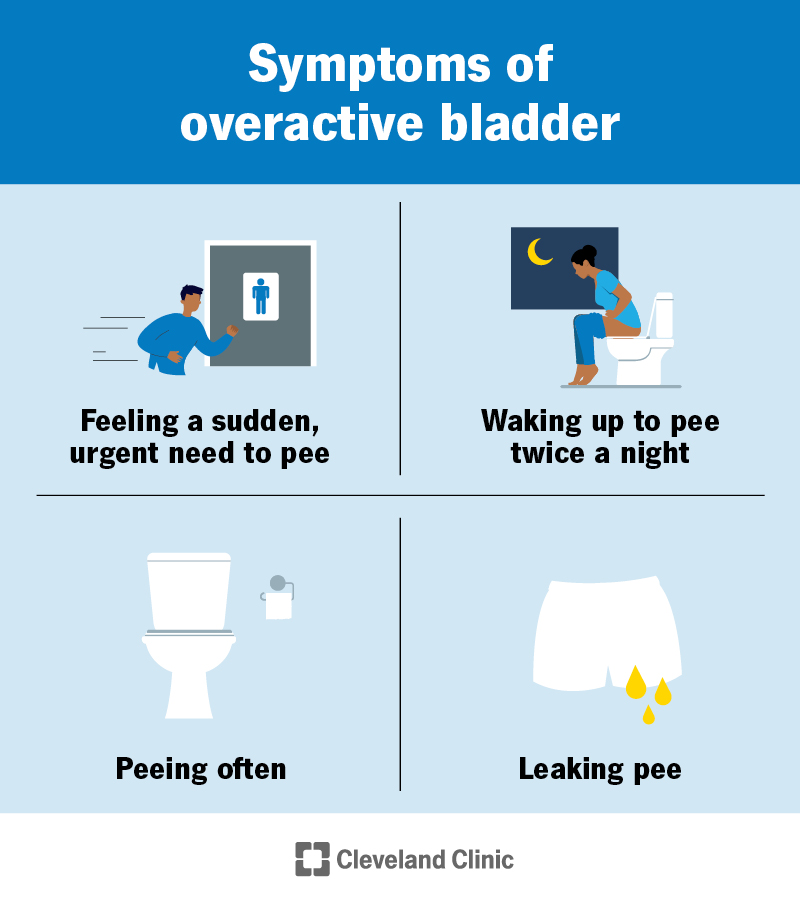
Image content: This image is available to view online.
View image online (https://my.clevelandclinic.org/-/scassets/images/org/health/articles/overactive-bladder)
Overactive bladder (OAB) is a mix of symptoms that may cause you to pee more often, have strong urges to pee, leak pee (incontinence) and have to pee at night.
Advertisement
Cleveland Clinic is a non-profit academic medical center. Advertising on our site helps support our mission. We do not endorse non-Cleveland Clinic products or services. Policy
Symptoms of this condition can cause stress and affect your quality of life. It can be frustrating to think about the nearest bathroom all the time. But an honest talk with a healthcare provider can get you on your way to managing OAB.
OAB is common. It affects millions of adults in the U.S. It’s most common in people 65 and older, but it isn’t a normal part of aging. Women may have OAB at a younger age, usually around 45.
Overactive bladder symptoms include:
Conditions or injuries that affect your detrusor muscle (in your bladder wall) cause overactive bladder. These may include:
Advertisement
Risk factors for OAB include:
Lifestyle adjustments can help reduce your risk of developing an overactive bladder. These may include:
If you have an overactive bladder, it affects your daily life. In addition to physical issues, OAB can affect your emotional well-being. It can be difficult to travel or even go to social events. If you have to get up to pee during the night, it can prevent a good night’s sleep. You may also get hurt if you fall when trying to get to the bathroom in time.
A healthcare provider can diagnose OAB by reviewing your symptoms and performing a physical examination of the organs around your pelvis and rectum. They may ask you about your symptoms, medications you take and fluids you drink.
A provider may ask you to keep a bladder diary for a few days. This can help them determine the cause of your OAB. You’ll use your bladder diary to track what and how much you drink, how often you pee and how often you leak.
You may get a referral to see a urologist. This is a doctor who’s an expert in diseases and conditions that affect your urinary tract and reproductive system.
A healthcare provider may order tests to help diagnose overactive bladder. These tests may include:
It’s rare for treatments to cure an overactive bladder. But different treatments can help with OAB. Overactive bladder treatments may include changing certain behaviors, taking medications and having nerve stimulation.
Advertisement
You can make many changes to your behavior as an OAB treatment. These include:
Avoid or cut back on drinks or foods that may cause bladder symptoms. These may include foods or drinks with caffeine or artificial sweeteners.
Constipation can place pressure on your bladder and affect its function. You may be able to avoid constipation and reduce bladder symptoms by keeping healthy bowel habits. You can do this by eating more fiber, drinking two to four extra glasses of water each day, and being physically active.
Having overweight can put pressure on your bladder, which may add to bladder control problems. Maintaining a weight that’s healthy for you can reduce pressure on your bladder.
Cigarettes and other tobacco products can irritate your bladder muscle. Coughing spasms from smoking can also cause leakage.
Bladder training teaches you how to resist feelings of urgency, delay going to the bathroom and pee according to a timetable instead of responding to feelings of urgency.
Patience is important. Training your bladder usually takes at least six to eight weeks to see results.
As you’re retraining your bladder, a healthcare provider may prescribe medication. Medications can help restore normal bladder function. Commonly prescribed medications for overactive bladder include:
Advertisement
A healthcare provider injects this into your bladder wall using a cystoscope. The injection keeps muscles from contracting. This therapy is very effective, even for people who haven’t responded well to other therapies. Most people need to repeat injections every six months.
Nerve stimulation can help improve OAB. Your nerves help tell your brain that your bladder is full. By treating your nerves, you can improve your bladder control. Healthcare providers only recommend it if other treatments don’t work.
Types of this reversible treatment include:
See a healthcare provider if you have any symptoms of an overactive bladder.
OAB may develop gradually and slowly worsen over time. If your symptoms develop suddenly and you have heavy leakage, OAB may be a symptom of an infection or a neurological issue. It’s best to have a provider check these symptoms sooner rather than later.
Advertisement
You may want to ask your healthcare provider:
Overactive bladder symptoms can cause considerable stress. Treatment can be challenging to manage, and symptoms may never completely disappear. But many people are satisfied with the treatment they receive and often experience a dramatic improvement in their quality of life.
OAB doesn’t go away on its own. If you don’t treat OAB, your symptoms can get worse. The muscles in your bladder that help control when you pee can become weak, and your pelvic floor tissues can get thinner.
If you’re waiting for treatments to take effect, products like disposable pads or adult diapers can help you feel in control and catch leaks.
Having an overactive bladder (OAB) can make you feel embarrassed. Many people struggle to talk to a healthcare provider about their symptoms. But providers can answer your questions without judgment. They can find the cause of your overactive bladder and work with you to create a treatment plan. If you have symptoms of OAB, talk to a provider so you can better manage your bathroom habits and improve your daily life.



Sign up for our Health Essentials emails for expert guidance on nutrition, fitness, sleep, skin care and more.
Learn more about the Health Library and our editorial process.
Cleveland Clinic’s health articles are based on evidence-backed information and review by medical professionals to ensure accuracy, reliability and up-to-date clinical standards.
Cleveland Clinic’s health articles are based on evidence-backed information and review by medical professionals to ensure accuracy, reliability and up-to-date clinical standards.
Having an overactive bladder isn’t a natural part of life. Cleveland Clinic’s experts are here to find treatments that work for you. We’ll get you the care you need.
