



Recognizing and Managing Telomere Biology Disorders
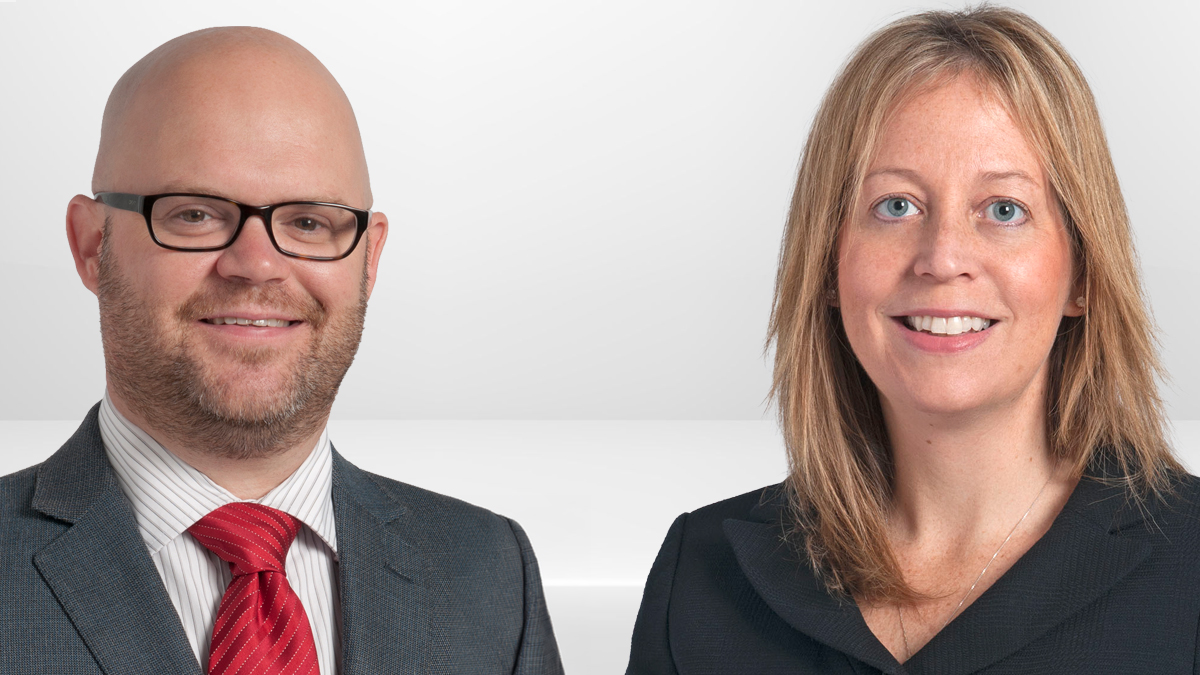
Telomere biology disorders are increasingly recognized as drivers of pulmonary fibrosis, bone marrow failure, liver disease, and other age-related conditions. In this episode of Respiratory Exchange , Dr. Daniel Culver is joined by Dr. Brian Southern and Dr. Hetty Carraway to explore the clinical clues, diagnostic testing, genetic implications, and multidisciplinary management of short telomere syndromes. They discuss who should be tested, the role of genetic screening, transplant considerations, and emerging research that is reshaping care for patients and families affected by these complex disorders.
Advertisement
Cleveland Clinic is a non-profit academic medical center. Advertising on our site helps support our mission. We do not endorse non-Cleveland Clinic products or services. Policy
Recent Episodes
Highlights from the 2026 ATS Conference
Host Daniel Culver, DO, is joined by Cleveland Clinic pulmonologists Rachel Scheraga, MD, and Vickram Tejwani, MD, for a recap of the 2026 A…
Hypercapnic Respiratory Failure from the Hospitalist Perspective: Recognition, Risk, and Perioperative Insights
In this episode of Respiratory Exchange, Dr. Dan Culver speaks with hospitalist and anesthesia outcomes researcher Dr. Roop Kaw about the pr…
Video content: This video is available to watch online.
View video online (https://cdnapisec.kaltura.com/p/2207941/sp/220794100/playManifest/entryId/1_p1l1gi4o/flavorId/1_5f3sgelj/format/url/protocol/https/a.mp4)
Transcript
Dr. Raed Dweik:
Hello and welcome to the Respiratory Exchange Podcast. I'm Raed Dweik, Chief of the Integrated Hospital Care Institute at Cleveland Clinic. This podcast series of short digestible episodes is intended for healthcare providers and covers topics related to respiratory health and disease. My colleagues and I will be interviewing experts about timely and timeless topics in the areas of lung health, critical illness, sleep, infectious disease, and related disciplines. We will share with you information that will help you take better care of your patients. I hope you enjoy today's episode.
Advertisement
Cleveland Clinic is a non-profit academic medical center. Advertising on our site helps support our mission. We do not endorse non-Cleveland Clinic products or services. Policy
Dr. Daniel Culver:
Hello and welcome to this edition of Respiratory Exchange. I'm your host, Dr. Daniel Culver. I'm the chair of the Division of Pulmonary Medicine at Cleveland Clinic. Today we'll be talking about telomere biology disorders. I'm joined by two excellent guests, Dr. Brian Southern and Dr. Hetty Carraway. Dr. Southern is a physician who directs our Telomere Biology Clinic in the Division of Pulmonary Medicine at Cleveland Clinic. Welcome, Dr. Southern.
Dr. Brian Southern:
Thank you. Good to be here.
Dr. Daniel Culver:
And Dr. Carraway is the director of the Acute Leukemia Service at Cleveland Clinic in the Department of Hematology and Oncology. Welcome, Dr. Carraway.
Dr. Hetty Carraway:
Thank you. Great to be here.
Dr. Daniel Culver:
So, I think that telomere biology disorders have really gotten a lot of press and most people have heard about them by now, but the field is changing So, rapidly and the amount we're understanding about them has really grown So, fast. It's a timely chance to talk about something. I wonder if we could just start with you, Hetty. If you can talk about how would you explain the general concept of telomere and telomere biology problems to somebody who's not in your specialty, maybe in a specialty where they don't think about this as often.
Dr. Hetty Carraway:
Yeah. We often use analogies to kind of talk about some of the biology in telomeropathy states. We talk about DNA duplication and the analogy we use are the ends of the laces on your shoes, kind of holding the end of the shoelace together.
Advertisement
Dr. Daniel Culver:
The aglet, right?
Dr. Hetty Carraway:
Yes.
Dr. Daniel Culver:
That's a crossword question.
Dr. Hetty Carraway:
You got it. You got it. So, the analogy being that if those are not holding the end of the strand in place that you can have shortening of the DNA and in telomere disorders where those are significantly shortened, shortened beyond or below the one percentile range for somebody of that same age, then we start to worry about shortened telomere syndromes. Those can be acquired, or they can also be inherited. And So, we often work hard to figure out what's happening for that individual patient specific to whatever phenotype may be going on with them. If we determine that it is inherited, then it has implications for their offspring and their family. And So, you can imagine that then it becomes a little bit more of a longer conversation beyond just their own individual care.
Dr. Daniel Culver:
Thank you. And I suppose that because these telomeropathies tend to be more apparent in organs where there's cell turnover like the bone marrow, like the lungs, this is why pulmonologists and hematologists commonly deal with these problems and hepatologists I think also,, it's an important feature for them. If you think about the biology of this, do you characterize this as primarily something that's accelerated senescence or is this more of a problem with stem cell exhaustion or is there something else in terms of the broad framework of how you think about the biology of these disorders?
Dr. Hetty Carraway:
It's So, interesting. I think because I'm an oncologist, I think about cell death and I think about DNA damage and that's really for these individuals that are affected by this, they're impacted by DNA damage in a much more in a higher way than others that don't have these shortened telomeres. And as a result of that, we need to protect them and do more preventative things for them in their lifespan to prevent the acquisition of issues, whether it's fibrosis in the marrow or fibrosis in the lungs. Yes, it could be an increased senescence I guess as well, but it's interesting in the way that we imagine it with the lens in which we practice, isn't it?
Dr. Brian Southern:
Of course. And I believe that there are a couple of people that have shown that the shortened telomeres happen in all cell types. So, you get shortened telomeres in stem cells as well as in epithelial cells and fibroblasts, and they have shown that senescent markers go up in these patients. We think of it as like premature aging or accelerated aging. Those cells get to a point where the chromosomes are so short that they can no longer function and So, the cell goes into apoptosis and dies and then you may end up getting scarring there if you're talking about the lungs or you may end up getting bone marrow dyscrasia. If you're talking about the bone marrow or liver fibrosis, if you're talking about the liver, which are the more common manifestations that we see.
Advertisement
Dr. Daniel Culver:
So, maybe we could get a little bit into that issue. If somebody's in clinic and they're not as familiar with these syndromes, what are the most common tip offs that you use to think about across the whole body telomeropathy? What makes you really sit up and take notice in the history or the exam?
Dr. Brian Southern:
Well, first as a pulmonologist, anybody that comes in that has a first degree relative of pulmonary fibrosis or any type of interstitial lung disease that automatically raises a flag with me. Also, because of the different things you can see in telomere biology disorders, any patients that come in with unexplained pulmonary fibrosis and liver cirrhosis or pulmonary fibrosis and bone marrow failure, you can also, look for other subtle signs like some patients can present with a lacy hypopigmented skin rash. Some patients can present with what's called oral leukoplakia, white spots in the mouth. And So, those are some of the things we look for on exam and also, nail changes. Fingernail changes are other things that you can look for on exam, but usually it's having a family member with either pulmonary fibrosis or a bone marrow disorder or unexplained liver cirrhosis. Those are the main drivers that cause me to start thinking about a telomere disorder.
Advertisement
Dr. Daniel Culver:
And how about in the hematology realm? I know you see a lot of patients with all the spectrum of myelodysplastic syndromes and aplastic anemia. How do you think about the overlap with those things and when should somebody really focus on telomere testing in your realm?
Dr. Hetty Carraway:
Oh, I'm So, glad that you brought that up because this is really housed in the space of our bone marrow failure syndromes kind of clinic, if you will. And So, when patients present with aplastic anemia or myelodysplastic syndrome, those are two very different presentations with regard to patients. So, whenever you have cytopenias in a patient, you start to think about, is this inherited or is this acquired? The time that you worry about inherited the most is when people are young, right? But I'm often seeing older patients in my practice, but when I see people that are young, for sure I want to make sure to evaluate germline predispositions and we're learning that germline predisposition states are actually a lot more common than we knew about. So, this is an active area of research, not just for short telomere syndromes, but for other inherited kind of marrow disorders. So, in the context of bone marrow failure, this is one piece of that puzzle. And So, we work very closely with our colleagues in genetics, Brittany Stewart and Holly Greer, and we have certain criteria by which we say this person meets certain criteria in order to have germline testing, but it's very similar. We do look for classic phenotypic changes like nail dystrophy. We look for lung fibrosis. There are other questions that we typically will ask in terms of premature graying or gray forelock that kind of tip off, "Hey, this family is having graying hair in high school or a premature gray forelock that's kind of classic is also something that we see. We see clubbing of the fingers particularly in patients with DKC and some of the other things-
Advertisement
Dr. Daniel Culver:
DKC, dyskeratosis congenita.
Dr. Hetty Carraway:
So, it's not always the same in every patient. It's not always the same in every family, but you can certainly see things that are familiar that then you say, "I need to inquire more about this." And I'm sure we'll talk a little bit about some of what happens in terms of anticipation for some families where it's affecting older people in the family and as the younger generations get affected, it's even earlier in terms of the age of onset. I've had certain families also, surprise me. So, young patients that present with acute leukemia and I wasn't really having short telomere on the forefront of my mind because I'm more wrapped in the new diagnosis of acute leukemia. And So, I think we're learning more still in the landscape, and I think that's still important for us to continue to embrace, and that's why I'm particularly excited about the work that we're doing here together with the Pulmonary Institute and others.
Dr. Daniel Culver:
That's great. And I do want to get into a little bit about the testing pathway and when you send patients and how the tests perform, but maybe before we get to the sophisticated tests, I can pick your brain for a minute about whether there's any clues on the CBC. Are there some aspects of the differential or any other aspects that are subtle on the CBC that should make people think this could be a telomere issue?
Dr. Hetty Carraway:
Not necessarily. I think it typically still fits in the bone marrow failure spectrum where you have anemia; you have a low retic count or an abnormally low or an abnormally normal retic count. If you have anemia, it should be that the retic count's going up and if we don't see that, then we know that there's some bone marrow failure issue going on. Within the CBC, patients are probably not having appropriate differentiation within the diff, and you can sometimes see a monocytic like picture, but as a hematology oncologist, we're often wanting to pursue the bone marrow biopsy and now of course the genomic information with regard to the mutational profiles that we work on.
Dr. Daniel Culver:
I'm glad you're doing bone marrow biopsies as a hematologist and not bronchoscopies. And I hope you'll say the same thing about bronchoscopies, Brian.
Dr. Brian Southern:
Yeah.
Dr. Daniel Culver:
Sometimes people talk a lot about thrombocytopenia. Is that something you've seen very much as a tip off or is that a little bit oversold in the literature?
Dr. Hetty Carraway:
I might be biased just because many of the patients that I see in bone marrow failure states have thrombocytopenia, and there can be other germline predisposition states that are not short telomeres that we will see and work-up in that space. So, for example, other entities such as a germline predisposition to a familial platelet disorder such as RUNX1-FPD or other types of familial issues such as ANKRD26. But yeah, thrombocytopenia is one of those things that worries us in the context of cytopenia for thinking about short telomere, but the differential for so much of what we do in the bone marrow failure space can also include thrombocytopenia.
Dr. Daniel Culver:
With everything we're finding about short telomeres and really, I think in all the specialties we're seeing more and more that these contribute to some of the unexplained diseases. Should we be much broader in our telomere testing?
Dr. Brian Southern:
Yeah, I think the guidelines are pretty loose right now on who we test for telomere length, but I think that a lot of the symptoms or signs that we've mentioned, if patients show those, then I would be all for a broader application of telomere length testing because like Dr. Carraway said, I think that this is much more common than we think it is. They'll tell you that there's about one in a million patients that have dyskeratosis congenita, but if you look at some studies, there seem to be quite a few more patients and in the pulmonary fibrosis literature as well, you can see quotes of upwards of 70 to 90% of carriers of a telomere related gene mutation can develop some form of lung disease usually in their 50s or 60s. And So, I think there needs to be more widespread testing tailored towards patients who have those signs and symptoms that make you think about a telomere disorder.
Dr. Daniel Culver:
I want to ask you a little bit about that because it always begs the question to me about the cause of the shortened telomeres. Of course, there are genetic causes, but there's also non-genetic environmental and socioeconomic associations. And I wonder if one of you wants to comment on where is that field right now and how important do you think that is?
Dr. Brian Southern:
Yeah, I think there are certainly other things that can cause shortened telomeres, environmental exposures, pollutants; smoking has been associated with it. Like I mentioned, aging in itself causes telomeres to shorten radiation exposure, and a few other things can lead to a telomere biology disorder, So, it doesn't have to be necessarily inherited, but some patients are born with shortened telomeres as well.
Dr. Daniel Culver:
Thank you all for joining us for this episode of Respiratory Exchange. We hope you enjoyed today's episode and we look forward to the next edition.
Dr. Raed Dweik:
Thank you for listening to this episode of the Respiratory Exchange Podcast. You can find additional podcast episodes on our website, clevelandclinic.org/podcasts or wherever you get your podcasts.
Recent Episodes
Highlights from the 2026 ATS Conference
Host Daniel Culver, DO, is joined by Cleveland Clinic pulmonologists Rachel Scheraga, MD, and Vickram Tejwani, MD, for a recap of the 2026 A…
Hypercapnic Respiratory Failure from the Hospitalist Perspective: Recognition, Risk, and Perioperative Insights
In this episode of Respiratory Exchange, Dr. Dan Culver speaks with hospitalist and anesthesia outcomes researcher Dr. Roop Kaw about the pr…
Never miss a moment - subscribe now.
Listen to the Health Essentials Podcast on your favorite streaming platform.
Other Podcasts You May Love
Beyond Leadership
Hosts Jim Pae and Elizabeth Pugel escort you through a network of thought leaders, sharing world-cla…

Beyond the Pages: CCJM Podcast
Beyond the Pages: CCJM Podcast takes the listener more in-depth into Cleveland Clinic Journal of Med…
Butts & Guts
A Cleveland Clinic podcast exploring your digestive and surgical health from end to end. You’ll lear…
Cancer Advances
A Cleveland Clinic podcast for medical professionals exploring the latest innovative research and cl…